Category: Automobiles

The Rick Astley of Cars

Dave

Car enthusiasts spend a lot of time talking about dream cars. We argue about horsepower figures, Nürburgring lap times, quarter-mile records, and the latest technological breakthroughs from manufacturers determined to build the next automotive masterpiece. We admire exotic supercars, celebrate racing legends, and occasionally convince ourselves that happiness is only one vehicle purchase away. Yet if you ask most people about the car they remember most fondly, the answer is rarely the fastest vehicle they ever drove. More often than not, the answer is a vehicle that became part of their life story.

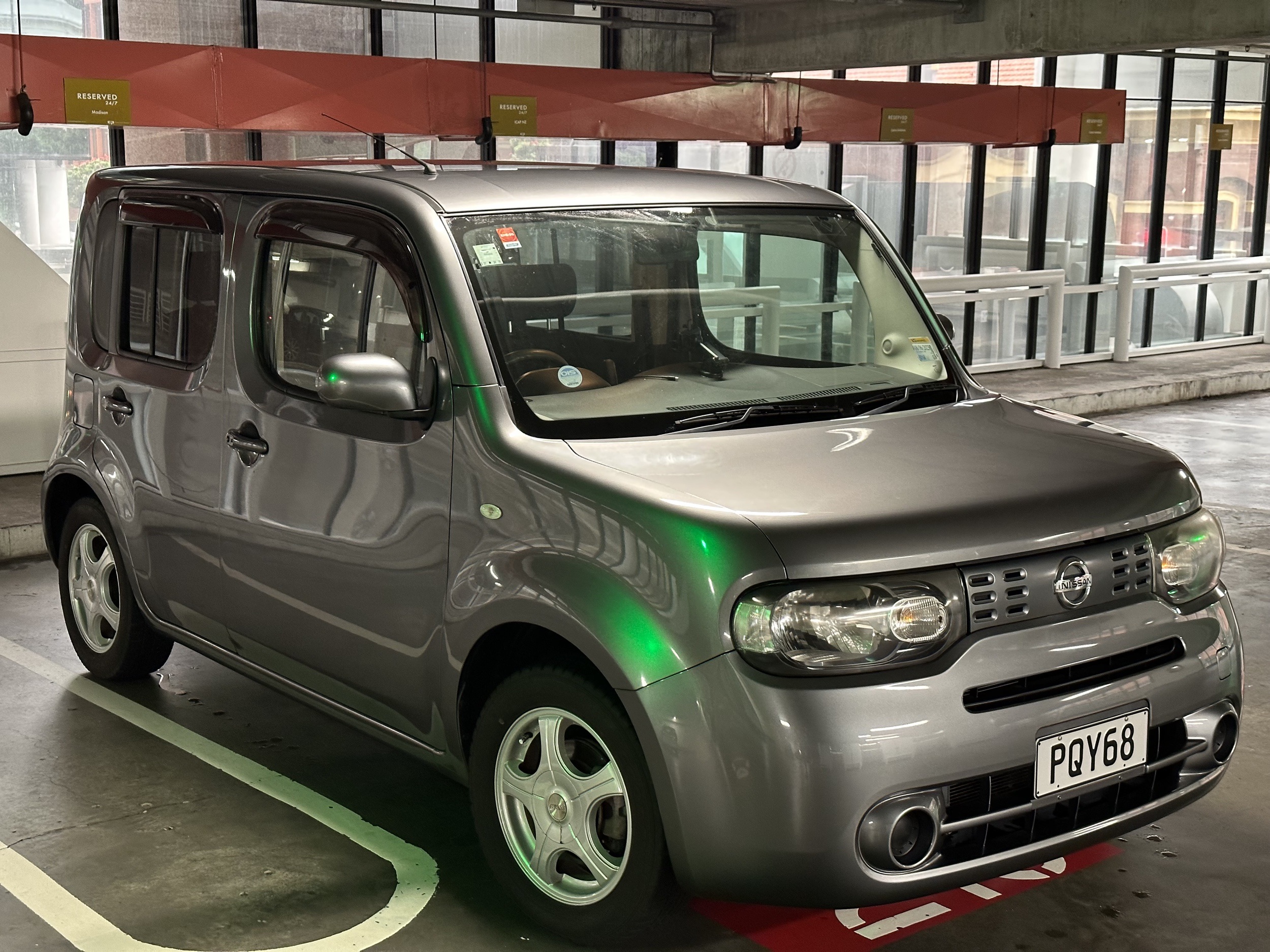
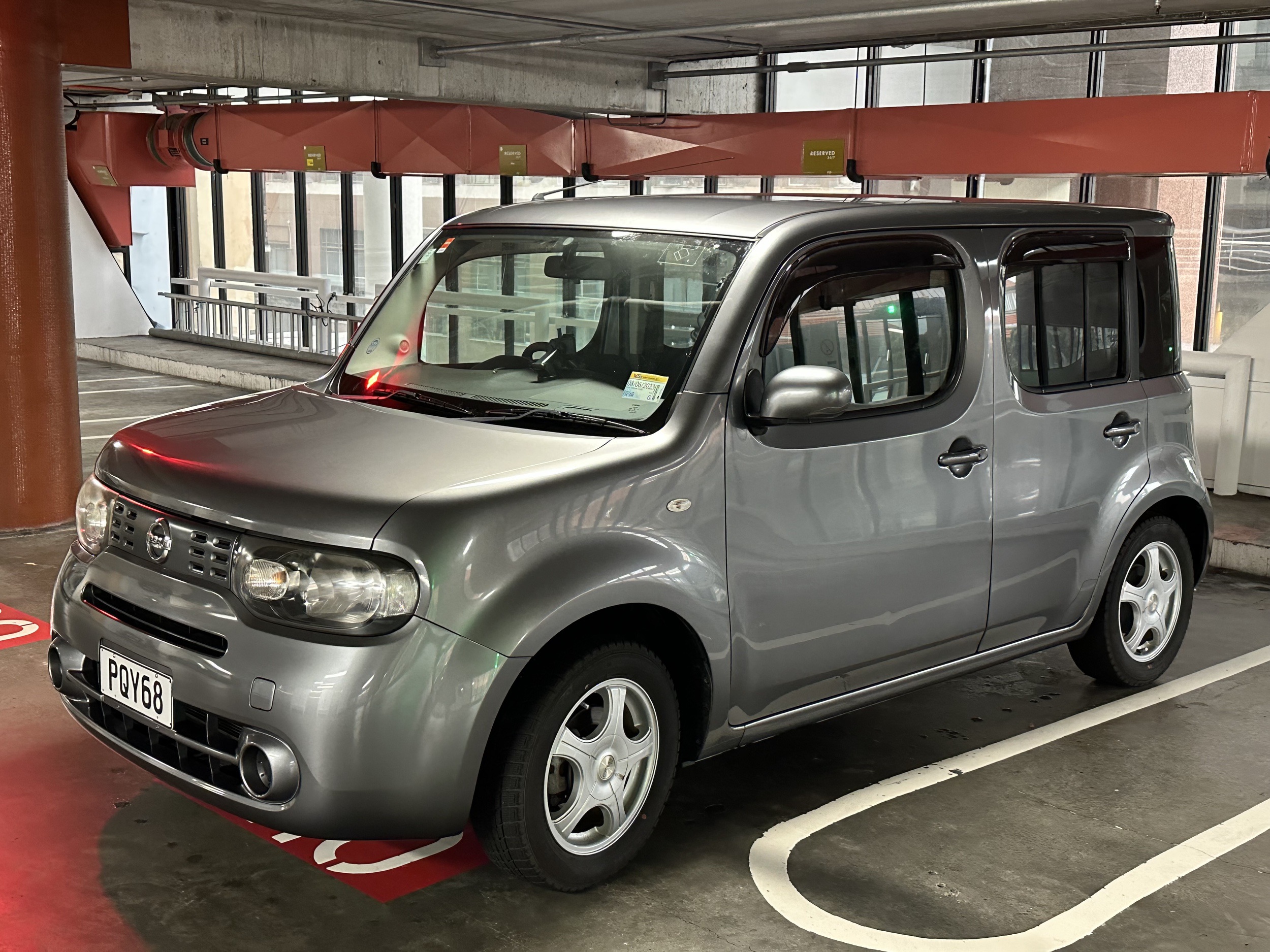
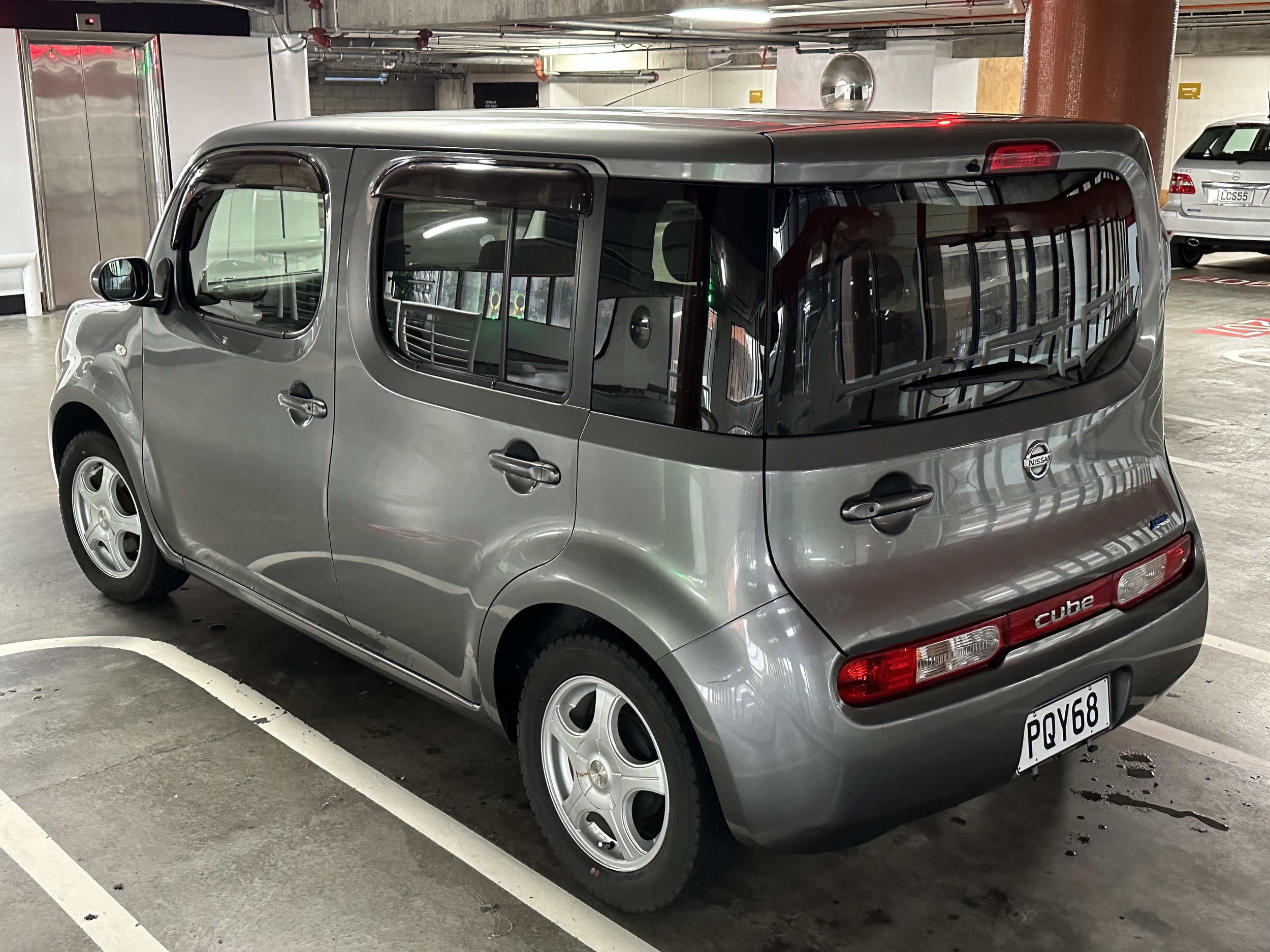
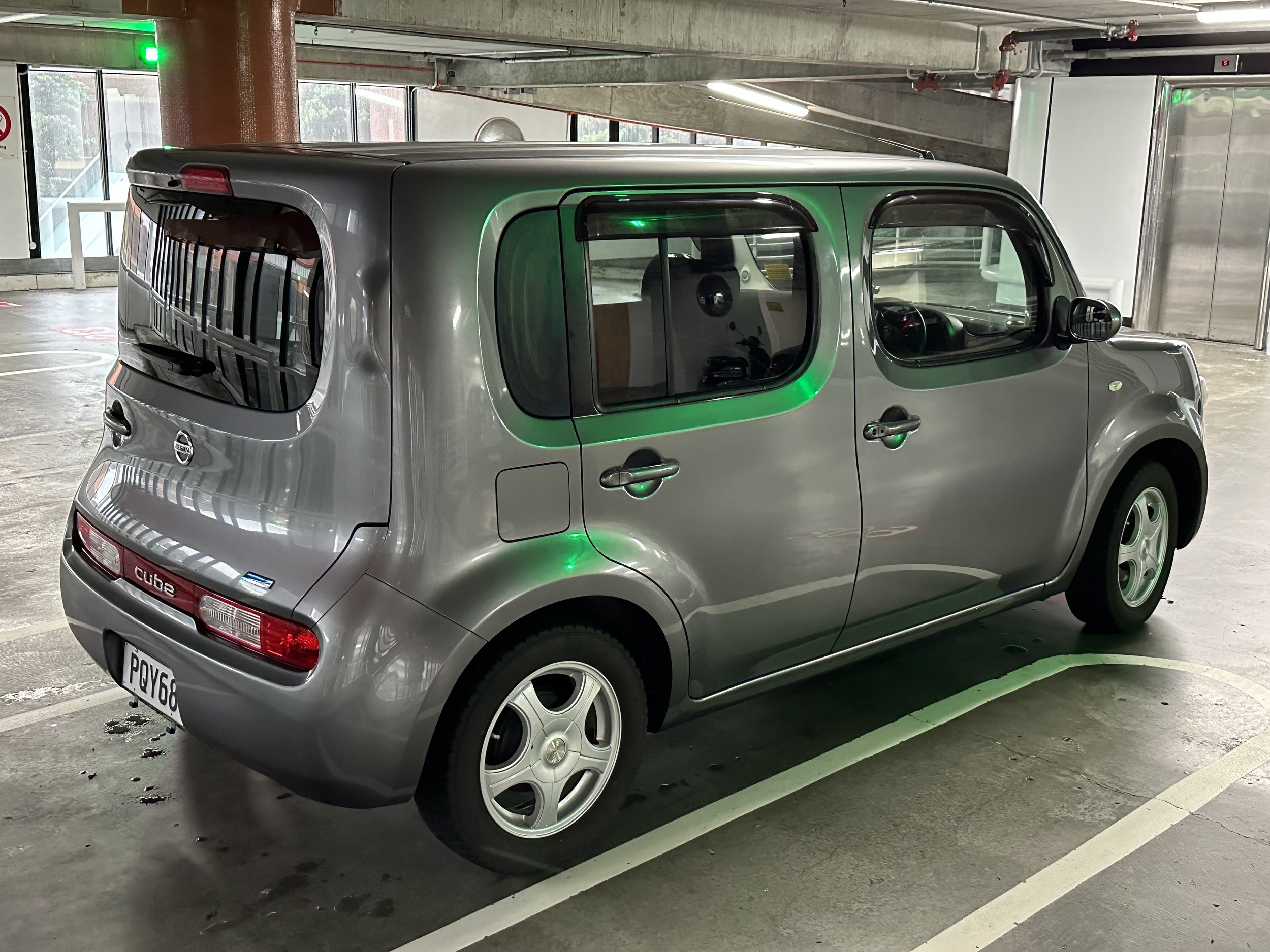
For me, that vehicle is the Nissan Cube.

At first glance, that statement sounds ridiculous. The Cube was never intended to be an enthusiast vehicle. It wasn’t designed to dominate race tracks, attract crowds at car shows, or appear on posters hanging in a teenager’s bedroom. It was a practical, box-shaped transportation appliance built around efficiency, visibility, comfort, and interior space. Many people laughed at its appearance. Others ignored it completely. Yet after owning and driving Cubes in Japan, New Zealand, Bahrain, and the United States, I’ve come to appreciate something that automotive journalists often overlook. A truly great vehicle isn’t necessarily the one that impresses strangers. It’s the one that consistently earns your trust.

Over the years I’ve owned other vehicles, including a Nissan Skyline equipped with Nissan’s legendary inline-six engine. The Skyline was exciting. It was the kind of vehicle enthusiasts love discussing. It sounded great, looked great, and carried a reputation that has become part of automotive history. Yet when I think about reliability, dependability, and sheer usefulness, it isn’t the Skyline that comes to mind first. It’s the Cube. The Skyline was the car I enjoyed talking about. The Cube became the vehicle I depended on.

That distinction became clear during my years overseas. In Bahrain, summer temperatures routinely climbed into territory that many Americans never experience. The heat was relentless. Walking across a parking lot could feel like opening the door to an industrial oven. Vehicles that perform perfectly in mild climates often reveal their weaknesses when exposed to those conditions day after day. Air conditioning systems struggle, interior materials deteriorate, and mechanical components endure stress that engineers rarely discuss in marketing brochures. Yet through all of it, the Cube simply carried on. Every time I climbed inside, the air conditioning did exactly what I needed it to do. While the desert sun turned the outside world into a furnace, the cabin remained cool and comfortable.

Years later, I found myself driving through Death Valley during temperatures that approached 130 degrees Fahrenheit. People who have never experienced that kind of heat have difficulty understanding just how oppressive it feels. The landscape itself seems hostile to life. Every decision becomes influenced by the environment, and you gain a newfound appreciation for machines that continue functioning when conditions become extreme. Once again, the Cube performed without complaint. The air conditioning remained cold, the engine remained happy, and the vehicle carried me through one of the harshest environments on Earth as though it were just another afternoon drive.

Some of my favorite memories, however, come from New Zealand. Anyone who has spent significant time driving through the North Island understands that weather can become an adventure of its own. A journey from Wellington to Auckland can feel like traveling through multiple seasons in a single day. I would leave Wellington under gray skies, rain, and wind, only to find myself hours later crossing the Desert Road where conditions felt cold, dry, and almost winter-like. By the time I reached Auckland, the weather might be warm and humid, with sunshine one moment and rain the next. The changing conditions kept every drive interesting.

One particular trip remains vivid in my memory because it perfectly captured the strange realities of New Zealand weather. As I crossed the high desert region, temperatures were low enough that I needed the heater running to remain comfortable. At the same time, moisture in the air was causing the windows to fog. The solution was to run both the heater and air conditioner simultaneously. To anyone unfamiliar with automotive climate control systems, that combination sounds contradictory. Yet it worked perfectly. The heater kept the cabin warm while the air conditioner removed excess humidity from the air. Outside, New Zealand couldn’t decide which season it wanted to be. Inside, the Cube simply adapted.

Perhaps the most memorable journey occurred during a diplomatic pouch run. A project required materials to be delivered the following day, leaving very little room for delay. I woke up at 0400, loaded the diplomatic pouch into the back of the Cube, and began the drive from Wellington to Auckland. After arriving, I spent roughly forty-five minutes completing the delivery and handling a few additional tasks before immediately turning around and driving all the way back to Wellington. By the time I arrived home it was around 2200. The next day I had another appointment that I couldn’t miss, so spending the night in Auckland wasn’t an option. It was a long day by any standard, yet the Cube never became part of the problem. It simply did what it had always done: start, run, and get the job done.

That phrase has become central to how I think about the vehicle. Just like me, the Cube gets the job done. It doesn’t seek attention. It doesn’t need recognition. It simply performs the task in front of it and moves on to the next one. Looking back, I realize that’s probably why I’ve remained loyal to the platform for so many years. The Cube and I seem to share the same philosophy. Neither of us is interested in making a dramatic entrance. We simply show up, handle our responsibilities, and keep moving forward.

Even today, the vehicle continues to surprise me. Despite its age, it still returns fuel economy figures that many larger and newer vehicles struggle to achieve. Gas prices may rise and fall, but the Cube remains remarkably economical to operate. Even when I spend part of my lunch break sitting inside with the air conditioning running while I play video games, the vehicle still averages more than twenty-five miles per gallon. On road trips, that figure climbs even higher, sometimes exceeding twenty-seven miles per gallon. Considering everything the vehicle has endured throughout its life, those numbers remain impressive.

Recently, while joking about my long history with the Cube, I realized that the vehicle reminded me of someone unexpected: Rick Astley. The comparison sounds absurd until you think about it for a moment. Rick Astley’s most famous song contains a promise that has somehow endured for decades. “Never gonna give you up. Never gonna let you down.” The more I considered my experiences with the Cube, the more appropriate the comparison became. Through scorching deserts, cross-country road trips, diplomatic assignments, changing continents, and countless ordinary days, the Cube has consistently honored that same promise. It has never given up. It has never let me down.

In an automotive world increasingly obsessed with performance numbers, luxury features, and technological gimmicks, there is something refreshing about a vehicle that succeeds through reliability alone. The Cube will never be mistaken for an exotic supercar. It will never dominate auction headlines or become the centerpiece of a prestigious collection. Yet it accomplished something many far more expensive vehicles never achieve. It earned complete trust. After all these years, across multiple countries and climates, that trust remains intact. And honestly, that’s about the highest compliment I can give any automobile.


Related Posts

A New American Machine Age: How Ford’s Model A Reignited the Road

Elias Rowen

The moment the Ford Motor Company introduced the Model A, America was a nation caught between the weight of a fading past and the thrilling promise of a future that seemed to unfold faster than anyone could quite comprehend. The automobile had already begun reshaping lives by the 1920s, but it was the arrival of this car—in all its elegant simplicity and thoughtful engineering—that marked a pivot in the American story. It didn’t merely replace the tireless and legendary Model T; it represented a turning point in the way ordinary people related to technology, to travel, to freedom, and even to one another. To truly understand the significance of the Model A, you have to picture a country brimming with motion, ambition, and contradictions, and then acknowledge that this machine emerged at precisely the moment people most needed something new to believe in.

When Henry Ford introduced the Model T in 1908, it revolutionized everything—manufacturing, transportation, the economy, and even the way cities grew. The T was rugged, cheap, and available to nearly anyone who wanted one. Its impact was almost mythic. But legends, as history reminds us, have a way of becoming ghosts. By the mid-1920s, the world Ford helped create had outpaced the machine that built it. Roads were expanding, highways were forming, cities were brightening with electric lights, and customers were no longer satisfied with simply getting from one place to another. They wanted comfort, power, safety—style. Families wanted something they weren’t embarrassed to park in front of church on Sunday. Young couples wanted cars that felt lively. Business owners wanted vehicles that reflected professionalism and success. The Model T, despite its unmatched legacy, suddenly felt like yesterday’s news.

Henry Ford resisted this reality with the same stubbornness that made him a titan of American industry. He believed the T was enough. He believed that making improvements was a betrayal of his original purpose: a car for the masses. But ultimately even he couldn’t deny what was happening outside the walls of his factories. Competition was fierce. Chevrolet had become a real threat. Consumers were gravitating toward cars that looked better, drove smoother, and felt more modern. So, with a mixture of reluctance, pride, and quiet determination, Henry Ford did something unimaginable—he shut down the Model T production line. Nearly two decades of dominance ended with a single announcement. And for six months afterward, Ford Motor Company—one of the largest industrial forces in the nation—did not produce a single car.

This period, which became known as the “Model A shutdown,” was more than a hiatus. It was a moment of industrial reinvention at a scale few had ever attempted. Ford essentially tore down the old machine of production and rebuilt it from the ground up to prepare for a car that did not yet exist. Engineers worked feverishly. Designers sketched and re-sketched every line. Factories were rearranged, retrained, and reimagined. The world watched with anticipation, confusion, and no small amount of doubt. Could Ford, the man who taught the world how to mass-produce, reinvent his own creation?

On December 2, 1927, the answer rolled onto the stage: the all-new Ford Model A.

If the Model T symbolized practicality, the Model A symbolized aspiration. It was beautiful in a way that the T never aimed to be. Its lines were smoother, its stance more confident, and its colors—yes, real colors, not just Henry Ford’s beloved black—brought a sense of personality and pride. You could walk into a Ford dealership and choose from a palette of finishes the way you might choose the color of a dress or a suit. It felt like a car designed for individuals, not just crowds.

But its beauty was only part of the story. Unlike the T, which prioritized rugged simplicity, the Model A incorporated mechanical advancements that placed it squarely into a new era of motoring. It had a water-pump-cooled engine, which meant it ran cooler and more reliably. It had a three-speed sliding-gear transmission instead of the planetary pedals that made the T feel like something halfway between a tractor and an amusement park ride. It featured safety glass in the windshield—a small but vital innovation that reduced injuries in accidents. It came with shock absorbers, a more comfortable suspension, and drum brakes on all four wheels. These were not luxuries; they were proof that Ford had accepted that the world was changing, and that he intended to move with it.

People responded immediately. The Model A sold a stunning 300,000 units in its first month alone. And this wasn’t during an economic boom—this was 1927, perched on the precipice of the Great Depression. But Americans saw something in the Model A that felt worth investing in. It wasn’t simply a car; it was a symbol of optimism, a reminder that innovation didn’t have to be reserved for the wealthy or the daring. It was, in many ways, a promise that even in uncertain times, the country would keep moving forward.

Families embraced it. The Model A was dependable, affordable, and stylish enough to make people feel like they were participating in the future. Farmers trusted it. Ford built variants including trucks, roadsters, coupes, and sedans, each tailored to different needs. Young drivers adored it because it felt responsive in a way the T never had. And older customers welcomed it because it balanced familiarity with modernity. Riding in a Model A didn’t feel like riding in the T; it felt like stepping into something new, something refined.

As the Model A appeared on streets from Detroit to Los Angeles, from Boston to small rural towns where gravel roads still dominated, something intangible traveled with it. Its presence carried dignity. It told people that Ford was not done shaping the world. It told competitors that the company that invented the assembly line had plenty more to say. And it told ordinary Americans that the act of traveling—of exploring, visiting loved ones, going to work, going to school, or simply going out for a Sunday drive—could be not just functional but enjoyable.

The Great Depression tested the Model A’s endurance, but the car rose to the moment. It was sturdy enough to serve working families when budgets were tight. It was easy enough to repair that even people struggling financially could maintain it. Its reliability became part of its legend. So many Americans vividly recall learning to drive in a Model A that it remains one of the most lovingly remembered vehicles of the early 20th century. It didn’t just get people from place to place; it became woven into memories, family histories, and the fabric of everyday life.

By the time Ford discontinued the Model A in 1932, replacing it with the groundbreaking flathead V-8-powered Model B, the Model A had sold nearly five million units. It would never eclipse the mythos of the Model T, but it didn’t need to. Its legacy lies in something quieter but equally profound: it restored people’s faith in innovation during a tumultuous period. It demonstrated that reinvention was not only possible but necessary. It showed manufacturers everywhere that customers wanted machines that felt personal, not utilitarian. And it reminded Americans—still recovering from the shock of a changing economy—that the road ahead could be navigated with courage.

Today, restored Model A Fords still appear on streets during parades, at vintage car shows, and sometimes even in everyday traffic, driven by enthusiasts who cherish their mechanical honesty and timeless charm. Watching one glide by feels like witnessing a living piece of history, a reminder of a moment when America paused, reassessed, and chose to keep moving forward. The sight of a gleaming Model A is not just nostalgic; it’s inspirational. It represents everything that era stood for: resilience, reinvention, and the belief that good ideas can always be improved upon with imagination and determination.

The Model A was born during a delicate moment in America’s story, yet it helped propel the nation into a new age of machines, mobility, possibility, and pride. Henry Ford may have reluctantly let go of his beloved Model T, but in doing so, he opened the door to a broader vision of what automobiles could be—more beautiful, more comfortable, more advanced, and more deeply connected to the aspirations of the people who drove them. In that sense, the Model A wasn’t just a car. It was a bridge between eras, a bold declaration that progress does not stop simply because the world becomes complicated. And for countless Americans, it was the vehicle that carried them toward the promise of a future just beginning to unfold.

Related Posts

Drive Away Happy: Mastering the Art of Getting the Best Deal at the Dealership

Dave

When it comes to getting a great deal when dealing with a car dealership, there are several strategies that can help you navigate the process and ensure you get the best price possible. First and foremost, it’s important to do your research. Before stepping foot into a dealership, take the time to research the make and model of the car you’re interested in, as well as its market value and any potential discounts or incentives available. This knowledge will give you a solid understanding of what a fair price would be, and will prevent you from being taken advantage of. Additionally, it’s crucial to be prepared to negotiate. Remember that the sticker price is often just a starting point, and there is usually room for negotiation. Be confident and assertive in expressing what you’re willing to pay and be prepared to walk away if the dealer isn’t willing to meet your terms. Another tip is to consider timing. Car dealerships often have monthly, quarterly, or yearly sales targets to meet, so it can be advantageous to buy a car towards the end of these periods when dealers may be more motivated to offer better deals. Finally, don’t forget to explore financing options. While the dealership may offer financing, it’s a good idea to secure pre-approved financing from your bank or credit union beforehand. This will give you the leverage to negotiate a better deal on the overall price of the car, as you won’t be dependent on the dealership’s financing terms. By following these strategies, you’ll be well-equipped to get a great deal when dealing with a car dealership.

Related Posts

Electric Wheels of the Future: Can EVs Outrun Gas-Powered Vehicles?

Dave

a close up of a car

The discourse surrounding electric vehicles (EVs) surpassing gas-powered vehicles has become impossible to overlook in recent years. This subject has garnered substantial attention due to its myriad of challenges; however, the shift to EVs presents a plethora of possibilities and advantages. Consequently, one might wonder what factors contribute to the feasibility of this paradigm shift. To begin with, the rapid advancements in EV technology are difficult to dispute. The continual enhancements in batteries translate to improved efficiency, affordability, and range for EVs. Nevertheless, it is essential to recognize that this matter spans beyond technology alone. The escalating concern for the environment and the urgent imperative to decrease greenhouse gas emissions make EVs an enticing alternative to their conventional counterparts. However, it is crucial to highlight that this phenomenon is not a mere passing trend. The global drive towards renewable energy sources provides further validation for the viability of EVs supplanting gas-powered vehicles. Governments and industries alike are heavily investing in charging infrastructure, incentivizing EV adoption through subsidies and tax benefits, and actively promoting research and development within the EV sector. Admittedly, there remain obstacles to overcome, such as the scarcity of charging stations and relatively longer refueling times compared to traditional gasoline usage. Additionally, it would be remiss not to acknowledge the initially higher cost of EVs. Despite these challenges, the substitution of gas-powered vehicles with EVs is not only probable but also essential. Our collective response to climate change and our pursuit of a sustainable future demand action, and EVs constitute a significant aspect of that equation.

Related Posts