Category: Holidays

When the World Turns the Page: How Cultures Everywhere Welcome the New Year

Elias Rowen

New Year’s Day is one of the rare moments when humanity seems to pause collectively, reflect on the past, and imagine what lies ahead. Yet while the idea of “a new year” feels universal, the way people mark this transition varies widely across cultures, religions, climates, and histories. For some, it is a quiet, spiritual reset; for others, it is a night of explosive noise, fire, color, and communal joy. Some celebrate in the depths of winter, others under summer skies. Some focus on ancestors and tradition, others on personal reinvention. Together, these celebrations reveal not just how people mark time, but how they understand life, continuity, and hope.

In much of the Western world, New Year’s Day is celebrated on January 1, following the Gregorian calendar. The night before is often louder and more dramatic than the day itself. Fireworks, countdowns, parties, and public gatherings dominate cities from New York to London to Sydney. The final seconds of the year are counted aloud, and the moment the clock strikes midnight is marked with cheers, kisses, and toasts. Champagne is uncorked, music swells, and people greet the future with a mix of optimism and relief. New Year’s Day that follows is typically quieter, devoted to rest, family meals, or watching televised events. Underneath the festivities lies a deeply ingrained tradition of making resolutions—personal promises to improve health, relationships, habits, or ambitions. This emphasis on self-improvement reflects a cultural focus on individual agency and fresh starts.

Across East Asia, New Year celebrations often follow the lunar calendar, meaning the holiday falls sometime between late January and mid-February. This celebration is not confined to a single day but unfolds over a period of weeks. Families travel long distances to reunite, homes are thoroughly cleaned to sweep away bad luck, and red decorations fill streets and doorways, symbolizing prosperity and protection. Firecrackers are set off to scare away evil spirits, and elaborate meals are shared, each dish carrying symbolic meaning—longevity, wealth, fertility, or harmony. Elders give red envelopes containing money to younger family members, reinforcing bonds across generations. Here, New Year is less about individual resolutions and more about family continuity, respect for ancestors, and collective fortune.

In South Asia, New Year celebrations vary widely depending on region, religion, and calendar system. In many parts of India, the New Year is celebrated in spring, aligning with agricultural cycles and ancient solar calendars. These celebrations often involve religious rituals, temple visits, and community feasts. Homes are decorated with intricate designs made from colored powders or flowers at their entrances, meant to welcome prosperity and positive energy. New clothes are worn, old grievances are set aside, and prayers are offered for abundance and harmony. Rather than focusing on a single night of revelry, these New Year observances emphasize balance—between humans and nature, material success and spiritual well-being.

In the Middle East and parts of Central Asia, New Year arrives with Nowruz, a festival rooted in ancient Persian traditions and celebrated at the spring equinox. Nowruz literally means “new day,” and it marks not only the start of a new year but the rebirth of the natural world. Preparations begin weeks in advance, with households cleaning thoroughly and setting up special tables displaying symbolic items such as sprouts, apples, and vinegar, each representing concepts like renewal, health, and patience. Families gather, elders are honored, and visits are exchanged among friends and neighbors. Nowruz blends the cosmic and the personal, tying human renewal to the cycles of the earth and emphasizing harmony, hospitality, and hope.

In Jewish communities, the New Year, known as Rosh Hashanah, usually falls in early autumn. Unlike many secular celebrations, this New Year is solemn and reflective. It marks the beginning of a period of introspection, repentance, and moral accounting. Religious services feature the sounding of the shofar, a ram’s horn whose haunting call is meant to awaken the soul. Families share symbolic foods such as apples dipped in honey, expressing the hope for a sweet year ahead. Rather than loud celebration, Rosh Hashanah invites quiet self-examination and ethical renewal, underscoring a cultural emphasis on responsibility, accountability, and spiritual growth.

In many African cultures, New Year celebrations are closely tied to agricultural rhythms, ancestral traditions, and communal identity rather than fixed calendar dates. In parts of West Africa, for example, New Year festivals may coincide with harvest cycles or important historical events. These celebrations often involve music, drumming, dancing, and elaborate costumes, transforming public spaces into living expressions of cultural memory. Elders play a central role, offering blessings and guidance, while younger generations participate through performance and ritual. New Year here is not just about the future; it is also about honoring the past and reaffirming the bonds that hold the community together.

In Ethiopia, the New Year, known as Enkutatash, is celebrated in September, marking the end of the rainy season and the arrival of spring flowers. The holiday is characterized by colorful attire, singing, and the exchange of bouquets, especially by children. Families gather for traditional meals, and religious services are held to give thanks for survival and renewal. Enkutatash reflects a deep connection between timekeeping, environment, and gratitude, highlighting how natural cycles shape cultural understandings of beginnings and endings.

In Latin America, New Year’s Eve is often a vibrant blend of indigenous traditions, European influences, and modern creativity. Fireworks and music fill the streets, but many families also observe unique rituals meant to shape the coming year. Some people eat twelve grapes at midnight, one for each month, making a wish with each bite. Others wear specific colors of clothing—yellow for prosperity, white for peace, red for love. In some places, people run around the block with suitcases to invite travel in the year ahead, or burn effigies symbolizing the hardships of the past year. These playful yet symbolic acts reflect a cultural tendency to blend joy, superstition, and communal celebration.

In Europe, New Year traditions differ from country to country, often reflecting regional history and climate. In Scotland, for example, New Year’s celebrations are famously elaborate, with customs emphasizing purification and luck. People clean their homes thoroughly before the year ends, and the first person to cross the threshold after midnight is believed to influence the household’s fortune for the year ahead. In Spain, the tradition of eating grapes at midnight is shared nationwide, turning a simple fruit into a collective ritual performed in unison. In Eastern Europe, New Year’s Day may be closely tied to religious observances, family meals, and folk customs that blend Christian and pre-Christian elements.

In Japan, New Year is one of the most important holidays of the year, marked by calm reflection rather than loud celebration. Families clean their homes, settle debts, and prepare special foods meant to bring longevity and good fortune. At midnight, temple bells are rung 108 times, symbolizing the cleansing of human desires and impurities. The first sunrise of the year is often watched in silence, and people visit shrines to pray for health, success, and peace. This contemplative approach reflects a cultural value placed on order, mindfulness, and inner balance.

In Islamic cultures, the New Year is marked according to the lunar calendar and does not typically involve celebration in the festive sense. The Islamic New Year commemorates the migration of the Prophet Muhammad from Mecca to Medina, an event that holds deep historical and spiritual significance. Observances are generally quiet, involving prayer, reflection, and remembrance. This restraint highlights a cultural emphasis on humility, devotion, and historical continuity rather than spectacle.

Across indigenous cultures worldwide, New Year celebrations are often deeply spiritual and tied to cosmology, land, and ancestral knowledge. For many Native American nations, the concept of a single New Year’s Day is less important than ongoing cycles marked by solstices, equinoxes, and seasonal changes. Ceremonies may involve fasting, dancing, storytelling, and offerings to the earth, reinforcing a worldview in which time is circular rather than linear. Renewal is not confined to a date but experienced continually through ritual and relationship with nature.

What unites all these diverse celebrations is not a shared calendar but a shared human impulse. New Year’s Day, whenever it falls, is a moment to pause and make sense of time. It offers a socially sanctioned opportunity to let go of regret, reaffirm identity, and imagine a better future. Whether through fireworks or prayer, feasts or silence, the act of marking a new year allows people to feel anchored in something larger than themselves—family, community, history, or the cosmos.

In a world that often feels fragmented, New Year celebrations reveal a powerful truth: while cultures differ in expression, the desire for renewal is universal. Each tradition, in its own way, answers the same fundamental question—how do we step forward into the unknown? The answers may be loud or quiet, communal or personal, ancient or evolving. But together, they form a global tapestry of hope, reminding us that no matter where or how we celebrate, the turning of the year is ultimately about believing that change is possible, and that tomorrow can be better than yesterday.

Related Posts

From Saint to Sleigh: How Kris Kringle and Santa Claus Became Christmas

Dave

The story of Santa Claus and Kris Kringle is not a straight line but a long, winding journey through history, language, faith, and folklore. What we recognize today as a single cheerful figure is actually the result of several traditions blending together over nearly two thousand years. Each name—Santa Claus and Kris Kringle—comes from a different origin, shaped by different cultures, and only later did they merge into the same beloved character.

The earliest and most important root of Santa Claus is a real historical person: Saint Nicholas. Nicholas lived in the 4th century in the city of Myra, in what is now modern-day Turkey. He was a Christian bishop known for extraordinary generosity, especially toward the poor and children. Stories spread of him secretly giving money to families in need, often under cover of darkness so no one would feel embarrassed. One famous legend tells of Nicholas tossing gold coins through a window—or down a chimney—so young women could afford a dowry. Whether literal or symbolic, these stories established key traits that still define Santa today: anonymity, nighttime gift-giving, and compassion without expectation of reward.

After Nicholas’ death, devotion to him spread rapidly across Europe. His feast day, December 6, became associated with giving gifts, especially to children. Over centuries, Nicholas became a figure of legend as much as history. As his story traveled, it adapted to local cultures, taking on new clothing, customs, and personality traits while keeping its moral core intact.

In the Netherlands, Saint Nicholas evolved into Sinterklaas. Sinterklaas was depicted as a tall, dignified man dressed as a bishop, arriving by ship each year to reward well-behaved children. He rode a white horse across rooftops and left gifts in shoes placed by the fireplace. This version strongly influenced the American Santa Claus to come, especially through Dutch settlers who carried the tradition to the New World. Even the name “Santa Claus” is a linguistic evolution of “Sinterklaas.”

Meanwhile, a separate tradition was developing in German-speaking Europe. During the Protestant Reformation, reformers wanted to reduce the emphasis on saints and refocus Christmas on Christ himself. As a result, the role of gift-giver shifted from Saint Nicholas to the Christkind, meaning “Christ Child.” The Christkind was imagined as an angelic, childlike figure who delivered gifts on Christmas Eve. This tradition became especially popular in parts of Germany, Austria, and Switzerland.

When German immigrants settled in America—particularly the Pennsylvania Dutch—the word Christkind or Christkindl was unfamiliar to English speakers. Spoken aloud, it was gradually misheard and transformed into Kris Kringle. Over time, the religious meaning faded, and Kris Kringle became perceived not as the Christ Child, but as a person—eventually a man. This linguistic misunderstanding is one of the most fascinating aspects of Christmas history: a theological concept accidentally turned into a folkloric name.

By the 18th and early 19th centuries in America, these traditions began to blend. Dutch Sinterklaas, English Father Christmas, and German Kris Kringle merged into a single seasonal figure. The transformation accelerated in 1823 with the publication of A Visit from St. Nicholas, commonly known as ’Twas the Night Before Christmas. This poem reshaped Santa into a jolly, magical figure who traveled in a sleigh pulled by reindeer, entered homes through chimneys, and delighted in bringing joy rather than enforcing moral judgment.

The visual image of Santa Claus was solidified later in the 19th century by Thomas Nast, whose illustrations portrayed Santa as round, cheerful, bearded, and warm-hearted. Nast also introduced the idea of Santa living at the North Pole and keeping a list of who was naughty or nice. By this point, Kris Kringle and Santa Claus were no longer separate identities; they were different names for the same character.

In the 20th century, Santa’s image became standardized worldwide through popular culture and advertising, particularly through campaigns by The Coca-Cola Company in the 1930s. These illustrations cemented the red suit, white trim, friendly smile, and grandfatherly demeanor that most people recognize today. While Coca-Cola didn’t invent Santa, they helped fix his modern appearance in the global imagination.

Today, Santa Claus and Kris Kringle are culturally interchangeable names for the same figure. Santa Claus traces his roots to Saint Nicholas and Dutch Sinterklaas, while Kris Kringle comes from the German Christkind via linguistic transformation. Together, they represent a fusion of history, religion, folklore, immigration, and storytelling. What keeps them alive is not accuracy, but meaning.

In the end, Santa Claus—whether called Santa, Kris Kringle, St. Nick, or Father Christmas—endures because he embodies timeless human values: generosity without recognition, joy freely given, and the belief that kindness still matters. The journey from bishop to myth, from Christ Child to Christmas icon, reflects how traditions survive by adapting, blending, and speaking to the deepest hopes of the people who carry them forward.

Related Posts

The Quiet Miracle of Christmas

Dave

Christmas does not arrive all at once. It drifts in slowly, almost shyly, carried on colder air and shorter days. It announces itself in small ways long before the calendar confirms it—an extra light glowing in a neighbor’s window, a familiar song playing softly in a grocery aisle, the sudden urge to reach out to someone you haven’t spoken to in a while. There is something about this season that gently presses on the heart, reminding us of who we were, who we are, and who we still hope to become. Christmas is not merely a day. It is a feeling that accumulates, layer by layer, memory by memory, until it becomes something deeply personal and quietly profound.

For many of us, Christmas lives first in memory. It is the echo of childhood mornings, when the world felt impossibly still before sunrise and sleep was abandoned with reckless excitement. It is the way time seemed to slow as we padded down hallways in socks, the smell of coffee or cinnamon already in the air, the tree glowing like something alive. Those moments were not about what waited beneath the branches, even if it felt that way then. They were about anticipation, about the belief that something wonderful was possible simply because the day had arrived. Long before we understood money or stress or loss, Christmas taught us what hope felt like.

As we grow older, the shape of Christmas changes, but the emotional core remains. The magic becomes quieter, more fragile. It shifts from receiving to giving, from wonder to gratitude, from innocence to intention. We begin to notice the effort behind the season—the late nights, the careful planning, the silent sacrifices made so others can feel joy. We understand, often too late, that the warmth we once took for granted was something someone else worked hard to create. Christmas, in this way, becomes a lesson in love disguised as tradition.

There is also a certain ache that accompanies Christmas, one that becomes more pronounced with each passing year. Empty chairs appear at tables where laughter once spilled freely. Stockings go unfilled, names go unspoken, and memories press closer than usual. The season has a way of reopening old wounds, not out of cruelty, but because it invites reflection. Christmas asks us to remember, and remembering is rarely painless. Yet even in grief, there is something tender about the way Christmas holds space for loss. It does not rush it away. It allows us to feel deeply, to miss fiercely, to love even harder in absence.

At its heart, Christmas is about connection. It draws people together who might otherwise drift apart, if only briefly. Old arguments are softened, distance is crossed, and differences are set aside in favor of shared moments. There is an unspoken understanding during this time that being present matters more than being right, that kindness outweighs pride. Even those who feel disconnected from the traditional trappings of Christmas often sense this pull toward togetherness, toward something larger than themselves. It is the season that reminds us we are not meant to face the world alone.

The rituals of Christmas, repeated year after year, become anchors in an ever-changing life. Decorating a tree, preparing a familiar meal, wrapping gifts late into the night—these acts are comforting precisely because they are predictable. In a world that feels increasingly uncertain, Christmas offers continuity. It tells us that some things endure, that traditions can survive loss, distance, and time. Each ornament placed on a branch carries a story. Each recipe passed down carries hands and voices from the past. Through these small acts, we stitch our lives together across generations.

Christmas is also deeply introspective. It arrives at the end of the year, when the world seems to exhale and pause. The shorter days encourage us to turn inward, to take stock of the year behind us. We think about what we gained, what we lost, what we learned. We replay moments we wish we could redo and cherish those we wish we could relive. Christmas does not demand resolution, but it offers perspective. It reminds us that endings can be gentle, and beginnings do not always arrive with noise or certainty.

For those who observe it through a spiritual lens, Christmas carries a profound message of humility and grace. It speaks of light entering darkness, of hope born in the most unlikely of places. It is a story that has endured not because of spectacle, but because of its simplicity. The idea that love can change the world, that compassion can alter the course of history, resonates across belief systems. Even stripped of doctrine, the essence of the story remains powerful: that kindness matters, that mercy heals, that love is strongest when it is given freely.

Yet Christmas is not immune to contradiction. It exists alongside commercial excess, crowded schedules, and expectations that can feel overwhelming. The pressure to create a “perfect” holiday can sometimes eclipse the very joy we seek. But perhaps Christmas is not meant to be perfect. Perhaps it is meant to be real. The imperfect gatherings, the burned cookies, the awkward conversations—these are the moments that linger. They are honest, human, and shared. Christmas teaches us that joy does not require flawlessness, only sincerity.

One of the quiet miracles of Christmas is how it softens us. People who are otherwise guarded become more open. Strangers offer help more readily. Words like “peace” and “goodwill” are spoken without irony. It is as if the season gives us permission to be better versions of ourselves, if only temporarily. The challenge, of course, is carrying that spirit beyond the holiday. Christmas shows us what is possible when empathy leads the way. It leaves us with the question of why such kindness should be seasonal at all.

For children, Christmas is still magic, and watching that magic unfold can be as powerful as experiencing it firsthand. There is something healing about seeing the world through their eyes, about remembering how wonder once came easily. Their belief renews ours, reminding us that joy does not have to be complicated. In their excitement, we glimpse a version of ourselves that still lives somewhere within us, waiting to be acknowledged.

As the day itself arrives, there is often a quiet moment when everything feels briefly suspended. The rush gives way to stillness. The lights glow softly, conversations slow, and the weight of expectation lifts. In that space, Christmas reveals itself not as an event, but as a feeling—one of warmth, belonging, and gentle hope. It is fleeting, yes, but no less real for its impermanence. Like all meaningful moments, its value lies in its presence, not its duration.

When Christmas finally passes, it leaves behind more than discarded wrapping paper and fading lights. It leaves impressions on the heart. It reminds us of who showed up, who reached out, who made an effort. It reinforces the truth that love is expressed through time, attention, and care. The season may end, but its lessons linger, waiting to be carried forward into ordinary days.

In the end, Christmas is not about what we buy or how we decorate. It is about what we choose to feel and who we choose to be. It is about pausing long enough to notice the people beside us and the moments we are living through. It is about recognizing that even in a complicated world, there is room for tenderness. Christmas is a quiet miracle not because it changes the world overnight, but because it reminds us that we can.

And perhaps that is its greatest gift of all.

Related Posts

The Roots of Gratitude: How Thanksgiving Became America’s Defining Celebration

Dave

Thanksgiving in America is one of those rare cultural moments that somehow manages to blend history, myth, gratitude, family, food, and national identity into a single day. It arrives each year wrapped in a sense of ritual familiarity—the turkey in the oven, the scent of cinnamon drifting across the house, families gathering around a table, and the soft hum of conversation that feels older than memory itself. But beneath the mashed potatoes, the parades, and the football games lies a deeper, more complicated story—one that reflects the country’s beginnings, its struggles, its changing values, and the way Americans have chosen to define themselves through centuries of transformation. To understand what Thanksgiving truly is, why we celebrate it, and how it came to be, we have to revisit not only the famous feast of 1621, but the broader historical context that shaped it, the myths that grew around it, and the ways generations after reshaped the holiday into a cornerstone of American life.

The story most Americans hear begins with the Pilgrims, that small group of English separatists who crossed the Atlantic in 1620 aboard a cramped vessel called the Mayflower. They landed not at their intended destination in Virginia but on the rocky shores of Cape Cod, battered by weather, malnourished, and utterly unprepared for the brutal New England winter. Nearly half of them did not survive those first months. To understand their plight, imagine stepping onto an unfamiliar continent in December without proper shelter, sufficient food, or the knowledge of how to grow crops in the region’s sandy soil. The Pilgrims weren’t explorers or adventurers—they were religious refugees seeking a place where they could worship freely, yet they found themselves thrust into survival mode. In that moment of desperation, the Wampanoag people, who had lived in the region for thousands of years, made the pivotal decision that would alter the course of American history: they chose to help.

What followed was not the simple, harmonious narrative often told in school textbooks but a complex interaction shaped by diplomacy, mutual need, and the precarious balance of power between indigenous nations experiencing their own period of upheaval. A devastating epidemic had recently swept through parts of the Wampanoag territory, weakening their numbers and altering alliances across the region. Their chief, Massasoit, recognized the strategic advantage of forming an alliance with the struggling newcomers, who could serve as a counterweight against rival groups. It was in this context that a man named Tisquantum—known more widely as Squanto—entered the picture. Having been captured years earlier by English explorers, taken to Europe, and eventually returning to his homeland, he knew both English language and English customs. His experiences positioned him uniquely as a bridge between the two groups. To the Pilgrims, he was a miracle. To the Wampanoag, he was a man with shifting loyalties. To history, he remains a symbol of how survival, cultural exchange, and tragedy intersected in the early days of colonial America.

In the spring of 1621, Squanto taught the Pilgrims techniques that were essential for survival—how to plant corn using fish as fertilizer, how to identify local plants, how to gather resources in a landscape that was still foreign to them. With assistance from the Wampanoag, the Pilgrims’ fortunes began to turn. So when the autumn harvest arrived, marking the first moment of true abundance since their arrival, the Pilgrims decided to hold a celebration of gratitude. Whether they intended for it to be a religious observance, a harvest festival, or a diplomatic gesture remains a point of historical debate. What we do know is that it lasted several days and that the Wampanoag were present—not as invited dinner guests in the modern sense, but as political allies who arrived with warriors and food of their own. The “First Thanksgiving” was less a cozy family dinner and more a communal event blending two cultures whose futures were deeply intertwined yet destined to take very different paths in the years ahead.

The popular image of the Pilgrims and Wampanoag sharing a peaceful meal, though rooted in fragments of truth, has been shaped significantly by centuries of retelling. In the 19th century, as America faced internal conflict and sought symbols of unity, the story became romanticized. The complexities of colonization, indigenous displacement, and the harsh realities of early American settlement faded into the background, replaced with a more idyllic tableau—one that could be taught to children and embraced as a feel-good origin story. This version played a significant role in the holiday’s evolution. It transformed Thanksgiving from a regional observance—celebrated sporadically in various colonies and states—into a national symbol of gratitude, blessing, and unity.

The holiday gained real momentum during the American Civil War, when President Abraham Lincoln sought a way to encourage national healing. In 1863, prompted by the persuasive letters of writer Sarah Josepha Hale (best known for composing “Mary Had a Little Lamb”), Lincoln proclaimed a national day of Thanksgiving. At a time when brothers fought brothers, and the nation seemed at risk of fracturing irreparably, he imagined a holiday where Americans could pause, reflect, and find gratitude in their shared ideals. From that moment forward, Thanksgiving took on a new identity. It wasn’t just about recounting the story of the Pilgrims; it became a holiday rooted in the emotional fabric of the nation—a moment to acknowledge blessings amid hardship and to reaffirm collective resilience.

Throughout the late 19th and early 20th centuries, Thanksgiving absorbed new habits and traditions. Families began gathering around elaborate meals, with turkey emerging as the central dish partly due to its abundance and size—large enough to feed gatherings. Side dishes and desserts reflected local customs and immigrant influences, turning the Thanksgiving table into a celebration of America’s cultural diversity. Parades, later popularized by retailers like Macy’s, introduced a sense of spectacle and excitement. When President Franklin D. Roosevelt shifted the holiday slightly earlier in the calendar during the Great Depression to extend the shopping season, Thanksgiving also cemented its place at the start of the American holiday economy. What began as a harvest celebration became intertwined with commerce, family reunions, national identity, and the rhythm of American life.

Yet Thanksgiving has never been without tension or reflection. For many Native Americans, the holiday is a reminder of the loss, suffering, and cultural destruction that followed European colonization. Some observe it as a national day of mourning, using the occasion to honor ancestors and acknowledge the painful legacy that coexists with the traditional narrative. This duality—celebration and mourning, gratitude and grief—is part of what makes Thanksgiving uniquely American. It forces the country to confront its past even as it celebrates the present.

Still, at its core, Thanksgiving remains centered on the universal human desire to give thanks. Whether someone’s life has been marked by prosperity, hardship, or a mixture of both, the holiday encourages a pause—a moment to gather with people we care about, acknowledge the blessings we have, and reflect on the traditions that brought us here. It reminds us that gratitude doesn’t erase difficulty but can coexist with it, serving as a grounding force in a world that often feels chaotic and uncertain. This spirit of gratitude has allowed Thanksgiving to endure through wars, depressions, pandemics, and dramatic cultural shifts. It has adapted while remaining familiar, evolving while still anchored to its earliest roots.

One of the most powerful aspects of Thanksgiving is how it transcends boundaries. Families of every background, religion, and cultural heritage celebrate it. Immigrant families often adopt it enthusiastically, sometimes incorporating their own dishes into the feast—kimchi next to cranberries, tamales beside stuffing, curries alongside mashed potatoes—turning the table into a reflection of the nation’s rich mosaic. Despite its complicated origins, Thanksgiving has become a shared experience, a moment when millions of people sit down at roughly the same time to eat, talk, laugh, remember, and reconnect. It is perhaps one of the few days when the pace of American life slows down, even if briefly.

The meaning of Thanksgiving continues to evolve in modern society. For some, it is about faith; for others, about family. Some celebrate the abundance of food, while others focus on giving back through volunteer work, donations, or community service. Increasingly, people are also using the day to acknowledge historical truths surrounding Native American experiences and to honor indigenous resilience. In many ways, Thanksgiving has grown into a holiday that balances celebration with reflection—a blend of gratitude, memory, tradition, and awareness.

So what is Thanksgiving? It’s a holiday born from survival and shaped by centuries of storytelling. It is a feast that blends joy with introspection, a tradition that encourages both unity and historical honesty. It is a uniquely American fusion of old and new: the memory of a long-ago harvest festival combined with the modern rituals of food, family gatherings, and collective gratitude. Why do we celebrate it? Because across generations, Americans have found comfort and meaning in setting aside a day to acknowledge the good in their lives, even in difficult times. And how did it come to be? Through a journey that began on the shores of 17th-century New England, passed through the painful contradictions of American history, and ultimately emerged as a national tradition that binds people together each year.

Thanksgiving is not perfect—no holiday with such a complex history could be. But it endures because, at its heart, it speaks to something universal: the desire to pause, to appreciate, to connect, and to remember. That simple act of giving thanks, passed down through centuries, continues to shape the American experience today.

Related Posts

Crowned in Firelight: Why the Sexy Pumpkin Queen Reigns Supreme on Halloween

Dave

Every October, pumpkins are everywhere. They sit on porches carved into grinning Jack-o’-Lanterns, line grocery aisles in orange abundance, spice lattes and candles with their seasonal flavor, and glow from windows as symbols of autumn’s magic. But while pumpkins are beloved in pies and celebrated in patch photoshoots, Halloween has given rise to something even more unforgettable: the Sexy Pumpkin Queen. Draped in an orange corset that clings like firelight, crowned with seasonal splendor, and glowing with makeup that seems lit from within, she doesn’t just join the Halloween festivities—she rules them. She is the fusion of harvest goddess and Halloween temptress, a monarch of mystery who commands the night with elegance, sass, and the allure of a glowing Jack-o’-Lantern.

The Sexy Pumpkin Queen thrives because she embodies the very spirit of Halloween. She isn’t borrowed from myths or legends; she is the legend. Her outfit is designed to pop like neon against autumn darkness: the orange corset is a visual exclamation point, bold and unapologetic, its vibrant hue evoking flickering lanterns and autumn sunsets. Her crown, crafted with leaves, thorns, or metallic orange detail, sets her apart as a sovereign presence—a reminder that she doesn’t just attend the Halloween party, she presides over it. And her glowing makeup, lit with glitter, metallic hues, and luminous highlighter, makes her skin shimmer like candlelight inside a Jack-o’-Lantern. She is both flame and pumpkin, both queen and reveler, both fantasy and fire.

Visually, the Pumpkin Queen costume is built for viral power. The orange corset sculpts the body into a regal silhouette, while skirts, lace, or flowing fabrics can be layered to add movement that mimics falling leaves. Fishnets or thigh-high boots add a sultry contrast, while pumpkin-inspired jewelry—earrings shaped like vines, chokers decorated with tiny lanterns—adds detail that photographs beautifully. The crown completes the ensemble, tall and ornate, catching light like embers. And then there’s the makeup: orange-gold eyeshadow blended with smoky browns, glitter along cheekbones, glowing highlighter along the jaw, and bold lipstick in black, crimson, or even metallic copper. Under neon lights, she looks like royalty. Under strobe lights, she looks like magic. And in every selfie, she looks unforgettable.

But what makes the Pumpkin Queen more than just fabric and glitter is the story she carries. Costumes that thrive aren’t just outfits—they’re characters. The Sexy Pumpkin Queen has a mythology of her own: she is the spirit of Halloween embodied, the monarch of autumn nights, the one who blesses Jack-o’-Lanterns with their glow and keeps the season alive. For the woman wearing the costume, this means embodying a persona—regal yet playful, powerful yet inviting, sultry yet seasonal. Every step is a royal procession, every smile a command, every photo an announcement: the Queen has arrived. That sense of roleplay makes her costume more than clothing—it makes it performance art.

On social media, the Sexy Pumpkin Queen explodes because she’s instantly recognizable yet infinitely adaptable. On TikTok, she thrives in transition videos, snapping from everyday clothes into glowing corsets, her crown sparkling under Halloween filters. On Instagram, she rules with her aesthetic, whether posed against pumpkin patches, framed by neon cobwebs, or dancing on smoky dance floors. On X, she trends because her hashtags are irresistible: she’s seasonal, she’s sultry, she’s meme-worthy, and she commands conversation. The Pumpkin Queen isn’t just a costume—she’s a brand, a seasonal icon who lives in our feeds as surely as she lives in our imaginations.

Her adaptability ensures she never grows stale. Some versions lean classic, with orange satin corsets, golden crowns, and soft glowing makeup. Others glam it up with sequined bodices, rhinestone crowns, and glitter exploding like sparks across her cheeks. Some lean gothic, adding black lace, thorned crowns, and dark smoky makeup for a sinister pumpkin monarch. Others lean playful, with tutu skirts, pumpkin-print fabrics, and glowing LED accessories. Each twist reimagines her, yet the essence remains: she’s orange, she’s glowing, she’s crowned, and she’s unforgettable.

The human side of the Sexy Pumpkin Queen is what seals her crown. Pumpkins are warm, nostalgic symbols of autumn, tied to family, tradition, and community. The costume channels that nostalgia but twists it into empowerment. For the woman wearing it, the Sexy Pumpkin Queen isn’t about hiding—it’s about celebrating. It says: I am the embodiment of Halloween’s heart, and I own this night. She becomes the fire in the Jack-o’-Lantern, the warmth of the harvest, the royalty of the season. That confidence radiates outward, filling every room with energy. People don’t just admire her—they’re drawn to her glow.

Halloween is about transformation, and no costume captures transformation better than the Pumpkin Queen. She transforms the ordinary into extraordinary, a pumpkin into a crown, autumn warmth into royal power. She’s not a side character—she’s the headliner, the monarch, the ruler of October 31st. And when the night ends, her legacy remains. Her selfies will glow across Instagram. Her TikToks will rack up millions of views. Her hashtags will trend because she embodies the spirit of the season. She isn’t just a costume—she’s a cultural phenomenon, reborn every year.

So when the Halloween lights flicker, when the music shakes the walls, and when the crowd hushes as someone makes her entrance, it will be her. Orange corset blazing, crown gleaming, makeup glowing like candlelight, smile sharp as a flame. She won’t need to demand attention—it will already be hers. Because that’s the Sexy Pumpkin Queen. That’s the monarch of Halloween. And that’s why, year after year, she reigns supreme over the night of fire and fantasy.

Related Posts

The Devil’s Pumpkin: How Stingy Jack Lit the Spirit of Halloween

Dave

There are few images as instantly recognizable as the glowing grin of a jack-o’-lantern on Halloween night. Its crooked smile, its flickering eyes, the eerie glow spilling out into the darkness—it’s the very heart of the holiday’s atmosphere. But behind that simple carved pumpkin is a story, an old tale whispered across centuries, that begins not with candy, costumes, or pumpkins at all, but with a man from Ireland known as Stingy Jack. His legend is a story of trickery, darkness, and a strange bargain with the Devil himself, a story that somehow traveled through time and across oceans to inspire one of Halloween’s most enduring traditions. And tonight, on October 31st, it’s worth retelling in full, because the tale of Stingy Jack is more than just folklore—it is the spark that lights every jack-o’-lantern burning on porches around the world.

Jack was not the sort of man people admired. In fact, by all accounts, he was a selfish, miserly, and rather mean-spirited fellow, earning him the nickname Stingy Jack. He was known in his village for being clever but cruel, sharp-witted but dishonest. Jack liked to drink, and one fateful evening in a small Irish tavern, as the story goes, he met the Devil himself. Whether the Devil came for Jack’s soul that night, or whether Jack invited him for a pint out of sheer audacity, no one quite knows. What we do know is that Jack, even when faced with the Prince of Darkness, refused to give up his cunning. Instead, he hatched a plan.

After drinking together, Jack convinced the Devil to pay for the drinks. But of course, Jack being stingy, didn’t have the money himself. He suggested that the Devil transform into a silver coin to settle the bill. Amused or intrigued, the Devil agreed and changed shape. But Jack, instead of handing over the coin, slipped it into his pocket next to a small crucifix he carried. The holy symbol trapped the Devil in coin form, unable to escape. And just like that, Stingy Jack had outwitted Satan himself.

Jack kept the Devil imprisoned for some time, enjoying the power he held. Eventually, he struck a bargain. If Jack let him go, the Devil had to promise not to claim his soul for ten years. The Devil, caught and humiliated, had little choice but to agree. Jack released him, and for a decade he lived as he always had—selfishly, drunkenly, and without remorse—knowing that for once, death and damnation would not come knocking.

But time has a way of circling back. Ten years passed quickly, and the Devil returned, ready to finally collect what was owed. Jack, of course, wasn’t done scheming. As the Devil led him toward his fate, Jack asked for a last request—a simple apple from a nearby tree to quench his hunger before eternity in Hell. The Devil, perhaps still annoyed at being tricked before, climbed into the branches to fetch it. But once again, Jack pulled out his crucifix, carving crosses into the bark of the tree, trapping the Devil up among the branches.

This time, Jack drove a harder bargain. He demanded not just another ten years, but that the Devil promise never to take his soul to Hell at all. The Devil, cornered and angry, had no choice. He swore an oath never to claim Stingy Jack. Jack, smug and victorious, removed the crosses, and the Devil went free, his pride bruised and his patience for mortals running thin.

Years later, Stingy Jack finally died. His soul left his body, and he approached the gates of Heaven. But Jack’s life had been nothing but sin, greed, and cruelty, and Heaven wanted no part of him. He was turned away. With no place to go, Jack wandered to Hell. But true to his word, the Devil refused him entrance. Jack had trapped himself in the worst possible fate: rejected by both Heaven and Hell, doomed to wander the world as a restless spirit, caught forever in between.

The Devil, perhaps enjoying one last cruel jest, tossed Jack an ember from the fires of Hell to light his way as he roamed the dark earth. To keep it from burning out, Jack carved a hollow turnip and placed the ember inside, carrying it with him as he drifted endlessly through the night. From that moment on, he was known as Jack of the Lantern—or Jack-o’-Lantern.

This strange tale did not stay in Ireland. It became part of the folklore of Samhain, when the dead were thought to walk among the living, and villagers would carve grotesque faces into turnips and gourds, placing candles inside to frighten away Jack and other wandering spirits. The image of the glowing lantern, flickering against the night, became a symbol of protection as much as fear. Families lit them on doorsteps, warning away the supernatural while marking the night when the living and the dead brushed against each other.

Centuries later, when Irish immigrants carried their traditions to America, they found that turnips were not as abundant as the pumpkin, a native fruit that was larger, softer, and easier to carve. Soon, the pumpkin became the new vessel for Jack’s ember, and the jack-o’-lantern as we know it today was born. What had once been a story about a stingy man tricking the Devil evolved into a festive tradition of carving pumpkins, setting them alight, and celebrating Halloween with a mix of fear and joy.

Of course, Halloween itself grew and changed over the years. From its roots in Samhain, a solemn recognition of the turning of the year, it blended with Christian observances of All Hallows’ Eve, later morphing into the modern celebration of costumes, candy, and haunted houses. But through all these transformations, the jack-o’-lantern endured. Its glow remains a reminder of the line between life and death, between mischief and malice, between the safety of home and the mysteries of the night outside.

And what makes Stingy Jack’s tale endure isn’t just the supernatural bargain—it’s the humanity behind it. Jack wasn’t a hero. He wasn’t noble or virtuous. He was selfish, greedy, and manipulative. Yet, in his own flawed way, he managed to outwit the Devil, not once but twice. There’s a kind of rebellious charm in that, a sense that even the worst of us can, for a moment, outsmart the darkness that seems inevitable. And yet his story is also a warning: cunning and trickery may win battles, but they don’t always win wars. In the end, Jack condemned himself to a fate worse than Hell—eternal wandering, never finding rest.

When we light jack-o’-lanterns today, we may not think of Stingy Jack’s lonely walk through the night, but in a way, we are keeping his story alive. Each crooked grin and jagged eye carved into a pumpkin is a reminder of the trickster who made a deal with the Devil and lost in the strangest way imaginable. Halloween is a night of stories, after all, and every glowing lantern is a whisper of the old ones, telling us to laugh, to fear, to celebrate, and to remember.

And perhaps that is why the jack-o’-lantern became the perfect symbol of Halloween. It embodies the mischief, the fear, the mystery, and the fun. It connects us back to ancient bonfires and ghost stories, to the people who huddled against the cold and darkness of winter with only the warmth of firelight and folklore. It reminds us that even in the darkest night, there is a flicker of light—sometimes playful, sometimes frightening, but always alive.

So tonight, when you pass a row of pumpkins glowing in the dark, remember Stingy Jack. Remember the Devil’s coin, the apple tree, the ember in the turnip. Remember that behind every lantern’s grin is the story of a man who tried to outwit Hell itself and ended up lighting a holiday for centuries to come. That is the power of stories—they take root in us, twist through time, and carve themselves into tradition. Jack’s crooked smile lives on, flickering against the October night, daring us to laugh at fear, even as it chills us.

Related Posts

Knockout Allure: Why the Sexy Ring Girl and Boxer Combo Dominates Halloween

Dave

Halloween is a spectacle of transformation, a night where you can be anything you want. Some become creatures of the night—witches, vampires, zombies. Others lean into fantasy—fairies, angels, goddesses. But there’s one costume that hits harder than the rest, one that combines athletic power with undeniable charm, and one that goes viral every single year because it’s both fierce and flirty: the Sexy Ring Girl/Boxer. With her silky robe shimmering like championship gold, sports bra and shorts hugging her body like second skin, and an aura of confidence that could light up an entire arena, she doesn’t just enter the party—she struts into it like it’s Madison Square Garden. She is the main event, the title fight, the reason people grab their phones to post before they even say hello.

The Sexy Ring Girl/Boxer costume thrives because it merges two powerful archetypes: the glamor of the ring girl and the grit of the boxer. On one side, you have the sparkle—the silky robe, often trimmed in metallics, flowing like liquid under the lights. On the other, you have the edge—the sports bra, the shorts, the wraps or gloves that scream toughness. It’s a costume that is both alluring and commanding, equal parts athlete and icon. It doesn’t just look good—it tells a story. She’s not here to sit on the sidelines. She’s not just announcing the next round. She is the fight, and she looks damn good doing it.

Visually, the look is built to pop in photos and glow under party lights. The silky robe flows dramatically, catching air with every turn like a cape. The sports bra and shorts show off strength and sensuality in perfect balance. Satin waistbands glimmer under neon lights, while gloves—whether oversized boxing gloves or playful fingerless variants—double as props that transform any pose into a moment. High ponytails, braids, or loose waves tied with satin headbands frame the face, and bold makeup—glossy lips, smoky eyes, a hint of shimmer—completes the look. Every detail is tailored to scream confidence. When she throws a mock punch or poses with her robe hanging off one shoulder, the crowd doesn’t just see a costume—they see a champion.

But what elevates this costume into viral territory is its performance potential. Costumes that go viral aren’t just about looks—they’re about character. The Sexy Ring Girl/Boxer thrives because she comes with a persona built in. She can shadowbox her way across the dance floor, strike fierce victory poses, or hype up her friends like a ringside champ. She can carry a toy championship belt as a prop, raising it overhead like a victor. She can throw playful punches for photos, strut like she’s entering a weigh-in, or dance with her robe trailing like flames behind her. Every move becomes a performance, every action a clip-worthy moment. On TikTok, she trends with transformation videos—casual in sweats one second, silky robe and gloves the next, bass thumping as the reveal drops. On Instagram, she dominates with gym-inspired photoshoots, sweaty yet sexy, fierce yet flawless. On X, her hashtags explode because she embodies both grit and glamour in one irresistible package.

Adaptability makes her timeless. Some versions lean more into the boxer side—sports bras, shorts, wraps, and gloves, radiating toughness. Others glam it up with sequined robes, rhinestone belts, and bold lashes that shimmer like fight-night fireworks. Some even mix in parody, wearing oversized belts or carrying giant foam gloves. Others lean sultry, with shorter shorts, satin bralettes, and robes trimmed in lace. No matter the spin, the core remains: she’s in the ring, and she’s here to win. That versatility ensures the costume never feels stale—it evolves, it reinvents, it stays fresh while always hitting hard.

The human element is what really makes this costume unforgettable. At its core, the Sexy Ring Girl/Boxer is about empowerment. Boxing is a sport defined by grit, resilience, and heart—and this costume channels that energy. It says: I am strong. I am confident. I am the main event. But it’s also playful, saying: I can be fierce and flirty at the same time. For the woman wearing it, the costume isn’t just fabric—it’s armor, satin armor that gives her the confidence to strut, to pose, to shine. That confidence radiates, making her the person everyone gravitates toward, not just because she looks good, but because she feels unstoppable.

Halloween is about transformation, and the Sexy Ring Girl/Boxer is pure transformation energy. She transforms the ordinary into the extraordinary, a party into a fight night, a costume into a statement. She doesn’t just show up—she headlines. She doesn’t just participate—she wins. And when the night is over, her robe may be hung up, her gloves tossed aside, but her legacy lingers. Her selfies will dominate feeds. Her TikToks will rack up likes. Her hashtags will spread like wildfire. Because she isn’t just another costume—she’s the champ, and she doesn’t give up her crown easily.

So when the music hits, when the lights flash like camera bulbs at a weigh-in, and when the crowd parts to see who’s coming down the metaphorical ramp, it will be her. Silky robe flowing, gloves laced, shorts gleaming, smile radiant and fierce. She’ll shadowbox a little, strut a little, pose a lot. And the crowd will cheer—not because she’s pretending to fight, but because she’s already won. That’s the Sexy Ring Girl/Boxer. That’s the queen of Halloween. And that’s why, year after year, she’s the knockout nobody forgets.

Related Posts

Electric Chaos: Why the Rock Star Diva Rules Halloween

Dave

Every Halloween night, when the streets thrum with costumed chaos and music pulses from house parties, clubs, and festivals, one figure always finds herself front and center. She isn’t a monster. She isn’t a witch. She isn’t a queen from myth or a ghost from folklore. She is something even more magnetic, something real yet legendary, something stitched into the cultural DNA of rebellion and glamour: the Rock Star Diva. With fishnets clinging to her legs, leather hugging her frame, bold makeup blazing across her face like war paint, and attitude louder than the amplifiers, she doesn’t just walk into a party—she crashes through it like a power chord that rattles the walls. She is the costume that isn’t just worn—it’s performed. She is the energy of rebellion, distilled into lace, leather, and eyeliner. And she is why every Halloween, someone always leaves a trail of glitter, sweat, and Instagram posts screaming: the Rock Star Diva owned the night.

The allure of the Rock Star Diva lies in her untamed duality. She is glamorous, dripping with sequins, studs, and sparkle, but she is also raw, rough, and unapologetically wild. She is makeup smeared from the heat of the night, but she makes it look intentional. She is sweat on leather, glitter in hair, lipstick smudged onto a microphone—messy, chaotic, and absolutely irresistible. The Rock Star Diva isn’t polished perfection—she’s alive. And that authenticity is what makes her costume not just sexy, not just iconic, but viral.

Visually, this look is built for impact. Fishnets wrap her legs like a net of rebellion, tearing strategically in places to hint at nights of dancing and chaos. Leather corsets, jackets, or mini skirts scream authority, gleaming under strobe lights as though they’re alive. Spikes and studs add danger, catching light like firecrackers. And the bold makeup—thick eyeliner, glitter shadows, smudged lipstick in blood-red or electric purple—becomes a mask, a statement that says, I am larger than life tonight. Hair is teased, sprayed, dyed, or streaked in colors that feel like neon lightning. Whether it’s wild curls, messy waves, or spiky chaos, the hair alone tells the story: this is not a character you tame.

But the Rock Star Diva isn’t just a look—it’s a performance. Costumes thrive when they let you step into a persona, and this one practically begs you to unleash your inner chaos. She doesn’t just pose for selfies—she rips the air with air guitars, screams into invisible microphones, leaps onto couches like stages. At parties, she is kinetic energy personified, dancing harder, laughing louder, living bigger than anyone else. On TikTok, her costume is a viral dream—transitions from “everyday” to “rock goddess” with guitar riffs, smoky edits, and glitter filters rack up millions of views. On Instagram, her portraits dominate feeds—fishnets stretched across neon-lit thighs, leather gleaming under stage lights, faces painted like warriors of glam. On X, she trends because her energy is contagious. The Rock Star Diva isn’t just a costume—it’s a cultural archetype.

What makes her timeless is adaptability. The Rock Star Diva can be styled in countless ways, and every version is iconic. Some channel the punk roots—spiked leather jackets, ripped fishnets, Doc Martens pounding the pavement. Others lean glam, with sequins dripping, heels soaring, and glitter exploding like fireworks. Some go full metal, with chains, studs, and black leather corsets. Others tap into pop-rock energy, adding neon, rhinestones, and platform boots that glitter with every stomp. She can be vintage ‘70s, channeling Joan Jett or Debbie Harry, or ‘80s glam with Madonna’s lace and leather excess. She can be modern, cyberpunk-inspired with neon LEDs laced into her outfit, or minimalist, stripped down to just eyeliner, leather, and a snarl. Every variation works because the essence remains: rebellion, glamour, chaos, and confidence.

The human side of the Rock Star Diva is what really makes her viral. Everyone has, deep inside, a piece of themselves that wants to scream, to dance, to be unapologetically loud. Most of the time, we tuck it away. We go to work, we play roles, we stay neat. But Halloween is the one night of the year where that piece of us gets to roar. The Rock Star Diva is that roar made visible. She embodies freedom—the freedom to wear fishnets without apology, to smear on glitter without restraint, to scream lyrics into the night as though the whole world is listening. People connect with her because she represents what they crave: freedom, rebellion, self-expression without compromise.

And then there’s her power. She doesn’t just enter a room—she owns it. The Rock Star Diva costume isn’t passive, it’s commanding. It says: You will look at me. You will hear me. You will remember me. That confidence is magnetic, sparking admiration, envy, laughter, and connection. She doesn’t just wear leather—she wears power. She doesn’t just wield a microphone prop—she wields authority. And for the woman who puts her on, the costume becomes a transformation not into someone else, but into a version of herself that’s bold, fearless, and unforgettable.

Halloween is about transformation, and the Rock Star Diva is pure metamorphosis. She transforms living rooms into arenas, dance floors into stages, quiet moments into encores. She turns a costume into a performance, a night into a show, an ordinary person into a legend. And when the night is over, when the glitter has settled and the fishnets are torn, her legacy doesn’t fade. Her selfies will dominate feeds, her TikToks will hit the algorithm like a drumbeat, her hashtags will spread like wildfire. She isn’t just a costume—she’s a cultural moment, reborn every year.

So when the bass rattles through the Halloween party, when lights flash like strobes, and when the crowd surges like a mosh pit, look for her. She’ll be the one in fishnets and leather, bold makeup blazing like battle paint, hair wild, voice louder than the music itself. Phones will rise, flashes will pop, hashtags will flood. Because the Rock Star Diva doesn’t just attend Halloween—she headlines it. And like every true diva, she will never go quietly.

Related Posts

Dark Divinity: Why the Sexy Angel of Death Slays Halloween Every Time

Dave

Halloween thrives on opposites: life and death, light and dark, innocence and corruption. And no costume embodies those juxtapositions more powerfully—or more seductively—than the Sexy Angel of Death. Draped in lace, draped in mystery, her black wings spread wide like a promise and a threat. She doesn’t creep or crawl into the party—she descends, commanding the room with a scythe in hand, eyes rimmed in smoky kohl, lips painted in shades as dark as midnight. She is not here to be background noise. She is not here to whisper. She is here to slay, to take souls, to turn every head, and to go viral with a single pose.

The reason this costume resonates is simple: it is the personification of forbidden allure. Death is terrifying, inevitable, untouchable. But Halloween gives us the power to twist fear into fantasy, and the Sexy Angel of Death does exactly that. She makes the grim reaper wearable, irresistible, humanized. Her lace bodysuit turns bones and shadows into curves and confidence. Her black wings frame her like a fallen goddess. And her scythe—long, gleaming, theatrical—isn’t just a prop. It’s her scepter, her claim to the throne of the party. She doesn’t hide in darkness—she is the darkness, and she glows within it.

Visually, this look is unmatched. The lace bodysuit balances edge and elegance, its intricate details catching light in ways that transform fragility into power. Black feathers of her wings add scale and spectacle, each shift of her shoulders creating motion like thunderclouds unfurling. High boots or stilettos complete the silhouette, elongating every stride into a catwalk. And the scythe? That’s pure viral fuel. In photos, it creates drama. In videos, it adds performance. It turns every pose into a story, every smile into a threat, every turn into a showstopper. No other costume combines theatrics and sensuality in quite the same way.

But the Sexy Angel of Death isn’t just aesthetics—it’s narrative. Costumes that go viral always tell a story, and hers is as old as time. She’s the end we all fear, turned into something we can’t resist. She’s mortality itself, made glamorous. She whispers the truth we all know but rarely face: nothing is permanent, everything fades. And yet she doesn’t embody despair—she embodies power. For the woman who wears it, the costume is about claiming control over that inevitability. She’s not running from death—she is death, and she’s beautiful. That twist on one of humanity’s deepest fears makes her unforgettable.

Performance potential is another reason this costume dominates. She doesn’t just walk into the room—she stalks it. She doesn’t just pose—she performs. Adjusting her wings, twirling her scythe, gazing over her shoulder with a knowing smirk—every gesture is theater. On TikTok, she thrives in transformation videos, one snap changing a soft, innocent look into black-winged glory. On Instagram, her portraits dominate: wings stretched, scythe angled, lace gleaming under neon lights. On X, she trends because she’s meme-worthy and magnetic. She is the perfect blend of glamour and danger, humor and horror, beauty and dread. Every share, every repost, every hashtag amplifies her presence because she captures what Halloween is meant to be: the seductive face of fear.

Adaptability makes her timeless. Some versions lean gothic, with corseted lace, heavy makeup, and cathedral-like wings. Others go minimalist, with sheer bodysuits, sleek black feathers, and silver accents. Some emphasize horror, adding skull makeup, blood effects, or glowing contacts. Others lean sultry, highlighting curves and radiance against the darkness. Each interpretation is different, but the essence remains the same: the Angel of Death is eternal, and sexy or not, she cannot be ignored.

What makes her human, though, is her empowerment. Dressing as the Sexy Angel of Death isn’t about being looked at—it’s about embodying dominance. She isn’t running from fear—she is fear. She isn’t apologizing for her presence—she’s demanding it. For the woman wearing it, the costume isn’t just about lace and feathers—it’s about stepping into a role that commands. It’s about walking into a room and knowing you don’t just turn heads—you silence them. That confidence radiates outward, filling every space with a charge that is magnetic. People don’t just admire her—they’re captivated by her.

Halloween is about transformation, and the Sexy Angel of Death transforms one of humanity’s darkest archetypes into a vision of empowerment and allure. She takes the inevitability of mortality and turns it into performance. She takes dread and makes it dazzling. She reminds everyone that even in endings, there is spectacle, there is beauty, there is a presence that cannot be denied.

So when the lights flash and the music shakes the walls, watch who owns the room. It will be the woman in black wings, lace bodysuit hugging her frame, scythe gleaming under the neon glow. She won’t need to scream, she won’t need to chant—her silence will be louder than the bass itself. That’s the Sexy Angel of Death. That’s the viral queen of the underworld. And that’s why, year after year, she doesn’t just haunt Halloween—she rules it.

Related Posts

Pixelated Temptation: Why the Gamer Girl Costume Levels Up Halloween

Dave

Halloween is the one night where every identity can be tried on, tested, and performed. Vampires drain the room with their crimson allure, witches cast shadows in sequins and lace, devils smolder with horns and tridents. Yet amid the supernatural and the monstrous, a new icon has emerged in the cultural zeitgeist—one that didn’t come from ancient legends or gothic nightmares, but from the glowing blue light of screens, the hum of consoles, and the rhythm of keystrokes. She is the Gamer Girl, dressed in her short cosplay-inspired gamer outfit, oversized headset perched like a crown of neon, controller in hand, and confidence radiating as brightly as RGB lights. The Gamer Girl costume is more than cosplay—it’s a declaration of a cultural force that dominates the twenty-first century: gaming itself.

The Gamer Girl thrives on Halloween because she taps into the immediacy of culture. We live in an age where gaming isn’t niche—it’s mainstream. It’s esports stadiums filled with screaming fans, Twitch streams watched by millions, and online communities where friendships, rivalries, and entire worlds are built pixel by pixel. The Gamer Girl costume transforms that world into fashion, giving physical shape to a digital identity. The short outfit—a mix of cosplay tailoring and playful sensuality—makes her look like she just stepped out of a beloved RPG or anime. The headset adds authority, symbolizing not just play but power: she’s not just watching—she’s in the game. Add in props like controllers, keyboards, or even neon-lit accessories, and the look becomes unmistakable, instantly viral, instantly iconic.

Visually, the Gamer Girl costume thrives because it’s a feast of modern aesthetics. Neon trims mimic RGB lighting, the language of gaming setups everywhere. Skirts or shorts, often paired with thigh-high socks or boots, create silhouettes that pop both in real life and in photos. Cropped tops, zip-up jackets, or jerseys emblazoned with gamer-inspired logos fuse athleticism with playfulness. The oversized headset frames the face, amplifying expressions and creating a cinematic aesthetic that looks straight out of a stream overlay. Glitter makeup or face paint—perhaps with digital motifs like pixel hearts or neon streaks—transforms the face into a character that blurs the line between fantasy and reality. Under party lights, she glows like a screen come to life. In photos, she dominates the frame with equal parts gamer grit and playful charm.

But the Gamer Girl isn’t just visual spectacle—she’s symbolic power. Gaming has long been stereotyped as male-dominated, but the reality is that women have always been part of the story. Today, Gamer Girls are streamers, developers, cosplayers, esports champions, and community leaders. The costume celebrates that presence, flipping the stereotype on its head. She’s not a sidekick—she’s the main character. She’s not logging in quietly—she’s taking the spotlight. That symbolism resonates not only with gamers but with anyone who’s ever felt underestimated. To dress as a Gamer Girl is to say: I belong here. I am confident, I am bold, and I level up on my own terms.

The performance potential is another reason this costume thrives. Halloween costumes that go viral are the ones that can be performed—and the Gamer Girl practically begs for it. With a headset in place, she can lip-sync into her mic, play-act as a streamer, or call out commands to her “squad” on the dance floor. With a controller in hand, she can fake competitive rage, slam buttons with exaggerated flair, or “celebrate victory” mid-party. Even her gestures—adjusting her headset, leaning forward as though streaming—become instantly recognizable. These moments don’t just entertain—they create content. On TikTok, transformation videos flourish: casual one moment, decked out in headset and gamer gear the next, screen overlays flashing across the edit. On Instagram, neon-trimmed outfits and thigh-high socks dominate carousel posts, captions filled with playful gaming puns. On X, her image spreads like a meme, fueling debates, admiration, and nostalgia for countless hours spent in digital worlds.

Adaptability ensures the Gamer Girl costume remains fresh year after year. Some go full cosplay, basing their look on famous video game heroines with recognizable color schemes and props. Others create a hybrid, mixing generic gamer aesthetics—hoodies, skirts, controllers—with sultry flourishes. Some lean futuristic, turning themselves into cyberpunk avatars complete with LED visors and holographic accessories. Others go retro, dressing in ‘80s arcade chic with pixel motifs, Pac-Man accessories, and joystick props. No matter the variation, the costume is always recognizable because it carries the DNA of gaming culture. It evolves with the industry, reflecting trends, fandoms, and aesthetics as they shift.

What makes the Gamer Girl costume human, though, is its relatability. Unlike vampires or witches, the Gamer Girl isn’t mythological—she’s real. She’s your friend streaming on Twitch. She’s your sister cosplaying at a convention. She’s you, up at 3 AM, headset crooked, eyes lit by the glow of a monitor, laughter spilling into the mic as the game drags on. That authenticity makes the costume resonate deeply. When people see a Gamer Girl on Halloween, they don’t just see a fantasy—they see someone they know, someone they connect with, someone who reflects a piece of their everyday life. That’s why the costume isn’t just sexy or playful—it’s personal.

Halloween is about transformation, and the Gamer Girl costume captures the transformation of culture itself. It represents how gaming moved from basements to arenas, from niche hobby to global phenomenon, from stereotype to empowerment. It transforms the virtual into the tangible, the avatar into reality, the pixels into presence. And for the woman who wears it, the transformation is more than external—it’s internal. She doesn’t just look like she could stream to thousands—she feels like it. She steps into the party like she’s stepping onto a stage, headset on, mic hot, confidence radiating.

So when the party is in full swing and the room is alive with devils, angels, zombies, and superheroes, keep an eye out for the Gamer Girl. She’ll be the one in neon-trimmed cosplay gear, headset glowing, pom-poms replaced by controllers, smirk tilted as if she just landed a headshot in the middle of the dance floor. She won’t need to demand attention—it will already be hers. Phones will rise, flashes will pop, feeds will flood. Because the Gamer Girl isn’t just part of the Halloween lineup—she’s the new main character, the viral queen of a generation raised on pixels and playlists.

When the night ends, her legacy won’t fade. Her selfies will still shimmer, her TikToks will still trend, her hashtags will still spike. Because the Gamer Girl isn’t just a costume—she’s a movement. She proves that Halloween isn’t just about ghosts and ghouls—it’s about celebrating the icons who shape our culture. And in 2025, no icon shines brighter, streams louder, or trends faster than the Gamer Girl.

Related Posts

Enchanted Spark: Why the Sexy Fairy Spreads Her Glitter Over Every Halloween

Dave

Every October, when the air is crisp with possibility and the nights shimmer with imagination, there is one costume that always seems to flit through the dance floors, glow in the neon lights, and glitter across every Instagram feed. She is not stitched together from nightmares like a zombie, nor does she sprout from mythology as a goddess or devil. Instead, she floats out of dreams, dusted in glitter, glowing in iridescence, playful as a wink and powerful as a spell. She is the Sexy Fairy, a creature born of fantasy but perfected for the spectacle of Halloween. In her shimmering mini dress, her sparkling wings catching the light like stained glass, and her glitter makeup glowing brighter than the moon, she doesn’t just attend the party—she transforms it.

The Sexy Fairy costume thrives on its duality. On one hand, she is delicate: wings as fragile as dragonfly silk, glitter spread across her cheekbones like morning dew, a dress that flutters with every spin. On the other, she is bold: a figure that commands attention, a vibe that says I am here to glow brighter than anyone else tonight. That contradiction—soft yet strong, ethereal yet electric—is what makes her timeless and viral. Everyone recognizes her, everyone admires her, and everyone secretly wishes they, too, had the wings to float above the chaos of a Halloween crowd.

Visually, the Sexy Fairy costume is irresistible because it is built for light. The mini dress—whether sequined, satin, or sheer with shimmering layers—catches every beam, turning the wearer into a walking disco ball. The wings transform movement into spectacle, their glitter and glow leaving trails like comets with every turn. The glitter makeup is the final touch, dusted across eyelids, cheekbones, and even lips, catching flashes of light and transforming a face into a constellation. Under strobe lights, she glows. In selfies, she dazzles. In TikTok transitions, she explodes into virality because her transformation is visual magic in itself.

But her allure isn’t just visual—it’s symbolic. Fairies are creatures of freedom, playfulness, and rebellion against the ordinary. They exist outside of rules, flitting in shadows and sunlight, mischievous and untamed. The Sexy Fairy costume taps into that mythology, but with a sultry twist. She isn’t just an innocent pixie—she’s a confident enchantress, a flirtatious sprite who knows the power of glitter and wings. She doesn’t wait to be noticed—she creates the sparkle that makes her unforgettable. Wearing the costume is like stepping into a spell, like embodying a freedom we all crave: the freedom to shine unapologetically.

The performance potential of the Sexy Fairy costume is what cements her as a viral queen. She doesn’t just stand still—she moves. Wings flutter, glitter sparkles, and the mini dress twirls into motion. The woman wearing it doesn’t pose—she plays. She sprinkles glitter into the air, she winks mischievously, she spins until her wings blur into light. Every moment becomes a performance, every gesture an opportunity for content. On TikTok, she thrives because her costume turns movement into magic—dusting glitter, glowing in UV lights, floating across dance floors. On Instagram, her portraits gleam because the costume itself is aesthetic perfection—tiny details like wing edges, glitter eyeliner, and sequined hems turn each frame into a painting. On X, she trends because she embodies everything Halloween is meant to be: fantasy, playfulness, and unforgettable spectacle.

Adaptability makes the Sexy Fairy costume endlessly fresh. Some go full fantasy, with neon-colored wigs, elaborate feathered wings, and glitter trails across their bodies. Others go minimalist, keeping the wings delicate, the dress simple, and the makeup ethereal. Some lean whimsical, with pastel tones, floral crowns, and star-shaped glitter. Others lean sultry, with sheer mini dresses, thigh-high boots, and wings edged in metallic shimmer. The Sexy Fairy can be sugar-sweet, darkly gothic, neon rave-inspired, or classic woodland sprite. No matter the variation, the DNA remains: wings, glitter, confidence. She’s always recognizable, always fresh, always ready to sparkle her way into the spotlight.

The humanizing part of this costume is its empowerment. Halloween is the one night where people are encouraged to transform, and the Sexy Fairy is transformation personified. She takes the ordinary—fabric, glitter, accessories—and elevates them into fantasy. For the woman wearing it, the costume is permission to glow unapologetically, to claim her space, to sparkle without shame. It’s not about hiding—it’s about amplifying. It says: I don’t just belong at this party, I light it up. That empowerment is magnetic, and it’s why people don’t just admire the Sexy Fairy—they’re drawn to her.

Halloween thrives on icons, and the Sexy Fairy is one of the most iconic because she embodies fantasy itself. She’s playful enough to charm, sultry enough to tempt, bold enough to dominate. She’s more than a costume—she’s an experience. The glitter, the wings, the twirl of her dress—they don’t just create an outfit, they create a memory. And in an age where memory is shared in stories, posts, and hashtags, the Sexy Fairy is built to go viral.

So when the party lights flash and the room fills with vampires, witches, and devils, watch who turns heads. She’ll be the one glowing under the lights, glitter shimmering on her skin, wings fluttering with every move, mini dress catching every flash. She won’t just be part of the night—she’ll be the memory that defines it. That’s the Sexy Fairy. That’s the sparkle that spreads across feeds, the glow that lingers in the mind, the icon who turns Halloween into an enchanted carnival.

Because at the end of the night, when the glitter is swept from the floor and the wings are folded away, her presence will remain. In photos. In posts. In memory. And that’s why, year after year, she’ll always return—not just to attend Halloween, but to reign over it, wings spread wide, glitter raining down, smile daring you to forget her.

Related Posts

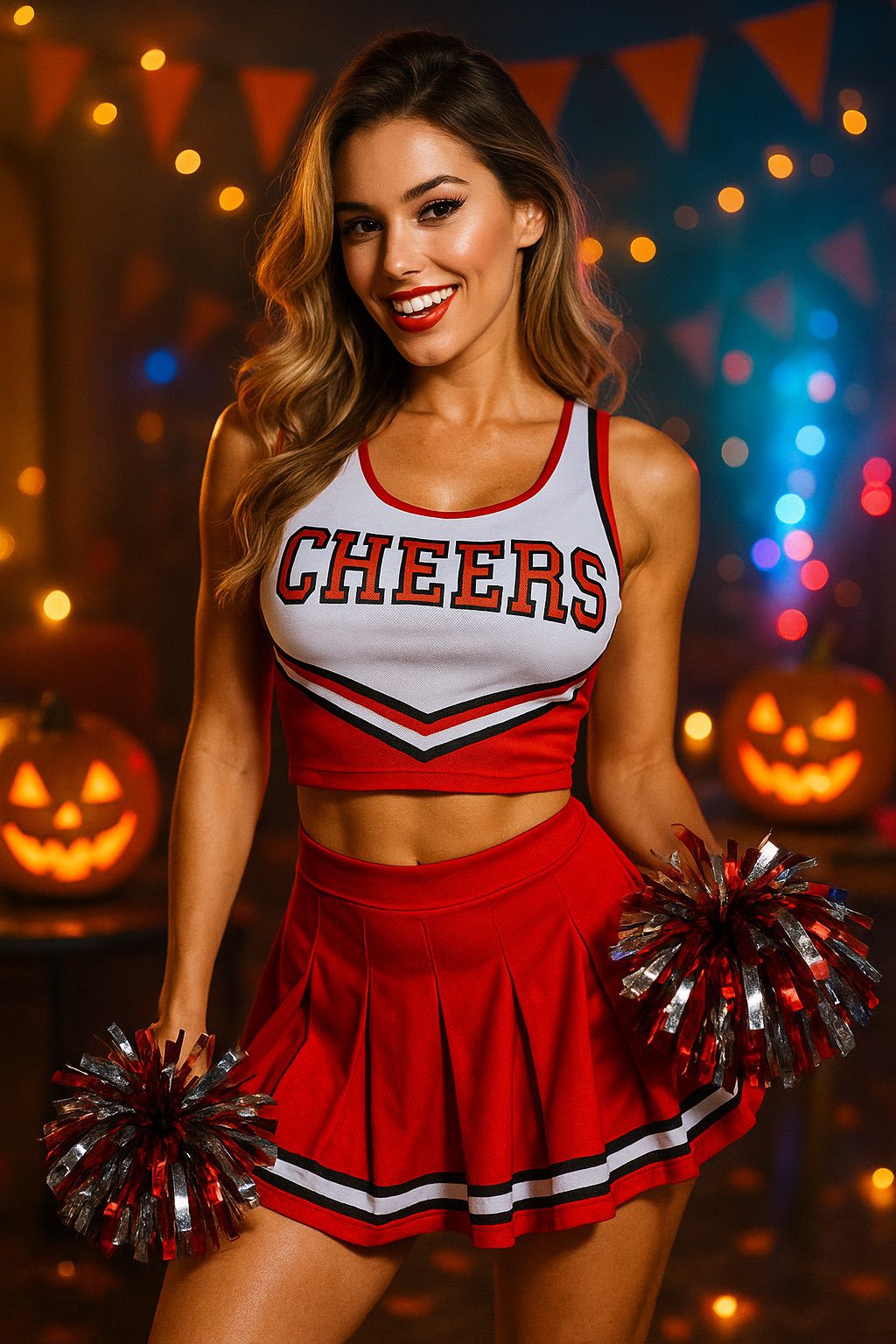
Pep, Power, and Playfulness: Why the Cheerleader Costume Always Wins on Halloween

Dave

Halloween thrives on icons. Every October 31st, the world’s stages—from smoky basements to rooftop bars, from crowded nightclubs to suburban streets filled with trick-or-treaters—transform into theaters of transformation. People become vampires, witches, ghosts, pirates, superheroes, and monsters. But amid the blood, fangs, and cobwebs, one costume consistently jumps higher, smiles brighter, and lands in the spotlight with unapologetic energy: the Cheerleader. With her short pleated skirt bouncing to the rhythm of her stride, pom-poms sparkling in her hands, and charisma radiating with every twirl, she doesn’t just dress up—she electrifies. The Cheerleader is more than just a uniform—she’s a vibe, a viral moment waiting to happen, and a timeless Halloween queen.

The allure of the Cheerleader costume starts with its design. The short pleated skirt, flaring with each playful movement, is iconic in itself. Paired with a fitted top that often bears bold letters or stripes, the look is instantly recognizable, conjuring the high-energy world of pep rallies, halftime shows, and endless chants of “Go! Fight! Win!” The pom-poms complete the look, shimmering like metallic firecrackers in her hands, doubling as both props and accessories. They catch the light on dance floors, they twirl in photos, and they amplify her movements like punctuation marks to her energy. On Halloween night, where costumes compete for attention, the Cheerleader thrives because her look is kinetic—she doesn’t just wear it, she performs it.

But the costume’s power doesn’t lie only in aesthetics—it lies in symbolism. Cheerleaders represent vitality, confidence, and leadership. They are the figures who rally crowds, who turn chaos into unison, who electrify entire stadiums with nothing but spirit and rhythm. On Halloween, that energy translates perfectly. The woman in the Cheerleader costume becomes the life of the party, the one who doesn’t just participate but ignites. She’s the spark on the dance floor, the one leading chants, the one laughing the loudest and posing the boldest. The costume doesn’t just tell people what she is—it tells people what she’ll do: command attention, inspire fun, and keep the energy soaring all night long.

The Cheerleader costume is viral gold because of its roleplay potential. Every prop, every piece, every detail invites performance. With pom-poms in hand, she can dance, jump, spin, and cheer on cue. The skirt flares with movement, making even the simplest gesture photogenic. The costume encourages choreography, whether rehearsed or improvised, creating natural moments of spectacle that beg to be filmed, shared, and posted. TikTok loves her for transitions—normal one second, high-energy Cheer Queen the next. Instagram adores her for her aesthetic—pleats catching neon lights, pom-poms reflecting strobe beams, hair bouncing in perfect sync. On X, she trends because she embodies nostalgia, humor, and allure all in one package. People can’t resist sharing her, because she doesn’t just stand out—she entertains.

Another reason the Cheerleader thrives is adaptability. The base of the costume is iconic, but the variations are endless. Some go classic, with school colors, varsity stripes, and ponytails tied in ribbons. Others glam it up, with sequined skirts, rhinestone tops, and glitter pom-poms that sparkle like fireworks. Some lean comedic, parodying the archetype with oversized props or exaggerated chants. Others lean sultry, pairing fishnets, boots, or crop tops with the classic pleats. She can be styled as sweet and bubbly, as edgy and rebellious, as dark and gothic. Every wearer brings her own twist, and every twist keeps the costume alive, fresh, and viral.

The humanizing element is what seals the Cheerleader’s crown. Unlike costumes rooted in fantasy or horror, the Cheerleader connects to lived experience. Everyone remembers cheerleaders from high school or college, whether as friends, crushes, rivals, or teammates. That familiarity makes the costume instantly relatable—it carries nostalgia, recognition, and cultural weight. But on Halloween, that familiarity is reborn with a twist. She’s not the same Cheerleader from gym class—she’s bolder, freer, unleashed. She’s taken the uniform and made it her own, transforming it from symbol of school spirit into symbol of personal power. That reclamation resonates, because it reflects the truth of Halloween itself: we take roles, tropes, and icons, and we twist them into something new, something unforgettable.

And then there’s the confidence. The Cheerleader costume isn’t about hiding—it’s about showing. It’s about celebrating the body, the energy, the charisma of the person inside it. It’s about embracing playfulness without apology, strutting with spirit, laughing loudly, dancing wildly. For the person wearing it, the costume becomes a declaration: I’m here, I’m bold, I’m fun, and you’re going to remember me. That confidence is magnetic, sparking admiration and envy in equal measure. People don’t just see the Cheerleader—they gravitate to her, drawn by the energy she radiates.

Halloween is about transformation, and the Cheerleader transforms every space she enters. She turns dance floors into stadiums, conversations into chants, rooms into arenas of laughter and fun. She isn’t just part of the party—she leads it. And when the night is over and the feeds fill with posts, hers are the images and videos that go viral. Hers are the moves that trend, the chants that become memes, the smiles that stay lodged in memory.

So when the music thunders and the lights flash, watch who takes center stage. She’ll be the one with pom-poms in hand, skirt twirling in the air, grin wide enough to light the room. She won’t just join the energy—she’ll multiply it. That’s the Cheerleader. That’s the viral queen of Halloween. And that’s why, year after year, she doesn’t just cheer for the team—she is the team, the leader, the icon, the moment.

Related Posts

Velvet Temptation: Why the Sexy Bunny Still Rules Halloween Nights

Dave

Every October, as the nights grow longer and the world prepares for its biggest masquerade, certain costumes emerge as timeless icons. Vampires stalk in velvet, witches sparkle in sequins, and devils strut in crimson, but one figure hops confidently into the spotlight, year after year, claiming her throne as one of the most enduring and viral costumes of all time. She is the Sexy Bunny—draped in a sleek bodysuit, adorned with playful cuffs, crowned with tall ears, and sealed with a soft little tail that winks at the world from behind. She is equal parts sophistication and seduction, humor and allure, innocence and boldness. She doesn’t need spells or fangs to captivate. With her velvet curves, her pointed ears, and her confident smile, the Sexy Bunny doesn’t just play Halloween—she owns it.

The costume’s power comes from its perfect balance of simplicity and impact. On the surface, it’s minimal: a bodysuit, cuffs, ears, tail. No elaborate props, no complicated makeup, no heavy fabrics. And yet, the effect is undeniable. The bodysuit frames the figure like a canvas, sculpting sleek lines that radiate confidence. The cuffs add just enough sophistication, playful nods to tuxedo elegance. The ears crown her head like a playful secret, a wink that says, I know exactly how much attention I command. And the tail? That’s the punchline, the detail that transforms allure into charm, sultry into playful. Together, these pieces create an image so iconic that it doesn’t need explanation. Everyone knows the Sexy Bunny when they see her, and everyone remembers her long after the night is over.

What makes the Sexy Bunny viral is the roleplay it inspires. Costumes thrive on Halloween not because of fabric, but because of story, and the Bunny carries one of the strongest narratives. She embodies contradiction: refined yet risqué, elegant yet cheeky, powerful yet playful. The woman who dons the costume becomes a character, someone who walks the line between sophistication and seduction, someone who knows how to laugh at herself even as she turns every head in the room. That character is endlessly fun to play, and endlessly fun to watch. On TikTok, she thrives in transformation videos, shifting from casual wear to ears and corset in a snap, the camera zooming as confidence floods the screen. On Instagram, she dominates feeds with full-body portraits that shimmer with charisma. On X, she trends every year as debates reignite: is she playful or powerful, innocent or seductive? The answer, of course, is both—and that ambiguity is what keeps her viral.

The adaptability of the Sexy Bunny is another key to her reign. Some choose the classic look: sleek black bodysuit, cuffs, bow tie, and iconic satin ears. Others glam her up with sequins, rhinestones, or vibrant colors, transforming her into a disco queen. Some lean minimalist, stripping the look down to sleek bodysuit and ears. Others exaggerate it, adding thigh-high boots, fishnets, or elaborate makeup. She can be styled vintage, like a pin-up pulled from the golden age of glamour, or modern, like a neon-lit goddess from a cyber club. The Sexy Bunny costume thrives because it’s endlessly customizable, always fresh, always relevant, yet always recognizable. No matter how it evolves, it always carries the same DNA: confidence, playfulness, and undeniable allure.

But beneath the sequins and satin lies something deeply human. The Sexy Bunny endures because she speaks to empowerment. She’s not about hiding—she’s about celebrating. She’s about stepping into a costume that doesn’t just look good but makes the wearer feel bold, radiant, and unapologetic. Halloween is the one night of the year where we can transform, where we can step into roles that amplify hidden parts of ourselves. For many women, the Bunny is that amplifier, the costume that says: I can be smart and sexy, funny and powerful, playful and confident—all at once. That empowerment radiates outward, charging every room, sparking admiration and laughter, inspiring envy and delight. The costume becomes more than fabric—it becomes a performance of self-confidence.

On social media, that confidence translates perfectly into content. The sleek lines of the bodysuit, the playful wiggle of the tail, the smirk framed by ears—all of it photographs beautifully, designed for virality. On TikTok, the Bunny thrives in lip-syncs, winks, and dances, hopping between humor and allure. On Instagram, she dominates in carousels—close-ups of makeup, playful ear adjustments, full-length portraits under neon lights. On X, she becomes a cultural talking point, sparking memes, jokes, and endless reposts. The Bunny is evergreen content, a costume that never fades because it’s always fresh, always fun, always memorable.

Halloween is about transformation, and the Sexy Bunny transforms the ordinary into extraordinary. She takes simple fabrics and accessories and turns them into an experience. She takes the playful innocence of an animal and fuses it with the boldness of glamour, creating something both familiar and surprising. She turns a person into a performance, a costume into a character, a night into a spectacle. And that’s why, year after year, she isn’t just present at the party—she defines it.

So when the music pulses and the strobe lights flicker, look around the room. Notice who commands attention without needing to shout. Notice who people are gravitating toward, who they’re laughing with, who they’re taking photos of, who they’re posting about online the next day. It will be the one in velvet, cuffs glimmering, ears standing tall, tail perched with perfection. That’s the Sexy Bunny. That’s the queen of playful contradiction. And that’s why, long after Halloween is over, she’ll still be hopping through feeds, trending across platforms, and living rent-free in memory.

Because the truth is simple: the Sexy Bunny doesn’t just wear a costume—she wears confidence. She doesn’t just play Halloween—she owns it. She doesn’t just attract attention—she deserves it. And that’s why she’ll always reign, golden tail and all, as one of the most viral icons of October 31st.

Related Posts

Golden Legacy: Why the Cleopatra Queen Reigns Over Every Halloween

Dave

Every October, when costumes flood the streets, bars, and parties of the world, certain archetypes rise above the rest. Vampires stalk in velvet and fangs. Witches glide in black silk with broomsticks in hand. Devils sparkle in red sequins and horns. Yet among all the monsters, seductresses, and rebels of the night, there is one figure who doesn’t need claws, wings, or spells to command attention. She simply needs a golden dress, a snake armband coiled like power on her arm, and a headpiece that gleams like the desert sun. She is Cleopatra, Queen of the Nile—the woman who, more than two thousand years after her reign, still owns any room, any stage, any Halloween night she chooses to enter.

The Cleopatra Queen costume endures because it blends history with fantasy. Cleopatra herself was a figure of myth and reality, power and beauty, intellect and seduction. Historians remember her as one of the most cunning rulers of ancient Egypt, a woman fluent in politics, economics, and languages, who dared to challenge Rome’s supremacy. Pop culture, however, immortalized her as a seductress, a queen who ensnared Julius Caesar and Mark Antony with her allure. The truth lies somewhere in the middle—but that duality is exactly what makes her perfect for Halloween. She’s both real and legendary, both political and passionate, both goddess and human. Wearing Cleopatra isn’t just about looking glamorous—it’s about embodying a role that has commanded fascination for millennia.

Visually, the Cleopatra Queen costume is pure spectacle. The gold dress is the foundation, shimmering under any light like the sands of the Nile at sunset. Its fabric clings, flows, and dazzles, sculpting the body into a figure of undeniable regality. The snake armband is the perfect detail, a coil of power and symbolism—snakes represented royalty, divinity, and immortality in Egyptian culture. Worn on the upper arm, it signals authority, danger, and sensuality. And the headpiece? That’s her crown, her unmistakable signature. Whether a cobra diadem, a bejeweled circlet, or a golden band across the forehead, it frames her like a living goddess, marking her not just as beautiful, but as divine. No matter how crowded the room is, Cleopatra’s costume gleams like a beacon—every eye finds her, every camera captures her, every post featuring her goes viral.

But Cleopatra’s power isn’t just in the costume—it’s in the performance it inspires. Costumes that thrive on Halloween are the ones that allow for character, and Cleopatra is a role ready to be played. The tilt of her chin, the smolder of her eyes, the deliberate grace of her walk—all become tools of her seduction. She doesn’t need to shriek or scare. She doesn’t even need to speak. Her presence alone is enough to make people hush, to turn heads, to create an aura of awe. At parties, the Cleopatra Queen doesn’t fade into the crowd—she rules it, as if every dance floor is her throne room and every guest her subject. And online, her presence transforms into content that feels mythic: slow-motion spins of her golden gown, close-ups of eyeliner sharp enough to cut, captions declaring her “Queen of Halloween.”

Adaptability also explains why Cleopatra’s look has remained one of the most popular Halloween costumes for decades. Some lean into historical authenticity, with linen gowns, intricate beaded collars, and cobra headpieces straight out of ancient reliefs. Others glam her up with sequins, stilettos, and plunging necklines that modernize her allure. Some reinterpret her as dark and gothic, adding shadowy tones and venomous accents. Others reimagine her as futuristic, a Cleopatra reborn for a cyberpunk age, draped in metallics and LED jewels. No matter the spin, the core essence remains: Cleopatra is power, Cleopatra is beauty, Cleopatra is eternal. That flexibility ensures that she never feels stale—she always returns, always reinvents, always reigns.

The humanizing part of Cleopatra’s costume is what makes it more than just dress-up. Cleopatra, the historical figure, was complicated. She was brilliant and strategic, but also vulnerable. She lived in a world that constantly sought to diminish women, yet she carved out her legacy in stone. She’s remembered as both seductress and stateswoman, sinner and saint, goddess and mortal. That messy duality resonates with us today because we all know what it feels like to be underestimated, to be judged, to be told we’re too much of one thing and not enough of another. When someone wears Cleopatra, they’re not just wearing gold—they’re embodying that defiance. They’re saying: I contain multitudes, I can be soft and fierce, I can be beautiful and brilliant, and I will not apologize for any of it. That’s why the costume isn’t just glamorous—it’s empowering.

And on social media, Cleopatra is viral gold. Instagram feeds light up with golden shimmer when she appears, her eyeliner wings cutting sharper than any vampire fang, her poses regal enough to rival influencers and models. On TikTok, Cleopatra transitions thrive: one moment barefaced, the next moment crowned in gold, draped in sequins, staring down the camera like a goddess. On X, she trends because she isn’t just another character—she’s an icon, a cultural touchstone that everyone instantly recognizes. Cleopatra’s hashtag fills with queens of all shapes, shades, and sizes, each one taking her legacy and making it their own. And that universality, that ability to connect across generations and cultures, is what cements her as a viral staple.

Halloween is about transformation, and Cleopatra’s story is one of eternal transformation. She has been remembered, reimagined, and reborn countless times across history: in Shakespeare’s words, in Elizabeth Taylor’s eyes, in the costumes of women at Halloween parties around the globe. She proves that icons never die—they simply take new forms, shimmering in new fabrics, glowing under new lights. Every Cleopatra costume is part of that ongoing story, another chapter in the Queen’s endless reign.

So when the Halloween party reaches its peak, when the music pounds and the lights flash, watch who stands at the center. She’ll be the one in gold, snake coiled around her arm, headpiece gleaming as if it were forged by the gods themselves. She won’t need to fight for attention—it will already be hers. People will approach her, drawn like moths to flame, eager to bask in her glow. Phones will rise, flashes will pop, feeds will flood. And when the night ends and the costumes are packed away, her image will linger, her posts will spread, her reign will continue. Because Cleopatra is not just a queen of the Nile—she’s the queen of Halloween.

Related Posts

Commanding the Carnival: Why the Ringmaster Seductress Steals the Halloween Spotlight

Dave

Halloween thrives on spectacle, and no costume delivers a spectacle quite like the Ringmaster Seductress. With her tailored mini jacket lined with gold trim, a corset that cinches like a promise of danger and delight, stockings that gleam in the glow of neon lights, and a top hat perched at a mischievous angle, she doesn’t just walk into a party—she commands it. She’s not just another guest in the crowd—she’s the one with the whip in hand, the spotlight at her back, and the confidence of someone who knows she’s running the entire show. The Ringmaster Seductress isn’t here to blend in; she’s here to captivate, to orchestrate, to dominate. And that’s why she’s one of the most viral, magnetic, and unforgettable Halloween costumes of all time.

The reason this look resonates so strongly is that it plays on power. Most Halloween costumes lean toward fantasy, fright, or flirtation—but the Ringmaster Seductress embodies authority. She isn’t pretending to be scary like a zombie or supernatural like a witch. Instead, she is rooted in a role we instantly recognize: the master of ceremonies, the leader of the circus, the one who controls the chaos. But when that role is reimagined with a seductive twist—mini jackets instead of full-length coats, corsets instead of waistcoats, stockings instead of trousers—it transforms into something irresistible. The result is a blend of dominance and allure that few costumes can match. People aren’t just looking at her—they’re responding to her command.

Visually, the Ringmaster Seductress thrives because she’s theatrical. The mini jacket, often red with gold detailing, pops instantly in photos. The corset, laced tightly, creates a silhouette that demands attention. The top hat, dramatic and tall, frames her like a crown, while thigh-high boots or stockings add just enough edge to balance the elegance. The whip or cane is the perfect prop, tying the whole aesthetic together as a symbol of both play and authority. Under the flashing lights of a party, the metallic trim on her outfit glitters, the corset gleams, and every movement feels choreographed—like she’s orchestrating the entire room. On Instagram, she dominates feeds because her costume looks like it belongs on a movie poster. On TikTok, transitions thrive on her performance potential—normal one second, whip-cracking goddess the next. And on X, she trends because she embodies the kind of energy people can’t resist talking about: commanding, sexy, unforgettable.

But the costume isn’t just about spectacle—it’s about roleplay. The woman who wears the Ringmaster Seductress costume isn’t just dressed up—she’s performing. Every gesture becomes part of the show. A smirk beneath the top hat? A cue for applause. A snap of the whip? A declaration of authority. A slow turn in her corset and stockings? A reminder that she’s not just running the circus—she is the circus. And that performance is what makes her magnetic. People can’t help but interact with her, can’t help but watch, can’t help but become part of the spectacle she’s orchestrating. She doesn’t just wear the costume—she embodies the persona, and that’s what sets her apart.

Part of her viral power also lies in adaptability. Some Ringmaster Seductresses lean traditional, sticking with the classic red-and-gold palette and whip accessory. Others glam it up, with sequins, rhinestones, and dramatic makeup that turns her into a carnival queen. Some lean gothic, turning the jacket black and trimming it with silver, pairing it with dark lipstick and smoky eyes. Others go playful, using candy-striped stockings, oversized props, or comedic timing to spin her into a parody. Each variation still reads as “ringmaster,” but each one feels fresh, unique, and personal. That adaptability ensures the costume never feels stale—it grows, evolves, and reinvents itself with every Halloween season.

The humanizing element here is essential. The Ringmaster Seductress costume is about more than just looking good—it’s about confidence. For the woman wearing it, it’s not just an outfit—it’s a declaration of presence. It says: I am here, I am bold, I am in charge, and you’re going to remember me. That kind of confidence is magnetic in any setting, but on Halloween, when people are searching for connection, laughter, and energy, it becomes unstoppable. The costume gives permission to step into a role of authority and charisma, to play a character that doesn’t just participate in the party, but directs it. That empowerment radiates, sparking admiration, conversation, and yes—virality.

Halloween is about transformation, and the Ringmaster Seductress is the purest embodiment of that idea. She takes the chaos of the night and organizes it into spectacle. She takes the flirtation of a costume and wraps it in authority. She takes the energy of the crowd and amplifies it until the room feels like a carnival. She doesn’t fade into the background—she is the background, the foreground, the center stage. She’s the one pulling the strings, cracking the whip, and keeping the spotlight where it belongs—on her.

And that’s why, year after year, the Ringmaster Seductress continues to dominate Halloween culture. Because she isn’t just sexy—she’s commanding. She isn’t just commanding—she’s theatrical. And she isn’t just theatrical—she’s unforgettable.

So when the Halloween lights glow and the music pounds, look for the woman in the red jacket, corset cinched, whip in hand, top hat tilted just so. Notice how the crowd gravitates toward her, how phones rise to capture her every pose, how laughter and applause follow wherever she walks. That’s the Ringmaster Seductress. That’s the carnival’s queen. And that’s why she doesn’t just attend Halloween—she runs it.

Related Posts

Electric Allure: Why the Sexy Bride of Frankenstein Is Halloween’s Timeless Temptress

Dave

When the lightning cracks across the October sky and the world leans into the eerie thrill of Halloween, certain figures crawl, slither, and storm their way into parties, streets, and social feeds. Among the vampires with blood-red lips, the witches in pointy hats, and the zombies smeared in gore, one particular icon continues to hold her electrifying grip on Halloween culture: the Sexy Bride of Frankenstein. She isn’t just stitched together from fabric and imagination—she is stitched into the DNA of Halloween itself. With her corset dress hugging every curve, her teased black-and-white hair rising like a storm cloud, and her aura radiating both gothic glamour and irresistible temptation, the Sexy Bride of Frankenstein is more than a costume. She’s a phenomenon, a timeless blend of classic horror and modern allure that keeps going viral year after year.

Why does she endure? Why does she continue to be one of the most recognizable and coveted Halloween looks, long after her 1935 cinematic debut in Bride of Frankenstein? The answer lies in her perfect contradiction. The Bride of Frankenstein was born out of horror, a patchwork creation, a woman brought to life by science and stitched with destiny. Yet over the decades, she has transcended that narrative, transforming from monster bride to a symbol of gothic femininity, power, and sensual rebellion. The Sexy Bride of Frankenstein costume takes that foundation and reimagines it for today’s audiences, blending corsets, lace, fishnets, and teased hair into a look that is both terrifying and tantalizing. She is the storm made flesh, the lightning given curves, the monster turned muse.

Visually, the Sexy Bride of Frankenstein thrives because she owns the drama. The teased hair is her crown, bold and unmistakable with its streaks of white slicing through black like jagged bolts of lightning. That silhouette alone is iconic, instantly recognizable even across a crowded Halloween bash. The corset dress is her weapon of seduction, cinching the waist, flaunting the figure, turning horror into haute couture. Add in gothic makeup—dark lips, smoky eyes, and pale skin kissed by dramatic contour—and she transforms into a goddess of both horror and desire. The stitched details, whether painted across the skin or sewn into the fabric, serve as reminders of her origin, grounding the sex appeal in the story of her birth. The result is magnetic: every photograph becomes a poster, every glance becomes a spark, every step radiates with the energy of a thunderstorm.

But beyond the visuals, the Sexy Bride of Frankenstein captures imaginations because she tells a story. Costumes that go viral aren’t just looks—they’re narratives. The Bride’s story is one of creation, rebellion, and identity. She wasn’t born naturally—she was made. She didn’t choose her role—she was forced into it. Yet she radiates independence, rejecting her creator and forging her own path. That defiance resonates deeply with modern audiences. When someone dons the corset and teases their hair into an electrified crown, they aren’t just playing dress-up—they’re embodying that rebellion. They’re saying: I am stitched together, I am flawed, I am fierce, and I am still unforgettable. That energy doesn’t just captivate a room—it dominates it.

The Sexy Bride of Frankenstein also thrives because she’s endlessly adaptable. Some interpretations lean toward classic horror, keeping the makeup pale and severe, with stitches drawn boldly across the skin. Others glam her up with sequins, rhinestones, and lace, turning her into a gothic runway queen. Some mix in humor, exaggerating her hair into cartoonish heights or pairing the corset with over-the-top props. Others lean sultry, with fishnet stockings, thigh-high boots, and lace gloves that make her more siren than monster. Each variation still screams “Bride of Frankenstein,” but each one adds a personal twist, keeping her fresh, relevant, and viral in every generation.

On social media, the Sexy Bride of Frankenstein is a content goldmine. TikTok adores her for transformation videos—one moment a normal girl in sweats, the next moment a storm-struck goddess with teased hair, corset cinched, and lightning effects flashing across the screen. Instagram thrives on her aesthetic—moody portraits in graveyards, glittering selfies at parties, bold makeup tutorials that teach fans how to recreate the stitched look. On X, she trends as a cultural staple, with people debating their favorite takes, sharing viral memes, or reposting jaw-dropping photos from parties and red carpets. She isn’t just a costume—she’s a platform for creativity, a muse for performance, and a catalyst for content that spreads like wildfire every October.

What makes her human, though, is her relatability. The Sexy Bride of Frankenstein is, at her core, about imperfection turned into power. She’s stitched together, flawed, and born of chaos—but she makes it work. That resonates with anyone who has ever felt messy, complicated, or pieced together by circumstance. Wearing her costume isn’t just about flaunting beauty—it’s about embracing imperfection and owning it with confidence. That’s why she inspires not just admiration, but connection. People see her and think, that’s me: imperfect, chaotic, but still electric. That relatability is what elevates her beyond mere sex appeal into something truly viral.

And then there’s the empowerment. The Sexy Bride of Frankenstein costume isn’t just about being looked at—it’s about taking control of the gaze. The woman who wears it commands attention, not as a passive object, but as a force of nature. She isn’t waiting to be chosen or defined—she defines herself. That empowerment is intoxicating, both for the wearer and for everyone around her. She doesn’t apologize for being dramatic, bold, or sexy—she revels in it. And that revelry becomes contagious, electrifying the entire room like the crackle of a storm.

Halloween is about transformation, and no costume captures transformation quite like the Bride of Frankenstein. She was transformed by lightning, transformed by science, transformed by story. And every Halloween, she is transformed again—by the women who choose to embody her, to reinterpret her, to breathe life into her legacy. She is proof that some monsters never fade, that some icons are eternal, that some figures will always rise again, electrified by the season.

So when the Halloween party is in full swing, when the lights flash like lightning and the bass rumbles like thunder, watch who commands the room. It will be the woman in the corset dress, hair teased sky-high, lips painted dark, with stitches snaking across her skin and a smirk that says she knows exactly how much power she wields. That’s the Sexy Bride of Frankenstein. That’s Halloween’s electrifying queen. And that’s why, year after year, she doesn’t just survive—she thrives, stitched into our collective imagination, as timeless as the storm itself.

Related Posts

Undead Allure: Why the Zombie Babe Reigns Supreme on Halloween

Dave

Halloween has always been about the collision of opposites—life and death, fear and fun, beauty and horror. Few costumes embody that fusion as perfectly as the Zombie Babe, a look that combines the sultry with the sinister, the glamorous with the grotesque. Dressed in ripped fishnets that cling like remnants of a former life, blood effects smeared across skin like crimson art, and makeup that blends smoky eyes with a deathly pallor, the Zombie Babe doesn’t just walk into a Halloween party—she lurches in, owning the room with equal parts menace and magnetism. She is proof that even the undead can be irresistible, that horror and hotness can share the same coffin, and that Halloween thrives on the thrill of contradictions.

What makes the Zombie Babe such a viral powerhouse is the way she subverts expectations. Zombies are usually depicted as mindless, shambling corpses, all rot and ruin. But the Zombie Babe flips that stereotype on its head. She’s undead, yes, but she’s confident. She’s bloodied, but she’s beautiful. She embodies survival and sensuality all at once, her costume a testament to both destruction and desire. That contradiction catches attention instantly because it forces people to reconcile two things they don’t normally imagine together. It shocks, it intrigues, and it seduces, all at once. And in the age of social media, those are the exact ingredients for virality.

Visually, the Zombie Babe is stunning because she thrives on extremes. The ripped fishnets scream rebellion, their jagged edges framing legs like art torn from the apocalypse. The fake blood—dripping, smudged, or splattered—adds chaos, a sense of carnage written directly on the body. And the makeup? That’s where the real magic happens. Dark eyes, exaggerated lashes, smeared lipstick like a kiss gone wrong, and pale foundation that makes every contour pop. Add in cuts painted on with stage makeup, or even prosthetic scars, and the look transcends mere costume into cinematic spectacle. Under the flashing lights of a party, the blood glows red, the fishnets catch shadows, and every movement looks like a scene from a horror-thriller infused with glamour.

But the Zombie Babe isn’t just about looks—it’s about performance. She doesn’t just pose—she acts. She staggers dramatically, then breaks into a sultry strut. She bares her teeth in a mock snarl, then winks with smoky eyes. She drips menace, but also laughter. That interplay of horror and humor makes her magnetic. People at parties flock to her because she’s fun, she’s interactive, she’s larger than life. And online, videos of Zombie Babes dancing, snarling, or “attacking” friends rack up views because they’re both creepy and hilarious. The duality creates entertainment, and entertainment creates shares, likes, and virality.

Adaptability also explains why the Zombie Babe remains evergreen. Some play her straight horror, with decayed makeup, dangling wounds, and grisly prosthetics that push the gore factor sky-high. Others lean more playful, adding glitter to blood, rhinestones around scars, or neon contacts that glow under blacklight. Some keep it simple—just ripped fishnets, pale skin, and a smear of red lipstick angled into a grin that says, I may be dead, but I still slay. The point is, no matter how she’s styled, she’s always recognizable, always engaging, and always unforgettable.

The human element makes the Zombie Babe even more powerful. At her core, she’s not just about gore or sex appeal—she’s about resilience. She’s the image of someone who refuses to fade away, who takes destruction and turns it into performance. She’s a reminder that even in chaos, beauty can thrive, even in horror, charisma survives. That emotional resonance connects people to her, whether they realize it or not. She’s scary, yes, but she’s also oddly empowering. She proves that you can take ruin and own it, wear it proudly, make it unforgettable.

And in the age of social media, the Zombie Babe costume is pure gold. On TikTok, she dominates transformation videos—normal one moment, covered in blood and ripped fishnets the next, music thrumming with bass as the camera zooms in on sultry eyes. On Instagram, her aesthetic is perfectly tailored for carousels: close-ups of makeup artistry, full-body shots of fishnet chaos, candids of her laughing with blood streaked across her cheeks. On X, she trends because she’s the perfect mix of scary and sexy, sparking debates, admiration, and endless retweets. She isn’t just a costume—she’s a content machine, designed for virality.

Halloween is about reinvention, and the Zombie Babe delivers that in spades. She takes the idea of decay and transforms it into style, turning wounds into art and ruin into allure. She doesn’t just join the party—she owns it, leaving a trail of bloody footprints and unforgettable moments in her wake. And when the night is over and the costumes are put away, hers is the one people talk about, the one they post about, the one that lingers in memory like a haunting melody.

So when you see her this October 31st, standing under the strobe lights with fishnets ripped, makeup smeared, and a grin that’s equal parts hunger and charm, don’t be surprised when the crowd gravitates toward her. Don’t be surprised when phones rise to capture her every move. And don’t be surprised when, the next morning, her image floods your feed with captions like: Brains never looked this good. That’s the Zombie Babe. That’s the queen of the undead. And that’s why she doesn’t just survive Halloween—she defines it.

Related Posts

Heaven and Hell in One: Why the Angel & Devil Combo Owns Halloween

Dave

Halloween is a holiday built on duality—trick and treat, fear and fun, light and darkness. No costume captures that balance better than the Angel & Devil combo. Imagine a split look: one half glowing white with feathers, halos, and innocence; the other blazing red with horns, pitchforks, and fiery temptation. It’s a walking contradiction, a bold mashup of good and evil stitched into one unforgettable outfit. The Angel & Devil Combo isn’t just a costume—it’s a statement about the human experience, the eternal tug-of-war between purity and mischief, restraint and indulgence, order and chaos. And perhaps that’s why this costume goes viral every single year. It isn’t just visually striking—it’s psychologically magnetic. Everyone can relate to it, because everyone has both sides inside them.

From the first glance, the Angel & Devil Combo makes people stop and stare. It’s rare for a costume to tell such a clear story without words, but this one does it instantly. One side is radiant: white dress or bodysuit, soft feathered wings, glowing halo perched above the head. The other side is sizzling: red fabric hugging curves, horns jutting playfully from the hair, a pitchfork angled like a weapon of flirtation. The seam where the two meet is a bold line of contrast, a reminder that this isn’t just a person in costume—it’s an embodiment of the inner battle between virtue and sin. That visual contradiction photographs like a dream, dominating Instagram feeds, TikTok transitions, and X posts with ease. The moment someone poses in this costume, the duality leaps off the screen, practically begging to be shared.

But beyond the visuals, what makes the Angel & Devil Combo so powerful is the roleplay it inspires. Costumes are performances, and this one doubles the script. Wearers can play the sweet angel one moment—gentle smiles, hands folded, wings spread like protection—and then flip into devil mode the next—arched brows, sly smirks, hips cocked with temptation. Every gesture becomes a game of switching sides, of blurring lines, of reminding the world that good and evil aren’t separate—they’re intertwined. And the person in the costume? They aren’t just playing a character—they’re revealing the parts of themselves that usually stay hidden. Because let’s be honest: we all have a halo we polish for the world, and we all have horns we tuck away until the moment calls for them.

The versatility of the Angel & Devil Combo is another reason for its viral staying power. Some go minimalist, with one split dress or jumpsuit, wings on one side, horns on the other. Others go elaborate, hand-sewing sequins into patterns that shimmer differently depending on which half catches the light. Some wear it as a duo costume—one person in all angel, the other in all devil—creating a living yin-yang dynamic at the party. And others play it up for comedy, exaggerating the contrast with oversized halos and cartoonish pitchforks. No matter how it’s styled, it always works, because the concept is so strong it doesn’t need explanation.

What humanizes this costume is its relatability. We don’t wear it just to look good—we wear it because it resonates. Everyone has felt the pull between doing the “right” thing and giving in to mischief. Everyone knows what it’s like to want to appear angelic but feel devilish, or to embrace chaos while keeping a halo tucked away for later. The Angel & Devil Combo is a mirror for that shared humanity, which is why it connects so powerfully. When people see it, they laugh, they nod, they get it. It isn’t just sexy or creative—it’s personal. That’s what makes it linger in memory long after the night ends.

And of course, it thrives on social media. The split design is perfect for TikTok transitions—turning left to show the devil side, turning right to reveal the angel, each set to music that amplifies the vibe. On Instagram, it’s a carousel-worthy costume: first photo angelic, second photo devilish, third photo split down the middle. On X, it sparks debates: “Are you more angel or devil?”—engagement bait that ensures shares and replies. It’s interactive, dynamic, and participatory, which is exactly what makes content spread. Costumes that invite people to play along are the ones that don’t just trend—they explode.

Halloween is about transformation, and the Angel & Devil Combo nails that theme like no other. It allows us to embody two extremes at once, to acknowledge our contradictions, to laugh at them, and to flaunt them. It turns morality into fashion, psychology into performance, philosophy into fun. And maybe that’s why it feels so powerful. Because when you slip into that half-white, half-red costume, you aren’t just dressing up—you’re embodying the truth that humans are messy, contradictory, and complicated. You’re giving permission for both your sides—the halo-polished and the horn-sharp—to exist at once.

So when the party lights flash and the music surges, watch who owns the room. It’ll be the one shimmering in feathers and sequins, smiling with one eye and smirking with the other, halo tilted over horns, wings brushing against a pitchfork. That’s the Angel & Devil Combo. That’s Halloween’s eternal contradiction. And that’s why, year after year, she remains one of the most viral, magnetic, and unforgettable icons of October 31st.

Related Posts

Dewey Decimal Desire: Why the Sexy Librarian Owns Halloween

Dave

There are certain archetypes that never lose their grip on the imagination. The witch, the vampire, the devil—all of them embody primal aspects of fear, rebellion, and temptation. But nestled among them, there’s one costume that doesn’t need blood or fire or darkness to command attention. She doesn’t need wings or fangs or horns. All she needs is a tight pencil skirt, a crisp blouse slightly unbuttoned, glasses perched on her nose, and stockings that hint at much more than modesty. The Sexy Librarian is one of Halloween’s most enduring viral icons because she thrives on contradiction. She takes an image that’s traditionally associated with quiet, rules, and order, and flips it into something daring, playful, and irresistible. She’s not about scaring you—she’s about making you lean in closer, drawn by the promise of knowledge, mystery, and just the right amount of mischief.

What makes the Sexy Librarian so powerful is the tension at the heart of the look. Librarians in our cultural imagination are figures of control: shushing voices, organizing chaos, maintaining order. They are the guardians of silence and discipline, the keepers of dusty tomes, and the overseers of rules. But Halloween is about rebellion. It’s about breaking free from rules, subverting expectations, and turning the ordinary upside down. The Sexy Librarian costume takes the idea of control and transforms it into temptation. The pencil skirt, usually a sign of modesty, suddenly becomes a spotlight for confidence. The glasses, symbols of seriousness, now frame flirtation. The stockings, once formal, now spark curiosity. This costume doesn’t just invite attention—it demands it, all while maintaining a clever wink that says: I know exactly what I’m doing.

Visually, the Sexy Librarian is designed for impact. The pencil skirt creates clean lines, accentuating curves with elegance and confidence. Paired with stockings, the look instantly blends sophistication with allure. The blouse, often white or cream, provides a canvas that can be styled modestly with a bow or unbuttoned just enough to suggest rebellion beneath the surface. And then there are the glasses—arguably the most powerful accessory in the entire look. They frame the face, sharpen the eyes, and create that unmistakable air of authority, even as they slide down the bridge of the nose with a mischievous smirk. It’s a costume made for performance, for adjusting glasses while raising an eyebrow, for tapping a ruler on a desk, for leaning forward as though grading more than papers. The details matter because they transform a simple outfit into an entire character.

The Sexy Librarian thrives in photos and videos because she’s not static—she’s interactive. Her props practically beg to be used: books stacked as flirtatious accessories, rulers wielded like playful tools, glasses that can be slid on and off with a smirk. Every gesture becomes an invitation, every pose a performance. On Instagram, the clean lines of the skirt and blouse pop against chaotic Halloween backdrops of cobwebs and neon. On TikTok, she’s the perfect subject for transformations—hair tied up into a bun, glasses perched firmly, then one snap and the bun drops, glasses slide down, blouse loosens, and suddenly the “strict librarian” becomes the “seductive librarian.” On X, she trends year after year because the internet cannot resist debating, sharing, and admiring the contradiction at the heart of the look. She’s not scary, but she’s unforgettable. She doesn’t hide in the shadows—she controls the spotlight.

Part of what makes her viral is how easy she is to adapt. Some Sexy Librarians keep the look classic—tight skirt, stockings, blouse, glasses, and maybe a stack of books. Others modernize it, adding leather skirts, bold lipstick, and heels that click with authority. Some lean into humor, carrying oversized glasses or giant novelty books as a parody of the trope. Others lean full-on sultry, with sheer stockings, fitted corsets, or plunging blouses that redefine what “library quiet” really means. That adaptability ensures that the costume never goes stale. Like the ever-expanding stacks of a library, the Sexy Librarian has endless interpretations, each one reflecting the personality of the woman wearing it.

But the reason she resonates isn’t just about looks—it’s about energy. The Sexy Librarian embodies confidence in a way that feels human and relatable. She’s not just showing skin—she’s showing control. She’s showing wit. She’s showing playfulness wrapped in sophistication. There’s something empowering about taking an image of strictness and formality and turning it into something unapologetically bold. For the woman wearing it, the costume becomes a declaration: I can be smart, I can be sexy, I can be both—and I’m going to have fun proving it. That empowerment doesn’t just stay with her—it radiates outward, filling the room with a charge that everyone feels. That’s why she dominates Halloween not just in person but online, because people don’t just admire the costume—they admire the confidence behind it.

Halloween is about transformation, and the Sexy Librarian is one of the purest forms of that idea. She takes a role rooted in rules and flips it into rebellion. She transforms silence into laughter, order into flirtation, modesty into mischief. She reminds everyone that the people who seem the most reserved often have the boldest sides waiting just beneath the surface. And that reminder is powerful, because it reflects something true about all of us: we all have contradictions, we all have hidden sides, we all crave moments when we can break free of expectations and reveal a version of ourselves that surprises the world.

That’s why the Sexy Librarian continues to trend year after year. She’s more than a costume—she’s an archetype of transformation, empowerment, and fun. She doesn’t rely on gore or gimmicks. She doesn’t need elaborate props or cinematic makeup. All she needs is a skirt, glasses, stockings, and the kind of charisma that turns heads and sparks conversation. She’s proof that sometimes the most viral costumes aren’t the ones dripping with fake blood or covered in sequins—they’re the ones that flip the script, the ones that subvert expectations, the ones that make people laugh, blush, and remember.

So when Halloween rolls around and the night is alive with monsters, superheroes, and creatures of the night, keep an eye on the room. Watch who everyone is watching, who people can’t resist talking to, who dominates selfies and videos. Chances are, it’s the woman with the books in her hands, the glasses on her nose, the pencil skirt that hugs her stride, and the stockings that say “rules are meant to be broken.” That’s the Sexy Librarian. That’s the viral queen of contradictions. And that’s why, year after year, she doesn’t just check out—she checks in as one of the most unforgettable icons of Halloween.

Related Posts

Tangled in Temptation: Why Poison Ivy Always Blossoms on Halloween

Dave

There are certain costumes that cling to Halloween like ivy to a crumbling brick wall, creeping into every party, dominating every selfie, and staying rooted in the collective imagination long after the candy wrappers have been swept away. At the very top of that list is Poison Ivy, the queen of leafy seduction, the emerald enchantress whose name alone is enough to conjure visions of tangled vines, scarlet hair, and an aura of danger sweetened by temptation. She doesn’t just walk into a Halloween party—she invades it like nature reclaiming concrete, lush, confident, and impossible to ignore. Wrapped in a leafy bodysuit that clings like it was grown for her, vines spiraling around her arms and legs like living jewelry, and hair the color of autumn fire cascading down her back, Poison Ivy is one of the most viral, enduring, and magnetic costumes the season has ever known.

Part of her strength lies in origin. Born in the pages of DC Comics, Poison Ivy began as a villain in Batman’s Gotham City, an eco-terrorist who used plants to bend the world to her will. She wasn’t just another femme fatale—she was something new, something primal. While Catwoman prowled with claws and Harley Quinn twirled bats, Ivy arrived like a storm from the earth itself, armed with pheromones, toxins, and a beauty so sharp it could cut. Over time, she blossomed into more than a villain—she became an icon, a symbol of femininity entwined with danger, of sexuality fused with power, of rebellion cloaked in green. And that duality is exactly what makes her irresistible on Halloween. She’s not just sexy, she’s formidable. Not just pretty, but powerful. When someone dresses as Poison Ivy, they’re not putting on a costume—they’re stepping into the role of a seductress who knows her worth, and dares the world to resist her.

Visually, Poison Ivy is a dream for Halloween. The leafy bodysuit is bold and striking, immediately recognizable even from across a crowded room. Green is not a color that blends—it pops, and when paired with the fiery cascade of red hair, the effect is explosive. Vines curling around limbs add movement and texture, making every pose look alive, as if the costume itself might slither off into the night. And the accessories—the leaf crowns, the glittery makeup, the botanical props—only amplify the aesthetic, creating a look that’s cinematic, viral, and unforgettable. Under neon lights, she glows. In photographs, she dominates. On TikTok, she transforms from everyday wear to leafy goddess in a single snap, a transition that racks up likes and shares because everyone wants to witness the metamorphosis. Poison Ivy isn’t just worn—she’s performed, and performance is what makes costumes legendary.

But Ivy’s viral appeal goes deeper than glitter and vines. It’s rooted in the contradiction she embodies. She’s a villain who fights for something noble: the preservation of nature. She’s seductive but lethal, playful but uncompromising, beautiful but dangerous. That balance of allure and threat is intoxicating. When someone slips into her leafy armor, they’re channeling more than a look—they’re channeling an attitude. The tilt of a smile, the gleam in the eye, the deliberate slowness of a walk across the room—it all becomes part of the performance. And it’s a performance everyone in the room responds to, whether with admiration, envy, or fascination. Ivy doesn’t need to demand attention—she grows into it naturally, like vines climbing a wall, inevitable and unstoppable.

The adaptability of the Poison Ivy costume also explains her longevity in the Halloween spotlight. Some wear her as a classic comic book villain, with a simple bodysuit, vines, and scarlet wig. Others glam her up with sequins, rhinestones, and couture-inspired designs, turning her into a red carpet-ready eco-queen. Some lean into horror, painting their skin green, adding thorns dripping with blood, and turning her into a nightmarish forest witch. Others keep her sleek and sultry, with thigh-high boots, dramatic leaf-shaped corsets, and makeup sharp enough to kill. No matter the variation, she’s always recognizable, always stunning, and always viral. Because Poison Ivy isn’t a trend—she’s an archetype, one that evolves year after year without losing her roots.

Her humanity is part of the secret, too. Poison Ivy resonates because she feels real. Unlike some flawless characters, Ivy is a mess of contradictions—she’s passionate to a fault, loyal yet ruthless, soft yet spiny. She represents the parts of ourselves that are chaotic but purposeful, wild but beautiful. To wear her costume is to embrace that part of yourself, to lean into confidence without apology, to flirt with danger while still glowing with allure. That authenticity shines through the glitter and leaves, making the costume more than just fabric. It becomes a statement: I am powerful, I am playful, I am unforgettable. And people respond to that, both in person and online. It’s why the Poison Ivy look dominates feeds every Halloween, why her hashtag never stops trending, why her image is shared again and again.

Props and staging push the look even further into viral territory. A rose clutched like a dagger, a trail of vines across the dance floor, a backdrop of glowing pumpkins twisted with ivy—the possibilities are endless. Every pose becomes art, every candid becomes content. The costume thrives because it encourages creativity, because every detail adds to the story. Poison Ivy isn’t just a woman in green—she’s a character with lore, with edge, with charisma. That built-in storytelling is what gives her a leg up over generic costumes. She’s not just a look—she’s a vibe, and vibes spread like wildfire in the age of social media.

Halloween is about transformation, and few transformations feel as powerful as Poison Ivy. She takes something as ordinary as leaves and vines and turns it into an emblem of temptation and strength. She transforms vulnerability into power, beauty into weaponry, mythology into reality. For one night, the woman who dons the vines isn’t just playing dress-up—she’s becoming a force of nature. She’s the storm, the temptation, the danger in the room. And when the night ends, when the glitter fades and the leaves are packed away, the memory lingers, because Poison Ivy doesn’t just pass through—she takes root.

So when the next Halloween party rolls around and the music shakes the floor, watch who people can’t stop staring at. Watch who gets pulled into every photo, whose laughter spreads like wildfire, whose image floods the feeds by morning. It’s the one in green, with vines curling like secrets, with hair like fire, with a smile that says she knows exactly how much power she holds. That’s Poison Ivy. That’s the seductress who turns Halloween into her jungle. And that’s why, year after year, she isn’t just another costume—she’s the costume, the viral queen of Halloween.

Related Posts