Category: Holidays

Siren of the Deep: Why the Mermaid Seductress Owns Halloween Nights

Dave

There are costumes that whisper, costumes that tease, and costumes that roar with undeniable presence. Then there’s the Mermaid Seductress, a Halloween look that doesn’t just appear at the party—it washes over it like a tidal wave, glittering, shimmering, and leaving everyone caught in her spell. Dressed in a seashell bra that sparkles under the lights and a glittering tail skirt that clings to her curves like the ocean itself, she is both fantasy and reality, both myth and temptation. The Mermaid Seductress is not some distant fairytale figure; she’s a living embodiment of allure, the siren who walked out of legend and into the heart of every Halloween celebration. And she doesn’t just turn heads—she drowns them in fascination.

The mermaid has always been a symbol of enchantment. In folklore, she’s the siren whose song lures sailors to their doom, the mysterious beauty who lives where the human world cannot reach. In modern pop culture, she’s playful and whimsical, a reminder of childhood tales filled with seashells and sea foam. But the Mermaid Seductress costume takes those threads of myth and modernity and weaves them into something entirely different. She is not just cute or whimsical—she is magnetic. She is the grown-up version of every mermaid fantasy, wrapped in sequins, glitter, and confidence. Halloween thrives on transformation, and slipping into the scales of a Mermaid Seductress is a transformation unlike any other: suddenly, you’re not bound by land or rules—you’re a creature of legend with the power to make anyone stop and stare.

Visually, the Mermaid Seductress thrives because her costume is pure spectacle. The seashell bra glimmers with metallic accents, catching every light in the room, a symbol of both playfulness and temptation. The glitter tail skirt elongates the body, hugging curves while shimmering with each step, giving the illusion of scales alive with magic. Some skirts even flare at the bottom like fins, swishing dramatically with movement, turning the dance floor into an ocean stage. Paired with waves of glitter-dusted hair, iridescent makeup, and maybe a crown of coral or pearls, the look transcends costume—it becomes performance. Every step is a ripple, every laugh a wave, every glance a spell. On Instagram and TikTok, this kind of visual impact is unstoppable: mermaid transformations trend constantly because they are both dazzling and timeless. On Halloween night, the Mermaid Seductress becomes a walking viral moment, effortlessly lighting up feeds with her oceanic glow.

But the magic goes deeper than sequins and glitter. The Mermaid Seductress resonates because she taps into something primal: the allure of the unknown. People have always been fascinated by what lies beneath the waves, by creatures that belong to a world we can’t touch. Mermaids represent mystery, and mystery is inherently seductive. When someone embodies that mystery, adding confidence and charisma to the shimmering scales, the effect is irresistible. It’s not just about looking pretty—it’s about embodying that myth of the siren who can captivate with a glance, who can tempt with a smile, who can own every room as though it were her ocean. That energy is intoxicating, both for the one wearing the costume and for everyone around her.

What makes the costume especially viral is how adaptable it is. Some Mermaid Seductresses go for pastel whimsy, with rainbow tails, soft shells, and a playful innocence that feels like a childhood dream turned real. Others lean into gothic glamour, with black sequined tails, dark makeup, and shells painted blood-red, transforming into sea witches who radiate power and danger. Some go regal, with crowns, flowing capes of iridescent fabric, and shimmering scales painted directly on their skin. Others strip it down, keeping the look sleek and simple with just a bra, tail skirt, and bold glitter makeup. The archetype allows for infinite interpretations, each one personal, each one dazzling, and each one ready to blow up online.

There’s also something deeply humanizing about this costume. The Mermaid Seductress isn’t about hiding—it’s about shining. It’s about letting yourself take up space, sparkle brighter, laugh louder. For the wearer, the costume isn’t just fabric and glitter—it’s confidence woven into every stitch. Putting on that seashell bra and tail skirt is like stepping into another version of yourself, one that’s free, bold, and unapologetically radiant. That confidence doesn’t just stay with the wearer—it radiates outward, catching everyone else in its tide. That’s why people take photos, why they post them, why they share them. The costume itself is beautiful, yes, but the energy behind it—the laughter, the glow, the charisma—is what makes it truly unforgettable.

Of course, the props only amplify the magic. Some Mermaid Seductresses carry glittered tridents or sea-shell scepters, others add glowing jewelry that mimics bioluminescence. Hair can be dyed or sprayed in ocean shades of teal, aqua, or violet. Skin can be painted with scale patterns using stencils and shimmer powder. Every detail adds another layer of fantasy, another reason for the costume to dominate feeds. It’s not just a dress-up moment—it’s a transformation into a character who feels larger than life, a mythical seductress striding through a world that suddenly seems just a little more magical.

And that’s why the Mermaid Seductress keeps making waves, year after year. Some costumes thrive for a season and then fade. Others are locked into cultural references that come and go. But mermaids are eternal. They are rooted in ancient myths, refreshed by pop culture, and reinvented every Halloween. The Sexy Nurse may flirt, the Catwoman may prowl, the Devil Temptress may blaze, but the Mermaid Seductress glows. She brings light into the darkness, sparkle into the shadows, and allure into the night.

So when you’re at the next Halloween party, watch the crowd. Notice who people can’t take their eyes off, who they’re filming on the dance floor, who they’re posting about online. More often than not, it’s the woman shimmering like the ocean, seashells framing her confidence, scales catching the light with every movement. That’s the Mermaid Seductress. That’s the siren who walked out of legend just to make this night unforgettable. And when the party’s over, when the glitter has settled and the photos are scrolling across screens, she’ll still be there—dazzling, timeless, viral.

Because the truth is, the Mermaid Seductress doesn’t just wear a costume—she is the costume. She is temptation made visible, mystery made tangible, confidence made radiant. She is Halloween distilled into sequins and seashells, and that’s why she’ll never sink. She’ll always rise, shimmering, laughing, and making waves wherever she goes.

Related Posts

Cuffed in Charm: Why the Sexy Cop Arrests the Spotlight Every Halloween

Dave

Halloween is a night built on archetypes, but only a handful of those archetypes consistently rise above the rest to become viral sensations. The Sexy Cop is one of them, and for good reason. She’s bold, instantly recognizable, playful, and just risqué enough to spark conversations long after the last jack-o’-lantern goes out. With her short navy or black dress hugging every curve, shiny badge gleaming in the glow of neon lights, hat tipped at a mischievous angle, and cuffs dangling in hand like an invitation and a warning all at once, the Sexy Cop isn’t just another costume—she’s an experience. She doesn’t ask for attention, she arrests it. And every year, at parties, in photos, and across social feeds, she’s proof that authority and allure are a deadly combination.

At the heart of her viral power is contradiction. Cops represent order, discipline, and authority. They’re supposed to maintain control, keep chaos at bay, and embody rules. The Sexy Cop costume flips that entire idea upside down. Instead of enforcing rules, she’s breaking them with a grin. Instead of radiating seriousness, she radiates mischief. Instead of demanding respect through intimidation, she earns admiration through allure. The irony is irresistible: the uniform that usually signals “hands off” becomes one that screams “look closer.” That playful rebellion against authority makes the costume not just sexy, but fun.

Visually, the Sexy Cop thrives in the Halloween ecosystem. The dark dress contrasts beautifully with party backdrops of orange pumpkins, purple strobes, and flashing lights. The shiny badge, handcuffs, and hat add metallic gleams that catch in photos, making the costume sparkle with just enough authenticity to look official, while staying flirty enough to stay unforgettable. The props are part of the magic—the cuffs in particular are iconic, a cheeky accessory that turns every pose into an invitation for laughs or winks. Every candid photo becomes a performance. Every posed selfie becomes a viral moment. She isn’t just wearing an outfit—she’s playing a role, and social media loves roles.

The personality of the Sexy Cop is as crucial as the outfit. She doesn’t slink quietly in the corner—she struts. She laughs. She teases with a “you’re under arrest” line, brandishing cuffs like a toy. She dances with playful authority, commanding the floor not with threats, but with charm. That performance element is what makes her truly viral. People don’t just want to see the Sexy Cop—they want to interact with her. She becomes part of the party, a source of entertainment and conversation, the person everyone gravitates toward. That energy translates online, too. Videos of Sexy Cops go viral because they’re fun, flirty, and just a little outrageous. Photos go viral because they balance recognition with allure, parody with power.

Another layer of her appeal is her versatility. Some Sexy Cop costumes lean heavily into realism, with detailed patches, realistic hats, and utility belts. Others strip it down to the essentials—short dress, hat, cuffs—and call it a night. Some add thigh-high boots or fishnets to up the flirt factor. Others play up humor, carrying oversized props like giant toy batons or novelty tickets that say things like “fine for being too cute.” That adaptability keeps the Sexy Cop fresh year after year, because no two ever look exactly the same. Each wearer brings her own spin, her own sense of fun, her own way of embodying the playful paradox.

And the human side is what seals the deal. The Sexy Cop isn’t about mocking authority—it’s about embracing confidence. It’s about stepping into a role where you get to command attention without apology, to flip seriousness into fun, to embody power in a way that makes people laugh and flirt rather than shrink away. For the person wearing it, the costume is liberating. It’s a chance to play a role of dominance and charisma while still being approachable and playful. That empowerment is infectious, and it’s why the Sexy Cop continues to trend long after newer costumes have come and gone.

The viral factor also comes from the universal recognition of the cop uniform. You don’t have to explain it to anyone—everyone gets it instantly. That instant recognition makes it perfect for quick laughs, quick photos, quick reactions. Pair that with the unexpected sexy twist, and you’ve got a costume that isn’t just memorable—it’s shareable. And in today’s Halloween culture, where costumes live and die by their ability to make an impression online, shareability is everything. The Sexy Cop doesn’t just make an impression—she makes a splash.

So when the party is pumping and the night is alive with monsters, angels, and superheroes, keep your eye on the room. Notice who people are laughing with, who they’re taking pictures of, who they’re tagging online. More often than not, it’s the woman in the navy dress, hat tilted, cuffs in hand, grinning like she just caught you red-handed. That’s the Sexy Cop. That’s Halloween’s playful enforcer. And that’s why, year after year, she doesn’t just attend the party—she runs it.

Related Posts

Bone Deep Beauty: Why the Sultry Skeleton Rules Halloween Night

Dave

Every Halloween, costumes crawl out from the shadows to spook, to seduce, and to entertain. Some are funny, some are terrifying, and some walk the razor’s edge of playful seduction. Among the devils and witches, angels and vampires, one costume has steadily risen into the viral spotlight, both eerie and enticing: the Sultry Skeleton. She wears a form-fitting bodysuit that hugs every curve, painted with glowing bones that transform her into the walking embodiment of life and death entwined. It’s part macabre, part mesmerizing. She is not the skeleton of biology textbooks or horror movies—she is a skeleton made to strut, to pose, to command a room with her spooky allure. The Sultry Skeleton is a paradox brought to life: equal parts fright and flirt, humor and heat, a reminder that even bones can be beautiful.

The skeleton has always been one of Halloween’s oldest symbols. Carved into decorations, dancing in cartoons, rattling in haunted houses, skeletons are shorthand for death and the supernatural. But the Sultry Skeleton takes that centuries-old image and flips it into something modern and magnetic. The bones on her bodysuit may be symbols of mortality, but the way they trace along her curves makes her immortal in memory. It’s the contrast that works so well—the grimness of bones against the vibrancy of a living, laughing, confident woman. That tension between eerie and alluring is exactly why this costume has gone viral year after year.

Visually, the Sultry Skeleton thrives in the age of social media. The form-fitting suit is a canvas of contrast: black fabric for shadows, white or neon bones for light. Under party strobes, the bones glow, creating the illusion of movement, making every dance step or spin a visual spectacle. Add in a skull-inspired makeup look—dark eyes, teeth painted across the lips, maybe a little glitter dusted on the cheekbones—and suddenly the costume is no longer just fabric. It’s a character. It’s art. On Instagram, the stark visuals pop against orange pumpkins and cobweb backdrops. On TikTok, Sultry Skeletons turn their glow into viral dances, each twirl catching the light in ways that feel cinematic. On X, they trend as people can’t help but share the striking images.

But what makes the Sultry Skeleton more than just a cool visual is the personality she carries. She’s bold. She’s playful. She’s confident enough to wear something that on paper sounds scary and make it irresistibly sexy. The woman who wears a Sultry Skeleton costume isn’t hiding behind a mask or a cape—she’s showcasing herself with a wink, reminding the room that even death itself can be made to look enticing when paired with attitude. The costume amplifies charisma, and that’s what makes it unforgettable.

The versatility of the look only adds to its viral power. Some go classic, sticking with white bones on black, channeling a timeless skeleton style. Others go neon, painting their bones in glowing greens, purples, or pinks that make the outfit a walking rave. Some lean into horror, adding fake blood, torn bodysuits, or bone-chilling makeup. Others lean into fashion, pairing the suit with heels, jewelry, and makeup that screams couture runway. No matter the spin, the Sultry Skeleton adapts, making it one of the most universal sexy costumes of Halloween.

The humanizing factor here is undeniable. Skeletons, by nature, are universal—we all have one. The Sultry Skeleton costume takes that universality and flips it into a celebration of individuality. Everyone who wears it brings their own body, their own energy, their own way of making the bones dance. It’s not about being identical—it’s about being unique within a shared framework. That makes the costume relatable, empowering, and endlessly shareable.

And at its heart, the Sultry Skeleton reminds us what Halloween is really about: transformation. It’s about taking something ordinary, even mundane, and turning it into magic. Bones are just bones—until they glow under blacklight, until they frame a confident pose, until they become a viral photo that floods feeds on November 1st. The Sultry Skeleton doesn’t just decorate the night—she defines it. She’s spooky without being scary, sexy without being cliché, playful without being forgettable. That balance is hard to hit, but she nails it bone-deep.

So when the parties rage, the music pulses, and the costumes compete for attention, watch for the Sultry Skeleton. She’ll be the one glowing under the lights, smiling through skull-painted lips, moving like every step is part of a dance only she knows. People will take pictures with her, repost her videos, talk about her the next day. Because she isn’t just wearing a costume—she’s embodying Halloween itself: spooky, sultry, unforgettable.

Related Posts

Mad Love and Mischief: Why Harley Quinn Always Wins Halloween

Dave

If Halloween is a night where fantasy takes the wheel and rules no longer apply, then Harley Quinn is the queen of the carnival. She’s colorful, chaotic, mischievous, sexy, funny, and just dangerous enough to make you wonder if you should step closer or keep your distance. And year after year, from comic book fans to partygoers who just want to stand out, Harley Quinn has become one of the most viral and beloved Halloween costumes in the world. There’s something irresistible about that playful chaos—the mix of danger and fun, innocence and violence, sweetness and sharpness—that makes Harley the ultimate symbol of the holiday spirit. She is, in so many ways, the living embodiment of Halloween: a trick and a treat rolled into one glittering, unpredictable package.

Part of Harley’s viral power comes from her origin story. Born out of the Batman universe, Harley Quinn started as the Joker’s sidekick in “Batman: The Animated Series.” But over time, she became much more—an independent icon with her own voice, her own style, and her own legion of fans. Unlike other characters tied too closely to their villains, Harley grew beyond the Joker, becoming an antiheroine in her own right, celebrated for her chaotic spirit and refusal to conform. That independence translates perfectly into Halloween, a night when people embrace their own chaos and rebellion. Putting on the pigtails, smearing on the lipstick, and grabbing a bat isn’t just cosplay—it’s stepping into the role of a character who laughs at rules and has the time of her life while breaking them.

Visually, Harley Quinn is a dream costume because she’s endlessly recognizable yet wildly adaptable. Her classic look—half red, half black, with a jester’s cap—still appears at parties, especially among die-hard comic fans. But Margot Robbie’s portrayal in Suicide Squad launched the modern Harley into viral superstardom: playful red-and-blue pigtails, “Daddy’s Lil Monster” crop top, fishnet stockings, sequin shorts, and a baseball bat slung over her shoulder. Instantly, Harley became not just a character but an aesthetic, a vibe that radiates fun and flirtation while carrying a dangerous edge. And unlike other costumes that can feel limiting, Harley Quinn encourages personalization. Some Harleys wear roller skates. Some lean goth with darker palettes. Some go glitter-heavy, turning her into a disco queen of chaos. Each iteration still screams Harley, because her essence is more attitude than uniform.

That attitude is what makes her viral gold. Harley Quinn is all about performance—the way she laughs, the way she poses, the way she teases and taunts. Put someone in a Harley costume, and suddenly they aren’t just standing there—they’re acting. They’re swinging bats, blowing kisses, sticking their tongues out, throwing peace signs, and giggling like they’re in on a joke the rest of the world missed. That playful performance energy translates directly to social media. In photos, the colors pop, the makeup stands out, the poses radiate chaos and charm. On TikTok, Harley costumes explode into skits, lip-syncs, and dance videos. On Instagram, she dominates feeds with her striking visuals. On X, she trends because the internet can’t resist a character who embodies both sex appeal and comedy.

The secret sauce of Harley Quinn’s Halloween domination is that she appeals to everyone. She’s sexy enough to draw admiration, funny enough to draw laughter, mischievous enough to spark curiosity, and chaotic enough to keep people on their toes. That combination means the costume never falls flat. A Harley Quinn walks into a party, and she becomes the center of gravity. People want photos with her. People talk about her. People remember her. That’s what makes a costume viral—not just looking good, but creating moments that stick in memory. Harley Quinn is a walking, laughing, teasing moment waiting to happen.

What humanizes Harley, and what makes her so enduring, is her relatability beneath the chaos. She’s not a flawless goddess or an untouchable symbol. She’s messy, emotional, vulnerable, and impulsive. She makes mistakes, she loves too hard, she laughs too loud, she runs headfirst into trouble, and she owns it all. That humanity resonates with people because it feels real. Wearing a Harley Quinn costume isn’t about pretending to be perfect—it’s about embracing imperfection with flair. It’s about saying, “I’m a little wild, a little silly, a little messy, and that’s exactly why I’m fun.” On Halloween, that kind of energy is magnetic.

The costume also carries empowerment. For years, Harley was seen as a sidekick, tied to the Joker’s chaos, defined by her relationship. But as she evolved in comics and films, she broke free, choosing her own path, her own mischief, her own love of mayhem. That journey of independence resonates with people who want to embody strength wrapped in fun. Wearing Harley isn’t just about dressing sexy or funny—it’s about stepping into the shoes of someone who lives unapologetically. Someone who owns her madness and makes it work for her. That empowerment is part of why women in particular flock to the costume—it isn’t just hot, it’s liberating.

And then there’s the fact that Harley Quinn is simply fun. Halloween can sometimes get heavy with the gore, the horror, the competition of one-upping costumes. Harley cuts through all that with laughter. She’s bright in her colors, loud in her energy, playful in her attitude. She makes people smile, and that’s viral power right there. Because at the end of the night, people don’t just remember who had the scariest mask or the most elaborate props—they remember who made them laugh, who brought the party to life. Harley Quinn does that effortlessly.

That’s why, no matter how many years pass, she remains a Halloween juggernaut. Some characters rise, peak, and fade with the times. Harley Quinn only grows. Every year, new twists on her look go viral. Every year, her quotes, her makeup, her antics flood feeds. Every year, she proves that chaos never goes out of style.

So if you’re wondering what to wear this Halloween and you want to guarantee attention, laughter, admiration, and a flood of selfies, the answer might be holding a bat and blowing a kiss. Slip into those pigtails, smudge that eyeliner, throw on that playful grin, and let the mischief loose. Because when Harley Quinn enters the party, she doesn’t just join the fun—she is the fun. And long after the night is over, when the costumes are packed away and the pumpkins are rotting on porches, it’s her laughter, her colors, her energy that people will still be talking about.

That’s the magic of Harley Quinn. That’s why she always wins Halloween.

Related Posts

Glowing All Night: Why the Playful Pumpkin Is Halloween’s Cutest Treat

Dave

Every October, when the air grows crisp and the streets glow with the flicker of jack-o’-lanterns, there’s one costume that embodies the very soul of Halloween with charm, sass, and a splash of cheeky fun—the Playful Pumpkin. Forget the scarecrows with their straw-stuffed faces or the witches with their pointy hats; the pumpkin has always been the true mascot of the season. And when it takes on human form in the shape of a flirty orange mini dress with green accents, it doesn’t just stay in the garden patch—it struts into the party with confidence, laughter, and the kind of glow that no candle could ever rival. The Playful Pumpkin is a costume that celebrates the joy of Halloween, blending festivity with flirtation, tradition with modern style, and innocence with spice. It’s not just a look—it’s a viral phenomenon waiting to happen.

The appeal of the Playful Pumpkin costume starts with its instantly recognizable theme. Pumpkins are everywhere in October: on porches, in pies, on lattes, in decorations, and carved into faces that grin from every window. They symbolize abundance, festivity, and fun. To turn that into a costume is to embrace the heart of the season itself. But the Playful Pumpkin takes things a step further. It doesn’t just stop at being cute—it adds a layer of allure. The mini dress hugs curves while still being whimsical. The bright orange makes the wearer pop in every room, while the green accents—whether as trim, stockings, gloves, or leafy accessories—add just enough playfulness to keep the look fresh. This is not a scary pumpkin, nor a decorative one—it’s a lively, sassy pumpkin who knows how to party.

Visually, the costume is a dream for Halloween photos. The bright orange color practically glows under party lights, creating a natural spotlight effect in every picture. Add in some green accessories—a leafy headband, green gloves, or a vine-like choker—and suddenly the Playful Pumpkin isn’t just recognizable, it’s unforgettable. Every candid laugh and every posed smile radiates energy because the costume itself radiates joy. On Instagram, TikTok, or X, the Playful Pumpkin stands out against the darker tones of devils, vampires, and zombies, offering a burst of color and charm that begs to be shared. Viral moments are about contrast, and nothing contrasts like a bright orange pumpkin in a sea of black costumes.

Part of what makes this costume human and relatable is the way it can be styled to fit different moods. Some go wholesome and cute, adding cartoonish pumpkin face prints to the dress, green-and-orange striped tights, and oversized leafy accessories for a more whimsical vibe. Others lean sultry, keeping the mini dress form-fitting, pairing it with thigh-high boots or heels, and adding bold makeup that says this pumpkin didn’t come to sit on a porch—she came to own the night. Some play up the comedy, carrying around a pumpkin candy bucket or adding puns like “Smashing Pumpkin” as a tongue-in-cheek accessory. That versatility ensures that no two Playful Pumpkins ever look the same, keeping the costume fresh and creative every single year.

Halloween costumes that go viral tend to tell a story, and the Playful Pumpkin tells a story of joy, confidence, and mischief. She’s the girl who lights up the dance floor, who hands out candy with a grin, who makes every selfie look like it belongs on a seasonal greeting card. She isn’t about fear or shock—she’s about fun. That energy is magnetic, pulling people in because it’s warm and inviting. The Playful Pumpkin doesn’t scare you away—she draws you in, makes you laugh, makes you want to join her vibe. That’s the kind of energy that makes a costume memorable, because at the end of the night, people don’t just remember what she wore—they remember how she made the room feel.

And that’s where the humanizing power of the Playful Pumpkin lies. It’s a costume that anyone can wear and make their own, regardless of personality. The shy can use it as an icebreaker, leaning into the cuteness and letting the costume do the talking. The bold can amplify it, adding accessories, sass, and confidence to turn it into a statement piece. It adapts to whoever wears it, becoming a reflection of personality while still staying true to the season’s theme. That adaptability is why it thrives in every party, every feed, every October.

Of course, part of the fun is that pumpkins are universal. They aren’t tied to a specific fandom, movie, or trend. You don’t have to explain the costume to anyone—everyone knows exactly what it is the second they see it. That instant recognition makes it easy to connect with people, easy to share, easy to go viral. And the twist of turning something so wholesome into something cheeky and playful is what elevates it beyond just “cute.” The Playful Pumpkin isn’t trying too hard, and that’s what makes her stand out.

So if you’re looking for a Halloween costume that guarantees laughs, likes, and lasting impressions, the answer might just be in the pumpkin patch. Slip into that orange mini dress, add the leafy green touches, tilt your hat or headband, and step into the night glowing brighter than any jack-o’-lantern. Be the pumpkin that didn’t stay carved on a porch, but came alive to dance, flirt, laugh, and steal the show. Because the truth is, when the night is over and the costumes are packed away, people won’t just remember the vampires or the witches. They’ll remember the burst of orange, the grin framed by green, the pumpkin who lit up the party. They’ll remember the Playful Pumpkin.

That’s the magic. That’s the glow. That’s why the Playful Pumpkin doesn’t just belong in the patch—she belongs in the spotlight.

Related Posts

Wild West Charms: Why the Cowgirl Cutie Always Lassos Halloween

Dave

There’s something about the sound of boots on a wooden floor, the flick of a lasso, the tilt of a cowboy hat, and the unmistakable twang of confidence that makes the Cowgirl Cutie one of Halloween’s most enduring and viral costumes. Every October, amidst the sea of vampires, witches, superheroes, and monsters, there’s always one figure who struts into the room with playful swagger: the girl in denim short shorts, a tied-up plaid top, thigh-high boots or cowgirl kicks, and that perfectly tilted cowboy hat. She’s not just dressed for a costume—she’s dressed to own the party, to steal the spotlight, and to make sure the night ends with people still talking about her playful, flirty, fun energy. The Cowgirl Cutie is more than a look—it’s a vibe, one that balances nostalgia with modern sass, tradition with transformation, innocence with heat.

At its core, the cowgirl aesthetic is about independence. Cowboys and cowgirls have always symbolized freedom, rebellion, and rugged charm. They live outside the rules, chasing horizons, riding into sunsets, and carving their own paths. That archetype already carries magnetic weight. But Halloween gives it a twist. The Cowgirl Cutie takes that independent, rugged spirit and wraps it in flirtation, transforming practicality into provocation. The short shorts aren’t just denim—they’re declarations of confidence, legs for days on proud display. The plaid top, tied at the waist, is both iconic and irreverent, turning farmyard tradition into nightclub temptation. And the cowboy hat? That’s the crown, the piece that says: I’m here to have fun, and I’m doing it on my own terms.

What makes the Cowgirl Cutie so viral is how adaptable she is. Some wear the costume with authentic western flair—distressed denim, leather belts, spurred boots, and wide-brimmed hats that look straight off the ranch. Others lean into playful exaggeration, with sequined tops, glitter-studded hats, and fringe skirts that shimmer under the strobe lights. Some go minimalist: a simple tied-up shirt, shorts, boots, and confidence. Others go all out with lassos, toy guns, and even rodeo-inspired makeup. No matter how it’s styled, the look always works because it blends familiarity with fantasy. Everyone recognizes the cowgirl archetype, but Halloween gives it a bold and sexy makeover that catches eyes, cameras, and conversations.

Visually, the Cowgirl Cutie costume thrives in the social media age. The plaid pops against Halloween’s darker backdrops, standing out in photos. The cowboy hat frames the face and adds instant silhouette recognition. The shorts and boots create striking lines that play beautifully in both candid shots and posed portraits. Add in props like a lasso or a hay bale backdrop, and suddenly every photo looks like a cover of a magazine. On TikTok, the Cowgirl Cutie turns into a dancing sensation, swinging hips to country remixes or trap beats. On Instagram, she shines with filters that highlight denim and fringe. On X, she trends with playful one-liners and bold selfies. She isn’t just a costume—she’s content, perfectly designed for the viral moment.

But beyond the look, the Cowgirl Cutie captures attention because of her personality. She isn’t a passive character—she’s bold, playful, and fun. She struts into the room with a grin, tips her hat with a wink, and radiates an energy that says she’s here to make memories. Halloween is a night for letting loose, and the Cowgirl Cutie does it better than most. She’s approachable because she’s fun, sexy because she’s confident, and unforgettable because she doesn’t take herself too seriously. Whether she’s two-stepping in the kitchen of a house party, posing with friends for a photo booth session, or holding court in the middle of a dance floor, she always owns her role with infectious charm.

There’s also a humanizing element in the way this costume resonates. The Cowgirl Cutie isn’t about pretending to be someone entirely different—it’s about embodying a version of yourself that feels free. For one night, you get to channel the wild spirit of the frontier, to laugh louder, dance harder, and flirt bolder. The hat, the plaid, the denim—they all become symbols of rebellion against the ordinary, of embracing a night where rules don’t apply. And that freedom, that joy, is what makes the costume stick in memory. People don’t just remember the outfit—they remember the fun that came with it.

The viral edge also comes from the Cowgirl Cutie’s ability to cross cultural lines. She’s nostalgic for some, reminding people of western movies, rodeos, or the golden days of Americana. She’s trendy for others, thanks to the resurgence of country-inspired fashion in music festivals like Coachella. And for everyone, she’s playful. The universal recognition of the cowgirl makes the costume accessible, but the sexy twist makes it unforgettable. That combination of universal and unique is exactly what it takes to go viral.

So when the party is in full swing, the music pumping, and the lights flashing, watch for her. She’s the one in denim cutoffs and boots, tipping her hat with a mischievous grin, dancing with carefree energy, posing for pictures with effortless confidence. She’s not just dressed as a Cowgirl Cutie—she is the Cowgirl Cutie, the embodiment of Halloween’s promise: that for one night, you can be anyone, and in being someone else, you discover a boldness that was always there. That’s why she dominates every October, and why she’ll keep riding high for years to come.

Related Posts

Holy Mischief: Why the Sexy Nun Is Halloween’s Most Sinful Surprise

Dave

Every year on Halloween night, when the moon hangs high and the streets fill with ghosts, ghouls, and glitter, there are costumes that inspire a little smile and others that spark a full-on double-take. And then, tucked between the devils with their horns and the angels with their halos, there she is: the Sexy Nun. Dressed in a risqué twist on one of the most sacred uniforms in the world, she is shocking, playful, sultry, and unforgettable all at once. A mini black dress with white trim nods to the traditional habit, stockings cling to her legs like prayers gone astray, a veil frames her mischievous face, and sometimes a cross dangles suggestively across her chest. She is both blasphemy and brilliance, a costume that doesn’t just bend the rules—it throws the rulebook straight into the fire. And that is exactly why the Sexy Nun remains one of the most viral, talked-about, and daring costumes of Halloween.

There’s no denying that part of the allure lies in the contradiction. Nuns represent purity, devotion, sacrifice, and discipline. Their habits are designed to remove vanity, to cloak the body, to signal detachment from worldly temptation. And yet, the Sexy Nun flips that symbolism entirely on its head. Suddenly, the uniform designed to erase sexuality becomes the foundation for flaunting it. The lines of devotion transform into lines of allure. The habit becomes a mini dress. The veil becomes an accessory. The symbol of chastity becomes the costume of cheeky rebellion. That tension between sacred and sinful is exactly what makes the Sexy Nun costume so electric. It’s not just about showing skin—it’s about making a statement, winking at authority, and reveling in the freedom of a night where nothing is off-limits.

Halloween thrives on shock value, and the Sexy Nun delivers it in spades. She’s not horrifying like a zombie or gory like a slasher villain, but she shocks in her own way. She makes people laugh, blush, gasp, and grin. At parties, she stands out not because she’s the scariest or the flashiest, but because she’s the boldest. She is the one who dares to walk into the room as both saint and sinner, the one who flirts with taboos and makes it look effortless. That audacity is what sparks conversations, photos, and viral posts. She doesn’t just wear a costume—she creates a moment, a memory, an instant of mischief that people will talk about long after the night is over.

Visually, the Sexy Nun costume is almost too perfect for the age of social media. The stark contrast of black and white pops in photos, catching the eye amidst neon lights and pumpkin glows. The veil frames the face beautifully, turning every grin or smirk into a portrait. The mini dress allows for movement, for playful poses, for twirls that catch on camera. Add in a cross necklace or a prop Bible turned upside-down, and suddenly the photo isn’t just a picture—it’s a viral performance. On TikTok, Sexy Nun videos explode into skits and dances. On Instagram, she dominates feeds with her bold visuals. On X, the costume trends every year because people can’t resist reacting to it, sharing it, debating it, laughing about it. That buzz is what keeps her at the top of the Halloween food chain.

But what makes the Sexy Nun more than just a shock costume is the human element. Every woman who wears it brings her own twist, her own energy, her own story. Some wear it with humor, laughing at the absurdity of sweeping floors with a feather duster while dressed in stockings and a veil. Others lean into full seduction, using the costume as a way to channel boldness, confidence, and allure. Still others mix in gothic or horror elements, turning the Sexy Nun into something darker—complete with blood-stained crosses or eerie makeup. That adaptability keeps the costume fresh, ensures that no two Sexy Nuns ever look quite the same, and gives every wearer the chance to make the look uniquely theirs.

And of course, there’s empowerment in it. The Sexy Nun costume isn’t about mocking faith—it’s about embracing the freedom to rewrite narratives. It’s about taking a symbol of restraint and turning it into one of expression, taking a uniform designed to hide and transforming it into one that reveals. For the person wearing it, the costume can be a chance to explore sides of themselves that usually stay hidden: boldness, confidence, mischief, and power. That’s the real appeal of Halloween—not just pretending to be someone else, but unleashing parts of yourself that the world rarely gets to see.

Critics may scoff or clutch their pearls, but that only fuels the fire. The controversy is part of the costume’s appeal. After all, what’s Halloween without a little scandal? The Sexy Nun sparks reactions precisely because she blurs lines, because she pokes at taboos, because she refuses to play it safe. That’s why she trends, why she gets photographed, why she gets remembered. In a sea of costumes, she stands out not because she’s elaborate or expensive, but because she’s fearless.

And maybe that’s why the Sexy Nun isn’t going anywhere. Every year, she resurfaces, dusting off her veil, slipping into her stockings, and walking boldly into the night. She doesn’t need an elaborate backstory or a blockbuster movie tie-in. She doesn’t need props beyond a feather duster or a rosary. She works because she’s simple, shocking, playful, and viral. She works because she takes a symbol everyone recognizes and twists it into something everyone wants to talk about.

So when the music is blaring, the lights are flashing, and the night is alive with laughter and chaos, watch the room. Notice who people are whispering about, pointing at, laughing with, and taking pictures of. Chances are, it’s the woman in the black mini dress and veil, feather duster twirling like a scepter of rebellion, grin sharper than any devil’s pitchfork. That’s the Sexy Nun. That’s Halloween’s most sinful surprise. And that’s why, year after year, she remains unforgettable.

Related Posts

Dusting Up Desire: Why the French Maid Costume Always Sweeps Halloween

Dave

There are costumes that whisper, and then there are costumes that shout. And every Halloween, when the shadows stretch long, the candy bowls overflow, and the night invites both tricks and treats, there’s one outfit that consistently makes the boldest statement without ever having to try too hard. That costume is the French Maid, the eternal queen of playful provocation, dressed in her classic black-and-white mini dress, lace trim framing every curve, stockings hugging her legs, and, of course, the tiny feather duster that somehow manages to feel more mischievous than practical. The French Maid is not a new idea—she’s a staple of fantasy, flirtation, and costume parties alike—but there’s something about Halloween that brings her back with renewed power year after year. She isn’t just sweeping floors—she’s sweeping through feeds, through parties, through conversations, and into the viral spotlight with ease.

What makes the French Maid costume so irresistible is its balance of elegance and playfulness. The design itself is disarmingly simple: a fitted black mini dress with white lace trim, an apron tied at the waist, a dainty headband, and the ever-present feather duster. But the simplicity is exactly what gives it strength. It’s a blank canvas of fantasy that every wearer can bring alive in her own unique way. Some go sultry, leaning into smokey eyes, crimson lips, and a teasing grin that says she knows exactly what game she’s playing. Others go lighthearted, with giggles, winks, and a bubbly personality that makes the feather duster a comedic prop as much as a flirtatious one. The beauty of the French Maid is that she is both iconic and adaptable—timeless enough to be instantly recognizable, flexible enough to be tailored to any personality.

There’s also a cheeky rebellion built into the French Maid archetype. Real maids are symbols of labor, order, tidiness, and quiet service. The costume flips that on its head, transforming duty into desire, subservience into confidence. She isn’t here to follow rules—she’s here to break them with a wink. That inversion is what makes the costume so compelling. It’s playful satire, a caricature of the prim and proper uniform turned into a symbol of cheeky empowerment. On Halloween, when everyone is looking for permission to blur the lines between the ordinary and the outrageous, the French Maid fits perfectly. She is respectable on the surface, rebellious underneath, and that contradiction makes her unforgettable.

And then there’s the viral factor. The French Maid photographs like a dream. The monochrome color scheme pops against Halloween’s chaotic backdrop of orange pumpkins, neon lights, and shadowy decor. The mini dress frames the body in ways that highlight movement—every pose becomes dynamic, every candid looks staged. The feather duster is the ultimate prop, instantly adding humor, sass, or seduction depending on how it’s used. A coy pose with it tucked under the chin feels cheeky. A playful swish at another guest turns it into comedy. Held against the lips with a smirk, it transforms into pure temptation. That adaptability makes it perfect for social media, where personality and style matter as much as the costume itself.

It’s easy to see why the French Maid endures. Every time she appears, she steals the spotlight. People notice her, not just because of the outfit but because of the energy it invites. The woman wearing it isn’t just in costume—she’s performing, stepping into a role that’s equal parts fantasy and parody, fun and flirtation. And she knows it. That awareness, that confidence, that wink at the audience is what elevates the look from a piece of fabric to a viral sensation.

The humanizing element here is crucial. The French Maid isn’t just sexy—she’s fun. She’s approachable, memorable, charming. She brings a playfulness that resonates with people because she doesn’t take herself too seriously. In a sea of elaborate costumes and scary masks, she’s the one laughing, teasing, and keeping the energy light. That’s why she works in every setting—from intimate house parties to wild nightclub bashes. She adapts. She owns her role. She entertains. And in doing so, she leaves everyone remembering her long after the night is over.

And of course, the French Maid taps into something deeper—the fantasy of transformation. Halloween is about becoming someone else, about indulging in sides of yourself that usually stay hidden. The French Maid allows the shy to become bold, the quiet to become playful, the playful to become irresistible. It’s a role anyone can embody, and once you step into it, the costume almost takes over. That’s why the smile is brighter, the poses bolder, the laughter louder. It’s not just the outfit—it’s the permission it grants to let loose.

That is why, year after year, the French Maid remains one of Halloween’s most iconic sexy costumes. She isn’t tied to a trend. She isn’t dependent on a movie release or a viral meme. She is eternal because she represents something bigger: the joy of mischief, the thrill of contradiction, the delight of transformation. Every October 31st, when the doors open, the music blares, and the crowd surges, the French Maid will be there, feather duster in hand, ready to sweep hearts into her orbit once again.

Related Posts

Plunder and Pleasure: Why the Pirate Siren Rules the Seven Seas of Halloween

Dave

Halloween is a night of transformation, a celebration of shedding the ordinary and stepping into the extraordinary, and among the countless costumes that surface every October, some shine brighter than others because they embody fantasy at its fullest. The Pirate Siren is one of those timeless, magnetic archetypes, an intoxicating mix of daring adventure and sultry seduction, the perfect balance of swashbuckler and temptress. With her corset top hugging curves like armor for allure, her ruffled skirt swishing with every bold step, and her thigh-high boots clicking like cannon fire on the dance floor, she is a vision of freedom, danger, and irresistible charm. She doesn’t just walk into a party—she storms it like a ship crashing into a harbor, demanding attention and stealing hearts with the same effortless ease she’d plunder treasure from a gilded chest.

The Pirate Siren taps into one of humanity’s oldest fantasies: the pirate life. Pirates represent rebellion, freedom from rules, and the thrill of danger. They are the outlaws of the sea, unbound by society’s expectations, living by their own codes. That foundation already makes the pirate archetype alluring, but add the siren twist and suddenly it’s not just about adventure—it’s about seduction. In mythology, sirens lured sailors to their doom with beauty and song, a dangerous blend of temptation and destruction. Combine that with the swagger of a pirate, and the result is the Pirate Siren, a character who embodies danger and desire, freedom and fire, fantasy and flesh.

What makes the costume viral is its sheer visual appeal. The corset top cinches the waist, lifting and shaping, transforming the torso into a bold declaration of confidence. The ruffled skirt adds playful movement, every step a tease, every twirl a performance. And the thigh-high boots? They are power incarnate, elongating the legs, adding dominance to every stance, commanding the floor as surely as any captain commands her ship. Together, the pieces create a look that is both sultry and commanding, a costume that doesn’t just beg for attention—it demands it.

Halloween thrives on fantasy, and the Pirate Siren offers a fantasy layered with stories. She isn’t just dressing up as a character—she is stepping into a world of high-seas adventure, where treasure maps and whispered legends swirl together with moonlit duels and secret kisses stolen on the deck. When someone wears the Pirate Siren costume, they don’t just look good—they tell a story without saying a word. The glint in her eye is mischief, the curl of her smile is danger, the sway of her skirt is seduction. Everyone who sees her knows, instinctively, that this is not someone to underestimate, but also not someone they can resist.

Part of the costume’s allure is its versatility. Some wear the Pirate Siren as pure elegance, with jewel-toned corsets, lace sleeves, and carefully detailed accessories—feathers in hats, polished sabers at the hip. Others go bold and edgy, with ripped ruffles, leather belts, and smudged eyeliner that looks like it was earned in a tavern brawl. Some lean into fantasy with mermaid-inspired siren details—scales in the makeup, seashell accents, oceanic jewelry—turning the costume into a hybrid of land and sea. And then there are those who strip it down to the essentials: corset, skirt, boots, a little sparkle, and a lot of attitude. No matter how it’s styled, the Pirate Siren costume works, because it’s built on archetypes that are powerful, primal, and universal.

What makes the Pirate Siren truly viral, though, is her presence. Some costumes are about the clothes; this one is about the attitude. To wear the Pirate Siren properly is to embody her spirit: to walk with swagger, to smirk like you know every secret in the room, to laugh loudly, flirt shamelessly, and maybe even brandish your prop sword in mock battle. She is not timid, she is not meek—she is the storm. And that energy translates perfectly into photos, videos, and social posts. On Instagram, TikTok, or X, the Pirate Siren becomes a character larger than life, the kind of costume that dominates feeds and lingers in memory. The lighting glints off the corset, the boots catch shadows, the ruffles create texture, and suddenly every shot looks like a poster for a blockbuster film that never was but should be.

There’s also something deeply humanizing about why the Pirate Siren works so well. She represents freedom—the kind of freedom we crave but don’t often get to live. Daily life is rules and schedules and responsibilities; the Pirate Siren laughs at all of that. She is chaos wrapped in lace, rebellion with a smirk. Wearing her costume is a chance to taste that freedom, to play at being someone who takes what she wants, who answers to no one, who lives for adventure and pleasure in equal measure. That fantasy resonates because it’s something everyone wishes for, if only for one night.

And that’s the magic of Halloween. It isn’t about pretending to be someone else—it’s about uncovering sides of ourselves that usually stay hidden. The Pirate Siren lets people step into a role that is powerful, seductive, and unapologetically free. For one night, she is untouchable, unforgettable, unstoppable. And that feeling isn’t just intoxicating for the person wearing the costume—it’s magnetic for everyone around them. That’s why the Pirate Siren costume doesn’t just work—it dominates.

So when the music is blaring, the lights are flashing, and the night is alive with mischief, watch who commands the room. Chances are, it’s the woman in the corset, skirt, and boots, the one with the sly grin and the confident stance, the one everyone wants to talk to, take photos with, dance beside, and remember. That’s the Pirate Siren. That’s the queen of the Halloween seas. And that is why, year after year, she continues to plunder hearts and go viral long after the last lantern flickers out.

Related Posts

Lessons in Temptation: Why the Sexy Schoolgirl Rules Halloween

Dave

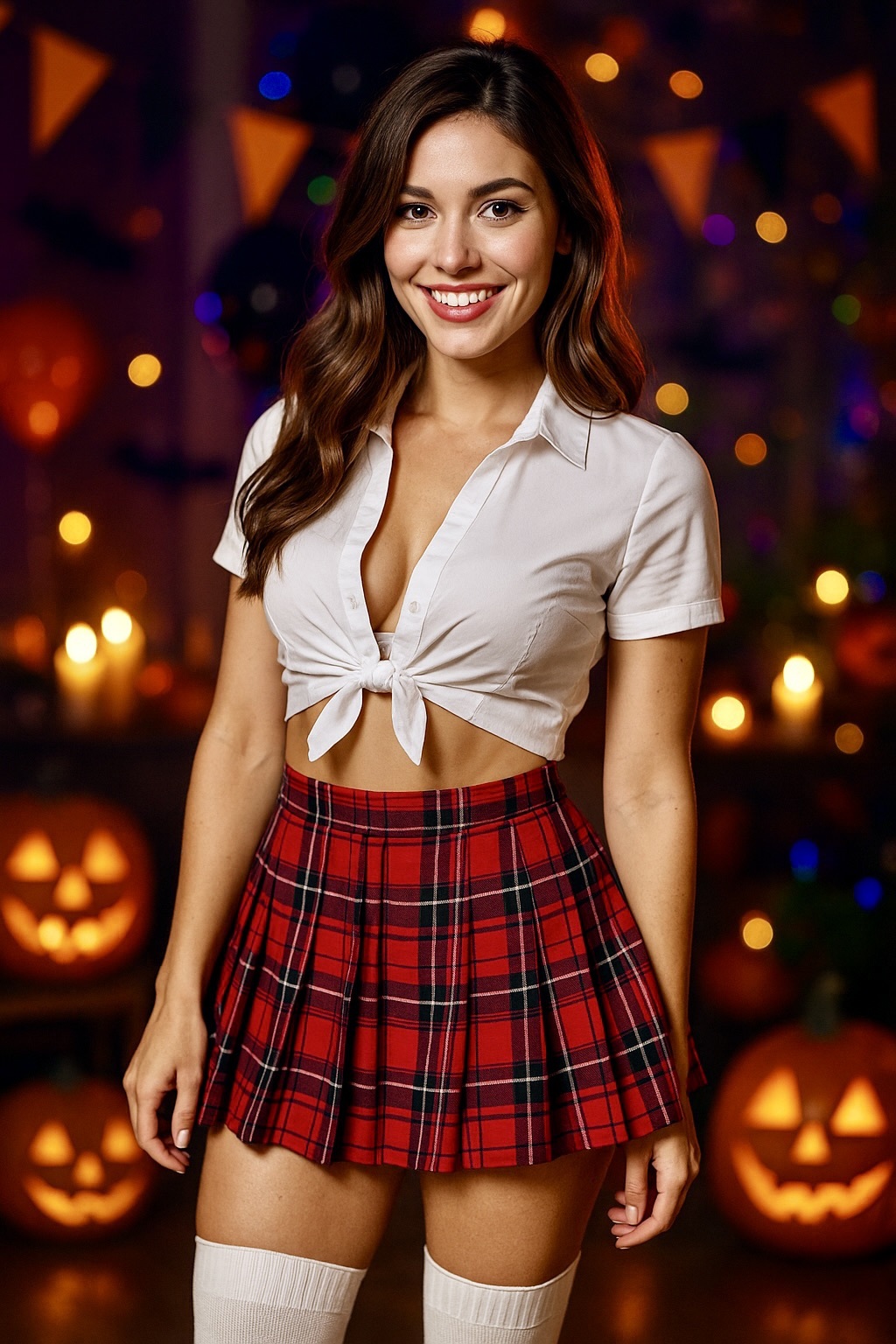
There are costumes that rise and fall with passing trends, those tied to movies, memes, or moments in time, and then there are the archetypes—the outfits that return every year because they tap into something bigger than a fad. Few costumes have reached the level of instant recognition and enduring allure as the Sexy Schoolgirl. Halloween after Halloween, amidst the devils, witches, vampires, and superheroes, the sight of a short plaid skirt, a tied-up blouse, and knee-high socks never fails to turn heads, spark conversation, and dominate photos. There is something about the look that is equal parts playful and provocative, innocent in its suggestion yet daring in its execution. The Sexy Schoolgirl doesn’t whisper for attention—she claims it, and she has been claiming it for decades.

At the heart of its appeal is contradiction. Real school uniforms represent rules, conformity, and structure. They are about discipline, order, and standardization. But Halloween is not about rules—it’s about rebellion. The Sexy Schoolgirl costume flips the uniform on its head, taking something meant to cover and control and transforming it into something designed to flaunt and tease. It’s not about authenticity—nobody is trying to actually pass for a student—it’s about the fantasy of rebellion against authority, of bending the straight lines of the classroom into the curves of playful temptation. That clash between innocence and flirtation is what gives the Sexy Schoolgirl its viral edge.

The plaid skirt is the centerpiece of the look, a fabric long associated with uniformity but here cut short to showcase legs and movement. Every pleat becomes a wink, every swish a suggestion. The blouse, tied at the midriff, changes from stiff and buttoned to relaxed and daring, a signal that this character is not following any handbook. And the knee-highs? They are the exclamation point, transforming practicality into allure, nodding to the world of vintage pin-ups while feeling fresh every year. Together, the pieces create a costume that is instantly identifiable, instantly flirty, and endlessly photogenic.

What makes the Sexy Schoolgirl especially viral in the age of social media is its adaptability. It can be styled in countless ways, each one telling a slightly different story. Some lean into playful innocence, with pigtails, bubblegum, and oversized glasses adding a tongue-in-cheek charm. Others go sultry and sleek, pairing the outfit with bold lipstick, smokey eyes, and heels that click like declarations of confidence. Some add props like books, rulers, or satchels, twisting them into flirtatious accessories instead of academic tools. And in recent years, the costume has been mashed up with pop culture—anime influences, punk-rock spins, or even supernatural twists that turn the schoolgirl into a vampire or zombie. The archetype is flexible, which is why it never gets stale.

Part of its power lies in the reaction it provokes. Unlike many costumes that fade into the background, the Sexy Schoolgirl sparks conversations, laughter, and admiration in equal measure. It’s a look that doesn’t just get noticed—it gets remembered. In photos, the plaid pops against Halloween’s darker tones. The tied blouse creates dynamic lines that flatter in candid shots. The knee-highs frame legs in ways that catch the eye. This is a costume made for cameras, and in the age of viral content, that matters. On Instagram, TikTok, or X, the Sexy Schoolgirl costume becomes a highlight reel of winks and smirks, one of those instantly shareable looks that racks up attention.

But what humanizes the Sexy Schoolgirl and keeps her evergreen is the personality behind the outfit. Every woman who steps into the pleats and knee-highs makes the role her own. Some wear it with tongue firmly in cheek, treating it as a parody of the cliché, playing it for laughs and irony. Others embrace the sultry side unapologetically, using the costume as a statement of confidence and boldness. Still others blend both, leaning into the contradiction of innocence and mischief. The costume isn’t about fitting a mold—it’s about giving permission to embody a fantasy, to play with an archetype, to revel in the freedom that Halloween offers.

And freedom is really the key. Halloween is a night when rules disappear, when the ordinary becomes extraordinary, when personas are tried on like masks. The Sexy Schoolgirl is so popular because she embodies that spirit. She is rebellion against authority. She is mischief wrapped in fabric that was once meant to symbolize conformity. She is the thrill of taking something familiar and making it wild, daring, unforgettable. She’s not about playing it safe—she’s about playing to win the room, the photo, the night.

Critics may call it a cliché, but clichés exist because they work. And this one works better than most. Year after year, the Sexy Schoolgirl shows up at parties, and year after year, she dominates. There is always at least one, and she is always unforgettable. Because whether it’s the pigtails or the plaid, the tied blouse or the knee-highs, the costume doesn’t just hint at temptation—it delivers it with a grin.

So if you’re choosing your Halloween look and want something guaranteed to spark attention, laughter, admiration, and a few sly double-takes, the answer is simple. Slip into that plaid, tie that blouse, pull on those knee-highs, and step into the role of the ultimate Halloween icon. The Sexy Schoolgirl isn’t just a costume—it’s an experience, one that makes the room buzz and the memories linger. She rules Halloween because she is playful, provocative, and unforgettable. And when the night is over, when the photos are posted and the stories are told, hers is the image that will still be sparking reactions days later. That’s the power of a costume built not on rules, but on breaking them.

Related Posts

Midnight Prowl: Why the Seductive Catwoman Is the Ultimate Halloween Fantasy

Dave

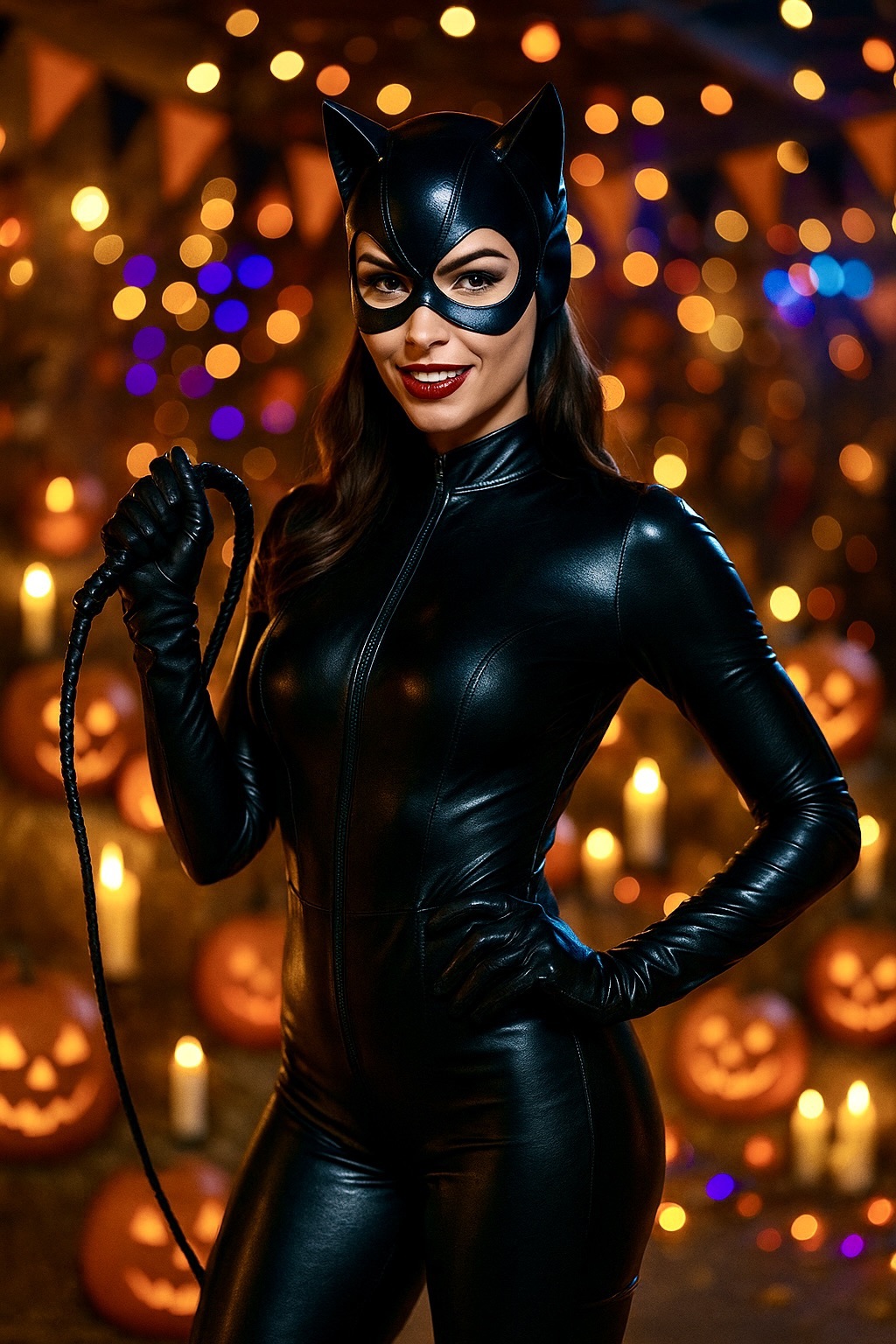
There are few costumes as instantly recognizable, as endlessly magnetic, and as irresistibly timeless as Catwoman. From the moment she first leapt from comic book panels into pop culture history, she has been the embodiment of sleek danger and sultry power. Halloween, of course, is her natural hunting ground. Every October 31st, while witches stir cauldrons and vampires bare their fangs, there will always be at least one Catwoman prowling the party. And not just any Catwoman—the Seductive Catwoman, in a skin-tight black catsuit that clings like a second skin, a mask that hides just enough to intrigue, and a whip coiled at her side that promises mischief. This isn’t just a costume. It’s a declaration of confidence, a statement that says: tonight, the shadows belong to me.

What makes Catwoman such a perennial favorite is the perfect marriage of danger and allure. She’s not simply a hero or a villain—she’s both, depending on her mood. That ambiguity makes her endlessly fascinating. When someone steps into the sleek black catsuit for Halloween, they aren’t just dressing as a character—they’re stepping into a persona that balances temptation and power, charm and chaos. And let’s be honest: the catsuit is practically built for going viral. The glossy material, the way it hugs every curve, the silhouette of the mask and cat ears—this is a look designed to command attention. It’s not just sexy—it’s iconic.

The whip is more than just a prop—it’s a symbol of dominance, of control, of playful danger. At a Halloween party, it becomes an accessory that adds an extra layer of intrigue. Every flick, every pose, every photo opportunity with it turns the costume from an outfit into a performance. The whip isn’t just about intimidation—it’s about storytelling, about embodying the sly trickster who always stays one step ahead. And when paired with the confidence of the person holding it, it’s the difference between being “someone in a Catwoman costume” and being the Seductive Catwoman.

But Catwoman’s appeal goes far beyond the shiny exterior. She represents freedom and independence. Unlike many female characters in pop culture, she isn’t waiting to be saved. She’s the one calling the shots, bending the rules, making the choices that suit her and no one else. That independence translates perfectly into Halloween night, when people feel the freedom to step into roles that reflect hidden sides of themselves. The Seductive Catwoman costume allows the wearer to channel that fearless independence, to embrace the spotlight without apology, to flirt with power in a way that feels both fun and empowering.

And the truth is, this costume photographs like a dream. Social media eats it up. The contrast of black leather against colorful party lights, the glint of the mask under neon strobes, the flash of red lipstick against the shadows—it’s cinematic. On Instagram, TikTok, or X, a Seductive Catwoman doesn’t just get posted, she gets shared, saved, and remembered. Every pose can look like a movie poster. Every candid laugh looks like a behind-the-scenes moment of Gotham’s most famous thief crashing your Halloween. That’s part of why she’s viral—she fits seamlessly into the aesthetics of the digital age, designed to dominate feeds as much as she dominates the dance floor.

What really makes her endure, though, is the humanity behind the claws. Catwoman has always been relatable because she is complicated. She isn’t pure evil or perfect good. She’s a mess of contradictions—caring and selfish, loyal and reckless, fierce and vulnerable. The Seductive Catwoman costume channels all of that into one intoxicating package. It’s not about being flawless—it’s about being fascinating. And that makes the costume feel less like putting on a mask and more like unleashing a side of yourself that’s already there, just waiting for a reason to come out.

Halloween is all about transformation, about permission to play roles we wouldn’t normally dare to embody. Slip into that catsuit, lace up those boots, fasten that mask, and suddenly you’re not just someone in a costume—you’re prowling the night, owning the room, letting every glance linger a second longer than it should. It’s intoxicating, not just for those who see you, but for the person wearing it. The Seductive Catwoman isn’t just sexy for others—she’s empowering for the one who wears her. And that’s why she continues to dominate, year after year.

Of course, there’s always competition on Halloween night. There will be witches and devils and angels and vampires. But Catwoman doesn’t compete—she prowls above the rest. She doesn’t need to shout for attention. She doesn’t need gimmicks. She walks in, and the room adjusts to her. That’s the power of the archetype, and it’s why the Seductive Catwoman will always be a highlight. She’s not chasing the party—the party is chasing her.

And maybe that’s the real magic of it all. The Seductive Catwoman costume reminds us that sometimes the most unforgettable Halloween looks aren’t the scariest or the flashiest—they’re the ones that embody confidence, mystery, and control. They’re the ones that let us play with danger while wrapped in allure. They’re the ones that turn a simple outfit into a story, and a night into a legend.

So this Halloween, when the music is pounding, the lights are flashing, and the air is buzzing with energy, watch the crowd. Notice who people are turning to. Notice who people can’t stop looking at. Chances are, it’s the one in the catsuit, mask, and whip, smirking like she knows exactly what you’re thinking—and daring you to say it out loud. That’s Catwoman. That’s the queen of Halloween. And that’s why, year after year, she never loses her claws.

Related Posts

Heaven in Disguise: Why the Angel Gone Wild Rules Halloween Nights

Dave

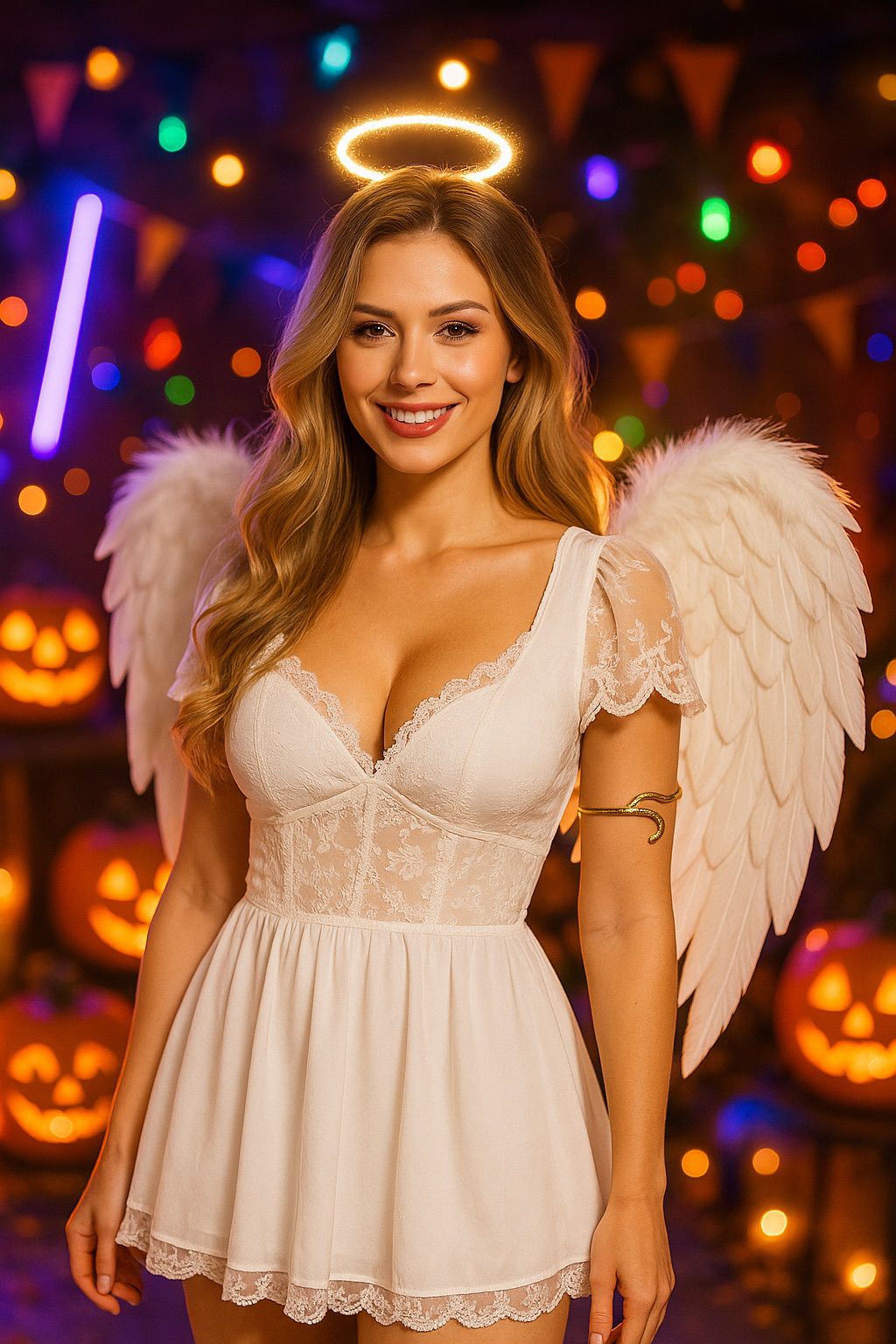
There’s something unforgettable about a Halloween costume that plays with expectations, something magnetic about flipping innocence into intrigue. Every October, amidst the swirling cauldron of witches, vampires, and monsters, there’s always one look that stands out because it doesn’t scream with gore or rely on fear—it teases with contradiction. That costume is the Angel Gone Wild: white lingerie that barely covers, stockings and heels that command attention, a delicate halo perched just above a mischievous smile, and feathered wings that gleam under the glow of party lights. It’s the kind of costume that makes people double-take, the kind that blurs the line between sweet and sinful, the kind that makes a room collectively lean in because suddenly the most heavenly figure has just gone deliciously off-script.

What makes the Angel Gone Wild so endlessly viral isn’t just the lingerie or the way the wings frame the body—it’s the concept. Angels in cultural imagination are pure, untouchable, serene. They are symbols of perfection, guardians of innocence. But the moment you twist that purity with a sultry spin, you unleash something that feels daring, rebellious, and wickedly fun. The halo no longer signals virtue—it becomes an ironic crown, a playful hint that this angel isn’t following the rules. The wings are no longer symbols of divine duty—they’re fashion accessories amplifying the allure. And the lingerie? That’s the statement. This isn’t heaven’s messenger. This is heaven’s secret after dark.

There’s a boldness in the costume that resonates. The Angel Gone Wild isn’t trying to blend into the background or pretend she’s just another part of the party. She’s there to be seen. She’s there to take the stereotype of innocence and flip it into power, to laugh at the idea of being judged and instead invite the attention head-on. That’s what gives her the edge. She’s not just sexy—she’s defiant. She’s claiming the freedom to embody both sides of the coin at once: the soft glow of white fabric and feathers mixed with the sharp thrill of lingerie and sultry confidence.

It’s also one of the most versatile sexy costumes out there. Some women play it flirty and fun, all smiles and glitter, wings bouncing behind them as they dance through the night. Others go more seductive and mysterious, pairing the look with smoky makeup, bold lipstick, and eyes that smolder as much as the candles around the room. Some add a playful prop—a cocktail glass instead of a harp, a halo that glows neon instead of gold, a wink that says this angel fell from heaven on purpose. The Angel Gone Wild can be adapted to fit every personality, from the giggly extrovert to the sultry siren, and that’s part of why it never loses traction.

And let’s be honest—the aesthetic is built for cameras. White lingerie against the dark Halloween backdrop glows like a spotlight. Wings add dimension and drama to photos, catching light and creating striking silhouettes. The halo frames the face, making every smirk, pout, or playful grin picture-perfect. On Instagram, TikTok, or X, the Angel Gone Wild doesn’t just appear in a feed—she owns it. She brings balance to the lineup of darker costumes, becoming the bright but wicked highlight that people scroll back to again and again.

But what really humanizes this costume, what makes it not just viral but beloved, is the story it tells. Every person who steps into that lingerie and straps on those wings isn’t just wearing a costume—they’re embodying a fantasy. For one night, they get to break the mold of being “good,” to revel in mischief while dressed as something pure. It’s a playful rebellion, the kind of cheeky self-expression that says: I don’t have to be what you expect. I can be both divine and daring, innocent and outrageous. That duality speaks to something deep in us, because aren’t we all a little bit of both?

It’s also empowering. The Angel Gone Wild costume demands confidence—it invites you to show skin, to command attention, to step into the party like you know the room was waiting for you. And when you feel that confidence radiating through the fabric, it changes you. The costume becomes a catalyst for unleashing the boldest, brightest, wildest version of yourself. That’s what makes it so viral—not just how it looks, but how it makes the wearer feel. And that feeling translates. People can sense it in the photos, in the way she moves, in the way she laughs without apology. It’s contagious, and it spreads.

Of course, critics will always grumble about the sexualization of costumes, but that misses the point. Halloween is about fantasy, freedom, transformation. The Angel Gone Wild isn’t about living up to anyone else’s idea of virtue or restraint. She’s about embracing the fun, the flirty, the outrageous. She’s about tapping into the parts of yourself that don’t get to shine in the daylight, the parts that want to wink at tradition and walk boldly into the night with feathers swaying and heels clicking. And that’s not shameful—it’s celebratory.

That’s why she endures. Trends shift, new pop culture icons rise and fall, but the Angel Gone Wild keeps flying high. Every year, she’s there in the mix, lighting up parties, dominating feeds, making people laugh, gasp, and swoon. Because deep down, we all understand the appeal. We all love the contradiction of it, the playful rebellion, the thrill of seeing heaven’s symbol take a walk on the wild side. It’s the kind of costume that doesn’t just mark a holiday—it defines it.

So when you see her this Halloween, glowing in white lace, halo tilted just slightly askew, wings brushing the shoulders of everyone she passes, remember that you’re not just looking at another sexy costume. You’re looking at an icon of Halloween itself. You’re looking at confidence, fun, rebellion, and allure wrapped into one unforgettable package. You’re looking at why the Angel Gone Wild isn’t just a costume—it’s a cultural phenomenon.

And the best part? Every woman who wears it makes it her own. Every feather, every smirk, every flick of the halo tells a slightly different story. But they all carry the same message: that heaven and hell aren’t so far apart when you’re brave enough to blur the lines. That’s why the Angel Gone Wild rules the night, every night, every year, forever.

Related Posts

Hellfire Glam: Why the Devil Temptress Steals the Show Every Halloween

Dave

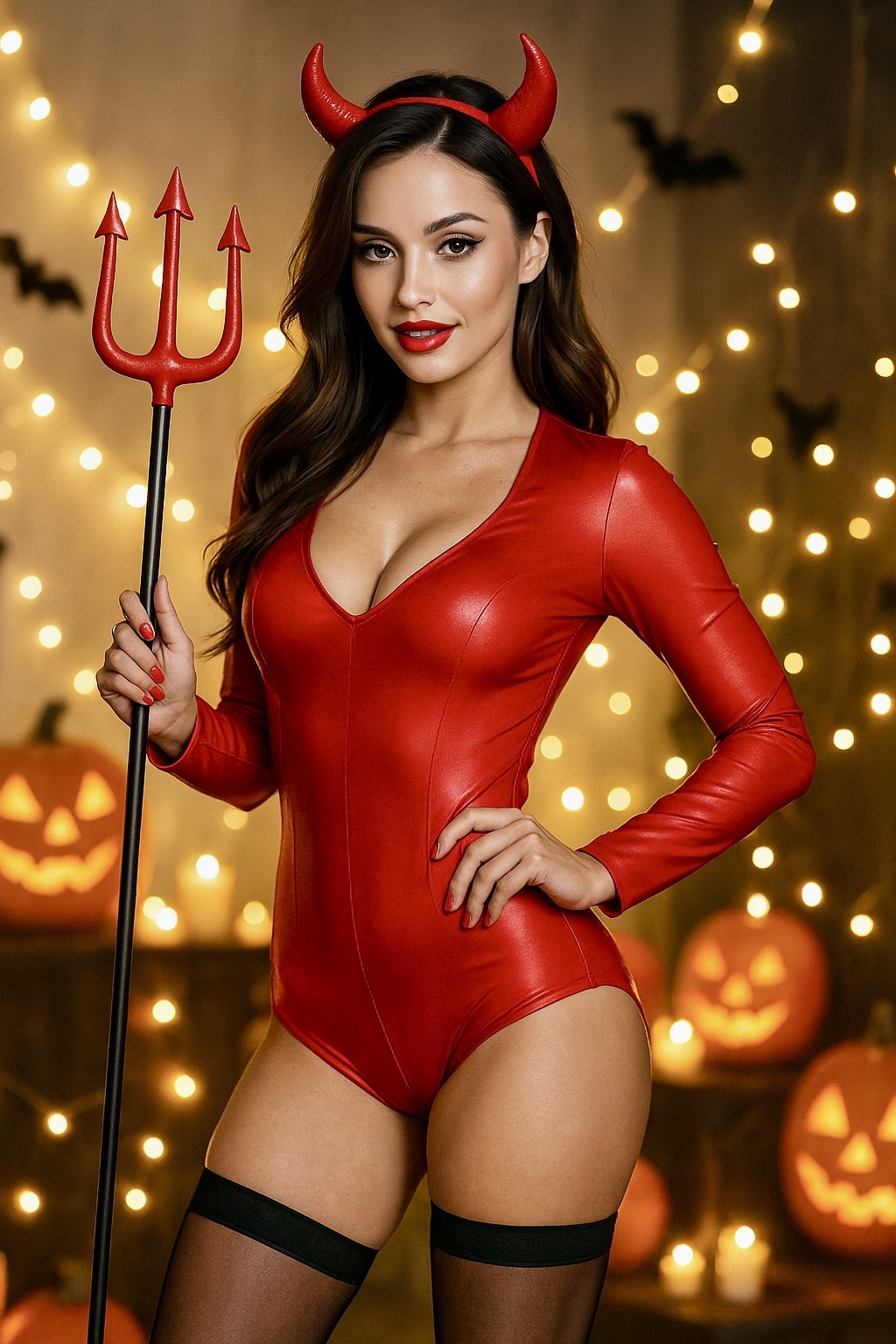
There are costumes that sparkle for a season and vanish by the next, tied to fleeting pop culture trends, but then there are the icons—the looks that never fade, never lose their hold, never stop dominating the night. Among these eternal legends of Halloween stands the Devil Temptress, dressed in a sizzling red bodysuit, horns perched proudly on her head, pitchfork in hand, and a wicked grin that promises mischief you probably shouldn’t want but absolutely do. She isn’t just another sexy costume—she is the unapologetic embodiment of temptation itself, the kind of look that turns heads, drops jaws, and burns her image into your memory long after the candles of the jack-o’-lanterns have gone dark. The Devil Temptress is more than fire and fabric—she is confidence personified, and that is why she has ruled the costumed night for decades and will continue to do so for centuries to come.

Halloween has always been about bending rules, about stepping outside yourself, about dancing on the edge of light and shadow. But nothing plays with that edge quite like the devil archetype. From the earliest religious warnings to the countless retellings of folklore, the devil has always been the ultimate symbol of temptation, rebellion, and indulgence. Add a feminine twist, and suddenly the abstract idea of sin takes on a physical form that is equal parts dangerous and magnetic. The Devil Temptress isn’t coy. She isn’t subtle. She doesn’t hide behind layers of irony or complexity. She walks into the party and declares herself with every bold inch of red. Her horns signal mischief, her pitchfork is a playful weapon, and her bodysuit hugs every curve with the kind of audacity that makes her impossible to ignore.

It’s not just about sex appeal—it’s about power. The Devil Temptress costume radiates dominance, the kind of confidence that says, “I don’t just own this look, I own this room.” And in a way, that’s the true essence of why people can’t look away. It’s not just that the outfit is hot—it’s that the woman wearing it is declaring herself unapologetically. Red is a color that commands attention. It’s the color of fire, of passion, of blood, of warning signs. Pair it with the sleek lines of a bodysuit, the playful menace of horns, and the theatrical flourish of a pitchfork, and suddenly you’ve got the perfect storm of danger and delight. It’s not just a costume, it’s a performance, a chance to embody the role of seductress, trickster, queen of the underworld for one wild night.

There’s also something universally appealing about how flexible the Devil Temptress can be. Some women lean into pure elegance—a satin bodysuit, thigh-high boots, flowing cape, horns shaped with sleek precision, makeup contoured to look like fire itself kissed their cheekbones. Others lean into playfulness—glittery red sequins, oversized cartoonish horns, pitchforks that double as cheeky props for selfies. Some go dark and gothic, pairing their costume with black lace, smokey eyes, and blood-red lipstick. And then there are those who strip it down to the bare essentials, turning the Devil Temptress into minimal fabric and maximum impact, the kind of boldness that has made this costume a mainstay of both parties and Instagram feeds for years. The devil is in the details, literally, and that is why no two Devil Temptresses ever look exactly alike.

What really makes the costume go viral, though, is the reaction it stirs. Walk into a party dressed as a cat, and you’ll blend into the crowd. Walk in as a witch, and you might be one of several. But walk in as the Devil Temptress, blazing in red, and the atmosphere shifts. People notice. They laugh, they cheer, they want a photo, they want to join the fun. It’s a costume that doesn’t just sit quietly—it amplifies the energy of the entire room. In a world where attention is the most valuable currency, the Devil Temptress costume is gold.

And of course, let’s not ignore the viral engine that drives our modern age: social media. Costumes that photograph well go further, spread faster, and live longer. The Devil Temptress doesn’t just photograph well—she’s a dream for the camera. The vivid red pops against any backdrop, whether it’s the moody candlelight of a house party or the neon flashes of a nightclub. The horns add instant silhouette recognition, the pitchfork creates dynamic poses, and the bodysuit’s shine catches every angle. Post a Devil Temptress picture on Instagram, TikTok, or X, and watch the likes climb. It’s the kind of costume that doesn’t just exist in the moment—it keeps living, reposted and reshared, days after the party is over.

But maybe what makes the Devil Temptress so enduring is something deeper, something more human. At its core, the costume is about embracing the parts of yourself that don’t always get to shine in everyday life. It’s about giving in to boldness, about leaning into your confidence, about playing with power in a way that’s safe, fun, and entirely your own. For one night, you get to embody temptation without consequence, to live in the fantasy of being the woman everyone is warned about but everyone secretly desires. That freedom, that joy, that audacity—it’s intoxicating. And when people feel that energy radiating off you, they can’t help but be drawn in.

The truth is, Halloween has always been about storytelling. Every costume tells a story, whether it’s about who we are, who we wish we could be, or who we want others to believe we are. The Devil Temptress tells a story that is equal parts dangerous and empowering. She says: I am not afraid of my desires. I am not afraid to be seen. I am not afraid to take up space. That’s why she owns the night. That’s why she keeps showing up, year after year, in clubs, bars, house parties, and feeds. She is both a joke and a statement, both playful parody and powerful archetype. She is Halloween distilled into one figure: scary, sexy, and unforgettable.

So if you’re deciding on your look this year and you want something that guarantees attention, admiration, and a little bit of trouble, you already know the answer. Grab that red bodysuit, slide on those horns, pick up that pitchfork, and let yourself revel in the fire. Halloween is about transformation, and nothing transforms you faster than stepping into the role of temptation itself. The Devil Temptress doesn’t ask for permission, doesn’t worry about approval—she knows she’s the star. And when you wear her costume, you’ll know it too.

Because when the music is pounding, the lights are flashing, and the night is alive with magic, there is no competition. The Devil Temptress doesn’t just enter the room—she owns it. And everyone else is just playing catch-up.

Related Posts

Prescription for Desire: Why the Naughty Nurse Always Heats Up Halloween

Dave

Halloween is the one night of the year where fantasy is not only allowed, but encouraged. Masks slip on, inhibitions slip off, and the world of imagination opens wide to welcome everything from the terrifying to the tantalizing. Among the countless costumes that line the shelves and flood the parties every October, some are instantly forgettable while others are absolutely unforgettable. And then, sitting high on the throne of iconic sexy costumes, is the Naughty Nurse. She is instantly recognizable with her short white dress, thigh-high stockings, and playful little nurse’s cap tilted just so, a look that is both cheeky and confident. This is not a costume about authenticity—it’s about fantasy. The Naughty Nurse is the walking embodiment of playful provocation, a character who blends the comfort of care with the thrill of seduction, and that makes her not just a Halloween staple but a viral sensation every single year.

Why does the Naughty Nurse endure so stubbornly? Because she straddles the line between wholesome and wicked. Nurses in real life are symbols of care, compassion, and healing—they are the guardians of health, the ones who bring comfort when things are at their worst. The Naughty Nurse flips that image on its head. She takes the soft power of comfort and turns it into the hard pull of temptation. It’s the perfect inversion: the woman you trust to bandage your wounds suddenly becomes the one making your heart race for entirely different reasons. It’s that twist of expectation that makes the costume irresistible. People are drawn to contrasts, and the Naughty Nurse is the ultimate contradiction—sweet and sinful, professional and provocative, wholesome and wild.

Of course, the outfit itself is part of the magic. The short white dress isn’t modest—it’s tailored to tease, to hug curves in the right places, to make the most of minimalism while leaving just enough to the imagination. The stockings add a touch of vintage allure, the kind of retro glamour that whispers of pin-up posters and playful winks. And the cap? It’s almost absurdly innocent, a little accessory that screams “official” even though everyone knows nothing about this look is standard hospital uniform. Together, the elements create a character who is as much a fantasy archetype as the Vampire Vixen or the Sexy Witch, a figure instantly recognizable but infinitely adaptable.

Because the Naughty Nurse isn’t a rigid character—she’s a blank slate for personality. Some women play her cute, with giggles and playful teasing, turning the costume into a flirtatious game. Others go sultry, with dark eyeliner, smoldering eyes, and the kind of walk that suggests she’s not here to check your temperature but to raise it. Some mix in a little horror, adding fake blood or a syringe prop for a touch of macabre fun. That versatility is part of what makes her go viral so easily. Whether the vibe is innocent flirtation or full-blown dominatrix energy, the Naughty Nurse costume can bend and flex to fit the mood of the wearer.

It also helps that the costume photographs incredibly well. The bright white fabric against the dark backdrop of Halloween night makes the Naughty Nurse pop in photos, and in today’s age of social media, looking good on camera is half the battle of going viral. Add a sly smile, a well-timed pose with a prop stethoscope, and the glow of Halloween party lights, and suddenly the photo is the kind of thing that racks up likes, shares, and comments. The Naughty Nurse is not just a costume—it’s content, and content that spreads like wildfire.

But beyond the visuals and the flirtation, there’s something human and relatable about why this costume works so well. It taps into the idea that Halloween is a night where people get to explore sides of themselves they don’t usually show. Maybe someone is quiet, reserved, buttoned-up in their daily life—but on Halloween, they put on that short dress and those stockings, and suddenly they’re the star of the room, playful, daring, and a little outrageous. It’s not about pretending to be someone else, it’s about unleashing the part of yourself that doesn’t always get to come out. The Naughty Nurse costume is like a permission slip to embrace that side without judgment. Everyone knows it’s Halloween. Everyone knows the game. And that’s what makes it fun.

The viral factor also comes from the reactions. The Naughty Nurse doesn’t walk into a room unnoticed. People smile, they laugh, they nudge each other, they take photos. The costume creates moments, and moments are what people remember. At the end of the night, when people are scrolling through the pictures from the party, the one that will make them stop, grin, and maybe even send to a friend is almost always the one of the Naughty Nurse. She sticks in the memory, not because the costume is shocking, but because it’s fun, flirty, and endlessly iconic.

And maybe that’s the real secret behind why the Naughty Nurse never fades: she makes people feel good. The vibe is never overly dark or heavy; it’s playful, it’s cheeky, it’s designed to bring out a smile. In a holiday filled with scares and spooks, that makes her stand out. She’s not about horror—she’s about humor, flirtation, and fun. She’s the wink in a room full of screams, the laugh in a night of shadows. And that balance is why she thrives.

So when you see the Naughty Nurse making her rounds at this year’s Halloween bash, don’t be surprised when she’s the one everyone gravitates toward. She’s got the look, the energy, and the confidence to turn a costume into a performance, and a performance into a memory. That’s why she’s viral, why she’s timeless, and why she’ll still be strutting through Halloween parties a hundred years from now. Because sometimes, the best medicine isn’t in a syringe or a pill—it’s in a sly smile, a playful wink, and a costume that says exactly what you want it to without saying a word.

Related Posts

Kiss of Midnight: Why the Vampire Vixen Owns the Night

Dave

There are costumes that come and go with the shifting tides of pop culture, flashes of novelty that fade as quickly as they arrive, but then there are those that remain carved into the very heart of Halloween itself. The Vampire Vixen is one of those immortals, timeless in her allure, eternally seductive, eternally dangerous. She is the woman who walks into the party and makes heads turn not because she is flashy, but because she radiates a primal, intoxicating energy that whispers of midnight kisses and eternal hunger. Lace clings to her curves, fangs glint when she smiles, and her blood-red lips promise a temptation that no mortal should resist but every mortal always does. It is not just a costume. It is a declaration: that on this night of masks and mischief, you are not just playing dress-up—you are stepping into the role of the most seductive predator folklore has ever given us.

The legend of the vampire has always been steeped in contradictions. It is a monster and a lover, a symbol of death and eternal life, a figure of fear that is somehow even more captivating because of that fear. That duality is exactly why the Vampire Vixen reigns supreme when it comes to sexy costumes. Unlike so many others that have to work hard to be edgy or risqué, the vampire has been sexy from the very beginning. From the gothic literature of the 1800s to the golden age of Hollywood, from Anne Rice’s dreamy immortals to the modern streaming obsessions with sultry vampire clans, the allure has always been the same: eternal beauty, dangerous intimacy, and the whisper of surrender under the cover of night. To put on the lace dress and slip in the fangs is to embody that timeless seduction. And that is why the Vampire Vixen works, year after year, without fail.

There is something almost primal about the way people react to vampires, especially the sensual female vampire. She is not a passive figure. She is not the damsel waiting to be rescued or the sidekick to some greater hero. She is the hunter. She is the one with the control, the power to give or take life, the ability to bend hearts and minds with a glance. On Halloween, when the rules of the ordinary world fall away, women step into that role willingly. The lace dress becomes the uniform of dominance, the blood-red lips a weapon of mass destruction, the fangs sharp punctuation to every smirk. It is no wonder people cannot look away. The Vampire Vixen costume doesn’t just show skin; it shows power dressed up as seduction, danger packaged as desire.

And what makes it irresistible is how versatile it can be. Some Vampire Vixens lean into gothic elegance—long flowing lace gowns, dramatic capes, jewelry that glitters like it was stolen from castles centuries ago. Others embrace the modern twist, short lace dresses, thigh-high boots, chokers, and corsets that toe the line between couture and sin. Some play it dark and frightening, with fake blood dripping from their lips and pale makeup that makes them look freshly risen from the grave. Others keep it sleek and mysterious, lips painted crimson, fangs just barely peeking when they smile, giving off the impression that they could bite, but maybe, just maybe, they’ll spare you tonight. That flexibility means no matter who wears it, the Vampire Vixen feels personal, tailored, like an extension of the woman herself.

There is also the undeniable fact that vampires as cultural icons have always been dripping with sexuality. Think of the great vampire stories—from Bram Stoker’s Dracula, where the bite was described with the passion of forbidden romance, to the black-and-white vampire queens of old cinema, to the endless franchises that turned vampires into romantic antiheroes. The bite is always intimate. It is an exchange of life and death, pain and pleasure, dominance and surrender. The Vampire Vixen costume taps directly into that cultural current. Those fangs are not plastic toys; they are symbols of appetite, of indulgence, of dangerous passion. And those blood-red lips? They are the gateway to a kiss you may not survive but cannot stop craving.

Halloween is the perfect stage for this character. On no other night is it so acceptable to lean into danger, to play at being a creature of the night who walks the edge of fear and desire. The Vampire Vixen thrives here, glowing in candlelight, standing out under neon strobe, commanding attention whether she is on the dance floor, in a photo booth, or simply walking into a room. People gravitate toward her because the costume doesn’t just say “sexy”—it says unforgettable. It promises a story that will linger long after the last pumpkin has rotted on the porch.

But the humanizing element, the reason why this costume keeps going viral every Halloween, is because every Vampire Vixen is also uniquely herself. She is not a copy-paste template of “woman in black with fangs.” She is the girl-next-door who suddenly looks like she might ruin your life in the best way possible. She is the shy introvert who, for one night, lets the lace and the lipstick transform her into the queen of the party. She is the woman who knows exactly what she’s doing, who uses the costume as a statement, a celebration of her confidence, her allure, her unapologetic embrace of her own sexuality. That is the real magic. The Vampire Vixen is not just playing pretend—she is an amplifier. She is what you already are, turned up to eleven, bathed in moonlight and red velvet.

And yes, it is a costume steeped in cliché, but clichés exist for a reason. They work. They resonate. You can walk into any Halloween event, from the biggest nightclub bash to the smallest house party, and there will be at least one Vampire Vixen. And every single time, she will own the night. People will remember her. Photos will get shared. The fangs and the lace will etch themselves into the collective memory of that evening. She doesn’t just blend in—she defines the vibe.

Perhaps that is why the Vampire Vixen has never faded while so many other costumes come and go. She is not bound to a trend, not tied to a single movie or moment. She is eternal, just like the creatures she represents. You could wear her in the 1980s, the 2000s, or right now in the age of social media dominance, and she still carries the same power. If anything, she thrives even more now, because the camera loves her. A Vampire Vixen knows how to work the lens, how to flash the hint of fang at just the right moment, how to let the crimson lips become the center of focus. She is built for the viral age because she has always been viral, centuries before hashtags ever existed.

So if you are choosing your costume this year and you want something that guarantees attention, seduction, and just the right mix of danger and fun, you cannot go wrong with the Vampire Vixen. Slip into that lace dress, paint your lips the deepest red you can find, let the fangs click into place, and smile like you’ve just spotted your next victim. Halloween is your night. Own it the way only a Vampire Vixen can.

Because in the end, it’s not the ghosts or the goblins or even the witches that people talk about the next day. It’s the woman who looked like midnight itself walked into the room, who made them forget whether they should be afraid or infatuated, who left them wondering if maybe she was more than just a costume. That’s the spell. That’s the bite. That’s the reason the Vampire Vixen will forever own the night.

Related Posts

Thirst in the Shadows: The Vampire’s Legacy from Folklore to Dracula

Dave

There is a reason the vampire has never left us. Centuries pass, cultures change, fashions evolve, and yet the image of the blood-drinking creature lurking in the dark is as irresistible now as it was to the villagers who first whispered its name around firesides in the cold hills of Eastern Europe. The vampire is more than a monster; it is a mirror of human fears, desires, and obsessions. From Romanian folklore to Bram Stoker’s Count Dracula and the endless adaptations that followed, the vampire is one of the few legends that has remained alive by constantly reinventing itself. But before Hollywood turned it into a brooding aristocrat or pop culture softened it into a romantic antihero, the vampire was something raw, terrifying, and deeply real to the people who believed in it. It was the explanation for mysterious deaths, the scapegoat for plague, the lurking shadow of mortality itself. To trace the vampire’s journey is to walk through both history and imagination, where blood has always been more than fluid—it has been life, soul, and the ultimate currency of existence.

In its earliest roots, the vampire was not a suave nobleman in a flowing cape but a reanimated corpse crawling from its grave. In the villages of Romania, Bulgaria, and Serbia, people spoke of the strigoi or nosferatu—restless spirits of the dead who would rise at night to drain the vitality of the living. They were described as pale, bloated, and foul-smelling, closer to ghouls than the elegant vampires we know today. These creatures were not metaphors—they were believed to be real. Families who lost loved ones suddenly would suspect vampirism. Bodies were sometimes dug up weeks after burial, and if they appeared unnaturally preserved, villagers might drive a stake through the corpse, burn it, or scatter its ashes. These gruesome rituals were not just superstition but survival strategies in communities plagued by disease, where science offered no answers and folklore filled the void.

The vampire was powerful not because of its beauty, but because it embodied the greatest fear of all: that death does not end suffering. To imagine the dead returning to torment the living was both a horror story and a warning, one that kept people cautious about how they buried their dead, how they treated outsiders, and how they explained misfortune. The vampire was never just a story—it was a way of making sense of chaos, of giving shape to the unexplainable. And in Romania, where the Carpathian Mountains cast long shadows and mist clings to valleys, the myth found the perfect home.

Enter Bram Stoker, a Dublin-born writer who had never set foot in Transylvania but understood the power of atmosphere. In 1897, he published Dracula, a novel that would forever redefine the vampire. Drawing on snippets of folklore, travel guides, and perhaps the faint echo of real history in the figure of Vlad the Impaler, Stoker created a character who blended horror with charisma, terror with seduction. Count Dracula was no shambling corpse—he was an aristocrat, intelligent, cunning, and magnetic, his charm as dangerous as his fangs. Stoker tapped into Victorian anxieties about sexuality, disease, and foreign invasion, weaving them into a narrative where Dracula became both predator and metaphor. The success of the book was immediate, but its legacy was even greater. It elevated the vampire from peasant graveyards to castles, from superstition to literature, and gave the world a monster that could never die because it could always adapt.

From there, the vampire became a creature of reinvention. In the 1922 silent film Nosferatu, the vampire was twisted back into a grotesque, with long claws and a skeletal face. In 1931, Bela Lugosi’s Dracula gave the monster a Hungarian accent and a hypnotic gaze, solidifying the image of the vampire as a suave aristocrat. The decades that followed would see vampires shift again and again, reflecting the fears and fantasies of each generation. In the 1980s, films like The Lost Boys made vampires rebellious, youthful, and punk. In the 1990s, Anne Rice’s Interview with the Vampire gave them existential depth, turning them into tragic immortals wrestling with loneliness and morality. In the 2000s, Twilight and True Blood made them romantic icons, embodying forbidden love and eternal desire. Every era reshaped the vampire, but the heart of the legend—the thirst, the danger, the allure—remained constant.

What makes the vampire so enduring? Perhaps it is because it combines opposites so perfectly. It is death and life, attraction and repulsion, predator and lover. It embodies the primal fear of being consumed, but also the secret desire to be chosen, to be touched by something eternal even if it is dangerous. Vampires are terrifying, but they are also seductive, and that duality gives them a power no other monster holds. Unlike zombies, who are mindless, or werewolves, who are enslaved to rage, vampires are conscious. They choose. And that choice makes them human enough to fascinate, alien enough to fear.

The Romanian roots of the vampire remain central even today. Tourists flock to Bran Castle, marketed as “Dracula’s Castle,” though Bram Stoker never set his story there. Villages across Transylvania still whisper about the strigoi, and in some rural areas, old practices linger—coffins nailed shut, garlic at the windowsill, horses used to sniff out restless graves. Modern Romanians balance pride in their vampire folklore with weariness at being forever linked to Dracula, but even they admit the myth has a strange, undeniable power. There is something about Transylvania—the forests, the mountains, the fog—that feels like it was made for legends. The landscape itself seems to breathe mystery, as if it knows that darkness always needs a stage.

Humanizing the vampire myth reveals why it resonates so deeply. At its core, it is about control and vulnerability. To drink blood is to take life, to dominate completely, but it is also to enter into intimacy unlike any other. It’s why vampires have been tied to fears of disease—blood as infection, blood as contagion. It’s also why they have been tied to sexuality—blood as passion, the act of feeding as metaphor for desire. The vampire myth strips humanity down to its rawest truths: we are fragile, we are hungry, and we long for connection even when it terrifies us. The vampire embodies all of that and then heightens it, turning our secrets into its survival.

In modern culture, the vampire is everywhere, from Halloween costumes to blockbuster movies, but its folkloric roots remind us that it began not as entertainment but as explanation. To the villagers in Romania centuries ago, the vampire was the reason crops failed, why children died suddenly, why the sick wasted away. To them, it was real, and it was dangerous. Today, we might not believe in vampires literally, but we still believe in what they represent—the idea that something unseen can drain us, that shadows hide hungers we cannot name, that death is not always the end. In a way, that belief keeps the vampire alive.

And so, the vampire will never die. It will continue to reinvent itself, shifting with each generation’s anxieties and desires. But whether it’s a bloated corpse rising from a village grave or a glittering immortal brooding over love, the vampire always returns to the same essential truth: it is us. It is our fear of mortality, our obsession with beauty, our hunger for power, our longing for intimacy. The vampire has survived centuries because it feeds not just on blood, but on the human imagination itself. And as long as we keep dreaming, fearing, and desiring, the vampire will keep rising, eternal in shadow, waiting for the next heartbeat in the dark.

Related Posts

Fireworks, Freedom, and Fried Food: How America Celebrates the 4th of July

Dave

Every year, on the 4th of July, the United States of America erupts in a nationwide spectacle of celebration. It’s a day painted red, white, and blue, echoing with the sounds of fireworks, the sizzle of barbecues, and the laughter of communities coming together. Officially known as Independence Day, July 4th marks the adoption of the Declaration of Independence in 1776, when the thirteen American colonies declared themselves free from British rule. But beyond its historical roots, the holiday has become a cultural phenomenon—a day when Americans of all backgrounds pause to celebrate the nation’s founding, revel in its traditions, and reflect on what it means to be free. From sea to shining sea, the 4th of July is more than just a date on the calendar—it’s a full-blown expression of national identity.

In towns and cities large and small, the day typically begins early with patriotic fervor on full display. Many communities host parades that march down main streets, drawing crowds dressed in stars and stripes. Children wave miniature American flags, veterans salute in uniform, and local bands blast renditions of “The Star-Spangled Banner” and “God Bless America.” Floats often feature local businesses, civic organizations, and even costumed historical reenactors portraying Founding Fathers. These parades aren’t just about pomp—they serve as a symbolic reminder of the country’s revolutionary origins and the democratic spirit that continues to define it.

Following the parades, Americans often shift their attention to food—and lots of it. The 4th of July is practically synonymous with barbecue culture. Backyards and parks are filled with the aroma of hamburgers sizzling on grills, hot dogs roasting over open flames, and corn on the cob being charred to perfection. Picnic tables are laden with potato salad, coleslaw, baked beans, watermelon slices, and all the fixings. For many, it’s not just about eating—it’s about gathering. Family reunions, neighborhood block parties, and community cookouts turn mealtimes into cherished moments of togetherness. These gatherings reflect a deep-rooted tradition in American life: celebrating through food.

Fireworks are perhaps the most iconic hallmark of the 4th of July. As dusk settles, the skies over cities and towns burst into color. Fireworks displays—often choreographed to patriotic music—illuminate the night with vibrant reds, blues, greens, and golds. From major metropolises like New York City, where Macy’s hosts one of the largest televised shows in the country, to small towns where local firefighters put on community displays, fireworks symbolize the explosive birth of a new nation. The thunderous booms and dazzling lights evoke the “rockets’ red glare” referenced in the national anthem and remind spectators of the battles fought to achieve independence.

Yet, not all celebrations are about grandeur. Many Americans mark the day in quieter, more personal ways. Some take time to visit historical sites such as Independence Hall in Philadelphia, where the Declaration of Independence was signed, or Mount Vernon, George Washington’s estate. Others may reflect on the sacrifices of military service members by visiting cemeteries or war memorials. For immigrants and newly naturalized citizens, the 4th of July can carry particularly poignant meaning, symbolizing the promise of liberty and opportunity. In naturalization ceremonies held across the country, thousands of new Americans are sworn in on this day, often surrounded by waving flags and beaming families.

Music is another central thread in the tapestry of Independence Day. Patriotic concerts and performances dot the country, with orchestras and choirs presenting renditions of national favorites. Boston’s “Pops Fireworks Spectacular,” for instance, is a longstanding tradition that pairs live music with pyrotechnics. In public parks, amphitheaters, and even front porches, local musicians play everything from folk tunes to country anthems, creating a festive soundtrack to the day’s events. These musical tributes not only entertain but also reinforce the shared cultural memory of the nation’s founding ideals.

Sporting events also play a big part in the day’s festivities. Major League Baseball hosts a full slate of games, often accompanied by themed uniforms, pregame ceremonies, and fireworks displays. The Nathan’s Famous Hot Dog Eating Contest, held annually at Coney Island in New York, has become a quirky but beloved 4th of July tradition watched by millions. Though far removed from the events of 1776, these competitions reflect an enduring aspect of American culture—celebrating with unrestrained enthusiasm.

The 4th of July also intersects with commerce. Retailers roll out major sales, from appliances to apparel, marketing patriotism alongside price cuts. American flags, paper plates with star-spangled designs, red-white-and-blue clothing, and all manner of themed decorations flood store shelves in the weeks leading up to the holiday. For better or worse, the commercialization of Independence Day mirrors the broader trend of turning national holidays into consumer events, even as many Americans seek to maintain deeper, more meaningful traditions.

Amid all the celebration, there are also important conversations that arise around the 4th of July. In recent years, the holiday has been a platform for broader discussions about the nation’s history, identity, and unresolved struggles. Some Americans use the day to highlight the paradoxes of freedom, pointing out that while 1776 marked liberation for some, it left others—particularly enslaved people, Native Americans, and women—outside the fold of that promise. These reflections don’t diminish the day’s importance; rather, they deepen it. They invite a more inclusive understanding of American identity—one that acknowledges past injustices while striving for a more perfect union.

Environmental concerns have also started to influence how people celebrate. With growing awareness about pollution and fire hazards, some communities have replaced traditional fireworks with drone light shows or laser displays. These alternatives offer equally dazzling visuals without the environmental and safety risks. Similarly, eco-conscious families might choose to reduce plastic waste at picnics or opt for locally sourced food, aligning their celebrations with values of sustainability.

Technology, too, plays a role in modern 4th of July celebrations. Social media platforms light up with patriotic posts, livestreams of fireworks, and family photos in front of flags. Friends separated by geography can share in each other’s celebrations virtually, while apps help locate nearby events, fireworks shows, and even flag etiquette guides. While critics might argue that smartphones can detract from the day’s spirit, others see it as a way to connect and share the joy.

Culturally, the 4th of July continues to evolve. In diverse communities, celebrations are infused with traditions that reflect America’s rich mosaic of cultures. For example, in areas with large Hispanic populations, it’s common to see the holiday celebrated with mariachi bands and tamales alongside hot dogs and burgers. In Filipino-American households, lechon (roast pig) might sit on the picnic table next to apple pie. These multicultural expressions highlight the enduring appeal of the holiday across ethnic lines—it becomes a day for all Americans to honor the freedoms they share, each in their own unique way.

Children play a special role in the holiday, and many of the festivities are geared toward them. From face painting and sack races to sparklers and red-white-and-blue popsicles, the 4th of July often creates lasting childhood memories. Parents and schools use the day as an opportunity to teach younger generations about history, civics, and patriotism. Coloring books with Founding Fathers, animated videos about the American Revolution, and stories about Betsy Ross and Paul Revere serve as entertaining gateways into complex historical narratives.

Pets, too, are part of the celebration—but with caution. Many animal lovers take extra precautions on this day, as the loud fireworks can cause significant distress to dogs and cats. Pet owners often prepare in advance with calming treats, noise machines, or by creating safe spaces indoors. Animal shelters across the country report spikes in lost pets on the 5th of July, prompting annual campaigns to raise awareness and promote safety.

One often overlooked but vital component of the 4th of July is civic engagement. The day reminds Americans of the responsibilities that come with freedom. Voter registration drives are often part of community celebrations, and local leaders use the occasion to encourage participation in upcoming elections. Speeches from mayors, governors, and community activists can add a layer of reflection and purpose, asking attendees not just to celebrate freedom, but to use it meaningfully.

The American flag, of course, is the omnipresent symbol of the day. It adorns everything from porches to pastries. There are flag-raising ceremonies, flag-themed fashion shows, and contests for the most patriotic house decor. But beyond aesthetics, the flag represents unity—a common emblem in a country known for its diversity and spirited debates. On the 4th of July, waving the flag becomes an act of solidarity, a visual affirmation of belonging.

Some Americans even take their celebrations on the road. Popular vacation destinations like beaches, national parks, and lakefronts swell with visitors. Fireworks over the water, bonfires on the sand, and patriotic boat parades turn natural landscapes into arenas of celebration. Travel and tourism peak, with families using the long weekend as an excuse to explore the country they’re honoring.

Military traditions are also prominently featured. Flyovers by fighter jets, 21-gun salutes, and tributes to service members serve as reminders that freedom has been hard-won. Military bases open their doors for public festivities, showcasing equipment and offering demonstrations. For many veterans, the day is both joyous and solemn, evoking pride in their service and remembrance of fallen comrades.

Ultimately, the 4th of July is a day that blends fun with meaning, leisure with legacy. It’s a holiday where history and hot dogs coexist, where profound ideals are honored with backyard games, and where a nation takes a moment to revel in its identity—complex, evolving, and uniquely American. It’s a day when firecrackers echo the sound of a distant revolution, and when the glow of fireworks reflects not just in the sky, but in the eyes of those who believe in the promise of liberty.

For all its pageantry and parties, the 4th of July is, at its core, a reminder. A reminder of a ragtag group of revolutionaries who dared to dream of self-governance. A reminder of the document that laid out bold truths—that all men are created equal, that they are endowed with certain unalienable rights. A reminder that the American experiment is ongoing, and that each generation has the power—and the responsibility—to shape its future. So as the smoke clears and the last sparkler fizzles, what remains is more than just memories of grilled food and glittering skies. What remains is a sense of belonging to a story still being written, with freedom as its enduring refrain.

Related Posts

The Spirit of 1776: Embracing Independence

Elias Rowen

There are moments in history that feel like the lightning strike of destiny—sudden, bright, and forever altering the landscape of what came before. July 4, 1776, stands as one of those moments. It wasn’t just a day on the calendar or the ceremonial drafting of another political document. It was, in many ways, the birth cry of a nation. When the Continental Congress adopted the Declaration of Independence, it wasn’t merely an act of rebellion against British rule—it was the articulation of a dream, a fierce and fragile vision of freedom, and an extraordinary act of political courage that changed the trajectory of the world.

To understand the full weight of that day, we have to go back—back to a time when thirteen ragged colonies stretched along the Atlantic coast, connected more by their shared grievances than by any real sense of unity. These were not mighty empires. These were settlements forged through hardship, blood, and persistence. The people living in these colonies were British subjects, yet over time they became something more: Americans in spirit, if not yet in law. For years they had chafed under a government an ocean away—one that levied taxes without representation, dissolved local assemblies, quartered troops in private homes, and saw the colonies not as partners, but as resources to be exploited.

The road to revolution was neither short nor simple. The seeds had been sown decades earlier through mercantile exploitation and deepening cultural and political rifts. It accelerated with the Stamp Act, the Townshend Acts, the Boston Massacre, and the Boston Tea Party—each event hardening colonial resolve. And even as shots rang out at Lexington and Concord in April 1775, the idea of total independence remained controversial. Many colonists still hoped for reconciliation with the Crown. Independence was a word uttered in hushed tones, with uncertainty and dread.

Yet, by the summer of 1776, the sentiment had shifted. The Continental Congress gathered in Philadelphia with a new clarity. They realized that continued allegiance to King George III was no longer tenable. Too much had been sacrificed already. Too many lives lost. Too many betrayals endured. And so, a committee of five was appointed to draft a formal statement justifying the colonies’ decision to break away. Among them—John Adams, Benjamin Franklin, Roger Sherman, Robert R. Livingston, and the man who would ultimately pen the draft—Thomas Jefferson.

Jefferson was just 33 years old when he took on the task, but he understood the gravity of the moment. He knew this wasn’t just about laws or grievances—it was about identity, justice, and the philosophical foundation of a new world. In a rented room, with a portable writing desk and candlelight as his companions, Jefferson began to write. And what he wrote would become one of the most iconic and influential texts in human history.

“We hold these truths to be self-evident,” he began, “that all men are created equal, that they are endowed by their Creator with certain unalienable Rights, that among these are Life, Liberty and the pursuit of Happiness.” In those few lines, Jefferson captured not only the spirit of the revolution but the aspirations of generations yet to come. He wasn’t just declaring independence from Britain—he was declaring a new way of thinking about government, power, and the rights of human beings.

The Declaration laid out a list of grievances against the King—evidence of tyranny that had made continued allegiance impossible. It accused the monarch of dissolving legislative bodies, obstructing justice, inciting violence, and waging war on his own subjects. But beyond the list of charges, the document was a manifesto of freedom. It proclaimed that governments derive their power from the consent of the governed, and that when a government becomes destructive of the rights of the people, it is not only their right but their duty to alter or abolish it.

On July 2, 1776, the Continental Congress voted in favor of independence. On July 4, they adopted the Declaration in its final form. The signatures didn’t all come at once, but it was on that day that the colonies formally declared their intent to sever ties with Britain. That evening, bells rang in Philadelphia. People poured into the streets. Bonfires were lit. A new nation had been born, though few could fully comprehend what lay ahead.

The men who signed the Declaration knew the risks. They were committing treason against the most powerful empire in the world. They were signing, quite literally, their death warrants. But they did it anyway. With full knowledge that victory was uncertain and consequences dire, they put ink to parchment and pledged “our Lives, our Fortunes, and our sacred Honor.” That courage—raw, reckless, and resolute—is what we celebrate each Fourth of July.

But we do ourselves a disservice if we reduce that day to fireworks and cookouts. The Declaration wasn’t just a historical document. It was a moral benchmark. It planted a flag of ideals in a messy, imperfect world—a promise that America has been striving to fulfill ever since. And it’s important to acknowledge that even in 1776, those ideals were aspirational. The phrase “all men are created equal” did not include women, Indigenous peoples, or the millions of enslaved Africans laboring under brutal conditions. The Founders were visionaries, but they were also deeply flawed. The greatness of the Declaration lies not in its perfection, but in its potential.

Over the centuries, that potential has been the fuel for progress. Abolitionists invoked the Declaration in their fight to end slavery. Suffragettes echoed its principles as they demanded the right to vote. Civil rights leaders, from Frederick Douglass to Martin Luther King Jr., used its language to expose the hypocrisy of a nation that professed equality but practiced exclusion. Each movement for justice has drawn strength from that document—not because it reflects who we were, but because it reflects who we strive to become.

And that’s what makes July 4 more than just a commemoration of the past. It’s a reckoning with the present and a challenge for the future. Every generation must ask itself what independence truly means. Is it freedom from tyranny? Freedom to speak one’s mind? Freedom to live without fear, without poverty, without discrimination? The answers evolve, but the question remains constant. The Declaration doesn’t give us those answers—it demands that we find them.

There’s something deeply human in that demand. After all, the story of America is the story of people—imperfect, passionate, struggling people—trying to build a society that lives up to its ideals. It’s the story of farmers who put down their plows to fight in militias, of women who kept the economy alive while men went to war, of immigrants who crossed oceans chasing freedom, of activists who risked everything to make this country live up to its promises. They didn’t always agree. They didn’t always succeed. But they believed, as Jefferson wrote, that liberty was worth fighting for.

The Fourth of July is also personal. It’s the sound of your neighbor lighting sparklers with their kids. It’s the sizzle of hot dogs on a grill and the crackle of patriotic songs echoing from car radios. It’s watching the sky explode in color and knowing, even if just for a moment, that you’re part of something larger than yourself. It’s remembering the sacrifices that made those moments possible—and acknowledging the work that still lies ahead.

And the work is far from over. We live in a time of deep division, when the idea of unity can feel more like a memory than a reality. But if there’s anything to be learned from July 4, 1776, it’s that unity doesn’t mean unanimity. The Continental Congress was made up of men with different backgrounds, beliefs, and egos. They argued. They compromised. They doubted. But in the end, they chose to believe in a shared future. They chose to act, even when the path forward was unclear. They chose to take a chance on an idea.

That’s what we honor every Independence Day—not the certainty of success, but the courage to try. To try to build a government of the people, by the people, for the people. To try to create a society where justice and liberty are more than words on a page. To try to become, in the fullest sense, free.

So this July 4, as flags wave and fireworks burst and families gather, take a moment to think about that rented room in Philadelphia. Think about Jefferson’s quill scratching against paper. Think about the hands that signed their names to a dream. Think about the generations that followed—some uplifted, some forgotten, all essential. Think about what independence meant then, what it means now, and what it could mean tomorrow.

Because the spirit of ’76 wasn’t just a rebellion against oppression. It was a declaration of hope—a belief that people, imperfect and impassioned, could shape their own destiny. That belief didn’t end on July 4, 1776. It began.

Related Posts

The Origins of Valentine’s Day: From Martyrs to Modern Romance

Dave

Valentine’s Day, celebrated every February 14, is widely recognized as a day of love, romance, and affection. However, its origins are deeply rooted in ancient history, blending mythology, religious traditions, and centuries-old customs. The holiday’s beginnings can be traced back to both Roman pagan festivals and early Christian martyrs, evolving over time into the modern celebration we know today.

One of the earliest influences on Valentine’s Day was the ancient Roman festival of Lupercalia, held in mid-February. This fertility festival was dedicated to Faunus, the Roman god of agriculture, and included rituals to ensure prosperity and purification. Young men would draw the names of women in a lottery, forming temporary romantic partnerships that sometimes led to marriage. As Christianity spread, the Church sought to replace pagan holidays with Christian ones, leading to the association of Lupercalia with the feast of St. Valentine.

The name Valentine itself comes from multiple historical figures. The most well-known St. Valentine was a priest in 3rd-century Rome who defied Emperor Claudius II’s ban on marriages for young soldiers. Believing in love’s power, Valentine continued to perform secret marriages. When his actions were discovered, he was imprisoned and later executed on February 14 around the year 270 AD. According to legend, before his execution, he sent a letter to a young woman he had befriended, signing it “From your Valentine”, an expression still used today.

By the Middle Ages, St. Valentine had become the patron saint of lovers, and February 14 was associated with courtly love in Europe. The poet Geoffrey Chaucer played a significant role in romanticizing the day, writing about birds choosing their mates on “Valentine’s Day.” This idea caught on, and over time, people began exchanging love notes and tokens of affection.

By the 19th century, mass-produced Valentine’s cards became popular, thanks to advances in printing technology. In modern times, Valentine’s Day has evolved into a multi-billion-dollar industry, with chocolates, flowers, and heartfelt messages exchanged worldwide. Despite its commercialization, the holiday continues to celebrate love in all its forms, reminding us of the deep connections that bind us together.

Though the origins of Valentine’s Day are steeped in history, its true meaning endures: a celebration of love, devotion, and the timeless human desire to connect with one another.

Related Posts

How to Write the Cheesiest Love Poem Ever: A Guide to Sappy Romance

Dave

Writing the cheesiest love poem ever is an art form that combines humor, sweetness, and a little bit of cringe-worthy creativity. It’s not about being profound or poetic in the traditional sense, but rather embracing the over-the-top, syrupy sweetness that makes love poems unforgettable—for better or for worse. To craft the ultimate cheesy love poem, start by using exaggerated metaphors and similes. Compare your lover to the sun, the moon, and the stars—basically anything that shines brightly. You might say, “Your eyes are like the twinkling stars in a midnight sky,” or “Your smile is brighter than a thousand fireworks.” These grandiose comparisons set the tone for an out-of-this-world level of affection.

Next, sprinkle in some wordplay, but don’t be subtle about it. If you’re feeling especially cheesy, use puns like, “You’re the gouda to my macaroni” or “I’m nacho average lover.” Yes, it’s corny, but it’s also undeniably charming. Don’t forget to employ overly dramatic expressions of devotion, like “I would swim the deepest oceans” or “I would climb the highest mountains,” even if you’re only writing from your cozy couch.

And let’s not overlook the importance of rhyming. While a traditional poem may use sophisticated rhyme schemes, in the world of cheesy love poetry, the simpler, the better. Pair rhyming words like “heart” and “part,” or “forever” and “endeavor,” even if they don’t perfectly match. The charm comes from their predictability and simplicity. Add some overly romantic phrases like “My love for you will never end” and “You complete me” to really seal the deal.

Finally, consider ending your poem with a flourish. You can’t go wrong with an emotional, but clichéd conclusion like “I love you more than words can say,” or “You are my one and only forever and always.” It might make you roll your eyes, but that’s the beauty of it—the cheesier, the better.

When you write the cheesiest love poem ever, remember that it’s all about having fun and not taking yourself too seriously. The goal is to spread joy, laughter, and love with a hefty dose of silliness. So, go ahead, embrace the cheese, and write your heart out—your lover is bound to appreciate the effort and the giggles.

Related Posts