Category: Sports

Surfing for Beginners: What to Expect

Dave

Your first day learning to surf doesn’t begin with the ocean; it starts with a feeling—the kind that pulls at you while you’re scrolling past sunrise photos and glassy waves, the kind that shows up in a stray beach breeze miles from the coast or in a song that sounds like summer. Surfing has a way of whispering to people before it shouts. If you’ve felt that tug, you’re already halfway there. The rest is learning to show up—board in hand, salt in the air, heart beating fast—and discovering what the ocean has to teach you. This is everything to expect, honestly and without sugarcoating, so your first sessions become a string of small, exhilarating wins instead of a confusing blur.

The beach is both more ordinary and more magical than you imagine on your first lesson day. There’s sunscreen in the air and coffee in the parking lot; there are sandy families and dogs that look like retired lifeguards; there are surfers who seem to know exactly where to go without ever looking up. You’ll feel new. That’s good. Being new means you can pay attention. You’ll notice the sound first—a low rolling hush underneath the gulls and chatter—waves folding, unfolding, folding again. You’ll learn that almost everything in surfing begins with listening to that sound and then matching your breath to it, the way you’d match steps with a friend on a long walk.

There’s a board under your arm. At some point you chose it, or someone chose it for you. If you want the simplest path, choose a big one—an 8- or 9-foot soft-top is a floating permission slip to learn slower and smarter. Big boards forgive wobbly stances and hesitant pop-ups; they help you find glide. You’ll feel slightly silly carrying it, like you stole a door and ran off toward the sea, but you’ll also feel the promise of all that foam: buoyancy, stability, and time to figure things out. You can chase performance later; on your first months, chase momentum.

Before you touch the water, the beach teaches your first lesson: patience disguised as preparation. You’ll wax your board (a light crosshatch on the deck where your feet and hands will go) and maybe do a few awkward pop-ups on the sand—hands under shoulders, hips forward, chest lifted, then a quick but smooth step to your feet, landing with your weight centered and your eyes forward. It will feel weird. That’s the point. Better to debug your stance in the sand than to learn the hard way while a wave is rearranging your life. You’ll also stretch—hamstrings, hips, shoulders, lower back—and feel your body ask, “So… we’re really doing this?” Yes. You are.

When you wade in, the water is never one temperature; it’s a map of microclimates. Ankles say “hello” in a sharp syllable, knees say “ahh,” waist says “oh, that’s a choice,” and then a wave smacks your ribcage and baptizes you without asking. Welcome. You’ll feel the board pull and bob. The leash will touch your ankle and you’ll wonder how people forget it’s there. They don’t, not at first. You’ll learn to keep the board between yourself and the horizon; you’ll learn to point its nose toward incoming waves so it doesn’t escape like a giant cork. Your instructor or a friend will tell you the two words you’ll hear forever: “Paddle out.”

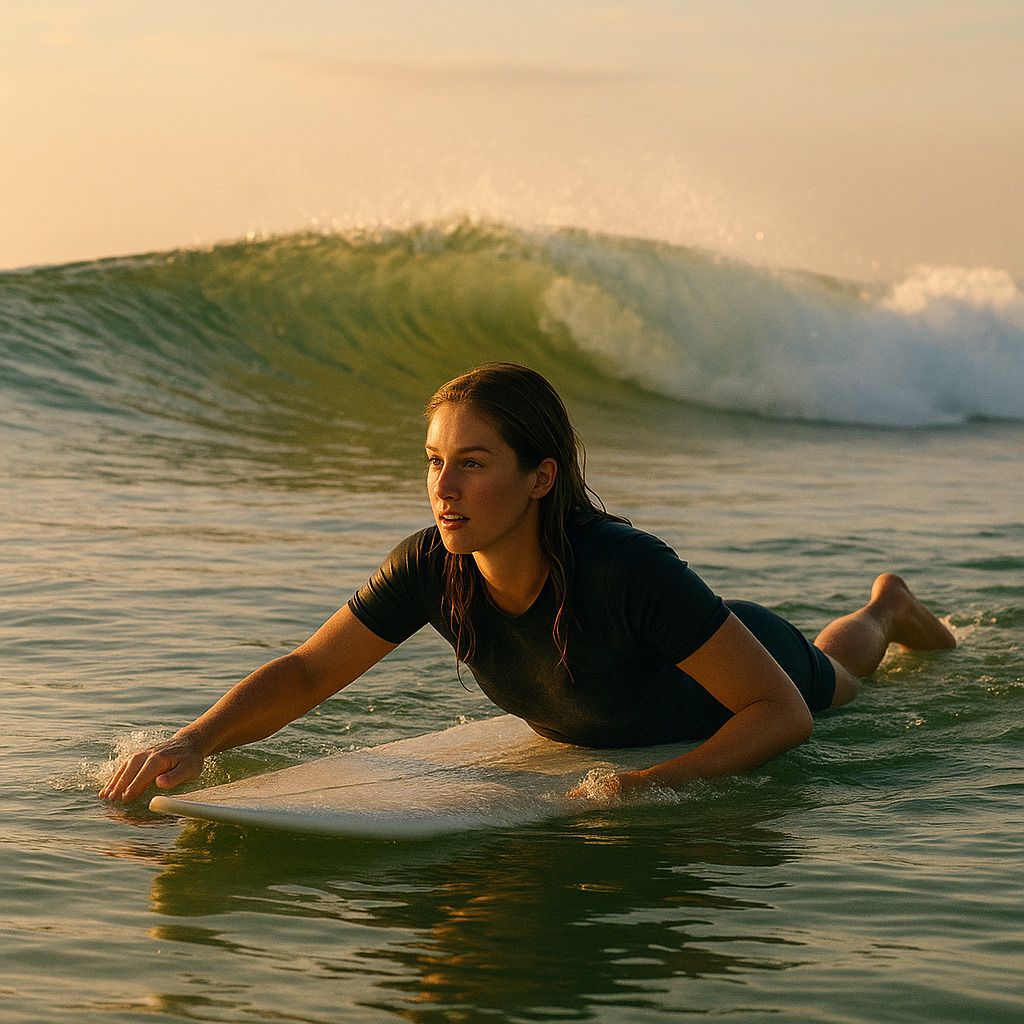
Paddling is surfing’s true engine and first surprise: it’s less about fighting the ocean and more about learning to move with it. Keep your chest lifted just enough that your nose isn’t plowing and your lower back isn’t screaming. Look where you’re going, long strokes, fingers slightly cupped. You’ll tend to paddle too short and too frantic; imagine instead you’re slowly climbing a ladder that stretches into the horizon. Each stroke should matter. This is where you learn rhythm—like a song that measures itself in breath and distance instead of beats. If a whitewater wave approaches, you’ll “press-and-knee” or push up slightly and let the foam roll between you and the deck. You’ll get shoved back. That’s fine. You don’t win by brute force; you win by reading the ocean better.

Somewhere past the shore break, there’s a quiet lane where the waves calm down before they rise. This is the lineup, and it’s a classroom with no walls. You’ll sit or belly down and watch the water breathe—lulls, sets, shifts. That surfer over there looks relaxed? They’re not lazy; they’re scanning. What is the wind doing? Are sets arriving every few minutes with two or three larger waves? Are people catching rides on the inside or farther out by a deeper channel? You’ll see patterns. Human beings are built for pattern-spotting. It’s just that the ocean likes to shuffle the deck now and then, and part of the humility of surfing is accepting that your patterns are always provisional.

Then comes your first wave—the conversation you’ve been eavesdropping on since you waxed that board. You’re positioned a little inside so you don’t have to sprint yourself into a heart attack. You turn the board toward shore, glance over your shoulder as the bump becomes a wall, and paddle with intent. The wave lifts you like a question. Two more strokes. One more. You’ll want to stand early. Don’t. Feel the board start to slide on its own—like a shopping cart that suddenly got a motor—then pop up decisively. Hands under you, hips driving forward, eyes up, feet landing wider than you think, front foot aiming slightly forward, back foot perpendicular, knees soft. If your eyes are down at your feet, you go down. If your chest is over the stringer and you’re looking where you want to go, you stand a chance.

You’ll stand for a second or ten. It will feel like standing on a rolling coin. Your instincts will argue. One will say “freeze” and the other will scream “lean!” Try neither. Bend, breathe, and let your ankles do the listening. Surfing is a thousand tiny adjustments you don’t consciously calculate. Your eyes read the slope; your hips translate; your feet write the sentence. When the ride ends (and it will, sooner than you want), step off rather than dive headfirst, keep the board away from your body, and come up protecting your head. If you wipe out harder than expected—and you will—know that wipeouts are the price of admission, not a sign you don’t belong. Everyone pays the cover.

Etiquette enters early. It isn’t gatekeeping; it’s traffic rules so the game stays fun and nobody collects fin marks on their shins. The surfer closest to the peak has priority; don’t drop in on someone’s right-of-way. Look both ways before you paddle for a wave; if someone’s already riding, pull back. Don’t paddle straight through the face of a wave someone is surfing—go around the shoulder or through the whitewater behind them. Smile. Apologize if you mess up. People forgive beginners who are respectful. They side-eye beginners who act like the ocean is a private amusement park. Learn who’s learning around you; celebrate their rides. Surfing can be solitary, but it’s a solitary sport done in company.

You’ll discover tides. They aren’t just “high or low”—they’re energy and geometry. On some beaches, mid-tide is your friend, smoothing the takeoff zone. On others, low tide turns the shore into a conveyor belt of closeouts, while high tide gives fat, slow rollers perfect for practice. You’ll learn to notice winds: morning glass before the sea breeze kicks up; afternoons that turn the surface into corduroy. Dawn patrol isn’t a personality trait; it’s a strategy. If you’re worried about crowds, early sessions are merciful. If you’re worried about cold, a light spring suit or fullsuit is a magic cape. Wetsuits aren’t just warmth; they’re flotation and courage.

Some days, progress feels like an escalator; other days it’s like trying to exit a crowded subway going the wrong way. You’ll plateau. Accept it. Plateaus are where technique consolidates and confidence catches up. On those days, choose goals that aren’t scoreboard-based: catch three clean whitewater rides to full pop-up; paddle out without turning turtle; finish with more energy than you started. Surfing asks you to be proud of ordinary wins. That’s how extraordinary ones sneak up on you.

Gear questions will appear like pop-up ads in your brain: Should I switch to a smaller board? When does a fish make sense? What about fins? Wax? Leash length? Here’s the quiet answer: keep gear simple while fundamentals grow. Your “next board” is not a trophy; it’s a teacher. If your soft-top still challenges you when the waves are a little bigger or cleaner, it’s still the right board. When you can catch unbroken waves consistently and angle down the line—not just go straight—then a mid-length (say 7’0”–7’6”) or a funboard transition opens new doors. Fins matter, but not as much as your paddle strength and pop-up timing. Wax smells like coconut so you buy more than you need; that’s okay.

The ocean will scare you sometimes, honestly, and that’s healthy. Fear is part warning system, part performance enhancer. The trick is to aim your fear at skills instead of avoidance. If you’re scared of getting held down, practice duck-dives or turtle-rolls in small surf and learn to count calmly underwater—one breath, one number. If rips worry you, learn to spot them—darker, ruffled water moving seaward—and treat them as conveyor belts you can exit by angling sideways to the sandbar rather than sprinting directly against them. If crowds stress you, move down the beach or pick a less “perfect” peak; an imperfect wave ridden is better than a perfect wave watched.

Training creeps in without feeling like homework when you anchor it to your goals. Two or three short swims a week condition your shoulders without the mileage; a resistance band routine keeps your rotator cuffs happy; light yoga grooves pop-up mobility and lower back resilience. Balance trainers are fun but optional; better to practice controlled land pop-ups and light jogs than to collect gadgets. The best “training plan” for beginners is a session plan: pick conditions with waves you can read, sessions short enough that your technique doesn’t collapse, and a simple focus like “late pop-ups” or “angled takeoffs.” Keep a notes app log—date, tide, wind, what you learned, what to try next. It’s shockingly motivating to see your ocean diary fill up.

There’s a social map to surfing that you’ll begin to decode. Some beaches throw “localism” like a wall; others welcome like a picnic. You can’t control that, but you can control how you show up—curious, respectful, stoked for everyone’s ride, and honest about your limits. Ask a lifeguard where beginners usually go. Watch a few sets before you paddle out. If a peak has six impatient shortboarders each with hero fantasies, don’t prove anything. Walk fifty yards. An easy wave with room to breathe is a better coach than a perfect wave with sharp elbows.

And then, the best part: surfing does strange, generous things to your life outside the water. You hydrate more. You sleep better. You start checking wind forecasts before checking your email. Mornings feel like presents you open on the sand. You become the person who understands that a single amazing ride is enough to turn a hard week into a good story. When friends ask how it’s going, you don’t brag about how many waves you caught; you talk about the one you almost had, how you learned to wait, the gull that looked like it was laughing at you, and that moment when you were paddling back out and the light turned the lip of a wave into a green window and you could see right through it. You start collecting moments like that—pocket-sized miracles, salt-cured and bright.

What should you realistically expect in your first ten sessions? Expect to be tired, but from the good kind of work. Expect to be humbled, and then to laugh at yourself more sweetly than you used to. Expect one or two rides that make you yell out loud without meaning to. Expect a handful of small scrapes: wax on your rashguard, a leash burn, a tiny bruise where the board kissed your thigh. Expect to learn that sunscreen is not a suggestion and water is fuel. Expect to meet strangers who pat their boards like pets and tell you the tide is “doing something weird.” Expect to get hooked, not on the image of surfing, but on the practice: the ritual of paddling out, the way time dilates, the fact that success is partly skill and partly generosity from something bigger than you.

Over weeks and months, your expectations will change. You’ll go from “I hope I stand up” to “I hope I angle right and make that section” to “I hope I find an empty bank and work on trimming.” You’ll learn to see waves that haven’t yet revealed themselves, to feel the slight lift in the water before it’s visible, to sense how a wave wants to be ridden and to oblige it instead of demanding it be something else. That’s perhaps the secret—surfing works best when you collaborate, not conquer. You’re not putting the ocean in your pocket; you’re borrowing a moment from it.

You’ll also learn that rest days are part of the practice. Surfers love to pretend they live on a permanent sabbatical, but bodies have bandwidth. Let your shoulders recover. Take a bike ride. Watch a point break cam with coffee and notice which surfers never look rushed. Read a book about ocean currents and realize that what pushes a wave across a whole planet is the same energy that nudges your board forward in that final, perfect instant before you stand.

If there’s a single mindset that keeps beginners progressing, it’s this: surf small goals, celebrate them loudly, and stack them early. A “small goals session” might look like: paddle out and back in three times without resting on the beach; practice ten smooth sand pop-ups before paddling out; sit on the board for a full minute without putting your feet down; angle your takeoff a little instead of going straight; end session while you still feel crisp. Small wins compound. They become muscle memory. Muscle memory becomes style. Style becomes the quiet signature you’ll leave on a wave someday when you’re not thinking about anything other than how good it feels to be alive.

Someday soon you’ll have a session that replays itself when you’re trying to fall asleep. The light is maybe a little gold. You’re in the spot you picked on purpose. The set builds. You’re calm. You turn with time to spare, paddle strong, feel the lift, commit to the pop-up later than your nervous system prefers, land clean, knees soft, eyes forward. You angle slightly, the board hums, and for a breath or five you’re weightless—hanging off the edge of your old life like a person peeking into a party they’re suddenly invited to. You kick out. You lie there grinning. The next wave marches in as if nothing happened, but something did. You’ll carry it all day, all week. This is what to expect.

If you want a practical checklist in plain words, here’s the quiet version, smuggled into the paragraphs above. Start on a big soft-top—your ego can handle it and your skills will thank you. Practice pop-ups on sand until the movement feels inevitable. Paddle with long, smooth strokes and a lifted chest. Choose mellow, uncrowded peaks and learn the traffic rules early so you make friends, not enemies. Read conditions: get curious about tides, winds, and bottom contour. Exit wipeouts with calm, protect your head, and find your leash before you stand up. Train off the water just enough to keep shoulders happy and hips mobile. Log your sessions. Sleep. Repeat. Smile at strangers with boards under their arms because you already know something about their day.

And then, welcome to the long game. You’ll tinker forever—stances, timing, lines, boards, fins, beaches, friend groups, playlists for early drives, snacks for the parking lot, the perfect change of clothes, the lucky towel. You’ll become the kind of person who notices cloud texture and thinks about wind. You’ll turn into the friend who can tell, by the smell in the air thirty minutes from the coast, if the sea is warming up. You’ll collect a dozen slightly ridiculous rituals that only make sense to surfers. That’s the real expectation: surfing will fold into your life until it’s not a hobby at all, but a place where you go to become a clearer version of yourself for a little while. The surprise is that this is available to anyone who’s willing to be a beginner for long enough.

If you need one more reason to begin now, consider this: the ocean is the most patient teacher in the world. It doesn’t care how you look in a wetsuit. It doesn’t ask how much you bench. It doesn’t even mind when you shout after a tiny ride like you just won a medal. It just keeps rolling up, class after class, in simple blue lines, asking you to pay attention. Most of surfing is just that: attention paid in salty coins over and over until you’ve accidentally bought yourself a life you recognize as your own. That’s what you can expect. Everything else is a bonus.

Finally, a few practical images to carry with you into those first sessions—pictures you can pull up with your eyes closed: the long slow paddle where each stroke is a note in a song you wrote that morning; the way you look over your shoulder and feel the lift like a hand at your lower back guiding you forward; the sudden quiet right before you pop; the glitter-sparkle of water at fin level when you’re trimming; the ridiculous laugh you can’t suppress when you fall and pop up grinning anyway. Make a pocket for those moments. That’s your souvenir bag. You’ll refill it for years.

When you pack up after a session—board rinsed, leash wrapped, wetsuit hanging like a tired superhero costume—you’ll feel subjectively taller. You earned a nap. Food tastes better. The traffic home is less insulting. You might hum along to a song you would normally skip. Surfing isn’t spiritual in a grand, serious way unless you want it to be; it’s spiritual in an everyday way that helps you name the day: I went out, I tried, I fell, I learned, I stood, I felt alive. Tomorrow might be flatter, windier, busier; doesn’t matter. You learn to greet the ocean as it is, and maybe yourself that way, too. That’s the surprise at the center of this sport: you came for the waves, and you leave with a better way to live your life between them.

When you finally call yourself a surfer, nobody gives you a certificate. You’ll just notice that your car knows the route on its own, that your shoulders are stronger than your patience used to be, that your phone’s weather widget looks like a secret code, and that you don’t mind waiting anymore. Waiting becomes part of the pleasure. You wait for tide, for wind, for sets, for that one friend who’s always late, for your turn, for your wave. In a world that begs you to sprint, surfing teaches you to arrive. That might be the best thing to expect of all.
Related Posts

Beach Volleyball for Fun & Fitness: Where Sand Meets Sweat and Smiles

Dave

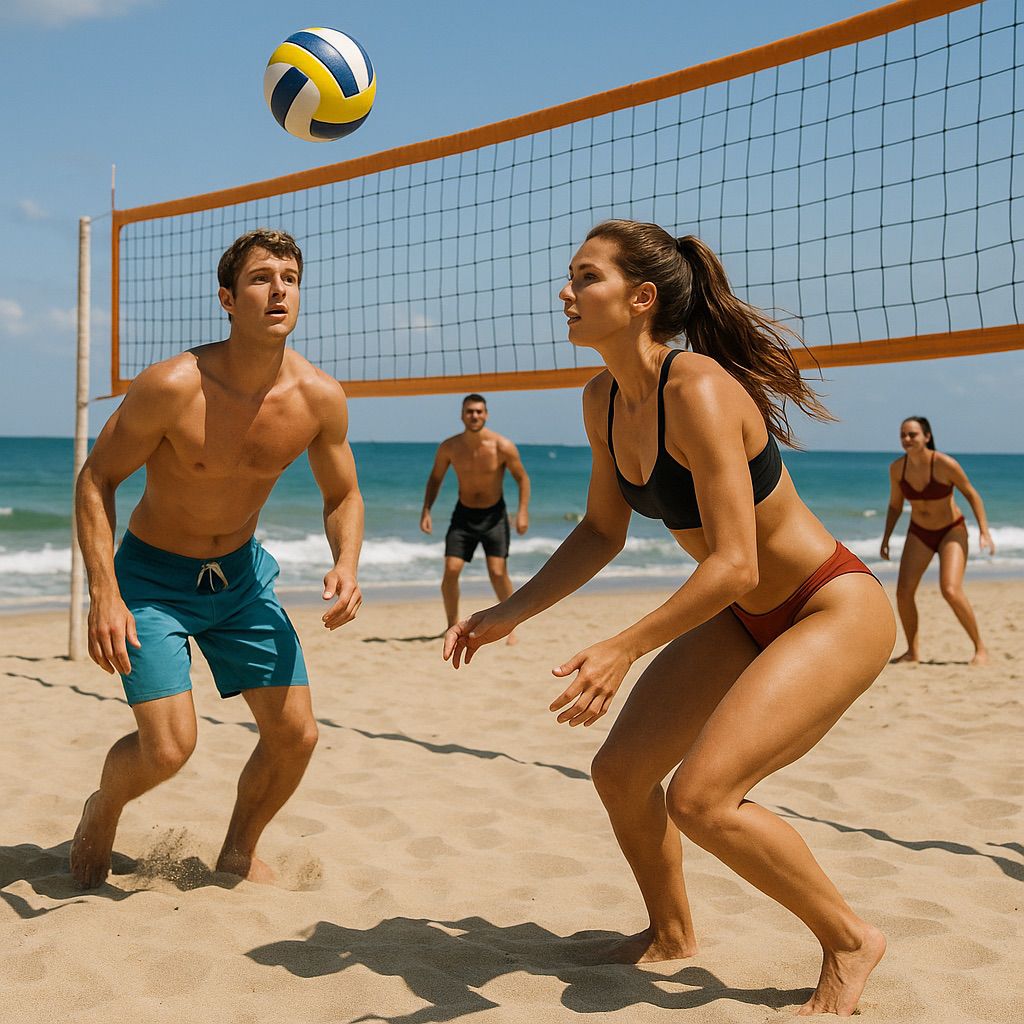
There’s something irresistible about a volleyball net strung between two poles on a stretch of golden sand, the sun glittering on the horizon, and the sound of waves keeping time with the rhythm of the game. Beach volleyball is more than just a sport—it’s a joyful blend of competition, camaraderie, and physical challenge that has been capturing hearts for decades. Whether you’re a seasoned athlete diving for impossible saves or a casual weekend player laughing through a friendly match, this sport offers a unique combination of fun and fitness that few activities can match.

It’s easy to see why beach volleyball draws people in. The setting is part of the magic—playing on sand, barefoot, surrounded by ocean air, feels worlds apart from indoor courts or gyms. The surface forces every movement to be deliberate, every jump to be earned, and every sprint to be powered by real grit. It’s a workout in disguise: you’re so caught up in the game that you forget just how much you’re sweating and how many muscles are engaged until you wake up the next day with pleasantly sore legs and shoulders.

For many, the introduction to beach volleyball is as simple as a spontaneous game with friends. Someone brings a ball, someone else sets up a net, and before long, two teams are forming from whoever happens to be nearby. Tourists join locals, strangers become teammates, and the boundaries between serious play and playful competition blur. The laughter is as loud as the cheers, and “winning” often takes a backseat to just keeping the rally alive for as long as possible.

But don’t let the laid-back vibe fool you—beach volleyball can be as intense and strategic as any professional sport. In competitive formats, the game is played two-on-two, meaning there’s no room to hide. Each player has to serve, dig, set, block, and spike with equal skill. The smaller team size demands constant communication and a deep understanding of your partner’s strengths and tendencies. Matches often turn into chess games played at full speed, where anticipating your opponent’s next move can make the difference between scoring a point or eating sand after a desperate dive.

The physical benefits of beach volleyball are undeniable. Sand provides a natural resistance that makes every step more challenging, building strength in your legs, core, and stabilizing muscles. Jumping on sand also requires more explosive power, which translates into improved vertical leaps when playing on harder surfaces. Plus, all that movement under the sun boosts your cardiovascular fitness, coordination, and agility. And let’s not forget the mental side—games on the beach are almost always bathed in sunlight and fresh air, a natural mood enhancer that helps reduce stress and improve focus.

For those looking to get into the sport seriously, the pathway from casual play to competition is wide open. Many coastal towns and cities offer organized leagues, tournaments, and training programs for all skill levels. Beginners can focus on learning the fundamentals—how to pass cleanly, how to set without carrying the ball, and how to serve consistently—while more advanced players can refine their footwork, blocking technique, and tactical plays. The community is generally welcoming, with veterans happy to give pointers and invite newcomers into games.

Beach volleyball also has a glamorous side that can’t be ignored. It’s a mainstay of the Summer Olympics, where athletes from around the world compete under blazing suns and roaring crowds. The sport’s combination of athleticism, spectacle, and scenic backdrops makes it a favorite for both live audiences and television viewers. Watching elite players dive into the sand, recover, and smash a ball over the net in one fluid motion is pure artistry—proof of what’s possible when skill meets passion.

Yet, what truly sets beach volleyball apart is how adaptable it is to different moods and groups. One weekend, you might find yourself in a high-stakes tournament where every serve counts. The next, you could be at a sunset pickup game with music playing in the background and players rotating in and out without keeping score. It’s as much a social gathering as it is a sport, and that’s why so many people return to it season after season.

The game has roots that go back over a century, with its origins in early 20th-century California and Hawaii, where it grew organically alongside surfing culture. It was the perfect complement to a lifestyle that valued outdoor activity, community, and a healthy dose of competition. Over time, the sport spread to beaches around the globe, from Rio’s Copacabana to Australia’s Bondi, each location adding its own flavor to the game.

For beginners, the best advice is simple: start small. Don’t be intimidated by the pros you see on TV. Grab a ball, find a beach, and start passing it around with friends. Learn to move comfortably on the sand before focusing on big spikes or blocks. And most importantly, embrace the fact that you’re going to get sandy—really sandy. Diving for the ball is half the fun, and wearing your post-game sand as a badge of honor is part of the culture.

For those chasing fitness goals, beach volleyball is a goldmine. A single hour of casual play can burn hundreds of calories while toning your muscles and improving your balance. It’s a full-body workout wrapped in a game, which makes it easier to stick with compared to repetitive gym routines. Add in the benefits of vitamin D from sunlight (with proper sunscreen, of course), and you’ve got one of the most enjoyable ways to stay in shape.

The social benefits are just as strong as the physical ones. Beach volleyball tends to attract positive, energetic people, making it a great way to meet new friends or strengthen existing bonds. Whether you’re traveling and looking to join a game abroad or playing weekly with the same group, the sense of community is undeniable. Players cheer each other on, celebrate great saves, and share in the joy of long rallies that seem to defy gravity.

At the heart of it, beach volleyball is about connection—connection to the game, to the people you play with, and to the environment around you. The sound of waves, the feel of sand under your feet, and the sight of a ball arcing against the backdrop of a bright sky all combine to create something timeless. It’s a reminder that sport doesn’t always have to be confined to arenas and schedules. Sometimes, the best matches happen when the tide is just right, the sun is sinking low, and someone shouts, “One more game!”

So whether you’re in it for the competition, the workout, or the simple joy of chasing a ball across the sand, beach volleyball has a place for you. It’s a sport that celebrates athleticism and playfulness in equal measure, and one that proves fitness can be as fun as it is challenging. The next time you see a net on the beach, don’t just watch—jump in, get sandy, and find out why this game has captured the hearts of so many.

Related Posts

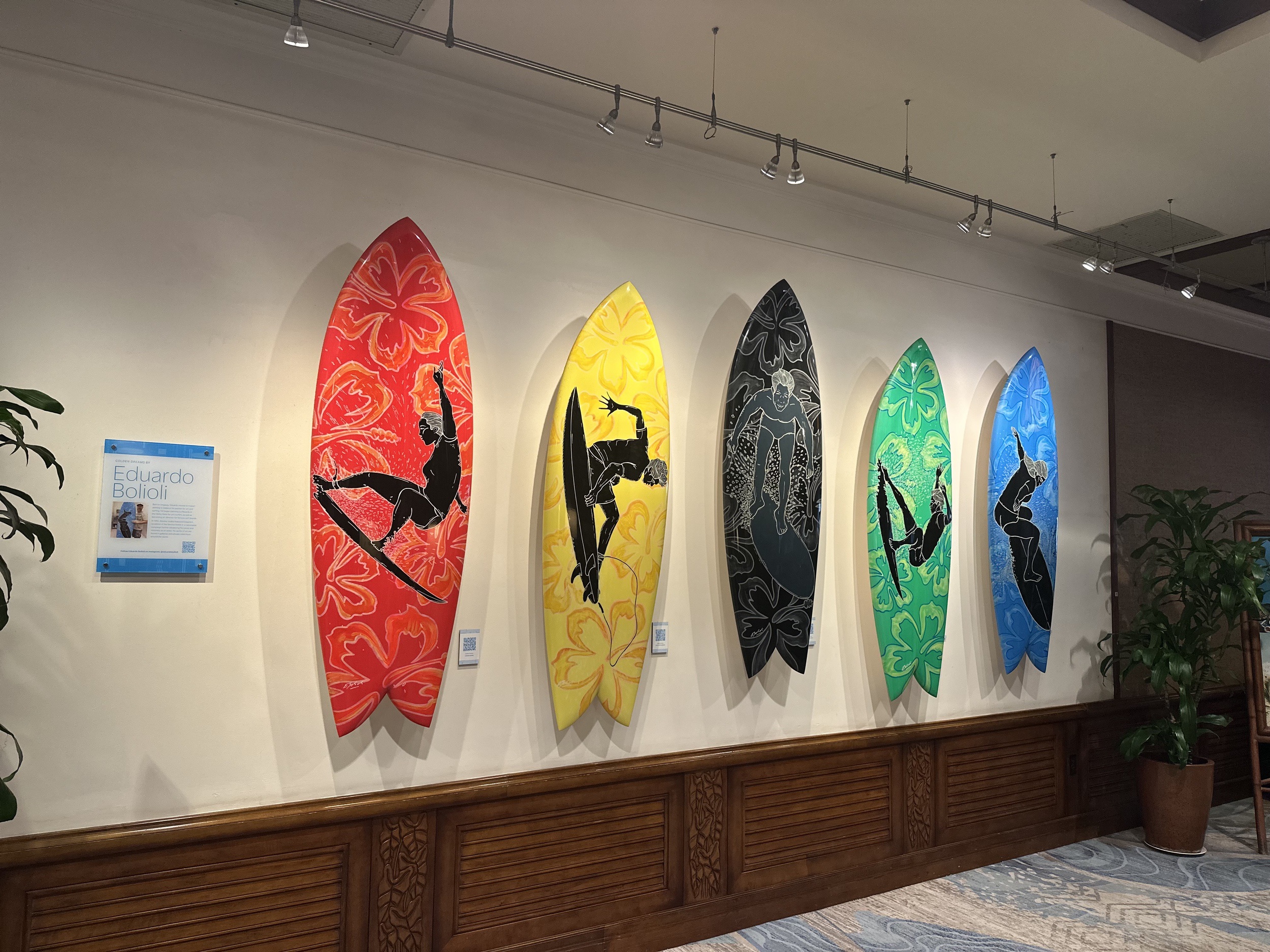
Riding the Waves of Art: The Craft of Eduardo Bolioli Surfboards

Dave

Eduardo Bolioli’s surfboards aren’t just vessels for the ocean—they’re canvases that capture the vibrant spirit of surfing and the deep connection between the rider and the sea. Born in Uruguay and shaped by the waves of Hawaii, Bolioli’s journey as an artist and shaper is a testament to his love for both art and surf culture. His boards are hand-painted masterpieces, each one a unique blend of bold colors, intricate designs, and the energy of the ocean. But these surfboards aren’t just about aesthetics; they’re crafted for performance, designed to glide effortlessly across the waves with the precision that only a true surfer and artist could achieve. Owning a Bolioli surfboard is like riding a wave of creativity, where every stroke of paint and curve of the board reflects the passion and soul of a man who lives and breathes the ocean. For those who seek more than just a surfboard, Eduardo Bolioli offers a piece of art that’s as alive as the waves it rides.

Related Posts

The Power and Passion of the Haka: New Zealand’s Legendary Pre-Match Ritual

Dave

In New Zealand, the haka is more than just a pre-match performance; it’s a powerful expression of cultural heritage and pride. This traditional Maori war dance, famously performed by the New Zealand national rugby team, the All Blacks, is a captivating spectacle that combines fierce chanting, rhythmic movements, and intense facial expressions. The haka serves multiple purposes: it intimidates opponents, motivates the team, and pays homage to Maori culture. Among the different types of haka, “Ka Mate,” composed in the early 19th century by the Maori chief Te Rauparaha, is the most renowned.

When the All Blacks take the field and perform the haka, it’s not just a show of physical prowess but a profound statement of unity and strength. The dance, with its deep roots in Maori tradition, is a way of acknowledging the importance of the occasion and showing respect to their opponents. The haka’s emotional intensity is palpable, inspiring the performers and capturing the imagination of spectators around the world. With each performance, the All Blacks not only demonstrate their athletic excellence but also honor the rich cultural tapestry that makes New Zealand unique.

Related Posts

Paris 2024: A Rendezvous with Olympic Glory

Dave

The Olympic Games are more than just a series of athletic competitions; they are a global celebration of human spirit, determination, and excellence. Every four years, the world comes together to witness extraordinary feats of strength, speed, and skill, transcending political boundaries and cultural differences. Athletes from all corners of the globe train tirelessly for years, embodying the pinnacle of dedication and perseverance. The Olympics inspire millions, showcasing the heights that can be achieved through hard work and passion.

But the Olympics are not just about the athletes. They are about the shared experience of the spectators, who cheer on their countries with fervent pride and connect with others in a collective celebration of humanity. The Games remind us of our commonalities, fostering a sense of global camaraderie and mutual respect. They provide a platform for stories of triumph over adversity, where underdogs can achieve the seemingly impossible and heroes are made.

The opening and closing ceremonies are spectacles of culture and creativity, where nations showcase their heritage and artistry on a world stage. These moments of grandeur and beauty add depth to the sporting events, highlighting the rich tapestry of human civilization. The Olympics also promote values such as fairness, respect, and sportsmanship, emphasizing the importance of ethical behavior both on and off the field.

In essence, the Olympics are a powerful reminder of what humanity can achieve when we come together in the spirit of friendly competition and mutual respect. They are a testament to the boundless potential of the human spirit and a celebration of the best aspects of our global community.

Related Posts

Ride the Wave: Dive into the Thrilling World of Boogie Boarding!

Dave

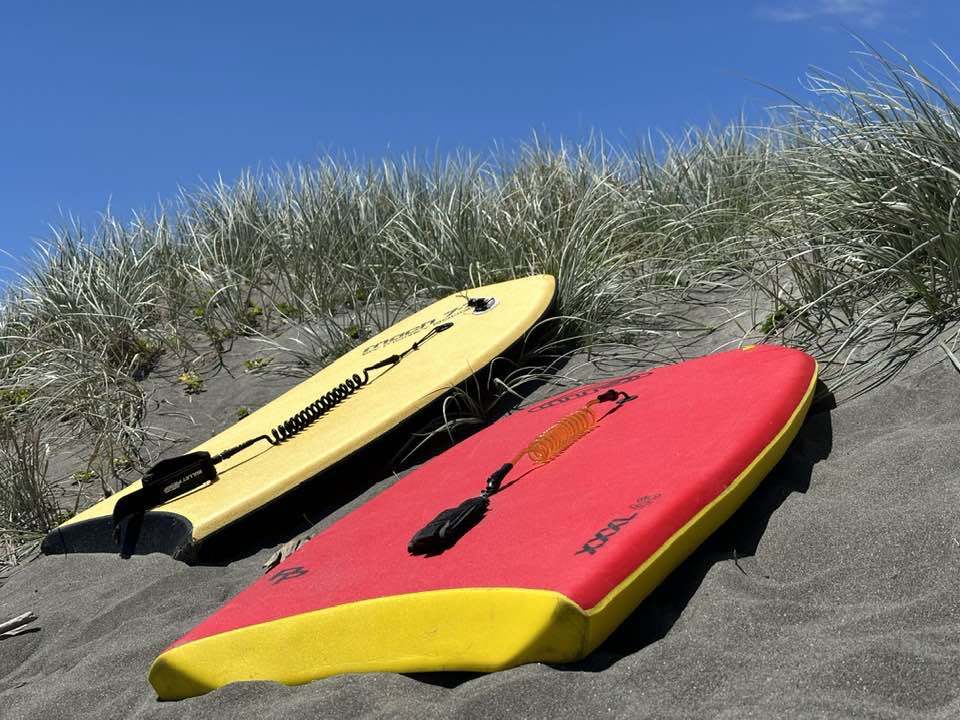
Ready for some ocean adventure? Look no further than boogie boarding, the thrilling water sport that’s taking the world by storm. Also known as bodyboarding, this popular activity involves riding a short, rectangular foam board on the waves of the ocean. It’s an accessible and exciting experience for people of all ages and skill levels. The lightweight foam board makes it easy to maneuver, allowing for a close connection to the water and an exhilarating ride.

Unlike surfing, where the rider stands on a longer and narrower board, boogie boarding is all about lying down on the board and riding the waves towards the shore. This unique approach provides a rush like no other, as you use your body and the board to steer and control your movements. It takes a keen sense of balance, coordination, and timing to successfully navigate the waves and come out on top.

Boogie boarding can be enjoyed in a variety of wave conditions, from gentle and small ones for beginners to larger and more powerful ones for experienced riders. It’s a sport that allows you to truly connect with the ocean and experience the exhilaration of riding the waves. So why not make it your next hobby or a fun way to spend a day at the beach? Grab your board, head to the shore, and get ready for an adventure you’ll never forget!

Related Posts

Racing with Wings: The Fascinating World of Pigeon Fanciers

Dave

Pigeon racing is an engrossing sport that seamlessly combines animal husbandry, meticulous training, and intense competition, all designed to challenge the speed and navigational prowess of homing pigeons. The devoted individuals who engage in this sport, known as “pigeon fanciers,” invest significant effort in breeding and training their avian athletes to master skills like endurance, agility, and superior homing instincts. The excitement of the races themselves cannot be overstated; pigeons are released from a predetermined location, and as they soar towards their home lofts, the stopwatch tracks the swiftest return. The birds’ average speed, measured in yards or meters per minute, is calculated from this time and distance data, adding a layer of mathematical intrigue to the spectacle.

What truly amplifies the thrill of pigeon racing is the fierce competition and the unrelenting pursuit of excellence. Enthusiasts commit considerable time and resources into cultivating pigeons with exceptional genetics and developing demanding training regimens to sharpen their capabilities. The camaraderie and community spirit within pigeon racing circles are equally compelling, offering a structured environment where fanciers can connect, share insights, and compete both locally and internationally. Beyond the excitement of the race and the lure of triumph, one of the sport’s most captivating aspects is the profound bond that forms between the pigeons and their trainers. This relationship is forged through painstaking care and collaborative training, demonstrating a remarkable testament to the natural aptitude of pigeons and the steadfast commitment of their handlers.

Moreover, there remains a palpable sense of awe surrounding these birds’ extraordinary homing abilities. The sheer wonder at their capability to navigate vast expanses with pinpoint precision enhances our admiration for these remarkable creatures. This blend of natural wonder, human dedication, and competitive fervor renders pigeon racing an unforgettable sport, as much about fostering deep connections as it is about crossing the finish line first.

Related Posts

Game Changers: Navigating the Profitable Terrain of Sports

Dave

Sports have become a major source of profit in today’s society. From professional leagues to local recreational teams, the sports industry has expanded into a multi-billion dollar business. This trend can be seen in the increasing salaries of athletes, the lucrative sponsorship deals, and the rise of ticket prices for major sporting events. The concept of sports for profit has both its supporters and critics. On one hand, it provides a platform for talented athletes to showcase their skills and earn a living through their passion. It also creates job opportunities for coaches, trainers, and other staff involved in the sports industry. Additionally, the revenue generated from sports can benefit the local economy through increased tourism and spending. However, there are concerns about the commercialization of sports and how it can potentially detract from the true spirit of competition. With the focus on profit, there is a risk of prioritizing financial gain over the well-being of athletes and the integrity of the game. There have also been cases of exploitation and corruption in the sports industry, as seen in the scandals surrounding FIFA and the use of performance-enhancing drugs in professional sports. Despite these issues, it is clear that sports for profit is here to stay. As long as there is a demand for sports entertainment, there will always be companies and organizations looking to capitalize on it. The key is finding a balance between making a profit and maintaining the integrity and values of sports. Ultimately, it is up to the consumers and stakeholders to support ethical practices in the sports industry and ensure that the love of the game is not overshadowed by the pursuit of profit.

Related Posts

The South Eastern Conference Plays Weak Non-Conference Opponents to Boost Their Ranking

Dave


The SEC, or the Southeastern Conference, has been a subject of criticism for its allegedly weak non-conference game schedules. In particular, many have pointed out that the SEC tends to schedule games against weaker opponents, often from smaller conferences or lower divisions. Some have suggested that this is an intentional strategy to pad the SEC’s win-loss record and increase their chances of making it to the College Football Playoff. Additionally, many of these non-conference games take place in good weather conditions, which some argue gives the SEC teams an unfair advantage.

There are certainly some valid criticisms of the SEC’s non-conference scheduling practices. It is true that many SEC teams do play weaker opponents in these games, which can make it difficult to gauge just how good they really are. However, it is worth noting that this is not a problem unique to the SEC. Many other conferences and teams also schedule weaker opponents in non-conference games, especially early in the season when they are still figuring out their roster and game plan.

As for the accusation that the SEC intentionally schedules weaker opponents to boost their win-loss record, it is difficult to say for sure whether this is true or not. Some coaches have admitted to scheduling easier non-conference games, but they typically do so in order to give their team an easier start to the season and avoid injuries before conference play begins. It is also worth noting that the SEC has been one of the most dominant conferences in college football in recent years, which suggests that their teams are simply better than many of their non-conference opponents.

Finally, the claim that the SEC benefits from playing non-conference games in good weather is also somewhat questionable. While it is true that many SEC teams are located in warmer climates and may be more accustomed to playing in hot weather, it is also true that many other conferences have teams in similar climates. Additionally, weather conditions can be unpredictable and can change quickly, so it is difficult to say whether a particular game will be played in good weather or not.

Overall, while there are certainly some valid criticisms of the SEC’s non-conference scheduling practices, it is important to keep things in perspective. The SEC has been one of the most dominant conferences in college football in recent years, and their teams are consistently among the best in the country. While it is true that they may schedule easier non-conference games at times, this is not a problem unique to the SEC and is done by many other conferences and teams as well. Additionally, while weather conditions may play a role in some games, it is not a significant enough factor to give the SEC an unfair advantage.

Related Posts

The Over Inflated Strength of Schedule Rankings at the Start of the Season Gives the SEC an Unfair Advantage

Dave


The SEC college football teams are no strangers to controversy! The ongoing debate about whether they receive an unfair advantage at the start of the season is a hot topic among football enthusiasts. Some argue that the team rankings are inflated, giving the SEC teams an edge based on their strength of schedule. While others believe that this provides a fair advantage, the primary reason why this argument exists is because the SEC teams often play weaker non-conference opponents, which artificially inflates their rankings.

It’s all about the rankings system, with teams gaining points for wins against high-ranked opponents. The SEC teams’ easier non-conference schedule gives them an advantage in the rankings, which some argue is unfair. Additionally, this means that the SEC teams may not be as dominant as they seem, and other teams are left to struggle against them. For example, teams from the Big Ten or Pac-12 conferences often play tougher non-conference games, making it harder for them to compete against SEC teams. This can impact their rankings and leave them at a disadvantage.

However, others argue that it’s a fair play, as the SEC teams still have to battle it out against tough conference opponents. The SEC is widely regarded as one of the most competitive conferences in college football, with several top-ranked teams. Moreover, SEC teams also have to play in the SEC championship game, which can be just as challenging as any non-conference game.

The debate about whether SEC college football teams receive an unfair advantage at the start of the year is a complex issue with valid arguments on both sides. While some believe that the rankings system should be changed to level the playing field, others believe that it provides a fair advantage. Ultimately, the decision lies in the hands of the NCAA and other governing bodies. Whichever way they decide to go, one thing’s for sure – the SEC will continue to be at the center of the college football universe!

Related Posts

College Football has Taken the Weather as a Factor out of the Sport

Dave


College football has long been a beloved American pastime, with millions of fans tuning in each year to watch their favorite teams battle it out on the field. However, one aspect of the game that has changed dramatically over the years is the impact of weather on gameplay. In the early days of college football, weather was often a significant factor that could have a huge impact on the outcome of a game. Rain, snow, and wind could all make it difficult for players to move the ball effectively, and many games were won or lost based on weather conditions alone.

However, in recent years, college football has taken the weather as a factor out of the sport. Advances in technology and the introduction of domed stadiums have made it possible for games to be played in almost any weather conditions, without significantly affecting gameplay. This has led to a more consistent and predictable experience for fans, who no longer have to worry about the weather ruining their favorite team’s chances of winning.

While some fans may argue that taking the weather out of the sport has made it less exciting or less challenging, the reality is that it has actually made the game more fair and more accessible to players of all skill levels. By eliminating the impact of weather conditions, teams are able to focus more on their actual gameplay strategies and less on adapting to changing weather patterns.

In conclusion, while the impact of weather on college football may be a thing of the past, the sport continues to thrive and evolve in exciting new ways. Whether you’re a die-hard fan or a casual observer, there’s no denying the thrill of watching some of the best athletes in the world compete on the gridiron, rain or shine.

Related Posts

The Bowl Championship Series Changed College Football by Favoring the Southeastern Conference

Dave


The Bowl Championship Series (BCS) was supposed to be the ultimate game-changer for college football, but it ended up sparking a fierce controversy due to its alleged bias towards the (SEC). As one of the most powerful conferences in college football, the SEC had already been dominating the sport for years, with multiple national championships under its belt. But with the BCS in place, the SEC had a distinct advantage over other conferences, which gave them even more power and prestige.

The BCS was designed to rank college football teams based on a variety of factors, such as their win-loss record, strength of schedule, and quality of wins. However, it seems that the system was rigged in favor of the SEC, which had more teams in the BCS than any other conference. This meant that the SEC had more opportunities to earn money and attract top talent, which helped them build dynasties that lasted for years.

The BCS also gave SEC teams an automatic bid into the top bowl games, which further cemented their status as the top dogs in college football. As a result, players were more likely to want to play for SEC teams, which made recruiting much easier for them. This created a vicious cycle that allowed the SEC to maintain their dominance over college football for a long time.

But all good things must come to an end, and the BCS was eventually replaced by the College Football Playoff (CFP). Unlike the BCS, the CFP doesn’t give any conference an automatic bid into the top bowl games, which means that every team has to earn its spot on the field. This has helped level the playing field for all conferences and has given more teams a chance to compete for a national championship.

The CFP has also made college football more exciting for fans, as every game now matters more than ever. With no automatic bids or guaranteed spots, every team has to fight tooth and nail to earn its place in the playoffs. While the SEC is still a dominant force in college football, the CFP has made it much harder for them to maintain their stranglehold on the sport.

Related Posts

University of Michigan Football Should be a Strong Contender for the Big Ten

Dave
a person wearing a helmet

University of Michigan Football

The Wolverines have been a consistent contender in the Big Ten conference, and this year should be no different. With a strong defense and talented skill players on offense, they have the potential to win big games and make a run at a conference championship. However, they will face some tough opponents, including Ohio State, Penn State, and Wisconsin, all of whom will be vying for the top spot in the conference. But with a talented and experienced coaching staff, led by head coach Jim Harbaugh, the Wolverines are well-equipped to handle these challenges. Ultimately, much will depend on the performance of their quarterback and the cohesion of their offensive line. If these pieces fall into place, the Wolverines could be in for a successful season. It is important to remember that football is a highly unpredictable sport, and there are many variables that can impact a team’s performance. But based on what we know, the University of Michigan football team has the potential to be a strong contender this year.

Related Posts

Bridging the Gender Pay Gap in Soccer: The Case for Implementing a Flat 15% Revenue Share

Dave

a close up of a football ball

The issue of gender pay disparity in professional sports has ignited passionate debates and intense scrutiny in recent years. And one team that has been at the center of this discussion is the Women’s FIFA soccer team in America. While it is widely known that American women only receive 20% of the profit from their games, compared to the men’s team earning a mere 7%, it is crucial to delve deeper into the context behind these figures.

Beyond the earnings gap, it’s important to acknowledge that the men’s team generates significantly more revenue for the sport as a whole. This can be attributed to various factors, such as the immense popularity and viewership of men’s soccer in comparison to the women’s game. Throughout history, the men’s team has enjoyed a larger following and higher attendance rates, translating into greater revenue from ticket sales, sponsorships, and broadcasting rights.

While the women’s team has undoubtedly made remarkable strides and achieved extraordinary success on the international stage, they are still striving to attain the same level of financial support and recognition as their male counterparts. It is crucial to recognize that the disparity in earnings is not a reflection of the women’s team’s value or contribution to the sport. Instead, it serves as a stark reminder of the existing inequalities within the sports industry.

Efforts must be made to address these disparities and ensure that female athletes receive the recognition and compensation they genuinely deserve for their exceptional skills and unwavering dedication to the sport.

One proposed solution to bridge the gender pay gap in professional soccer is the implementation of a flat 15% revenue share for both men and women players. This approach suggests that regardless of gender, players should receive a fair and equitable share of the total profits generated by their respective teams. By adopting such a system, it guarantees that players are rewarded based on the overall financial success of their teams, aligning with the principle of meritocracy.

Not only does this approach promote gender equality by eliminating the disparity in earnings between male and female players, but it also provides equal opportunities for financial growth. This model incentivizes athletes of all genders to strive for success both on and off the field. Moreover, it sends a powerful message that recognizes and values the invaluable contributions of female athletes in the world of soccer.

Implementing a flat 15% revenue share ensures that both men and women players have a tangible stake in the financial success of their teams. This approach not only highlights the importance of gender equality but also establishes a fair and transparent system that rewards athletes based on their ability to generate revenue. In conclusion, adopting a flat 15% revenue share for men and women’s soccer presents a viable solution that promotes fairness, gender equality, and financial prosperity for players in this dynamic and globally beloved sport.

Related Posts

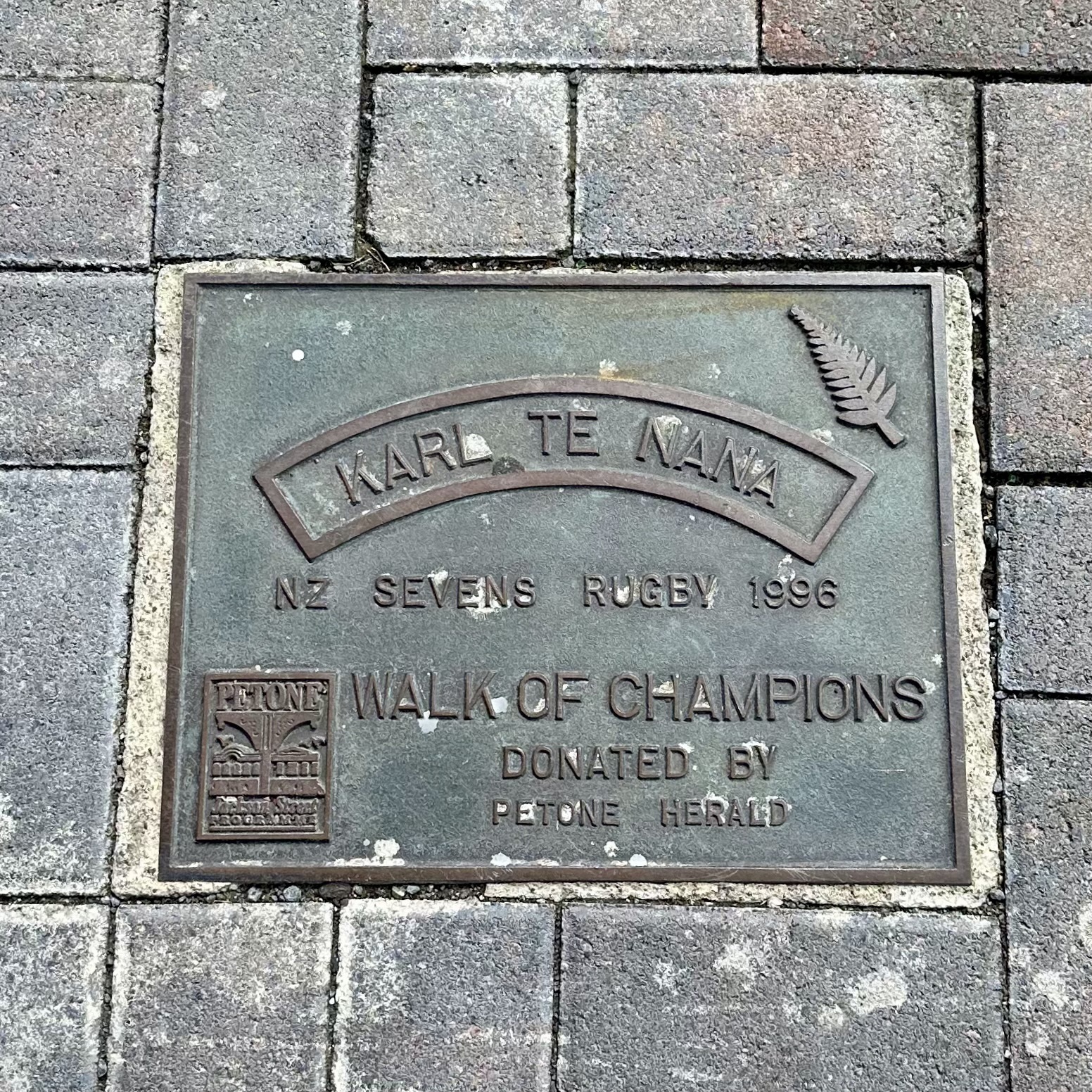
Karl Te Nana and the Legendary New Zealand Sevens Rugby 1996 Walk of Champions

Dave


The New Zealand Sevens Rugby 1996 Walk of Champions is a legendary event that holds a significant place in the history of New Zealand rugby – a sport that’s almost like a religion for the Kiwis. While I couldn’t find specific details about Karl Te Nana’s participation in the Walk of Champions that year, I can provide you with some fascinating insights into the event and its importance.

The Walk of Champions is a revered tradition in rugby circles where players, past and present, are celebrated for their contributions to the sport. It’s a momentous occasion that’s often held before major rugby tournaments or as part of special events. The purpose of the Walk of Champions is to pay homage to the players’ achievements, showcase the rich history of the sport, and get fans pumped up with excitement.

The New Zealand Sevens Rugby team is a force to be reckoned with in the world of rugby sevens, a breathtakingly fast variant of the game. The team’s legacy is one of dominance, having clinched numerous victories and championships over the years. The 1996 edition of the New Zealand Sevens Rugby tournament was undoubtedly a momentous event, but specific details of Karl Te Nan’s involvement in the Walk of Champions during that year are somewhat elusive.

Karl Te Nana is a former New Zealand rugby union player who played as a winger and represented his country in both fifteens and sevens rugby during his illustrious career. Although I couldn’t find any specific information about his role in the 1996 Walk of Champions, it’s safe to say that his contributions to New Zealand rugby would undoubtedly be recognized and celebrated.

If you’re interested in delving deeper into the New Zealand Sevens Rugby 1996 Walk of Champions or Karl Te Nana’s involvement, I recommend scouring through official rugby archives, news articles, or reaching out to relevant rugby associations or organizations that may have documented records of the event. Who knows what fascinating tidbits of information you may uncover!

Related Posts

Is it Fair for Transgender Athletes to be Competing in Women’s Sports?

Dave

a group of people posing for the camera

The issue of transgender biological males participating in women’s sports has ignited a heated debate in recent years. While some argue that inclusivity is paramount, others stress the significance of maintaining a fair playing field. The core concern lies in the physical differences between males and females. Biologically, males possess greater bone density, larger body structures, and higher testosterone levels than females. Allowing transgender biological males to compete in women’s sports can lead to an unfair advantage, putting the integrity of the sport in jeopardy.

The safety of female athletes is another pressing concern. Biological males are generally more physically dominant, and their inclusion in women’s sports can increase the risk of injury, especially in contact sports like boxing, MMA, and rugby.

However, supporters of inclusivity believe that transgender individuals have a right to participate in any activity they choose, including women’s sports. They argue that transgender individuals often face discrimination and exclusion, and allowing them to participate in women’s sports can promote acceptance and inclusivity.

It’s clear that this is a complex and multifaceted issue that requires careful consideration. While inclusivity is vital, it’s equally crucial to ensure fairness and safety for all athletes, regardless of their gender identity. Therefore, alternative solutions must be explored to address this contentious issue.

Related Posts