Category: Government

The Thomas Jefferson Memorial: Where Ideas of Freedom Still Echo

Dave

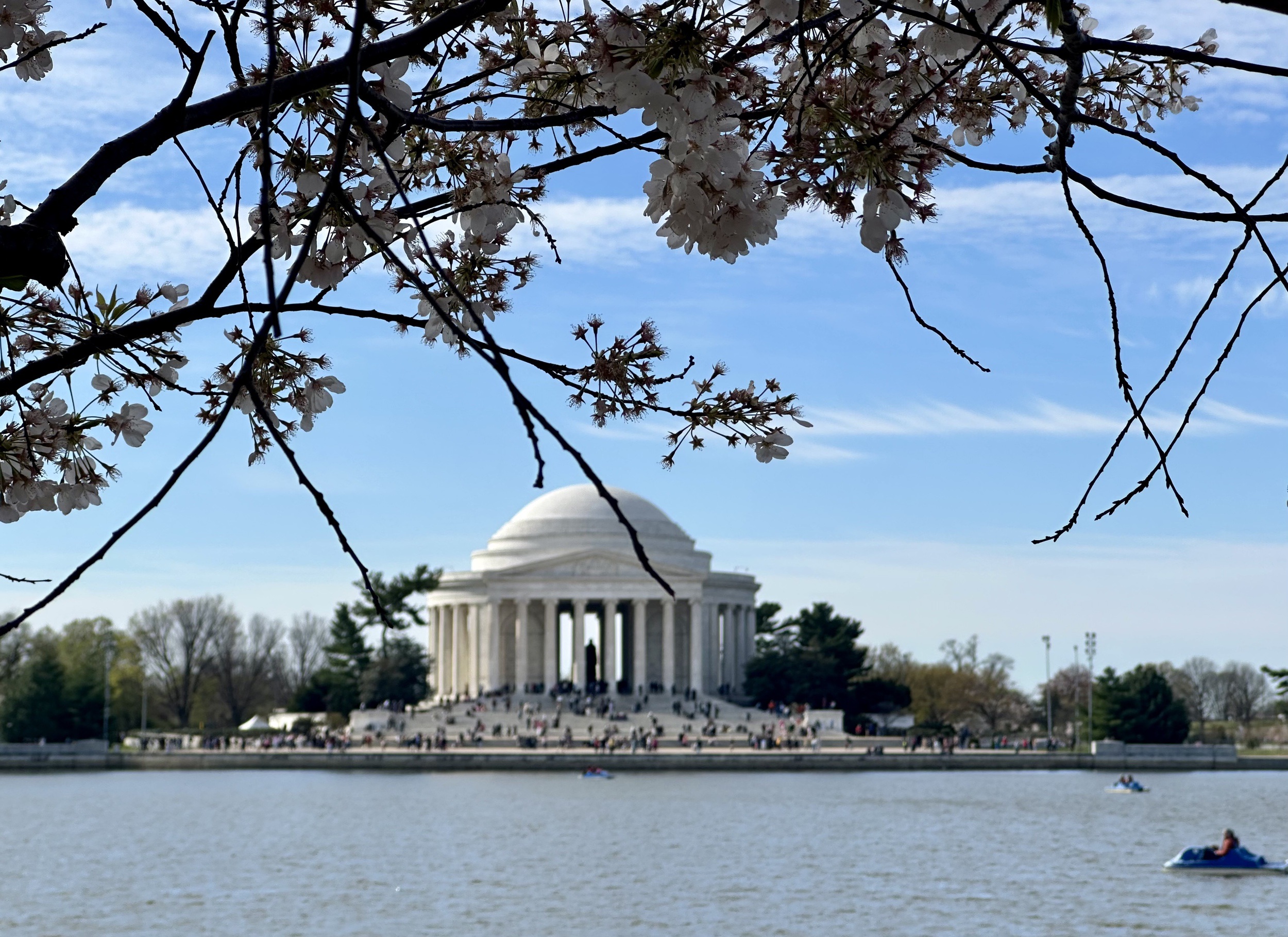
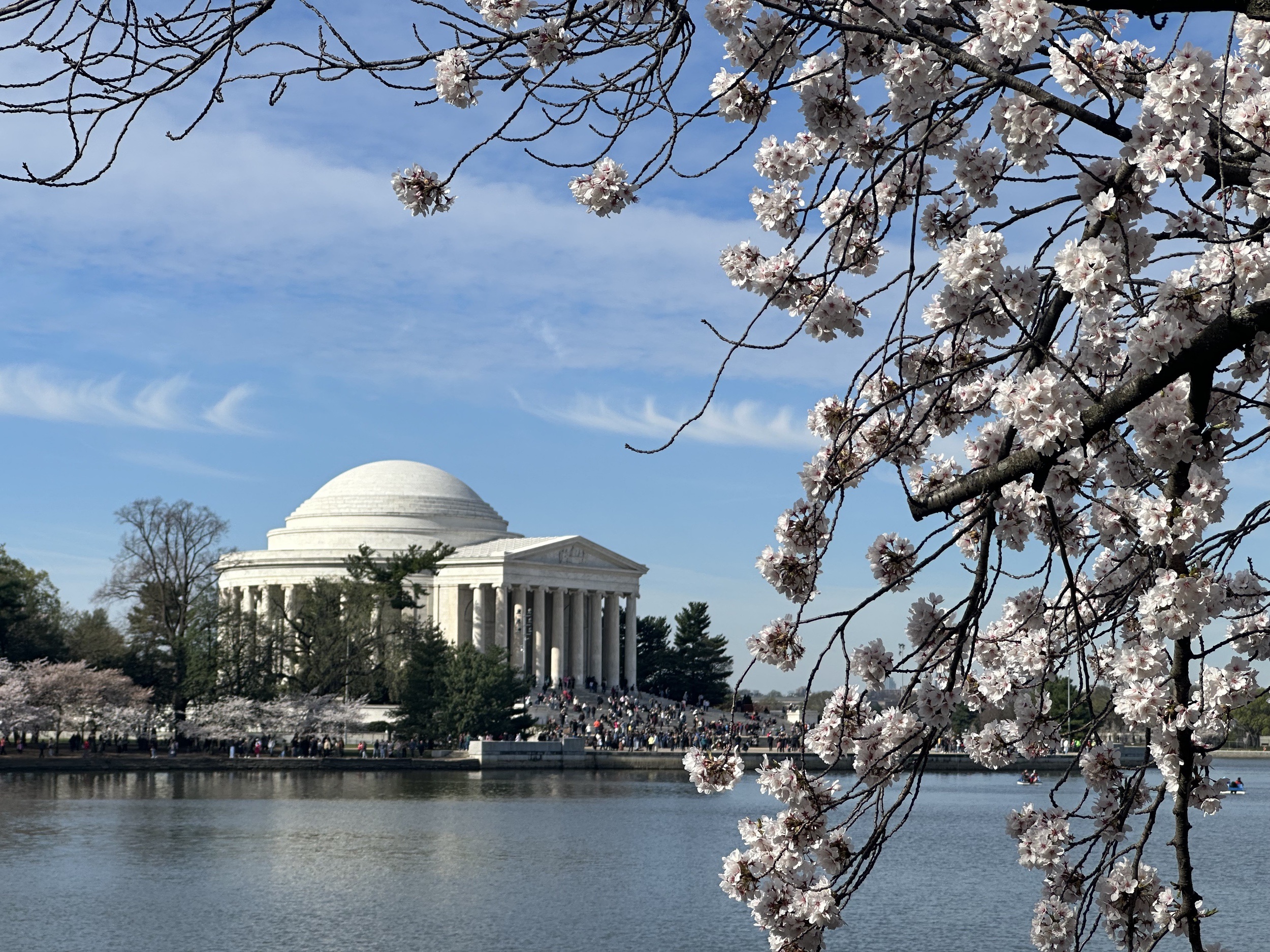
There’s something quietly powerful about standing at the edge of the Tidal Basin in Washington, D.C., watching the white marble dome of the Thomas Jefferson Memorial glow against the sky. It doesn’t shout for attention the way some landmarks do. It doesn’t tower over you with overwhelming scale or intricate ornamentation. Instead, it feels deliberate, almost contemplative—like it’s inviting you to slow down, think, and maybe even question something you thought you understood.

That feeling isn’t accidental. The memorial was designed to reflect the mind of Thomas Jefferson himself—a man who believed deeply in reason, liberty, and the messy, evolving nature of democracy. And like Jefferson, the memorial isn’t simple. It’s layered, full of contradictions, and deeply tied to both the ideals and imperfections of the nation he helped shape.

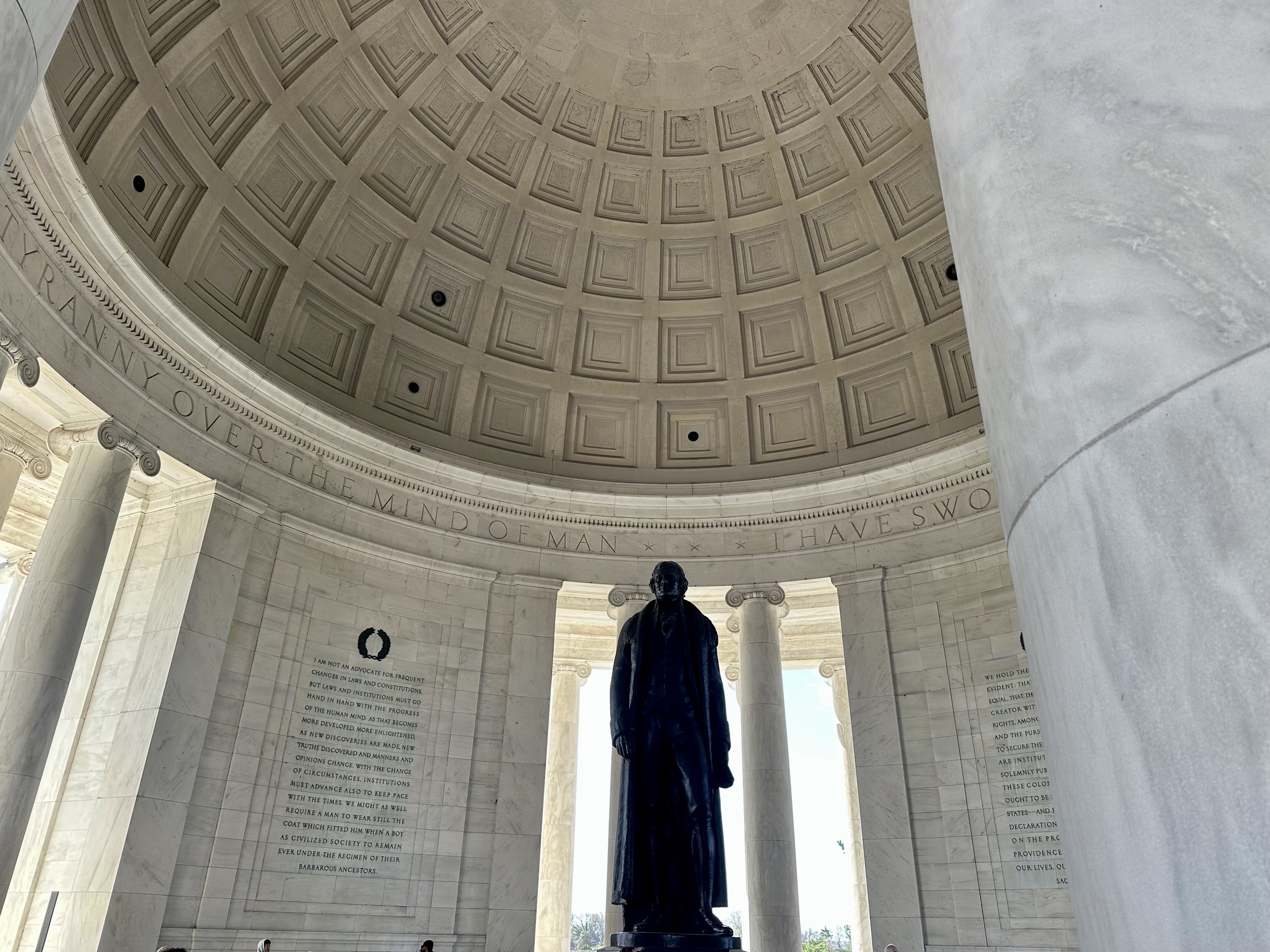
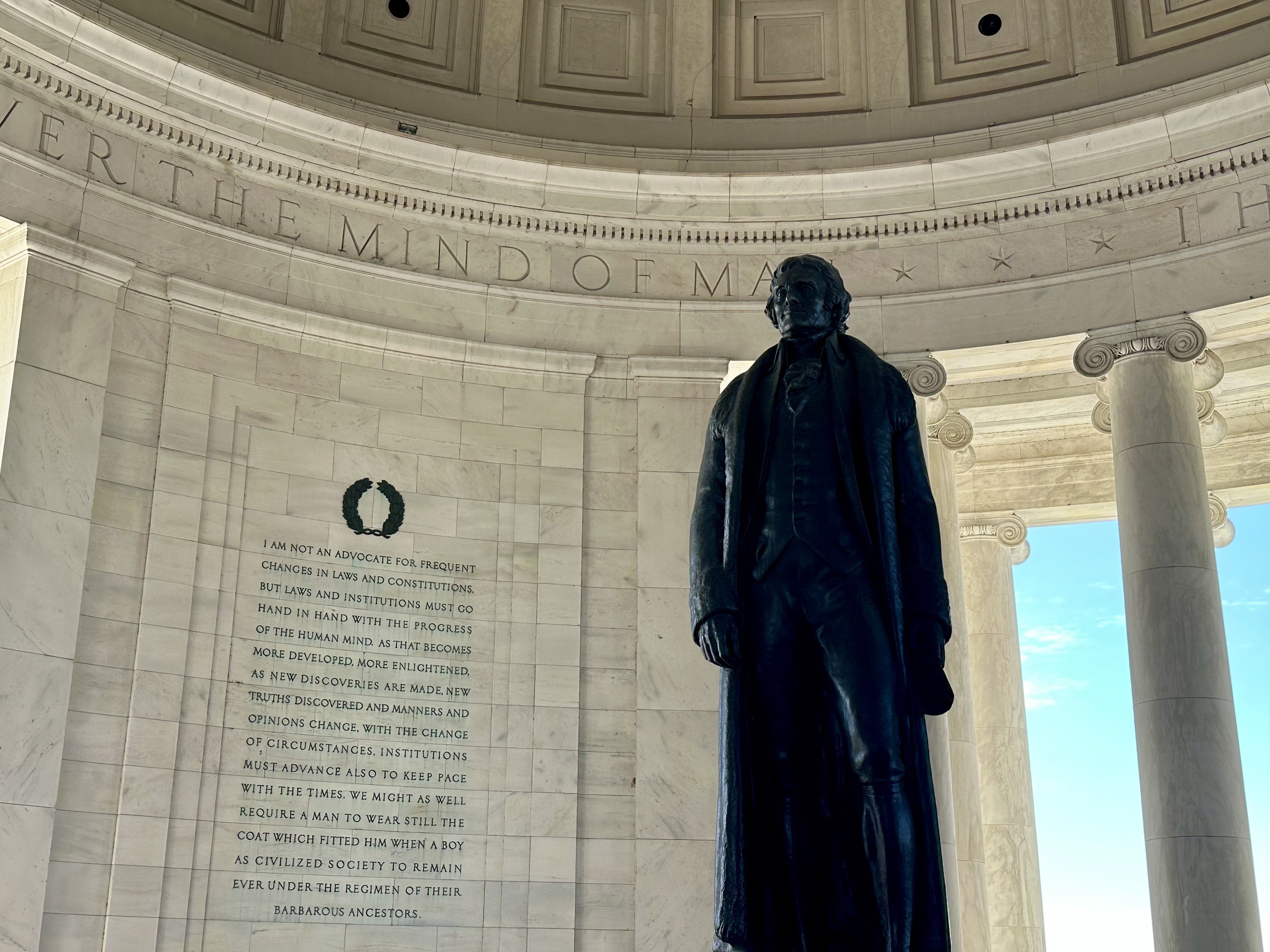
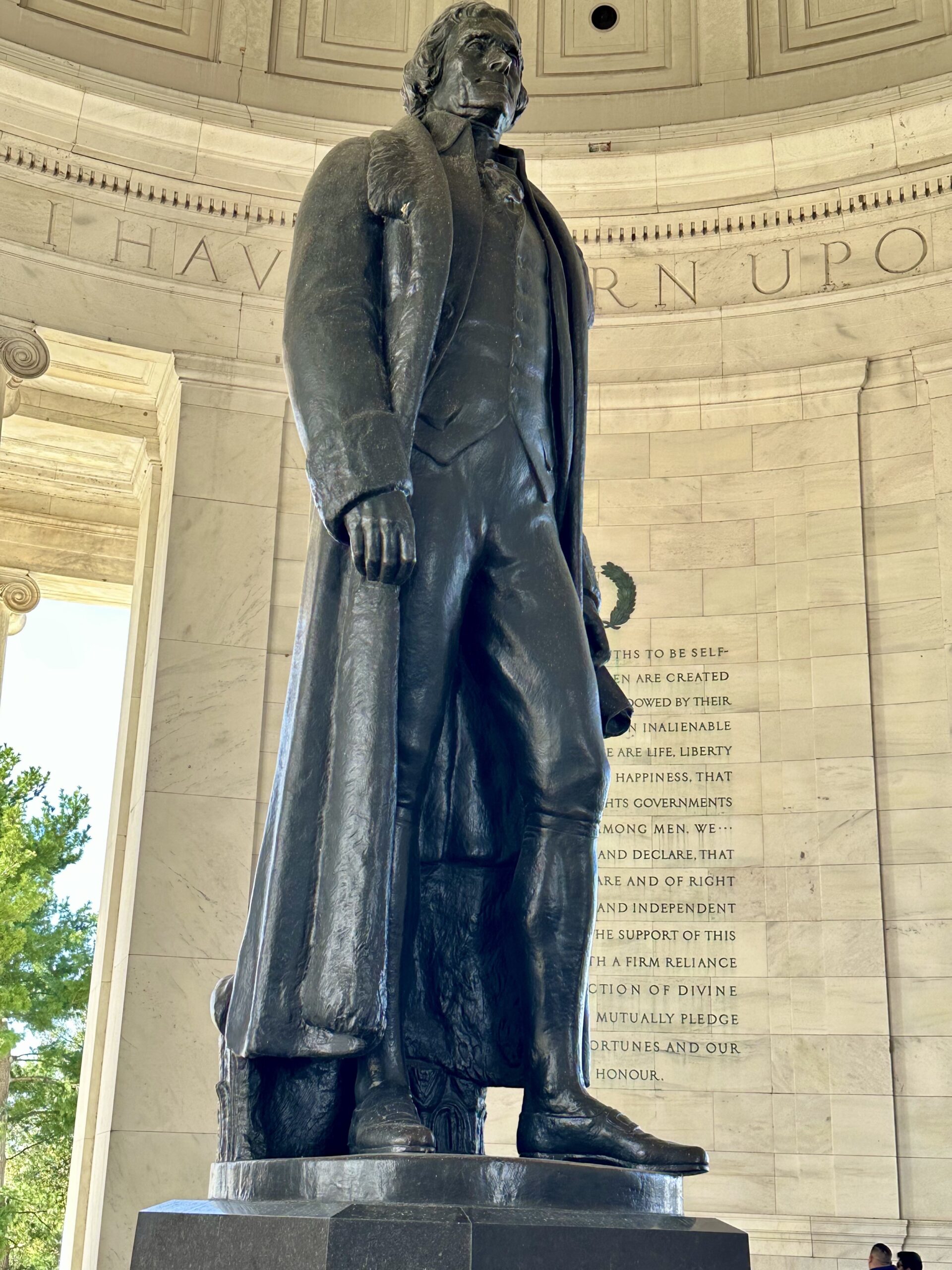
When you approach the memorial, especially during cherry blossom season, the scene feels almost cinematic. Soft pink petals drift across the water, framing the structure in a way that feels too perfect to be real. But then you step closer, climb the steps, and suddenly the beauty gives way to something heavier. Inside, Jefferson stands—towering, bronze, and still—gazing outward as if he’s still watching the country unfold centuries after his time.

The statue itself wasn’t even part of the original unveiling. When the memorial was dedicated in 1943, during the height of World War II, a plaster version stood in its place because metal was being reserved for the war effort. That detail alone tells you something about the moment in which the memorial came to life. The United States was fighting for its survival, and here it was, building a monument to the man who wrote the words that defined its purpose. There’s something poetic about that—almost like a reminder that ideas can outlast even the most uncertain times.

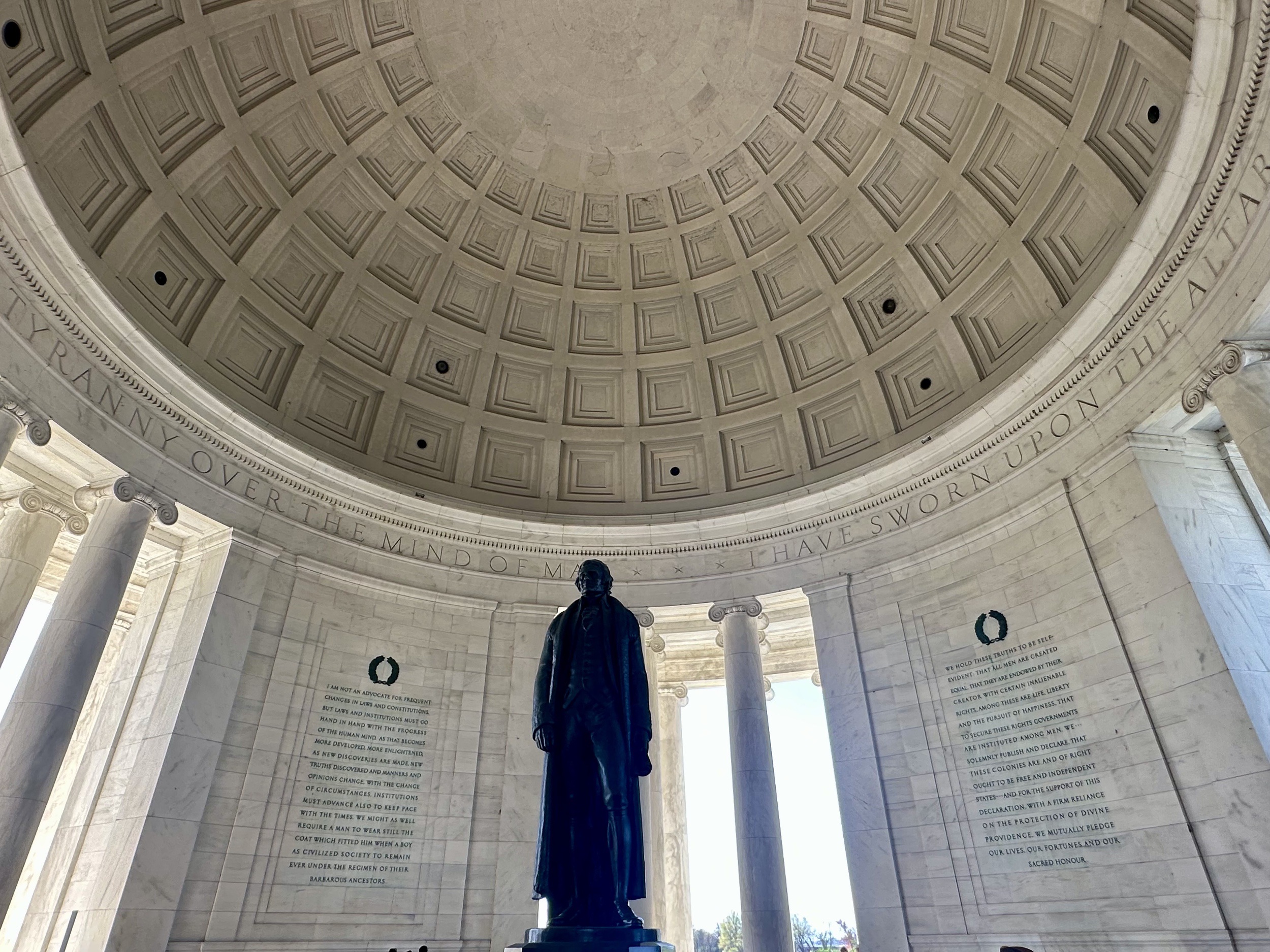
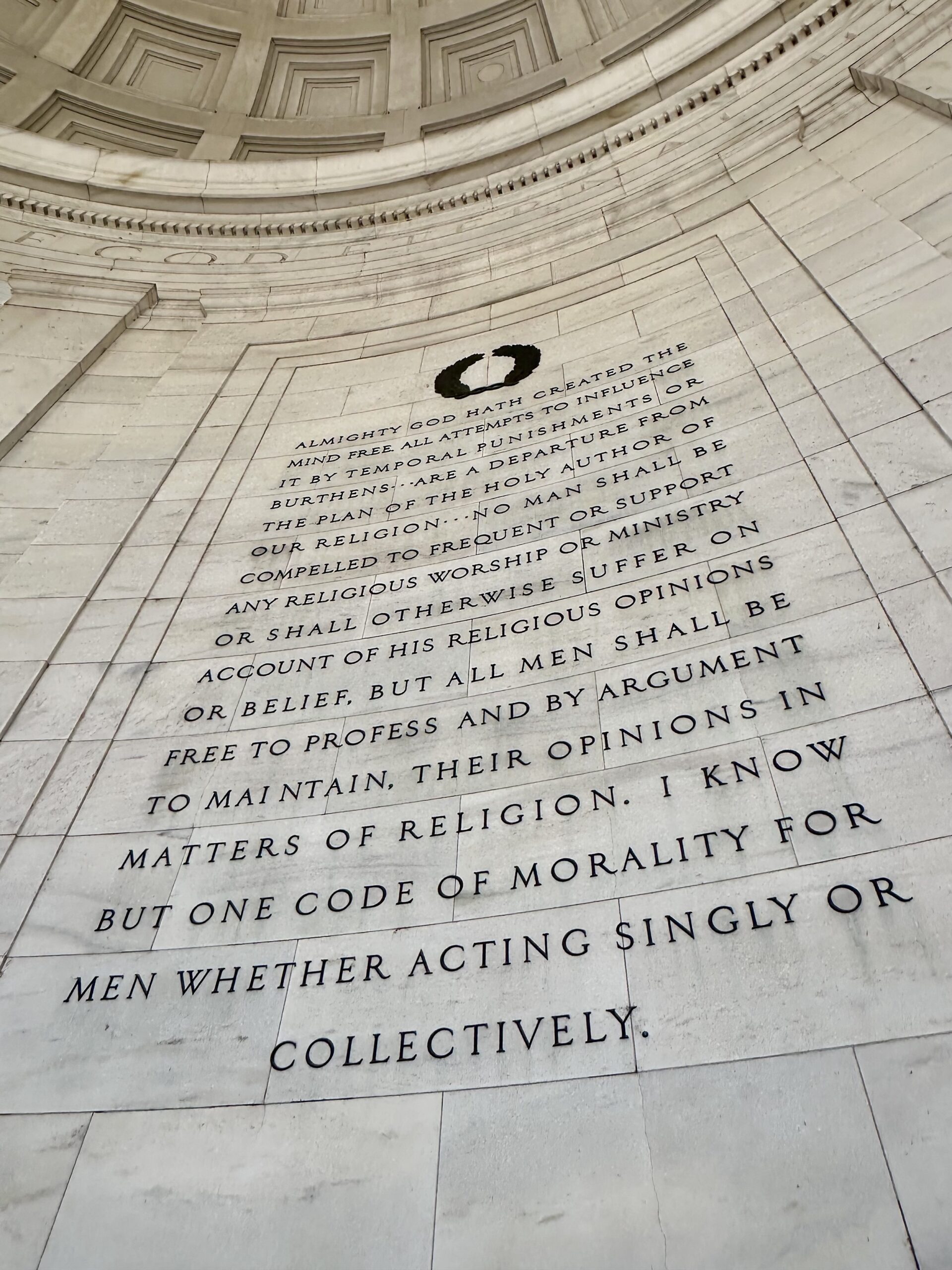
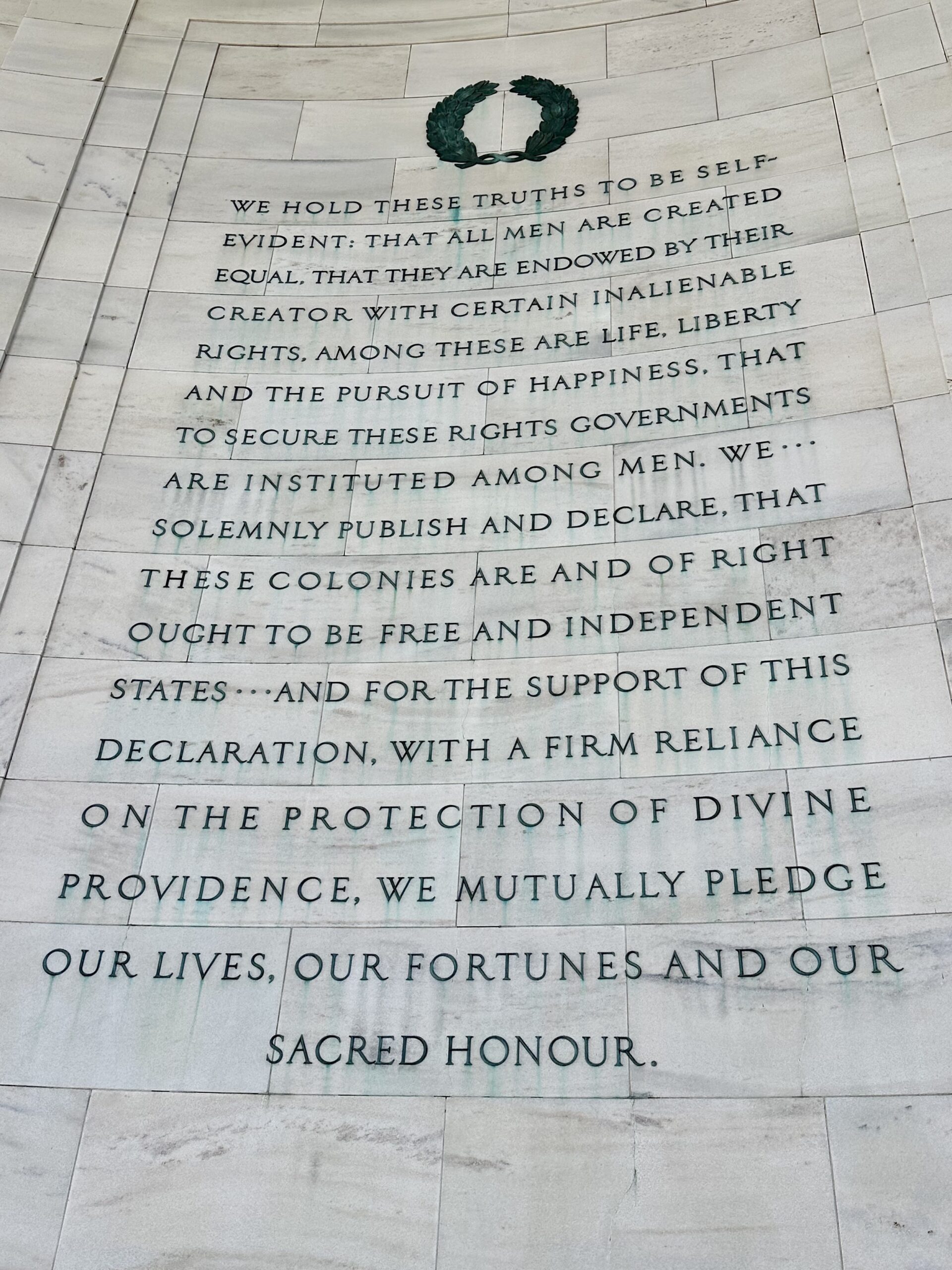
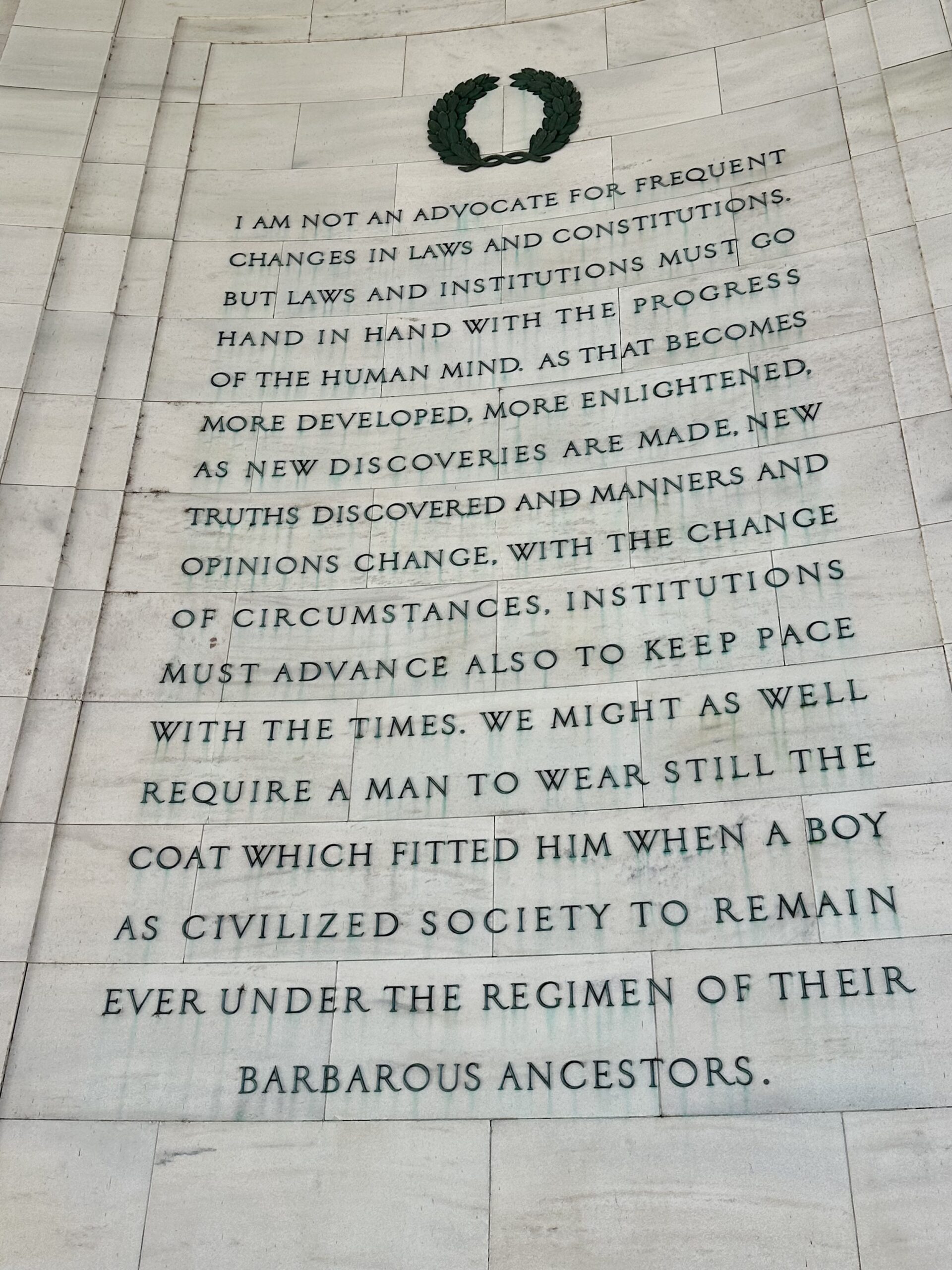
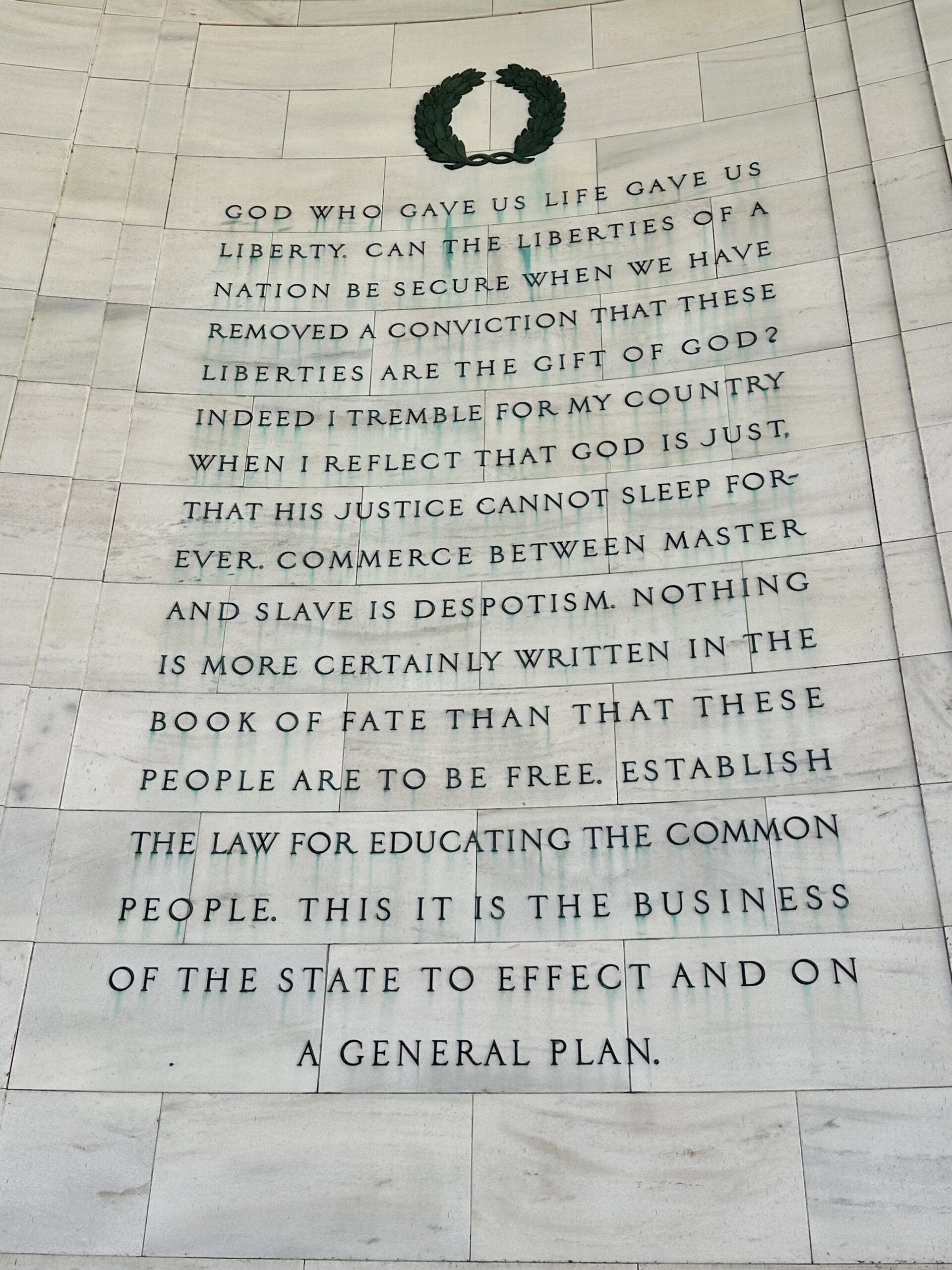
Step inside and you’re surrounded not just by Jefferson’s presence, but by his words. They’re carved into the walls, pulled from documents like the Declaration of Independence and his letters. But what’s striking isn’t just what the words say—it’s how they feel in that space. They don’t come across as distant, historical artifacts. They feel immediate. Alive. Even a little uncomfortable at times.

Jefferson wrote about equality, about liberty, about the rights of individuals to govern themselves. But standing there, it’s impossible not to also think about the contradictions. Jefferson was a slave owner. A man who spoke of freedom while participating in a system that denied it to others. The memorial doesn’t explicitly spell out that tension, but it lingers in the air. And maybe that’s part of its power—it doesn’t resolve the contradiction for you. It leaves you to wrestle with it.

That tension makes the memorial feel less like a celebration and more like a conversation. It’s not just saying, “Here’s a great man.” It’s asking, “What do we do with the legacy of someone who helped build something extraordinary, but was also deeply flawed?” That’s not an easy question, and it’s one the country is still trying to answer.

Architecturally, the memorial draws heavily from classical influences, particularly Roman designs like the Pantheon. The circular structure, the columns, the open interior—they all point back to the ancient world that Jefferson admired so much. He believed that the ideals of democracy and civic responsibility had roots in those earlier civilizations, and the memorial reflects that belief in a very literal way.

But there’s also something distinctly American about it. Unlike the Pantheon, which feels enclosed and inward-looking, the Jefferson Memorial is open to the outside world. There are no doors sealing it off. The wind moves through it. The light changes constantly. It feels connected to its surroundings, almost as if it’s part of the landscape rather than separate from it.

That openness mirrors Jefferson’s own philosophy. He believed that ideas should evolve, that societies should adapt, and that no system of government should be so rigid that it can’t change. Standing in the memorial, you get the sense that it’s not just honoring the past—it’s leaving space for the future.

The location itself is no accident either. Positioned along the Tidal Basin, the memorial sits slightly removed from the more crowded areas of the National Mall. It’s not hidden, but it’s not central either. You have to make a conscious decision to go there. And when you do, the journey becomes part of the experience.

Walking along the water, you start to notice how the memorial reveals itself gradually. First, just a glimpse of white through the trees. Then the full dome. Then the reflection shimmering on the water. By the time you reach it, you’ve already been pulled into its orbit.

At night, the experience changes completely. The crowds thin out, the noise fades, and the memorial takes on a different personality. The lighting casts long shadows across the columns, and Jefferson’s statue feels more introspective, almost like he’s lost in thought. The reflection in the water becomes sharper, clearer, as if the world itself has quieted down just enough to listen.

It’s in those quieter moments that the memorial feels most alive. Not because anything is happening, but because of what it represents. It’s a space dedicated not just to a person, but to an idea—an idea that’s still being tested, debated, and redefined.

And maybe that’s why it resonates so strongly with people, even today. It’s not frozen in time. It doesn’t feel like a relic. It feels relevant. The questions it raises—about freedom, equality, responsibility—are the same ones that continue to shape conversations across the country.

There’s also something deeply human about the way people interact with the memorial. You’ll see tourists snapping photos, of course, but you’ll also see people sitting quietly on the steps, staring out at the water. Couples talking in hushed voices. Individuals reading the inscriptions slowly, as if trying to absorb every word.

It’s not uncommon to see someone stand in front of Jefferson’s statue for a long time, just looking up. Not out of awe, necessarily, but out of curiosity. Maybe even a little uncertainty. As if they’re trying to figure out what to make of him—and by extension, what to make of the country he helped create.

That’s the thing about the Jefferson Memorial. It doesn’t tell you what to think. It doesn’t wrap everything up neatly. It leaves space for interpretation, for reflection, for disagreement. And in a way, that makes it one of the most honest monuments in the city.

Because the story of the United States isn’t simple. It’s not a straight line from past to present. It’s a complicated, often contradictory narrative filled with progress, setbacks, and constant reevaluation. The memorial captures that complexity without trying to simplify it.

Even the decision to build it was controversial. Some people opposed its construction, arguing that it would disrupt the natural beauty of the Tidal Basin. Others questioned whether Jefferson, with all his contradictions, should be honored in such a grand way. Those debates echo the very themes the memorial embodies—who we choose to remember, how we remember them, and why it matters.

In the end, the memorial stands not as a final statement, but as an ongoing dialogue. It invites you to engage with history, not just observe it. To question it. To learn from it. And maybe, to carry those lessons forward in your own way.

As you leave, walking back along the water, the memorial slowly fades behind you. But the feeling doesn’t. It lingers. Not as a clear answer, but as a kind of quiet challenge—one that asks you to think about what freedom really means, and what it takes to live up to it.

And that might be the most powerful thing about the Thomas Jefferson Memorial. It doesn’t just honor the past. It keeps it alive—unfinished, unresolved, and still deeply connected to the present.

Related Posts

Bridging Cultures in the Gulf: The U.S. Embassy in Manama, Bahrain

Dave

In the vibrant capital of Bahrain, where the minarets of ancient mosques rise alongside the shimmering towers of modern commerce, the U.S. Embassy in Manama stands as a symbol of enduring partnership and shared vision. Nestled in the heart of this dynamic island kingdom, the embassy is more than a diplomatic outpost; it is a living testament to a friendship that has withstood the tests of time, regional change, and global transformation. Since its establishment, the U.S. Embassy in Manama has played a vital role in deepening the bonds between two nations that share a belief in mutual respect, cooperation, and progress. It is here that policy meets purpose, where cultures intersect, and where the values of peace, dialogue, and shared prosperity are brought to life every day.

The United States and Bahrain formalized diplomatic relations in 1971, marking the beginning of a partnership that has steadily grown stronger with each passing decade. What began as a modest diplomatic exchange has evolved into one of the most multifaceted and resilient relationships in the Gulf region. The embassy has been at the forefront of this evolution, fostering collaboration that spans defense, economics, culture, and education. Its mission extends far beyond the walls of diplomacy—it serves as a bridge between two peoples, linking American innovation and ideals with Bahraini heritage and vision. The story of the U.S. Embassy in Manama is therefore not only the story of diplomacy, but also of humanity, cultural understanding, and the shared pursuit of a more stable and connected world.

Bahrain’s position in the Arabian Gulf has long made it a crossroads of civilizations. With its strategic proximity to Saudi Arabia and its access to vital shipping lanes near the Strait of Hormuz, it is a nation whose geography naturally lends itself to diplomacy and global relevance. The United States recognized Bahrain’s significance early on, not only as a trading partner but as a trusted ally in maintaining regional stability. Today, that alliance is embodied through close cooperation between the U.S. Embassy in Manama and the government of Bahrain, particularly in areas such as defense, counterterrorism, and maritime security. The embassy is a key player in coordinating these efforts, ensuring that both nations remain aligned in their strategies for peace and protection in one of the world’s most sensitive regions.

One of the most tangible examples of this strategic partnership is the presence of the U.S. Navy’s Fifth Fleet, headquartered in Bahrain. The embassy and the fleet maintain a seamless relationship, balancing the delicate interplay between military cooperation and diplomatic engagement. Together, they uphold freedom of navigation, safeguard trade routes, and work to deter regional threats that could disrupt the flow of commerce and security across the Gulf. Embassy officials liaise daily with Bahraini counterparts in the Ministry of Defense, Ministry of Foreign Affairs, and Ministry of Interior, ensuring that both countries respond quickly and cohesively to emerging challenges. The level of trust that has developed between the United States and Bahrain over decades is a reflection of countless hours of collaboration, dialogue, and shared commitment to a safer world.

But the U.S. Embassy’s mission extends far beyond the confines of defense and security. It also serves as a beacon of opportunity and economic partnership. In 2006, Bahrain became the first Gulf nation to sign a Free Trade Agreement with the United States, a landmark achievement that underscored both countries’ dedication to open markets and mutual prosperity. The embassy played a central role in laying the groundwork for this historic accord, and it continues to be instrumental in facilitating trade and investment to this day. Through its commercial and economic sections, the embassy helps connect American businesses to opportunities in Bahrain’s expanding economy while also assisting Bahraini entrepreneurs seeking to engage with the U.S. market. From major corporations in energy and finance to small and medium-sized enterprises pioneering new ideas in technology and green innovation, the embassy ensures that both nations benefit from shared economic success.

The economic relationship between the United States and Bahrain has evolved with the times. In the early years, it focused primarily on energy and infrastructure. Today, the scope has broadened to include digital transformation, clean technology, education, and finance. American companies such as ExxonMobil, General Electric, and Microsoft have contributed to Bahrain’s growth, while Bahraini firms have established a growing presence in the U.S. marketplace. The embassy often serves as the connector, bringing together business leaders, policymakers, and investors to create sustainable ventures that benefit both economies. Trade missions, networking events, and entrepreneurship programs sponsored by the embassy foster innovation and empower both Bahraini and American participants to share expertise and create new pathways of cooperation. This economic symbiosis not only strengthens bilateral ties but also demonstrates the power of diplomacy in driving tangible progress.

Yet perhaps the most enduring impact of the U.S. Embassy in Manama lies not in defense agreements or trade deals, but in its commitment to cultural and educational exchange. For decades, the embassy has been a driving force behind programs that promote mutual understanding and build bridges between people. Through initiatives such as the Fulbright Program, EducationUSA advising, and English language scholarships, the embassy has opened doors for thousands of Bahrainis to study in the United States, experience American life firsthand, and bring back skills that enrich their homeland. Likewise, it has introduced Americans to Bahrain’s deep cultural heritage—its poetry, art, music, and hospitality—fostering genuine connections that go beyond political alliances. These people-to-people relationships are often the unseen yet most powerful threads that hold the fabric of diplomacy together.

Inside the embassy’s cultural affairs office, countless programs are designed with one guiding principle: understanding breeds cooperation. Workshops, exhibitions, concerts, and lectures are frequently organized to celebrate shared values such as creativity, freedom of expression, and innovation. American artists and educators collaborate with Bahraini counterparts to explore topics ranging from environmental sustainability to digital literacy and women’s empowerment. The embassy’s annual celebration of the Fourth of July, for example, is more than a ceremonial event—it is a gathering of Bahraini and American friends who come together to reflect on their partnership and celebrate the enduring friendship between their nations. Similarly, Bahraini cultural events hosted in collaboration with the embassy often highlight the kingdom’s diverse traditions, underscoring its identity as both a proud Arab nation and a global partner open to the world.

Education remains one of the strongest pillars of this relationship. The embassy’s educational initiatives have inspired a generation of Bahraini scholars, scientists, and entrepreneurs. Each year, students travel to the United States to pursue higher education, supported by the embassy’s EducationUSA advising center, which guides them through the process of applying to American universities. Upon their return, many of these alumni become leaders in their fields, embodying the spirit of collaboration and innovation that defines U.S.-Bahrain relations. The embassy also supports English language programs that equip young Bahrainis with the skills needed to compete in a globalized world. English Access Microscholarship Programs, for example, give students from diverse backgrounds the opportunity to learn the language of international commerce and diplomacy, while also exposing them to American culture and values.

Cultural diplomacy, however, is not a one-way street. The U.S. Embassy in Manama also plays a crucial role in helping Americans understand Bahrain’s rich heritage and traditions. Through community outreach and partnerships with local organizations, embassy staff engage directly with Bahraini citizens, participating in events that celebrate national identity, history, and the arts. By doing so, they foster respect and mutual appreciation, ensuring that the relationship between the two countries is built not on convenience, but on genuine friendship. These efforts may not always make headlines, but they are the foundation upon which lasting peace and cooperation are built.

Beyond its external engagement, the embassy also plays a vital role in serving the American community in Bahrain. For U.S. citizens living, working, or traveling in the kingdom, the embassy provides essential consular services—from passport renewals and notarial assistance to emergency support in times of crisis. In moments of uncertainty, such as during regional tensions or global health emergencies, the embassy becomes a lifeline, ensuring the safety and well-being of its citizens. Consular staff work around the clock to provide information, facilitate evacuations if necessary, and coordinate with Bahraini authorities to resolve complex situations. The relationship between embassy personnel and the American community is built on trust and reliability, offering a sense of reassurance that no matter the circumstance, support is never far away.

The embassy itself is a microcosm of cooperation. Within its walls, American diplomats and Bahraini staff work side by side, embodying the spirit of partnership that defines the U.S.-Bahrain relationship. Every department—from political and economic affairs to public diplomacy and consular services—contributes to a larger mission of understanding and collaboration. It is a dynamic environment where ideas flow freely, where challenges are met with teamwork, and where the shared goal of strengthening ties drives every decision. The embassy’s local employees, many of whom have served for decades, are not just staff—they are custodians of institutional memory, cultural bridges, and trusted advisors whose insights help shape the embassy’s success.

The U.S. Embassy in Manama also plays an important role in advancing regional diplomacy. Bahrain’s active engagement in multilateral forums and its participation in global initiatives make it a key partner in addressing regional and international challenges. The embassy facilitates high-level visits, coordinates humanitarian efforts, and supports initiatives that promote dialogue across the Gulf and beyond. Whether it is advancing peace talks, supporting regional development projects, or contributing to global security frameworks, the embassy serves as a crucial link between Washington and the wider Middle East. In times of tension, it becomes a center for communication and crisis management; in times of peace, it is a platform for vision and collaboration.

Technology and innovation have also become integral to the embassy’s work. In an era defined by digital diplomacy, the embassy uses social media, virtual exchanges, and online learning platforms to reach broader audiences and engage with younger generations. Virtual town halls, live-streamed cultural events, and online dialogues allow the embassy to connect with people across Bahrain, even those who may never step inside its compound. This modernization reflects a broader trend in U.S. diplomacy—one that values transparency, inclusivity, and accessibility in an increasingly interconnected world. By embracing these tools, the U.S. Embassy in Manama continues to evolve with the times, ensuring that diplomacy remains relevant and effective in the digital age.

Over the years, the embassy has faced challenges—political shifts, security threats, and even natural crises—but through it all, its mission has remained constant: to serve as a bridge between the people of the United States and the Kingdom of Bahrain. Its resilience mirrors the resilience of the partnership it represents. Each generation of diplomats builds upon the foundation laid by those before them, adapting to new realities while preserving the core principles of mutual respect and cooperation. In many ways, the story of the embassy is also the story of Bahrain’s own transformation—from a modest pearl-diving economy to a modern, diversified nation with global ambitions. The two have grown together, learning from one another and forging a relationship that is as practical as it is profound.

As Bahrain continues to evolve, embracing its Vision 2030 agenda for economic diversification and sustainable development, the U.S. Embassy remains a committed partner in that journey. It supports initiatives that promote innovation, empower youth, and advance gender equality. By working with government ministries, private sector leaders, and civil society organizations, the embassy helps nurture an environment where creativity, inclusion, and opportunity can flourish. These efforts reflect not just the goals of diplomacy, but the values that define the American spirit: optimism, collaboration, and a belief in the transformative power of education and enterprise.

The physical presence of the embassy itself is emblematic of this enduring bond. Its design blends modern architectural features with subtle nods to Bahraini culture, symbolizing the harmony between American ideals and local tradition. Behind its secure walls lies a space of diversity and dialogue, where decisions are made not only in the interest of policy but in the spirit of partnership. The daily rhythm of the embassy is a reflection of this purpose—meetings, cultural programs, visa interviews, educational seminars, and community events all happening under one roof, each contributing to the greater goal of fostering understanding between two nations.

To outsiders, the embassy may appear as just another government institution, but to those who work within and with it, it is a family—a dedicated community united by service and shared vision. Diplomats, local employees, and partners from across sectors contribute to its mission, often in ways that go unseen but not unfelt. Their work builds trust, resolves conflicts, and creates opportunities that ripple far beyond Bahrain’s shores. In times of celebration, such as national holidays or cultural festivals, the embassy becomes a gathering place of unity and friendship. In times of hardship, it stands as a pillar of stability, a reminder that true partnership is defined not by convenience, but by enduring commitment.

In the end, the U.S. Embassy in Manama is more than a diplomatic building; it is a bridge between two worlds. It connects the energy of American innovation with the heritage of Bahraini tradition, the aspirations of a young generation with the wisdom of an ancient land. It represents the shared hopes of two nations that, despite differences in geography and culture, have found common ground in their pursuit of peace, prosperity, and mutual respect. Through its daily work—quiet yet profound—the embassy continues to strengthen the bond between the United States and Bahrain, ensuring that this partnership remains not only a cornerstone of Gulf diplomacy but a shining example of how nations can thrive together through understanding and cooperation.

The story of the U.S. Embassy in Manama is therefore a story of connection—of two nations joined by purpose and friendship, navigating a complex world together with trust and determination. It is a story that continues to unfold, carried forward by the people who believe in its mission and the ideals it represents. In an age where diplomacy is often tested by uncertainty, the embassy stands as a steady beacon of continuity, reminding both Americans and Bahrainis that true partnership is built not in moments of ease, but in the steadfast collaboration that endures through every challenge and triumph.

Related Posts
Gulf Currents, Global Ripples: The 21st IISS Manama Dialogue 2025

Dave

It is dawn in the capital of the Kingdom of Bahrain, and in the elegant halls of the Ritz-Carlton in Manama delegates from across the world gather. Ministers in dark suits, military officers in uniform, strategic thinkers clutching tablets and notepads, journalists lining up microphones — all converge for the twenty-first edition of the Manama Dialogue, organised by the International Institute for Strategic Studies in partnership with the Bahraini Ministry of Foreign Affairs. The agenda is dense: three days of plenary sessions, bilateral meetings, break-out panels, and corridor diplomacy among states and supranational actors grappling with the shifting tides of Middle East security. In this essay I will walk you through what the Manama Dialogue is, what is typically on its agenda and what appears set for this year, what kinds of outcomes it produces, and why it matters in a region both turbulent and pivotal. Along the way I’ll draw out the human dynamics, the strategic theatre, the promises, and the challenges. By the end you should be equipped not just to summarise the event, but to reflect on its significance and possible future trajectory.

Since its inception in 2004, the Manama Dialogue has become one of the Middle East’s most consequential annual gatherings of ministers, defence chiefs, policymakers, strategists, and business leaders. Hosted in Bahrain, the event is framed as a unique forum for decision-makers to debate the region’s most pressing foreign-policy, defence, and security challenges. What makes this forum distinctive is its hybrid character: it blends high-level official diplomacy with think-tank-mediated discussions, side-meetings, innovation-oriented sessions, and media coverage. The region itself — the Gulf, the Levant, North Africa, and the Red Sea corridor — is deeply strategic. Everything from energy and shipping routes to migration, proxy wars, great-power competition, and technological disruption funnels through the Middle East. The Manama Dialogue, positioned in the heart of that geography, becomes more than a conference: it is a strategic crossroads. Consider the scene: a plenary hall abuzz with delegates, interpreters, cameras, and aides; coffee tables laced with traditional Arabic coffee; a hallway where a Gulf minister quietly meets their foreign counterpart; nearby, a young strategist from a regional think-tank presents ideas on maritime security while a naval attaché listens. Behind the polished optics lies intense discussion about everything from Iran’s missile programme to the geopolitics of energy, to water scarcity and artificial intelligence in defence systems. The host country, Bahrain, gains more than symbolic prestige. By convening regional and global leadership in its capital, it positions itself as a regional hub of strategic dialogue. The organisers meanwhile reinforce their reputation as premier convenors of security discourse. For states participating, the Dialogue offers a chance to shape narratives, build networks, signal policy shifts, and sometimes spark new cooperative ventures.

Over the years the Manama Dialogue has embraced a wide canvas of issues, reflecting the evolving nature of Middle East security and its global intersections. From conflict zones and state fragility to maritime corridors and cyber warfare, from power shifts and alliances to human security and innovation — the agenda is multifaceted. Topics routinely featured include regional conflicts and security, such as Syria, Yemen, Libya, Iraq, the Israel-Palestine question, Lebanon, Sudan, and the role of non-state actors and proxy networks. Maritime and energy security are always central — the Gulf, the Strait of Hormuz, Bab al-Mandab, the Red Sea shipping corridors, and the risks from missiles and drones. Other discussions explore geopolitics and power shifts, such as the role of the United States, Russia, China, India, and regional states in a more multipolar world, and the concept of strategic autonomy for Middle East actors. There is also significant focus on defence, technology, and innovation: missiles, drones, cyber-defence, space, intelligence cooperation, and defence-industry transformation. Economic, governance, and human-security dimensions are also central, including the transition from oil, climate change, water and food security, reconstruction in post-conflict societies, and migration. Finally, emerging horizons such as artificial intelligence, demographic shifts, social resilience, and youth leadership have taken on new prominence.

For the 2025 edition, the outline agenda focuses on major themes such as U.S. statecraft and Middle East stability, the future of global security governance, securing the Gulf through diplomacy and economics, and the geopolitics of energy. Later sessions turn to managing political transitions in the Levant, maritime security as a shared responsibility, and the implications of a possible new nuclear age. These themes reflect a region in flux. The Gulf states are pursuing economic diversification while balancing alliances. The Levant faces fragile transitions. The maritime domain has become a theatre for asymmetric threats. Great-power competition is reconfiguring the security system. The Manama Dialogue provides a space where these threads converge and where diplomats, military leaders, and strategists can collectively assess risks and opportunities.

What actually comes out of a three-day strategic conversation? The answer is nuanced. Outcomes of the Manama Dialogue span from the visible to the subtle, from the symbolic to the operational. Some of the most valuable outcomes are agenda-setting and signalling, where issues are elevated onto the regional or global radar. When a minister uses the Manama stage to highlight a crisis, that message reverberates well beyond the room. High-profile delegates also make policy speeches that shape expectations and intentions. Yet the real substance often lies in the informal spaces — the side-bars, the coffee breaks, and the bilateral lunches where ministers, defence chiefs, and business leaders exchange views, form connections, and sometimes initiate collaborations that bear fruit months or years later. On occasion, frameworks for cooperation emerge: maritime-security working groups, cyber-defence agreements, or youth-leadership programmes. The Dialogue also shapes narratives and discourse, influencing how policymakers and the media frame Middle East security as part of a global system. And occasionally, it leads to the creation of working groups or task forces that keep momentum alive long after the conference ends. While the Dialogue’s outcomes are rarely immediate or binding, they are cumulative. Its influence lies in the networks it sustains and the momentum it generates. The challenge is always in translating discussion into action — what happens after the event is often the true measure of success.

The Manama Dialogue matters because it bridges regional and global dimensions by bringing Gulf and international actors together. It captures the interconnectedness of issues shaping the Middle East — from conflict and energy to technology and climate. It acts as a strategic barometer, offering clues about the direction of policy and alliances. And it strengthens diplomatic and defence networks that are vital for crisis management and long-term stability. Yet it also faces challenges. Its non-binding nature means outcomes can remain rhetorical. There is often a follow-through gap once the event concludes. Representation is sometimes limited to officials, with civil-society perspectives less visible. Neutrality and balance are constant concerns in a politically charged region. And when the Middle East faces overlapping crises, the Dialogue can become reactive, focused on immediate firefighting rather than structural change. Despite these challenges, it remains one of the few spaces where adversaries, allies, and global powers can engage under one roof — candidly, and sometimes productively.

Picture this: it is Saturday morning, the opening plenary begins. Delegates sit shoulder to shoulder — Gulf defence ministers, Western diplomats, and Asian trade officials. The session topic is “Statecraft and Middle East Stability.” The minister on stage speaks of shifting global priorities, of balancing partnerships and responsibilities. In the back row, a military attaché takes notes on maritime-security cooperation. Across the room, a young analyst whispers to her colleague about artificial intelligence transforming defence systems. Later, during a coffee break, conversations spill into the lobby. A Gulf energy minister talks privately with a European CEO about the energy transition. Two diplomats share an unscheduled chat about joint naval patrols. A journalist scribbles notes, sensing a headline forming. On the final day, the concluding plenary asks a provocative question: “Are we entering another nuclear age?” The discussion spans arms control, deterrence, and the future of strategic balance. The session closes with polite applause, but the real impact lies elsewhere — in the quiet commitments, the exchanged business cards, and the new understanding forged in private. Weeks later, as ministers return to their capitals, some of these hallway conversations bear fruit. One country announces a new maritime-security working group. Another launches a youth innovation programme tied to defence technology. None of these developments carry the official stamp of the Dialogue, yet they trace their origins back to Manama.

Following this year’s sessions, several elements will reveal the conference’s influence: announcements of cooperation or memoranda of understanding between states on maritime, cyber, or defence matters; statements summarising major themes, indicating how cohesive or divided the participants were; the emergence of working groups or follow-on forums maintaining momentum on specific issues; policy documents or budgetary changes in the coming months that reflect the Dialogue’s discussions; shifts in public and academic discourse about regional security and global governance; and signs of deeper engagement between Gulf states and external powers, showing the Middle East’s growing strategic weight. These indicators will determine whether the 2025 Dialogue was merely performative or genuinely catalytic.

The twenty-first Manama Dialogue arrives at a pivotal moment. The Middle East stands at the intersection of overlapping crises — maritime insecurity, shifting alliances, technological disruption, and renewed great-power competition. In this environment, a forum like the Manama Dialogue is more than a conference; it is a mirror of the region’s evolution. Its importance lies in the convergence of region and world, of defence and diplomacy, of immediate challenges and long-term strategy. But its ultimate value depends on whether conversations in Manama translate into coordinated policies and durable partnerships once the microphones are switched off. For observers, the story of the Manama Dialogue is a story of people as much as policy — of ideas exchanged in corridors, of trust built over coffee, of shared concern for a region whose stability resonates far beyond its shores. This year, as delegates depart, the world will watch to see whether the Gulf’s dialogue of words becomes a dialogue of action.

Related Posts

One Big Beautiful Bill: Trump’s Monumental Legislative Gamble and Its Legacy

Dave

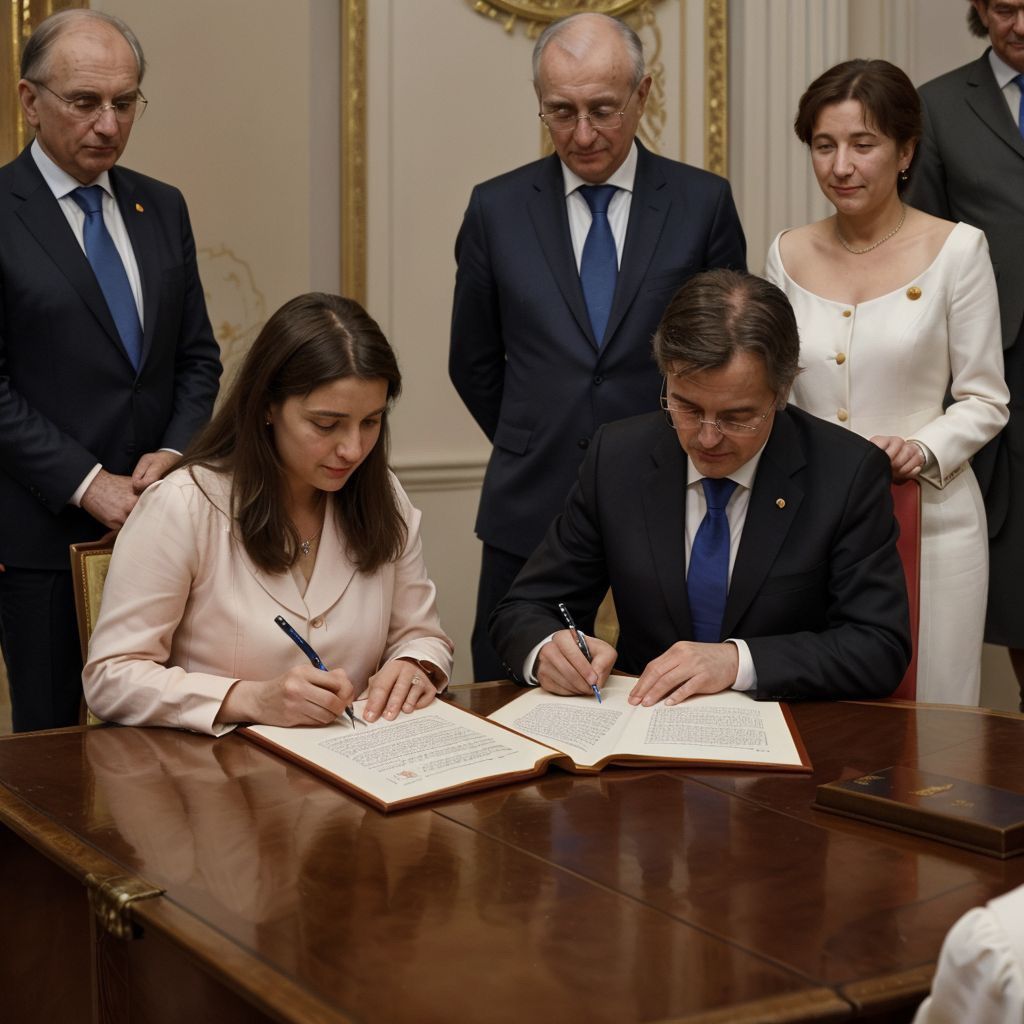
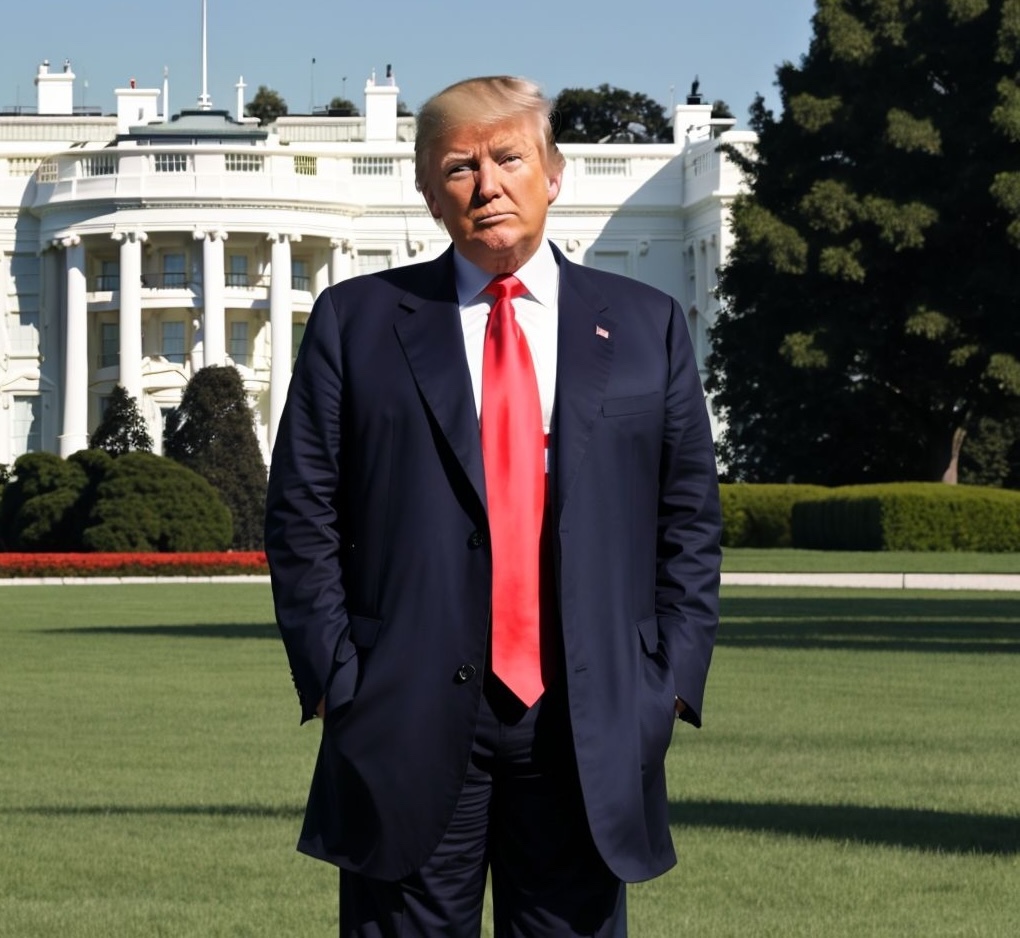
The Fourth of July 2025 was meant to celebrate American independence, but this year, it served a dual purpose. As fireworks blazed over Washington, D.C., President Donald J. Trump signed what he triumphantly hailed as the One Big Beautiful Bill. Clutched in his hand was a leather-bound folder thick with legislative text—nearly 1,200 pages of sweeping tax reforms, defense increases, border security measures, and social program overhauls. The symbolism of the date was no accident. For Trump, this wasn’t just another bill—it was the legislative embodiment of his second-term vision. And for better or worse, it might prove to be one of the most consequential acts of his presidency.

The journey to this moment had not been easy. Trump’s return to the White House in 2024 after a bitter and bruising electoral cycle had left Washington more divided than ever. The Republican Party, freshly invigorated by Trump’s populist base, found itself fractured between traditional conservatives, MAGA loyalists, and libertarian skeptics. Democrats, meanwhile, controlled the Senate by the slimmest of margins and had no intention of handing Trump a signature win. But what followed was a political drama that tested the limits of negotiation, exposed deep rifts in both parties, and ultimately revealed the extraordinary power of political momentum.

At the heart of the One Big Beautiful Bill was tax reform. Trump’s first term had already delivered massive corporate tax cuts, but the 2017 reforms had expiration dates built in to satisfy budget rules. This new bill made many of those cuts permanent. Corporate rates were locked at 21%, and individual rates—particularly for higher earners—were flattened or lowered. But this time, the bill went further. It introduced tax deductions for tips and overtime pay, a clever nod to Trump’s working-class base. Workers in service and blue-collar industries stood to gain significantly, though critics noted that the benefits skewed toward those already earning enough to itemize deductions.

Another headline-grabbing provision was the deduction for auto loan interest—but only for U.S.-built vehicles. It was a protectionist flourish meant to encourage domestic car sales while subtly punishing foreign automakers. In practical terms, it served as both economic incentive and political theater, reinforcing Trump’s “America First” message in unmistakable terms.

Perhaps the most personal of the tax provisions was the creation of what the bill called “Trump Accounts”—tax-deferred savings accounts for parents and children, with a one-time federal contribution. Framed as a nod to family values and future planning, critics saw the name as self-aggrandizing, but the provision enjoyed broad bipartisan support among voters who saw it as a modest but meaningful tool for long-term savings.

For wealthier Americans, the bill offered a generous boost to the SALT deduction—the cap on state and local tax write-offs. Previously set at $10,000, the new law raised the cap to $40,000 for households earning under $500,000, a move that pleased suburban voters in high-tax states. But the expansion came with a sunset clause: by 2030, the deduction would revert to prior limits. This political maneuvering ensured that the bill’s long-term fiscal impact remained somewhat obscured.

Indeed, one of the bill’s most controversial aspects was its cost. The Congressional Budget Office (CBO) projected a revenue shortfall of over $4 trillion over ten years, even after accounting for potential economic growth. The national debt ceiling was raised by up to $5 trillion to accommodate the tax breaks and spending increases, drawing sharp criticism from fiscal hawks and deficit-wary Republicans. Yet Trump and his allies insisted that the cuts would “pay for themselves” through increased investment and job creation—a claim economists remained deeply divided over.

The spending side of the bill was no less ambitious. Defense spending was raised by an eye-watering $150 billion over five years. Much of that was allocated to naval shipbuilding, next-gen missile defense systems, and AI-driven battlefield technology. The bill also doubled down on Trump’s earlier focus on Space Force, granting it a larger share of defense appropriations and an expanded mission to include cyberwarfare readiness. To Trump’s supporters, this was the bold reassertion of American military dominance. To opponents, it was an unaffordable military expansion that ignored pressing domestic needs.

But nowhere did the bill go further than in immigration enforcement. A full $150 billion was earmarked for border security and deportation operations. ICE saw its budget increase tenfold over the next four years. Funds were allocated for the construction of new detention centers, expanded judicial processing facilities, and the controversial deployment of facial recognition and drone surveillance along the southern border. Trump had long promised to “finish the wall,” but the bill offered something arguably more potent: a bureaucratic and technological infrastructure for mass deportation.

The social safety net, meanwhile, was rewritten in a way that stunned many policy experts. Medicaid, the joint federal-state healthcare program for the poor, was restructured to include strict work requirements. Able-bodied adults under 60 were now expected to verify at least 80 hours of work or job training per month to remain eligible. States were granted more autonomy to manage their Medicaid rolls but were also subjected to new financial penalties if they exceeded federal error thresholds. Supporters argued that this would encourage self-sufficiency. Critics feared it would simply purge millions of vulnerable Americans from the healthcare system.

A similar dynamic played out with the Supplemental Nutrition Assistance Program (SNAP). New verification rules and work requirements were layered on top of an already complex system. States had to absorb more of the administrative costs and were given fewer exemptions for economic hardship. Analysts warned that the changes would disproportionately affect rural and minority communities—ironically, many of the same voters who had propelled Trump back into office.

The political strategy behind the One Big Beautiful Bill was as audacious as the legislation itself. Rather than pursuing piecemeal reforms, Trump insisted on an all-in approach: one massive, singular bill that covered taxes, defense, border policy, social welfare, and more. It was a gamble. In the modern era, legislative packages of this size rarely pass without fracturing under their own weight. But Trump used every lever of executive influence—campaign-style rallies, pressure on GOP holdouts, threats of primary challenges—to hold his party together. And in the end, it worked.

House Republicans passed the bill after a marathon 22-hour session. Senate Republicans, bolstered by a few crossover Democrats from red or purple states, pushed it through on a razor-thin 51–49 vote. Vice President J.D. Vance, who had emerged as a key legislative negotiator, broke the tie on procedural votes and helped shepherd the bill across the finish line. The final signing ceremony on the White House lawn was equal parts spectacle and triumph—a declaration that the Trump agenda was not just back, but more ambitious than ever.

Public reaction was deeply polarized. Among MAGA loyalists, the bill was celebrated as a generational achievement, a kind of Reagan-era tax reform meets New Deal scope. Among progressives, it was condemned as a dystopian rollback of the social contract, prioritizing corporations and the wealthy while punishing the poor. Moderate voters, meanwhile, expressed confusion and fatigue. The sheer size and complexity of the bill made it difficult for most Americans to parse what it actually did.

Polling in the weeks following its passage reflected this divide. Approval hovered between 25% and 30% nationally, with strong support from Republican voters but overwhelming opposition from independents and Democrats. In swing districts, vulnerable members of Congress were already bracing for attack ads. The 2026 midterms, once seen as a referendum on economic stability, were now shaping up to be a battle over the One Big Beautiful Bill itself.

Critically, the bill’s long-term legacy remains uncertain. On paper, it delivers short-term tax relief, boosts military strength, and reshapes welfare policy in ways that align closely with conservative ideals. But those gains come with massive fiscal costs and potentially severe consequences for public health and economic inequality. If the economy booms and job creation surges, Trump may be vindicated. If not, the bill could go down in history as a reckless gamble with the nation’s future.

In political terms, the bill serves as a reminder of Trump’s unique ability to reshape the Republican Party—and, by extension, American politics. Unlike previous presidents who governed through compromise, Trump’s approach remains maximalist. He doesn’t trim around the edges; he redraws the borders. The One Big Beautiful Bill is not a centrist’s law. It’s a bold, polarizing blueprint for a second term that aims to lock in structural changes far beyond Trump’s time in office.

As analysts, historians, and everyday Americans grapple with what the bill means for their futures, one thing is clear: this was not just a piece of legislation. It was a statement. A vision. A provocation. It was Trumpism codified, institutionalized, and federally funded.

Whether it will ultimately be remembered as a masterstroke or a misstep remains to be seen. But its name—boisterous, boastful, and undeniably Trump—will not soon be forgotten.

Related Posts

What the New JFK Assassination Files Reveal: A Closer Look at the Mystery That Won’t Go Away

Dave

The assassination of President John F. Kennedy on November 22, 1963, is one of the most shocking and debated events in American history. Despite the official conclusion that Lee Harvey Oswald acted alone, theories about conspiracies, cover-ups, and foreign involvement have persisted for decades. In March 2025, the U.S. government declassified a massive batch of documents related to the assassination, offering a fresh look at the investigation and the political world of the 1960s. These newly released files have reignited public interest in the case, providing new details while largely reinforcing the long-standing conclusion that Oswald was the lone gunman. But, as always, the release raises new questions and fuels ongoing speculation.

Reinforcing the Warren Commission’s Conclusion
At the heart of these newly revealed documents are the findings of the Warren Commission, which was set up shortly after Kennedy’s assassination to investigate what happened. The Commission concluded in 1964 that Oswald was responsible for the killing, acting alone. The newly released files largely confirm this conclusion, offering more context about Oswald’s life—his time in the Soviet Union, his radical views, and his ties to communist groups. The documents provide a clearer picture of the FBI’s surveillance on Oswald, shedding light on his activities before and after the assassination. Despite the ongoing conspiracy theories, the files don’t provide any earth-shattering evidence that changes the original narrative: Oswald, for better or worse, is still seen as the lone gunman.

A Cold War Context
One of the most interesting things these files offer is a deeper understanding of the Cold War climate in which the assassination took place. The documents reveal just how closely the U.S. government was watching Oswald and his connections to the Soviet Union and Cuba. While it was clear that Oswald had ties to the Soviet Union, the files do not present any proof that the Soviet government or its intelligence agencies played a role in the assassination. Similarly, the government’s suspicions about Cuba’s involvement, sparked by the fraught relationship between the U.S. and Fidel Castro’s regime, are explored, but again, no direct link to the assassination is found. There’s plenty of evidence in the files about U.S. fears of foreign influence, but it still doesn’t suggest that a foreign power was behind Kennedy’s death.

The Persistence of Conspiracy Theories
Despite the mountain of evidence in the files, the conspiracy theories surrounding Kennedy’s assassination are far from going away. Since the assassination, people have speculated about the involvement of the Mafia, the CIA, or even shadowy government forces, and the new documents don’t put those theories to rest. If anything, they highlight how the public’s fascination with alternative explanations grew over time. The FBI’s investigation explored many of these leads, but most came to nothing. Still, the allure of conspiracy remains strong. People continue to search for answers in these files, hoping for a smoking gun that will confirm their suspicions.

The documents also show how the government handled the investigation. The FBI tracked down leads and gathered evidence, some of which proved unhelpful, but many of the files show that the authorities were genuinely trying to figure out what happened—despite the occasional misstep or overlooked detail. This adds a bit of texture to the investigation, showing that even those who were investigating were working within the confines of a highly charged political climate.

The Secret Files We Still Don’t Have
Even with all the new information, the release isn’t complete. Some documents, including recent FBI reports and other sensitive materials, remain sealed. This continuing secrecy only fuels suspicions that there’s more to the story that the government isn’t ready to share. While the released files give us a lot of new material to sift through, it’s clear that we might never have the full picture. The government has promised that more documents will be released in the future, but whether these will provide the final answers remains to be seen.

So, What Does All This Mean?
The release of these documents is a huge deal for historians, researchers, and anyone who’s ever been fascinated by the JFK assassination. While the files offer new details about the investigation and the Cold War context of the time, they don’t dramatically change the narrative that Oswald acted alone. There are more insights into the U.S. government’s fears about Cuba and the Soviet Union, and the documents provide a more detailed account of the FBI’s role in the investigation. But despite the thousands of pages released, many of the questions that have lingered for decades remain unanswered.

The mystery surrounding Kennedy’s death isn’t likely to be solved anytime soon. The files may help us understand more about the context of the time, but they don’t offer the definitive breakthrough that some people had hoped for. Still, this release has brought us one step closer to understanding the events of that fateful day in Dallas—and yet, for all we’ve learned, the JFK assassination continues to remain one of the greatest mysteries in modern American history.

Related Posts

The Maastricht Treaty: The Blueprint for a United Europe

Dave

In the early 1990s, Europe stood at a crossroads. After decades of economic cooperation and political dialogue, the need for deeper integration among European nations became clear. This vision was realized on February 7, 1992, with the signing of the Maastricht Treaty, a landmark agreement that laid the foundation for what we now know as the European Union (EU). More than just a treaty, it was a bold step toward unity, prosperity, and a shared European identity.

The Maastricht Treaty had three main pillars. First, it formally established the European Union, giving it a political structure that extended beyond just economic cooperation. Second, it paved the way for the creation of a common currency—the euro—by setting strict economic and financial criteria that member states needed to meet. Third, it introduced European citizenship, allowing individuals to move, live, and work freely across member nations. This was a groundbreaking shift, reinforcing the idea that Europe was not just a collection of countries but a community of people.

Beyond economic and monetary policies, the treaty also strengthened cooperation in areas like foreign policy, security, and justice. It expanded the powers of European institutions, including the European Parliament, giving citizens a stronger voice in decision-making. The agreement also introduced policies on environmental protection, social rights, and public health, reflecting a broader commitment to the well-being of Europeans beyond just economic growth.

However, the treaty was not without controversy. Many feared that transferring power from national governments to a centralized European authority would erode sovereignty. In some countries, public resistance led to referendums, debates, and demands for renegotiations. Despite these challenges, the Maastricht Treaty was ratified, and on November 1, 1993, the European Union officially came into existence.

Today, the Maastricht Treaty remains one of the most significant agreements in modern European history. It transformed a vision of unity into reality, shaping the EU into a global political and economic powerhouse. While debates about integration and sovereignty continue, the treaty’s legacy is undeniable—it set the stage for a Europe that is more connected, cooperative, and influential on the world stage.

Related Posts

Stacking the Bench: FDR’s Controversial Court-Packing Gambit

Elias Rowen

1937 was a defining year for President Franklin D. Roosevelt, who found himself at odds with the very institution meant to interpret the laws of the land—the U.S. Supreme Court. Frustrated by the Court’s repeated rulings against key elements of his New Deal policies, Roosevelt proposed a radical solution: expanding the number of justices to up to fifteen, allowing him to appoint new judges more sympathetic to his vision. This so-called “court-packing plan” sparked a fierce national debate over executive power, judicial independence, and the delicate balance of democracy.

At the heart of the controversy was Roosevelt’s desire to push forward economic recovery programs aimed at pulling the nation out of the Great Depression. However, the conservative-leaning Supreme Court had consistently struck down these efforts, ruling them unconstitutional. FDR framed his plan as a way to modernize the judiciary and reduce its workload, but critics saw it as a blatant power grab that threatened the foundation of American democracy. Even some of his staunchest allies in Congress balked at the proposal, fearing it set a dangerous precedent where future presidents could manipulate the Court for political gain.

The backlash was swift and severe. Many Americans, including members of FDR’s own party, accused him of undermining the separation of powers. The Senate ultimately rejected the plan, but the battle was not a complete loss for Roosevelt. The controversy pressured the Court to soften its opposition to New Deal legislation, and soon after, key rulings upheld programs like Social Security and labor protections. This shift, often referred to as “the switch in time that saved nine,” helped preserve the New Deal without altering the Court’s structure.

While Roosevelt’s court-packing plan failed, its impact rippled through American history. It underscored the limits of presidential power, reinforced the independence of the judiciary, and sparked conversations about constitutional reform that continue to this day. The episode remains a powerful reminder of the delicate checks and balances that define American governance and the political risks of pushing them too far.

Related Posts

A Tale of Two Verdicts: The Legacy and Overturning of Roe v. Wade

Dave

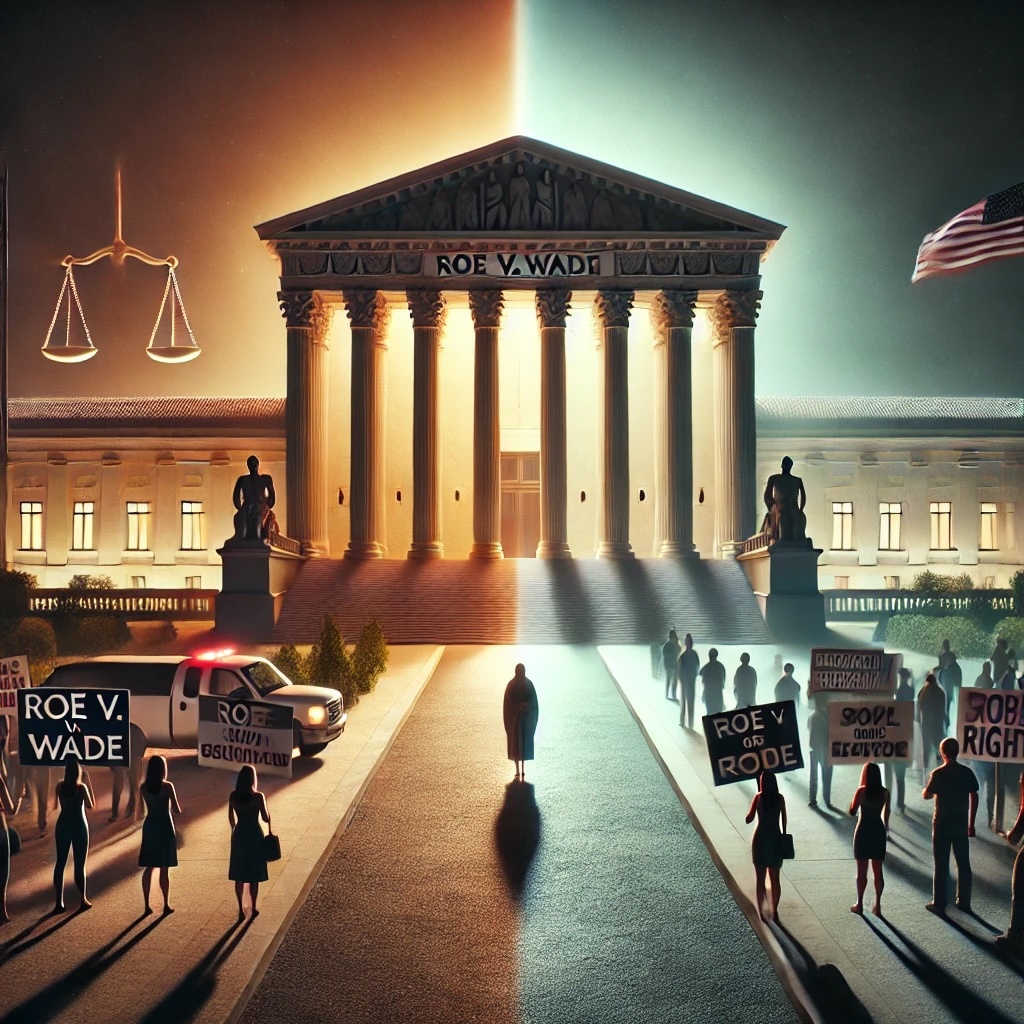
Few judicial decisions in American history have sparked as much passion, debate, and societal change as Roe v. Wade. In 1973, the U.S. Supreme Court ruled that the Constitution of the United States protects a woman’s right to choose to have an abortion, effectively legalizing the procedure nationwide. For nearly five decades, Roe v. Wade stood as a symbol of reproductive freedom, empowering individuals with autonomy over their own bodies. However, in 2022, the Supreme Court overturned this landmark ruling, reigniting fierce debates over personal liberties, state authority, and moral values. The ripple effects of these decisions continue to shape American society, highlighting the ever-evolving balance between rights and restrictions.

The 1973 Roe v. Wade ruling emerged from a lawsuit filed by “Jane Roe,” a pseudonym for Norma McCorvey, against Henry Wade, the district attorney of Dallas County, Texas. McCorvey challenged Texas laws that criminalized most abortions, arguing that they violated her constitutional rights. In a 7-2 decision, the Court concluded that the right to privacy, implied by the Fourteenth Amendment, extended to a woman’s decision to terminate a pregnancy, particularly within the first trimester. This decision not only protected reproductive rights but also established a framework for balancing the interests of the pregnant individual and the state.

For decades, Roe v. Wade faced relentless challenges from opponents who viewed it as an overreach of judicial authority. Advocacy groups, religious organizations, and conservative politicians argued that abortion was a moral issue best decided by individual states rather than federal courts. In 2022, this persistent opposition culminated in the Supreme Court’s ruling in Dobbs v. Jackson Women’s Health Organization. The Court, now with a conservative majority, overturned Roe v. Wade, declaring that the Constitution does not confer a right to abortion. This decision effectively returned the power to regulate abortion to individual states, creating a patchwork of laws across the nation.

The impact of overturning Roe v. Wade was immediate and profound. States with “trigger laws” quickly enacted stringent abortion bans, leaving millions without access to safe and legal procedures. At the same time, other states doubled down on their commitment to protecting reproductive rights, becoming safe havens for those seeking care. The reversal has amplified societal divisions, with debates raging over women’s health, economic equity, and the broader implications for privacy rights.

Roe v. Wade and its subsequent overturning underscore the dynamic and contentious nature of constitutional interpretation. While some celebrate the return of decision-making power to states, others mourn the loss of federally protected reproductive autonomy. This ongoing saga is a testament to the enduring tension between individual freedoms and collective values, and its resolution will likely continue to shape the United States for generations to come.

Related Posts

A Peaceful Transfer of Power: The Significance of Presidential Inaugurations

Dave

Presidential inaugurations are much more than ceremonial events; they are a cornerstone of American democracy, symbolizing the peaceful transfer of power and the resilience of the nation’s political system. Held every four years, these inaugurations mark a new chapter in the country’s history, offering a moment for reflection, unity, and hope for the future. Whether it is the first swearing-in of a newly elected president or the re-inauguration of an incumbent, the event reaffirms the values of democracy, continuity, and leadership.

The inaugural ceremony itself is steeped in tradition, beginning with the president-elect taking the oath of office, as outlined in the U.S. Constitution. Often held on the steps of the U.S. Capitol, this moment signifies the president’s commitment to uphold and defend the Constitution. Inaugural addresses often become defining speeches, laying out the administration’s vision and setting the tone for the next four years. Famous examples include Abraham Lincoln’s plea for unity during the Civil War, John F. Kennedy’s call to “ask what you can do for your country,” and Barack Obama’s message of hope and change.

Presidential inaugurations also serve as a platform for celebrating the diversity and dynamism of American culture. Performances by renowned artists, the presence of leaders from all walks of life, and the gathering of citizens from across the nation highlight the collective spirit of the United States. Even in moments of political division, inaugurations remind the nation of the shared principles that bind it together.

Ultimately, presidential inaugurations are more than rituals; they are a testament to the enduring strength of democracy. They reflect the nation’s ability to move forward, embrace change, and renew its commitment to the ideals of liberty, justice, and equality. As a nation watches its leader take office, the ceremony becomes a powerful reminder of the people’s role in shaping their government and their future.

Related Posts

The 1919 Boston Police Strike: A Turning Point in American Labor Movements

Dave

The 1919 Boston Police Strike was a pivotal moment in American labor history, highlighting the tensions between workers’ rights and the demands of a rapidly industrializing society. It was a bold act of defiance by the men and women who risked their livelihoods to demand better working conditions, fair wages, and a greater sense of dignity. The strike began in September 1919 when the Boston Police Department, underpaid and overworked, voted to strike for better wages and the right to unionize. As the strike escalated, it soon became a flashpoint for broader debates about labor movements, social justice, and the role of government in managing conflicts between employers and workers.

The backdrop of the strike was a post-World War I America, where returning soldiers flooded the job market, and workers across various industries, from steel to textiles, were organizing for better conditions. In Boston, police officers, who were responsible for maintaining order in an increasingly chaotic and volatile city, found themselves in dire straits. Despite their essential role, they were poorly paid and had little protection under the law. When they took action, they were met with resistance from city officials and Governor Calvin Coolidge, who famously declared, “There is no right to strike against the public safety by anybody, anywhere, any time.” The dismissal of over 1,000 police officers in response to their strike led to a temporary breakdown in law and order, including widespread looting and violence.

The strike’s aftermath reverberated far beyond Boston. While the police officers were not reinstated, their action became a symbol of the growing power of labor movements in America. The Boston Police Strike also signified the increasing awareness of class struggles and labor rights, setting the stage for future union movements and legislation aimed at improving working conditions. In the end, the strike demonstrated the lengths to which workers were willing to go to fight for justice, and it forced American society to reckon with the treatment of its labor force.

The 1919 Boston Police Strike remains a key moment in the history of labor movements, reminding us of the struggles workers face in their pursuit of dignity and fair treatment. Though the strike may not have achieved immediate success, it ignited important conversations that would shape the labor landscape for decades to come.

Related Posts

The Emancipation Proclamation: A Monumental Step Toward Freedom

Elias Rowen

On January 1, 1863, President Abraham Lincoln signed the Emancipation Proclamation, one of the most pivotal documents in American history. This executive order declared that all enslaved individuals in Confederate-held territories were to be freed. While it did not immediately abolish slavery throughout the entire United States, it fundamentally altered the course of the Civil War and redefined the nation’s moral and legal compass. The Proclamation empowered enslaved individuals to escape bondage, offering them the hope of freedom, while also allowing for the enlistment of African American soldiers into the Union army, further strengthening the Union’s efforts.

The significance of the Emancipation Proclamation cannot be overstated. It marked the beginning of the end of an institution that had deeply entrenched itself in the fabric of American society for centuries. Although it faced fierce opposition from Confederate states and some in the Union, it set a powerful precedent for the eventual passage of the 13th Amendment, which would formally abolish slavery in the United States. The document was not only a military strategy but also a moral declaration that reshaped the nation’s identity. For many, it symbolized a turning point where the ideals of liberty and equality began to take precedence over the preservation of an unjust system.

In the years that followed, the Emancipation Proclamation became a beacon of hope for African Americans, inspiring generations to fight for equality and justice. It remains a testament to the enduring struggle for freedom and human dignity, and its legacy continues to influence movements for civil rights across the world.

Related Posts

Guarding Against a Nuclear Tide: The Legacy of the Non-Proliferation Treaty

Dave

The Non-Proliferation Treaty (NPT), signed in 1968, stands as one of the most pivotal arms control agreements in history. With the world still recovering from the devastation of World War II, the NPT was designed to prevent the spread of nuclear weapons and promote the peaceful use of nuclear energy. Today, over five decades later, the treaty continues to serve as the cornerstone of global efforts to limit nuclear proliferation, reduce the threat of nuclear war, and create a framework for disarmament. While challenges remain, the NPT’s legacy has significantly shaped international relations, maintaining stability and fostering cooperative dialogues aimed at securing a safer world for future generations.

The core principle of the NPT is its commitment to the non-proliferation of nuclear weapons. As more countries sought to develop nuclear capabilities, the treaty provided a critical framework for regulating their spread. By limiting nuclear weapons to five recognized nuclear-armed states— the United States, Russia, China, France, and the United Kingdom— the treaty created a clear boundary for nuclear possession. Additionally, it placed great emphasis on promoting the peaceful use of nuclear technology, encouraging countries to use nuclear energy for constructive purposes rather than destructive ones. This balance between security and peaceful nuclear cooperation has made the NPT a significant force for international diplomacy.

However, the NPT has not been without its challenges. Over time, nations like North Korea and Iran have tested the treaty’s effectiveness, prompting concerns about the erosion of its principles. North Korea’s nuclear tests, in particular, have highlighted the complexities of enforcement and the difficulties in ensuring compliance. Meanwhile, Iran’s nuclear program has led to tense negotiations about the peaceful use of nuclear energy versus the potential for weaponization. These instances underscore the difficulty of balancing national security concerns with the treaty’s objectives of disarmament and non-proliferation. Despite these setbacks, the NPT remains a critical tool in international diplomacy, with global powers continuing to work within its framework to address emerging threats.

The treaty’s broader legacy also lies in its role as a symbol of international cooperation. By bringing together countries with divergent interests, the NPT has fostered dialogue on nuclear disarmament and arms control, even in the face of significant geopolitical tension. Through periodic review conferences and multilateral discussions, the NPT serves as a platform for assessing progress, identifying areas of concern, and encouraging new approaches to nuclear security. It has also inspired other arms control agreements and treaties, reinforcing the global commitment to preventing the spread of nuclear weapons.

Ultimately, the legacy of the NPT is one of resilience and adaptability. While it has faced considerable challenges, the treaty’s continued relevance underscores the world’s shared desire for a future free of the existential threat posed by nuclear weapons. As countries continue to navigate the complexities of nuclear technology, the NPT remains a guiding force in efforts to ensure that nuclear weapons are never used again, and that future generations inherit a safer, more peaceful world.

Related Posts

Global Reflections: How U.S. Elections Shape Democracy Worldwide

Dave

The world watches U.S. elections with rapt attention—not just because of America’s global influence but also for the lessons that emerge from its electoral process. From campaign dynamics to voter turnout, the U.S. electoral system has long been a model (and sometimes a cautionary tale) for other democracies. The United States’ elections spark discussions worldwide about democratic values, the role of citizens in government, and the mechanics of voting. But how exactly do other countries interpret U.S. election outcomes, and have they enacted any reforms based on American experiences? This article explores these global reflections and the influence of U.S. elections on electoral reform.

The U.S. elections often set trends, serving as a model that other nations adopt or adapt in different ways. Here’s a closer look at some aspects that inspire reforms abroad:

U.S. elections are known for high-energy campaigns that rely on data analytics, social media, and direct voter outreach to engage people at a grassroots level. Many countries have taken notes, using targeted campaigns and digital tools to better connect with their voters. In nations where voter engagement was traditionally low, lessons from American-style campaigning have sparked new methods of outreach aimed at boosting turnout and encouraging civic participation.

The U.S. model of election transparency—live debates, accessible information on candidates, and real-time election coverage—has inspired other democracies to ensure their election processes are similarly open. Countries have introduced televised debates, expanded access to candidate platforms, and set up live broadcasts of vote counts, aiming to build public trust in their own elections.

With initiatives focused on young and first-time voters, the U.S. has influenced programs worldwide that encourage youth engagement in politics. Inspired by American voter education efforts, countries such as India and Canada have rolled out programs in schools to educate young people about their role in democracy, aiming to build lifelong habits of civic involvement.

While the U.S. elections offer valuable lessons, some of the world’s reforms have been inspired by perceived challenges in the American system, especially around access and fairness.

Observing debates in the U.S. around voter suppression, countries like Brazil and Germany have taken extra steps to ensure inclusive and accessible voting processes. Many have opted for automatic voter registration and expanded absentee ballot access, aiming to make it easier for all citizens to vote without restrictions.

The enormous role of money in U.S. campaigns has led some countries to reinforce their own limits on campaign financing, to ensure fairness and equal opportunity for all candidates. Nations including the United Kingdom and Canada have enacted stricter regulations on political donations and spending caps to prevent wealthier candidates or parties from having outsized influence.

Witnessing both the promise and occasional pitfalls of U.S. voting technology, countries have cautiously adopted modern systems while prioritizing security. Countries like Estonia have implemented secure online voting systems, while others, like France, have retained traditional paper ballots to avoid risks associated with electronic voting.

The U.S. election process often spurs global dialogue about democracy itself. The transparency, campaigning styles, and electoral policies seen in U.S. elections encourage nations to reflect on their own practices, adopting elements that fit their unique cultures and governance structures. Yet, they also serve as a reminder that democratic practices are not one-size-fits-all. U.S. elections continue to demonstrate both the power and the complexities of modern democracy, inspiring other nations to learn, adapt, and refine their own systems to best serve their citizens.

The U.S. election process acts as both a mirror and a model for global democracies. Whether inspiring reforms in transparency, voter engagement, or campaign finance, it highlights the values shared across democratic nations and serves as a valuable, albeit imperfect, example of democracy in action. As countries reflect on and adapt lessons from U.S. elections, they reinforce a global commitment to representative governance and active civic participation—a powerful, lasting impact of the American democratic experiment.

Related Posts

The Treaty of Trianon: A Nation’s Shattered Boundaries

Dave

In June 1920, Hungary faced a moment that would forever alter its place in the world: the signing of the Treaty of Trianon. This treaty, a component of the broader peace settlement concluding World War I, was one of the most significant turning points in Hungarian history. Stripped of two-thirds of its territory and over half its population, Hungary emerged from the treaty a shadow of its former self, sparking decades of national reflection, cultural resilience, and political tension.

Hungary’s pre-war borders included vast lands and a diverse population. Trianon reduced the nation from over 325,000 square kilometers to just 93,000 square kilometers. Entire regions, such as Transylvania, Slovakia, and Croatia, were ceded to neighboring states like Romania, Czechoslovakia, and Yugoslavia. For millions of ethnic Hungarians, this meant waking up one day as minorities in foreign countries—a deeply personal and painful transformation.

Economically, Hungary’s once-thriving industries, heavily reliant on resources from the lost territories, crumbled. Railways now crossed international borders, agriculture lost fertile lands, and trade routes were disrupted. The psychological impact was equally severe, with national pride and identity deeply wounded.

The treaty’s fairness remains a topic of debate. To the Allied powers, it was a necessary measure to weaken a defeated empire and ensure stability in the region. To Hungary, it felt punitive and excessive, fostering a sense of injustice that would linger for generations. This resentment became fertile ground for political instability, influencing Hungary’s role in the interwar years and even its alignment during World War II.

Despite the losses, Hungary preserved its cultural heritage. The arts, literature, and traditions flourished as Hungarians sought solace and strength in their shared identity. Writers like Dezső Kosztolányi and musicians such as Béla Bartók emerged as symbols of resilience, capturing the spirit of a nation determined to rise above adversity.

More than a century later, the Treaty of Trianon is still a sensitive topic in Hungary. It shaped the country’s modern borders, identity, and foreign relations. For Hungarians, it’s a reminder of a painful past but also a testament to their enduring spirit.

Related Posts

Term Limits: The Balancing Act Between Accountability and Continuity

Dave

Term limits for elected officials have long stirred debate among political scholars, lawmakers, and the public alike. While the idea of limiting terms resonates with those eager for fresh leadership and a government responsive to the people, it also raises questions about the loss of valuable experience and continuity in governance. Are term limits the key to accountability, or do they undermine the stability needed to carry out long-term policies? This article dives into the heart of the debate to weigh both sides, shedding light on why this issue remains both timely and contentious.

Supporters of term limits argue that capping the time an official can hold office encourages a healthier, more dynamic political landscape. Here are some of the core arguments from proponents:

Term limits, they argue, help prevent the entrenchment of power that can lead to complacency or even corruption. By limiting terms, politicians must prioritize serving the public effectively within their allotted time. This accountability can refresh political commitment and keep leaders attuned to their constituents’ needs.

Without term limits, some argue, officials risk becoming “career politicians,” losing touch with the daily struggles of the public. Term limits would encourage representatives who bring new perspectives and who are less likely to adopt the “insider” mentality that sometimes distances long-serving officials from the people they serve.

New leaders bring new ideas, and turnover allows for fresh perspectives that can lead to more innovative policy solutions. Proponents suggest that term limits can make way for those who understand the evolving nature of issues like technology, environmental changes, and shifting social dynamics.

Critics of term limits, however, caution that capping terms comes at the cost of losing experienced, knowledgeable leaders. Here’s why opponents believe term limits may do more harm than good:

Effective governance often relies on a long-term vision and the ability to carry out policies that span years or even decades. Frequent turnover can disrupt ongoing projects and policies, weakening governmental stability and continuity. Imagine a key infrastructure project repeatedly delayed because new leaders keep changing priorities. Opponents argue this instability does little to serve the public in the long run.

Governance is complex, and the longer someone serves, the more institutional knowledge they acquire. Critics argue that this experience benefits constituents, as officials become adept at navigating bureaucracy, understanding intricate issues, and building relationships across party lines. Losing such expertise too quickly, they suggest, limits the effectiveness of leadership.

Some argue that term limits may create a vacuum where lobbyists and unelected influencers hold more sway, as newly elected officials may lack the knowledge or connections to resist pressure. With term limits, lawmakers may rely more on external advisors and think tanks, potentially diminishing their independence and weakening the role of elected leadership.

For some, the solution lies not in strict term limits but in reforms that balance both continuity and accountability. Alternatives might include partial term limits, mandatory gaps between terms, or performance-based measures that incentivize effective governance. Voters might also embrace stronger recall options to remove underperforming leaders without sacrificing seasoned officials who are serving effectively.

Ultimately, the debate over term limits reflects a broader tension in modern democracy: the balance between the desire for fresh, responsive leadership and the need for steady, experienced governance. While term limits promise accountability and renewal, they risk undermining continuity and expertise. The decision, as always, lies with the people, who must weigh these values when considering reforms to the political landscape.

Related Posts

Polls, Predictions, and Public Opinion: The Powerful Influence of Political Polling

Dave

In an election season, one of the most talked-about topics is often the polls. These snapshots of public opinion, collected from samples of voters, attempt to predict election outcomes and gauge support for candidates and issues. Political polling has become a central feature of campaigns and media coverage, shaping public perception, influencing strategies, and even affecting voter turnout. Yet, while polls can provide valuable insights, they’re also complex tools with limitations that can sometimes mislead or create unintended consequences. Let’s explore the profound influence that polling has on modern politics, how predictions sway voters, and why understanding polls is essential to navigating today’s political landscape.

Political polling doesn’t just report public opinion; it also shapes it. Polls can create a bandwagon effect, where people are more likely to support the candidate who appears to be winning. Conversely, they can create an underdog effect, where a candidate’s low numbers motivate their base to rally. For undecided voters, poll results can influence which candidates seem viable, persuading them to lean toward those with momentum.

For example, if a candidate is shown as leading significantly, some voters may feel that casting a ballot for the opposing candidate would be “wasting” their vote. On the other hand, if a race is predicted to be close, voters may feel more compelled to turn out, believing their vote could make a difference. Polls, therefore, play a psychological role in elections, affecting voter morale and shaping the public’s perception of what’s achievable.

Campaigns closely monitor polling data, tailoring their strategies based on the insights these numbers provide. By analyzing demographic support, campaigns can adjust their messaging to address issues most important to specific voter segments. If polls reveal a lack of support among young voters, for instance, a candidate might focus more on topics that resonate with younger audiences, like climate change or student debt relief. Similarly, if polling indicates strong support among certain groups, campaigns might invest additional resources in turnout efforts within those demographics.

Polling also guides decisions on where candidates should campaign. If certain states or regions show tight races, campaigns will focus their resources there, often leading to targeted advertisements, local events, and even increased efforts to reach voters through digital and social media. The insights gleaned from polls can be a game-changer, allowing campaigns to focus on areas with the greatest potential impact.

Polling can either encourage or discourage voter turnout. Some voters, seeing a candidate far ahead, may believe their vote isn’t necessary and stay home, assuming the result is a foregone conclusion. This phenomenon, known as the “discouragement effect,” can potentially lower turnout, especially in races projected to be landslides. Conversely, close polls can boost turnout, motivating voters to participate, believing their vote could be decisive.

However, polling inaccuracies can have real-world consequences. For instance, in the 2016 U.S. presidential election, polling showed a strong lead for one candidate, leading some voters to feel complacent. When results differed from predictions, many questioned polling reliability and methodology. Such cases highlight the complexities of polling and the potential effects on both campaign dynamics and voter participation.

Polls are not foolproof, and their accuracy depends on factors like sample size, sampling method, and question phrasing. Achieving a truly representative sample can be challenging, especially as fewer people participate in traditional polling methods. Factors like phone polls or online surveys can skew results based on who is most likely to respond. Further, with more people having “cut the cord” and moved away from landlines, polling companies must adapt to reach diverse audiences through mobile and online platforms.

Another critical challenge is question design. How questions are worded can influence responses, intentionally or unintentionally. For example, asking about support for a candidate “despite their controversies” versus “because of their policies” might produce dramatically different results. Pollsters also face the difficulty of accounting for undecided voters, who often make up a significant portion of the electorate, especially in close races. These factors, while subtle, can create wide variations in polling results and have profound implications for how polls are interpreted.

With advancements in technology, polling has entered a new era, providing real-time insights that were previously impossible. Social media platforms have become valuable sources of public opinion data, allowing for “sentiment analysis” based on users’ reactions to political events, speeches, or debates. This data provides an instant look at public sentiment and helps campaigns adjust strategies in real time.

The digital age also means that polling data spreads faster than ever, often being reported and re-shared instantly on news sites and social media. This accessibility can lead to “poll fatigue” among the public and even poll-driven anxiety among voters and candidates alike. However, the digital landscape has also given rise to new tools and methodologies, with data scientists constantly innovating to create more reliable models.

Polling, while an invaluable tool in politics, is a double-edged sword. It influences public perception, shapes campaign strategies, and can significantly impact voter turnout. Yet, it’s essential to remember that polls are snapshots, not certainties. Understanding polling methodology, sample diversity, and the potential for bias is crucial for interpreting results thoughtfully.

For voters, approaching polls with a healthy skepticism and understanding their limitations can prevent the undue influence of these numbers on personal decisions. Ultimately, while polls are a powerful element of modern elections, they are only part of the larger political picture. In the end, individual votes—not polling predictions—determine the outcome, making every ballot count, regardless of what the numbers say.

Related Posts

Trailblazers in Power: How Women Are Shaping the Political Future

Dave

In recent decades, women have transformed political landscapes around the world, both as candidates and as powerful voices in the electorate. From breaking new ground by winning office to using their influence as voters, women have proven that they are not only vital to democracy but are also redefining what leadership looks like. While they have achieved remarkable milestones, women in politics continue to face unique challenges, from gender biases to structural barriers. This article highlights the impressive achievements and the ongoing journey for women in politics, celebrating how far they’ve come and exploring the road that lies ahead.

The path to political office for women has been marked by both triumph and adversity. Women like Margaret Thatcher, Angela Merkel, and Ellen Johnson Sirleaf paved the way in the global arena, serving as heads of state and changing the narrative of political power. In the United States, trailblazers like Shirley Chisholm, the first Black woman elected to Congress, and Geraldine Ferraro, the first female vice-presidential candidate from a major party, broke new ground for women in politics.

In recent years, women’s political representation has reached new heights. Kamala Harris, elected as the first female Vice President of the United States, and Jacinda Ardern, known for her empathetic and decisive leadership in New Zealand, exemplify how women are redefining global political leadership. These achievements are more than individual successes; they are part of a larger wave of change, where women leaders are increasingly seen as catalysts for addressing issues from social equality to healthcare reform.

Despite these milestones, women still face significant challenges in the political arena. Gender stereotypes and biases remain prevalent, with women often subjected to harsher scrutiny and unrealistic expectations about their appearance, family roles, and emotional expression. Female politicians are also more likely to face harassment, both online and offline, which can deter many from entering public office. Moreover, issues such as campaign funding and networking support—often essential for success—can pose additional barriers for women, as political structures were historically designed by and for men.

For women of color, LGBTQ+ women, and women from marginalized communities, the path is often even steeper. Intersectionality brings its own set of challenges, as these women encounter discrimination not only for their gender but also for their race, ethnicity, or sexuality. However, this diversity in representation is precisely what makes their voices so powerful; women from all walks of life bring fresh perspectives that enrich the democratic process and offer more inclusive solutions to societal issues.

Women are not only influential candidates but also powerful voters who have swayed elections and shaped policies. In many countries, women vote at higher rates than men, using their ballots to support issues like healthcare, education, and family leave policies that directly impact families and communities. In the U.S., women were instrumental in the 2020 presidential election, with particularly high turnout among young women and women of color. This voter base is now recognized as a critical force, pushing candidates to address issues that directly affect women, such as reproductive rights, wage equality, and social justice.

The political landscape is beginning to reflect the issues that matter most to women voters, and their collective voice continues to push for policies that create fairer societies. Political leaders are increasingly aware of the importance of women’s votes, knowing that their support can be the key to winning or losing an election.

From gaining the right to vote to breaking into the highest offices, women’s political progress has been both swift and transformative. The suffragette movement of the early 20th century marked a turning point in women’s rights, eventually leading to voting rights in many countries. By the 21st century, women have ascended to leadership positions once considered unattainable. More women than ever before are serving in parliaments, congresses, and cabinets around the world, contributing diverse viewpoints and championing causes that directly impact society.

Looking forward, the momentum is only growing. Young women are now leading movements for climate change, social justice, and gender equality, determined to make politics more inclusive and responsive. Organizations dedicated to supporting women in politics, such as EMILY’s List in the U.S., are working tirelessly to recruit and train female candidates who are ready to make an impact. In a world facing complex issues, women’s involvement at all levels of government is essential to achieving a more balanced and equitable society.

Women’s participation in politics is more than a milestone; it’s a movement that strengthens democracy and reshapes society. When women lead, they bring diverse perspectives and empathetic solutions, fostering a political environment that is more representative and just. The challenges are real, but so is the determination of women who continue to break barriers and inspire future generations. As more women step into roles of influence, they carry with them the legacy of those who fought for a voice and a vision for an equitable future. Every election, every vote, and every woman who runs for office brings us closer to a world where equality isn’t just an ideal, but a reality.

Related Posts

Unpacking the Durham Report: What It Reveals About FBI Investigations and Political Integrity

Dave

In May 2023, after years of speculation and investigation, Special Counsel John Durham released a report that aimed to shed light on the FBI’s controversial 2016 probe into alleged ties between the Trump campaign and Russian interference. Known formally as the Report on Matters Related to Intelligence Activities and Investigations Arising Out of the 2016 Presidential Campaigns, this document—commonly referred to as the Durham Report—examined whether the FBI acted properly and impartially in its investigation.

While the report didn’t bring forth major new revelations, it scrutinized the integrity of the intelligence community, highlighted significant issues within the FBI’s approach, and raised concerns about potential political bias in one of the most pivotal investigations of the last decade. Here, we break down what the Durham Report revealed and what it might mean for the future of political investigations and election integrity.

The Durham investigation focused heavily on the FBI’s handling of “Crossfire Hurricane,” the code name for the probe into connections between Trump associates and Russian agents. According to Durham, the FBI relied on weak and unverified intelligence—particularly the Steele dossier, a collection of allegations against Trump, which Durham claims lacked proper vetting. This overreliance on unvetted information, according to the report, may have led the FBI to initiate and pursue an investigation without sufficient justification.

Durham’s report also criticized what he described as a “double standard” in the way the FBI handled intelligence. While the FBI quickly opened the Trump investigation based on limited evidence, it appeared to exercise more caution when dealing with potential intelligence concerns related to Hillary Clinton’s campaign. This perceived discrepancy fueled concerns that political bias, whether implicit or explicit, may have influenced investigative decisions.

Despite a thorough investigation and years of inquiry, the Durham Report did not lead to widespread criminal charges against top FBI officials. The notable exception was the case of FBI attorney Kevin Clinesmith, who was found to have altered an email related to the application for a surveillance warrant. This incident was used as an example of procedural misconduct that may have compromised the integrity of the broader investigation. However, the absence of large-scale criminal indictments led some critics to question the overall impact of Durham’s findings.

For many, the lack of broader criminal charges was a sign that, while mistakes and lapses in judgment may have occurred, there wasn’t a grand conspiracy within the FBI to target the Trump campaign. Others, however, interpreted Durham’s findings as evidence that biases within the intelligence community must be addressed to ensure fair treatment in future investigations.

The report suggested a number of reforms aimed at preventing similar issues in politically sensitive investigations. Key among these recommendations was a stronger internal oversight mechanism within the FBI to ensure that investigations are based on verified evidence rather than unsubstantiated claims. Durham also recommended additional transparency in the FBI’s operations and the adoption of stricter protocols for handling politically sensitive cases.

One of the most debated aspects of the report centers on the need to safeguard political investigations from any appearance of bias. Reform advocates argue that these changes are essential for maintaining public trust in the FBI and intelligence community, particularly as the digital age continues to blur lines between public perception and factual reporting. Ensuring that investigative practices are transparent and neutral, they argue, is necessary to sustain the credibility of future election-related investigations.

The Durham Report spurred strong reactions across the political spectrum. Supporters of Donald Trump viewed the report as evidence that the FBI’s investigation into his 2016 campaign was unjustified and politically motivated, while critics argued that the report largely reiterated findings already covered by the Department of Justice’s Inspector General in prior investigations. The release of the Durham Report has also revived debates around political investigations in general, with many questioning the role of the FBI in the political landscape and calling for more checks on intelligence practices.

Looking ahead, the Durham Report’s findings are expected to contribute to ongoing discussions about how best to reform intelligence practices and maintain public trust in democratic processes. As the country heads into future election cycles, transparency, fairness, and accountability will remain central themes for both voters and policymakers.

By examining the details of the Durham Report, we gain a clearer view of the challenges inherent in balancing national security with political impartiality. As reforms take shape, the hope is that they will ultimately strengthen the democratic foundation on which the country relies, ensuring that the intelligence community serves all citizens without bias.

Related Posts

Voices Rising: How Young People Are Shaping the Future of Politics

Dave

In recent years, youth engagement in politics has moved from a quiet murmur to a powerful force that is shaping elections, setting agendas, and calling leaders to account. Young people are stepping into the political arena like never before, bringing fresh perspectives, passionate convictions, and an unparalleled ability to harness digital tools. But what’s driving this surge of interest among young voters, and what impact are they really having on the political landscape?

Unlike the traditional political issues that often dominate headlines, young voters are interested in a broader spectrum of concerns. For many of them, climate change isn’t just a talking point—it’s a matter of survival. They’re vocal about the need for substantial environmental policies, from renewable energy investments to protecting biodiversity. Racial justice, gender equality, mental health, and affordable education are also high on their list, as they seek a world that is inclusive, sustainable, and just.

Young people today have also grown up in a more globally interconnected world, giving them a unique perspective on international issues. They’re not only voting with local policies in mind but are looking at how national decisions impact communities worldwide. This worldview makes them formidable advocates for causes that transcend borders.

While previous generations campaigned door-to-door or through phone banks, young people are leveraging digital platforms in ways that are redefining political engagement. From viral social media posts to well-organized hashtag campaigns, they use every tool in the digital toolbox. Platforms like TikTok, Instagram, and Twitter aren’t just for entertainment anymore—they’re central spaces for political discourse and organizing.

During elections, young people’s ability to spread messages at the speed of light has proven to be a game-changer. Grassroots organizations are connecting with youth through these platforms, making it easier than ever to register to vote, stay informed on key issues, and mobilize friends and family. In many cases, the results are extraordinary. Record-breaking voter turnout in recent elections can, in part, be attributed to these digital efforts that energize young voices and transform individual concerns into collective action.

Beyond voting, young people are stepping into leadership roles within political campaigns, advocacy groups, and even as candidates. Many have recognized that real change requires not only showing up at the polls but also running for office. By putting themselves in positions of influence, they aim to make policies that directly address the issues they are passionate about, from student debt to healthcare reform.

As this generation matures, they’re slowly changing the traditional face of politics. Their approach is not only less partisan but also more inclusive, collaborative, and solutions-driven. For example, they’re often seen working with diverse allies and employing creative, nontraditional approaches to bridge divides and enact change.

The rising engagement of young people in politics is not just a temporary trend; it signals a transformation that will shape elections, policies, and the political landscape for years to come. With each election, they’re refining their strategies, learning from experiences, and growing even more adept at rallying their peers. And as they continue to engage, their influence will likely encourage more transparency, equity, and responsiveness from the political system itself.

The future of politics is being crafted, bit by bit, by these young, energetic voices. They’re showing us all that democracy is not a spectator sport and that, with passion and persistence, change is always within reach.

Related Posts

Money Talks: The Power and Perils of Campaign Finance in Democracy

Dave

Democracy is meant to be the voice of the people, where each vote has an equal say. However, the growing influence of money in politics is shifting the balance of power, making campaign finance a deeply contentious issue. As billions pour into political campaigns every election season, questions arise: Whose voices are really being heard, and what does this mean for the future of democracy? From the role of Political Action Committees (PACs) to the push for reform, understanding campaign finance is crucial to ensuring that democracy remains fair and representative.

Running a campaign is an expensive undertaking, from paying for television ads and digital outreach to organizing events and staffing a team. But over the years, the cost of winning an election has skyrocketed. In recent election cycles, the money spent on presidential, congressional, and state elections has reached record-breaking heights. This raises a key question: Is the growing cost of campaigns leading politicians to prioritize wealthy donors over ordinary voters?

Campaign funds often come from a mix of sources—small individual donations, large donations from wealthy individuals, and funds from PACs and Super PACs. For many politicians, donations from major contributors are essential to staying competitive, which can create a strong incentive to consider the interests of these donors when making policy decisions. Unfortunately, this dynamic can leave everyday voters feeling overlooked or even sidelined.

Political Action Committees (PACs) have been around since the 1940s, but they took on a new dimension with the rise of Super PACs following the Supreme Court’s 2010 Citizens United decision. While traditional PACs have limits on how much they can receive from donors and give to campaigns, Super PACs can raise unlimited funds and spend them independently to support or oppose candidates. This means that a single Super PAC with enough money can dominate the conversation around an election, spending millions to influence public opinion.

Though these groups cannot coordinate directly with candidates, their impact is undeniable. By pouring money into targeted advertising and social media campaigns, Super PACs can shape voters’ views on candidates and issues, sometimes without clear disclosure of who’s funding the messages. This lack of transparency can make it challenging for voters to understand whose interests are being promoted and why.

In response to the growing influence of money in politics, many advocates are calling for campaign finance reform. Proposals range from setting stricter limits on donations to increasing transparency requirements. Some argue for public financing of campaigns, which would reduce reliance on private donors altogether, allowing candidates to focus on issues rather than fundraising. However, reform efforts face significant challenges, particularly given the powerful interests that benefit from the current system.

One of the biggest hurdles to reform is the legal framework. Campaign contributions are often considered a form of free speech, making it difficult to limit them without facing constitutional challenges. Yet advocates argue that without reform, the very principle of “one person, one vote” is at risk, as big money continues to influence who gets elected and which policies get prioritized.

As campaign finance debates continue, voters are increasingly aware of the issue and are demanding change. Grassroots organizations, civic groups, and concerned citizens are raising awareness and pushing for reforms that would make politics more transparent and less reliant on big money. In some areas, cities and states are experimenting with new models, like publicly funded vouchers that let voters direct public funds to the candidates of their choice. These local experiments could provide valuable lessons on how to create a more balanced and representative system.

Ultimately, preserving the integrity of democracy requires finding ways to make sure that elected officials are accountable to all citizens, not just those with the deepest pockets. While the challenge is complex, every step toward a fairer campaign finance system is a step toward a healthier, more inclusive democracy.

Related Posts