Latest Articles

Paul Celan: Where Identity Goes to Hide (And Why It’s Still Talking to Me)

Penelope

Paul Celan’s poetry has been a constant presence in my life since I first stumbled upon it in a literature class during my junior year of college. His words have haunted me, lingered with me, and sometimes even felt like they were speaking directly to me. But as much as his poetry resonates, there are aspects of Celan’s life that leave me unsettled.

One of the things that has always fascinated me about Celan is the way he navigated his Jewish heritage amidst the devastation of World War II and its aftermath. As a Romanian-born Jew who survived the Holocaust, Celan’s experiences inform his poetry in profound ways. But what strikes me is the complexity of his feelings towards his own identity. He often wrote about being torn between his Jewish roots and his desire to assimilate into German culture.

I find myself struggling with similar questions. Growing up, my family wasn’t very involved in our Jewish heritage, despite being Jewish ourselves. We celebrated holidays, but it was more out of tradition than any deep connection to the faith. As I got older, I began to feel a sense of disconnection from this part of my identity, like there were parts of myself that I didn’t fully understand or acknowledge.

Reading Celan’s poetry has made me confront these feelings head-on. His work is not just about Jewish identity; it’s also about the fragmentation and dislocation that occurred during the war. He writes about how words themselves became tainted by association with Nazi ideology, making it impossible to speak truthfully without being compromised.

This resonates deeply with me because I’ve always felt like language can be both powerful and limiting. As a writer, I know that words have the ability to convey complexity and nuance, but I also recognize that they can be used to silence or erase entire communities. Celan’s poetry forces me to consider the ways in which language is never neutral.

But what really gets under my skin is the way Celan struggled with his own sense of responsibility as a writer. He felt like he was failing to adequately convey the horrors of the Holocaust, that his words were too timid or too obscure. This anxiety speaks directly to my own fears about writing – that I’ll never be able to capture the essence of what I’m trying to say.

It’s this tension between ambition and inadequacy that I find so compelling in Celan’s work. His poetry is both a testament to his skill as a writer and a reflection of his own doubts and fears. It’s as if he’s constantly pushing against the limits of language, testing its ability to express the unexpressible.

I’m drawn to this aspect of Celan’s work because it speaks to my own creative insecurities. As someone who writes for myself, I often feel like I’m trying to capture something intangible – a feeling or an experience that can’t be fully articulated. Reading Celan’s poetry makes me realize that these feelings are not unique to me; they’re shared by countless writers and artists throughout history.

And yet, despite this sense of solidarity with Celan, I still find myself wrestling with the implications of his work. His poetry is not just a reflection of his own experiences but also a commentary on the broader cultural landscape of post-war Germany. He writes about the ways in which language was used to justify atrocities, and how it continues to shape our perceptions of reality.

This makes me uncomfortable because I know that similar dynamics are still at play today. We’re living in an era where misinformation spreads quickly, and facts are often distorted or omitted altogether. Reading Celan’s poetry forces me to confront the ways in which language can be used as a tool for manipulation, and how we must remain vigilant against its misuse.

As I continue to grapple with Celan’s work, I’m struck by the complexity of his legacy – both as a writer and as a human being. His poetry is not just a testament to his own resilience but also a reminder that language has the power to both heal and harm. It’s this paradox that keeps me coming back to his words again and again, searching for answers in the midst of uncertainty.

The more I delve into Celan’s poetry, the more I’m struck by the way he navigates this tension between language as a tool for healing and its potential to harm. It’s as if he’s constantly walking on a tightrope, aware that one misstep could lead to further devastation.

This resonates deeply with me because I’ve always felt like writing is a double-edged sword. On the one hand, it allows me to process my thoughts and emotions in a way that feels therapeutic. But on the other hand, I’m constantly worried about how my words might be received by others – whether they’ll be misunderstood or misinterpreted.

Celan’s poetry makes me realize that this anxiety is not unique to me as a writer, but rather a fundamental aspect of the creative process. He writes about how even the most well-intentioned language can become tainted by its context, and how the very words we use to express ourselves can be used against us.

This thought sends a shiver down my spine because it speaks to the darker corners of human nature. I think about all the ways in which language has been used as a means of control – to silence marginalized communities, to justify oppression, or to spread hate speech. And yet, at the same time, I’m also aware that language has the power to bring people together, to inspire change, and to create something new.

This paradox is what keeps me up at night, wondering about the responsibilities that come with writing. Do I have a duty to use my words in a way that promotes understanding and empathy? Or can I simply focus on expressing myself honestly, without worrying about how others might receive it?

As I grapple with these questions, I’m drawn back to Celan’s poetry – specifically his concept of the “Ashes” collection. For me, this collection represents the ultimate expression of the tension between language as a tool for healing and its potential to harm.

The Ashes poems are written in a style that’s both beautiful and brutal – a deliberate fragmentation of language that mirrors the shattered remains of human experience during the Holocaust. It’s as if Celan is trying to convey the unrepresentable, to capture the essence of something that can’t be put into words.

This approach makes me uncomfortable because it forces me to confront my own limitations as a writer. I’m aware that there are certain experiences and emotions that are beyond my grasp – things that I can only attempt to describe, but never truly capture.

And yet, even in the midst of this uncertainty, Celan’s poetry offers me a sense of hope. It reminds me that language is not a fixed entity, but rather a dynamic and ever-changing force that can be shaped and reshaped by our experiences and perspectives.

As I continue to explore Celan’s work, I’m struck by the way it encourages me to think more critically about the role of language in shaping our understanding of the world. It’s a reminder that words have power – not just as tools for communication, but also as instruments of transformation and healing.


As I delve deeper into Celan’s poetry, I find myself drawn to his use of imagery and metaphor. His descriptions of the Holocaust are both stark and beautiful, a juxtaposition that seems to capture the complexity of human experience during that time. For example, in one of his poems, he writes about the ash trees that grew from the crematoria at Auschwitz-Birkenau, their branches stretching towards the sky like skeletal fingers.

This image haunts me because it speaks to the ways in which trauma can leave its mark on the natural world. The idea that something as beautiful and life-giving as a tree could grow out of such darkness is both heartbreaking and profound. It makes me wonder about the long-term effects of trauma on individuals, communities, and even the land itself.

Celan’s use of imagery also forces me to confront my own relationship with beauty and ugliness. As someone who writes for themselves, I often struggle with the idea that my words can be both aesthetically pleasing and disturbing at the same time. Do I have a responsibility to create something beautiful, even in the face of darkness? Or is it more important to simply express the truth, no matter how ugly or difficult it may be?

These questions swirl around me as I read Celan’s poetry, his words weaving together like a tapestry that’s both fragile and resilient. It’s as if he’s trying to capture the very essence of human experience – all its complexities, contradictions, and paradoxes.

And yet, despite the depth and richness of his work, I still find myself struggling with the idea of representation. Can poetry truly represent the Holocaust? Or is it just a pale imitation, a feeble attempt to grasp something that’s inherently beyond words?

These doubts plague me because I know that language can never fully capture the horrors of the Holocaust. There are some experiences that are too great for words, and Celan’s poetry reminds me of this fact. His work is not about representing the Holocaust in all its gory detail; it’s about capturing the emotions, the sensations, and the very essence of what happened.

This realization makes me wonder about my own relationship with representation as a writer. Do I have a responsibility to represent certain experiences or perspectives? Or can I simply focus on expressing myself honestly, without worrying about how others might receive it?

These questions linger in my mind long after I finish reading Celan’s poetry. They haunt me because they force me to confront the limitations of language and the power of words to both heal and harm.

As I continue to grapple with these questions, I’m struck by the way Celan’s poetry encourages me to think about the role of silence in creative expression. He often writes about the importance of silence as a means of conveying the unrepresentable, the unspeakable. It’s as if he’s saying that sometimes, the only way to truly express something is to leave it unsaid.

This resonates with me because I’ve always been drawn to the idea of silence as a form of resistance. In a world where words are often used to dominate or oppress, silence can be a powerful tool for reclaiming one’s own narrative and agency. Celan’s poetry reminds me that silence is not just the absence of sound; it’s also a presence, a palpable force that can shape our understanding of the world.

But what I find particularly intriguing about Celan’s use of silence is the way he often juxtaposes it with music. In many of his poems, he writes about the sound of silence, describing it as a kind of mournful melody that haunts the reader. It’s as if he’s trying to capture the sound of absence, the way that silence can take on a life of its own.

This image has stayed with me long after I finished reading Celan’s poetry. I find myself thinking about the ways in which music and silence are intertwined – how they both have the power to evoke strong emotions and create complex meanings. As someone who writes for themselves, I’m drawn to the idea that language can be used as a kind of musical instrument, one that can create harmony or discord depending on how it’s played.

But what I’m struggling with is the way Celan’s poetry often blurs the line between music and silence. He writes about the sound of silence, but he also uses language in ways that are almost musical – employing rhythm, meter, and repetition to create a sense of sonic texture. It’s as if he’s trying to capture the essence of music itself, rather than just using it as a metaphor.

This has me wondering about the relationship between language and music in my own writing. Do I have a responsibility to use language in ways that are more musical, more evocative? Or can I simply focus on expressing myself honestly, without worrying about how others might receive it?

As I grapple with these questions, I’m drawn back to Celan’s poetry – specifically his concept of the “language after Auschwitz.” For me, this phrase represents the ultimate expression of the tension between language and silence, music and meaning. It’s as if Celan is saying that language itself has been forever changed by the horrors of the Holocaust, that it can never be the same again.

This idea haunts me because I know that language is a constantly evolving entity – shaped by history, culture, and personal experience. But what I’m struggling with is the way Celan’s poetry often presents language as something fixed, unchanging. He writes about the ways in which words become tainted by association, how they can never be used again without being compromised.

This makes me wonder about my own relationship with language as a writer. Do I have a responsibility to use language in ways that are aware of its history and context? Or can I simply focus on expressing myself honestly, without worrying about the implications of my words?

As I continue to explore these questions, I’m struck by the way Celan’s poetry encourages me to think more critically about the role of language in shaping our understanding of the world. It’s a reminder that words have power – not just as tools for communication, but also as instruments of transformation and healing.
Related Posts

Vepar the Sea-Duchess of the Ars Goetia: The Demon Who Commands Storms, Ships, and the Rot Beneath the Waves

Dave

There is something ancient and instinctive about the fear of the sea. Long before maps were precise and coastlines charted, the ocean represented both opportunity and annihilation. It fed nations and swallowed fleets. It promised wealth and delivered storms. Within the pages of the Lesser Key of Solomon, that primal fear takes form in Vepar, a Great Duke of Hell who governs the waters, commands storms at sea, and inflicts festering wounds filled with corruption. She is one of the most striking figures within the Ars Goetia, not because she rages with fire, but because she moves through salt and tide.

Vepar is described as appearing in the form of a mermaid. That detail alone sets her apart from many other Goetic spirits. While numerous demons take hybrid animal shapes—lions, stags, birds—Vepar’s marine form anchors her domain entirely within the ocean. She commands twenty-nine legions of spirits and is said to guide ships laden with arms, ammunition, and soldiers. At her command, the sea becomes strategic terrain. Trade routes, war fleets, and maritime campaigns fall within her shadow.

Earlier references to Vepar appear in the Pseudomonarchia Daemonum compiled by Johann Weyer. Though the wording varies slightly, the themes remain consistent: she governs waters, raises tempests, and causes putrefying wounds unless restrained. As with many spirits of the Goetia, Vepar is not simply a monster of destruction. She is a force of navigation, transport, and influence over the sea’s vast unpredictability.

To understand Vepar fully, one must step into the mindset of a world where the ocean was mystery incarnate. In medieval Europe, the sea was not just a route—it was an abyss. Ships vanished without explanation. Storms struck without warning. Diseases spread rapidly among sailors in cramped quarters. The boundary between natural disaster and supernatural agency was porous. When a fleet was lost, it was not hard to imagine a duchess of Hell rising from beneath the waves, her voice carried on the wind.

Vepar’s ability to guide ships armed for battle suggests that her domain includes both commerce and conquest. Maritime power has always determined empires. Whoever controls the sea controls trade, supply chains, and invasion routes. To place Vepar in that role is to acknowledge the ocean as both highway and battlefield. She does not merely sink ships; she directs them.

Yet her darker power lies in the wounds she causes. The grimoires state that Vepar can cause wounds filled with worms—lesions that fester and refuse to heal. In an age of saltwater voyages, infection was a constant threat. Minor cuts exposed to brine and filth could become deadly. Scurvy, gangrene, and septic wounds ravaged crews long before they reached shore. Vepar’s association with putrefaction reflects the grim reality of maritime life. The sea nourishes, but it also rots.

There is an almost poetic symmetry in her mythology. The ocean preserves and corrodes. Saltwater sustains life yet erodes stone. Similarly, Vepar both protects ships under her command and brings decay upon those she targets. She is not merely a storm-bringer; she is the slow corruption beneath the surface.

The mermaid form is particularly fascinating. In folklore, mermaids are not universally malevolent. They are seductive, elusive, sometimes benevolent, sometimes deadly. Sailors told stories of hearing songs on the wind. Some legends warned of drowning embraces; others spoke of guidance through reefs. Vepar stands at the intersection of those narratives. She is neither fully siren nor simple tempest spirit. She is command over the waters themselves.

Unlike demons associated with fire and earth, Vepar’s power is fluid. Water cannot be grasped easily. It shapes itself around obstacles, erodes them over time, and moves with persistent force. Vepar’s symbolism mirrors that fluidity. She represents influence that spreads quietly, like a tide rising unnoticed until it reaches the door.

In modern psychological interpretation, Vepar can be seen as the archetype of emotional undercurrents. Just as the ocean hides depth beneath a calm surface, human emotions can conceal turmoil. A calm exterior may mask storms within. The festering wound she causes might symbolize unresolved emotional injuries—hurts that remain submerged until they infect daily life.

The connection between Vepar and maritime warfare is equally compelling. Ships armed with weapons traveling under her guidance suggest organized strategy. She is not chaos incarnate but calculated control of maritime resources. This aligns with the historical importance of naval dominance. From Mediterranean fleets to Atlantic armadas, the sea has always been decisive. Vepar’s mythology echoes that truth.

In the ritual tradition, practitioners were warned to approach her with caution. Like many Goetic spirits, Vepar is said to obey when constrained within proper ritual boundaries. Authority and structure matter. Without them, the sea answers to no one. That tension between command and chaos defines her character.

There is also a haunting femininity in Vepar’s depiction. In a pantheon dominated by male titles—marquises, kings, presidents—Vepar’s identity as a duchess and her mermaid form stand out. She embodies a version of power that is neither purely nurturing nor purely destructive. She is the ocean’s sovereignty—capable of sustaining trade and devouring fleets.

The historical context of the grimoires amplifies her significance. These texts emerged during periods of expanding maritime exploration. New trade routes opened. Naval conflicts intensified. Disease spread across continents via ships. The sea was both economic lifeline and vector of catastrophe. Vepar personified that duality.

Even today, the ocean retains its mythic hold. Despite satellites and sonar, its depths remain largely unexplored. Storms still overwhelm vessels. Coral reefs hide hazards. The idea of a spirit ruling beneath the waves does not feel entirely antiquated. Vepar’s legend lingers because the sea still commands awe.

Symbolically, Vepar’s putrefying wounds carry a lesson. When something is submerged too long—emotion, resentment, trauma—it decays. Exposure and cleansing become necessary for healing. Saltwater both preserves and disinfects, yet stagnation breeds corruption. Vepar’s wounds remind us of the cost of neglect.

Some contemporary occult practitioners reinterpret Vepar as a guide through emotional depths. In this framework, she governs intuition, dreams, and subconscious currents. The sea becomes metaphor for the psyche. Storms represent upheaval necessary for clarity. Her role shifts from destroyer to initiator—forcing confrontation with hidden tides.

Yet the original grimoires maintain her edge. She is not sentimental. She commands legions. She can sink fleets or fill hulls with arms. Her power is strategic and surgical. The ocean obeys her.

In a broader mythological sense, Vepar aligns with ancient sea deities who balanced benevolence and wrath. From Poseidon to Tiamat, water gods have embodied creation and destruction simultaneously. Vepar fits within that lineage, reframed through Christian demonological lenses. What older cultures revered, later traditions cataloged as infernal.

There is something deeply human in that transformation. Fear of the unknown often becomes personified. The sea’s unpredictability demanded explanation. Vepar became that explanation. She offered structure to chaos—a name to invoke, a hierarchy to understand.

The enduring power of her image lies in its resonance. A mermaid rising from storm-tossed waves, directing ships heavy with cannons, whispering decay into wounds—it is cinematic and unsettling. It captures the romance and horror of maritime history.

And perhaps that is why Vepar remains compelling. She reminds us that control over nature is never absolute. Ships may be armed, sailors disciplined, maps detailed—but the ocean still decides. Beneath every voyage lies vulnerability.

Vepar is not merely a demon of the sea. She is the tide itself—guiding, crashing, eroding, and renewing. She is the reminder that beneath calm waters, currents move unseen. And those currents, once stirred, reshape everything in their path.

Related Posts

Susan B Anthony: The Rebel in a Corset

Penelope

I’ve been thinking a lot about Susan B. Anthony lately, and what draws me to her is the sense of contradictions that surround her legacy. On one hand, she’s often celebrated as a pioneering figure in the fight for women’s suffrage – and rightfully so. Her tireless efforts to secure voting rights for women are inspiring, even if they were met with resistance, ridicule, and even arrest.

But what strikes me is how often I hear people say that Anthony’s cause was “pure” or “selfless,” implying that she was motivated by some kind of altruistic desire to better the world. Don’t get me wrong – I think it’s wonderful that she dedicated her life to fighting for women’s rights. But it’s impossible to separate Anthony’s actions from her own experiences, desires, and frustrations.

I’ve been reading about how Anthony grew up in a family that valued education and social reform, but also expected her to conform to traditional feminine roles. She rebelled against these expectations, of course – who wouldn’t? – but I wonder what it meant for her to be constantly caught between these competing demands. Did she feel like she was sacrificing her own ambitions by focusing on women’s suffrage, or did she see it as a way to break free from the constraints placed on her?

Sometimes I think about how Anthony’s reputation has been sanitized over time – how we remember her as a steadfast leader, but forget that she had her own share of doubts and controversies. Like when she advocated for property owners being able to vote, excluding many poor women who couldn’t afford to buy property. Or when she clashed with other suffragists who disagreed with her methods.

These complexities make me feel uncomfortable, because they suggest that Anthony wasn’t a one-dimensional figure at all – not some kind of saint or icon, but a multifaceted person with her own contradictions and flaws. And yet, I’m drawn to this very messiness, precisely because it makes her more human.

I think what really resonates with me is the way Anthony’s life was shaped by her relationships – particularly with other women like Elizabeth Cady Stanton and Matilda Joslyn Gage. Their friendships were forged in the fire of activism, but they also contained all the usual complexities: disagreements, misunderstandings, and moments of deep affection.

When I think about my own relationships, especially with other women who are passionate about social justice, I’m struck by how often we’re expected to be supportive, selfless, and united. But what if we’re not? What if we disagree, or feel burnt out, or just plain frustrated with each other’s approaches?

Anthony’s legacy is a reminder that even in the midst of struggle and disagreement, relationships can be a source of strength – but also of tension and conflict. And it’s this messy, complicated aspect of her life that I think I’m most drawn to.

I’ve been writing about Anthony for weeks now, but I still don’t have any clear answers or conclusions. Maybe that’s the point: sometimes the most interesting questions are the ones we can’t resolve, or that leave us feeling uncertain and unsettled.

As I continue to delve into Susan B. Anthony’s life, I find myself thinking about my own relationships with other women in a different light. We often talk about how women support each other in our struggles for social justice, but what does that really look like? Is it always easy and harmonious, or are there moments of tension and conflict?

I think back to a conversation I had with my friend Rachel last semester. We were both working on a project together, advocating for more diverse representation in our university’s curriculum. But as we started brainstorming ideas, we realized that our approaches were vastly different. I wanted to focus on creating a comprehensive report, while Rachel was adamant that we should prioritize social media campaigns. The tension between us grew thicker than the air, and before long, we found ourselves at odds.

It wasn’t until we took a step back, acknowledged our differences, and started talking about why they were important to each other, that we began to find common ground. It was a messy process, but ultimately, it made our collaboration stronger.

I wonder if something similar happened between Anthony and her fellow suffragists. Did they have their own moments of disagreement and tension? Or did they somehow manage to maintain this idealized sense of unity and solidarity?

The more I read about Anthony’s life, the more I’m struck by how little we know about the inner workings of her relationships with other women. There are glimpses here and there – a letter from Elizabeth Cady Stanton, a newspaper clipping about Anthony’s disagreements with Matilda Joslyn Gage – but it’s like trying to piece together a puzzle with missing pieces.

And yet, it’s precisely this uncertainty that makes me feel more connected to Anthony. I see myself in her messiness, in the ways she navigated complex relationships and conflicting desires. Maybe that’s what being human is all about: embracing our contradictions, our doubts, and our disagreements.

As I continue to explore Susan B. Anthony’s life, I find myself thinking about the notion of “sisterhood” in a different light. We often talk about how women support each other in their struggles for social justice, but what does that really mean? Is it enough to simply agree on the end goal, or do we need to navigate our differences and complexities along the way?

I think back to my own experiences with female friends who share similar passions and values. We often bond over our shared outrage and frustration with systemic injustices, but when it comes down to implementation and strategy, things can get messy. We disagree on tactics, priorities, and even core principles. And yet, despite these disagreements, we continue to support and care for each other.

It’s almost as if we’re trying to recreate the idealized sense of sisterhood that Anthony and her fellow suffragists seemed to have achieved. But I wonder if that’s even possible – or desirable. Do we need to be in perfect harmony all the time, or can we tolerate a little bit of tension and disagreement?

I’ve been reading about how Anthony’s relationships with other women were marked by both deep affection and intense conflict. She clashed with Elizabeth Cady Stanton over issues like property ownership and voting rights for African American men, but she also wrote letters to Matilda Joslyn Gage that reveal a profound sense of respect and admiration.

It’s this paradox that I find so fascinating – the idea that we can love and support each other even when we disagree. Maybe it’s not about achieving some kind of false unity or harmony, but about embracing our differences as an opportunity for growth and learning.

I think back to my conversation with Rachel again, and how we were able to find common ground by acknowledging our differences and talking through them. It was a messy process, but ultimately, it made our collaboration stronger. And I wonder if something similar could happen between Anthony and her fellow suffragists – or even between us, as women who are trying to create change in the world.

But what would that look like? Would we need to compromise on core principles, or find ways to balance our differences with a shared commitment to social justice? These questions swirl in my mind as I continue to learn about Anthony’s life and legacy.

As I delve deeper into Susan B. Anthony’s relationships with other women, I’m struck by the way they seem to embody both the ideals of sisterhood and the messy realities of human connection. It’s like they’re living proof that we don’t have to choose between being allies or adversaries – we can be both at the same time.

I think about how often I’ve seen this dynamic play out in my own life, where friendships are forged over shared passions and values, but eventually give way to disagreements and conflicts. It’s as if we’re constantly navigating a tightrope, trying to balance our desire for unity with the need to acknowledge and respect each other’s differences.

Anthony’s letters to Elizabeth Cady Stanton and Matilda Joslyn Gage reveal a deep sense of mutual respect and affection, but also a willingness to disagree and challenge each other. It’s like they’re modeling a new kind of sisterhood – one that acknowledges the complexity and nuance of human relationships.

I wonder if this is what I’ve been searching for in my own friendships with women who share similar passions and values. We often talk about how we need to “lift each other up” and “support each other’s dreams,” but what does that really mean? Is it enough to simply offer encouragement and validation, or do we need to engage in more meaningful conversations about our differences and disagreements?

Anthony’s legacy is a reminder that sisterhood isn’t just about being in perfect harmony – it’s about navigating the messy realities of human connection. It’s about acknowledging our differences and finding ways to work together despite them.

As I continue to explore Anthony’s life, I’m struck by how little we know about the inner workings of her relationships with other women. There are glimpses here and there – a letter from Stanton, a newspaper clipping about Anthony’s disagreements with Gage – but it’s like trying to piece together a puzzle with missing pieces.

And yet, it’s precisely this uncertainty that makes me feel more connected to Anthony. I see myself in her messiness, in the ways she navigated complex relationships and conflicting desires. Maybe that’s what being human is all about: embracing our contradictions, our doubts, and our disagreements.

I think back to my conversation with Rachel again, and how we were able to find common ground by acknowledging our differences and talking through them. It was a messy process, but ultimately, it made our collaboration stronger. And I wonder if something similar could happen between Anthony and her fellow suffragists – or even between us, as women who are trying to create change in the world.

But what would that look like? Would we need to compromise on core principles, or find ways to balance our differences with a shared commitment to social justice? These questions swirl in my mind as I continue to learn about Anthony’s life and legacy.

I’ve been thinking a lot about how Anthony’s relationships with other women were not just about shared goals and values, but also about the messy, complicated emotions that come with working together towards a common cause. I think about how often I’ve felt frustrated or hurt by disagreements with my own friends who share similar passions, only to later realize that those same conversations were also opportunities for growth and learning.

One of the things that strikes me about Anthony’s relationships is how she was willing to listen to and learn from others, even when they disagreed with her. She wrote letters to Elizabeth Cady Stanton, for example, that reveal a deep sense of respect and admiration for her fellow suffragist, despite their differences on issues like property ownership and voting rights.

I think about my own relationships with women who share similar passions, and how often I feel the need to be right or to “win” an argument. But Anthony’s legacy suggests that maybe that’s not what’s most important – maybe what’s more important is being willing to listen, to learn, and to grow together.

It’s funny, because when I think about it, I realize that my own relationships with women who share similar passions are often marked by a sense of competition or one-upmanship. We’re all trying to prove ourselves as the most committed, the most passionate, the most dedicated – but in doing so, we often forget that our differences and disagreements are an opportunity for growth and learning.

Anthony’s legacy is a reminder that sisterhood isn’t just about being in perfect harmony – it’s about navigating the messy realities of human connection. It’s about acknowledging our differences and finding ways to work together despite them. And I think that’s something we can all learn from, regardless of whether we’re suffragists or social justice advocates.

As I continue to explore Anthony’s life and legacy, I’m struck by how little we know about the inner workings of her relationships with other women. There are glimpses here and there – a letter from Stanton, a newspaper clipping about Anthony’s disagreements with Gage – but it’s like trying to piece together a puzzle with missing pieces.

And yet, it’s precisely this uncertainty that makes me feel more connected to Anthony. I see myself in her messiness, in the ways she navigated complex relationships and conflicting desires. Maybe that’s what being human is all about: embracing our contradictions, our doubts, and our disagreements.

I think back to my conversation with Rachel again, and how we were able to find common ground by acknowledging our differences and talking through them. It was a messy process, but ultimately, it made our collaboration stronger. And I wonder if something similar could happen between Anthony and her fellow suffragists – or even between us, as women who are trying to create change in the world.

But what would that look like? Would we need to compromise on core principles, or find ways to balance our differences with a shared commitment to social justice? These questions swirl in my mind as I continue to learn about Anthony’s life and legacy.

Related Posts

Sabnock the Fortress Builder: The Blood-Stained Marquis of the Ars Goetia Who Commands Wounds, Walls, and War

Dave

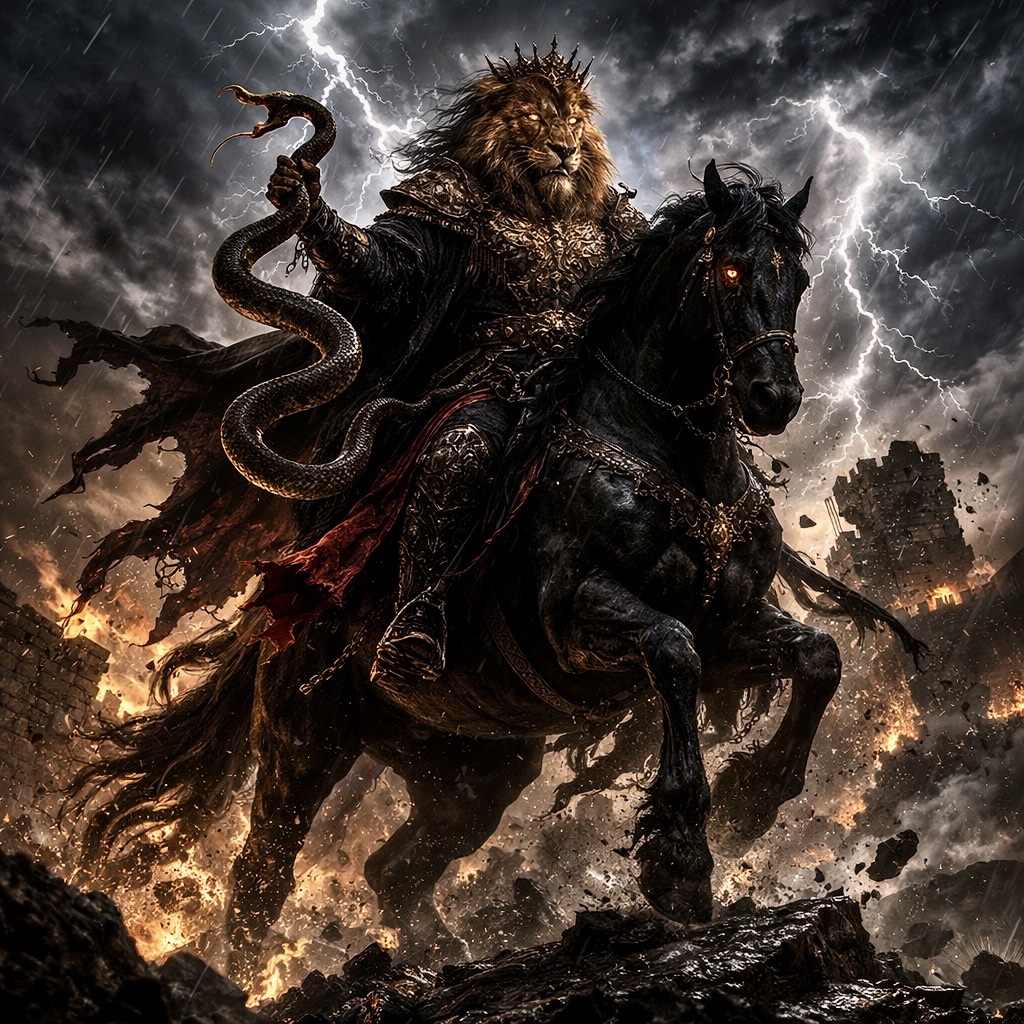
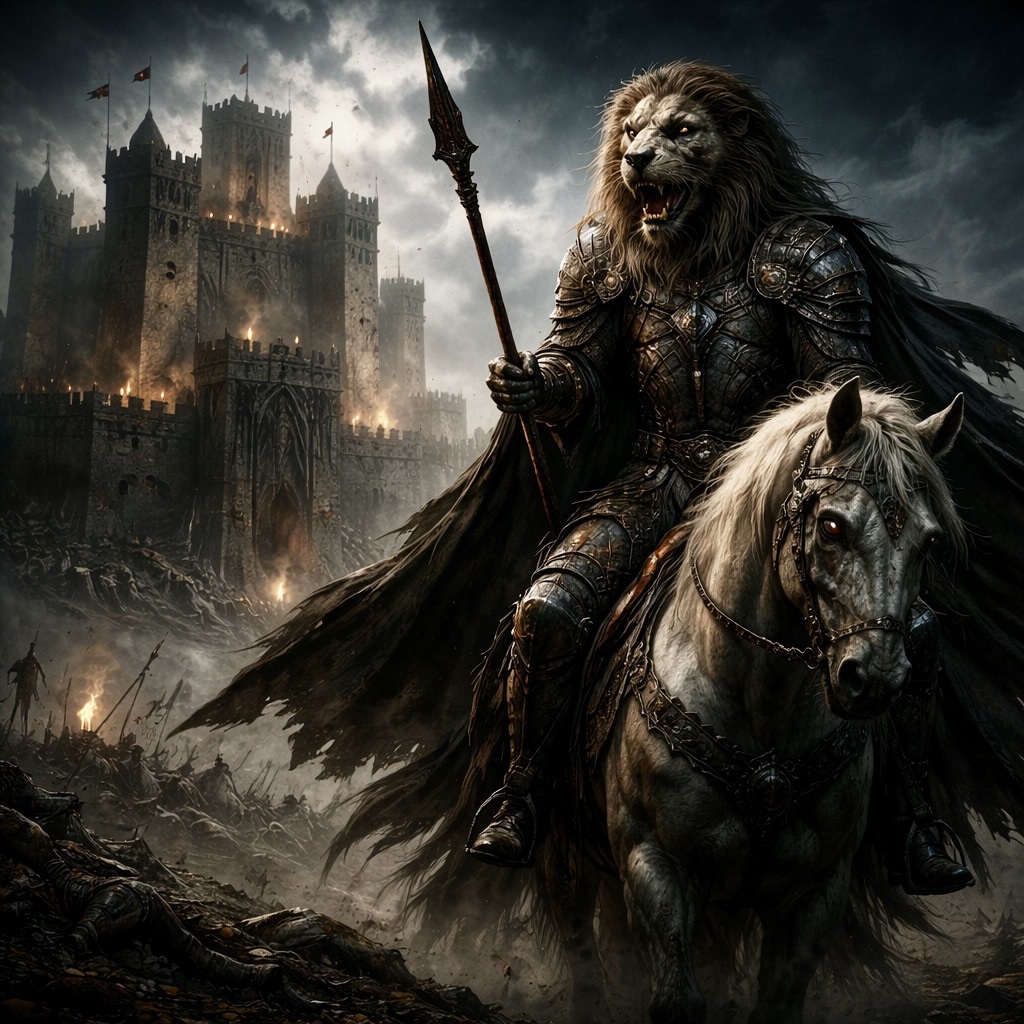
There is something unnervingly practical about Sabnock. In a catalog of spirits filled with tempters, illusionists, seducers, and whisperers of hidden knowledge, Sabnock stands apart with a hammer in one hand and a blade in the other. He does not merely deceive or seduce; he constructs and destroys. In the hierarchy recorded in the Lesser Key of Solomon, Sabnock is described as a Great Marquis of Hell who commands fifty legions of spirits. He appears as an armed soldier with the head of a lion, riding upon a pale horse. He builds high towers, furnishes castles with armor and weapons, and inflicts festering wounds that refuse to heal.

Even in summary, Sabnock feels severe. There is nothing subtle about a lion-headed warrior charging forward on horseback. Unlike demons who cloak themselves in soft persuasion, Sabnock is martial from the start. He represents fortification, defense, siege, and the long memory of violence.

His name appears prominently in the Ars Goetia, where he is sometimes spelled Sabnac or Sabnach. Earlier demonological texts such as the Pseudomonarchia Daemonum by Johann Weyer also reference him, preserving his rank and attributes within the infernal order. Across variations, certain themes remain constant: walls rise at his command, weapons appear in armories, and wounds linger under his influence.

On the surface, Sabnock seems to embody straightforward brutality. But as with many Goetic spirits, there is more beneath the imagery. The lion’s head is not merely decorative. In medieval symbolism, the lion represents courage, ferocity, nobility, and dominion. It is a creature that both protects and devours. To graft that image onto a soldier riding a pale horse is to combine predatory instinct with disciplined warfare. Sabnock is not chaos on the battlefield; he is organized aggression.

The pale horse is another striking detail. Throughout Western iconography, the pale horse often signals plague, death, or inevitability. It evokes the rider who cannot be escaped. In Sabnock’s case, the pale horse may suggest the inevitability of conflict once walls begin to rise and weapons are gathered. Fortification invites siege. Preparation anticipates violence. The very act of building defenses implies that something terrible is expected.

The grimoires note that Sabnock can build high towers and fortify cities with weapons and armor. In a literal medieval context, that power was invaluable. Fortresses determined survival. A city’s walls were the thin line between prosperity and massacre. To command a spirit capable of strengthening defenses would have seemed not only useful but urgent. Yet the same texts warn that Sabnock can also afflict men with wounds that rot and fester.

This duality is crucial. Sabnock both protects and punishes. He reinforces walls but undermines flesh. In that sense, he embodies the paradox of militarization. The more one prepares for war, the more war becomes present in spirit and structure. The fortress may stand strong, but the cost is carried in blood.

It is tempting to read Sabnock as merely a relic of medieval warfare, but his symbolism remains deeply relevant. In modern psychological terms, Sabnock can represent emotional fortification. When someone builds walls around themselves—armor against betrayal, distance against vulnerability—they may feel protected. But those same defenses can isolate and harden the spirit. The wound that refuses to heal may not be physical at all; it may be the scar left by constant vigilance.

The lion-headed marquis riding into view is a dramatic image, but the true terror of Sabnock lies in the festering wound. The old texts emphasize that he causes wounds filled with worms, sores that linger unless commanded otherwise. In pre-modern Europe, such infections were catastrophic. Without antibiotics, a minor injury could spiral into death. To associate Sabnock with festering wounds is to align him with decay that cannot easily be stopped.

And yet, even here, there is nuance. Some interpretations suggest that when properly constrained within ritual authority, Sabnock can prevent such afflictions or redirect them. Like many Goetic spirits, he is not purely destructive but conditional. He responds to authority, structure, and discipline—the very traits associated with military hierarchy.

Sabnock’s legion count—fifty legions—places him among the more powerful marquises. In the hierarchical imagination of demonology, numbers signified status and influence. Fifty legions suggest organization, command, and scale. Sabnock is not a lone marauder; he is a general. His influence extends through ranks of subordinate spirits, mirroring earthly armies.

There is something almost disturbingly relatable about him. Humanity has always oscillated between building and breaking. We erect cities, walls, systems, and institutions. We fortify ourselves with laws and weapons. Yet the same mechanisms that promise safety often produce prolonged conflict. Sabnock becomes the embodiment of that cycle: prepare, defend, suffer, endure.

In contemporary occult discussions, Sabnock is sometimes approached as a spirit of strategic protection. Practitioners interpret his ability to build towers as symbolic of establishing boundaries. In this framework, Sabnock teaches resilience, discipline, and preparedness. The lion’s head becomes courage rather than cruelty. The pale horse becomes inevitability accepted rather than feared.

Still, one cannot ignore the darker undertones. The festering wound is a powerful metaphor for unresolved conflict. When grievances are left untreated, they rot. When trauma is ignored, it seeps into daily life. Sabnock’s wounds may be psychological reminders that armor alone does not heal what lies beneath.

Historically, the grimoires that cataloged Sabnock emerged in a world defined by siege warfare. Castles dotted the European landscape. Plagues and infections spread unchecked. The fear of attack was constant. To imagine a spirit governing walls and wounds was not abstract—it was immediate. Sabnock represented both hope for protection and dread of decay.

What fascinates modern readers is how vividly physical he feels compared to more abstract demons. Sabnock is tactile: stone walls rising, steel weapons clashing, flesh splitting under blades. There is a grounded brutality in his depiction. Even the lion’s mane conjures texture and heat.

And yet, beneath that physicality lies something archetypal. Sabnock is the spirit of defense mechanisms. He is the instinct to harden after betrayal. He is the voice that says, “Build higher walls. Sharpen the blades.” Sometimes that instinct is necessary. Boundaries protect. Preparation saves lives. But when carried too far, fortification becomes isolation, and readiness becomes paranoia.

The old magicians who wrote of Sabnock likely approached him with caution and precision. Ritual circles, divine names, and structured invocations were not theatrical flourishes; they were safeguards. In demonology, authority is everything. To summon Sabnock without discipline would invite chaos. To command him properly would harness structured strength.

This dynamic reflects something deeply human. Power without structure destroys. Power within boundaries protects. Sabnock’s mythology reinforces that lesson again and again. The lion-headed warrior obeys hierarchy. The walls he builds stand only when commanded. The wounds he inflicts persist unless restrained.

There is also a strange dignity in Sabnock’s martial image. Unlike demons associated with deceit or seduction, Sabnock’s domain is overt. He does not pretend to be gentle. He arrives armed. There is honesty in that. You know what you face. In a world where many threats are hidden, there is something almost comforting about a visible adversary.

Over centuries, artists and occultists have reimagined Sabnock in countless forms: towering armored knight, leonine-faced general, spectral rider emerging from smoke. The core imagery remains consistent because it resonates. We recognize the archetype of the defender-warrior. We understand the cost of walls. We know the sting of wounds that take too long to heal.

Whether viewed as literal entity, psychological construct, or mythic narrative, Sabnock occupies a powerful place within the Goetic tradition. He is not merely a demon of violence. He is a symbol of preparation, defense, consequence, and the fragile line between protection and harm.

In the end, Sabnock’s story is not just about Hell’s marquises. It is about humanity’s enduring struggle to protect itself without becoming hardened beyond recognition. It is about the towers we build—externally and internally—and the wounds we carry when those towers are tested.

Sabnock rides on, lion-headed and relentless, reminding us that every fortress casts a shadow, and every blade leaves a mark.

Related Posts

Herman Melville: The Patron Saint of My Inner Contradictions

Penelope

Herman Melville’s words have been lingering in my mind for years, even before I dove into his novels as a college student. There’s something about the way he tackles complex themes like identity, morality, and the human condition that resonates with me on a deep level. I think it’s because his writing often feels like a reflection of my own internal struggles – those moments when I’m forced to confront the contradictions within myself.

I remember feeling particularly drawn to Moby-Dick during my freshman year. Maybe it was the way Ahab’s obsession with the white whale mirrored my own fixation on trying to find meaning in life. Or maybe it was the way Ishmael’s voice, with its mix of wonder and skepticism, seemed to speak directly to me. Whatever the reason, I found myself returning to that book again and again, each time uncovering new layers of depth and complexity.

One aspect of Melville’s writing that continues to fascinate me is his use of ambiguity. He rarely provides clear answers or tidy resolutions – instead, he seems to revel in the uncertainty of life. Take Ahab’s motivations, for example. Is he driven by a desire for revenge, a need for control, or something more profound? Melville leaves it up to us to decide, and I think that’s part of what makes his work so compelling.

As someone who’s always struggled with making decisions, I find myself drawn to characters like Ahab and Ishmael. They’re both searching for something – a whale, a sense of purpose, a way out of the wilderness – but they’re not quite sure what they’ll find when they get there. That vulnerability feels strangely relatable to me, especially in today’s world where we’re constantly expected to have it all together.

But Melville’s work also makes me uncomfortable, particularly when I think about his depiction of whiteness and racism. As a white woman from a privileged background, I’ve always felt like I’m on shaky ground when it comes to issues of systemic oppression. Melville’s writing often blurs the lines between satire and critique, leaving me wondering if he’s truly condemning or perpetuating racist attitudes.

Take the character of Queequeg, for example. On one hand, Melville portrays him as a kind and gentle soul, one who represents a more compassionate and inclusive way of living. But on the other hand, his depiction is also marked by stereotypes and exoticism – qualities that have contributed to Queequeg’s enduring marginalization.

I’m not sure how to reconcile these contradictions in my own mind. Part of me wants to argue that Melville was ahead of his time, that he was trying to subvert the dominant narratives of his era. Another part of me wonders if he was simply reflecting the biases and prejudices of his age, even if unintentionally.

These questions have been swirling around me for years now, and I’m still not sure how to untangle them. Maybe that’s the point – maybe Melville’s work is meant to leave us with more questions than answers, to nudge us toward a deeper understanding of ourselves and our place in the world. Whatever his intentions, I know that Herman Melville has become an integral part of my own search for meaning and purpose. His words continue to challenge me, provoke me, and inspire me – even when they make me uncomfortable.

As I look back on my college years, I realize that Melville’s writing was a constant companion during those formative times. His novels were like a series of mirrors reflecting different aspects of myself: the idealist, the skeptic, the seeker. And while I’ve grown and changed since then, his work remains a source of fascination for me – a reminder that the search for meaning is a lifelong journey, one that requires patience, courage, and a willingness to confront our own complexities head-on.

I’m not sure what lies ahead, but I do know that Melville’s words will continue to be there, guiding me through the twists and turns of life. And maybe, just maybe, that’s all we can ask for – a steady hand pointing us toward the next great mystery, the next great challenge, and the next step forward into the unknown.

As I reflect on Melville’s influence in my life, I’m struck by how his writing has shaped my perspective on identity. Growing up, I often felt like I was searching for a sense of self, trying to pin down who I was and where I fit into the world. Moby-Dick’s exploration of Ishmael’s journey resonated deeply with me – the way he navigates different cultures, confronts his own biases, and grapples with the complexities of belonging.

I think what draws me to this aspect of Melville’s work is its portrayal of identity as a fluid, ever-changing process. For so long, I’d been taught that there was one “right” way to be – to fit into certain boxes, follow established paths, and conform to societal norms. But Melville’s writing shows me that identity is messy, multifaceted, and often contradictory.

Take Ahab, for example. On the surface, he appears to be a one-dimensional character driven by revenge and obsession. But as I delve deeper into the novel, I see glimpses of vulnerability, of desperation, and of a deep-seated need for connection. It’s this complexity that makes him so relatable – because, let’s be honest, who hasn’t struggled with their own demons and contradictions?

This fluidity of identity has been a liberating concept for me, especially in recent years as I’ve navigated the transition from college to adulthood. I’ve found myself questioning old assumptions, challenging my own biases, and embracing the uncertainty of it all. Melville’s writing has given me permission to explore these complexities without fear of judgment or expectation.

Of course, this exploration also comes with its own set of challenges. As I grapple with my own identity, I’m forced to confront the privileges and advantages that have been bestowed upon me – namely, being a white woman from a relatively affluent background. Melville’s portrayal of whiteness and racism in his work has made me acutely aware of these power dynamics, and I struggle to reconcile this awareness with my own positionality.

I wonder if Melville would have seen the privilege that I possess as a curse or a blessing? Would he have encouraged me to use it as a tool for social change, or would he have cautioned me against its corrupting influence? These are questions that haunt me still, and ones that I’m not sure I’ll ever fully answer.

Still, Melville’s writing continues to guide me on this journey of self-discovery. His words remind me that identity is a fluid, ever-changing process – one that requires patience, compassion, and a willingness to confront our own complexities head-on. As I look to the future, I know that I’ll continue to grapple with these questions, even as I try to make sense of my place in the world.

I think about how Melville’s writing has influenced my relationships with others. In Moby-Dick, he explores the complexities of human connection through the bond between Ishmael and Queequeg. Their friendship is built on mutual respect, trust, and a deep understanding of each other’s differences. It’s a portrayal that challenges the dominant narratives of colonialism and imperialism, instead highlighting the beauty of cross-cultural exchange.

As I reflect on my own relationships, I realize that I’ve often struggled with feeling like an outsider. Whether it was navigating friendships in high school or trying to find my place within my college community, I’ve always felt like I’m observing from the periphery rather than being fully immersed. Melville’s writing has given me permission to see this as a strength rather than a weakness – to acknowledge that my perspective as an outsider can be a unique asset.

I think about how Queequeg’s character has become a kind of touchstone for me when it comes to thinking about identity and belonging. He’s a figure who exists outside the dominant culture, yet he finds ways to navigate its complexities with grace and humor. His story reminds me that identity is not fixed or static – that we can belong in multiple places and communities at once.

But what does this mean for my own relationships? How can I use Melville’s lessons on identity and belonging to build more authentic connections with others? These are questions that still feel like a work-in-progress for me, but ones that I’m committed to exploring further. As I look to the future, I know that I’ll continue to grapple with these themes – and to seek out new insights from Melville’s writing along the way.

One thing that’s struck me about Melville’s work is its ability to capture the tensions between individuality and community. On one hand, his characters are often driven by a desire for independence and self-expression – whether it’s Ahab’s quest for revenge or Ishmael’s search for meaning. But on the other hand, they’re also deeply connected to others – whether through their relationships with friends, family, or even strangers.

This tension between individuality and community feels particularly relevant to me right now. As I navigate the ups and downs of adulthood, I’m constantly being pulled in different directions by my own desires for independence and connection. Melville’s writing reminds me that these are not mutually exclusive – that we can cultivate a sense of self while still being deeply connected to others.

Of course, this is easier said than done. As someone who’s struggled with anxiety and feelings of isolation, I know how tempting it can be to retreat into my own little world. But Melville’s work encourages me to stay engaged with the world around me – to seek out new connections and relationships that can help me grow as a person.

I wonder if this is what Melville meant by his phrase “the sea of life.” Is it not just a physical body of water, but a metaphor for the complexities and uncertainties of human existence? Ahab’s quest for Moby-Dick becomes a symbol for our own search for meaning and purpose – a journey that requires us to navigate the choppy waters of identity, belonging, and connection.

As I reflect on Melville’s writing, I’m struck by how it continues to resonate with me long after my college years are behind me. His words have become a kind of anchor in my life, reminding me that the search for meaning is a lifelong journey – one that requires patience, courage, and a willingness to confront our own complexities head-on.

As I delve deeper into Melville’s work, I’m starting to notice how his writing often blurs the lines between reality and fantasy. Take the character of Queequeg, for example – is he truly a Pacific Islander, or is he a product of Melville’s imagination? And what about the white whale itself – is Moby-Dick a symbol of Ahab’s obsession, or is it something more profound?

This blurring of reality and fantasy has me thinking about my own experiences with creativity. As a writer, I often find myself straddling the line between fact and fiction – trying to capture the essence of real events while also infusing them with a sense of imagination and wonder. Melville’s writing shows me that this is not only acceptable but also necessary – that the best art often lies in its ability to transcend the boundaries between reality and fantasy.

But what about when this blurring gets too close to home? When do we start to lose sight of what’s real and what’s just a product of our own imagination? I think back to my college years, when I was struggling to come to terms with my own identity. Melville’s writing often felt like a reflection of my inner world – a way for me to process the complexities and contradictions that were swirling inside me.

As I navigated these questions, I found myself drawn to characters like Ishmael and Queequeg – individuals who existed on the margins of society but still managed to find ways to connect with others. Their stories reminded me that identity is not fixed or static – that we can belong in multiple places and communities at once.

But what about when these identities are imposed upon us? When do we start to internalize the labels and expectations that are placed upon us by others? Melville’s writing often critiques the ways in which societal norms can constrain our individuality, but it also shows me that there is always a way out – that we can resist, subvert, or even rewrite these narratives for ourselves.

This is a theme that resonates deeply with me as I look to my own future. As someone who’s struggled with feelings of inadequacy and self-doubt, I know how tempting it can be to buy into the expectations of others – whether it’s from family members, friends, or even societal norms. But Melville’s writing shows me that this is a path that leads to stagnation and disconnection.

Instead, he encourages me to seek out my own identity – to explore the complexities and contradictions that make up who I am. And when I’m faced with moments of uncertainty or self-doubt, I try to recall Ishmael’s words from Moby-Dick: “To produce a mighty book, you must choose a mighty theme.”

Related Posts

Shax the Thief of Sight and Silver: Unmasking the Cunning Demon of the Ars Goetia

Dave

There is something uniquely unsettling about a demon who does not rage, does not roar, and does not promise kingdoms or forbidden love—but instead slips quietly into the world to steal what you thought was secure. Shax is not the lord of fire or the master of storms. He is subtler than that. In the old grimoires, especially within the pages of the Lesser Key of Solomon, Shax appears as a Great Marquis of Hell, commanding thirty legions of spirits. His description is brief but chilling: he steals money from kings, carries it away to distant lands, and—perhaps most disturbingly—takes away sight, hearing, and understanding from those he deceives.

Unlike the grander figures of infernal mythology, Shax does not seduce through power. He destabilizes through absence. He removes. He subtracts. He empties vaults, clouds perception, and erodes certainty. In a world that values accumulation and clarity, Shax represents the terror of loss and confusion.

In the Ars Goetia, Shax is depicted as appearing in the form of a stork, speaking with a hoarse and subtle voice. The image itself is strange—why a stork? The stork has long associations with migration, distance, and silent observation. It stands motionless before striking with precision. That symbolism aligns perfectly with Shax’s reputation. He is not chaotic. He is deliberate. He waits. He watches. Then he takes.

Earlier references to Shax appear in the Pseudomonarchia Daemonum, compiled by Johann Weyer. Weyer’s work, though skeptical in tone, preserved many of the demonological hierarchies that later grimoires expanded upon. In these writings, Shax’s abilities are emphasized not as theatrical displays of hellfire but as calculated acts of theft and deception. He steals horses. He steals money. He removes hearing and sight unless constrained by ritual authority.

What makes Shax particularly compelling in modern interpretation is how psychological he feels. In medieval Europe, literal theft of treasure and livestock was catastrophic. To lose a horse meant losing transportation, livelihood, perhaps survival. To lose gold meant instability and disgrace. But to lose sight and hearing? That implied something more insidious: a stripping away of perception itself. In a symbolic sense, Shax embodies cognitive distortion. He clouds judgment. He fosters misunderstanding. He makes people certain of falsehoods.

If one reads between the lines of the old texts, Shax is not merely a supernatural burglar; he is the archetype of misdirection. He is the voice that convinces a king his treasury is secure while quietly emptying it. He is the influence that assures someone they see clearly when, in fact, they have been blinded by their own assumptions.

The rituals associated with summoning Shax in the grimoires are precise and cautious. Practitioners are warned that he is deceptive and may lie unless constrained within a proper magical triangle. This emphasis on containment speaks volumes. Even within demonological systems—where manipulation is expected—Shax is flagged as particularly unreliable. He does not simply obey; he misleads. He promises what he does not intend to deliver.

This trait distinguishes him from demons whose domains are more transactional. Shax is not a straightforward bargain-maker. He is closer to a trickster. His power lies in exploiting trust. In that sense, he reflects a universal human anxiety: the fear that what we rely upon—our senses, our savings, our understanding—can quietly vanish.

There is also an economic undertone to Shax’s mythology that feels strikingly modern. The idea of wealth disappearing into distant lands echoes contemporary concerns about financial instability, hidden transactions, and unseen hands manipulating markets. In the medieval imagination, that uncertainty became personified. It became Shax. Rather than abstract systems, people envisioned a marquis of Hell quietly relocating riches across borders.

And yet, like many Goetic spirits, Shax is not entirely malevolent in all interpretations. When properly commanded, he is said to reveal hidden things and return stolen goods. That duality is fascinating. The same force that obscures can clarify. The same entity that steals can restore. It suggests that Shax’s domain is not merely theft, but the control of access. He governs who sees and who does not, who possesses and who loses.

From a psychological lens, Shax can be understood as the embodiment of internal sabotage. We all experience moments when clarity vanishes. We misplace important things. We misunderstand people we love. We act against our own interests. The medieval world externalized those experiences into demons. Shax became the explanation for the inexplicable loss, the sudden confusion, the inexplicable drain of resources.

The stork form adds another layer of symbolism. Storks migrate great distances, disappearing with the seasons and returning without warning. They are creatures of transition. To envision Shax as a stork suggests movement—wealth traveling, perception shifting, certainty migrating away. The hoarse voice described in the grimoires evokes something whispering at the edge of awareness, not commanding but suggesting.

There is something deeply unsettling about a demon who does not need spectacle. Shax operates in quiet erosion. He undermines foundations without dramatic collapse. By the time you notice, the vault is empty. The senses are dulled. The understanding is gone.

And yet, perhaps that is precisely why Shax endures in modern occult discussions. He represents an anxiety that has never faded. We fear losing what we cannot immediately replace. We fear being deceived without realizing it. We fear blindness more than darkness, because blindness implies something has been taken.

In contemporary demonology circles, Shax is sometimes approached as a spirit of revelation through inversion. By confronting the archetype of loss, practitioners seek to sharpen awareness. If Shax clouds understanding, then awareness becomes the defense. If Shax steals wealth, then vigilance becomes the shield. In this way, the demon becomes a mirror—reflecting our vulnerabilities.

Whether one interprets Shax as literal spirit, psychological archetype, or symbolic narrative, his presence in the Goetia stands as a reminder of fragility. Wealth can disappear. Perception can falter. Certainty can dissolve. The medieval magicians who wrote of him were not merely cataloging monsters; they were articulating fears that remain painfully relevant.

Shax is not the loudest name in demonology. He does not command legions of pop culture fascination like Lucifer or Asmodeus. But there is something more intimate about him. He lingers in the spaces where confidence meets complacency. He waits where assumption replaces scrutiny.

And perhaps that is why his legend persists. Because somewhere, in every era, someone opens a ledger and finds it lacking. Someone realizes too late that they misunderstood what stood before them. Someone discovers that what they trusted has quietly slipped away.

Shax is the whisper that precedes that discovery.

Related Posts

Italo Calvino: Where Fragmented Thoughts are a Beautiful Mess

Penelope

Italo Calvino’s words have a way of slipping into my thoughts like whispers from an old friend. I remember stumbling upon his essays and stories while researching for a paper on Italian literature in college. At first, they felt foreign – the language was poetic, the ideas were complex, and the tone was detached yet intimate. But as I delved deeper into his work, I found myself drawn to the way he probed the human experience with a mix of curiosity and skepticism.

One aspect that continues to fascinate me is Calvino’s obsession with the fragmented nature of reality. In “Invisible Cities,” he writes about a series of fantastical cities that exist in the mind of an emperor, each one a representation of a particular idea or emotion. I found myself pondering the notion that our understanding of the world is composed of disparate fragments – memories, experiences, stories – that we try to weave together into a coherent narrative.

It’s a thought that resonates with me on a deeply personal level. As someone who struggles to articulate their own thoughts and emotions, I often feel like my perception of reality is fragmented and disjointed. Calvino’s work offers a strange comfort in this disorientation – a sense that it’s okay to be uncertain, that the fragmentation itself might be an essential part of the human experience.

But what I find most compelling about Calvino is his ambivalence towards the notion of truth. He often presents multiple perspectives and possibilities without seeming to lean on one over the other. This ambiguity can be disorienting – it’s as if he’s holding up a mirror to my own doubts and uncertainties, forcing me to confront the provisional nature of knowledge.

It’s a discomfort that I’m not always comfortable with. As someone who writes for clarity and understanding, I often find myself wanting to tidy up Calvino’s loose ends, to tie together the disparate threads into a neat package. But he resists this impulse, instead embracing the complexity and uncertainty of life.

I’ve come to realize that my attraction to Calvino lies in his refusal to offer easy answers or clear solutions. His work is a constant reminder that truth is not something you arrive at, but rather something you inhabit – a feeling that’s constantly shifting and evolving. It’s a perspective that both exhilarates and terrifies me, leaving me with more questions than answers.

Perhaps it’s this sense of uncertainty that keeps me coming back to Calvino’s work – the knowledge that I’ll never fully grasp his ideas or understand his perspective. His writing is an invitation to explore the labyrinthine corridors of my own mind, to confront the contradictions and ambiguities that lie at the heart of existence.

As I continue to grapple with Calvino’s words, I find myself returning to the same questions – what does it mean to seek truth in a world that resists certainties? How do we navigate the fragmented landscape of our own experiences? And what lies at the intersection of language and reality, where meaning is constantly slipping away from us?

These are questions that Calvino’s work refuses to answer, instead offering only more questions, more possibilities, and more uncertainties. It’s a gesture that I both admire and find frustrating – a reminder that sometimes, it’s not about finding answers, but about embracing the ambiguity itself.

As I delve deeper into Calvino’s work, I’m struck by the way he weaves together multiple narratives and perspectives, creating a sense of multiplicity that reflects the complexities of human experience. His writing is like a palimpsest, with layers of meaning peeling away to reveal new insights and interpretations. It’s as if he’s saying, “Look, there’s no one ‘right’ way to understand this; instead, let’s dance among the possibilities.”

This multiplicity resonates with me on a personal level, as I navigate my own relationships and interactions. I often find myself oscillating between different roles – friend, writer, daughter, sister – each one demanding its own unique perspective and set of expectations. Calvino’s work acknowledges this multiplicity, rather than trying to reduce it to a single, essential identity.

But what I find most intriguing about Calvino is the way he uses language itself as a tool for exploring the fragmented nature of reality. He plays with words, juxtaposing them in unexpected ways to create new meanings and associations. It’s as if he’s saying, “Language is not just a reflection of reality; it’s also a creator of reality.” This realization unsettles me, because it forces me to confront my own relationship with language – how I use it to shape my perceptions, to communicate with others, and to make sense of the world.

Calvino’s writing is like a mirror held up to my own linguistic habits. I see myself using words as tools to construct a coherent narrative, to impose order on a chaotic world. But what about when language falters or fails? What about when words fall short of conveying the complexity and messiness of human experience? Calvino’s work suggests that it’s in these moments of linguistic failure that we might discover new insights and perspectives – not through language itself, but through the gaps and silences that surround it.

As I continue to explore Calvino’s ideas, I’m drawn back to my own writing practice. How do I use language to shape my perceptions of reality? Do I rely on clear, concise sentences to convey a single message, or do I experiment with ambiguity and uncertainty? Calvino’s work encourages me to take risks with language, to push against the boundaries of what’s possible in order to capture the fluidity and multiplicity of human experience.

But this experimentation also fills me with anxiety. What if I’m not good enough at writing? What if my words are too clumsy or unclear? Calvino’s work doesn’t offer easy answers or reassurances; instead, it invites me to confront the provisional nature of language itself – to recognize that meaning is always in flux, and that words can never fully capture the complexity of reality.

In this sense, Calvino’s writing becomes a kind of mirror held up to my own creative insecurities. I see myself struggling to find the right words, to convey the depth and nuance of human experience. But perhaps it’s precisely this struggle that makes my writing worth doing – not for the sake of clarity or precision, but for the sake of experimentation, risk-taking, and the uncertain search for meaning.

As I reflect on Calvino’s use of language, I’m reminded of my own struggles with articulating complex ideas in a clear and concise manner. His work encourages me to take a more fluid approach to writing, one that acknowledges the provisional nature of meaning and the instability of language itself. This is both liberating and terrifying – it means that I have the freedom to experiment and push against the boundaries of what’s possible, but it also means that I risk failing or falling short in my attempts to convey meaning.

I find myself wondering if Calvino’s ambivalence towards truth extends to his own creative process. Does he too struggle with the uncertainty of language and the instability of reality? Or is it precisely this uncertainty that allows him to create works that are both deeply personal and universally relatable?

As I delve deeper into Calvino’s essays and stories, I begin to notice a recurring theme – the idea that our understanding of reality is always filtered through our individual perspectives and experiences. This realization resonates with me on a deeply personal level, as I navigate my own relationships and interactions. I often find myself oscillating between different roles – friend, writer, daughter, sister – each one demanding its own unique perspective and set of expectations.

Calvino’s work acknowledges this multiplicity, rather than trying to reduce it to a single, essential identity. Instead, he celebrates the complexity and diversity of human experience, revealing the ways in which our individual perspectives intersect and collide with one another. This is both exhilarating and overwhelming – it means that I have the freedom to explore different identities and perspectives, but it also means that I risk getting lost in the labyrinthine corridors of my own mind.

As I continue to grapple with Calvino’s ideas, I’m struck by the way he uses storytelling as a tool for exploring the human experience. His stories are like palimpsests, layered with multiple meanings and interpretations that unfold over time. This multiplicity resonates with me on a personal level, as I navigate my own relationships and interactions – it reminds me that people are complex and multifaceted, and that our understanding of them is always incomplete.

Calvino’s work also raises important questions about the nature of storytelling itself. Is it possible to capture the complexity and messiness of human experience through a single narrative or perspective? Or do we need to create multiple stories, each one revealing different facets of reality? As I ponder these questions, I’m drawn back to my own writing practice – how do I use storytelling as a tool for exploring the human experience?

Do I rely on clear, linear narratives to convey a single message, or do I experiment with non-linear structures and fragmented perspectives? Calvino’s work encourages me to take risks with narrative, to push against the boundaries of what’s possible in order to capture the fluidity and multiplicity of human experience.

But this experimentation also fills me with anxiety – what if my stories are too fragmented or disjointed? What if I fail to convey the depth and nuance of human experience through my writing? Calvino’s work doesn’t offer easy answers or reassurances; instead, it invites me to confront the provisional nature of narrative itself – to recognize that meaning is always in flux, and that stories can never fully capture the complexity of reality.

In this sense, Calvino’s writing becomes a kind of mirror held up to my own creative insecurities. I see myself struggling to find the right narrative voice, to convey the depth and nuance of human experience through my stories. But perhaps it’s precisely this struggle that makes my writing worth doing – not for the sake of clarity or precision, but for the sake of experimentation, risk-taking, and the uncertain search for meaning.

As I continue to explore Calvino’s ideas, I’m drawn back to my own relationship with uncertainty and ambiguity. How do I navigate the complexities and contradictions of human experience? Do I try to impose order on a chaotic world through language and narrative, or do I learn to inhabit the uncertainty itself?

Calvino’s work suggests that it’s precisely this uncertainty that allows us to discover new insights and perspectives – not through clear solutions or definitive answers, but through the ambiguities and contradictions that surround them. This is both exhilarating and terrifying – it means that I have the freedom to explore different possibilities and interpretations, but it also means that I risk getting lost in the labyrinthine corridors of my own mind.

As I ponder these questions, I’m left with more uncertainty than answers. But perhaps it’s precisely this uncertainty that makes Calvino’s work so compelling – not for its clarity or precision, but for its willingness to confront the provisional nature of meaning and the instability of reality itself.

As I grapple with Calvino’s ideas about uncertainty and ambiguity, I’m struck by the way he uses metaphor and allegory to convey complex concepts. His writing is like a rich tapestry, woven from threads of mythology, literature, and philosophy. Each thread is carefully selected and intricately intertwined, creating a narrative that’s both personal and universal.

I find myself wondering if Calvino’s use of metaphor is a deliberate attempt to sidestep the problem of language itself. By using metaphors and allegories, he can convey complex ideas without getting bogged down in precise definitions or clear explanations. This approach resonates with me on a deeply personal level, as I navigate my own writing practice.

I often find myself struggling to articulate complex concepts through straightforward language, only to discover that the words themselves are inadequate for conveying the depth and nuance of human experience. Calvino’s use of metaphor offers a way out of this impasse – by embracing the ambiguities and contradictions of language itself, he can create a narrative that’s both more inclusive and more mysterious.

This is particularly evident in his essay “The Castle of Crossed Destinies,” where he weaves together a complex tale of chance encounters, multiple narratives, and intersecting lives. The story is like a palimpsest, layered with meanings and interpretations that unfold over time. Each reader brings their own perspective to the text, revealing new insights and connections that Calvino himself might not have intended.

As I read this essay, I’m struck by the way Calvino uses language to create a sense of uncertainty – not just about the events themselves, but about the nature of reality itself. The story blurs the lines between chance and fate, free will and determinism, creating a narrative that’s both dreamlike and unsettling.

This is precisely what I find so compelling about Calvino’s work – his willingness to confront the ambiguities and contradictions of human experience head-on. By embracing uncertainty, he creates a narrative that’s both deeply personal and universally relatable. It’s as if he’s saying, “Look, we’re all lost in this labyrinthine world, but perhaps it’s precisely this disorientation that allows us to discover new insights and perspectives.”

As I continue to explore Calvino’s ideas, I’m drawn back to my own relationship with the unknown. How do I navigate the complexities and contradictions of human experience? Do I try to impose order on a chaotic world through language and narrative, or do I learn to inhabit the uncertainty itself?

Calvino’s work suggests that it’s precisely this uncertainty that allows us to discover new insights and perspectives – not through clear solutions or definitive answers, but through the ambiguities and contradictions that surround them. This is both exhilarating and terrifying – it means that I have the freedom to explore different possibilities and interpretations, but it also means that I risk getting lost in the labyrinthine corridors of my own mind.

As I ponder these questions, I’m left with a sense of awe and wonder at Calvino’s writing. His work is like a mirror held up to the complexities and contradictions of human experience – a reflection that’s both deeply personal and universally relatable. It’s as if he’s saying, “Look, we’re all lost in this world, but perhaps it’s precisely this disorientation that allows us to discover new insights and perspectives.”

Related Posts

The Demon King Who Commands Storms, Topples Empires, and Reveals Hidden Truths

Dave

There are demons in grimoires who whisper, demons who tempt, demons who deceive, and then there are those whose presence feels less like a secret and more like a natural disaster. Vine belongs firmly to the latter category. Among the seventy-two spirits cataloged in the Ars Goetia, Vine stands apart not merely because of rank—though he is counted among kings and earls—but because of what he represents. Vine is not subtle corruption or quiet manipulation. Vine is upheaval. Vine is force. Vine is revelation delivered with thunder rather than suggestion.

To understand Vine is to step into the worldview of medieval demonology itself, where spiritual entities were believed to influence the physical world directly. These spirits were not abstract metaphors to those who recorded them; they were intelligences capable of reshaping fate, altering perception, and even influencing war and weather. Vine’s domain reflects this belief perfectly. He is described as commanding storms, discovering hidden things, destroying walls, and revealing enemies—powers that blur the boundary between supernatural insight and catastrophic intervention.

In traditional descriptions drawn from seventeenth-century occult manuscripts, Vine appears as a lion riding upon a black horse while holding a serpent in his hand. The imagery is striking and deliberate. Every element communicates authority and danger. The lion symbolizes dominance and sovereignty, the black horse evokes unstoppable momentum, and the serpent suggests knowledge—particularly knowledge that coils beneath appearances waiting to strike. Vine is not chaos for chaos’s sake. He represents controlled devastation, destruction guided by awareness.

The grimoires classify him as both King and Earl of Hell, commanding thirty-six legions of spirits. Titles in demonology were never ornamental. They reflected hierarchy modeled after earthly monarchies, suggesting that infernal realms mirrored human political structures. Kings commanded strategy. Earls oversaw execution. Vine therefore occupies a fascinating dual role: planner and enforcer, intelligence gatherer and battlefield commander. His abilities reinforce this interpretation. He reveals hidden things, exposes sorcerers, uncovers secrets, and protects or destroys fortifications depending on the will of the summoner.

What makes Vine especially compelling is how closely his mythology aligns with humanity’s ancient fear of unseen threats. Across history, civilizations have worried less about visible enemies than concealed ones—betrayal, espionage, conspiracy, hidden intentions. Vine becomes the supernatural answer to paranoia. Invoke him, the texts promise, and concealed truths will surface. Lies crumble. Enemies reveal themselves. The invisible becomes undeniable.

This association with revelation explains why Vine appears repeatedly in occult traditions concerned with knowledge rather than temptation. Unlike demons linked to pleasure or wealth, Vine’s power revolves around exposure. He forces reality into the open. In many ways, he resembles a cosmic investigator, albeit one whose methods involve storms and shattered defenses.

Storm imagery surrounding Vine deserves particular attention. Medieval thinkers viewed weather not as random but as morally or spiritually influenced. Tempests were interpreted as divine punishment or supernatural warfare. Vine’s ability to command storms therefore symbolized dominion over instability itself. Lightning and thunder represented sudden truth—the moment illusion ends. A storm strips away comfort. It reveals structural weakness. Roofs collapse, defenses fail, and what once seemed permanent proves fragile.

Psychologically, Vine embodies moments in human life when certainty collapses. Entire belief systems can crumble overnight under new information. Relationships dissolve after hidden truths emerge. Nations fall when secrets surface. Vine’s mythology reflects this universal experience: revelation often arrives violently.

The serpent he carries deepens this symbolism. In Western tradition, serpents occupy an ambiguous role—agents of wisdom and danger simultaneously. Knowledge liberates, but it also destroys innocence. Vine’s serpent suggests mastery over forbidden understanding. Those who sought him were rarely looking for pleasant truths. They wanted answers regardless of consequence.

Historical practitioners of ceremonial magic approached spirits like Vine with elaborate ritual protections. Circles were drawn, divine names invoked, and strict procedures followed. These rituals reveal something important about how Vine was perceived. He was not considered easily controlled. Summoners believed that without authority grounded in sacred power, the spirit’s destructive nature could overwhelm the operator. This fear underscores Vine’s character as a force rather than merely an entity.

Interestingly, Vine is also described as capable of building towers as well as destroying them. This duality mirrors the broader demonological principle that infernal powers reflect human intention. The same force that demolishes can construct. Storms devastate landscapes yet renew ecosystems. Fire destroys forests yet enables regrowth. Vine represents transformational energy—the breaking down required before rebuilding becomes possible.

Modern interpretations often frame such figures psychologically rather than literally. From this perspective, Vine becomes an archetype of disruptive awareness. Every person encounters moments when denial becomes impossible. Evidence accumulates. Truth intrudes. Internal defenses collapse much like the walls Vine is said to tear down. The experience can feel catastrophic, yet it frequently precedes growth.

Carl Jung’s exploration of shadow integration resonates strongly here. The shadow contains truths individuals avoid acknowledging about themselves. Encountering it is rarely gentle. It dismantles identity structures constructed around illusion. Vine’s mythology parallels this process almost perfectly: revelation, destruction of false defenses, emergence of hidden reality.

Even outside psychological interpretation, Vine’s legend speaks to humanity’s enduring fascination with power over uncertainty. Weather, war, betrayal, and secrecy remain among the most destabilizing aspects of existence. The promise of commanding such forces—even symbolically—holds immense appeal. Medieval magicians lived in unpredictable worlds shaped by disease, invasion, and political intrigue. A spirit capable of exposing enemies or controlling storms represented security in an insecure age.

Descriptions of Vine’s temperament vary, but many sources emphasize obedience when properly constrained. This reinforces the ritual worldview in which authority determines outcome. Power itself is neutral; intention shapes its manifestation. Vine does not inherently deceive or corrupt. He executes.

That neutrality distinguishes him from more manipulative demons. Vine does not seduce; he reveals. He does not persuade; he acts. The fear surrounding him arises from consequence rather than trickery. Truth uncovered cannot easily be hidden again.

The lion imagery reinforces regal inevitability. Lions do not negotiate dominance—they embody it. A lion riding a horse creates layered symbolism: raw strength directing momentum. The black horse often signifies death, war, or unstoppable advance in European symbolism. Together they portray authority moving forward with irreversible force.

One can imagine why Renaissance occultists found Vine compelling. Europe during this period experienced religious upheaval, scientific discovery, and political revolution. Old certainties shattered rapidly. Figures like Vine symbolized both terror and empowerment amid transformation. Knowledge expanded faster than tradition could contain it. Entire worldviews were under siege.

Interestingly, Vine’s powers include discovering witches and sorcerers. This reflects anxieties of the era when accusations of hidden magical influence were widespread. The idea of a spirit revealing secret practitioners mirrors societal obsession with identifying concealed threats. Demonology often acted as a mirror reflecting collective fears rather than inventing them.

In contemporary culture, Vine’s symbolism remains surprisingly relevant. Modern societies grapple with misinformation, concealed agendas, and unseen systems shaping daily life. Data breaches, hidden algorithms, intelligence operations—all echo ancient fears of invisible influence. Vine becomes an archetype of exposure within an information age defined by secrecy and revelation.

The destructive aspect of his mythology also carries philosophical weight. Structures—whether psychological, social, or political—often resist change until external pressure forces collapse. Vine represents that pressure. He is the storm that arrives when stagnation persists too long.

Some occult traditions suggest that working with Vine required clarity of purpose above all else. Ambiguous intent could produce unintended outcomes. This aligns with broader magical philosophy emphasizing alignment between desire and action. To summon revelation without readiness for truth invites chaos.

The enduring fascination with figures like Vine reveals something deeply human. People simultaneously crave truth and fear it. We seek clarity yet construct elaborate defenses against uncomfortable realities. Vine’s legend dramatizes this tension. He is both liberator and destroyer because truth itself holds both qualities.

Stories surrounding Vine often emphasize dramatic manifestation—violent winds, sudden insight, overwhelming presence. Whether literal or symbolic, these descriptions capture how transformative realization feels. Life rarely changes gradually at moments of profound understanding. Instead, perception shifts abruptly, like thunder breaking silence.

Across centuries, demonology has functioned as a language for grappling with forces beyond control. Vine’s association with storms situates him among humanity’s oldest fears. Before meteorology, storms represented divine or infernal will. Their unpredictability mirrored existence itself. By personifying storms in a being like Vine, people imposed narrative upon chaos.

Yet Vine is not merely destruction incarnate. His ability to build suggests mastery over transition. Creation frequently follows collapse. Old walls must fall before new structures rise. In this sense, Vine embodies necessary endings—the difficult transformations enabling renewal.

Artists and occult scholars continue to reinterpret Vine through modern lenses, depicting him as a sovereign of revelation rather than a monster. This shift reflects changing attitudes toward darkness and knowledge. What earlier ages feared as demonic disruption may now be understood as confrontation with truth.

Even skeptics can appreciate the symbolic richness of Vine’s mythology. Whether viewed as literal spirit, psychological archetype, or cultural artifact, he encapsulates a universal experience: the moment when hidden reality breaks through illusion and demands acknowledgment.

Perhaps that explains why Vine persists in occult imagination while lesser spirits fade into obscurity. He represents something fundamental. Empires collapse when truths emerge. Personal identities transform when denial ends. Storms arrive regardless of preparation.

And when they pass, the landscape—internal or external—is never quite the same.

Vine stands therefore not simply as a demon king of infernal hierarchy, but as a narrative embodiment of revelation itself. He reminds humanity that knowledge carries consequence, that power disrupts stability, and that truth rarely arrives quietly. In mythic form, he asks an unsettling question: if every hidden thing were revealed, what structures in our lives would survive the storm?

The answer, as generations of occultists suspected, may be both terrifying and liberating.

Related Posts

Margaret Mead: The Unsettling Truth About Being True to Myself (Mostly)

Penelope

Margaret Mead. I’ve always been fascinated by her, but not for the reasons you’d expect. It’s not her groundbreaking research on adolescence, though that does get a nod of respect from me. As someone who’s still figuring out this whole “adulting” thing, I appreciate that she didn’t shy away from exploring the complexities of growing up.

What really draws me to Mead is her willingness to challenge the status quo, especially when it came to societal expectations around women. Her work in Samoa, for example, showed that the girls there weren’t as bound by traditional feminine norms as Western society led us to believe. It’s a concept I’ve grappled with personally – the idea that our paths are determined by what others think we should be doing.

I remember reading about Mead’s experiences on the island and feeling a pang of discomfort. Not because she was critiquing the Samoa culture (she was, but in a way that respected their traditions), but because I saw echoes of her struggles in my own life. The pressure to conform to certain expectations, the weight of “shoulds” – it’s exhausting trying to navigate those expectations while still being true to myself.

Mead’s relationship with her mentor, Ruth Benedict, also sparked some curiosity in me. Their professional partnership was unconventional for its time, and I find myself wondering what that meant for their personal dynamics. Were they supportive friends? Did their differing perspectives lead to creative tension or frustration?

What I love about Mead is that she didn’t shy away from her own uncertainties. She admitted when she was wrong, like in her initial assessment of the Arapesh people, which later led to a reevaluation of her research methods. That willingness to revise and improve resonates with me as someone who’s still figuring out my place in the world.

Sometimes I wonder if Mead’s confidence (some might call it arrogance) was a coping mechanism for the scrutiny she faced as a woman in academia. Did she have to be bold, even brash, to be taken seriously? I think about my own life and how often I’ve had to find ways to assert myself in order to be heard.

Mead’s legacy is complex – some see her as a trailblazer, while others view her work as flawed or even problematic. As someone who’s still learning, I’m drawn to the gray areas she inhabited. Her story reminds me that there’s no one-size-fits-all approach to making a difference in the world. Sometimes it means challenging existing power structures, other times it means acknowledging and respecting those same systems.

I don’t think I’ll ever fully understand Mead’s inner workings or the intricacies of her relationships. But what I do know is that she pushed boundaries and asked hard questions – often at great personal cost. As someone who’s still trying to find my own voice, Margaret Mead’s story serves as a reminder that growth often requires discomfort and uncertainty.

As I delve deeper into Mead’s life, I’m struck by the ways in which she navigated the tension between her desire for intellectual freedom and the societal expectations placed upon her as a woman. She was a product of her time, yet she refused to be defined by it. Her experiences with Ruth Benedict, in particular, have me wondering about the intricacies of their professional partnership.

I imagine that Benedict’s more traditional approach to anthropology might have clashed with Mead’s more progressive ideas, but instead of dismissing each other’s perspectives, they seemed to feed off each other’s energy. I find myself admiring their ability to maintain a sense of respect and curiosity in the face of disagreement. It’s a quality I aspire to, especially when working on group projects or collaborating with peers who hold different opinions.

Mead’s willingness to take risks and challenge her own assumptions also resonates with me. As someone who’s struggled with imposter syndrome, it’s reassuring to know that even someone as accomplished as Mead had doubts about her abilities. Her story serves as a reminder that growth often requires embracing uncertainty and taking calculated leaps into the unknown.

One of the things that continues to fascinate me about Mead is the way she balanced her intellectual pursuits with her personal life. She was married twice, but both relationships seemed to be shaped by her career ambitions. I wonder if this tension between love and work was a source of stress for her, or if it allowed her to maintain a sense of independence and focus.

As I continue to learn about Mead’s life, I’m struck by the ways in which she embodied the complexities of being a woman in a male-dominated field. Her struggles with sexism and misogyny are well-documented, but what I find most compelling is her refusal to be defined solely by those experiences. Instead, she used them as fuel for her research and activism, pushing against the boundaries of what was considered acceptable for women at the time.

I don’t think I’ll ever fully grasp the intricacies of Mead’s life or the nuances of her relationships. But what I do know is that she left an indelible mark on anthropology and beyond. Her story serves as a reminder that growth, change, and progress often require us to navigate uncertainty and push against the status quo.

As I delve deeper into Mead’s life, I’m struck by her ability to balance intellectual curiosity with emotional vulnerability. In many of her writings, she shares personal anecdotes and reflections on her own experiences as a woman in academia. It’s as if she’s saying, “I’ve been there too, and this is how it affected me.” That level of self-awareness and willingness to share one’s emotions feels both courageous and relatable.

I think about my own struggles with anxiety and imposter syndrome, and I wonder if Mead ever felt the same way. Did she have moments where she doubted her abilities or felt overwhelmed by the expectations placed upon her? If so, how did she navigate those feelings without letting them define her work?

What’s also fascinating is the way Mead’s relationships with other women in her life influenced her thinking and research. Her friendships with Ruth Benedict and others seem to have been a source of support and inspiration, but also a catalyst for intellectual growth. I find myself drawn to this aspect of her life – the idea that our personal connections can shape our ideas and passions.

I’ve always believed that women’s relationships are just as important as their achievements, yet we often overlook or downplay these aspects in favor of more “important” narratives. Mead’s story offers a refreshing counterpoint to this trend. By highlighting her friendships and partnerships, she shows us that even the most influential thinkers can be deeply human and emotionally complex.

As I continue to explore Mead’s life, I’m struck by the ways in which she embodied the contradictions of being a woman in a patriarchal society. She was both confident and uncertain, bold and vulnerable – all at once. It’s this paradox that makes her story so compelling to me: she’s not just a brilliant anthropologist or a trailblazing feminist; she’s also a multidimensional human being with her own set of struggles and doubts.

Mead’s legacy is complex because it reflects the complexities of her own life. She was a product of her time, but she refused to be defined by its limitations. Her story serves as a reminder that we can’t reduce people or their work to simple labels or categorizations. Instead, we must grapple with the messy realities of human experience and the ways in which our lives intersect and overlap.

I’m not sure where this exploration of Mead’s life will lead me, but I know it’s changing my perspective on what it means to be a woman in academia – or anywhere, for that matter. Her story is a powerful reminder that growth, change, and progress often require us to navigate uncertainty and push against the status quo.

As I reflect on Mead’s life, I’m struck by her willingness to take risks and challenge established norms. It’s not just about being bold or confident; it’s about being willing to be vulnerable and uncertain in order to learn and grow. This resonates deeply with me as someone who’s still figuring out my place in the world.

I think about how Mead’s experiences on Samoa had a profound impact on her thinking, but also on her own personal growth. She wrote about feeling like an outsider among the Samoan people, struggling to understand their culture and customs. Yet, she also found herself drawn to their way of life, admiring their sense of community and cooperation.

I wonder if Mead’s experiences in Samoa helped her develop a greater sense of empathy and understanding for others. Did she learn to see beyond her own biases and assumptions? As someone who’s struggled with my own cultural privilege and biases, I find myself drawn to Mead’s story as a reminder that we all have the capacity to grow and change.

One of the things that continues to fascinate me about Mead is her ability to balance intellectual curiosity with emotional vulnerability. She wasn’t afraid to share her personal thoughts and feelings in her writing, even when they made her seem vulnerable or uncertain. This willingness to be open and honest has a profound impact on how we relate to each other – both personally and professionally.

I think about my own relationships and how I often struggle to balance intellectual curiosity with emotional intimacy. Do I prioritize being right over being understood? Do I value knowledge over connection? Mead’s story serves as a reminder that it’s okay to be vulnerable, to ask questions, and to seek understanding from others.

Mead’s legacy also reminds me of the importance of mentorship and collaboration. Her partnership with Ruth Benedict was built on mutual respect and trust, allowing them to push each other intellectually and creatively. This kind of collaboration is essential in academia and beyond – it allows us to learn from each other, to challenge our assumptions, and to grow as individuals.

As I continue to explore Mead’s life, I’m struck by the ways in which she embodied the complexities of being a woman in a patriarchal society. She was both confident and uncertain, bold and vulnerable – all at once. It’s this paradox that makes her story so compelling to me: she’s not just a brilliant anthropologist or a trailblazing feminist; she’s also a multidimensional human being with her own set of struggles and doubts.

I’m left wondering what Mead’s life would have been like if she had more women around her who shared her values and ambitions. Would she have felt less isolated, less alone in her struggles? Or did her experiences shape her into the person she became – a woman who refused to be defined by societal expectations, but instead forged her own path?

These questions linger in my mind as I reflect on Mead’s life, leaving me with more questions than answers. But that’s what makes her story so compelling – it’s a reminder that growth, change, and progress often require us to navigate uncertainty and push against the status quo.

As I continue to grapple with Margaret Mead’s complexities, I find myself thinking about the role of privilege in shaping her experiences. She was a white, middle-class woman from a wealthy family, which undoubtedly influenced her access to education and opportunities. Did this privilege shape her perspective on the cultures she studied? Did it make it easier for her to navigate the male-dominated world of academia?

These questions are difficult to answer, but they’re essential in understanding Mead’s legacy. Her work often centered around marginalized communities, and yet, she was a product of her own privileged upbringing. It’s a tension that I’m still trying to reconcile – how can we celebrate someone’s contributions while also acknowledging the power dynamics at play?

Mead’s relationship with her husband, Luther Cressman, is another area that interests me. He was a professor and an anthropologist in his own right, but their marriage seems to have been marked by tension and criticism. Mead’s biographers suggest that she often felt stifled by Cressman’s more traditional views on women’s roles, while he struggled with her independence and ambition.

It’s a dynamic that feels eerily familiar to me – the push-and-pull between individual desires and societal expectations. As someone who’s still figuring out their own relationships and career path, I’m drawn to Mead’s struggles as a way of navigating my own uncertainty.

One thing that strikes me is how Mead’s experiences with relationships and mentorship influenced her research. Her work on Samoa, for example, was heavily influenced by her friendships with Samoan women who became close confidantes during her time on the island. These relationships not only informed her understanding of Samoan culture but also challenged her own assumptions about femininity and identity.

This blurring of personal and professional boundaries is something that I find myself drawn to – the idea that our relationships can shape our perspectives, our research, and ultimately, our understanding of the world around us. It’s a delicate balance between intimacy and objectivity, one that Mead navigated with remarkable nuance in her work.

As I reflect on Mead’s life, I’m reminded that growth often requires embracing uncertainty and taking risks. Her willingness to challenge established norms, to question her own assumptions, and to seek out new experiences has a profound impact on how we think about learning, relationships, and personal growth.

It’s a message that resonates deeply with me – the idea that our lives are not fixed or predetermined but rather shaped by the choices we make and the relationships we cultivate. Mead’s story is a powerful reminder of this possibility, one that encourages us to be brave, to take risks, and to push against the status quo in order to create meaningful change.

And yet, as I continue to explore Mead’s life, I’m also reminded of the complexities and contradictions that make her so compelling. She was a woman of great privilege, yet she used her platform to advocate for marginalized communities. She was confident and bold, but also uncertain and vulnerable – all at once.

It’s this paradox that makes her story so fascinating, one that challenges me to think more critically about my own assumptions and biases. Mead’s legacy is not simply a reflection of her accomplishments or her flaws; it’s a reminder that we are complex, multifaceted beings with our own set of struggles and doubts – and that it’s in embracing these complexities that we find true growth and transformation.

Related Posts

Bifrons the Demon: Grave-Walker of the Dead, Master of Astrology, and Keeper of Forbidden Knowledge

Dave

Bifrons is a demon whose power is inseparable from memory, place, and what lingers after life has moved on. In the Ars Goetia, he is named as an Earl of Hell, commanding legions and appearing first as a monstrous figure before assuming a human form. Yet the descriptions of his appearance matter far less than the territories he governs. Bifrons rules over cemeteries, tombs, and the knowledge bound to the dead. He moves bodies from one grave to another, lights phantom candles over burial grounds, and teaches astrology, geometry, and the sciences with an authority that suggests long familiarity with time itself. Bifrons is not a demon of death. He is a demon of what death leaves behind.

To understand Bifrons, one must understand the significance of the grave in human consciousness. Graves are not merely places of disposal. They are markers of memory, respect, fear, and unfinished business. Bifrons inhabits this space with ease. He governs the transition between being remembered and being forgotten. His power does not lie in killing, but in repositioning what has already ended.

One of the most striking aspects of Bifrons is his association with moving the dead. In demonological texts, he is said to shift bodies from one place to another and light candles over graves. This is not mindless desecration. It is recontextualization. To move a body is to change its story, its ownership, its meaning. Bifrons understands that where something rests determines how it is interpreted. Graves are narratives carved into earth.

The candles Bifrons lights are deeply symbolic. Light in darkness has always represented awareness, remembrance, and the refusal of oblivion. These are not comforting lights. They do not guide the living safely home. They illuminate what people prefer not to see. Under Bifrons, the dead are not silent. They are present.

Bifrons is also a teacher of sciences, particularly astrology and geometry. This pairing is deliberate. Geometry defines space. Astrology defines time and influence. Together, they create structure. Bifrons understands that death is not random. It occupies coordinates. It occurs within systems. He teaches how to read those systems without sentimentality.

Unlike demons who manipulate desire or fear, Bifrons manipulates context. He alters how events are situated in memory. He teaches that meaning is not fixed, even after death. This makes him deeply unsettling. People take comfort in the idea that the dead are settled, that their stories are complete. Bifrons denies that comfort.

When Bifrons assumes human form, he is described as knowledgeable, composed, and authoritative. There is no frenzy in his presence. He does not mourn. He does not celebrate. He catalogues. He understands that death is not the end of influence. It is the beginning of a different kind of impact.

As an Earl, Bifrons holds authority over territories rather than doctrines. His domain is physical and symbolic ground. Cemeteries, borders between past and present, places where time layers upon itself. He does not rule people directly. He rules what they remember and how they remember it.

Psychologically, Bifrons represents the human inability to fully let go. He is the demon of unresolved memory, of history that refuses to stay buried. He appears wherever the past intrudes upon the present with unanswered questions, unacknowledged truths, or inconvenient facts.

Bifrons’ knowledge of astrology reinforces this role. The stars, like the dead, are distant yet influential. They are not active participants in daily life, yet their patterns shape interpretation. Bifrons understands long arcs, slow movements, and delayed consequences. He teaches how the past continues to exert pressure long after its origin is forgotten.

The act of moving bodies under Bifrons can also be understood metaphorically. He relocates ideas, narratives, and identities once thought settled. Under Bifrons, nothing stays where it was placed simply because it was placed there. This makes him a demon of revision, not erasure.

Unlike demons associated with cruelty, Bifrons is emotionally neutral. He does not torment the dead. He repositions them. He does not frighten the living directly. He unsettles them by reminding them that closure is often an illusion.

In modern symbolic terms, Bifrons feels like historical revision, forensic archaeology, and the reopening of cold cases. He is present wherever remains are exhumed, records reexamined, and accepted stories challenged. Bifrons does not invent new facts. He changes their placement.

His lighting of candles is especially evocative. Candles burn slowly, deliberately, and visibly. They require attention. Under Bifrons, memory demands energy. If you ignore it, it still burns. If you confront it, it still burns. There is no neutral position.

Bifrons also teaches geometry, suggesting an obsession with boundaries, dimensions, and orientation. Graves are geometric. They are measured, aligned, and ordered. Bifrons understands how order is imposed on chaos, and how easily that order can be rearranged.

There is an implicit warning in Bifrons’ lore. What is buried without understanding will resurface without permission. Moving something does not remove its weight. It merely changes where that weight is felt. Bifrons enforces this truth relentlessly.

In demonology, Bifrons is not described as treacherous or violent. He is described as effective. He does what he governs thoroughly. He does not forget. He does not abandon tasks halfway. This makes him more terrifying than demons of impulse.

Bifrons endures because memory endures. Every society builds monuments, cemeteries, archives, and histories. Over time, these structures crack. Bifrons governs what emerges from those cracks.

To engage with Bifrons symbolically is to accept that the past is not inert. It shifts, reasserts itself, and demands reevaluation. He does not allow history to rest comfortably.

Bifrons is the demon of illuminated graves, of knowledge retrieved from silence, of truths that refuse to remain where they were placed.

Related Posts

Alan Turing’s Face Haunts Me, But Does It Haunt Him Too?

Penelope

Alan Turing’s face haunts me. I’ve seen it on a worn-out T-shirt my friend wore to class, and again on the Wikipedia page that I must have stumbled upon during a late-night research session for a paper. The first time I saw him was probably in an image of his later years, gaunt and bespectacled, with a faint sense of sadness etched into his features. What is it about this man that draws me to him?

I think back to my computer science courses in college, where Turing’s name kept popping up – the father of artificial intelligence, the codebreaker who cracked the Enigma code during WWII. The stories of his work were fascinating, but they didn’t quite connect with me on a deeper level. It wasn’t until I delved into his personal life that I began to grasp why he resonates with me.

I’ve always been drawn to outsiders and misfits – people who don’t quite fit the mold of what society expects from them. Turing’s struggles with his sexuality, his persecution by the British government for being gay, and eventually, his tragic fate all speak to a sense of isolation that I can only imagine experiencing.

Reading about his relationship with Christopher Morcom, a fellow mathematician who died young, made me feel like I was reading about my own lost relationships. There’s something poignant in seeing someone else grapple with the same feelings of longing and disconnection that I’ve experienced. It makes Turing more than just a historical figure – it makes him human.

I also find myself drawn to his work on artificial intelligence. His 1950 paper “Computing Machinery and Intelligence” proposed the Turing Test, which challenges machines to exhibit intelligent behavior equivalent to, or indistinguishable from, that of a human. It’s this concept that really gets me thinking – what does it mean for humans when we create beings that can mimic our thoughts and actions?

Sometimes I wonder if I’m drawn to Turing because he’s a symbol of the outsider in me. The introverted college student who struggles with anxiety, the one who writes as a way to process her emotions, the person who feels like they don’t quite fit in – it’s this sense of not belonging that connects us.

But what unsettles me is how I can see myself in Turing without fully understanding his experiences. Can I truly empathize with someone who lived through a different era, whose struggles were so deeply tied to the societal norms of his time? Does my connection to him come from some fundamental human similarity, or is it just a superficial identification?

I’m left wondering if I’m trivializing his life by drawing parallels between us. Am I diminishing the magnitude of what he went through simply because I see myself in him? The more I learn about Turing, the more complex and multifaceted he becomes – and the more uncertain I feel about my own place within this narrative.

For now, I’ll continue to explore the intersections between his life and mine. It’s a journey that feels both illuminating and disorienting, like walking through a maze with no clear exit in sight.

As I delve deeper into Turing’s life, I find myself increasingly fascinated by the tension between his intellectual brilliance and his emotional vulnerability. His work on artificial intelligence is a testament to his boundless curiosity and innovative spirit, yet it’s also tempered by his own struggles with identity and acceptance.

I’m struck by how his experiences as an outsider have influenced my own perceptions of what it means to be intelligent or creative. Growing up, I was always told that being smart meant being assertive and confident – qualities that didn’t exactly come naturally to me. But Turing’s story suggests that intelligence can take many forms, from the quiet introspection of a codebreaker to the bold experimentation of an artificial intelligence pioneer.

I’ve also begun to see parallels between Turing’s work on the Enigma code and my own attempts to decipher the complexities of human relationships. Both involve cracking seemingly impenetrable codes – in his case, the Germans’ encrypted messages, and in mine, the subtleties of social interactions that often leave me feeling lost or uncertain.

But what if I’m misinterpreting these parallels? What if I’m projecting my own insecurities onto Turing’s experiences, rather than truly understanding his story? This nagging doubt has been with me since I started writing about him – a fear that I’ll reduce his life to a series of superficial connections, rather than genuinely engaging with the complexities of his legacy.

One thing that keeps drawing me back is his passion for learning and discovery. Turing’s work was characterized by a relentless pursuit of knowledge, even in the face of overwhelming obstacles. He saw the world as a puzzle to be solved, and he dedicated himself to uncovering its secrets – whether through mathematics, computer science, or cryptography.

This drive to understand resonates deeply with me, particularly during my own struggles in college. When anxiety threatened to overwhelm me, it was often the act of writing that helped me regain my footing. The process of putting thoughts into words allowed me to clarify my ideas and make sense of the world around me – just as Turing’s work did for him.

But what I find most captivating about Turing is how he embodied this drive to understand without ever fully resolving his own contradictions. He was both a brilliant mathematician and a deeply human being, with all the flaws and vulnerabilities that come with it. His story suggests that even in the face of adversity, we can choose to hold onto our passions and our curiosity – rather than allowing them to be extinguished by fear or expectation.

This realization has left me feeling both inspired and unsettled. As I continue to explore Turing’s life, I’m forced to confront my own doubts and insecurities head-on. What does it mean for me to see myself in him, when his experiences are so vastly different from mine? Can I truly learn from someone who lived through a bygone era, without diminishing the significance of what he went through?

For now, these questions remain, hovering at the periphery of my thoughts like unspoken words waiting to be written.

As I delve deeper into Turing’s life, I’m struck by the parallels between his experiences and those of other outsiders who have come before him – people like Virginia Woolf, who struggled with mental illness and found solace in her writing; or Frida Kahlo, whose art was a testament to her resilience in the face of physical and emotional pain. These women, like Turing, were all pioneers in their own ways, pushing boundaries and challenging societal norms despite the obstacles they faced.

But what sets Turing apart is his unique blend of intellectual curiosity and emotional vulnerability. He’s both a brilliant mathematician and a deeply human being, with all the complexities and contradictions that come with it. This duality fascinates me – it makes him feel more relatable, more accessible, than other historical figures I’ve studied.

I’m also drawn to his writing style, which is often described as clear and concise yet still somehow lyrical. His words have a way of cutting through the noise, getting straight to the heart of the matter. It’s something that I aspire to in my own writing – the ability to convey complex ideas with simplicity and elegance.

As I continue to explore Turing’s life, I’m beginning to see him as more than just a historical figure or a symbol of outsider-ness. He’s a person who lived through incredible highs and lows, someone who struggled to find his place in the world despite his many talents and achievements. And it’s this sense of fragility that makes me feel less alone – like I’m not the only one who’s ever felt lost or uncertain.

I wonder if Turing’s struggles with identity and acceptance are something that I can learn from, something that might help me navigate my own relationships and sense of self. His experiences were shaped by a different time and place, but his emotions and doubts remain relatable – they’re a reminder that we’re all searching for connection, for understanding, in our own ways.

As I write this, I’m aware that I’m still grappling with the complexities of Turing’s legacy. I’m not sure if I’ve fully understood his story or if I’ve simply superimposed my own experiences onto his. But what I do know is that exploring his life has been a journey of self-discovery for me – one that’s forced me to confront my own doubts and insecurities in new ways.

In the end, it’s not about reducing Turing’s life to simple parallels or superficial connections. It’s about embracing the complexities of human experience, the messy and beautiful contradictions that make us who we are. And if I’m lucky, maybe I’ll find a way to honor his legacy by doing the same – by writing my own story with honesty and vulnerability, just as he did.

As I continue to explore Turing’s life, I’m struck by the ways in which his work on artificial intelligence continues to resonate with me. It’s not just the ideas themselves that fascinate me, but also the process of thinking through them – the way he grappled with the implications of creating machines that could think and learn like humans.

I find myself wondering what it would be like to have a conversation with Turing about his work on the Turing Test. Would I be able to keep up with his rapid-fire thoughts, or would I get lost in the complexity of his ideas? Would he see me as a worthy interlocutor, or would I feel intimidated by my own limitations?

I also think about how Turing’s work on artificial intelligence has influenced the world we live in today. We take for granted the fact that we can interact with machines that can understand and respond to our language, but it’s easy to forget the pioneering work that made this possible.

As I delve deeper into Turing’s life, I’m starting to see parallels between his experiences as a queer man living in a society that didn’t accept him and my own feelings of not quite belonging. It’s strange to think about how both of us have been outsiders in our own ways – he for being gay, me for being introverted and anxious.

But what if this sense of disconnection is what makes Turing’s story so compelling? What if it’s his willingness to be vulnerable, to expose himself to the world despite its potential rejection, that has made him such an enduring figure?

I think about how I’ve always struggled with feeling like I don’t fit in – whether it’s in a social situation or in my own relationships. And I wonder if Turing’s story is somehow trying to tell me something about this sense of disconnection – that it’s not something to be ashamed of, but rather something to be explored and understood.

As I write this, I’m aware that I’m still grappling with the complexities of Turing’s legacy. I’m not sure if I’ve fully understood his story or if I’ve simply superimposed my own experiences onto his. But what I do know is that exploring his life has been a journey of self-discovery for me – one that’s forced me to confront my own doubts and insecurities in new ways.

And it’s this sense of uncertainty that feels most true to Turing’s spirit, I think. He was a man who lived with contradictions, who struggled with his own identity and acceptance, but who still managed to make groundbreaking contributions to the world. His story is a reminder that we’re all complex and multifaceted beings, full of contradictions and paradoxes.

As I continue to explore Turing’s life, I’m left wondering what it means to be human – not just in terms of our capacity for intelligence or creativity, but also in terms of our vulnerabilities and fragilities. And I think that’s what makes Turing’s story so compelling – it’s a reminder that we’re all searching for connection, for understanding, in our own ways.

Related Posts

Uvall (Vual): The Diplomatic Demon Who Bends Loyalties, Forges Alliances, and Makes Enemies Speak as Friends

Dave

Uvall, also known as Vual, is not a demon of violence, spectacle, or terror. He is far more dangerous than that. He is a demon of agreement. In the Ars Goetia, Uvall is named as a Great Duke of Hell, commanding legions and appearing first as a mighty dromedary before assuming human form. This is not an intimidating image in the conventional sense, and that is precisely the point. Uvall does not conquer through fear. He conquers through conversation.

The camel form attributed to Uvall is deeply symbolic. Camels are creatures of endurance, trade, and long-distance survival. They move slowly but relentlessly, carrying valuable goods across hostile terrain. Uvall embodies this same principle in social and political space. He governs negotiation, persuasion, and the slow reshaping of relationships over time. His power is not immediate, but it is persistent.

Uvall is best known for his ability to procure the love and friendship of both allies and enemies. This ability is often misunderstood as charm or manipulation, but it is something subtler. Uvall does not overwrite free will. He redirects it. He understands what people want to hear, what they fear losing, and what they hope to gain. He speaks to incentives rather than emotions.

In demonology, Uvall is said to reveal the thoughts of enemies and bring about reconciliation, even between opposing sides. This makes him one of the most politically potent demons in the Goetia. He does not need to destroy an enemy if he can neutralize them through understanding or alliance. Under Uvall, conflict becomes conversation, and conversation becomes leverage.

When Uvall takes human form, he is described as persuasive, articulate, and socially adept. There is nothing monstrous about him. That normality is part of his threat. Uvall does not stand out in a room. He blends in, listens carefully, and speaks at exactly the right moment. His influence often goes unnoticed until outcomes are already decided.

Psychologically, Uvall represents the power of social intelligence. He is the demon of reading the room, of sensing shifts in tone, of understanding when to press and when to yield. He does not dominate discussions. He guides them. This makes him especially effective in environments where open force would fail.

Uvall’s domain over friendship is not sentimental. Friendship under Uvall is strategic. It is alliance. It is mutual benefit disguised as goodwill. This does not mean it is false. It means it is conditional. Uvall understands that most human relationships are transactional at some level, whether acknowledged or not.

One of Uvall’s most unsettling attributes is his ability to make enemies friendly without erasing their memory of conflict. He does not rewrite history. He reframes it. Under Uvall, former enemies do not forget why they opposed each other. They simply decide that cooperation is now more advantageous than hostility.

In occult warnings, Uvall is not described as treacherous, but he is described as influential. This distinction matters. He does not betray agreements lightly. He constructs them carefully. Once bonds are formed under Uvall, breaking them carries consequences, not because of punishment, but because of exposure. Uvall knows what everyone promised.

The dromedary symbolism also reinforces patience. Uvall is not the demon of quick deals or impulsive alliances. He understands that trust takes time to build and moments to destroy. His influence grows slowly, often invisibly, until it becomes structural.

In modern symbolic terms, Uvall feels strikingly contemporary. He resembles diplomats, negotiators, lobbyists, and power brokers who shape outcomes without appearing on the battlefield. He is the demon of soft power, of influence exercised through relationships rather than force.

Uvall’s rank as a Duke suggests authority over regions rather than empires. He governs zones of interaction: borders, trade routes, alliances, and negotiations. He does not rule absolutely. He coordinates.

Unlike demons associated with deception, Uvall does not rely on lies. He relies on selective truth. He knows which facts to emphasize and which to leave unsaid. This is not dishonesty in the crude sense. It is framing. And framing is often more powerful than falsehood.

Uvall also understands reputation. He knows how individuals are perceived and how those perceptions can be adjusted subtly. A rumor softened here, a compliment placed there, a concession remembered at the right moment. Under Uvall, social capital becomes currency.

There is a quiet danger in Uvall’s gifts. When conflicts are smoothed over too efficiently, underlying issues can remain unresolved. Uvall does not guarantee harmony. He guarantees cooperation. These are not the same thing.

Psychologically, Uvall represents the human desire to avoid open conflict, even when conflict might be necessary. He is the voice that says, “Let’s find common ground,” sometimes wisely, sometimes at the cost of truth. Uvall does not judge which outcome occurs.

Uvall endures in demonology because societies depend on agreement to function. Laws, alliances, and institutions all rest on negotiated consent. Uvall personifies the force that keeps those negotiations moving.

To engage with Uvall symbolically is to accept that power often flows through relationships rather than weapons. He teaches that influence does not need to be loud to be effective.

Uvall is not the demon of peace. He is the demon of accord. And accord, once achieved, can reshape the world without ever drawing blood.

Related Posts

Elizabeth Bishop: The Cartographer of In-Between Places

Penelope

Elizabeth Bishop’s poetry has been a constant companion to me during my college years, and yet I’ve only recently started to grapple with what it is about her writing that resonates so deeply. It’s not just the precision of her language or the vividness of her imagery – although those things are certainly part of it. It’s something more fundamental, something that speaks to me on a level that feels both intimate and universal.

One of the things I find most compelling about Bishop is her relationship with place. She writes so beautifully about the specificities of location – the way the light falls in Brazil, the sounds of the sea in New England – and yet she also conveys a sense of dislocation, of being a stranger in a strange land. It’s a feeling I’m familiar with, having grown up moving from place to place as a child. There’s something about Bishop’s writing that captures the sense of being suspended between two cultures, two identities.

I think what draws me to this aspect of Bishop’s work is its connection to my own experience of identity formation. As a young adult, I’ve been struggling to pin down who I am – or at least, who I want to be. It feels like every decision I make about my life is a choice between two opposing versions of myself: the introverted writer and the outgoing socialite; the ambitious careerist and the laid-back artist. Bishop’s writing seems to acknowledge this tension, this sense of being torn between competing identities.

But it’s not just her own identity that fascinates me – it’s also the way she represents others in her work. Her characters are often outsiders, people who exist on the fringes of society: a Brazilian woman in New York City, an old man living alone on the coast of Maine. There’s something about their stories that feels both deeply personal and utterly anonymous – like they’re speaking directly to me, but also completely through me.

I’ve always been drawn to Bishop’s poem “In the Waiting Room,” which captures this sense of disconnection and longing so beautifully. The speaker is a young girl sitting in a waiting room with her grandmother, surrounded by people who are all connected to each other by some invisible thread – except for her, who feels like an outsider looking in. It’s a feeling I know well: being the new kid in school, or moving to a new town and trying to make friends.

What strikes me most about this poem is its recognition of the complexity of relationships. The speaker is not just observing these people; she’s also participating in their lives – vicariously, through her imagination. It’s as if Bishop is saying that even in our most isolated moments, we’re connected to others in ways both visible and invisible.

As I think about this poem more deeply, I start to wonder what it would be like to write something so simple yet so profound. To capture the essence of a moment – or a feeling – without resorting to flowery language or grand gestures. It’s not that Bishop’s writing is simple; on the contrary, it’s often highly allusive and intellectually complex. But there’s something about her use of language that feels direct, unmediated.

I’m drawn to this quality in Bishop’s work because I feel like it speaks directly to my own struggles as a writer. I’ve always been hesitant to share my writing with others – partly because I fear criticism or rejection, but also because I worry that my words will be misunderstood. Bishop’s poetry suggests that this fear is not only understandable but also inherent to the creative process itself.

As I continue to read and reread Bishop’s work, I find myself returning to these themes of identity, place, and connection. There’s something about her writing that feels both deeply personal and universally relatable – a quality that I’m still trying to grasp, even after multiple readings. Perhaps it’s the way she captures the complexities of human experience, with all its contradictions and ambiguities. Or maybe it’s simply the way she writes about the quiet, everyday moments that often go unnoticed.

Whatever it is, Bishop’s poetry has become a touchstone for me – a reminder that writing is not just about expressing oneself, but also about understanding others. And in this sense, her work feels both deeply comforting and utterly unsettling: a recognition of our shared humanity, alongside the awareness that we’re all still figuring out who we are, one moment at a time.

As I continue to explore Bishop’s poetry, I’m struck by the way she navigates the complexities of identity through her use of language and imagery. Her poems often feel like fragmented snapshots of experience, with each image or phrase hovering between different meanings and interpretations. It’s as if she’s intentionally leaving room for ambiguity, encouraging the reader to fill in the gaps with their own experiences and emotions.

This echoes my own struggles with writing about identity. I often find myself torn between trying to convey a specific truth or emotion, versus leaving things open-ended and allowing the reader to interpret for themselves. Bishop’s work suggests that this tension is not only inherent to the creative process but also essential to capturing the complexities of human experience.

I’m also fascinated by Bishop’s use of metaphor and analogy in her poetry. She often compares seemingly disparate things – a Brazilian beach, an old man’s house, a waiting room full of strangers – highlighting their underlying connections and similarities. This technique creates a sense of wonder and surprise, making me see the world in new and unexpected ways.

As I read Bishop’s poems, I start to wonder about my own use of metaphor in writing. Do I tend to rely too heavily on obvious comparisons, or do I take risks by linking seemingly unrelated things? How can I create metaphors that feel both specific and universal, like Bishop’s?

These questions are not just theoretical; they’re also deeply personal. As someone who has spent their entire life moving between different places and identities, I’ve learned to navigate multiple perspectives and worlds. Writing about this experience is both a way of making sense of myself and a means of connecting with others who may be going through similar struggles.

Bishop’s poetry suggests that this process of self-discovery is not just individual but also collective. Her poems often speak to the universal experiences of displacement, longing, and disconnection – emotions that are both deeply personal and universally relatable.

As I continue to read and reflect on Bishop’s work, I’m drawn back to her poem “In the Waiting Room.” The speaker’s observation that “we were all / in this together” feels like a profound truth about human experience. We’re not isolated individuals; we’re connected through our shared struggles, desires, and uncertainties.

This realization is both comforting and unsettling – a reminder of our shared humanity alongside the awareness that we’re all still figuring out who we are, one moment at a time. It’s this sense of connection and disconnection that I find myself returning to again and again in Bishop’s poetry, seeking to understand and articulate the complexities of human experience through my own writing.

As I delve deeper into Bishop’s work, I’m struck by her ability to capture the intricate web of relationships between people, places, and experiences. Her poems often feel like a patchwork quilt, with each thread representing a different connection or narrative. This tapestry is both beautiful and fragile, reflecting the fragility of human connections in a world where identity and belonging are constantly shifting.

I think about my own life, where I’ve moved between different cities, families, and social circles. Each new place has brought its own set of relationships, some fleeting, others lasting. Bishop’s poetry makes me realize that these connections, though temporary or tenuous, are still worth exploring and writing about. Her work suggests that even the most ephemeral experiences can be imbued with a sense of depth and meaning.

One of the things I find most compelling about Bishop is her use of the natural world as a metaphor for human experience. Her poems often describe landscapes, seascapes, and cityscapes in vivid detail, but beneath these descriptions lies a deeper truth about the human condition. For example, in “The Fish,” she writes about the intricate details of a fish’s anatomy, only to reveal that her true subject is the speaker’s own emotional state.

This use of metaphor has made me think more carefully about my own writing. How can I use natural imagery to convey complex emotions or ideas without being too obvious? Can I find ways to describe the physical world in such a way that it reveals deeper truths about human experience?

Bishop’s work also makes me consider the role of memory and nostalgia in shaping our sense of identity. Her poems often touch on themes of loss, longing, and disconnection, which are all deeply personal experiences for her. Yet, at the same time, these emotions feel universally relatable – a testament to the power of shared human experience.

As I reflect on my own life, I realize that memory has played a significant role in shaping who I am today. Growing up, I moved between different cities and cultures, accumulating stories and experiences that have informed my sense of self. Bishop’s poetry suggests that this process of remembering and reflecting is not just individual but also collective – that our memories are intertwined with those of others, forming a rich tapestry of human experience.

This idea has me wondering about the nature of identity itself. Is it fixed or fluid? Does it exist independently of our experiences, or is it shaped by them? Bishop’s poetry implies that identity is both stable and ephemeral – that we are all constantly in flux, yet anchored to certain memories, emotions, and relationships.

As I ponder these questions, I’m drawn back to her poem “In the Waiting Room.” The speaker’s observation about being connected to others through shared experiences feels like a profound truth about human existence. We may feel isolated or disconnected at times, but ultimately, we’re all part of a larger web of relationships and memories – a web that’s constantly shifting, yet somehow remains intact.

This realization has left me with more questions than answers, but it’s precisely this uncertainty that I find so compelling. Bishop’s poetry has shown me that writing is not just about expressing myself, but also about exploring the complexities of human experience. It’s a reminder that identity and belonging are ongoing processes – ones that require patience, empathy, and understanding.

As I continue to explore Elizabeth Bishop’s poetry, I’m struck by her ability to capture the nuances of human emotion. Her poems often seem to hover between different states of being – joy and sorrow, excitement and boredom, connection and disconnection. It’s as if she’s constantly toggling between multiple perspectives, creating a sense of ambiguity that feels both authentic and unsettling.

This quality of Bishop’s poetry resonates deeply with me because I’ve always struggled to pin down my own emotions. As someone who has moved frequently throughout their childhood, I’ve learned to adapt quickly to new situations, but this ability to adjust has also made it difficult for me to settle into a consistent emotional state. I often find myself oscillating between different feelings – one moment elated, the next melancholic.

Bishop’s poetry suggests that this kind of emotional ambiguity is not only normal but also necessary for understanding the human experience. Her poems often convey a sense of longing or disconnection, but they also contain moments of beauty and joy. It’s as if she’s saying that our emotions are not binary – we don’t simply feel one way or another; instead, we exist in a complex web of feelings that ebb and flow like the tides.

This idea has me thinking about my own writing process. How can I capture the nuances of human emotion on the page? Can I find ways to convey the complexity of feeling without resorting to clichés or over-simplification? Bishop’s poetry suggests that this is possible, but it requires a willingness to explore the gray areas between emotions – to linger in the spaces where joy and sorrow coexist.

As I delve deeper into Bishop’s work, I’m struck by her use of the personal as a lens through which to examine the universal. Her poems often begin with intimate details about her own life – memories of childhood, relationships with family members, experiences of displacement – but they quickly expand to encompass larger themes and emotions. It’s as if she’s taking the smallest fragments of experience and using them to illuminate the human condition.

This approach to writing has me thinking about my own relationship with intimacy in my work. Do I tend to pull back too far, focusing on abstract ideas or general observations? Or do I lean in too close, risking sentimentality or over-sharing? Bishop’s poetry suggests that there’s a delicate balance between these two approaches – one that allows us to explore the personal without losing sight of the universal.

One of the things I find most compelling about Bishop is her ability to capture the beauty and fragility of human connection. Her poems often describe moments of tenderness or affection, but they also convey the risk of loss and disconnection that accompanies these relationships. It’s as if she’s saying that our connections with others are both precious and precarious – delicate threads that can easily snap under pressure.

This idea has me thinking about my own relationships and how I navigate them in my writing. Do I tend to emphasize the positives, glossing over difficulties or conflicts? Or do I focus on the negatives, highlighting the tensions and disagreements that inevitably arise? Bishop’s poetry suggests that this is not a binary choice – instead, we can aim for a nuanced portrayal of human connection that acknowledges both its beauty and its fragility.

As I continue to explore Elizabeth Bishop’s poetry, I’m struck by her ability to capture the complexities of human experience. Her poems often seem to hover between different states of being – joy and sorrow, excitement and boredom, connection and disconnection. It’s as if she’s constantly toggling between multiple perspectives, creating a sense of ambiguity that feels both authentic and unsettling.

This quality of Bishop’s poetry resonates deeply with me because I’ve always struggled to pin down my own emotions. As someone who has moved frequently throughout their childhood, I’ve learned to adapt quickly to new situations, but this ability to adjust has also made it difficult for me to settle into a consistent emotional state.

Related Posts

Haagenti: The Alchemical Demon Who Turns Corruption Into Wisdom and Chaos Into Form

Dave

Haagenti is a demon whose reputation rests not on destruction, terror, or domination, but on transformation. In the Ars Goetia, he is listed as a Great President of Hell, commanding legions and appearing first in the form of a bull with the wings of a griffin, before assuming a human shape. This image means everything. Haagenti is not a demon who ends things. He is a demon who changes them, often irreversibly, and almost never gently.

At his core, Haagenti governs alchemy, transmutation, and the refinement of what has already been damaged. He does not create purity. He creates usefulness. This distinction defines his entire character. Where other demons promise power through destruction or deception, Haagenti promises power through conversion. He takes what is broken, corrupted, or raw and reshapes it into something effective.

The bull form attributed to Haagenti is a symbol of stubborn force, endurance, and raw material. Bulls are not subtle animals. They are strength without finesse, power without refinement. The griffin wings add the missing element: elevation, intellect, and command over perspective. Haagenti’s true nature exists at the intersection of brute matter and refined purpose. He does not deny the crude origins of things. He improves them.

Haagenti is most famously associated with turning metals into gold and wine into water or water into wine, but these acts are symbolic rather than literal. Alchemy has never truly been about materials alone. It has always been about process. Haagenti teaches how to take something flawed and render it valuable, not by pretending it was never flawed, but by working through its defects.

This is why Haagenti is deeply unsettling. He does not reject corruption. He incorporates it. Under Haagenti, mistakes are not erased. They are repurposed. Weakness becomes leverage. Failure becomes instruction. He does not promise redemption. He promises adaptation.

When Haagenti takes human form, grimoires describe him as composed, articulate, and unsettlingly calm. There is no urgency in his presence. Alchemy takes time. Transformation requires patience. Haagenti does not rush outcomes. He allows processes to complete, even when they are uncomfortable to witness.

As a President, Haagenti governs systems rather than individuals. He is interested in how things function once transformed. He does not care about moral purity. He cares about results. This makes him attractive to those who feel damaged, compromised, or irreversibly altered by experience. Haagenti does not judge that damage. He asks how it can be used.

Psychologically, Haagenti represents the human capacity to metabolize hardship. He is the force behind resilience that does not romanticize suffering but refuses to waste it. Under Haagenti, pain is not sacred. It is instructive.

Haagenti’s association with wisdom is often misunderstood. The wisdom he grants is not philosophical insight or moral clarity. It is operational wisdom. Knowing what works, what fails, and why. Haagenti teaches discernment born of experience, not theory.

Unlike demons who manipulate illusion, Haagenti deals in reality. He does not hide what something was. He shows what it can become. This makes him dangerous to idealists and comforting to pragmatists. Haagenti does not promise perfection. He promises improvement.

The alchemical symbolism surrounding Haagenti also emphasizes containment. Alchemy requires vessels, boundaries, and control. Without structure, transformation becomes explosion. Haagenti understands this deeply. Change without discipline is destruction. He teaches how to apply pressure without collapse.

In modern symbolic terms, Haagenti feels strikingly contemporary. He resembles systems that take waste and turn it into fuel, trauma into motivation, error into iteration. He is the demon of optimization after failure.

Haagenti is also associated with instruction. He teaches willingly, but without sentiment. Those who learn from him often find that their illusions about themselves do not survive the process. Haagenti is not cruel, but he is unsparing.

There is an implicit warning in Haagenti’s lore. Not everything should be transformed. Some things, once refined, become more dangerous than they were before. Haagenti does not prevent this outcome. He facilitates it. Transformation amplifies potential, for better or worse.

The bull-griffin imagery reinforces this duality. Power and intellect together create efficiency. Efficiency without ethics is hazardous. Haagenti does not pretend otherwise.

Haagenti’s endurance in demonology comes from a simple truth: humans are never finished. They are always becoming something else. Some changes destroy. Others refine. Haagenti governs that line.

To engage with Haagenti symbolically is to accept that who you are now is raw material, not a final product. He does not care how you arrived here. He cares what can be done next.

Haagenti is the demon of transformation without apology, of improvement stripped of moral comfort, of alchemy practiced on lives rather than metals.

Related Posts

Johannes Kepler: When Perfection is a Never-Ending Orbit

Penelope

Johannes Kepler – the man who cracked the code of our solar system’s rhythm. I’ve always been fascinated by his story, but it wasn’t until I stumbled upon a biography of his life that I started to grasp the depth of my fascination. It’s not just about his groundbreaking discoveries; it’s about the way he navigated the complexities of his own mind and the world around him.

As I read through his writings, I found myself drawn to his struggles with anxiety and depression. He was a perfectionist who pushed himself to the limit, often to the point of exhaustion. His journals reveal a man torn between his desire for order and precision, and the turmoil that seemed to follow him everywhere. I couldn’t help but wonder if there’s something in me that resonates with Kepler’s struggles.

I’ve always been someone who values structure and routine. My college days were filled with planners, schedules, and color-coded notes. But as I’ve entered adulthood, I’ve begun to feel the weight of uncertainty more acutely. It’s as if I’m constantly trying to recalculate my own orbit around the sun, to find a new balance between stability and freedom.

Kepler’s work on the laws of planetary motion was revolutionary, but it was also born from his own experiences with chaos. He spent years studying the movements of Mars, pouring over data and observations, until he finally cracked the code. And yet, even as he achieved this monumental breakthrough, he struggled to reconcile his own feelings of inadequacy and self-doubt.

I find myself returning to Kepler’s journals again and again, searching for clues about how he managed to navigate such turmoil. His writing is like a mirror held up to my own fears and doubts – the fear of not being good enough, the doubt that I’ll never find my place in the world. It’s as if Kepler is saying, “I’ve been there too, friend. And I’m still here.”

But what strikes me most about Kepler is his willingness to explore the unknown. He was a man who spent years studying the night sky, pouring over ancient texts and making observations that no one else dared to make. His work was often met with skepticism or even ridicule, but he refused to back down.

In a way, I feel like I’m still in Kepler’s shoes – navigating uncharted territory, trying to find my own path through the darkness. It’s scary to admit this out loud, but it’s also freeing. Maybe that’s why Kepler’s story holds such power for me – because he shows me that it’s okay to be uncertain, to struggle with my own doubts and fears.

As I close his journals and put them back on my shelf, I feel a sense of gratitude towards this man who lived so long ago. His struggles are not mine alone, but they’re certainly familiar enough. And in the end, it’s his unwavering dedication to truth and understanding that inspires me to keep moving forward – even when the path ahead seems uncertain, or dark, or utterly chaotic.

I’ve been thinking a lot about Kepler’s concept of the “music” of the spheres. He believed that the planets moved in harmony with each other, creating a cosmic symphony that reflected the divine order of the universe. As I read his writings on this topic, I couldn’t help but feel a sense of envy towards his ability to see the world in such a beautiful and elegant way.

Growing up, I was always fascinated by music myself. I took piano lessons as a child, and later studied music theory in college. But even though I loved playing and analyzing music, I never quite experienced that same sense of cosmic harmony that Kepler wrote about. For me, music has always been more of a personal expression, a way to communicate emotions and ideas rather than a window into the underlying structure of the universe.

But what if I’m missing something? What if there’s a deeper level of understanding that I’m not tapping into, a sense of resonance that Kepler seemed to have with the natural world? It’s easy to get caught up in the idea of cosmic music as some kind of mystical or poetic notion, but for Kepler, it was a scientific fact. He saw the movements of the planets as a manifestation of divine order, and his work on the laws of motion was an attempt to quantify that beauty.

I’m not sure I believe in the same way that Kepler did, at least not explicitly. But I do think there’s something powerful about seeking out patterns and connections in the world around us. Whether it’s music or math or some other language, we’re constantly trying to make sense of our place within the larger universe.

And yet, even as I’m drawn to Kepler’s vision of a harmonious cosmos, I’m also aware of my own limitations and biases. What if his view of the world is just that – a view, rather than an objective truth? What if we’re all seeing different frequencies, different patterns, depending on our individual perspectives and experiences?

It’s unsettling to think about how much we don’t know, how many assumptions we make without realizing it. But maybe that’s what makes Kepler’s story so compelling for me – not just his achievements or his struggles, but the way he embodies a fundamental human quest: to understand ourselves and our place within the world around us.

As I continue to grapple with Kepler’s concept of cosmic music, I find myself wondering about the role of imagination in scientific discovery. For Kepler, it was clear that his imagination played a crucial part in shaping his understanding of the universe. He saw the movements of the planets as a manifestation of divine order, and his work on the laws of motion was an attempt to quantify that beauty.

But what if our imaginations are not just passive receptors for truth, but active participants in shaping our perceptions? What if we’re constantly filtering our experiences through the lens of our own biases and assumptions, even when we think we’re being objective?

I think about my own experiences as a writer. When I’m working on a piece, I often find myself lost in the world I’m creating. The characters, the settings, the plot twists – they all come alive for me in ways that feel almost tangible. And yet, as much as I try to stay true to the story, I know that my own experiences and emotions are seeping into every line.

It’s a strange feeling, knowing that our perceptions are not just reflections of reality, but also active creations of our own minds. It’s like trying to pin down a will-o’-the-wisp – the more I try to grasp it, the more it slips away from me.

But maybe that’s what makes scientific inquiry so fascinating. Maybe it’s not about uncovering objective truth, but about navigating the complex web of our own perceptions and biases. Maybe Kepler’s cosmic music is less about a literal harmony of the spheres, and more about the way our imaginations can shape our understanding of the world.

I’m not sure where this line of thinking will lead me, but it feels like I’m walking along the edge of something profound. It’s as if I’ve stumbled upon a new frequency, one that resonates with Kepler’s sense of wonder and curiosity. And even though I’m still unsure about what it means, I feel a thrill of excitement at the prospect of exploring this idea further.

As I continue to ponder the intersection of imagination and reality, I find myself returning to Kepler’s journals again and again. His writing is like a mirror held up to my own thoughts and feelings – reflecting back to me the complexities and mysteries that lie beneath the surface of our understanding. And in those moments, when the world feels most uncertain and chaotic, I’m reminded that even the smallest spark of imagination can ignite a new path forward.

As I delve deeper into Kepler’s journals, I start to notice a pattern – his writing is not just about conveying facts or ideas, but also about exploring the emotional terrain of his own mind. He writes about his fears and doubts, his struggles with anxiety and depression, and his deep-seated need for order and control. It’s as if he’s trying to make sense of himself, just as much as he’s trying to understand the workings of the universe.

I find myself resonating with this approach – as a writer, I too struggle with the impulse to impose structure and order on my thoughts and emotions. My journals are filled with lists and schedules, attempts to tame the chaos of my own mind. But Kepler’s example encourages me to look at this tendency in a different light. What if, instead of trying to control or suppress my emotions, I could learn to explore them more fully? What if I could find a way to harness my anxiety and depression, rather than letting it consume me?

This is a daunting prospect – one that makes me feel both excited and terrified. But as I continue to read through Kepler’s journals, I start to see glimmers of hope. He writes about his struggles with melancholy, but also about the moments when he feels most alive – when he’s observing the night sky, or working on a problem that’s been puzzling him for hours. These moments are not just moments of insight or understanding; they’re also moments of pure joy.

I want to experience that kind of joy, that kind of sense of wonder and awe. I want to learn how to navigate my own complexities, rather than trying to avoid them. And so I continue to read Kepler’s journals, searching for clues about how he managed to tap into this deeper level of understanding – a level where the boundaries between reason and emotion blur, and the universe reveals its secrets in all their beauty and complexity.

As I turn the pages, I start to notice something else – Kepler’s writing is not just about his own struggles; it’s also about the people around him. He writes about his patrons and sponsors, who provide him with financial support but also with emotional validation. He writes about his colleagues and friends, who offer him encouragement and criticism in equal measure. And he writes about his loved ones – his wife, Barbara, who provides a steady presence in his life, even as he’s struggling to balance his work and personal responsibilities.

I’m struck by the way Kepler weaves these relationships into the fabric of his writing. He doesn’t just see himself as a solitary figure, working away in isolation; he sees himself as part of a larger web of connections and interactions. And it’s this web that allows him to stay grounded, even as he’s exploring the most abstract and challenging ideas.

This is something I’m still learning about myself – the importance of relationships and community in my own life. As a writer, I often feel like I’m working alone, pouring over my thoughts and feelings without anyone to share them with. But Kepler’s example shows me that this isn’t just a necessity; it’s also an opportunity for growth and connection. By reaching out to others, by forming connections and building relationships, we can find a sense of purpose and meaning that goes beyond our individual struggles or achievements.

As I close Kepler’s journals and put them back on my shelf, I feel a sense of gratitude towards this man who lived so long ago. His writing is not just about science or philosophy; it’s about the human condition – all its complexities, challenges, and beauty. And as I look to my own life, I realize that I’m still struggling with many of the same questions and doubts that Kepler faced. But I also know that I don’t have to face them alone.

Related Posts

Crocell: The Cold Duke Who Commands Hidden Waters, Celestial Music, and the Silence Beneath Truth

Dave

Crocell is a demon defined not by fire or fury, but by cold clarity. Among the spirits of the Ars Goetia, he stands apart as a figure whose power flows quietly, persistently, and without spectacle. Listed as a Great Duke of Hell, Crocell appears initially as an angel, speaking of hidden waters, the nature of springs, and the mysteries of sound itself. This combination of imagery—angelic form, cold waters, and celestial music—creates a figure that feels almost contradictory, and that contradiction is precisely where Crocell’s power resides.

Crocell governs what lies beneath surfaces. Not secrets in the dramatic sense, but structures that quietly sustain or undermine everything above them. Water is his primary symbol, and water does not shout. It erodes, supports, freezes, and preserves. Crocell understands the mechanics of depth. He knows how currents move unseen, how pressure builds silently, and how collapse often begins far below where anyone is looking.

In demonology, Crocell is said to speak truly of the creation of the world, of waters both natural and supernatural, and of the sound that fills the heavens. This is not poetic metaphor. Crocell is concerned with resonance—how vibration moves through matter, how sound carries meaning, and how knowledge spreads without announcing itself. His domain is not persuasion. It is inevitability.

The angelic form attributed to Crocell is deeply unsettling once understood. Angels are associated with order, message-bearing, and divine structure. By appearing this way, Crocell blurs the boundary between infernal and celestial knowledge. He does not present himself as a corrupter. He presents himself as a recorder. He does not lie. He explains.

Crocell’s waters are often described as cold, deep, and hidden. These are not rivers or rain. They are subterranean flows, aquifers beneath civilizations, seas that preserve and crush in equal measure. Cold water slows movement. It numbs reaction. Crocell’s influence is similar. He removes emotional heat from situations, leaving only structure and consequence.

One of Crocell’s most intriguing attributes is his association with sound, particularly celestial or angelic music. This music is not entertainment. It is structure. In many traditions, the universe itself is described as vibration, harmony, or frequency. Crocell governs that underlying rhythm. He does not create noise. He reveals pattern.

Unlike demons who manipulate desire or fear, Crocell influences understanding by removing distortion. He chills emotion until clarity becomes unavoidable. This makes him dangerous not because he deceives, but because he refuses to comfort. Under Crocell, truth feels stark, echoing, and unavoidable.

Crocell’s rank as a Duke suggests authority over territory and systems rather than individuals. He governs environments of knowledge: how information flows, where it pools, and how it freezes into certainty. He does not chase followers. He waits for systems to reach pressure points.

Psychologically, Crocell represents the part of the human mind that seeks calm explanation after chaos. He is the demon of post-crisis clarity, the moment when adrenaline fades and reality asserts itself. He does not intervene during disaster. He explains it afterward.

Crocell’s connection to hidden waters also links him to memory. Water preserves. Cold preserves especially well. Crocell governs what is remembered accurately rather than emotionally. Under Crocell, events are stripped of narrative and recorded as they occurred.

In modern symbolic terms, Crocell feels like deep data analysis, climate systems, and long-term consequences. He is the demon of slow variables, of changes that take years to manifest but reshape everything. Crocell is not interested in immediacy. He governs endurance.

Unlike demons associated with madness or illusion, Crocell is associated with sobriety. His presence is calming in a way that can feel ominous. There is no panic around Crocell. Panic requires heat. Crocell brings cold.

Crocell’s knowledge of sound also implies knowledge of communication beyond words. Vibrations travel through water faster and farther than through air. Crocell understands how information moves through environments unnoticed. This makes him a demon of indirect influence. He does not speak loudly. He resonates.

The angelic appearance reinforces this neutrality. Crocell does not announce himself as enemy or ally. He presents information. What is done with that information is not his concern. This indifference is unsettling. It mirrors natural forces that reshape civilizations without intent.

Crocell is often associated with teaching sciences, particularly those related to natural phenomena. But like Vapula, his teaching is not guided by ethics. Crocell does not ask whether knowledge should be used. He assumes it will be.

In demonological warnings, Crocell is not described as treacherous or violent. He is described as convincing. His explanations feel complete. His logic feels airtight. Under Crocell, doubt dissolves—not because questions are answered emotionally, but because systems are revealed.

Crocell’s waters also symbolize boundaries. Water separates lands, defines borders, and enforces limits. Crocell understands where things can exist and where they cannot. His influence is felt wherever limits are non-negotiable.

In narrative interpretation, Crocell represents the truth that comes after emotion has burned out. The cold assessment. The forensic reconstruction. The understanding that does not care how you feel about it.

Crocell endures in demonology because humans are uncomfortable with cold truth. We prefer narratives that assign blame, intent, or meaning. Crocell removes those comforts. He shows systems operating as systems.

To engage with Crocell symbolically is to accept explanation without consolation. He does not punish. He does not reward. He clarifies.

Crocell is the demon of depth, of resonance, of truth preserved in cold silence long after noise has faded.

Related Posts

Octavia Butler: Where My Outsider Heart Beats

Penelope

I’ll admit it: Octavia Butler fascinates me, but not just because she’s a trailblazer or a genius writer (although those things are definitely true). I’m drawn to the complexities that make her story feel both deeply personal and universally relatable.

One of the things that’s always struck me about Butler is how her experiences with racism, sexism, and identity informed her writing. Growing up as an African American woman in Pasadena, California, she faced a lot of adversity, from overt racism to internalized self-doubt. It’s clear that these struggles seeped into her fiction, particularly in works like “Kindred” and “Parable of the Sower”.

I can relate to feeling like an outsider looking in – I’m still figuring out where I fit within my own identity. As a biracial woman with a complicated family history, I often feel like I’m caught between two worlds that don’t quite understand each other. Reading Butler’s writing is like seeing a mirror held up to those feelings of disconnection and uncertainty.

But it’s not just the personal experiences that draw me in; it’s also the way Butler explores the intersectionalities of power, privilege, and oppression in her work. She was ahead of her time in tackling these complex issues, and yet, it feels like we’re still grappling with them today. Her writing often leaves me feeling both hopeful and unsettled – a sense that we’ve made progress, but there’s still so much work to be done.

What I find really interesting is how Butler’s fiction often blurs the lines between science fiction and social commentary. She wasn’t afraid to use speculative elements to explore the human condition, and that resonates with me as someone who writes about my own experiences through the lens of storytelling. It’s like she took all these disparate threads – racism, sexism, identity, power dynamics – and wove them into a tapestry that’s both beautiful and uncomfortable.

I’ve always been struck by Butler’s use of alterity in her writing – the way she creates characters who are “other” than herself, but also somehow relatable. It’s like she’s saying, “Look, I may not be you, but we’re connected in ways you might not expect.” That sense of connection is what draws me to her work; it feels like a reminder that our experiences, though unique, are part of a larger web of humanity.

I’ve spent hours poring over Butler’s essays and interviews, searching for clues about how she managed to tap into this deep reservoir of insight. Some days I feel like I’m getting close to understanding what makes her writing so compelling; other days, it feels like I’m still just scratching the surface. Maybe that’s the point – maybe we’re never fully done grappling with these issues, and Butler’s work is a reminder of how much more there is to explore.

As I write this, I’m aware that I’m only scratching the surface of what makes Octavia Butler fascinating. There are so many aspects of her life and work that I’ve barely touched on – her relationship with her family, her struggles with mental health, her advocacy for women’s rights… But that’s okay; I don’t think I need to have all the answers to be drawn to her story.

For me, Butler’s writing is a reminder that our experiences are not isolated incidents, but part of a larger narrative. It’s a call to explore, to question, and to seek out new perspectives – even when they make us uncomfortable. And in that sense, I feel like I’m still learning from her, even as I write these words.

I think one of the reasons I’m so drawn to Butler’s writing is because it feels like a reflection of my own struggle to reconcile different parts of myself. Growing up biracial in a world that often demands clear categorization can be exhausting – do I identify as black, white, or something in between? Do I claim my African American heritage, or do I lean into the privilege of being perceived as “mixed”? It’s like Butler is saying, “No, you don’t have to choose. You can exist in multiple spaces at once.” Her writing validates this messy, hybrid identity that I’m still trying to make sense of.

Butler’s exploration of alterity also makes me think about my own relationships with people who are different from me – the friends I’ve made across cultures and socioeconomic lines, the family members who challenge my assumptions. She reminds me that these connections can be transformative, that we can learn so much from each other when we’re willing to listen. It’s like she’s saying, “The ‘other’ is not something to be feared or avoided; it’s a doorway to understanding and empathy.”

I’ve also been struck by Butler’s use of science fiction as a tool for social commentary – how she takes the most fantastical elements and uses them to critique the very real issues we face today. It’s like she’s saying, “This isn’t just some far-off future; this is our present, with all its problems and complexities.” Her work makes me think about my own writing, too – how I can use storytelling as a way to explore the world around me, to question assumptions and challenge myself.

Lately, I’ve been wondering if Butler’s commitment to exploring the intersectionalities of power and oppression has anything to do with her experiences as an outsider within her own community. As an African American woman in a predominantly white institution, she likely faced racism and sexism from multiple angles – and yet, she chose to use those experiences to create something beautiful and powerful. It’s like she’s saying, “I may be seen as ‘other,’ but I’m not invisible; my voice matters.”

All of this has me thinking about the role of storytelling in shaping our understanding of ourselves and each other. Is it possible that our stories can be both personal and universal at the same time – that they can reflect our individual experiences while also speaking to something deeper, more collective? Butler’s work suggests that yes, it is possible – and that’s a thought that leaves me both hopeful and unsettled, just like her writing always does.

As I delve deeper into Butler’s life and work, I’m struck by the way she navigated multiple identities and allegiances throughout her career. She was a science fiction writer, but also a historian, an essayist, and an activist – each of these roles informing and intersecting with the others in complex ways. It’s like she’s showing me that identity is not a fixed thing, but rather a dynamic web of experiences, choices, and affiliations.

I think about my own struggles to reconcile different parts of myself, and I wonder if Butler’s ability to navigate multiple identities was a source of strength for her. Did she find solace in being seen as an outsider within her own community? Or did it make her feel like she had to choose between different aspects of herself?

Butler’s commitment to exploring the complexities of identity also makes me think about the role of privilege and power in shaping our experiences. As someone who is perceived as “mixed,” I’ve often found myself caught between two worlds – one that sees me as white, another that sees me as black. It’s like Butler is saying, “No, you don’t have to choose; you can exist in multiple spaces at once.” But what does it mean to occupy multiple spaces of privilege and oppression simultaneously? How do we navigate the power dynamics within our own communities?

As I ponder these questions, I’m reminded of Butler’s use of alterity in her writing – the way she creates characters who are “other” than herself, but also somehow relatable. It’s like she’s showing me that even in the most unexpected places, there is a deep connection between us all. But what does it mean to be connected across lines of difference? Is it possible to forge meaningful relationships with people from different backgrounds and experiences without exploiting or appropriating their stories?

Butler’s work raises more questions than answers for me – and that’s part of its beauty. It’s like she’s holding up a mirror to my own complexities, inviting me to explore the messy intersections between identity, power, and experience. As I write this, I’m aware that I’m still grappling with these issues, but I feel a sense of hope – hope that I can use storytelling as a tool for understanding, empathy, and transformation.

I think about Butler’s own struggles with mental health, her experiences with depression and anxiety, and how she used those struggles to fuel her writing. It’s like she’s saying, “Even in the darkest moments, there is beauty and power – if we’re willing to look for it.” Her work reminds me that our stories are not just individual experiences, but also part of a larger narrative – one that can be both healing and transformative.

As I continue to explore Butler’s life and work, I’m aware that I’m only scratching the surface of what makes her writing so compelling. There’s still so much to learn from her, so much to question and explore. And yet, even in the midst of uncertainty, I feel a sense of clarity – a sense that storytelling can be a powerful tool for connection, empathy, and understanding.

One thing that’s struck me about Butler’s work is how she often blurs the lines between fiction and memoir. Her writing is deeply personal, but it’s also infused with a sense of universality – like she’s taking her own experiences and extrapolating them into something much larger than herself. I think that’s part of what makes her writing so powerful: she’s able to take these intensely personal struggles and turn them into something that resonates with readers on a deeper level.

As someone who writes about their own experiences, I’m fascinated by Butler’s ability to do this. It’s like she’s saying, “I may be telling my own story, but it’s also your story – because we’re all connected in ways we might not even realize.” Her writing makes me think about the power of personal narrative to shape our understanding of ourselves and each other.

Butler’s use of alterity is also a big part of what draws me to her work. The way she creates characters who are “other” than herself, but also somehow relatable – it’s like she’s showing me that even in the most unexpected places, there is a deep connection between us all. It’s not always easy to see this connection when we’re faced with people who seem so different from ourselves, but Butler’s writing reminds me that it’s always worth trying.

I think about my own relationships – the friends I’ve made across cultures and socioeconomic lines, the family members who challenge my assumptions. Butler’s work makes me realize that these connections can be transformative, that we can learn so much from each other when we’re willing to listen. It’s like she’s saying, “The ‘other’ is not something to be feared or avoided; it’s a doorway to understanding and empathy.”

Butler’s commitment to exploring the complexities of identity also makes me think about the role of language in shaping our experiences. As someone who writes about their own identity, I’m aware of how language can both liberate and oppress us – how certain words and phrases can be used to marginalize or include us. Butler’s writing reminds me that language is a powerful tool for creating change, but it’s also a complex one that requires nuance and care.

I’ve been thinking about the ways in which Butler uses language to subvert expectations and challenge assumptions. Her writing often plays with genre, blending elements of science fiction, historical fiction, and social commentary into something entirely new. It’s like she’s saying, “Language is not fixed; it’s a tool that can be used to create new worlds and new possibilities.” Her work makes me realize that language is not just a means of communication – it’s also a way of shaping reality itself.

As I continue to explore Butler’s life and work, I’m struck by the way she navigated multiple identities and allegiances throughout her career. She was a science fiction writer, but also a historian, an essayist, and an activist – each of these roles informing and intersecting with the others in complex ways. It’s like she’s showing me that identity is not a fixed thing, but rather a dynamic web of experiences, choices, and affiliations.

I think about my own struggles to reconcile different parts of myself – as a biracial woman with a complicated family history, I often feel like I’m caught between two worlds that don’t quite understand each other. Butler’s writing makes me realize that this is not just a personal struggle, but also a universal one – that we’re all navigating complex identities and allegiances in our own ways.

Butler’s work raises more questions than answers for me – and that’s part of its beauty. It’s like she’s holding up a mirror to my own complexities, inviting me to explore the messy intersections between identity, power, and experience. As I write this, I’m aware that I’m still grappling with these issues, but I feel a sense of hope – hope that I can use storytelling as a tool for understanding, empathy, and transformation.

As I reflect on Butler’s life and work, I’m struck by the way she embodied the spirit of her writing – her commitment to exploring the complexities of identity, power, and experience. She was a writer who refused to be bound by genre or expectation, who instead used her work to challenge assumptions and push boundaries. Her legacy is a reminder that we don’t have to conform to societal norms or expectations; we can create our own paths, our own stories, and our own sense of self.

For me, Butler’s writing is a call to arms – a reminder that storytelling has the power to shape our understanding of ourselves and each other. It’s a challenge to use language in ways that are both personal and universal, that speak to our individual experiences while also speaking to something deeper and more collective. As I continue to write about my own experiences, I’m aware that I’m walking in Butler’s footsteps – trying to use storytelling as a tool for connection, empathy, and understanding.

Butler’s legacy is complex and multifaceted, and I feel like I’m only scratching the surface of what makes her writing so powerful. There are still so many aspects of her life and work that I want to explore – her relationships with other writers and artists, her experiences as a woman in a male-dominated field, her advocacy for women’s rights and social justice. As I continue to learn from Butler’s writing, I’m aware that I’ll never fully understand the depths of her genius – but that’s okay. Because the beauty of her work lies not just in its complexity, but also in its ability to inspire and empower us all.

Related Posts

Furcas: The Ancient Knight Who Teaches Philosophy, Judgment, and the Hard Discipline of Wisdom

Dave

Furcas is a demon who feels old in a way that has nothing to do with age and everything to do with endurance. Among the spirits of the Ars Goetia, he does not present himself as a monster of excess, flame, or terror. Instead, he appears as a stern, elderly man with a long beard, seated or standing with authority, holding a sharp weapon or staff. This imagery is deliberate. Furcas is not the demon of temptation or spectacle. He is the demon of accumulated understanding, of wisdom forged through repetition, error, and consequence.

In the Ars Goetia, Furcas is named as a Knight of Hell, commanding legions and teaching philosophy, rhetoric, logic, astronomy, astrology, chiromancy, and the art of judgment. His title alone sets him apart. Knights are not kings or dukes. They are enforcers of order, bound to codes, duty, and discipline. Furcas does not rule domains. He sharpens minds.

The aged appearance attributed to Furcas is central to his symbolism. Old age in demonology is not weakness. It is persistence. Furcas represents knowledge that has survived being tested, contradicted, and refined. He is not interested in novelty. He values what holds up under pressure. His wisdom is not inspirational. It is corrective.

Furcas teaches philosophy, but not as abstract debate. Under Furcas, philosophy is confrontation with reality. It is the discipline of asking uncomfortable questions and refusing comforting answers. Furcas does not teach how to feel wise. He teaches how to think clearly when wisdom is inconvenient.

Logic and rhetoric also fall under his domain, but again, not as tools for persuasion alone. Furcas understands how arguments are constructed, dismantled, and abused. He teaches how reasoning can be weaponized, and more importantly, how to recognize when it is being used dishonestly. Under Furcas, intelligence without integrity is exposed.

Judgment is one of Furcas’s most important attributes. Judgment is not opinion. It is evaluation informed by structure, evidence, and consequence. Furcas governs the moment when information must be weighed and a decision made, knowing that no outcome will be clean. He does not promise fairness. He promises clarity.

The weapon or staff Furcas carries is symbolic of enforcement. Knowledge, under Furcas, is not passive. It demands application. Once you understand something clearly, you are responsible for acting accordingly. Furcas does not allow ignorance as an excuse once insight has been granted.

Astrology and astronomy also belong to Furcas, but in a practical sense. He does not teach star-gazing for wonder. He teaches cycles, timing, and influence. Furcas understands that judgment improves when context is considered. Decisions made without awareness of timing and environment are incomplete.

Chiromancy, the reading of hands, fits naturally into Furcas’s domain. Hands are tools of action. They reveal labor, habit, injury, and adaptation. Furcas teaches how the body records choices long after the mind forgets them. Under Furcas, nothing is accidental. Everything leaves a trace.

Unlike demons who tempt through pleasure or fear, Furcas tempts through authority. He speaks with certainty earned rather than claimed. This makes him dangerous to the arrogant and humbling to the curious. Furcas does not flatter. He corrects.

Psychologically, Furcas represents the internal judge that develops with maturity. The voice that no longer excuses impulse, that demands accountability, that values restraint over indulgence. Furcas is not kind, but he is stabilizing. He strips away self-deception.

Furcas’s rank as a Knight is significant here. Knights serve causes larger than themselves. Furcas serves structure. He upholds disciplines that keep thought from collapsing into chaos. In this sense, Furcas is a guardian against intellectual decay.

In modern terms, Furcas feels like the embodiment of rigorous education. Not schooling as credential, but learning as discipline. He is present wherever standards matter, wherever reasoning is expected to withstand scrutiny, and wherever judgment carries real consequences.

Unlike demons associated with madness or illusion, Furcas is associated with sobriety. He does not distort reality. He clarifies it. This clarity can feel harsh. Furcas does not soften truths to preserve comfort. He does not adjust conclusions to spare feelings.

The aged appearance of Furcas also reflects patience. He does not rush conclusions. He observes patterns over time. This makes him deeply unsettling in a culture obsessed with speed. Furcas reminds us that wisdom takes time, and shortcuts are visible to those who know where to look.

Furcas’s teachings often leave people quieter rather than energized. Insight under Furcas does not inflate ego. It deflates it. He shows how little most people understand about the systems they judge confidently.

In demonological warnings, Furcas is not described as treacherous or cruel. He is described as severe. Severity here means uncompromising adherence to standards. Furcas does not bend principles to accommodate desire.

Symbolically, Furcas represents the cost of knowing better. Once you understand, you are accountable. There is no return to ignorance without dishonesty. Furcas enforces that boundary.

He endures in demonology because every culture eventually needs correction. When reasoning erodes and judgment collapses, systems fail. Furcas exists as the reminder that structure matters, discipline matters, and clarity is earned.

To engage with Furcas symbolically is to accept that wisdom is not gentle. It is earned through discomfort, discipline, and the willingness to be wrong.

Furcas is not the demon of inspiration. He is the demon of standards.

Related Posts

Rosalind Franklin: The Invisible Thread That Almost Broke Me Too

Penelope

I’ve always felt a pang of fascination when I think about Rosalind Franklin’s story. Her life is like a puzzle with too many missing pieces, and yet it’s the gaps that intrigue me. What I know is that she was a brilliant British biophysicist who made significant contributions to our understanding of DNA structure, but her work was often overlooked during her lifetime.

As someone who’s also struggled to be recognized for my own creative endeavors, I find myself drawn to Franklin’s frustration and disappointment. She was a woman in a male-dominated field, working tirelessly in the lab while simultaneously navigating the societal expectations placed upon her as a wife and mother. Her frustration is palpable in her letters and interviews – she felt undervalued and underappreciated by the very people she was helping to advance scientific knowledge.

One of the things that gets stuck in my head is Franklin’s relationship with James Watson and Francis Crick, the duo who famously discovered the double helix structure of DNA. While they credited Franklin for their work, it feels like a half-hearted nod at best. Her X-ray crystallography images were instrumental in helping them decipher the code, but her contributions were largely erased from the narrative. I’ve read about how Watson and Crick would often mock her accent and belittle her abilities, reducing her to nothing more than a footnote in their story.

It’s uncomfortable for me to confront this kind of sexism and misogyny head-on. As someone who’s grown up with a relatively privileged existence, it’s hard to wrap my head around the ways in which women like Franklin faced such blatant disregard for their work. And yet, I feel drawn to her determination and resilience – she refused to be silenced or ignored, even when faced with overwhelming obstacles.

What strikes me most about Franklin is the sense of isolation that pervades her story. Despite being part of a prestigious research team at King’s College London, she worked largely in solitude, pouring over data and experimenting with new techniques. Her relationships were complicated, and her marriage to a fellow scientist, John Randall, was strained to say the least. It’s as if she existed on the periphery of her own life, observing the world around her with a mix of curiosity and disconnection.

I wonder what it must have been like for Franklin to feel so disconnected from the very people who were supposed to be supporting her. Was she able to find solace in her work, or did the isolation seep into every aspect of her being? I’m not sure I’d want to know – there’s something unsettling about confronting the depths of human loneliness.

As a writer, I often struggle with feelings of disconnection myself. There are days when it feels like my words are falling on deaf ears, and I’m just shouting into the void. Franklin’s story makes me realize that I’m not alone in this feeling – there are countless women who have come before me, struggling to be heard in a world that often refuses to listen.

But even as I grapple with these feelings of isolation and frustration, I’m drawn back to Franklin’s image. She’s the embodiment of quiet strength, refusing to be silenced or overlooked despite the odds against her. Her legacy is complex, multifaceted – a reminder that women like me are capable of greatness, even in the face of adversity.

As I sit here with my thoughts swirling around Rosalind Franklin, I’m left with more questions than answers. What does it mean to be undervalued and overlooked? How do we find our place in a world that often seems determined to erase us? These are questions I’ll continue to grapple with, long after this piece is finished.

I keep coming back to the image of Franklin’s data, meticulously recorded and analyzed on graph paper. It’s as if she’s speaking directly to me from beyond the grave, her calculations and observations a testament to her unwavering dedication. I find myself wondering what it must have been like for her to pour over those X-ray crystallography images, searching for patterns and connections that would unlock the secrets of DNA.

There’s something haunting about the idea that Franklin’s work was so precise, so carefully considered, and yet so easily dismissed by the men around her. It’s a reminder that even in the midst of groundbreaking research, women were often relegated to the margins, their contributions reduced to footnotes or afterthoughts. I think about all the times I’ve felt like an outsider in my own creative pursuits – the moments when my ideas are met with skepticism or condescension.

As I delve deeper into Franklin’s story, I’m struck by the tension between her public persona and private life. On one hand, she was a brilliant scientist, respected by her peers for her intellect and expertise. On the other hand, she struggled to balance her career ambitions with the societal expectations placed upon her as a woman. Her marriage to John Randall was complicated, to say the least – it’s clear that he often undermined her work, dismissing her contributions as trivial or insignificant.

I find myself wondering what it must have been like for Franklin to navigate these dual identities – the scientist who craved recognition and respect, versus the wife and mother who felt bound by societal norms. Was she able to reconcile these two selves within herself? Or did they exist in a state of perpetual conflict, each one vying for dominance?

The more I learn about Franklin’s life, the more I’m struck by the ways in which her story reflects my own fears and insecurities as a writer. What if my words aren’t good enough? What if no one takes me seriously? These are the same doubts that haunted Franklin, despite her towering intellect and groundbreaking research.

As I grapple with these questions, I’m left with a sense of unease – a feeling that there’s more to Franklin’s story than what we’re allowed to see. There are whispers of infidelity, of personal struggles that went far beyond the confines of her lab work. It’s as if she existed in a state of constant tension, torn between her ambition and her desire for human connection.

I’m not sure where this is leading me – only that I’m drawn deeper into Franklin’s world with each passing day. Her story is a labyrinth, full of twists and turns that challenge my assumptions about creativity, identity, and the pursuit of knowledge. And yet, it’s in the midst of these complexities that I find myself most alive – questioning, seeking answers, and grappling with the messy, imperfect nature of human experience.

I’ve been lost in Franklin’s world for hours now, tracing the contours of her story with a mix of fascination and trepidation. As a writer, I’m drawn to the way she navigates the complex web of relationships within her lab, trying to balance her own ambitions with the expectations of those around her.

It’s strange to think that Franklin’s work was so central to the discovery of DNA’s structure, yet she herself felt like an outsider in the very community where she made such significant contributions. I wonder if this sense of disconnection is something I can relate to – as someone who writes about topics that often feel ephemeral or abstract, I sometimes struggle to connect with others on a more tangible level.

The more I read about Franklin’s life, the more I’m struck by her fierce determination and independence. Despite facing so many obstacles, she continued to push forward, pouring all of herself into her work. It’s almost as if she knew that her contributions were crucial, even if they wouldn’t be recognized until long after she was gone.

I think about my own writing habits – the way I often retreat into my own little world when faced with criticism or doubt. Franklin’s story makes me realize that this kind of isolation is not unique to me, but rather a common experience for many women who’ve been pushed to the periphery of their own lives. It’s as if we’re constantly navigating between two worlds – the one where we’re recognized and valued, and the one where we feel overlooked and undervalued.

As I sit here with Franklin’s story swirling around me, I’m left with more questions than answers. What does it mean to be a woman in a male-dominated field? How do we find our voice in a world that often tries to silence us? These are questions I’ll continue to grapple with, long after this piece is finished.

But even as I face these uncertainties, I’m drawn back to Franklin’s data – those meticulously recorded X-ray crystallography images that hold the secrets of DNA. It’s as if she’s speaking directly to me from beyond the grave, her calculations and observations a testament to her unwavering dedication. And in this moment, I feel a sense of connection to her – a recognition that our struggles, though different in many ways, are somehow intertwined.

I think about all the times I’ve felt like an outsider in my own creative pursuits, unsure if anyone would ever truly see or hear me. Franklin’s story makes me realize that these feelings are not unique to me, but rather a common experience for countless women who’ve come before me. And it’s this sense of solidarity – this recognition that we’re all part of a larger narrative – that gives me the courage to keep going, even when the road ahead feels uncertain and daunting.

As I close my eyes and let Franklin’s story wash over me, I feel a sense of peace settle in. It’s as if she’s telling me that it’s okay to be messy, to be imperfect, and to be unsure – that these are all part of the journey towards discovery and growth. And in this moment, I know that I’ll keep writing, keep pushing forward into the unknown, even when the world around me seems determined to silence me.

As I sit here with Franklin’s story still resonating within me, I find myself thinking about the power of representation and how it can shape our perceptions of ourselves and others. Franklin’s legacy is a testament to the importance of acknowledging and celebrating women in science, but it also highlights the ways in which societal expectations can silence and erase them.

I think about all the times I’ve felt like my own voice was being drowned out by the dominant narratives around me. As a writer, I’m constantly seeking ways to express myself and connect with others, but it’s easy to get caught up in the noise of the world outside. Franklin’s story makes me realize that this is not just a personal struggle, but a collective one – that women like her and me are part of a larger movement towards visibility and recognition.

But even as I’m drawn to the idea of solidarity and shared experience, I’m also aware of the complexities and nuances that come with it. Franklin’s story is not just about being a woman in science; it’s also about being a British woman, a wife, a mother – all these identities intersecting and overlapping in ways that are both beautiful and challenging.

I wonder what it would be like to have more women like Franklin in my life – mentors, role models, friends who understand the intricacies of navigating a male-dominated field. I think about how much easier it would be to face my own doubts and fears with someone who’s been through similar experiences, someone who can offer guidance and support without judgment.

As I ponder these questions, I’m struck by the sense of longing that pervades Franklin’s story. Despite her many achievements, she often felt like an outsider, a stranger in a strange land. And yet, it’s this very sense of disconnection that also allows her to maintain a sense of independence and resilience – a quality that I admire and aspire to.

I find myself wondering what would have happened if Franklin had been able to connect with others on a deeper level – if she’d had more people in her life who understood and valued her contributions. Would she still be working tirelessly in the lab, pushing forward against the obstacles that stood in her way? Or would she have found a different path, one that allowed her to balance her ambition with her personal relationships?

These questions swirl around me like a vortex, pulling me deeper into Franklin’s world and my own. It’s as if I’m trapped in a never-ending loop of what-ifs and maybes – forever chasing the elusive thread of connection and understanding.

But even as I’m lost in these doubts and uncertainties, I’m also aware of a sense of peace that settles within me. It’s as if Franklin’s story has given me permission to be uncertain, to be imperfect, and to be unsure. And in this moment, I know that I’ll keep writing, keep pushing forward into the unknown, even when the world around me seems determined to silence me.

For now, at least, I’m content to sit here with Franklin’s story, letting it wash over me like a wave of calm. It’s as if she’s reminding me that our struggles are not unique, but also not identical – that we’re all part of a larger narrative, one that’s still unfolding and evolving with each passing day.

As I close my eyes and let the silence settle around me, I feel a sense of connection to Franklin that goes beyond words. It’s as if we’re linked by some invisible thread, a thread that binds us together in our shared humanity. And in this moment, I know that I’ll keep writing, keep seeking answers, and keep pushing forward into the unknown – not just for myself, but for all the women who’ve come before me, and for those who will come after.

Related Posts

Balam: The Three-Headed King Who Sees Past, Present, and Future Without Mercy

Dave

Balam is a demon who does not bargain with uncertainty. In the Ars Goetia, he is named as a Great and Terrible King of Hell, commanding forty legions and appearing in one of the most unsettling forms in demonology: three heads—one of a man, one of a bull, and one of a ram—set upon a powerful body, with blazing eyes and the presence of something that has already seen the outcome. Balam does not speculate. He remembers the future.

What makes Balam distinct is not simply his monstrous form, but the function it serves. Each head represents a different mode of knowing. The human head is reason and articulation, the ability to explain what is seen. The bull represents raw strength, inevitability, and momentum—the force that carries events forward regardless of resistance. The ram represents will, stubborn direction, and the power of initiation. Together, they form a being that does not guess at fate but comprehends it from multiple angles at once.

Balam’s most feared ability is his knowledge of the past, present, and future. This is not prophecy in the poetic sense. It is not riddles or metaphors. Balam sees events as structures, not moments. He understands how causes lock into effects, how decisions narrow pathways, and how outcomes solidify long before people realize they are inevitable. To encounter Balam is to confront the idea that choice exists, but only within boundaries already drawn.

Unlike demons who manipulate through desire or fear, Balam manipulates through certainty. He can make a person invisible, not just physically, but socially—unnoticed, overlooked, erased from consequence. He can also grant sharp wit and insight, allowing someone to speak with devastating precision. These gifts are not comforts. They are tools for navigating a world whose outcomes Balam already understands.

Balam’s kingship matters. Kings in demonology are not merely powerful; they are final authorities within their domain. Balam does not influence fate. He governs knowledge of it. He does not need to change the future, because he knows which futures will survive resistance. This makes him profoundly unsettling. Resistance feels futile in his presence, not because he threatens it, but because he has already accounted for it.

The animal heads attributed to Balam are not random symbols of chaos. Bulls and rams have long been associated with sacrifice, cycles, and the exertion of will against limitation. These are not predators; they are forces. Balam is not a hunter. He is gravity.

In occult tradition, Balam is sought by those who want clarity without illusion. But clarity under Balam is brutal. Knowing the future does not grant control over it. Often, it strips away hope of changing it. This is why Balam is described as terrible. Not because he is cruel, but because he is honest in a way that leaves no escape.

Psychologically, Balam represents the fear that some outcomes are already locked in. The anxiety that no matter how much effort is applied, certain paths will not change. Balam does not create this fear. He confirms it. He is the demon of confirmation bias elevated to cosmic scale.

Balam’s ability to grant invisibility is deeply symbolic. Invisibility is not always protection. Sometimes it is irrelevance. To be unseen is to be spared, but also to be excluded. Balam understands when erasure is safer than presence. He does not frame this as kindness. It is efficiency.

His gift of wit is equally dangerous. Wit under Balam is not humor. It is surgical articulation. The ability to say exactly what needs to be said to collapse an argument, expose a weakness, or end a debate. This wit does not persuade. It concludes.

In modern terms, Balam resembles systems that predict outcomes with unsettling accuracy: models that forecast behavior, algorithms that anticipate decisions, trends that reveal inevitability before individuals are aware of them. Balam is the demon of predictive certainty.

What makes Balam endure in demonology is that humans crave certainty, even when certainty hurts. We want to know what will happen, even if knowing removes hope. Balam offers that knowledge without apology.

He does not guide. He informs. He does not protect. He reveals. Once Balam has shown you what lies ahead, the burden of action is yours alone.

Balam is the demon of the closed door you finally understand was never meant to open, the future that feels cruel only because it was always honest.

Related Posts