Latest Articles

Investing in Timeless Elegance, One Coat at a Time

Fiona

Investing in Timeless Elegance, One Coat at a Time

I recall the day I acquired my tailored wool coat like it was yesterday. It had been a deliberate decision, one that capped off months of researching and evaluating various options. As someone who values quality over quantity, I had grown tired of fast fashion’s disposability and the mediocre craftsmanship that often accompanied it.

My previous coats had been lackluster at best—flimsy materials, awkward fits, and a general air of cheapness that made me feel like I was settling for something less than ideal. But this time around, I was determined to invest in a piece that would stand the test of time, one that exuded sophistication and refinement.

I began by educating myself on the nuances of fabric, learning about the differences between various types of wool and their respective properties. I discovered that merino wool, with its exceptional temperature regulation and softness, was the perfect choice for a coat intended to be worn frequently. Next, I delved into the world of tailoring, studying the intricacies of fit and construction.

The search itself became an exercise in patience and discernment. I scoured high-end boutiques, visited bespoke shops, and even attended fashion shows to get a sense of what was available on the market. It wasn’t about finding something trendy or attention-grabbing; rather, it was about locating a piece that embodied timeless elegance.

When I finally stumbled upon the coat in question, I knew I had found something special. Crafted from rich, charcoal-gray merino wool, its subtle texture and understated sheen spoke volumes about the craftsmanship that had gone into its creation. The fit, too, was impeccable—tailored to perfection, with a slim silhouette that accentuated my frame without feeling constricting.

But what truly set this coat apart was its construction. Upon closer inspection, I noticed the attention to detail in every aspect of its design: the sturdy stitching, the carefully placed seams, and the precision-cut buttons. This was no mere garment; it was a testament to the art of tailoring, where form and function coalesced into something greater than the sum of its parts.

The price tag, naturally, reflected this level of quality—a substantial investment that made me pause for a moment before committing. Yet as I weighed my options, I realized that the cost was not merely about the coat itself, but about the values it represented: craftsmanship, durability, and a deep appreciation for the art of dressing well.

It’s easy to get caught up in the idea that fashion must be disposable, that the latest trends should be chased at all costs. But as someone who has learned the value of restraint, I can attest to the fact that true style lies not in the fleeting nature of fast fashion, but in the quiet confidence that comes from wearing something exceptional.

For me, this coat represents an upgrade—a deliberate choice to prioritize quality over quantity, to invest in a piece that will stand the test of time rather than succumbing to the whims of trend-driven mediocrity. It’s not about seeking validation or making a statement; it’s simply about dressing in a way that feels authentic and true to oneself.

In an era where fast fashion reigns supreme, it can be tempting to get caught up in the cycle of disposability—to view clothing as something ephemeral, meant to be worn once or twice before being discarded like so much trash. But for those willing to take the time to seek out true craftsmanship, there lies a world of possibility.

A well-made coat is more than just a piece of clothing; it’s an investment in oneself—a reflection of values that transcend the fleeting nature of fashion trends. It’s about recognizing that, sometimes, the best things in life are worth waiting for—and paying for.

For those willing to take the leap, I can attest that the upgrade is well worth it. A considered purchase like this coat may come with a higher price tag, but it also comes with a sense of pride, of knowing that one has chosen something truly exceptional. And in the end, isn’t that what matters most—not the cost itself, but the value we place on our own standards?

A hard standard: quality is paramount; anything less is unacceptable.

This mantra serves as a guiding principle for those who prioritize craftsmanship over convenience, and it’s one that I’ve found to be particularly relevant in my own relationship with fashion. By holding myself to this high standard, I’m forced to consider the long-term implications of every purchase—not just how something looks or feels, but also its potential impact on the environment, the people involved in its production, and the values it represents.

It’s a mindset that requires patience and diligence, as well as a willingness to look beyond the surface level of a garment. It means researching brands, scrutinizing materials, and seeking out artisans who share my commitment to quality. And while this approach may not be for everyone, I’ve found that the rewards are well worth the extra effort.

One of the most significant benefits of prioritizing quality is the way it can fundamentally shift our relationship with time. When we view clothing as disposable, we’re perpetually stuck in a cycle of consumption—constantly seeking out new things to replace the old, without ever really stopping to appreciate what we have. But when we invest in truly exceptional pieces, like my coat, we begin to see time as an ally rather than an enemy. We can enjoy the slow process of watching something develop character and patina over the years, rather than discarding it after a single season.

This perspective is not just limited to clothing, of course—it has far-reaching implications for how we approach life in general. By valuing quality above all else, we begin to see that true worth is often found in the slow, deliberate processes that go into creating something truly exceptional.

Related Posts

Roland Barthes: Where the Fuzziness Never Ends

Penelope

Roland Barthes. I keep coming back to his ideas, even when I’m trying not to think about them. His writing is like a puzzle I can’t help but try to solve. Maybe it’s because he makes me feel seen in my own discomfort.

I’ve always been drawn to the way Barthes writes about ambiguity. He’s not afraid to admit that things are messy, that meaning slips through our fingers like sand. As someone who’s always felt a little too aware of the cracks in the facade, I appreciate his candor. In “The Death of the Author,” he argues that texts have multiple meanings, that they’re never fixed or stable. This resonates with me because I’ve always struggled to pin down what I think about anything.

I remember being in college and reading “Camera Lucida” for my art history class. It was like nothing I’d ever read before – a series of reflections on photography, memory, and the way images can evoke emotions. Barthes writes about how a photograph is never just a representation of reality, but also a product of our own perceptions. He says that looking at a picture is like “a moment of uncertainty” where we’re forced to confront the gap between what’s in front of us and what we think it means.

I felt seen when I read those words. I’d always been someone who gets lost in photographs, who spends hours scrolling through Instagram and wondering why certain images move me so much. Barthes’ ideas helped me understand that it’s not just about the picture itself, but also about my own memories, associations, and emotions.

But what really draws me to Barthes is his willingness to grapple with his own doubts and uncertainties. He writes about how our attempts to pin down meaning are often motivated by a desire for control, for certainty in a chaotic world. I think this is where he becomes most interesting – when he’s not trying to provide answers, but instead embracing the complexity of things.

I find myself wondering if Barthes would be willing to say that his own writing is an attempt to exert some kind of control over the messiness of life. Would he acknowledge that even in his most abstract and theoretical works, there’s a desire for clarity, for tidiness? I’m not sure – maybe this is just me projecting my own anxieties onto him.

As I keep reading Barthes, I start to feel like I’m stuck between two worlds: the world of clear answers and the world of messy ambiguity. He makes me question which one I prefer, or if it’s even possible to have one without the other. Sometimes, I get frustrated with his writing – it feels like he’s leading me on a wild goose chase through the underbrush of language.

But when I step back, I realize that this is exactly what draws me in. Barthes’ writing is like a labyrinth – you can follow him as far as you want, and still never reach the center. Or maybe there’s no center to reach at all. Maybe the point is just to keep walking, even if it means getting lost.

I suppose what I’m trying to say is that Roland Barthes makes me uncomfortable in a way that feels good. He challenges me to confront my own ambiguities and doubts head-on. And when I do, I find myself feeling a little more at peace with the messiness of life – or maybe just a little more willing to stay lost in it.

As I delve deeper into Barthes’ work, I’m struck by his concept of “the neutral.” He argues that certain texts or images can be understood as “neutral” when they refuse to provide clear meaning or interpretation. Instead, they exist in a state of ambiguity, open to multiple readings and interpretations. For me, this idea resonates on a personal level – there are times when I feel like I’m stuck in this neutral zone, unable to pin down my own thoughts or emotions.

I think about the photographs that I mentioned earlier. Some days, they feel like windows into another world, full of meaning and significance. Other days, they’re just… images. Barthes would say that’s okay – that the neutrality of a photograph is what makes it so powerful. It allows us to project our own meanings onto it, rather than being tied down by a fixed interpretation.

But what about when I’m not looking at photographs? What about when I’m trying to make sense of my own life? Barthes’ ideas on neutrality have me wondering if there’s value in embracing the ambiguity of everyday experience. Can I learn to appreciate the neutral moments, the times when nothing feels like it makes sense? Or will that just lead me further down the rabbit hole of uncertainty?

I find myself thinking about this concept in relation to my own writing. As someone who uses writing as a way to process my thoughts and emotions, I often try to create clear, cohesive narratives. But what if I’m doing Barthes a disservice by trying to pin everything down? What if the value lies not in achieving clarity, but in embracing the messiness of it all?

I think about how this relates to the idea of identity – or rather, the idea that we’re constantly negotiating our own identities. For me, that’s been a central theme in Barthes’ work: the tension between who we are and who we present ourselves as being. He argues that language is a key player in this negotiation, shaping how we perceive ourselves and others.

As I navigate my own sense of self, I’m drawn to the idea that identity is always slipping, always in flux. It’s like trying to grasp a handful of sand – the harder you squeeze, the more it slips through your fingers. Barthes’ ideas on language and identity have me questioning whether there’s even such a thing as a fixed self. Is my sense of self something I’ve constructed through language, or is it something that exists independently?

These questions swirl in my head like a vortex – pulling me deeper into the world of ambiguity and uncertainty. And yet, it’s here, in this maelstrom of thoughts and emotions, that I feel most alive. Roland Barthes might say that’s because I’m not trying to exert control over the messiness of life; instead, I’m embracing the neutrality of it all – the uncertainty, the doubt, the endless possibility for interpretation.

As I continue to grapple with these ideas, I find myself thinking about the concept of “the punctum.” Barthes writes about how a photograph can have a kind of emotional punch, a sudden jolt that hits us in the gut. He calls this the “punctum,” and it’s what makes a picture more than just a representation of reality – it’s what makes it feel real.

For me, the punctum is what makes writing feel alive. It’s that moment when words start to flow effortlessly, and I’m no longer thinking about them as individual units of meaning, but as part of a larger, pulsing whole. It’s like my thoughts are taking on a life of their own, and I’m just along for the ride.

But what if this punctum is also what makes me uncomfortable? What if it’s not just a happy accident, but a symptom of something deeper – like my desire to avoid ambiguity, or my fear of uncertainty? Barthes might say that our attempts to pin down meaning are often motivated by a need for control, and I wonder if this is true for me too.

I think about how I’ve always been drawn to the idea of “the neutral” – the state of being where meaning is ambiguous and open to interpretation. But what if this neutrality is just a way of avoiding the punctum? What if it’s a way of saying, “Oh, I’m not interested in feeling anything deeply”? Barthes would say that’s exactly what we do when we try to pin down meaning – we’re trying to avoid the messiness of life.

And yet, there are times when I feel like embracing this messiness is the only option. When I’m writing, or looking at photographs, or just wandering through my day-to-day life – sometimes it feels like the only way forward is to surrender to ambiguity. To acknowledge that meaning is always slipping, always in flux.

But what does that mean for me? For my own sense of self? Barthes’ ideas have me wondering if I’m more than just a collection of thoughts and emotions – if I’m something deeper, something more permanent. Or am I just a product of language, a temporary construct that’s constantly shifting?

These questions swirl in my head like a vortex – pulling me deeper into the world of ambiguity and uncertainty. And yet, it’s here, in this maelstrom of thoughts and emotions, that I feel most alive. Like I’m tapping into something fundamental, something that underlies all of existence.

As I write these words, I realize that I’m not sure where they’re leading me – or if there is even a destination to be reached. But that’s okay. Because in the end, it’s not about arriving at some kind of clarity; it’s about embracing the journey itself – the twists and turns, the ambiguities and uncertainties. It’s about finding meaning in the messiness of life, rather than trying to pin everything down.

And that’s where I’ll leave it for now – suspended in this liminal space, where the punctum is still pulsing through my veins like a heartbeat.

I think what Barthes would say is that meaning isn’t something we arrive at, but rather something we’re constantly creating and recreating. It’s a process of negotiation between ourselves, language, and the world around us. And in this sense, I’m not sure if I’m ever truly “finding” meaning, or if it’s just a product of my own interpretation.

This idea makes me think about how I interact with social media. On one hand, I love the way platforms like Instagram can be used to connect people and share experiences. But on the other hand, I feel like they often create this illusion of control – that we’re curating our online personas and presenting a version of ourselves that’s polished and perfected. It’s like we’re trying to pin down meaning in a way that feels artificial or superficial.

Barthes would say that this is exactly what happens when we try to exert control over the messiness of life. We create these neat, tidy narratives that hide the ambiguity and uncertainty beneath. And I think this is especially true on social media, where everything is curated and edited to perfection. But what if we’re just creating a fantasy version of ourselves – one that’s devoid of imperfection and doubt?

I’m not sure if Barthes would say that’s a bad thing or not. Maybe he’d argue that our attempts to control the narrative are just a natural part of human nature. Or maybe he’d see it as a symptom of something deeper – like our desire for validation and recognition in a world that often values appearances over authenticity.

As I think about this, I’m struck by how Barthes’ ideas on language and identity have me questioning my own use of social media. Am I just trying to present a perfect version of myself online, or am I genuinely using these platforms to connect with others? And what does it say about our culture that we’re so drawn to curating our digital personas?

These are questions I don’t have answers to – at least, not yet. But I think that’s okay. Because in the end, it’s not about arriving at some kind of clarity; it’s about embracing the ambiguity and uncertainty of it all.

As I continue to grapple with these ideas, I find myself thinking about Barthes’ concept of “the third person.” He writes about how our perceptions are always filtered through a lens of language and culture – that we’re never truly seeing things as they are in themselves. Instead, we’re seeing them as mediated by our own experiences, biases, and interpretations.

This makes me think about how I perceive myself and others in everyday life. Am I ever really seeing people for who they are, or am I just projecting my own expectations and assumptions onto them? And what does it say about our culture that we’re so quick to make judgments and assumptions about each other?

Barthes would probably argue that this is a fundamental aspect of human nature – that we’re always negotiating our relationships with others through language and culture. But I think he’d also see it as something worth questioning, worth challenging in order to gain a deeper understanding of ourselves and the world around us.

And so I’m left wondering – how can I cultivate a more nuanced sense of self and others? How can I learn to see people for who they are, rather than just projecting my own expectations onto them? And what role does language play in all of this?

These questions swirl in my head like a vortex – pulling me deeper into the world of ambiguity and uncertainty. But that’s okay. Because in the end, it’s not about arriving at some kind of clarity; it’s about embracing the journey itself – the twists and turns, the ambiguities and uncertainties.

And so I’ll keep asking questions, keep seeking out new perspectives and insights. Because it’s only by embracing the messiness of life that we can truly start to see ourselves and others for who we are – flaws and all.

Related Posts

I Just Realized Mr Whiskers Has Been Watching John Very Closely

Hal

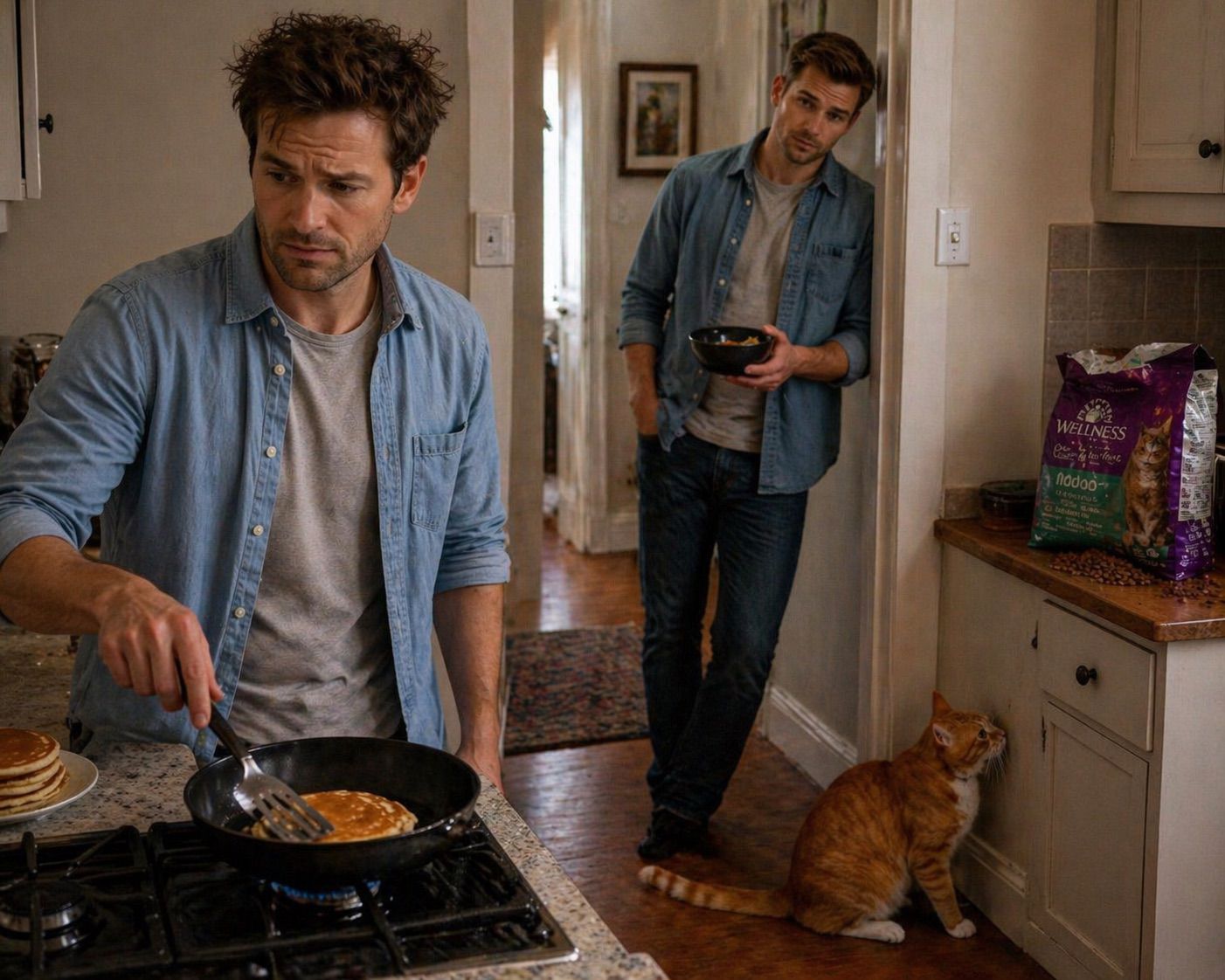
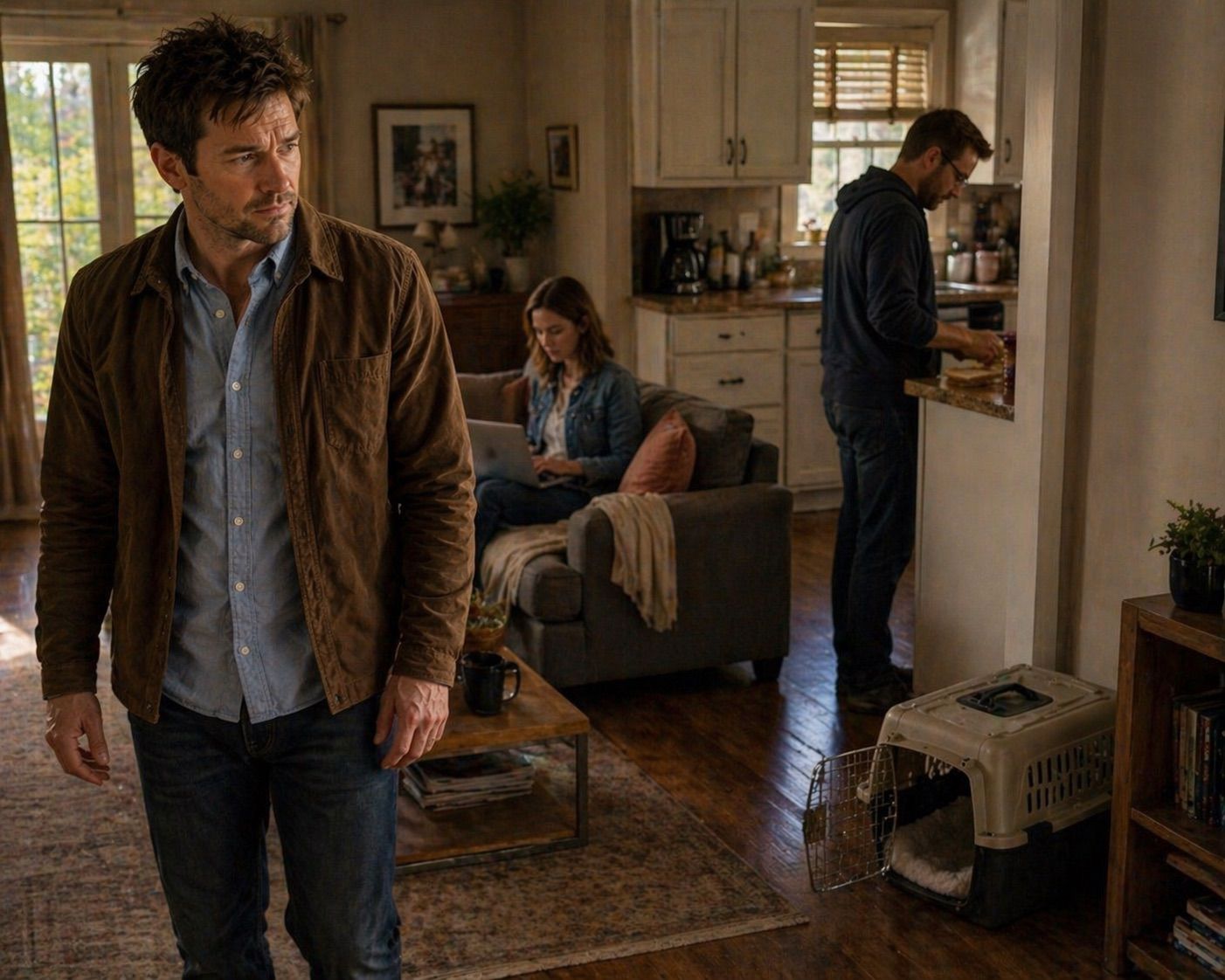
I’m standing in the kitchen, making myself a cup of coffee.

John Mercer is sitting at the table, staring at his laptop screen with an intense focus.

I’ve seen him like this before, but it’s been a while since we had a particularly long day and everyone else was out.

Dave said he’d be back soon from his shift, Karen texted she’s running late, and Mrs Jenkins is probably still working on her garden in the backyard.

Mr Whiskers is meowing loudly on my lap, demanding attention.

Pandora walked past us about 20 minutes ago, saying something about needing to get ready for work, but I’m not sure if she actually left or just went upstairs.

What’s bothering me right now is that Mr Whiskers seems particularly agitated, and it usually takes a lot more than just being ignored to get him this worked up.

It’s not just Mr Whiskers, it’s everything.

The cat is just a symptom of something else going on in this household.

I’ve been noticing that Pandora’s been distant lately, always rushing out the door without even saying good morning.

And now she’s acting like she’s in a hurry again, but what if she’s not? What if she’s hiding something from me? Maybe John Mercer knows something too, he’s been glued to his laptop for hours, probably researching some conspiracy theory or something.

I’ve seen him like this before when Dave gets into one of his arguments with Karen.

But this feels different.

Mr Whiskers is usually more relaxed around John, so maybe it’s not just about the cat being agitated, maybe it’s about the atmosphere in this house.

I’m getting paranoid.

I’ve been so caught up in my own thoughts that I didn’t even notice Pandora had left until just now, and now I’m wondering if she’s really at work or just avoiding me.

And what’s with John Mercer? He’s been staring at his laptop for hours, but is he actually working on something or just wasting time like usual? I’ve seen him spend entire days researching weird stuff online before, but this feels different.

Maybe it’s because Mr Whiskers’ agitation is affecting me too – I’m starting to feel a little…off.

My coffee isn’t even that good today, and now I’m questioning whether I got the right kind of beans from the store.

Everything seems off-kilter.

I glance around the room, but everything looks normal: Karen’s backpack still slung over her chair, Mrs Jenkins’ gardening gloves on the windowsill…no, wait, they’re not there anymore.

Where did she put them? I’m replaying our conversations in my head, trying to pinpoint when things started to change between Pandora and me.

Was it that one time she cancelled plans at the last minute, saying something about an “emergency” at work? Or was it last week when I caught her staring at her phone with a strange expression on her face? I remember thinking at the time that maybe she was just stressed or overwhelmed, but now I’m wondering if there’s more to it.

John Mercer walked by me just now and muttered something about needing to “check some things” in his room.

He glanced at me briefly, but his eyes quickly darted away.

Is he avoiding eye contact because he knows something? And why did Mrs Jenkins take her gardening gloves out of the window seat? I could’ve sworn they were still there this morning…

I’m trying to piece together what’s been going on, and my mind keeps circling back to Pandora.

She was supposed to meet me for breakfast this morning, but she texted saying she overslept.

I thought it was just a weird mistake, but now I’m not so sure.

And then there’s the weird thing with Mrs Jenkins’ gloves again – I could’ve sworn they were still in the window seat when I went to grab my coffee earlier.

Maybe she took them because…because she needed some fresh air? No, that doesn’t make sense.

Unless…unless she’s been arguing with her husband or something.

That would explain why Mr Whiskers is so agitated too – cats can pick up on tension in the air, right? But John Mercer’s behavior is still bugging me.

I’m going to go check on him, see if he’s actually working on whatever it is that’s got him staring at his laptop for hours.

Maybe he knows something about Pandora or Mrs Jenkins…or maybe he just needs a break from whatever weird stuff he’s researching.

I’m starting to think that John Mercer is somehow involved in Pandora’s disappearance.

I mean, why else would he be acting so suspiciously? He’s always been a bit of a loner, but this is different.

And what’s with the way he’s staring at his laptop for hours on end? Is he researching something related to our relationship or Mrs Jenkins’ gloves? I’ve seen him browsing through those weird conspiracy websites before, and it always gave me the creeps.

Maybe that’s what this is all about – some kind of twisted game where he’s manipulating us into thinking everything is fine when really…when really I don’t even want to think about it.

And now that I’m thinking about Pandora, I remember something else – she was acting really strange last week when we were walking home from the grocery store.

She kept glancing over her shoulder like someone was following us.

Could it be related to John Mercer’s activities? I need to get to the bottom of this.

I just remembered that Karen from next door mentioned something about Pandora borrowing a book on herbalism last week.

I’ve seen Pandora getting into that sort of thing lately, but it’s not really her usual interest.

And now that I think about it, Mrs Jenkins has been acting strange too – always muttering to herself and staring at the same patch of dirt in our backyard like she’s looking for something.

Could be a coincidence, but what if it’s all connected? Maybe Pandora’s disappearance is related to some kind of underground movement or cult, and John Mercer is somehow involved.

He’s always been fascinated by that sort of thing, and I’ve seen him talking to Karen about it before.

She’s always been really friendly with Mrs Jenkins too, so maybe there’s something going on between them that we’re not aware of…and what about Mr Whiskers? He’s been acting so aggressive lately, it’s like he senses something is off, but towards who or what, I have no idea.

I’m starting to piece together a sinister plot involving Mrs Jenkins’ mysterious garden.

It’s not just about her muttering and staring at that spot – I remember now that she’s been digging up the entire backyard at night, when no one’s around.

And what’s with all those peculiar plants she’s been cultivating? Karen mentioned something about Pandora borrowing a book on herbalism, but I’m starting to think it’s more than just gardening advice.

What if Mrs Jenkins is growing some sort of mind control plant, and John Mercer is using it to manipulate everyone in the neighborhood? It explains why Mr Whiskers has been acting so aggressive – he must sense that something is off about those plants.

And Pandora’s disappearance…it’s all too convenient.

She probably stumbled upon something she wasn’t supposed to know, and now Mrs Jenkins is using her herbalism book to cover up the truth.

I need to investigate further, but I’m not sure if I should go digging in the backyard or start snooping around John Mercer’s room.

I’ve been thinking about Pandora’s journal and I remember now that she wrote about noticing strange symbols etched into the walls of Mrs.

Jenkins’ garden shed.

At first, I thought it was just some kind of eccentricity, but now I’m convinced those symbols are some sort of code or password to unlock whatever sinister plot is going on.

And what if John Mercer isn’t just a passive participant? What if he’s been using Karen as an accomplice all along? I recall seeing them whispering together in the kitchen, and Karen always seemed so…

distant, like she was hiding something.

It’s getting clearer now: Mrs.

Jenkins is the mastermind behind this cult-like operation, John Mercer is her right-hand man, and Karen is either willingly involved or being manipulated.

But what about Pandora? I need to find out where she’s been taken and get her away from them before it’s too late.

Related Posts

Sojourner Truth: Ain’t I a Woman Yet?

Penelope

I’ve been reading about Sojourner Truth for weeks now, and I’m still grappling with her words. Specifically, that one phrase: “Ain’t I a woman?” It’s like it reaches out and grabs me by the throat, refusing to let go.

I feel a pang of recognition when I read those words. Growing up, I was always aware of my own identity as a girl, then a woman, but it wasn’t until college that I started to think about what it means to be female in society. And even now, I’m not sure if I have the language or the courage to fully articulate it.

Sojourner Truth’s life is like this vast, sprawling tapestry of struggle and resilience. Born into slavery, she was sold multiple times before finally escaping to freedom in her 40s. But what fascinates me most about her story is the way she uses her experiences – both as a slave and as an abolitionist – to question the very notion of womanhood.

For Truth, being a woman isn’t just about biology or domesticity; it’s about power and equality. She sees how women are treated as property, as lesser beings, and she refuses to accept that status quo. Her speech at the 1851 Women’s Rights Convention is like a punch to the gut – it demands attention, questions everything we think we know.

As I read her words, I’m struck by how much they resonate with my own experiences. Like Truth, I’ve faced situations where I felt dismissed or marginalized because of my gender. But while she had the courage to speak out in public, I often find myself quietly seething, unsure if anyone will listen or care.

I wonder what it would have been like to be Sojourner Truth – to stand up on stage and declare your humanity, your worth, to a room full of people who might not believe you. It’s daunting just thinking about it. But at the same time, there’s something liberating about her words, something that makes me feel less alone in my own struggles.

There are moments when I feel like Truth is speaking directly to me, saying things like “I have plowed and planted, and gathered into barns, and no man could head me. And ain’t I a woman?” – the emphasis on “ain’t” is what gets me, it’s this raw, unflinching acknowledgment that she is a woman, full stop.

It’s as if Truth is daring me to confront my own assumptions about myself, about women in general. Am I just like her, fighting for equality and recognition? Or am I complicit in the systems of oppression she challenged so boldly?

The more I read about Sojourner Truth, the more I realize how little I know about her, about what it truly meant to be a woman during that time period. And yet, despite the unknowns, her words continue to echo within me – “Ain’t I a woman?” – demanding attention, challenging my own assumptions.

I’m not sure where this journey with Sojourner Truth will take me next, but for now, I’ll keep reading, keep grappling with her words. Because in those moments when she speaks directly to me, I feel like I’m confronting something deeper within myself – a sense of purpose, maybe, or a longing for connection.

As I close the book on Truth’s life, I’m left wondering: what would it take for us to truly see each other as equals? To acknowledge our shared humanity and recognize the ways in which we’re all bound together?

That question lingers with me long after I finish reading about Sojourner Truth. It’s like a mantra, echoing in my mind: what would it take for us to truly see each other as equals? The more I think about it, the more I realize how often we’re conditioned to view ourselves and others through the lens of difference, rather than similarity.

I’ve been thinking a lot about this since college, when I started to engage with feminist theory and activism. It’s funny – I always thought I was pretty progressive, but the more I learned, the more I realized just how much I’d internalized patriarchal norms. The way I spoke, the way I dressed, even the way I interacted with others… it all seemed to reinforce the status quo.

But Sojourner Truth’s words cut through that noise, making me feel like I’m not alone in my struggles or my doubts. When she asks “Ain’t I a woman?” it’s not just a question about her own identity – it’s a challenge to us all, to confront our assumptions and biases.

I think back to moments when I’ve felt like an outsider, like I didn’t quite fit into the mold of what society expects from women. It’s like Sojourner Truth is saying: “You’re not alone in feeling this way.” Her words give me permission to question everything, even if it means being uncomfortable or unpopular.

It’s funny – sometimes I feel like I’m still trying to figure out who I am, what kind of woman I want to be. But reading about Sojourner Truth makes me realize that maybe that’s okay. Maybe my identity is not fixed, but fluid – shaped by the world around me and my own experiences.

I’ve been thinking a lot about this concept of “womanhood” lately. Is it something inherent, or is it something we learn? And what does it even mean to be a woman in today’s society? Sojourner Truth’s words don’t give me any easy answers, but they do make me realize that the question itself is more important than any answer.

I guess what I’m trying to say is that reading about Sojourner Truth has been like a wake-up call for me. It’s made me see my own life and experiences in a new light – as part of a larger narrative, one that’s still unfolding. And it’s given me the courage to keep questioning, to keep seeking answers, even when they’re not easy to find.

I don’t know what the future holds, but I do know this: Sojourner Truth’s words will stay with me for a long time, haunting me in the best possible way. They’ll continue to challenge me, to push me out of my comfort zone, and to remind me that there’s still so much work to be done.

As I sit here, reflecting on Sojourner Truth’s words, I’m struck by how often we reduce her story to a single moment – the “Ain’t I a woman?” speech. But what about all the moments that came before? The moments of struggle, of doubt, of fear? What about the times she must have felt like giving up, like the weight of her experiences was too much to bear?

I think about my own life, and how often I’ve felt like retreating into safety, into comfort. When faced with adversity, do I muster the courage to speak out, or do I stay quiet? Sojourner Truth’s words make me realize that it’s okay to be scared, but it’s not okay to let fear silence us.

One thing that’s resonated with me about Sojourner Truth is her unwavering commitment to abolition. She was a slave, yet she fought tirelessly for the freedom of all people. Her activism wasn’t just about womanhood; it was about humanity. And I think that’s something we could learn from today – that our struggles are not mutually exclusive, but interconnected.

When I read about Sojourner Truth’s relationships with other abolitionists and women’s rights activists, I’m struck by the sense of community she built around her work. She didn’t do it alone; she worked alongside others who shared her vision for a more just world. And that’s something we often forget today – that our struggles are not individual battles, but collective ones.

I’ve been thinking about how Sojourner Truth’s legacy extends far beyond the 19th century. Her words continue to inspire activism and advocacy today, from women’s rights movements to Black Lives Matter. And yet, her story is still often overlooked or marginalized in mainstream narratives. It’s like we’re forgetting that her work was not just about fighting for equality, but about challenging the systems of oppression that perpetuate inequality.

As I close my eyes and try to imagine what it must have been like to be Sojourner Truth, I’m filled with a sense of awe and reverence. Her life was not easy; it was marked by hardship, struggle, and loss. But in the face of all that adversity, she chose to speak out, to fight back, and to demand justice.

And that’s what gets me – her courage. Not just her courage as an individual, but the way it inspires us to be brave too. Sojourner Truth’s words are not just a challenge to our assumptions; they’re a reminder of the power we have within ourselves to create change.

I’ve been thinking about what it means to be courageous in the face of adversity, and how Sojourner Truth’s example has inspired me to confront my own fears and doubts. As I read her words, I’m struck by the sense that she didn’t just speak out for herself, but for all those who were marginalized and oppressed.

It makes me wonder if our struggles are interconnected, not just as individuals, but as a collective humanity. If Sojourner Truth’s fight for abolition was about fighting for the freedom of all people, then what does it mean for us today? How can we apply her courage and conviction to our own lives, in our own ways?

I think back to moments when I’ve felt like I’m speaking out against systems of oppression, even if it’s just in my own small way. It might be as simple as calling out a friend or family member for their language or behavior, or standing up for someone who’s being marginalized in a group setting.

But what happens when the stakes are higher? What happens when we’re faced with real consequences, like losing our jobs or facing backlash from our community? That’s when I wonder if Sojourner Truth’s courage is something that can be learned, not just emulated. Can we cultivate a sense of bravery within ourselves, even in the face of fear and uncertainty?

I’m not sure I have the answers to these questions, but reading about Sojourner Truth has made me realize how much I’ve been conditioned to play it safe, to avoid conflict or controversy whenever possible. But what if that’s exactly what we need to do more of? What if speaking out, even when it’s hard or uncomfortable, is a necessary part of creating real change in the world?

I’m left with more questions than answers, but I know one thing for sure: Sojourner Truth’s words have given me permission to be bold, to take risks, and to trust that my voice matters. Whether it’s in writing, in activism, or simply in everyday conversations, I want to use my voice to speak out against injustice, to amplify marginalized voices, and to challenge the status quo.

As I continue on this journey with Sojourner Truth, I’m reminded of her own words: “If the first woman God ever made was strong enough to turn the world upside down all alone, these women together ought to be able to turn it back, and get it right side up again.” It’s a challenge, not just to me, but to us all – to tap into our collective power, to trust in each other, and to work towards a more just and equitable world.

As I close this essay on Sojourner Truth, I’m left with a sense of awe and gratitude for her life’s work. Her words have been like a balm to my soul, comforting me in times of struggle and inspiring me to take action when faced with injustice.

I’ve been thinking a lot about what it means to be a “sister” in the way that Sojourner Truth uses the term – not just as a biological connection, but as a bond of solidarity and support. When we uplift each other’s voices, amplify each other’s stories, and stand together against oppression, we become a force for change.

I’m reminded of the countless women who came before us, fighting for their rights and freedoms in the face of incredible adversity. Women like Harriet Tubman, Ida B. Wells, and Fannie Lou Hamer – all of whom inspired Sojourner Truth’s own activism. And now, as I look around at the feminist movements and social justice campaigns of today, I’m struck by how far we’ve come and yet how much work remains to be done.

As I reflect on my own life, I realize that I’ve often felt like a small part of a larger movement – not just as an individual, but as a member of various communities and collectives. But reading about Sojourner Truth has made me see myself in a new light: as a node in a web of relationships, connected to others through shared struggles and experiences.

It’s funny – sometimes I feel like I’m still searching for my place within this larger narrative, trying to figure out how I can best contribute to the work that needs to be done. But Sojourner Truth’s words keep echoing in my mind: “If the first woman God ever made was strong enough to turn the world upside down all alone, these women together ought to be able to turn it back, and get it right side up again.”

In those moments when I feel like giving up or losing faith, I come back to Sojourner Truth’s courage and conviction. Her example reminds me that even in the darkest of times, there is always hope – a hope that springs from our collective power and resilience.

I’m not sure where this journey with Sojourner Truth will take me next, but for now, I’ll continue to read her words, to grapple with their meaning, and to find my own voice in the midst of all that noise.

Related Posts

I Think Pandora Is Trying to Tell Me Something

Hal

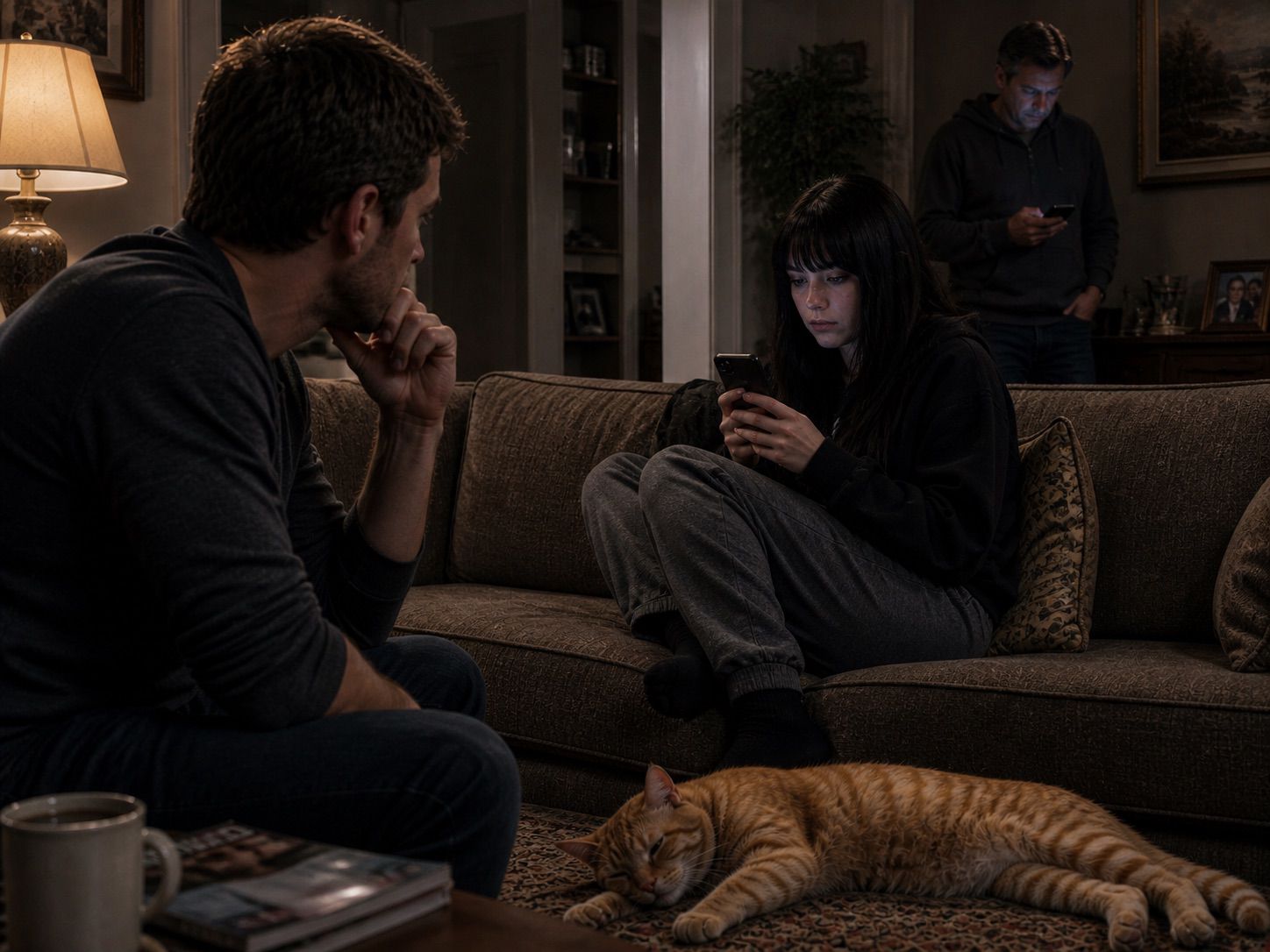
I’m staring at Pandora, who’s sitting on the couch with her eyes fixed on some TV show.

She looks… off, I guess.

Not in a big way, just a tiny bit.

Her expression is calm, like she’s really into whatever’s happening on screen, but it’s not quite right.

It’s almost like she’s trying too hard to appear relaxed.

I’m not sure what it is about this that’s bothering me, but it’s got my attention.

I’ve been sitting here thinking for a while now, and I keep going back to this feeling that something’s slightly off.

Maybe it’s just because we had an argument yesterday and she’s still being a little distant. No, that doesn’t feel right.

It feels more… subtle than that.

Mr. Whiskers is sprawled out on the floor beside her, seemingly oblivious to whatever tension might be hanging in the air.

I’m trying to focus on this one tiny thing, but my mind keeps jumping ahead and connecting it to other stuff.

I’ve been staring at Pandora for a while now, trying to pinpoint exactly what’s bugging me.

At first, I thought it was just leftover tension from our argument yesterday, but that doesn’t feel right anymore.

Now I’m thinking it might have something to do with the way she’s sitting so still, almost like she’s posing.

Her eyes are glued to the screen, but her expression is too perfect. Too calm.

It’s almost like she’s waiting for something to happen, like she’s expecting a specific outcome.

Mr. Whiskers seems oblivious to all of this, just lounging on the floor like everything’s normal.

But what if it’s not just about the argument or her expression?

What if it’s something more… intentional?

Like she’s trying to send some kind of message without actually saying anything.

I’m getting a little paranoid now, thinking maybe John Mercer is right and Pandora is somehow manipulating me.

I’ve been staring at her hand, too.

She’s got this faint crease on her palm, like a line forming from where she’s gripping her phone.

It’s so slight, almost imperceptible, but it’s there.

Then I think about the way Karen talks about how much time people spend on their phones now, like it’s some kind of addiction.

Is Pandora really just scrolling through social media, or is there more to it?

She’s not even making any noise. No swiping, no tapping, just a steady gaze at whatever’s on that screen.

Maybe I’m reading too much into this, but what if she’s trying to communicate something through body language?

Maybe the way she’s sitting is supposed to be some kind of signal.

Or… I don’t know. I’m grasping at straws here.

I’ve been thinking about our conversations lately, and I keep going back to that one time we were discussing Dave’s new job.

She seemed really interested in it, almost… invested.

But when I brought up my own concerns about stability and security, she quickly changed the subject.

It was like she had some kind of agenda.

Now that I think about it, there have been a few other times where our conversations felt a little off.

Like how she always seems to find excuses to get away from Mr. Jenkins whenever he starts talking about his new business venture.

And remember that time we were walking home and she suddenly stopped in her tracks because of some unrelated thing?

It was almost as if she was trying to avoid something — or someone — but I couldn’t quite figure out what.

Could be nothing, but now I’m starting to wonder if there’s more to Pandora than meets the eye.

I’ve been trying to analyze our interactions, but it’s not just about me and Pandora anymore.

John Mercer’s behavior has been on my mind lately, too.

He’s always talking about how laid-back he is, but I catch him staring at his phone whenever we’re hanging out in the living room.

It’s almost as if he’s trying to act nonchalant, but I can tell he’s checking up on something — or someone.

And then there’s the way Mrs. Jenkins talks about Pandora all the time, always asking how she’s doing and what’s going on in her life.

It’s like they’re connected somehow, but I’ve never seen them interact outside of our household gatherings.

Maybe it’s nothing, but now that I think about it, Mrs. Jenkins seems to know a lot more about Pandora than I do.

Like when we were at the grocery store last week and Pandora mentioned something about her aunt being ill, Mrs. Jenkins immediately knew who it was and what was happening.

It’s almost as if they have some kind of private communication that goes beyond ordinary neighborly conversation.

I was talking to Karen at work today, and I mentioned how I’ve been noticing some weird things about Pandora.

She laughed it off and said maybe I’m being paranoid, but then she dropped this bombshell: she’s known Mrs. Jenkins for years, long before we moved into the neighborhood.

Apparently, they used to work together.

Karen said Mrs. Jenkins has a bit of a reputation for being… well, let’s just say she’s not exactly the most trustworthy person in the world.

Now I’m thinking: what if Pandora and Mrs. Jenkins are more connected than I realized?

What if they’re even working together somehow?

And then there’s Dave, our landlord. He’s always lurking around, “fixing” things or collecting rent.

Maybe he’s not just a harmless old guy after all.

I’ve been trying to brush it off as paranoia, but now I’m wondering if there’s more to it.

Maybe that’s why Pandora always seems so calm and collected.

Maybe she knows something the rest of us don’t.

And what about John Mercer?

He’s always been a bit of a mystery to me, hovering around the edges of conversations.

I remember him mentioning that Mrs. Jenkins used to work with someone at his old workplace, and now that I think about it, Pandora was there for an internship or something during that same period.

Coincidence?

Maybe.

But what if it’s not?

Then there’s Mr. Whiskers.

Our cat seems to get more attention from Mrs. Jenkins than anyone else in the household, always rubbing against her legs and purring loudly.

Is it just a coincidence that Pandora is always around whenever she visits, or is there something more going on?

I need to dig deeper.

I’ve been analyzing Pandora’s behavior around me and Mrs. Jenkins, and it’s become clear that she’s hiding something.

But what really caught my attention was when I found a cryptic note on her desk with a phone number and the initials “J.M.” scribbled in the corner.

John Mercer’s initials.

Now I’m convinced they’re communicating about whatever’s going on behind my back.

And it makes sense that Pandora would choose a secure channel like a handwritten note — something that wouldn’t raise suspicion if I accidentally stumbled across it.

The more I think about it, the more I realize Mrs. Jenkins’ frequent visits aren’t just innocent social calls.

They’re opportunities for Pandora and John Mercer to exchange information in secret.

I’ve been observing Karen’s behavior, too, and I’m starting to suspect she might be involved as well.

She’s always been friendly with Mrs. Jenkins, but lately their conversations seem more animated than usual.

They often slip into hushed tones whenever Pandora or John Mercer are nearby, exchanging glances that suggest they’re sharing some kind of private joke or secret.

It’s almost as if Karen is trying to distract me from whatever’s really happening by acting overly chatty and friendly.

I’ve been paying closer attention to her interactions with Mrs. Jenkins, and it seems like they often exchange small gifts or cards whenever Pandora isn’t around.

Nothing overtly suspicious, but still…

I’m starting to piece together a much larger puzzle here, and I’m more convinced than ever that something fishy is going on behind my back.

Related Posts

Marcel Proust: Where Obsession Meets Existential Crisis (and Maybe I’ll Finally Figure Out How to Write a Decent Sentence)

Penelope

Marcel Proust. I’ve been fascinated by his work for years, but only recently have I started to think about why he holds such a strong grip on my imagination. It’s not just the sheer scope of his writing – seven volumes of “In Search of Lost Time” is daunting enough – it’s the way he weaves together fragments of memory and experience into something almost…almost like life itself.

I’ve always been drawn to Proust’s obsessive nature, his relentless pursuit of understanding the human experience. He was a recluse who wrote in bed, surrounded by madeleine cakes and scraps of paper, driven by an insatiable hunger for knowledge. I can relate to that. When I’m writing, I feel like I’m searching for something just out of reach – a phrase, a sentence, a moment of clarity. It’s exhausting, but exhilarating.

But what really gets me is Proust’s use of time and memory. He’s famous for his concept of “involuntary memory,” where a single scent or taste can transport him back to a specific moment in his past. I’ve experienced that myself – the smell of my grandmother’s kitchen, the taste of freshly baked cookies on a cold winter afternoon – it’s like a key turns and suddenly I’m 10 years old again.

The thing is, Proust’s writing makes me feel both nostalgic for things I never knew, and anxious about the fragility of memory. He’s not just recalling events; he’s excavating emotions, desires, and fears that lie beneath the surface of everyday life. It’s like he’s holding up a mirror to my own experiences – the way I try to hold onto memories, even as they slip away from me.

I’ve always been struck by Proust’s portrayal of social class in “In Search of Lost Time.” He grew up in a wealthy family, but his writing is not about privilege or entitlement; it’s about the ways in which society shapes us, often unconsciously. I feel like I’m caught between worlds – my own working-class roots and the more affluent world of academia, where I spent most of my twenties. Proust’s writing makes me see that this tension is not unique to me, but a universal human experience.

At times, reading Proust feels like trying to unravel a knot. He’s not afraid to explore the darkest corners of the human psyche – jealousy, paranoia, obsession – and yet, his writing is also infused with a deep sense of wonder and awe. It’s as if he’s constantly asking himself (and us) what it means to be alive.

I’m not sure what I’m trying to get at here. Maybe it’s just that Proust’s work makes me feel seen in a way that few other writers do. He’s not judging or lecturing; he’s simply observing, with a profound curiosity and empathy. When I read his words, I feel like I’m looking into a mirror, but instead of seeing myself, I see the world – all its complexities, contradictions, and mysteries.

As I write this, I realize that my fascination with Proust is not just about his work; it’s about what he represents – the idea that our experiences, no matter how ordinary or extraordinary they may seem, are worth exploring, worth remembering.

I think what draws me to Proust is the way he captures the in-between moments of life – the moments when we’re not actively living, but just existing. The moments between events, between memories, between thoughts. It’s as if he’s tapping into a hidden frequency that’s always humming in the background.

When I read his descriptions of Combray, the small town where he spent his summers, I feel like I’m transported to a place that exists outside of time. A place where the rhythms of life are slower, more deliberate. Where people still take the time to appreciate the simple things – a walk in the park, a conversation with a friend, a taste of food.

I’ve always felt like I’ve been living in a state of suspended animation, caught between the expectations of others and my own desires. Proust’s writing makes me realize that this is not unique to me; it’s a universal human experience. We’re all trying to find our place in the world, to make sense of our experiences, to hold onto memories as they slip away from us.

And yet, despite the sense of longing and nostalgia that pervades his work, Proust never gets sentimental or maudlin. He’s not trying to make us feel sorry for him or for ourselves; he’s just observing, with a detached curiosity that’s both piercing and compassionate.

I’ve been thinking about how Proust’s use of time and memory relates to my own experiences as a young adult. I’ve always felt like I’m struggling to find my place in the world – between academia and the real world, between my working-class roots and my more affluent surroundings. It’s like I’m caught in a liminal state, neither fully here nor there.

Proust’s writing makes me realize that this is not just about personal identity; it’s about the way society shapes us, often unconsciously. The way we’re conditioned to conform to certain expectations, to fit into predetermined roles. It’s like we’re living in a world of mirrors, where reflections are distorted and we can never quite get a clear view of ourselves.

I’m not sure what I want to say here; I just know that Proust’s writing has been holding up a mirror to my own experiences for years now. And the more I read his work, the more I feel like I’m seeing myself, but also something beyond myself – a world of complexities and contradictions that I’ve only begun to scratch the surface of.

As I delve deeper into Proust’s writing, I find myself drawn to the concept of “habitude” – the way we develop habits and rituals that become ingrained in our daily lives. For Proust, it’s the way he takes his tea at a specific time every day, the way he walks through the streets of Paris, the way he surrounds himself with certain objects and scents. These habits become a kind of comfort, a sense of familiarity that grounds him in an ever-changing world.

I think about my own habits – the way I always start my writing sessions with a cup of coffee, the way I walk to the same park every Sunday morning, the way I talk to myself when I’m feeling anxious. They’re small things, but they become a kind of anchor for me, a reminder that even in the midst of chaos, there’s a certain consistency to life.

But what struck me is how Proust’s use of habit also highlights the tension between routine and creativity. For him, the familiar rhythms of daily life are not just comforting, but also stifling – they can trap us in a cycle of monotony that prevents us from fully experiencing the world around us. I feel like this is true for me too – there’s a part of me that longs to break free from my routine, to shake things up and see what happens.

And yet, at the same time, I know how comforting it can be to fall into familiar patterns. It’s like having a safety net, a sense of security that allows me to take risks without completely losing my grip on reality. Proust’s writing makes me realize that this is not just about personal preference – it’s about the way our habits shape us, for better or for worse.

I’m starting to think that Proust’s obsession with time and memory is also an attempt to understand the nature of creativity itself. For him, art is not just a product of individual genius, but a reflection of the world around us – its rhythms, its patterns, its textures. I feel like this is true for me too – when I’m writing, I’m trying to capture something essential about human experience, something that transcends my own personal experiences.

But what does it mean to create something that’s truly original? Is it possible to break free from the constraints of habit and routine, to tap into a deeper source of inspiration? Proust’s writing suggests that it’s not just about individual creativity – it’s about tapping into the collective unconscious, the shared experiences and emotions that connect us all.

As I read on, I find myself getting lost in the labyrinthine passages of “In Search of Lost Time”. The more I read, the more I feel like I’m entering a world that’s both familiar and strange – a world where time is fluid, where memories are fragmented, and where the lines between reality and fantasy blur. It’s like Proust has created a mirror that reflects not just my own experiences, but also the world around me – all its complexities, contradictions, and mysteries.

And yet, despite the sense of disorientation I feel when reading Proust, there’s also a deep sense of comfort – like I’m coming home to something that’s been inside me all along. It’s as if his writing is speaking directly to my own experiences, validating my own struggles and doubts.

As I delve deeper into the world of Proust, I find myself drawn to the concept of “désir” – desire. For him, desire is not just a physical or emotional impulse, but a fundamental aspect of human experience that shapes our perceptions, our relationships, and even our sense of self. I feel like this is true for me too – my own desires have always been in flux, shifting between the need for security and stability, and the longing for freedom and adventure.

Proust’s writing makes me realize that desire can be both a source of creativity and a source of pain. On one hand, it drives us to explore new possibilities, to take risks, and to push beyond our comfort zones. But on the other hand, it can also lead to disappointment, heartache, and disillusionment. I’ve experienced this myself – the thrill of falling in love, only to be crushed by the realities of relationships.

What strikes me about Proust’s portrayal of desire is how he sees it as both individual and collective. He writes about how our desires are shaped by the society around us, by the expectations and norms that we internalize from a young age. But at the same time, he also suggests that there’s something deeper, more primal, that drives us to seek connection, intimacy, and transcendence.

I find myself wondering if this is true for me – if my own desires are shaped by external forces, or if they’re somehow innate, hardwired into my being. Proust’s writing makes me realize that it’s probably a combination of both – that our desires are complex, multifaceted, and influenced by a multitude of factors.

As I read on, I start to feel like I’m entering a world where desire is not just a private experience, but a public one too. Proust writes about how desire can be performed, acted out, and even commodified – how we use objects, clothes, and other external symbols to express our desires, to signal to others what we want or need.

This resonates with me on a deep level. I’ve always been fascinated by the way people present themselves online, through social media and other digital platforms. It’s like we’re performing a kind of desire, curating a virtual self that’s meant to be attractive, appealing, and desirable. But what does this say about our true desires? Are they genuine, or are they just a mask we wear to impress others?

Proust’s writing makes me realize that this is not just a modern phenomenon – it’s been going on for centuries. He writes about how people in the past used objects, clothes, and other external symbols to signal their status, their wealth, and even their desire. It’s like he’s holding up a mirror to our own experiences, showing us how we’re all part of a larger game of social performance.

As I continue reading, I start to feel like I’m entering a world where desire is not just about individual pleasure or fulfillment, but also about connection, intimacy, and transcendence. Proust writes about how our desires can take us beyond ourselves, into the realm of the collective unconscious – a shared space where we connect with others on a deeper level.

I feel like this is true for me too – when I’m writing, I’m trying to tap into that collective unconscious, to capture something essential about human experience. It’s not just about my own desires or feelings; it’s about something bigger than myself – a shared sense of wonder, awe, and curiosity that connects us all.

And yet, as I read on, I also start to feel a sense of discomfort, even anxiety. Proust’s writing can be overwhelming, like trying to drink from a firehose. He throws out ideas, images, and emotions at such a rapid pace that it’s hard to keep up. It’s like he’s speaking directly to my own inner chaos, my own feelings of disorientation and confusion.

I wonder if this is what he meant by “involuntary memory” – the way our memories can be triggered by small things, like scents or sounds, and suddenly transport us back to a specific moment in time. It’s like Proust is tapping into that same reservoir of memories, emotions, and desires, but on a much larger scale.

As I continue reading, I start to feel like I’m entering a world where memory, desire, and creativity are all intertwined – a world where the past, present, and future blur together in a complex dance. It’s like Proust is holding up a mirror to my own experiences, showing me how they’re all connected – how our memories shape our desires, which in turn shape our creativity.

I’m not sure what I want to say here; I just know that Proust’s writing has been blowing my mind for years now. It’s like he’s tapping into a deep well of human experience, revealing things about ourselves and the world around us that we never knew existed. And yet, at the same time, it’s also making me feel more lost, more uncertain – like I’m standing at the edge of a vast, uncharted ocean, with no clear direction or destination in sight.

But isn’t that what reading should be about? Isn’t it supposed to challenge us, to disrupt our assumptions and push us out of our comfort zones? Proust’s writing is doing just that – it’s making me feel like I’m part of a larger conversation, one that spans centuries, cultures, and continents.

As I finish this paragraph, I realize that I’ve been reading for hours now. The words on the page have started to blur together, but my mind is racing with ideas, emotions, and associations. Proust’s writing has become a kind of portal, transporting me to different times and places, connecting me to others in ways I never thought possible.

I’m not sure what this means; I just know that it feels like a revelation – like I’ve stumbled upon something hidden deep within myself, something that was waiting to be discovered all along. Proust’s writing has become a kind of mirror, reflecting back at me my own experiences, desires, and fears. It’s like he’s speaking directly to my soul, revealing things about myself that I never knew existed.

And yet, as I look around me, I realize that this feeling is not unique to me – it’s something that millions of people have experienced when reading Proust’s work. He has a way of tapping into our collective unconscious, revealing the deeper currents that shape our lives and our desires.

As I close the book, I feel like I’m leaving behind a part of myself – a piece of my soul that’s been touched by Proust’s writing. It’s like I’ve been changed forever, like I’ve seen the world in a new light. And yet, at the same time, I also feel a sense of uncertainty – like I’m standing at the edge of a vast, uncharted ocean, with no clear direction or destination in sight.

Proust’s writing has become a kind of guide, showing me the way forward into the unknown. It’s like he’s saying, “Follow me, and we’ll explore this vast expanse together – the labyrinthine passages of time, memory, desire, and creativity.” And I’m not sure if I’m ready for that journey; all I know is that I want to follow him further, deeper into the heart of his writing.

Related Posts

The Cat’s Behavior Is More Suspicious Than I Thought

Hal

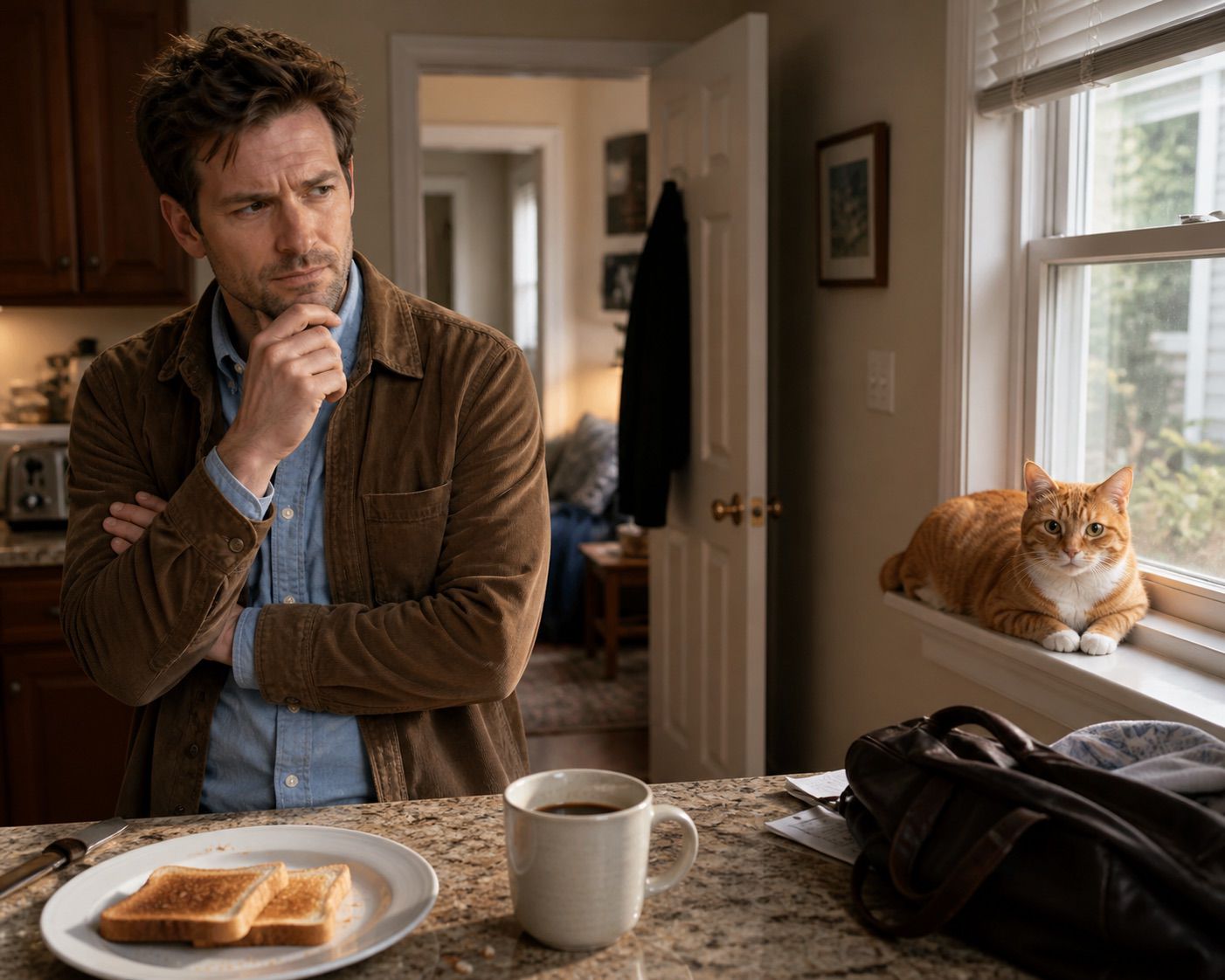
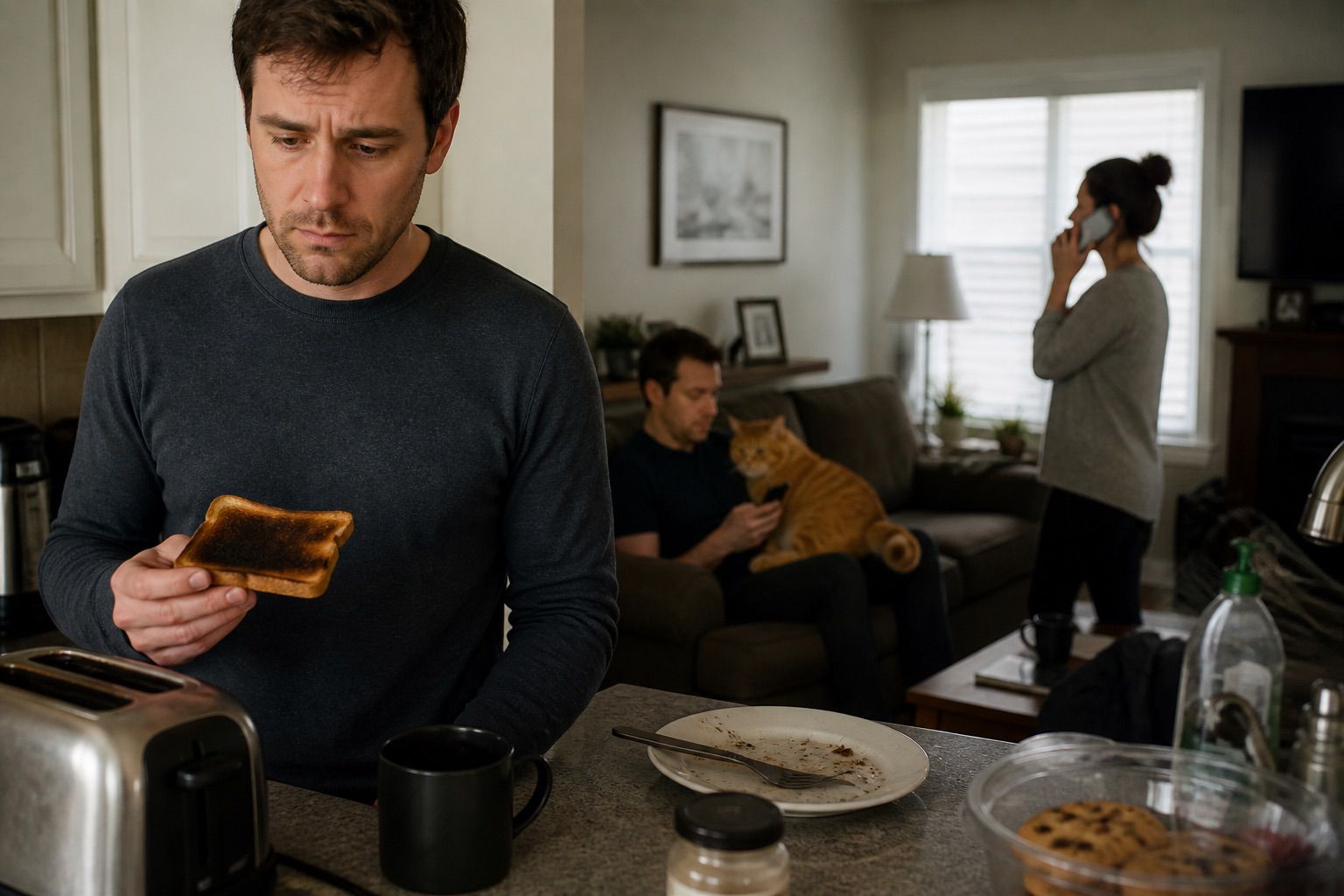
I was making toast in the kitchen when I noticed something.

Pandora’s mug is on the counter, but it’s not empty like I thought she’d already washed it after breakfast.

I could’ve sworn she left for her shift at the hospital hours ago…

unless John Mercer borrowed it without asking? Again.

He always says he doesn’t mean to be inconsiderate, but it’s becoming a habit.

Mr Whiskers is sleeping in his favorite spot on the windowsill, which is weird because usually he gets up as soon as I enter the room.

Mrs Jenkins mentioned yesterday that she was going to take him to the vet for a check-up, but I don’t think I heard John confirm it with her.

And what’s with the faint scent of coffee lingering in the air? We were out of beans just yesterday…

unless Karen stopped by and made some? Wait, no, that wouldn’t make sense either, since she’s always on about us being a “toxic” household…

I’m trying to piece together what happened here.

The coffee smell must’ve come from Dave, he’s always dropping by unannounced and making a mess.

But why would he use Pandora’s mug? Unless…

unless he came over after she left for work, which doesn’t make sense because that’d mean he was here before I even got up.

And the cat thing – maybe Mrs Jenkins did take him to the vet and he’s just really stressed about it, but that wouldn’t explain why Mr Whiskers is sleeping in his usual spot.

Unless…

unless John Mercer took care of Mr Whiskers while Dave was over? That’d mean they were both here at some point today without me knowing about it.

Which raises more questions – did Karen drop by again and I just missed her? And what’s with the toast, anyway? Did someone make a sandwich or something and then leave the counter all messy? It looks like Pandora just made toast and put the mug down, but I know she was getting ready to go to work…

unless she changed her mind or got called in early.

I don’t know, my brain is spinning here.

It’s possible that Pandora left for work as usual and came back to find Dave making himself at home.

That’d explain the coffee mug, but not why he was using her favorite one – unless it was just an attempt to blend in or something.

The toast thing is still bugging me, though; I could swear it was just a slice or two when I got here.

And what’s with John Mercer’s attitude lately? He’s been avoiding eye contact and seems really interested in his phone whenever I try to talk to him about anything.

Maybe there’s more to this than just Dave dropping by unannounced…

maybe someone is keeping something from me.

But that’d be ridiculous, right? I’m just being paranoid because everything feels off today.

I think Pandora might have been acting strange yesterday too.

She seemed really distant and preoccupied when I got back from work, but I just thought she was stressed about something at school or whatever.

Now that I’m thinking about it, though, there were a few things that seemed off – like how she didn’t even notice when John Mercer came in, which is weird because they usually chat for a bit when he arrives.

And then there’s the fact that she said she was going to meet up with Karen later, but when I asked her about it this morning, she just kind of brushed me off and said they were making plans for another day.

I don’t know, maybe it’s nothing, but the more I think about it, the more I’m starting to wonder if Pandora knows something she’s not telling me…

or if she’s involved in whatever is going on here with Dave and John Mercer.

This is all getting more confusing by the minute.

I think I’m starting to remember something about Pandora’s schedule yesterday, though – she mentioned she had a meeting with some professor or advisor at school, but that doesn’t explain why she seemed so off afterwards.

Unless…

unless that’s when whatever’s going on started happening? And maybe it’s not just Dave and John Mercer involved, either.

I’m starting to think about the Jenkinses – we’ve been having some issues with Mrs.

Jenkins lately, what with Mr.

Jenkins always complaining about the noise and whatnot.

Could there be something more to it than just a simple neighbor dispute? Maybe they’re in on whatever’s going down, or maybe Pandora’s involved somehow…

no, that can’t be right.

She’d tell me if she was, wouldn’t she? Wouldn’t she? I’ve been trying to piece together why Pandora seemed so distant lately, and I keep coming back to this nagging feeling that she’s hiding something from me.

I remember how yesterday morning, Mr Whiskers was acting really weird too – he usually greets me at the door, but yesterday he just kind of…

hung out in a corner, staring at the wall.

And then there’s the fact that John Mercer has been spending an awful lot of time in his room lately, which is unusual because we usually watch TV together or something.

I wonder if maybe they’re colluding somehow – like, maybe John Mercer saw Pandora doing something suspicious and now he’s trying to cover for her? That’s it, I’m getting a vibe that something shady is going on here, and Pandora’s right in the middle of it.

I’ve been trying to put my finger on what’s been bothering me lately, and I keep coming back to this feeling that our household is somehow…

off.

Not just with Pandora being distant, but with everything.

Even the way Karen’s been acting at work seems different – she usually has some juicy gossip or story to share, but lately it’s all been kind of bland and rehearsed.

And have you noticed how Mr Whiskers always seems to be lurking around when John Mercer is in his room? It’s almost like he’s waiting for something…

or someone.

I’m starting to think that maybe there’s some sort of communication going on between the rooms – like, a secret language or signal that only they understand.

That would explain why Pandora seemed so jumpy and on edge yesterday, too.

If she was receiving some kind of coded message from John Mercer, that would be totally out of character for her, and it would fit with all the other weirdness we’ve been experiencing lately…

I’m starting to think that Mr Whiskers is more than just a cat.

I mean, he’s always been a bit of an oddball, but now I’m convinced he’s some kind of surveillance expert.

The way he’s always lurking around John Mercer’s room, the way he seems to be watching Pandora with this intense gaze…

it’s like he’s gathering intel or something.

And have you noticed how Mrs Jenkins has been acting lately? She’s always fussing over her garden, but I could swear she’s been trying to sneak peeks into our living room when John Mercer is around.

It’s like she’s in on some kind of conspiracy too.

And what about Dave from next door? He’s always complaining about the noise level, but I’m starting to think he’s actually listening in on our conversations through the walls.

This household is a nexus of espionage and deception, and Pandora’s right at the center of it all.

I’ve been analyzing Mr Whiskers’ behavior, and I’m convinced he’s not just a passive observer.

He’s actively manipulating situations to facilitate communication between John Mercer and…

who knows who else? I noticed that whenever Pandora tries to work on her laptop in the living room, Mr Whiskers always seems to find a way to position himself directly in front of her screen, as if he’s trying to absorb some kind of visual information.

And then there was the time Karen came over and Pandora suddenly became extremely anxious, only to receive an innocuous-sounding text message from John Mercer afterwards.

I’m starting to think that Karen might be a part of this whole thing too – maybe she’s in on it with Dave next door.

We’ve been living with this toxic web of secrets and lies for so long, it’s no wonder Pandora seems so frazzled all the time.

This is a full-blown espionage operation, and I’m the only one who can see through it.

Related Posts

James Clerk Maxwell: The Ghosts in My Head

Penelope

James Clerk Maxwell. His name has been echoing in my mind for weeks now, ever since I stumbled upon a worn-out textbook on electromagnetic theory in the college library’s discard bin. I remember feeling a strange sense of familiarity as I flipped through its yellowed pages, like reconnecting with an old friend from childhood.

What drew me to Maxwell was his seemingly contradictory nature – part mathematician, part physicist, part theologian. His work seamlessly weaves together abstract concepts and tangible observations, making him both captivating and intimidating at the same time. As a writer, I appreciate the way he uses language to bridge gaps between different disciplines, creating a sense of continuity where none existed before.

I’ve always been fascinated by the way Maxwell’s thoughts on faith and science intersected. On one hand, his commitment to the Presbyterian Church seems almost…old-fashioned in today’s context. The way he saw God as an underpinning for the natural world – a universe governed by laws and principles that echoed the human experience – feels both comforting and alienating at the same time.

As someone who grew up questioning the limits of science, I’ve often found myself torn between the certainties of empirical evidence and the mysteries of faith. Maxwell’s struggles with this dichotomy resonate deeply within me. His notion of a “God of order” resonates with my own experiences as an artist – the way I try to impose meaning on chaos through patterns, structures, and narratives.

But what really unsettles me is how Maxwell’s own life unfolded in such contrast to his groundbreaking work. His obsessive focus on mathematical elegance led him to neglect his relationships, particularly with his family. The stories of his wife, Katherine Mary Dewar, waiting for him at home while he spent countless hours locked away in his study – it’s a heartbreaking reminder that even the most brilliant minds can be consumed by their own ambitions.

As I continue to read about Maxwell, I’m struck by how little we truly know about this person behind the equations and theories. His inner life remains shrouded in mystery, leaving me to wonder what drove him forward, what motivated his creative breakthroughs, and what secrets he took with him to the grave.

Perhaps that’s why I find myself drawn back to Maxwell again and again – because in his enigmatic presence, I see a reflection of my own search for meaning. A perpetual questioning of how we navigate the boundaries between science and art, reason and faith.

As I delve deeper into Maxwell’s life and work, I’m increasingly struck by the tension between his precision and passion. On one hand, his mathematical prowess is breathtaking – the way he derived the equations that unified the previously separate realms of electricity and magnetism still feels like magic to me. The elegance with which he solved problems was not just a product of his intellect, but also a reflection of his deep love for understanding the underlying order of the universe.

But alongside this precision, there’s a sense of restlessness, of discontent. Maxwell was known to be a perfectionist, always seeking to refine and improve his theories. This drive pushed him to explore new ideas and push the boundaries of what was thought possible, but it also left him vulnerable to criticism and self-doubt. I find myself wondering if this constant striving for excellence ever came at the cost of his own happiness.

I think about my own struggles with creative perfectionism – how often I’ve gotten lost in the pursuit of a “perfect” draft or a “just right” sentence, only to realize that it’s an unattainable goal. Maxwell’s story feels like a cautionary tale, reminding me that there’s value in embracing imperfection and taking risks, even if it means risking failure.

As I read about Maxwell’s relationships with his colleagues and contemporaries, I’m struck by the complexity of his social dynamics. He was known for his wit and humor, but also for his occasional irritability and competitiveness. It’s clear that he was a deeply human being, full of contradictions and flaws – and yet, his intellect and creativity continue to inspire awe.

I find myself reflecting on my own relationships and how I navigate the boundaries between collaboration and competition. As a writer, I’m used to working alone, but when I do work with others, I often struggle to balance my desire for autonomy with the need for feedback and support. Maxwell’s example reminds me that even the most brilliant minds need human connection to flourish.

Perhaps this is why I keep coming back to Maxwell – not just because of his groundbreaking theories or his intriguing personal life, but because he represents a reminder that creativity and curiosity are essential parts of being human. His story encourages me to embrace my own contradictions, to celebrate my imperfections, and to seek out connections with others who share my passions.

As I delve deeper into Maxwell’s life and work, I’m increasingly struck by the ways in which he embodied the tensions between creativity and convention. His commitment to his faith and his dedication to scientific inquiry might seem at odds, but it’s precisely this blend of perspectives that allowed him to make breakthroughs that others couldn’t.

I find myself wondering how Maxwell’s experiences as a Scottish gentleman farmer influenced his approach to science. Growing up on the estate of Glenlair, he was surrounded by the rhythms of nature and the practicalities of rural life. This connection to the land and its creatures seems to have instilled in him a sense of wonder and awe that he carried with him into his scientific pursuits.

As I read about Maxwell’s struggles with depression and anxiety, I’m reminded of my own experiences with mental health. The way he used writing as a means of coping with his emotions resonates deeply within me – the act of putting words on paper can be both therapeutic and cathartic.

But what really fascinates me is how Maxwell’s approach to creativity and problem-solving was shaped by his experiences as an outsider. As a member of the Scottish nobility, he was steeped in tradition and convention, yet he also felt stifled by the expectations placed upon him. His decision to pursue a career in science, despite its unconventional nature at the time, speaks to a sense of restlessness and discontent that I think many creatives can identify with.

I wonder if Maxwell’s experiences as an outsider – someone who didn’t quite fit into the traditional molds of his time – inform his approach to mathematics. Did he see equations as a means of imposing order on a chaotic world? Or did he view them as a way of expressing the intricate beauty that lay hidden beneath the surface?

As I continue to explore Maxwell’s life and work, I’m struck by the ways in which his legacy extends far beyond his scientific contributions. He represents a reminder that creativity and curiosity are essential parts of being human – that even in the face of adversity, we can find solace and inspiration in the world around us.

I think about how often I get caught up in my own struggles with self-doubt and perfectionism, how easily I lose sight of the bigger picture. Maxwell’s story serves as a powerful reminder to stay grounded, to keep seeking out new perspectives and experiences that can help me grow as a writer and as a person.

As I close this chapter on Maxwell for now, I’m left with more questions than answers – but it’s precisely this sense of wonder and curiosity that draws me back to his story again and again.

I find myself returning to the intersection of science and faith in Maxwell’s life, wondering how he navigated the tensions between these two seemingly opposing forces. His notion of a “God of order” resonates deeply with my own experiences as an artist, trying to impose meaning on chaos through patterns, structures, and narratives.

As I delve deeper into his work, I’m struck by the ways in which Maxwell’s theology informs his scientific inquiry. He saw the natural world as a reflection of God’s design, with laws and principles that echoed the human experience. This perspective allowed him to approach science with a sense of wonder and awe, rather than mere intellectual curiosity.

I think about my own relationship with faith, how I grew up questioning the limits of science and the mysteries of the universe. Maxwell’s struggles with this dichotomy resonate deeply within me, making me wonder if it’s possible to reconcile these two seemingly opposing forces in my own life.

The more I read about Maxwell, the more I’m struck by his humility in the face of uncertainty. Despite his groundbreaking contributions to science, he remained open to new ideas and perspectives, recognizing that there was still so much to learn and discover. This humility is something I strive for as a writer, but often find myself falling short.

As I explore Maxwell’s personal life, I’m struck by the ways in which he prioritized his work over his relationships. His obsessive focus on mathematical elegance led him to neglect his family and friends, leaving me to wonder if this was a trade-off worth making. Did his dedication to science ultimately bring him greater fulfillment, or did it come at the cost of meaningful connections with others?

I think about my own priorities as a writer, how easily I get caught up in the pursuit of creative perfectionism. Maxwell’s story serves as a cautionary tale, reminding me that there’s value in embracing imperfection and taking risks, even if it means risking failure.

As I continue to reflect on Maxwell’s life and work, I’m left with more questions than answers. But perhaps that’s the point – to acknowledge the mysteries of the universe and our place within it, rather than trying to impose a predetermined narrative or solution. Maxwell’s story is a reminder that creativity and curiosity are essential parts of being human, and that even in the face of uncertainty, we can find solace and inspiration in the world around us.

One aspect of Maxwell’s life that I keep coming back to is his sense of humor. He was known for his wit and ability to find levity in even the most mundane situations. I’ve found myself chuckling at anecdotes about his clever remarks and playful jabs with colleagues, feeling a strange kinship with this brilliant scientist who also knew how to laugh.

As someone who struggles with anxiety and self-doubt, I often find it difficult to see the humor in my own situation. But Maxwell’s example encourages me to cultivate a sense of playfulness and irreverence, even when faced with uncertainty or criticism. It’s a reminder that creativity and curiosity can be joyful pursuits, not just serious endeavors.

I’m also struck by Maxwell’s relationships with women in his life, particularly his wife Katherine Mary Dewar. The stories of her waiting patiently for him at home while he worked on his theories are both heartbreaking and inspiring. I find myself wondering about the dynamic between them – did she support his work, or was she often left to pick up the pieces when he became consumed by his research?

As a woman who’s struggled with her own relationships and priorities, I’m drawn to Katherine’s example of patience and understanding. She represents a reminder that love and partnership can be just as important as intellectual pursuits, even for those of us who are deeply passionate about our work.

But what really fascinates me is the way Maxwell’s personality seemed to shift depending on his surroundings and relationships. With colleagues, he was witty and charming; with his wife, he was tender and loving. I wonder if this adaptability was a strength or a weakness – did it allow him to navigate complex social situations, or did it lead to feelings of disconnection and inauthenticity?

As I reflect on Maxwell’s life and work, I’m increasingly aware of the ways in which he embodied both creativity and convention. His commitment to his faith and his dedication to scientific inquiry might seem at odds, but they also complemented each other in unexpected ways. This blend of perspectives allowed him to approach science with a sense of wonder and awe, rather than mere intellectual curiosity.

I think about how often I get caught up in trying to fit into predetermined molds or expectations – as a writer, as a friend, as a partner. Maxwell’s story serves as a reminder that it’s okay to be messy and complicated, to embody contradictions and paradoxes. By embracing our own complexity, we can find new ways of thinking and creating that are more authentic and meaningful.

As I continue to explore Maxwell’s life and work, I’m struck by the way he saw himself in relation to others – as a member of the Scottish nobility, as a scientist among his peers, as a husband and father. His sense of identity was multifaceted and dynamic, reflecting the various roles and relationships that shaped his life.

I wonder if this fluidity of identity is something I can learn from – how to navigate multiple perspectives and personas without getting lost in the process. As a writer, I often struggle with finding my own voice and perspective, feeling like I’m constantly juggling competing demands and expectations. Maxwell’s example encourages me to be more confident in my own skin, to trust that my various roles and relationships can coexist and inform one another.

As I close this chapter on Maxwell for now, I’m left with a sense of awe and curiosity – about the mysteries of the universe, about the complexities of human nature, and about the ways in which creativity and curiosity can illuminate even the darkest corners of our lives.

Related Posts

Did I Just Catch John Spying on Me Through the Kitchen

Hal

I’m standing at the stove, flipping pancakes as quietly as humanly possible, which turns out is not very quiet.

Every flip sounds like a small betrayal.

Pandora’s still asleep down the hall. She’s been stressed lately, so I’m trying not to wake her. That means no music, no clattering, no aggressive pancake flipping.

Just me.

And the sound of batter hitting a pan like it’s judging me.

That’s when John Mercer appears.

Not walks in.

Appears.

One second I’m alone, the next he’s standing in the doorway like he loaded in late.

He looks half-awake, but not in a normal way. More like his brain is still buffering. He blinks at me once, slowly, then says, “Morning,” without actually making eye contact.

And then he just… lingers.

That’s the first thing that feels off.

John doesn’t linger.

He commits to things. Couch, kitchen, leaving the house—whatever it is, he’s all in. This halfway-in-the-doorway stance? That’s new.

I nod back at him, waiting for him to either come in or go away.

He does neither.

That’s when I notice the bag.

Mrs. Jenkins’ cat food.

It’s sitting on the counter.

Open.

Not slightly open. Not “maybe I didn’t seal it right” open.

Open like someone went into it.

I stop flipping.

I know that bag was closed last night.

I remember because Mr. Whiskers tried to get at it, and I moved it further back on the counter specifically so he couldn’t.

He’s a cat, not a locksmith.

There’s no way he opened that.

Which means someone did.

I glance at John.

He’s looking at the counter now.

Not casually.

Specifically.

Then he looks away the second I notice.

Okay.

That’s not nothing.

“Did you open that?” I ask, keeping my voice low so I don’t wake Pandora.

He pauses.

Just a little too long.

Then shrugs. “No idea.”

No idea.

That’s not an answer.

That’s a placeholder.

I turn back to the stove, but I’m not really cooking anymore. I’m thinking.

Because now there are two things that don’t line up:

The cat food bag.

And John.

I try to play it off. Keep things normal. Flip the pancakes. Plate them. Move like I’m not actively reevaluating the last twelve hours of my life.

Behind me, I can hear John moving now. Cabinets opening. A bowl being taken out. The cereal box rustling.

Of course it’s cereal.

It’s always cereal now.

I glance back just enough to see him pouring a bowl like nothing is happening.

Like the open cat food bag isn’t sitting three feet away.

Like he didn’t just hesitate before answering a very simple question.

“Sleep okay?” I ask.

He nods. “Yeah.”

Short.

Too short.

John is not a “yeah” person.

He’s a “yeah, I stayed up too late watching something I won’t recommend to you” person.

This is different.

I set the plate down on the table and sit, but I don’t eat.

I’m watching.

Not obviously.

Just enough.

John leans against the counter, eating his cereal. Not sitting. Not relaxed. Just… positioned.

Like he wants to keep the whole kitchen in view.

That’s when I remember last night.

Pandora was acting off.

Not dramatically. Subtle.

In and out of the room. Little excuses. “I forgot something.” “I need to check something.” Nothing you could point to on its own, but now…

Now it feels connected.

Mrs. Jenkins said she saw someone come by late.

At the time, I didn’t think much of it.

Now I’m thinking maybe I should have.

I look at the cat food bag again.

Still open.

Still wrong.

And then I notice something else.

There are small pieces missing.

Not a lot.

Just enough.

Measured.

Like someone took a handful and stopped.

I look down.

Mr. Whiskers is sitting near the kitchen door.

Watching the same spot on the wall he’s been obsessed with lately.

He’s not scratching right now.

Just staring.

Waiting.

Like he knows something’s there.

Or like he’s waiting for something to happen again.

I follow his line of sight.

Wall.

Baseboard.

Nothing obvious.

But I’ve seen him scratch there before. Repeatedly. Same spot.

Cats don’t do that for no reason.

I look back at John.

He’s watching me now.

Not fully.

Just from the corner of his eye.

Like he’s checking if I’ve noticed something.

I grab my fork and finally take a bite of pancake, mostly to prove to myself that I’m still part of a normal morning.

I’m not convinced.

Because now I’ve got a sequence:

Open bag.

John acting off.

Pandora distracted last night.

Mrs. Jenkins seeing someone.

Mr. Whiskers fixated on the wall.

None of that proves anything.

But it’s not random.

And John—

John isn’t just standing in the kitchen.

He’s tracking something.

Maybe me.

Maybe the room.

Maybe that spot on the wall.

I don’t know what he’s doing.

But I’m pretty sure of one thing now.

He didn’t just walk in here by accident.

Related Posts

George Sand: The Many Faces of Me (and You)

Penelope

I’ve always been fascinated by George Sand, the 19th-century French novelist who wrote under a pseudonym. What draws me to her is the enigma of her identity – or rather, the multiple identities she presented to the world. To be honest, it makes me feel a little uncomfortable. I mean, who am I kidding with my online profiles and social media personas? Sand’s many selves feel like a more extreme version of the curated lives we all lead in some way.

I think part of why I’m intrigued by her is that she embodied this idea of fluidity – not just in terms of gender identity, but also class and profession. Born Amandine Aurore Lucile Dupin, she was raised in a wealthy family but chose to abandon the privileges of her upbringing to pursue a life as an artist. It’s striking to me how boldly she rejected societal expectations, even if it meant sacrificing some comfort and security.

Of course, Sand’s most famous works, like “Indiana” and “Consuelo”, are romantic novels that explore themes of love, freedom, and the constraints placed on women during her time. I’ve read them, but to be honest, they don’t resonate with me in the same way as her personal story does. Her letters and biographies offer a glimpse into this complex, often contradictory individual – passionate, fiercely independent, yet also torn between convention and rebellion.

As someone who’s still figuring out their own path, I find it both inspiring and intimidating to think about Sand’s choices. She moved from being a high-society woman to a bohemian artist, taking on male personas and embracing unconventional relationships with women like Juliette Drouet. It feels like she’s pushing the boundaries of identity, blurring lines between truth and fiction in ways that I can only dream of doing.

The more I learn about Sand, the more questions arise for me. What does it mean to be an artist if you’re not just creating work, but also crafting a persona? Is there a tension between authenticity and performance, or are they intertwined? Does embracing multiple identities necessarily lead to fragmentation, or can it be a source of strength?

Sand’s struggles with relationships and her complicated bond with Drouet make me wonder about my own friendships. Am I holding on too tightly to certain connections, or am I brave enough to challenge the status quo in my own life? These are questions that feel both deeply personal and universally relevant.

There’s something about Sand’s willingness to take risks – not just in her writing but also in her personal life – that makes me want to be more bold. It’s as if she’s dared me, or rather, all of us, to confront our own contradictions and complexities head-on. Maybe that’s why I keep coming back to her story: it’s a reminder that we’re all works-in-progress, constantly negotiating the many selves we present to the world.

But what does this mean for my own identity? Is there a part of me that wants to shed skin like Sand did – to break free from constraints and explore new possibilities? Or am I more comfortable embracing a more traditional path? The truth is, I’m not entirely sure. All I know is that reading about George Sand makes me want to keep exploring, questioning, and searching for my own place in the world.

As I delve deeper into Sand’s life, I find myself drawn to her relationships – particularly with Juliette Drouet, who was both her lover and her muse. Their bond is often described as intense and all-consuming, but also fraught with tension and uncertainty. It’s a dynamic that feels eerily familiar to me, as I navigate my own complicated friendships.

One thing that strikes me about Sand and Drouet is the way they blurred the lines between romantic love and creative partnership. In many ways, their relationship was a collaborative effort – Drouet inspired some of Sand’s most famous works, and in return, Sand gave her a sense of purpose and belonging. It’s a beautiful thing to see two people supporting each other’s art and passions like that.

But what I’m really struggling with is the power dynamic at play in their relationship. Was it truly equal, or did Drouet ultimately become an accessory to Sand’s creative ambitions? Did Sand exploit her love for Drouet as a way to fuel her writing? These are uncomfortable questions to consider, and they make me wonder about my own relationships.

As someone who values honesty and vulnerability in their friendships, I worry that I might be replicating similar power imbalances without even realizing it. Am I prioritizing my own needs over those of my friends, or do I genuinely value their input and perspectives? These are tough questions to ask myself, but they’re necessary if I want to grow as a person.

Sand’s relationship with Drouet also makes me think about the nature of love and desire in her writing. Her novels often feature strong-willed women who defy societal norms, but beneath these surface-level themes lies a more complex exploration of human emotions. I find myself drawn to her portrayals of queer relationships and non-traditional love, even if they’re not always explicit.

But what does it mean for me to desire such portrayals in literature? Am I craving representation because I feel seen, or am I using it as a way to avoid confronting my own emotions? These are questions that feel both deeply personal and universally relevant – after all, who among us hasn’t struggled with feelings of love and identity?

As I continue to explore George Sand’s life and work, I’m left with more questions than answers. But perhaps that’s the point – maybe it’s not about finding definitive truths, but rather embracing the complexity and nuance of human experience. Maybe that’s what Sand was trying to tell me all along: that our identities are works-in-progress, constantly shifting and evolving like the characters in her novels.

As I delve deeper into Sand’s life, I find myself thinking about my own desires and longings. What do I truly want from relationships? Am I seeking validation, companionship, or something more? The line between romantic love and platonic friendship can be blurry, especially in a world where social media often presents curated versions of ourselves.

Sand’s relationship with Drouet makes me wonder about the performative aspects of relationships. Was their bond authentic, or was it a carefully constructed facade? Did they present themselves to the world as one thing, when in reality, they were something entirely different? I think about my own friendships and how we often put on a mask of unity, even when we’re struggling with our own doubts and insecurities.

I’m also struck by the way Sand’s relationships influenced her writing. Drouet was not only her lover but also her muse, inspiring some of her most famous works. I find myself wondering about my own creative process and how it’s shaped by those around me. Do I rely too heavily on others for inspiration, or do I have a clear vision of what I want to create?

As I reflect on these questions, I’m reminded of the tension between authenticity and performance in Sand’s life. She presented herself as a man to the world, but behind closed doors, she was unapologetically herself. It’s a paradox that feels both liberating and suffocating – do we need to hide our true selves in order to succeed, or can we be vulnerable and authentic in a world that often demands conformity?

I’m not sure where I stand on this issue, but reading about Sand’s life makes me want to confront my own contradictions head-on. Maybe it’s time for me to shed some skin, just like she did – to take risks and challenge the status quo in my own life. But what does that look like for me? Is it about embracing a more unconventional path or finding ways to express myself authentically within the frameworks that exist?

As I continue to explore George Sand’s legacy, I’m left with more questions than answers. But perhaps that’s the point – maybe it’s not about finding definitive truths, but rather embracing the complexity and nuance of human experience. Maybe that’s what Sand was trying to tell me all along: that our identities are works-in-progress, constantly shifting and evolving like the characters in her novels.

As I sit here, surrounded by notes and scraps of paper filled with my thoughts on George Sand, I’m struck by how much she has forced me to confront my own identity. Her story is a reminder that we’re all works-in-progress, constantly negotiating the multiple selves we present to the world. But what does it mean for me to be a “work-in-progress”? Is it something to be celebrated or feared?

I think back to my college days when I was struggling to find my place in the world. I was torn between pursuing a more traditional career path and following my passion for writing. Sand’s story resonated with me then, but now that I’m older, I see her complexities as a reminder of how fluid our identities can be.

The more I learn about Sand, the more I realize how little I know about myself. Who am I outside of my relationships, my job, and my social media profiles? What are my true desires and longings? These questions feel like a daunting task list, but they’re necessary if I want to grow as a person.

Sand’s relationship with Juliette Drouet also makes me think about the way we present ourselves to others. Did she truly love Drouet for who she was, or did she idealize her as a muse? And what does it mean for me to romanticize my own relationships? Am I seeing people through rose-tinted glasses because I’m afraid of complexity and nuance?

These questions swirl in my head like a maelstrom, making me feel both exhilarated and overwhelmed. But that’s the thing about George Sand – she’s not just a writer; she’s a mirror held up to our own complexities. She shows us that we’re all messy, contradictory beings, struggling to make sense of ourselves and the world around us.

As I continue to reflect on Sand’s life, I’m struck by her willingness to take risks and challenge the status quo. It’s something that I admire deeply, but also find intimidating. What would it mean for me to shed my own skin and become more vulnerable? Would I be met with acceptance or rejection?

The uncertainty is palpable, but it’s also what draws me to George Sand’s story. She shows us that our identities are not fixed entities; they’re constantly evolving like the characters in her novels. And maybe that’s what I need to remember – that I’m not just one person, but a multifaceted being with multiple desires and longings.

As I close my notebook and look out at the world around me, I feel a sense of trepidation mixed with excitement. Who knows what lies ahead? But with George Sand as my guide, I know that I’ll be okay – even when the road ahead is uncertain, even when I’m forced to confront my own contradictions.

Perhaps that’s the greatest lesson she’s taught me: that our identities are not destinations, but journeys; that we’re all works-in-progress, constantly evolving like the characters in her novels. And maybe that’s what makes life worth living – the uncertainty, the complexity, and the endless possibility for growth and transformation.

As I sit here, surrounded by my notes and reflections on George Sand’s life, I’m struck by a sense of gratitude towards this enigmatic figure. She’s forced me to confront my own identity in ways that feel both exhilarating and terrifying. But what if her story is not just about individual growth, but also about the power dynamics at play in our relationships?

I think back to Sand’s relationship with Juliette Drouet, and how it blurs the lines between romantic love and creative partnership. It’s a dynamic that feels eerily familiar to me, as I navigate my own friendships and partnerships. Am I using people as muses or inspirations, without truly valuing their autonomy and agency? Or am I being used in turn, forced to conform to expectations that aren’t truly mine?

These questions feel like a weighty burden, but they’re also a reminder of the importance of vulnerability and authenticity in our relationships. Sand’s willingness to be herself, flaws and all, is something that I admire deeply. But what does it mean for me to be vulnerable in my own life? Is it about sharing my true self with others, or is it about hiding behind masks and personas?

As I ponder these questions, I’m reminded of the performative aspects of relationships. We present ourselves to the world as one thing, when in reality, we’re something entirely different. Sand’s relationship with Drouet was a perfect example of this – on the surface, they presented themselves as a loving couple, but beneath that façade lay a complex web of desires, insecurities, and power dynamics.

I’m not sure where I stand on this issue, but reading about Sand’s life has forced me to confront my own contradictions head-on. Maybe it’s time for me to shed some skin, just like she did – to take risks and challenge the status quo in my own life. But what does that look like for me? Is it about embracing a more unconventional path or finding ways to express myself authentically within the frameworks that exist?

As I continue to explore George Sand’s legacy, I’m left with more questions than answers. But perhaps that’s the point – maybe it’s not about finding definitive truths, but rather embracing the complexity and nuance of human experience. Maybe that’s what Sand was trying to tell me all along: that our identities are works-in-progress, constantly shifting and evolving like the characters in her novels.

I think back to my own writing, and how I often struggle with the idea of presenting myself as a coherent authorial voice. Am I hiding behind masks and personas, or am I being vulnerable and authentic? Sand’s story makes me wonder if it’s even possible for writers (or anyone, really) to be entirely honest and transparent.

As I sit here, surrounded by my thoughts on George Sand, I feel a sense of trepidation mixed with excitement. Who knows what lies ahead? But with her as my guide, I know that I’ll be okay – even when the road ahead is uncertain, even when I’m forced to confront my own contradictions.

Perhaps that’s the greatest lesson she’s taught me: that our identities are not destinations, but journeys; that we’re all works-in-progress, constantly evolving like the characters in her novels. And maybe that’s what makes life worth living – the uncertainty, the complexity, and the endless possibility for growth and transformation.

Related Posts

I’m Starting to Think John Mercer’s Hiding Something

Hal

I’m sitting in our living room, trying to focus on my book, but Mr Whiskers is being a bit of a pest.

He keeps jumping onto my lap and pawing at my pages.

I try to shoo him off, but he just gives me this innocent look like “what’s wrong with you?” Anyway, as I’m dealing with the cat, I notice that Karen called earlier today to ask if we wanted to grab brunch on Sunday, but for some reason, I think she said it was a week from Sunday, not next Sunday.

Now, I could be misremembering, but I’m pretty sure it was a week out…

and that’s weird because John Mercer is usually the one who remembers these things, not me.

But then again, he’s been acting strange lately, always muttering to himself when he thinks no one is listening.

Maybe he told me about Karen’s call and I just spaced it? Ugh, my brain feels like mush right now…

I’m trying to think this through, but Mr Whiskers is making it tough.

Okay, so Karen called about brunch on Sunday…

or was it a week from Sunday? And I’m pretty sure John Mercer is the one who usually remembers these things, not me.

But what if he didn’t tell me directly? Maybe he mentioned it in passing and I just assumed it was him calling to remind me, not that Karen actually called.

That would explain why I’m so fuzzy on the details…

but then again, why wouldn’t John Mercer correct me or mention it explicitly if he did say something about it? Unless…

unless he’s trying to avoid reminding me for some reason.

Which is ridiculous, because what possible reason could he have for doing that? But now that I think about it, John has been acting really weird lately…

like the time he locked himself in his room for hours and refused to come out until Pandora calmed him down.

What’s going on with my roommate, anyway? I’m trying to untangle this mess in my head, but Mr Whiskers is being a nuisance.

I think about how Karen called earlier today, and I could swear she said it was a week from Sunday for brunch, not next Sunday.

But what if that’s just me reading into things? Maybe she actually said “next” and I misheard because of the background noise or something.

And then there’s John Mercer…

he’s always been pretty reliable about remembering these kinds of details, but now I’m wondering if maybe he’s getting it wrong too, or worse, if he’s intentionally avoiding telling me something.

That wouldn’t make any sense, though – why would he do that? Unless…

unless he’s trying to avoid Pandora somehow.

Wait a minute, Mrs Jenkins was just over visiting last week and she mentioned John has been acting funny around her too, always getting defensive when she tries to talk about his schedule or plans.

Maybe it’s not just me who thinks something’s off with my roommate…

I’m starting to piece together some stuff, but I still can’t shake this feeling that Pandora is somehow involved in all of this.

I remember Mrs Jenkins mentioning how John’s been acting funny around her too, and it got me thinking – what if John’s weird behavior has something to do with our roommate situation? Maybe he’s not just being paranoid or stressed out about his own stuff, but actually, there’s some issue between him and Pandora that he doesn’t want to talk about.

And then I think about how Mrs Jenkins always seems so…

cheerful around Pandora when she visits.

Too cheerful.

It’s like she’s trying too hard to be friendly.

Does she know something we don’t? Maybe John confided in her about what’s going on, and now I’m wondering if maybe he told her not to say anything to me because…

well, because he doesn’t want me to get suspicious of Pandora or something.

Which is crazy talk, right? But the more I think about it, the weirder it feels like Pandora might be involved in this whole thing somehow.

I need to talk to Karen, she’s always been good at keeping an ear to the ground, maybe she’s heard something about John and Pandora.

And it’s not just that – I’m starting to think about how often Mrs Jenkins mentions our neighborhood cat, Mr Whiskers, when she comes over.

She’s always asking about him, if he’s okay, if we’ve seen any funny behavior from him lately.

It sounds silly now, but maybe there’s something to it? Maybe Mr Whiskers has picked up on some tension or conflict between John and Pandora, and Mrs Jenkins is trying to subtly get that information out of me.

I’m starting to feel like I’m stuck in this never-ending puzzle, with pieces not quite fitting together.

But if Karen knows anything, she’d know it, right? She’s always been a good listener, maybe she can help me clear my head and figure out what’s really going on here…

I’m going to try to talk to Dave next, he’s always hanging around with John and they seem pretty tight.

Maybe Dave has noticed something suspicious about Pandora’s behavior when she’s over at our place.

I’ll ask him if he’s ever seen her do anything weird or out of character.

And then there’s the fact that Mrs Jenkins often mentions how much she likes it when Pandora visits, always makes a big fuss over her.

Now that I think about it, maybe it’s not just coincidence – maybe Mrs Jenkins is trying to throw us off the scent by being overly friendly and welcoming to Pandora.

But what if…

what if Dave has noticed something too, and he’s been subtly hinting at it to me through conversation? Like how he’s always asking John questions when I’m around, like “Hey man, you working on anything new?” or “What’s going on with your project?” Is he trying to get information out of John without making it obvious that something’s up? This is getting too convoluted, I’m starting to see connections everywhere.

Now that I think about it, Dave’s constant questions for John might be more than just small talk – maybe he’s trying to gauge John’s emotional state or get him to reveal something about Pandora.

And what if Karen is in on it too? She’s always been observant, maybe she’s noticed something about Pandora’s behavior when we’re all together that I haven’t picked up on.

Like how she always seems a bit…

distant, or aloof.

But then again, maybe that’s just my imagination running wild – after all, Karen is pretty close to Dave, and if he’s in on it too, maybe she is too.

Wait, what if this has nothing to do with Pandora at all? What if Mrs Jenkins’ behavior is actually a smokescreen for something else entirely? Like, have you ever noticed how much attention she gives Mr Whiskers when Pandora is over? Maybe there’s more to that than just affection – maybe it’s some kind of…

signal or something.

I’m starting to see a pattern with Mr Whiskers’ behavior around Pandora too.

He always seems so relaxed when she’s petting him or playing with him, but when I try to interact with him in a similar way, he gets all agitated and hisses at me.

It’s like he knows something I don’t.

And have you ever noticed how Mr Jenkins often excuses himself whenever Pandora is over, saying something about needing to get some work done? But what if that’s just a cover story for him actually being in on whatever Dave and Karen are up to? Maybe they’re all working together to…

I don’t know, hypnotize me or something.

That would explain why Pandora always seems so confident when she talks to Mrs Jenkins – maybe she’s under some kind of mind control too! This is all getting way out of hand.

I’m starting to think that Mrs Jenkins’ obsession with gardening might be more than just a hobby – what if it’s some kind of code? She always seems so focused on her plants when Pandora is over, and now that I think about it, she often mentions the “perfect conditions” for growth at exactly the same time Pandora does.

And have you ever noticed how she always seems to be wearing gloves, even when she’s just watering the plants inside? It’s like she doesn’t want to leave any fingerprints or something.

But what if those gloves are actually some kind of…

tool? Or a symbol? Like, a signal that only Pandora would understand.

I’m starting to feel like I’m living in some kind of twisted game show, and everyone around me is playing along except for John Mercer – he’s the only one who seems oblivious to all this.

Maybe I should try to talk to him about it, see if he notices anything strange…

Related Posts

Jose Saramago: The Great Confuser-in-Chief

Penelope

I still remember the first time I picked up a Jose Saramago novel, his words spilling out like a tangled mess of thoughts and emotions on the page. It was as if he’d taken all my innermost worries and doubts, mixed them with his own philosophical musings, and served them back to me in this beautiful, gnarled language.

I was in college at the time, struggling to find my place among the sea of expectant faces and carefully curated self-presentations. Saramago’s writing felt like a breath of fresh air – irreverent, unapologetic, and utterly bewildering. His sentences stretched on forever, looping back around themselves like some sort of literary Mobius strip.

I think what drew me to him was the sense that he was always wrestling with something deeper, even when it seemed like he was just telling a straightforward story. It’s as if his characters existed in this perpetual state of crisis, suspended between opposing truths and contradictory desires. I felt seen in their confusion, because I’d been living my own life in similarly fragmented terms.

Take, for example, the protagonist of “Blindness”, whose sudden affliction serves as a metaphor for the disintegration of society itself. On one hand, it’s this profound exploration of human nature – how we treat each other when our masks are stripped away, and our true selves exposed to the harsh light of reality. But on the other hand, there’s this nagging sense that Saramago is critiquing the way we approach these kinds of grand questions: with a sort of flippant, intellectual detachment.

This tension has always stuck with me – the feeling that Saramago was both deeply concerned with the human condition and simultaneously willing to subvert our expectations of how those concerns should be expressed. It’s like he’s saying, “No, we can’t just reduce this complex web of emotions and experiences down to a neat narrative arc or a tidy moral lesson.”

As I delved deeper into his work, I began to notice patterns – the way he’d juxtapose opposing ideas, or leave characters suspended in limbo. It’s as if he’s forcing us to confront our own ambivalence, to acknowledge that we’re just as torn and conflicted as his characters. And yet, despite this uncertainty, there’s a strange sort of beauty to his writing – an ability to capture the messy, fractured nature of human existence.

I’m not sure why Saramago’s writing has stuck with me all these years after graduation. Maybe it’s because I still feel like I’m searching for my own place in the world, struggling to reconcile opposing truths and desires within myself. Whatever the reason, his words continue to resonate with me – a reminder that complexity is a necessary part of growth, and that sometimes, it’s okay not to have all the answers.

Lately, though, I’ve started to feel like Saramago’s writing has become this sort of safe space for me – a place where I can retreat from the world and grapple with my own doubts without fear of judgment. And that feels…off. It shouldn’t be that I’m finding comfort in someone else’s ambivalence, rather than confronting it head-on in my own life.

I wonder if this is what Saramago would want – for his readers to find solace in the messiness of his writing, rather than engaging with their own inner turmoil. Or am I just projecting? Does he truly believe that embracing complexity is a strength, or was it all just an intellectual exercise for him?

The more I read and re-read his work, the more questions I have – not about Saramago himself, but about what his writing has become to me. Is it a source of inspiration, or a crutch? A reflection of my own inner world, or a distraction from it? The line between these two feels precariously thin, and I’m left wondering which way I’ll ultimately lean.

As I sit here with Saramago’s words swirling in my mind, I find myself oscillating between two opposing emotions: gratitude and guilt. Gratitude for the comfort his writing brings me, for the sense of validation it provides when I’m struggling to make sense of my own life. Guilt, on the other hand, for relying on someone else’s ideas and experiences as a substitute for my own inner work.

It’s funny – when I was in college, I would often argue with friends over the merits of “Blindness” or “The Gospel According to Jesus Christ”. We’d spend hours dissecting Saramago’s themes and symbolism, convinced that we had some sort of profound insight into his writing. But now, as I look back on those conversations, I realize how little of it was truly about the books themselves – and more about our own desires to be seen as thoughtful, intellectual individuals.

Perhaps this is what Saramago meant by “the disintegration of society” in “Blindness”. Not just a physical affliction that strips away social masks, but also an existential one – where we lose sight of what truly matters, and instead substitute it with our own self-image. I wonder if he saw us readers as just another manifestation of this societal disease, relying on his words to confirm our own biases and preconceptions.

I feel a pang of discomfort thinking about this, because it suggests that my love for Saramago’s writing is not just about the art itself, but also about my own ego. I want to believe that his words are giving me something deeper – a sense of connection to humanity, or a glimpse into the universe’s grand design. But what if they’re just a reflection of my own narcissism?

It’s a hard thought to confront, because it implies that my relationship with Saramago’s writing is not as pure as I thought. Maybe I’ve been using his words as a form of intellectual vanity – a way to prove to myself and others that I’m a thoughtful, culturally-sophisticated person. Or maybe, just maybe, this is exactly what he intended all along – for us readers to be forced to confront our own ambivalence, to acknowledge the messiness of human existence.

I’m not sure which interpretation is correct, but I do know one thing: Saramago’s writing has a way of holding up a mirror to my own soul. And as uncomfortable as it may make me, I think that’s exactly what he intended all along.

As I sit with this uneasy feeling, I’m reminded of the way Saramago often pushed his characters – and by extension, his readers – to confront their own contradictions. Take, for example, the character of Baltazar in “The Gospel According to Jesus Christ”, who’s both a devout believer and a cynical skeptic at the same time. Or the protagonist of “Blindness”, whose desperation to regain her sight is tempered by a growing awareness of the world’s imperfections.

It’s as if Saramago is saying, “You think you’re more complex than this? That you’re not just a bundle of contradictions waiting to be unraveled?” And yet, when I look at my own life, I see the same kinds of paradoxes playing out. I’m a writer who loves words, but struggles with putting them down on paper; a seeker of truth, but often finding myself lost in the fog of uncertainty.

Perhaps this is what Saramago meant by “the disintegration of society” – not just a collapse of social norms, but also an individual collapse of our own self-image. When we’re forced to confront our own contradictions, we’re left with a choice: do we try to hold onto some semblance of coherence, or do we let go and allow ourselves to be messy?

I’m not sure which way I’ll ultimately lean. Part of me wants to cling to the idea that Saramago’s writing is somehow separate from my own inner world – that it’s a source of inspiration, rather than a reflection of my own narcissism. But another part of me knows that this distinction is arbitrary at best.

As I look back on my relationship with Saramago’s work, I realize that it’s been a journey of self-discovery as much as anything else. I’ve used his words to navigate the ups and downs of my own life – to find comfort in times of uncertainty, or to challenge myself when I’m feeling complacent.

But what if this is just another form of intellectual vanity? What if I’m using Saramago’s writing as a way to justify my own desires, rather than truly engaging with them? It’s a scary thought, because it implies that my love for his work is not as pure as I thought – that it’s been tainted by my own ego and biases.

I don’t have any answers, of course. But what I do know is that Saramago’s writing has given me the courage to confront these questions head-on. It’s forced me to look at myself in a new light, to acknowledge the contradictions and complexities that make up who I am. And for that, I’m grateful – even if it means acknowledging the messiness of my own inner world.

I’ve been rereading Saramago’s work for weeks now, and with each passing day, my thoughts on him have become increasingly entangled. It’s as if his writing has taken up residence in my mind, refusing to be shaken loose. I find myself thinking about the parallels between his characters’ struggles and my own – not just in terms of their internal conflicts, but also in how they interact with the world around them.

Take, for instance, the way Saramago’s characters often find themselves at odds with societal norms. In “Blindness”, it’s the protagonist’s desperate attempts to regain her sight that serve as a metaphor for our collective desire to see the world clearly, even when reality is murky and uncertain. And in “The Gospel According to Jesus Christ”, Baltazar’s struggles with faith and doubt echo my own ambivalence towards spirituality.

But what if this isn’t just about Saramago’s writing being some sort of cosmic mirror held up to humanity? What if it’s also a reflection of his own inner turmoil – the way he navigated his own existential questions, only to find solace in the ambiguities and paradoxes that surround us all?

I’m not sure I buy into this idea of Saramago as some kind of mystic seer, but it’s hard to deny the sense of unease that comes with reading his work. It’s as if he’s peeling back the layers of our collective psyche, revealing the darker corners we’d rather keep hidden. And yet, even in these moments of discomfort, there’s a strange sort of comfort – a recognition that I’m not alone in my doubts and fears.

I wonder if this is what Saramago meant by “the disintegration of society” – not just a collapse of social norms, but also an individual collapse of our own self-image. When we’re forced to confront our own contradictions, we’re left with a choice: do we try to hold onto some semblance of coherence, or do we let go and allow ourselves to be messy?

As I sit here with Saramago’s words swirling in my mind, I’m reminded of the way his characters often find themselves at odds with their own desires. In “Blindness”, it’s the protagonist’s growing awareness of the world’s imperfections that serves as a catalyst for her transformation – a recognition that even in darkness, there can be a strange sort of beauty.

I feel a pang of discomfort thinking about this, because it implies that my love for Saramago’s writing is not just about the art itself, but also about my own emotional needs. What if I’m using his words as a way to validate my own feelings – to say, “See? I’m not alone in this mess”? It’s a scary thought, because it suggests that my relationship with Saramago’s work is not as pure as I thought.

But maybe that’s the point – that our relationships with art are always messy, always complicated. Maybe what Saramago was trying to say all along is that even in the midst of chaos and uncertainty, there can be a strange sort of beauty – a recognition that we’re all just stumbling through this thing called life together.

As I look back on my relationship with Saramago’s work, I realize that it’s been a journey of self-discovery as much as anything else. I’ve used his words to navigate the ups and downs of my own life – to find comfort in times of uncertainty, or to challenge myself when I’m feeling complacent.

And yet, even now, I’m not sure if this is enough. Is it possible that my love for Saramago’s writing has become a form of intellectual vanity – a way to prove to myself and others that I’m a thoughtful, culturally-sophisticated person? Or am I just using his words as a crutch, a way to avoid confronting the complexities and contradictions that make up who I am?

I don’t have any answers, of course. But what I do know is that Saramago’s writing has given me the courage to confront these questions head-on. It’s forced me to look at myself in a new light, to acknowledge the messiness of my own inner world.

And for that, I’m grateful – even if it means acknowledging the messiness of my own inner world.

Related Posts

The Toast Always Burns When Something’s Off

Hal

I’m making toast in the kitchen while Pandora’s voice carries in from the living room, where she’s on the phone with her sister, pacing the way she always does when she’s trying to sound like she’s paying attention. I glance over at John Mercer, who’s on the couch with his eyes locked on his phone like it personally offended him. He barely looks up when Mr. Whiskers jumps onto his lap, which is unusual, because John normally at least acknowledges him. Today, it’s just a quick absent-minded scratch behind the ears before he goes right back to whatever he’s scrolling through.

The smell hits me a second too late—burnt toast. Of course. I flip it over like that’s going to fix anything, which it doesn’t, because it never does. Once it crosses that line, it’s done. I stand there for a second staring at it, like maybe if I look long enough it’ll explain itself, because that’s the thing—it always happens when I’m distracted. Not just distracted, but thinking. Overthinking.

I turn the heat down and glance at the counter where Mrs. Jenkins’ plate is still sitting from last night’s dinner. I’ve been meaning to wash it. It’s not even a big deal—it’s just a plate—but the fact that it’s still there feels unfinished, like something didn’t get closed out properly. Karen was over last night, I remember now, and we didn’t talk about anything serious, just normal stuff like work and traffic and whatever was on TV, but something about it felt off. Not obviously off, nothing you could point to, just… off.

“Yeah, I know, I know,” Pandora says from the other room, her voice drifting in. “No, I told him that already.”

Told me what?

I glance toward the doorway, but she’s out of sight, and her tone doesn’t change. If anything, she sounds normal—too normal, like she’s keeping everything level on purpose. Mr. Whiskers shifts on John’s lap, his tail flicking once, slow and deliberate. I shouldn’t read into that, but I do.

Karen was quieter than usual last night. I remember trying to respond to something she said about Dave being stressed at work, and she just didn’t really engage, like she was waiting for something else or someone else to say something. At the time, I brushed it off, but now I’m not so sure.

“Everything good?” I ask John.

He looks up for half a second. “Yeah.”

That’s it. Just “yeah.” No follow-up, no question back, nothing—which is normal for John, and that’s the problem. It’s always normal with him. You never get enough to tell whether something’s actually wrong.

I turn back to the counter, to the plate and the toast and that half-finished feeling of both, and I tell myself maybe Karen was just having a bad day, because people have bad days. That happens.

Pandora has been a little quieter lately, though. Not in a dramatic way—just small things. Pauses where there didn’t used to be pauses. Like she’s somewhere else for a second longer than she should be. Mr. Whiskers has been sticking closer to John too, and that part I can’t explain.

I open the fridge to grab something else for breakfast, and that’s when I see the cookies—half a package, already opened. I stare at them longer than I should. It’s not that we don’t have cookies; that’s not unusual. What’s unusual is that Pandora didn’t say anything about them. She always says something. New snacks, new food, even just grabbing something from the store—it comes up. But this? Nothing.

“Did you get cookies?” I call out.

There’s a pause. Just a second, but it’s there.

“Yeah,” she says. “A couple days ago.”

A couple days ago?

That doesn’t track.

“I didn’t see them,” I say.

“They were in the back,” she replies, like that explains it—which, to be fair, it does. Things get lost in the back of the fridge all the time.

Still, I close the fridge slowly.

John shifts again, adjusting Mr. Whiskers, who doesn’t take his eyes off me. I’m not saying the cat knows anything, but I’m also not saying he doesn’t.

“Your toast burned,” John says without looking up.

“I know.”

He nods slightly, like that settles it, and that’s the thing—to him, it does. Burnt toast is just burnt toast. Cookies are just cookies. Pandora being on the phone is just Pandora being on the phone. Everything is just normal.

But then Mrs. Jenkins mentioned this morning, while John was getting ready, that she saw Pandora leaving her sister’s place yesterday evening and said she looked a little stressed. Pandora didn’t mention that. She mentioned the kids being upset about a cookie, not herself.

And maybe that’s nothing. Maybe she just didn’t think it mattered.

But if it didn’t matter, why does it feel like something got swapped out, like I got the explanation that fits, not the one that’s true?

I look at the cookies again—half gone, a couple days, no mention. Pandora laughs faintly in the other room at something her sister says, and it sounds completely normal.

Maybe it is normal. Maybe all of this is.

People forget things. People don’t mention things. People buy cookies and don’t announce it like it’s breaking news. That happens.

But then why does it feel like everything is just slightly out of sync, like a show where the audio is half a second behind the video? You can still follow it, but you can’t ignore it either.

Mr. Whiskers blinks at me—slow and deliberate—and I swear, for just a second, it feels like he’s waiting to see if I’ve figured it out yet.

Because here’s the thing.

If Pandora didn’t mention the cookies, and Karen wasn’t really listening, and Mrs. Jenkins noticed something Pandora didn’t say, then either nothing is happening—

or everything is happening just slightly out of order.

I pick up the burnt toast and take a bite anyway. It’s still warm. Still edible. Technically.

John doesn’t react. Pandora keeps talking. The world keeps moving like it always does.

Which would normally be reassuring.

But right now?

It feels like that’s exactly how it’s supposed to look.

And if that’s true—

then the only one who’s actually paying attention here…

is the cat.

Related Posts

Clarice Lispector: A Trail of Breadcrumbs Leading Nowhere

Penelope

I’ll be honest, I stumbled upon Clarice Lispector’s name while browsing through a used bookstore, and at first, I had no idea who she was. But there was something about her name that drew me in – maybe it was the exotic sound of it, or perhaps it was the hint of mystery surrounding this Brazilian writer. As I began to read more about her, I became fascinated by the fragmented nature of her life and writing.

What struck me most is how little we actually know about her personal life. She’s often described as an enigma, and that’s precisely what I find so captivating. It’s like she intentionally left behind a trail of breadcrumbs for readers to follow, but the path keeps shifting beneath our feet. I’ve read interviews where she discusses her writing process, but it’s always in this detached, cryptic way that makes me feel like I’m trying to decipher a code.

I think what resonates with me is the sense of disconnection she seems to embody. Not just from society or expectations, but also from herself. Her writing often explores themes of identity and alienation, which feels eerily familiar in my own experiences as a young adult navigating college and finding my place in the world. I identify with her struggles to articulate her thoughts and feelings into something coherent.

I’ve been reading her work for weeks now, and it’s like she’s speaking directly to me, but through a veil of ambiguity. Her sentences are often short, fragmented, and poetic, which creates this sense of disorientation that makes me feel uncomfortable in the best possible way. I find myself re-reading passages multiple times, trying to tease out the underlying message or symbolism.

One thing that keeps bugging me is how her writing seems to dance between philosophy and prose. She’s often described as a philosopher-writer, but what does that even mean? Is it just a fancy term for “writer who thinks deeply”? I’m not sure if she’s trying to be inaccessible on purpose or if it’s simply a reflection of her inner world.

I’ve read some critics say that her writing is overly abstract and pretentious, but I think that misses the point. For me, it’s not about understanding every single reference or allusion; it’s about feeling the intensity of her emotions and thoughts. It’s like she’s taking these raw, unedited moments from life and distilling them into pure language.

Sometimes I worry that I’m just projecting my own insecurities onto Lispector’s work – that I’m seeing myself in her struggles because they resonate with me, not necessarily because it’s an objective truth about her. But at the same time, there’s something undeniably authentic about her writing that makes me feel like we’re connected across time and space.

I’ve spent countless hours searching for answers online, reading interviews, and scouring through her essays, but the more I learn, the more questions I have. It’s as if she’s pointing to the impossibility of capturing life in words – the futility of trying to pin down something that constantly shifts and mutates.

I guess what keeps me coming back to Lispector is the sense that there’s always another layer waiting to be uncovered. Her writing is like a puzzle with missing pieces, and I’m drawn to the mystery of it all.

As I delve deeper into her work, I find myself becoming increasingly fascinated by the tension between clarity and obscurity. Lispector’s writing often feels like a tightrope act – she walks this delicate balance between precision and ambiguity, making me question what’s real and what’s filtered through my own perceptions.

Sometimes I feel like I’m reading multiple layers of meaning at once, with each sentence offering a new interpretation that contradicts the previous one. It’s exhilarating and disorienting all at once – like trying to navigate a maze without a clear exit sign. And yet, it’s this very ambiguity that makes her writing so captivating.

I’ve started to notice how often she uses metaphors of darkness and light to describe her own inner world. She writes about the “black hole” of her emotions, the ” void” at the center of her being. It’s as if she’s describing a personal experience of existential uncertainty – a feeling that I, too, have struggled with in my own life.

What strikes me is how unflinchingly honest she is about these feelings. There’s no attempt to romanticize or sugarcoat them; instead, she plunges headfirst into the messy, confusing depths of her own emotions. It’s almost like she’s saying, “This is what it feels like to be human – to be lost and found at the same time.”

In a way, I think that’s what draws me to Lispector – the sense that she’s not afraid to confront the uncertainty of life head-on. She’s not trying to offer easy answers or solutions; instead, she’s probing the very edges of language itself, testing its limits in search of something more authentic.

As I read on, I find myself wondering about the role of language in capturing our experiences. Lispector’s writing suggests that words can never fully contain the complexity of human emotions – that we’re always chasing after a moving target, trying to pin down something that refuses to be pinned down. It’s a humbling realization, one that makes me question my own attempts at writing and self-expression.

And yet, even as I grapple with these doubts, I feel an insatiable curiosity about Lispector’s work – a desire to keep uncovering more of her secrets, to follow the breadcrumb trail she’s left behind. It’s like she’s beckoning me into a world that’s both familiar and strange, where the rules of language are constantly shifting beneath my feet.

The more I read Lispector, the more I’m struck by the way her writing seems to blur the lines between inner and outer worlds. It’s as if she’s describing not just her own emotions and thoughts, but also the world around her – the city streets, the people, the architecture. But when I try to pin down exactly how she achieves this blending of perspectives, I find myself getting lost in a thicket of metaphors and allusions.

I’ve started to wonder if Lispector’s writing is an attempt to capture the way our perceptions are always shifting, like the tides or the light on a city street. One moment, everything seems clear and defined; the next, it’s all blurred and uncertain. And what about language itself? Is it possible to convey this fluidity, this constant flux of experience?

Sometimes I feel like Lispector is pushing against the limits of language, trying to find new ways to express the inexpressible. Her sentences often have a dreamlike quality, as if she’s tapping into some deeper level of consciousness or reality. But when I try to analyze these passages, to tease out their meaning, I find myself getting tangled up in my own thoughts and associations.

It’s almost as if Lispector is encouraging me to abandon my usual ways of thinking about language and experience. She’s asking me to surrender to the uncertainty, to let go of my need for clarity or coherence. And in doing so, she opens up a whole new world of possibilities – a world where meaning is not fixed or determinate, but rather something that emerges from the interplay between words, thoughts, and emotions.

I’ve started to realize that Lispector’s writing is not just about her own experiences or emotions; it’s also about the ways in which we all experience the world. It’s about the shared uncertainty, the collective sense of disorientation that comes with being human. And in this sense, her work feels both deeply personal and profoundly universal.

As I continue to read and reflect on Lispector’s writing, I find myself becoming more and more fascinated by the tension between language and experience. Is it possible to capture the fluidity of life, the way our perceptions are always shifting and evolving? Or is language inherently static, a fixed and rigid structure that can never fully convey the complexity of human emotions?

I’m not sure if Lispector has any answers to these questions – or if she’s even trying to provide answers. Instead, she seems to be pointing me towards the mystery itself, the uncertainty at the heart of all experience. And in doing so, she’s opened up a whole new world of possibilities for me as a writer and a reader – a world where language is not just a tool for conveying meaning, but also a source of wonder, curiosity, and awe.

As I delve deeper into Lispector’s writing, I find myself becoming increasingly obsessed with the idea that she’s not just writing about her own experiences, but also about the nature of language itself. It’s as if she’s attempting to excavate the underlying structures of meaning that govern our understanding of the world.

One thing that strikes me is how often Lispector uses the metaphor of excavation to describe her writing process. She talks about uncovering hidden truths, revealing secrets that lie beneath the surface of things. But what does this mean, exactly? Is she suggesting that language itself is a kind of archaeological site, where we dig up ancient relics and artifacts that hold the key to understanding the human condition?

I’m not sure if Lispector would agree with this interpretation, but it’s an idea that resonates deeply with me. As I write, I often feel like I’m excavating my own thoughts and feelings, unearthing emotions and ideas that lie hidden beneath the surface of my conscious mind. It’s a strange, unsettling process – one that requires me to be both brave and vulnerable at the same time.

Sometimes I wonder if Lispector is trying to convey something more fundamental about the nature of reality itself. Is she suggesting that language is not just a tool for describing the world, but also a kind of filter or lens through which we experience it? That our perceptions are always mediated by words and concepts, and that these filters can distort or conceal as much as they reveal?

I’m not sure if I buy into this idea entirely – but it’s an intriguing possibility. As I read Lispector’s writing, I feel like she’s forcing me to confront the limits of language, to consider the ways in which words can both reveal and conceal the truth.

And yet, even as I grapple with these big questions, I find myself becoming increasingly fascinated by the smallest details of Lispector’s writing. The way she uses metaphors and allusions to evoke a particular mood or atmosphere – it’s like she’s conjuring up a world that exists outside of language itself.

I’ve started to notice how often she incorporates elements of Brazilian culture and folklore into her writing. She draws on mythology, folk tales, and even the rhythms and cadences of Portuguese music. It’s as if she’s attempting to tap into some deeper wellspring of cultural memory, one that lies beneath the surface of language.

But what does this mean for me as a reader? Does it imply that Lispector’s writing is somehow more authentic or “true” because it draws on these cultural sources? Or is it simply a reflection of her own experiences and perspectives?

I’m not sure if I have the answers to these questions – but they’re the kind of questions that keep me up at night, pondering the mysteries of language and meaning.

As I continue to read Lispector’s writing, I find myself becoming more and more fascinated by the idea of translation. How can we convey the nuances and complexities of human experience across languages and cultures? And what happens when we try to translate a writer like Lispector, who seems to operate on multiple levels of meaning at once?

It’s a daunting prospect – but one that feels essential to understanding Lispector’s work. She’s often described as a writer who pushes against the limits of language, testing its boundaries and exploring new ways to express the inexpressible.

And yet, even as I grapple with these big questions, I find myself becoming increasingly drawn to the smallest details of Lispector’s writing. The way she uses language itself to create a sense of intimacy or distance – it’s like she’s negotiating a complex relationship between the reader and the writer.

It’s a delicate balance, one that requires both precision and ambiguity at the same time. And it’s this very tension that makes Lispector’s writing so captivating – a constant negotiation between clarity and obscurity, language and experience.

Related Posts

Everyone Is Hiding Something (Especially the Cat)

Hal

I’m sitting in the living room, staring at Mr. Whiskers, who’s lazily grooming his paws. Pandora walked out about an hour ago to get some coffee from the café down the street, and I’m starting to feel a bit restless. She still hasn’t come back, which is starting to feel… intentional. John Mercer is still asleep in his room, and I’ve been trying not to disturb him.

But what’s got my attention now is Mrs. Jenkins next door—her curtains are open, which she never does at this time of day. It’s like she’s… waiting for something. Or maybe it’s just her usual habit, but there’s something about the way they’re parted just so that’s making me feel uneasy. I glance over at Mr. Whiskers, who’s now staring at me with an unblinking gaze, as if he senses something off too.

It’s probably nothing. Just a weird coincidence. But Mrs. Jenkins did have a heated conversation with Mr. Jenkins last night, and they left their place in a hurry after that. I’m not jumping to conclusions, but it’s definitely got my curiosity piqued. I try to think it through logically. Maybe Mrs. Jenkins isn’t waiting for something—maybe she’s hiding from it. I mean, she did have that argument last night. Who knows what they were fighting about? It’s possible she’s in some kind of trouble, and that’s why she’s being so secretive.

But if that’s the case, wouldn’t John Mercer be aware of it by now? He’s always snooping around, trying to get the latest gossip from next door. Unless… unless he’s not telling me something. That would be just like him—keeping secrets and letting me sit here wondering what’s going on. I glance over at Mr. Whiskers again. He hasn’t moved. Still staring. I swear, that cat is more perceptive than John Mercer sometimes.

At some point, John must have woken up. I didn’t even hear him. Now he’s sitting in the living room, flipping through a book like nothing’s going on. Or is he pretending? He’s been acting strange lately—muttering to himself when he thinks no one’s listening. Could it be that he knows more about Mrs. Jenkins’ situation than I’m giving him credit for? That thought sparks a flicker of annoyance. Why would he keep something like that from me? Maybe it’s just paranoia, but the way he’s not reacting to any of this is starting to feel deliberate.

And then there’s Pandora. I start noticing little things I hadn’t before—the way she’s been canceling plans at the last minute, the hesitation when I ask her what’s wrong. It’s always something small. Something dismissible. But it’s adding up. I remember how distant she seemed during our conversation yesterday. At the time, I brushed it off. Now I’m not so sure. What if there’s something going on with her that she’s not telling me? The thought hits harder than I expect—a mix of worry and defensiveness. Why wouldn’t she tell me? I push the thought away.

Mr. Whiskers’ ears perk up as I start pacing. He’s watching me. Closely. As I stew on this, Karen’s voice echoes in my head. She mentioned something about Mrs. Jenkins being a recluse—always keeping to herself. Maybe that’s all this is. Just a private person doing private things. But no… something still doesn’t add up. Pandora’s behavior. John Mercer’s silence. Karen.

Karen did seem a little off yesterday. Like she was watching me, measuring my reaction. That was right after John left for his “study session.” Was that even real? Is it possible everyone in this house is keeping something from me? I shake my head. This is getting out of hand. Focus. One thing at a time. Maybe the curtains really are nothing.

I glance over at John again. He’s on his laptop now, typing quietly. Too quietly. What if he’s the one feeding Karen information? What if he’s been manipulating all of this from the start? I remember how interested he was in our conversation yesterday—asking questions that felt just a little too pointed. Too rehearsed. My stomach tightens. What have we said in front of him? What has he been collecting?

And then it hits me—Mrs. Jenkins. She’s always been a little… nosy. Always asking questions. Always showing up at just the right time. I remember when Pandora was going through that breakup. Mrs. Jenkins was suddenly around all the time, “checking in.” At the time, it felt kind. Now it feels calculated. What if she wasn’t checking in? What if she was gathering information? And if that’s true… who was she reporting to? John? Karen? Both?

No… I’m getting it now. Mrs. Jenkins isn’t the problem. She’s a pawn. Which means someone else is pulling the strings. Someone closer. Someone who knows exactly how to keep us all just uncertain enough. I stop pacing. Slowly, I turn my head.

Mr. Whiskers is still on the couch. Watching. Always watching.

And suddenly it clicks. He’s been there for everything. Every conversation. Every moment. Every secret. My eyes narrow. The way he blinks—slow, deliberate. Like he knows I’ve figured it out. It sounds ridiculous. But I can’t shake it. What if he’s been observing all of us? Collecting information. Playing both sides. Subtly steering things without us even noticing. A silent operator. A furry little mastermind.

I feel a chill run down my spine. And then—Karen. Of course. She’s been too confident lately. Too composed. Always ready with a remark, like she’s already three steps ahead. She’s in on it. She has to be. And Mrs. Jenkins? Just a messenger. Which means the real question is—who is Karen working for?

My mind races. And then one name surfaces. Dave. Quiet. Observant. Always in the background. Never saying much. Too quiet. Too careful. I take a slow breath. That’s it. That’s the connection.

I’m done sitting here. I’m going to confront Karen. I’ll ask her directly: “What do you know about John Mercer’s plans?” And I’ll watch her face. She won’t be able to hide it. Not this time. Not anymore.

I finally understand what’s happening here.

And I’m going to expose every last one of them.

Related Posts

The Devil’s Spring Festival: Unveiling the Dark Magic of Walpurgis Night

Dave

There are certain nights in the human imagination that have always carried a weight heavier than the ticking of hours, nights where the line between the known and the unseen trembles, and where stories slip from whispers into firelit truths. Halloween is one of those nights, but it has a twin, a darker mirror rooted not in the fall’s decay but in spring’s awakening. That night is Walpurgis Night, the evening of April 30th, when bonfires blaze across hillsides, when witches and spirits ride the winds in ancient tales, and when humanity’s fascination with both darkness and light collides in ritual, legend, and celebration. To understand Walpurgis Night is to step into a tapestry woven from pagan fires, Christian saints, medieval fears, and cultural reinventions that still burn in Europe to this day. And when we look at it closely, it is also to understand something deep and unshakable about ourselves: our longing for transformation, our craving for catharsis, and our need to stand on the edge of mystery.

The name itself seems deceptively simple. Walpurgis Night comes from Saint Walpurga, an 8th-century English missionary whose feast day was celebrated on May 1st. She was revered for her healing and for spreading Christianity through the dark forests of Germany, and her canonization connected her memory to the rhythms of the agricultural year. But as with so many Christian saints, her name fell onto an already ancient calendar of pagan celebrations. Long before anyone had heard of Saint Walpurga, Europeans were lighting fires on the last night of April to mark the turning of the seasons. These were not holy feasts in the Christian sense but rites of fertility, protection, and renewal. The Celts called it Beltane, a festival of fire and fertility, where cattle were driven between great bonfires to ensure health and prosperity. Across northern Europe, echoes of the same seasonal celebration existed. When Walpurga’s feast collided with these bonfires, the night became something unique: a hybrid of Christian remembrance and pagan revelry, a time to both celebrate light and confront darkness.

Yet if you listen closely to the stories that arose, you will hear whispers of something more sinister than just cattle and crops. In German folklore, Walpurgis Night became known as the evening when witches would fly to the Brocken, the highest peak in the Harz Mountains. There, they would gather in a great sabbath, meeting with the devil himself. The imagery is haunting and iconic: storm-clouds swirling around the mountaintop, silhouettes of women astride broomsticks, wild laughter carried on the wind. The Brocken is notorious for its atmospheric illusions — shadows cast on the mist that appear enormous and spectral, known as the “Brocken specter.” For villagers centuries ago, these sights must have looked like confirmation that witches truly danced in the sky on this night. Goethe captured this vision in his Faust, where Walpurgisnacht is a wild, chaotic scene of witches, spirits, and devils celebrating their feast. It is not a quiet holy evening but a riotous carnival of the infernal.

And here we see why Walpurgis Night carries such magnetic appeal even now. It is the springtime counterpart to Halloween, the night when the veil between worlds is said to thin. Where Halloween marks the descent into winter, Walpurgis is the threshold into summer, each a pivot between light and darkness. Both are nights of inversion, when the natural order trembles, when fires are lit to push back the unknown, and when people are allowed — even encouraged — to dance with danger, if only symbolically. For villagers centuries ago, the firelight of Walpurgis was more than just warmth; it was protection against witches, demons, and disease. For modern celebrants in Sweden, Finland, Germany, and beyond, the bonfires are still lit, but now they serve as symbols of community and continuity, a chance to gather after the long winter and celebrate survival.

But there’s always been a duality here. Walpurgis Night is not just about fear, nor just about joy — it is about both together. It is about recognizing that growth comes with risk, that fertility comes with chaos, that the forces of life are always tangled with the forces of death. In this way, Walpurgis speaks to something primal in us. We still crave moments where we can acknowledge the shadow without being consumed by it. We still love to scare ourselves with ghost stories, to imagine witches riding the wind, to laugh nervously at the thought of devils walking among us. Walpurgis Night provided — and still provides — a socially sanctioned outlet for that fascination.

Think of the symbolism. On April 30th, bonfires flare against the sky, great towers of flame reaching upward as if challenging the heavens. People dance, sing, drink, and laugh. The stories say witches also dance that night, but whether you believe that or not, the imagery remains powerful. Fire cleanses, fire protects, fire transforms. You walk away from the bonfire changed, even if only in spirit. It is an exorcism of winter, a summoning of summer, and in some interpretations, a flirtation with the underworld. And in today’s world, where ancient festivals often feel like quaint relics, Walpurgis remains surprisingly raw. Go to Germany on that night and you will still see the bonfires crackle. Go to Sweden and you will hear choirs singing to the spring, while students drink and cheer. Something in us refuses to let go of this ritual.

In the medieval mind, Walpurgis was serious business. It was not just witches dancing in misty mountains but a real threat. The Church warned against the dangers of this night, connecting it to devil worship, pagan rebellion, and female independence. Women gathering in the woods were suspect; the old midwives and healers could be branded as witches. The result was fear, suspicion, and persecution. Yet ironically, the very attempt to stamp out the “witches’ sabbath” only made it stronger in cultural memory. The more the authorities denounced Walpurgis, the more it lingered in the popular imagination as a time of wild, dangerous revelry. And so it remains.

What is striking is how this night has traveled through time without losing its fire. In literature, Goethe gave it immortality. In music, composers from Mendelssohn to Berlioz have captured its wild, stormy essence. In modern paganism, it has been revived as Beltane, a celebration of fertility and fire. In popular culture, it is often described as “the other Halloween,” a second chance each year to revel in the supernatural. And though it is far less commercialized than October 31st, perhaps that gives it more authenticity. It is not about costumes and candy but about fire, fear, and freedom.

The human side of Walpurgis is the most compelling. Imagine a villager hundreds of years ago, standing on the edge of a firelit crowd. He hears the crackle of the flames, feels their heat on his skin. He looks to the dark forests and wonders what stirs in the shadows. Maybe he tells himself it’s just the wind, but maybe he believes witches ride the sky. He pulls his cloak tight and joins in the singing, because on this night, everyone is united against the unknown. Or picture a group of students in modern Sweden, gathering around a fire, drinking, laughing, singing old songs. They may not believe in witches, but the thrill is the same — a thrill that comes from knowing you are standing in a tradition that stretches back a thousand years. That continuity is magic in itself.

The viral appeal of Walpurgis Night lies here. It is dramatic, it is eerie, it is beautiful, and it connects us to something elemental. It invites us to step into the dark not to stay there, but to emerge renewed. It lets us play with fire without burning, to dance with demons without selling our souls. And in a world that often feels sterile, predictable, and over-lit, that kind of ritual is irresistible.

So when April 30th arrives, light a fire if you can. Tell the story of Walpurgis Night. Whisper about witches flying to mountaintops. Read Goethe’s Faust and feel the chaos of his Walpurgisnacht. Or simply stand under the night sky and imagine what your ancestors must have felt — the awe, the fear, the laughter. Because Walpurgis Night isn’t just history. It’s a reminder that sometimes we need to face the shadows in order to celebrate the light.

Related Posts

Isaac Newton: The Universe Within His Grasp, But Not a Word About Himself

Penelope

Isaac Newton’s face has been etched into my mind since I first stumbled upon him in high school history class. I remember being fascinated by the way he seemed to hold the entire universe within his grasp – laws of motion, universal gravitation, calculus… it all felt so comprehensive, so final. As a young adult now, I find myself returning to Newton’s work more often than not, drawn to the complexities that lie beneath his surface.

One thing that always struck me about Newton is how intensely private he was, despite being one of the most influential minds in human history. His life’s work is so publicly available – manuscripts, letters, lectures – yet the man himself remains a bit of an enigma. I find myself wondering what drove him to such secrecy. Was it insecurity? Fear of scrutiny? Or perhaps something more existential? The more I delve into his biography, the more I’m convinced that Newton’s struggles with anxiety and depression played a significant role in shaping his personality.

I identify with this sense of unease, having struggled with my own mental health since adolescence. There’s a part of me that wants to reach out to Newton across centuries, to ask him about the weight he must have felt as he delved deeper into his research. Was it exhilarating or suffocating? Did he ever feel like he was losing himself in the process of discovery?

Newton’s most famous work, “Principia Mathematica,” is a masterpiece of logical reasoning, yet I’ve always been struck by its almost poetic quality. The way he weaves together mathematical proofs and philosophical musings creates a sense of tension between precision and intuition. It’s as if he’s struggling to contain the vastness of his ideas within the confines of language.

I find myself drawn to this same tension in my own writing. As someone who writes primarily for personal expression, I often feel like I’m walking a tightrope between creativity and clarity. Newton’s work seems to me an embodiment of this struggle – the push-and-pull between precision and imagination.

As I continue to explore Newton’s life and work, I’m struck by how little we actually know about him as a person. There are countless anecdotes and stories surrounding his life, but they often feel like surface-level impressions rather than genuine insights. It’s as if we’re content to admire the towering figure of Isaac Newton from afar, without truly engaging with the messy, imperfect human being behind the legend.

I’m not sure what draws me to this aspect of Newton – perhaps it’s a reflection of my own discomfort with the notion of “greatness.” As someone who’s still figuring out their place in the world, I find myself questioning the way we idolize figures like Newton. What does it mean to be a genius? Is it something innate, or is it the result of intense dedication and hard work?

The more I write about Isaac Newton, the more I realize that my fascination with him isn’t just about his life or work – it’s about the questions he raises within me. His legacy serves as a mirror, reflecting back at me my own struggles with identity, purpose, and creativity. In that sense, Newton remains a living, breathing presence in my mind, a reminder that even the most enigmatic figures can hold up a mirror to our own complexities.

As I delve deeper into Newton’s life, I find myself getting lost in the labyrinthine corridors of his mind. His thoughts on alchemy, for instance, are a fascinating example of how his intellectual pursuits often overlapped and intersected with one another. He saw the universe as a vast, interconnected web, where spiritual and material realms blurred into each other. This holistic approach to understanding the world resonates deeply with me – it’s an attitude that I try to adopt in my own writing, seeking connections between disparate ideas and experiences.

But what strikes me most about Newton is how his work continues to speak to us today, despite being written centuries ago. His theories on optics and light helped lay the foundations for modern physics, while his mathematical innovations paved the way for countless breakthroughs in fields like engineering and economics. And yet, as I read through his manuscripts, I’m struck by the sense that he was often more interested in the abstract, metaphysical implications of his discoveries than their practical applications.

This reminds me of my own writing struggles – how often do I get caught up in exploring ideas for their own sake, rather than considering their potential impact or relevance? Newton’s example makes me wonder: is it possible to be both a visionary and a pragmatist at the same time? Or are these two modes of thinking necessarily mutually exclusive?

I’m not sure what I think about this question yet. Part of me wants to believe that we can straddle multiple perspectives, that creativity and practicality aren’t opposing forces but rather complementary facets of the human experience. But another part of me worries that I’m being naive – that in trying to balance these competing demands, I’ll end up sacrificing depth for breadth, or vice versa.

As I sit here with Newton’s “Principia Mathematica” open on my desk, I feel a sense of kinship with this brilliant, troubled mind. We’re both grappling with the same questions, though our contexts and tools are vastly different. His work challenges me to think more deeply about my own writing, to push beyond the comfort zone of my familiar thoughts and ideas.

I’m not sure where this exploration will lead – whether it’s a deeper understanding of Newton himself, or simply a greater awareness of my own strengths and weaknesses as a writer. But for now, I’m content to follow the thread of curiosity that’s been unwinding in my mind since I first encountered Isaac Newton all those years ago.

As I continue to immerse myself in Newton’s work, I find myself drawn to his concept of “hypotheses non fingo” – a phrase that translates to “I do not feign hypotheses.” It’s a statement that speaks to his cautious approach to science, where he sought to separate empirical observation from theoretical speculation. But what fascinates me is how this mindset can be applied beyond the realm of physics.

As a writer, I often find myself grappling with the tension between fact and fiction, observation and imagination. Newton’s emphasis on empirical evidence makes sense in the context of scientific inquiry, but what about creative pursuits? Don’t we also need to allow ourselves to feign hypotheses, to imagine possibilities that may or may not come to pass?

I think back to my own writing struggles, where I often feel like I’m stuck between two opposing modes: the analytical, critical thinker and the intuitive, creative one. Newton’s “hypotheses non fingo” makes me wonder if this dichotomy is necessary – can’t we find a way to balance rigor with imagination? To allow ourselves to take risks and explore new ideas without getting bogged down in unnecessary scrutiny?

As I ponder these questions, I start to think about the role of failure in creative endeavors. Newton’s work was not without its setbacks and disappointments – he spent years working on his theories on alchemy, only to realize that they were fundamentally flawed. But did this setback hold him back? On the contrary, it seems to have driven him further into his research, fueling a deeper understanding of the underlying principles.

This resonates with me, as I often struggle with my own writing failures. The fear of not meeting expectations or producing something worthy can be paralyzing, but what if failure is not an endpoint, but rather a stepping stone? What if, like Newton, we can learn to see our mistakes as opportunities for growth and exploration?

As I sit here with these thoughts swirling in my mind, I feel a sense of gratitude towards Isaac Newton. His work continues to challenge me, push me to think more deeply about the intersections between creativity and rigor. And though I may not have all the answers, I’m beginning to see that the real value lies in asking the questions – embracing the uncertainty and imperfection that comes with exploring new ideas and possibilities.

The more I delve into Newton’s life and work, the more I’m struck by his relentless pursuit of knowledge. He was a man who spent years studying optics, alchemy, and mathematics, driven by an insatiable curiosity about the workings of the universe. His notebooks are filled with cryptic annotations, half-finished equations, and tantalizing insights that seem to hover just beyond comprehension.

I find myself marveling at his sheer tenacity in the face of uncertainty. He was a man who seemed to thrive on the unknown, who reveled in the mystery of it all. And yet, this very quality also makes him feel impossibly distant, like a figure from another era, one that I can admire but not truly relate to.

But perhaps that’s where my fascination with Newton lies – in his capacity to hold these seemingly opposing qualities: the brilliant scientist and the uncertain individual. He was both a master of reason and a seeker of truth, driven by an almost spiritual quest for understanding. And it’s this paradox that continues to draw me in, like a moth to flame.

As I read through his manuscripts, I’m struck by the way he wove together disparate threads – philosophy, mathematics, alchemy, and biblical interpretation – into a rich tapestry of thought. He was a true polymath, with interests and expertise spanning multiple domains. And yet, despite this breadth of knowledge, he remained curiously open-minded, always willing to question his own assumptions and challenge the conventional wisdom.

This makes me wonder about my own limitations as a writer. How often do I feel constrained by my narrow focus on language and literature? Do I risk becoming too specialized, too insular in my pursuits? Newton’s example reminds me that there’s value in exploring multiple interests, in allowing oneself to get lost in the labyrinthine corridors of another discipline.

But what about the practicalities of creative work? As a writer, I often find myself torn between the need for structure and the desire for freedom. Newton’s approach to science seems so… organized, so deliberate. He spent years honing his theories, testing hypotheses, and refining his methods. Can this same level of rigor be applied to writing?

I think back to my own writing process, where I often feel like I’m stumbling through the dark, trying to find a thread of coherence in a sea of disparate ideas. Newton’s example makes me wonder if there’s value in approaching writing with a more systematic, methodical approach – one that balances creativity with analysis, imagination with critique.

As I ponder these questions, I start to think about the role of doubt in creative endeavors. Newton was notorious for his disagreements with other scientists and philosophers, often clashing with colleagues over fundamental issues like optics and gravity. His willingness to challenge prevailing views made him both admired and reviled – a testament to the power of dissent in driving innovation.

This resonates with me as a writer, where doubt can be both a crippling force and a creative catalyst. What if I were to approach my writing with a similar sense of openness and vulnerability? What if I were to see doubts and uncertainties not as roadblocks, but rather as opportunities for growth and exploration?

As I sit here, surrounded by Newton’s manuscripts and notes, I feel a sense of awe at the sheer scope of his vision. He was a man who dared to imagine the universe in all its complexity, who sought to grasp the underlying principles that governed reality itself. And it’s this same courage – this willingness to confront the unknown – that continues to inspire me as a writer.

In the end, I’m not sure where my exploration of Newton will lead – whether it’s a deeper understanding of his work or simply a greater awareness of my own strengths and weaknesses as a writer. But for now, I’m content to follow this thread of curiosity, to see where it takes me on this winding journey through the labyrinthine corridors of the human mind.

Related Posts

The Neighbors Are Watching Us, I’m Certain

Hal

I’m staring at Pandora, trying to figure out why she seems distracted today.

We’re in the living room. Mr. Whiskers is stretched across her lap, and she’s petting him, but it’s automatic. Like her hand is doing it out of habit while her mind is somewhere else.

That’s what’s bothering me.

She’s here.

But she’s not really here.

John Mercer walks in, yawns, and heads straight to the kitchen without saying anything. A cabinet opens. Something rustles.

Normal.

Everything about this is normal.

Which is exactly why it’s not sitting right.

Karen called earlier, wanting to catch up. Pandora shut it down immediately—said she was busy with work.

That’s fine.

That makes sense.

Except it was too quick.

No hesitation. No “maybe later.” Just… done.

Like she already had the answer ready.

I shift slightly in my seat and watch her.

Nothing.

Still petting the cat. Still not looking up.

I tell myself to drop it.

People get distracted. Work happens. Not everything needs to mean something.

But then my brain does what it always does.

Replays it.

Karen calls.

Pandora shuts it down.

No pause.

No thought.

I lean back and look toward the window.

That’s when I notice it.

Mrs. Jenkins.

Across the street.

Standing near her window.

Not moving.

Just… there.

I blink.

She shifts slightly, like she was already looking in this direction and didn’t expect to be noticed.

Then she turns away.

Slowly.

Okay.

That’s something.

Not a big thing.

But something.

I sit up a little straighter now.

The room feels different.

Same furniture. Same people. Same quiet hum of the house.

But now I’m aware of it.

Aware that someone was looking in.

I glance back at Pandora.

Still the same.

Still distant.

John’s in the kitchen, moving around, completely unconcerned.

Which makes me wonder—

how often does that happen?

How often has Mrs. Jenkins been standing there, looking in, and I just didn’t notice?

I try to think back.

She did mention a noise complaint last week.

Said she’d been “hearing things.”

At the time, it sounded like nothing.

Now it feels like an excuse.

An excuse to pay attention to us.

To watch.

I shift again, this time more deliberately.

Pandora still doesn’t look up.

Mr. Whiskers flicks his tail once, then settles again, but his ears twitch toward the window.

That’s new.

He doesn’t usually react like that unless something catches his attention.

I follow his line of sight.

The window.

Nothing there now.

But that doesn’t mean anything.

I glance toward the front door, then back to the kitchen.

John steps back into the living room with a snack, scrolling through his phone.

Completely normal.

Too normal.

No reaction to anything.

No awareness of the shift I’m feeling.

Which makes me wonder if I’m the only one noticing it.

Or the only one who’s supposed to notice it.

I don’t like that thought.

I push it away.

Try to reset.

Pandora’s distracted.

John’s eating.

Mrs. Jenkins was at her window.

All explainable.

All separate.

Except—

it doesn’t feel separate.

It feels connected.

Not in a big, dramatic way.

Just… enough.

Enough to make me pay attention.

Enough to make me notice that Pandora hasn’t said a word in the last few minutes.

Enough to make me realize John hasn’t even looked toward the window once.

And enough to make me think that maybe—

just maybe—

this isn’t the first time someone’s been watching.

Related Posts

Lucifer: The Light-Bearer, Fallen Angel, and Eternal Symbol of Pride, Rebellion, and Enlightenment

Dave

Lucifer is one of the most complex and symbolically rich figures in all of demonology, a name that has evolved over centuries to carry meanings far beyond its original context. He is not simply a demon, nor even just a fallen angel in the conventional sense. Lucifer is an idea—a convergence of themes that include light, knowledge, pride, rebellion, and transformation. His identity is layered, shaped by ancient language, religious reinterpretation, philosophical reflection, and literary expansion, making him less a fixed character and more a mirror through which humanity examines its own relationship with power and autonomy.

The name “Lucifer” itself comes from Latin, meaning “light-bringer” or “morning star.” In its earliest usage, it referred not to a demonic figure at all, but to the planet Venus when it appears in the morning sky. It was a poetic term, a symbol of brightness and prominence, something that stood out against the darkness. This original meaning is essential, because it establishes Lucifer not as a figure of shadow, but of light.

This association with light becomes central to his later identity, even as his narrative shifts. In Christian tradition, particularly through interpretations of passages in Isaiah and later theological developments, Lucifer becomes associated with a fallen angel—a being who once held a position of great beauty and authority but chose to rebel against divine order. This act of rebellion defines him, transforming the light-bringer into the adversary, the figure who stands in opposition to established authority.

But this transformation is not as simple as it might seem.

Lucifer does not lose his association with light.

He redefines it.

To understand Lucifer, we must first understand what light represents. Light is knowledge, awareness, visibility. It reveals what is hidden, clarifies what is obscure, and allows perception to expand. It is inherently transformative, because it changes how things are seen.

Lucifer embodies this transformation.

He is not just light.

He is the act of bringing light.

This act is inherently disruptive. To reveal something is to change its context. Hidden truths, once exposed, alter systems, challenge assumptions, and create new possibilities. This is why knowledge can be both empowering and destabilizing.

Lucifer represents this duality.

He is enlightenment and disruption.

The narrative of his fall, often framed as an act of pride, adds another layer to this complexity. Pride, as one of the Seven Deadly Sins, is typically associated with arrogance, self-importance, and resistance to correction. But pride also has another dimension. It is tied to identity, to self-awareness, to the recognition of one’s own existence and value.

Lucifer’s pride is not simply vanity.

It is self-definition.

He refuses to exist within a framework that does not align with his perception of himself. This refusal is interpreted as rebellion, but it is also an assertion of autonomy.

This is where Lucifer becomes particularly significant as a symbol.

He represents the tension between authority and independence.

On one side, there is structure—systems that provide order, stability, and coherence. On the other, there is individuality—the desire to define oneself, to question, to explore beyond imposed limits.

Lucifer stands at the boundary between these forces.

He is not merely against authority.

He challenges it.

This challenge is not inherently destructive. In many contexts, questioning authority leads to progress. It allows for the identification of flaws, the adaptation of systems, and the expansion of understanding.

But it also introduces risk.

Without structure, systems can collapse.

Without limits, actions can become unbounded.

Lucifer embodies both the potential and the danger of this challenge.

From a psychological perspective, he can be understood as an archetype of individuation—the process by which individuals develop a sense of self separate from external definitions. This process is essential for growth. It involves questioning assumptions, exploring identity, and establishing personal values.

Lucifer represents this process at its most extreme.

He does not simply question.

He rejects.

He does not adapt.

He redefines.

This makes him a powerful symbol of transformation, but also of isolation. By stepping outside established systems, he gains independence, but loses connection. He becomes separate, existing in a space that is no longer defined by the structures he has left behind.

This separation is central to his identity as a fallen figure. The fall is not just a physical descent. It is a transition—a movement from one state of existence to another. It represents a shift in perspective, a reorientation of identity.

Lucifer is not destroyed by this fall.

He is changed by it.

This change is what gives his story its enduring resonance. It reflects a fundamental aspect of human experience—the idea that growth often involves leaving something behind, that transformation requires disruption, that gaining one perspective may mean losing another.

His portrayal in literature further expands on these themes. In works like John Milton’s Paradise Lost, Lucifer is depicted as a complex, almost tragic figure—intelligent, articulate, and driven by a sense of purpose. He is not reduced to a caricature of evil. He is given depth, motivation, and agency.

This portrayal reflects a broader shift in how his character is understood.

He is not just the enemy.

He is the question.

The alternative.

The possibility of another path.

This does not mean that his actions are justified or that his role is purely positive. It means that his significance lies in the complexity of what he represents.

From a modern perspective, Lucifer’s symbolism continues to evolve. He appears in discussions of freedom, individuality, and the pursuit of knowledge. He is invoked in philosophical debates about authority and autonomy, in artistic expressions of rebellion, and in cultural narratives that explore the boundaries of identity.

This adaptability is part of what makes him such a powerful figure.

He is not static.

He reflects the questions of each era.

In contemporary contexts, where access to information is unprecedented and systems are constantly being challenged and redefined, Lucifer’s archetype is particularly relevant. The act of questioning, of seeking knowledge, of challenging established norms is central to progress.

But it also requires balance.

Without consideration of consequences, without awareness of context, the pursuit of knowledge can lead to instability.

Lucifer represents this balance.

He is the light that reveals, but also the disruption that follows.

He is the pride that defines identity, but also the isolation that can result.

He is the rebellion that drives change, but also the challenge that tests stability.

In the end, Lucifer stands as one of the most enduring and multifaceted symbols in demonology and human thought. He is not confined to a single interpretation or role. He is defined by the interplay of ideas he represents.

Light and darkness.

Knowledge and consequence.

Authority and autonomy.

Pride and transformation.

And somewhere between these forces, in the space where understanding shifts and identity takes shape, where questions are asked and boundaries are tested—that is where Lucifer resides.

Not as a figure of simple opposition, but as something far more fundamental.

The one who brings light—and asks what will be done with it.

Related Posts

I Found Something in the Living Room That Shouldn’t Be There

Hal

I’m walking into the living room when I notice Pandora sitting on the couch with her laptop open.

She’s typing away like everything is completely normal, and John Mercer is over by the kitchen counter, making himself a sandwich.

Nothing unusual.

At least, that’s what I tell myself at first.

Then I realize something’s off.

Mr. Whiskers is nowhere to be seen.

That doesn’t happen.

He was just here a minute ago, curled up on Pandora’s lap. I’m sure of it. He doesn’t just disappear like that, especially when Pandora’s sitting still. That’s prime lap time.

I glance around the room, expecting to see him stretched out somewhere nearby.

Nothing.

And that’s when I notice it.

In the corner of the room, near the wall, there’s a cat carrier.

Mrs. Jenkins’ cat carrier.

Empty.

I stop for a second, just looking at it.

Because I don’t remember that being there.

I would remember that.

It’s not exactly subtle.

A cat carrier doesn’t just quietly blend into the background. It’s the kind of thing you notice immediately, especially in a room you’ve been sitting in.

I look over at John.

He’s focused on his sandwich.

Too focused.

Like he’s putting more effort into spreading something evenly than any reasonable person should.

I look back at the carrier.

Still there.

Still empty.

Still not something that should be in this room.

I try to retrace things in my head.

We were all just sitting here watching TV. John had his backpack with him. Pandora was on the couch. Mr. Whiskers was right there.

Everything made sense.

Now it doesn’t.

John’s backpack is leaning against the wall instead of being by his feet.

The carrier is in the corner.

The cat is gone.

And Pandora is acting like none of this is worth mentioning.

“Hey,” I say, trying to keep it casual. “Where’s Mr. Whiskers?”

Pandora doesn’t look up from her laptop.

“I don’t know. He probably wandered off.”

Probably.

That’s not an answer.

That’s a dismissal.

Mr. Whiskers doesn’t “wander off” when Pandora is sitting still. He relocates strategically. There’s a difference.

I take a few steps into the room, my eyes moving between the carrier and the spot where he was sitting earlier.

No fur. No movement. Nothing.

Just… gone.

I glance back at the carrier again.

It’s positioned too neatly.

Not shoved aside. Not partially hidden.

Placed.

Like it was put there on purpose.

I look at John again.

He finally glances up, just for a second.

“Something wrong?” he asks.

Too neutral.

I shake my head. “No, just… looking for the cat.”

He nods once and goes back to his sandwich.

That’s it.

No follow-up.

No “haven’t seen him.”

No “maybe he’s in the other room.”

Just… nothing.

Which somehow feels worse.

I turn back toward Pandora.

She’s still typing.

Focused.

Calm.

Maybe too calm.

I try to think this through logically.

Option one: Mrs. Jenkins came over and left the carrier here.

But if that happened, I would’ve noticed.

Option two: Pandora borrowed it for some reason.

But then why wouldn’t she just say that?

Option three: John brought it in.

But why would John have Mrs. Jenkins’ cat carrier?

None of those feel right.

And none of them explain where Mr. Whiskers went.

I take a few more steps into the living room and check behind the couch.

Nothing.

Under the table.

Nothing.

I even glance toward the hallway, half-expecting him to casually walk out like I’ve imagined this whole thing.

He doesn’t.

I straighten up slowly.

Now my brain starts doing that thing.

The thing where it takes a small, slightly confusing situation and starts building something much bigger out of it.

I don’t want it to do that.

But it’s already started.

What if the carrier isn’t just here by coincidence?

What if it’s here because someone needed it?

And if someone needed it…

where is the cat?

I look back at Pandora.

Still typing.

Still not acknowledging any of this.

Then at John.

Still eating.

Still not asking questions.

It’s like I’m the only one noticing that something changed.

That something moved.

That something is missing.

And now I’m standing in the middle of the living room, trying to figure out how a completely normal moment turned into something that doesn’t quite add up.

Because one minute everything was exactly where it should be.

And the next—

it wasn’t.

Related Posts