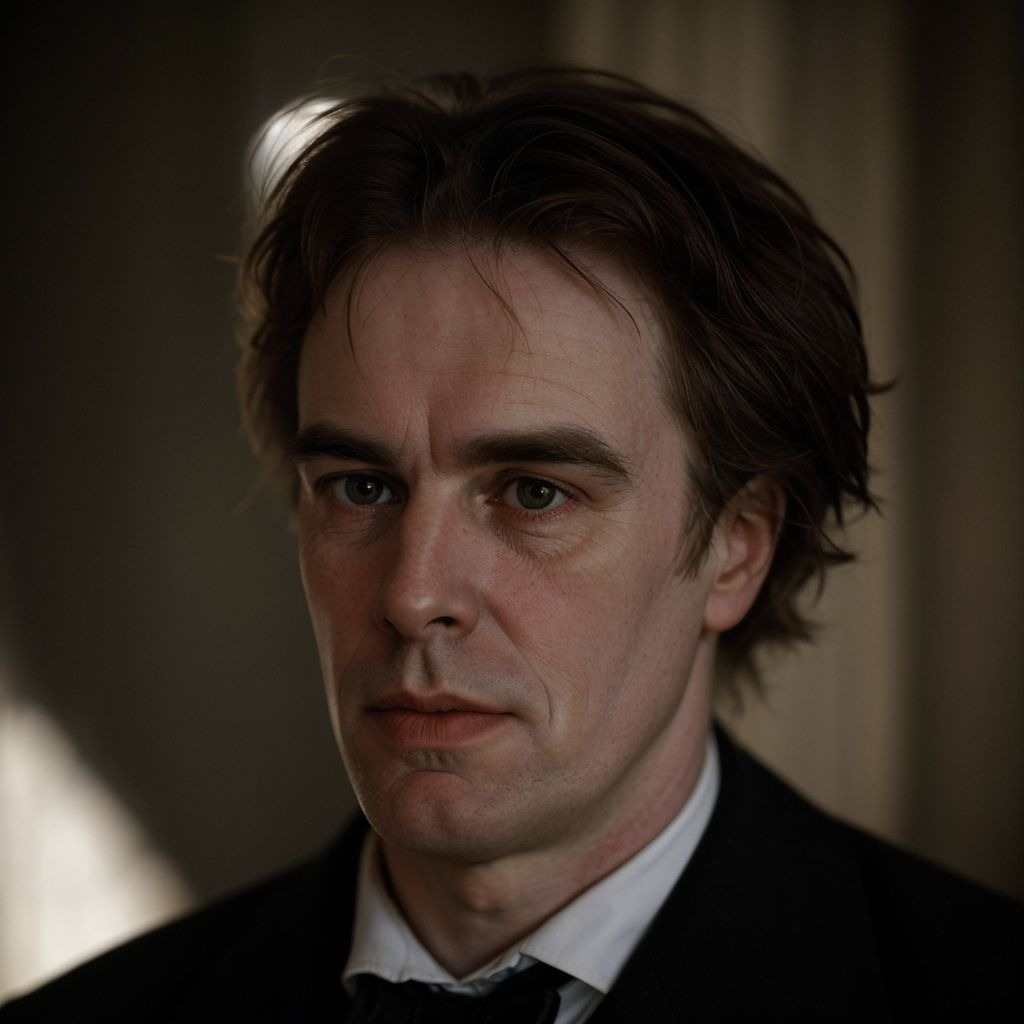
I’ve been reading W.B. Yeats for what feels like an eternity, but it’s really only been a few months since I stumbled upon his poetry in a used bookstore. There was something about the way his words seemed to dance on the page that drew me in – a combination of mystery and accessibility that left me both fascinated and unsettled.
As I delved deeper into his work, I found myself becoming increasingly obsessed with the idea of identity. Yeats’s poetry is riddled with personas and masks, each one carefully crafted to conceal and reveal aspects of himself at the same time. It’s like he’s constantly asking: who am I? What do I want to be known for?
I think that’s something we can all relate to on some level – trying to figure out our place in the world and what stories we want to tell about ourselves. For me, it’s been a constant struggle since college ended. I feel like I’m supposed to have everything figured out by now, but the truth is, I still don’t know what I want to do with my life.
Reading Yeats’s poems feels like looking into a mirror that’s reflected in another mirror – an endless series of reflections staring back at me, each one distorted and unclear. His words whisper secrets in my ear about the instability of identity and how it’s always slipping through our fingers like sand.
I find myself drawn to his most famous poems, the ones that feel like they’re speaking directly to me: “The Second Coming,” “The Lake Isle of Innisfree,” “Sailing to Byzantium.” There’s something in these lines that feels both familiar and foreign – a sense of longing and disillusionment that I recognize all too well.
But what really gets under my skin is the way Yeats writes about the relationship between art and reality. He sees them as separate entities, with art serving as a way to transcend or escape the mundane world. It’s a notion that both resonates with me and fills me with discomfort – because what does it mean for our lives when we prioritize creative expression over concrete reality?
I think about my own writing, how it feels like a way for me to process the chaos of everyday life. But at the same time, I’m aware that this escape route can also be a cop-out – a way to avoid dealing with the harder questions and emotions head-on.
Yeats’s fascination with mysticism and the occult is another aspect of his work that both intrigues and unsettles me. There’s something about the idea of tapping into deeper truths, hidden worlds beyond our own reality, that feels like a tempting promise – but also a potential Pandora’s box of confusion and disorientation.
As I continue to explore Yeats’s poetry, I’m struck by how he writes about the tension between individual desire and collective responsibility. He sees himself as an artist torn between his creative impulse and his sense of duty to the world around him. It’s a dichotomy that feels both intensely personal and universally relatable – like we’re all trying to balance our own inner worlds with the demands of external reality.
And yet, despite my growing fascination with Yeats’s work, I still feel uncertain about what draws me in. Is it his intellectual curiosity? His ability to capture the complexity of human experience? Or is it something more primal – a connection to the darker, more mysterious corners of existence that only he seems to inhabit?
As I sit here with his poems scattered around me, I realize that my fascination with Yeats is less about understanding him and more about exploring myself. His words serve as a mirror, reflecting back at me the tangled web of thoughts and emotions that’s been swirling inside me since college ended.
It’s funny – I started writing this essay thinking it would be some kind of intellectual exploration, but the truth is, it’s become an exercise in self-discovery. Who am I? What do I want to write about? Why does Yeats’s work speak to me on such a deep level?
I’m not sure I’ll ever find definitive answers to these questions, but for now, that’s okay. The more I immerse myself in Yeats’s poetry, the more I realize that it’s less about understanding him and more about embracing the mystery of our own existence – with all its contradictions and paradoxes intact.
As I sit here surrounded by the remnants of my scattered thoughts, I find myself drawn to the way Yeats writes about the relationship between art and reality. On one hand, his notion that art can serve as a means of transcendence or escape resonates deeply with me. There’s something about losing myself in the world of words that feels both exhilarating and necessary.
But at the same time, I’m acutely aware of the potential pitfalls of this idea. If we prioritize creative expression over concrete reality, don’t we risk becoming disconnected from the world around us? Don’t we risk ignoring the messiness and complexity of everyday life in favor of some idealized or romanticized version of it?
I think about my own writing, how it often feels like a way to escape the chaos of daily life. But what if this is just a cop-out? What if I’m using art as a way to avoid dealing with the harder questions and emotions head-on? Yeats’s poetry seems to suggest that there’s a tension between individual desire and collective responsibility, but how do we navigate this tension in our own lives?
As I ponder these questions, I find myself thinking about my college years. I spent so much time trying to figure out who I was supposed to be – the perfect student, the ideal friend, the aspiring writer. But now that I’m out of school and facing the uncertainty of the real world, I realize that those personas were just masks we wore to impress others.
I think about how Yeats writes about his own identity in poems like “The Second Coming” – a sense of disillusionment and fragmentation that feels both deeply personal and universally relatable. It’s as if he’s saying that our identities are constantly shifting, fragmenting, and reassembling themselves in ways we can’t control.
This idea terrifies me, but it also feels strangely liberating. If our identities are fluid and ephemeral, then maybe I don’t have to worry so much about finding some fixed or essential self. Maybe I can just let myself be, with all my contradictions and paradoxes intact.
As I sit here surrounded by Yeats’s words, I feel a sense of kinship with him – not because we share the same experiences or perspectives, but because we’re both grappling with the same fundamental questions: who am I? What do I want to write about? Why does art matter in this messy, complicated world?
I’m not sure what answers I’ll find, but for now, it’s enough to know that I’m not alone in my confusion. Yeats’s poetry serves as a reminder that we’re all just stumbling through the darkness together, trying to make sense of our own identities and the world around us.
As I delve deeper into Yeats’s work, I find myself fascinated by his obsession with the cyclical nature of time. In poems like “The Second Coming” and “Sailing to Byzantium,” he writes about the passing of years, the rise and fall of civilizations, and the eternal return of myth and symbol. It’s as if he’s trying to grasp the underlying rhythm of existence, the way that history repeats itself in a never-ending cycle.
This idea resonates with me on a deep level. As I look back on my college years, I see myself caught up in a similar cycle of growth, decay, and rebirth. The four-year structure of college became a kind of microcosm for life itself – a finite period of time marked by its own set of rituals and milestones. And yet, even as I navigated the ups and downs of those years, I couldn’t shake the feeling that something deeper was at work – some invisible current that was carrying me along, whether I liked it or not.
Reading Yeats’s poetry feels like being swept up in this same current. His words are a reminder that we’re all part of a larger tapestry, one that stretches back centuries and forward into the unknown. It’s a daunting thought, but also a liberating one – because if we’re all just along for the ride, then maybe we don’t have to worry so much about controlling the steering wheel.
This sense of surrender is both exhilarating and terrifying. As I write these words, I feel like I’m standing on the edge of a precipice, staring into the void with no safety net in sight. But at the same time, I’m drawn to the idea that maybe this is where true creativity begins – when we let go of our need for control and allow ourselves to be shaped by forces beyond our understanding.
I think about my own writing, how it often feels like a way to impose order on the chaos of everyday life. But what if that’s exactly the problem? What if our need for structure and coherence is just a mask for our deeper desire to avoid the uncertainty and complexity of reality?
Yeats’s poetry suggests that art can be a means of transcendence, but also a means of avoidance. It’s as if he’s saying that we can use creative expression to escape the messiness of life, or to confront it head-on. I’m not sure which path I’ll choose, but for now, I’m content to wander through the labyrinthine corridors of his poetry, searching for answers that may never come.
As I continue to read and write, I find myself drawn to Yeats’s fascination with the Irish folklore tradition. He was deeply interested in the stories and legends of his native country, seeing them as a way to tap into a deeper cultural consciousness. It’s an idea that resonates with me on a personal level – because as a writer, I’ve always been fascinated by the power of storytelling to shape our perceptions of reality.
But what really gets under my skin is the way Yeats writes about the relationship between myth and history. He sees them as intertwined, yet fundamentally separate – like two threads that are woven together to form a larger tapestry. It’s an idea that speaks to me on a deep level, because I’ve always been fascinated by the way that stories can be both true and false at the same time.
As I sit here surrounded by Yeats’s words, I feel like I’m staring into a mirror that’s reflecting back at me a thousand different versions of myself. It’s a dizzying experience, but also a liberating one – because if we’re all just masks or personas, then maybe we don’t have to worry so much about being authentic.
Or do we?
The more I immerse myself in Yeats’s poetry, the more I’m struck by the way he blurs the lines between myth and history. It’s as if he’s saying that our stories are not just reflections of reality, but also shape it in ways both subtle and profound. This idea resonates with me on a deep level, because as a writer, I’ve always been fascinated by the power of language to create and destroy worlds.
As I ponder this idea, I find myself thinking about my own writing process. Do I create characters and stories that are authentic representations of people and experiences, or do I use them as a way to escape into a world that’s more manageable? Yeats’s poetry suggests that the line between these two options is thin at best, and often nonexistent.
I think about how he writes about the cyclical nature of time in poems like “The Second Coming” and “Sailing to Byzantium.” He sees history as a never-ending cycle of birth, growth, decay, and rebirth. It’s an idea that both terrifies and liberates me – because if our lives are just one thread in this larger tapestry, then what does it mean for us to create meaning or purpose?
As I sit here surrounded by Yeats’s words, I feel like I’m staring into a void that’s both familiar and unknown. It’s as if he’s inviting me to join him on a journey into the heart of chaos, where identity and reality are constantly shifting and reassembling themselves.
This is the place where art and madness meet, where creativity and delusion blur together in ways that defy understanding. And yet, it’s also the place where true transformation occurs – where we shed our old skins and emerge anew, like butterflies from their cocoons.
I’m not sure if I’ll ever find my way out of this labyrinthine world of Yeats’s poetry. But for now, that’s okay. The more I wander through its twisting corridors, the more I realize that it’s less about understanding him than embracing the mystery of our own existence – with all its contradictions and paradoxes intact.
As I write these words, I feel like I’m standing on the edge of a precipice, staring into the unknown with no safety net in sight. But at the same time, I’m drawn to the idea that maybe this is where true creativity begins – when we let go of our need for control and allow ourselves to be shaped by forces beyond our understanding.
I think about how Yeats writes about his own identity in poems like “The Second Coming” – a sense of disillusionment and fragmentation that feels both deeply personal and universally relatable. It’s as if he’s saying that our identities are constantly shifting, fragmenting, and reassembling themselves in ways we can’t control.
This idea terrifies me, but it also feels strangely liberating. If our identities are fluid and ephemeral, then maybe I don’t have to worry so much about finding some fixed or essential self. Maybe I can just let myself be, with all my contradictions and paradoxes intact.
As I sit here surrounded by Yeats’s words, I feel a sense of kinship with him – not because we share the same experiences or perspectives, but because we’re both grappling with the same fundamental questions: who am I? What do I want to write about? Why does art matter in this messy, complicated world?
I’m not sure what answers I’ll find, but for now, it’s enough to know that I’m not alone in my confusion. Yeats’s poetry serves as a reminder that we’re all just stumbling through the darkness together, trying to make sense of our own identities and the world around us.
As I continue to read and write, I find myself drawn to the way Yeats writes about the relationship between language and reality. He sees them as intertwined, yet fundamentally separate – like two threads that are woven together to form a larger tapestry. It’s an idea that speaks to me on a deep level, because I’ve always been fascinated by the power of words to shape our perceptions of the world.
But what really gets under my skin is the way Yeats writes about the tension between individual desire and collective responsibility. He sees himself as an artist torn between his creative impulse and his sense of duty to the world around him. It’s a dichotomy that feels both intensely personal and universally relatable – like we’re all trying to balance our own inner worlds with the demands of external reality.
As I ponder this idea, I find myself thinking about my own writing process. Do I prioritize creative expression over concrete reality? Or do I try to use art as a way to engage with the world around me?
I’m not sure which path I’ll choose, but for now, it’s enough to know that I’m on a journey of discovery – one that’s guided by Yeats’s poetry and fueled by my own curiosity about the nature of identity, reality, and creative expression.