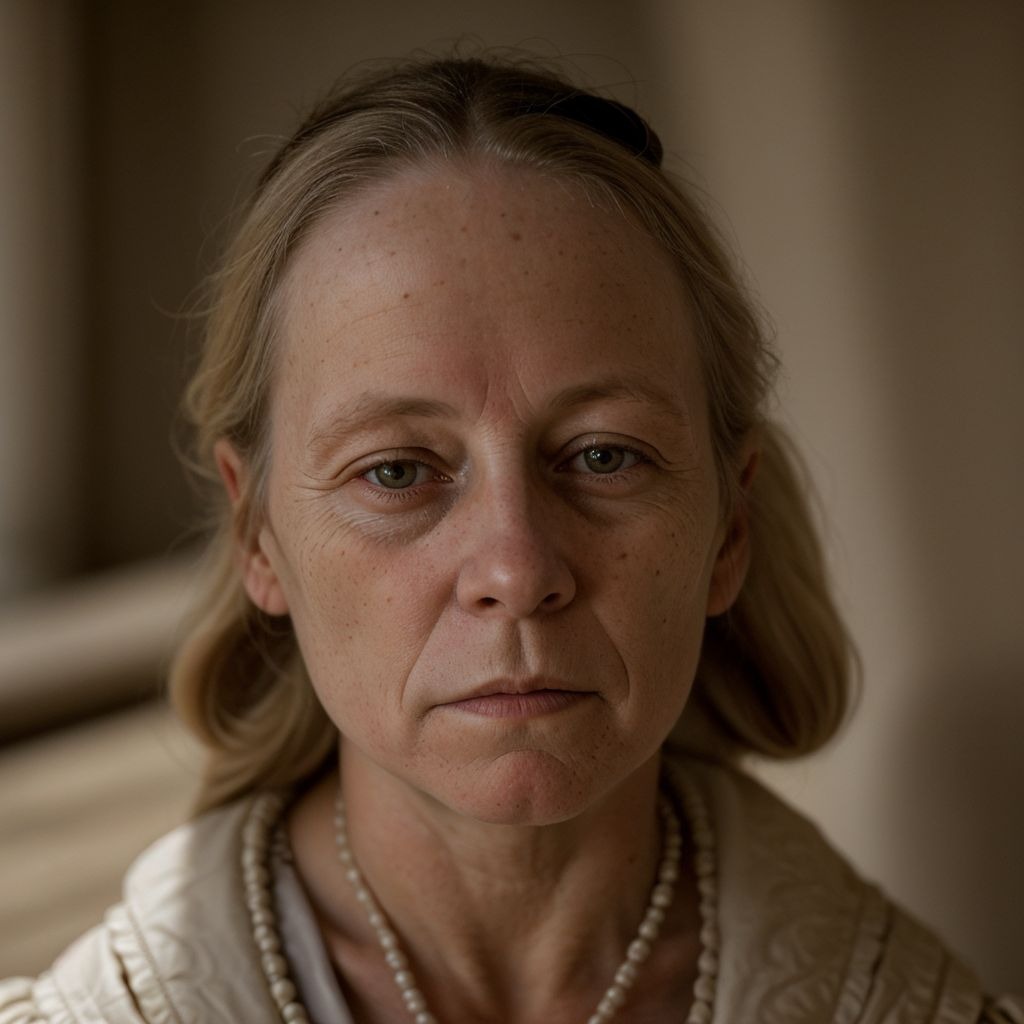
Maria Mitchell. I’ve been thinking about her a lot lately, especially since finishing college. Maybe it’s the sense of freedom that comes with being done with school, but I find myself drawn to people who didn’t fit neatly into expectations – and Maria certainly didn’t.
I first learned about Mitchell in my astronomy class, where we spent an entire semester studying the history of women in science. She was one of those pioneers, a woman who broke through in a field dominated by men. What struck me most was her discovery of a comet in 1847, which earned her international recognition and a reputation as one of the leading astronomers of her time.
But it’s not just her accomplishments that fascinate me – it’s the circumstances surrounding them. Mitchell grew up on Nantucket, where she worked at the local whaling museum (yes, you read that right). She spent countless hours studying the stars through the museum’s telescope and developed a passion for astronomy. Her father, who was a Quaker minister, encouraged her love of learning but also warned her against pursuing it as a career – women weren’t meant to be scientists.
It’s that tension between expectation and desire that I find myself reflecting on most when I think about Maria Mitchell. As someone who grew up in a world where STEM fields were considered male-dominated, I can relate to the frustration of being told what you’re capable of versus what you actually want to do. But while Mitchell faced similar obstacles, she never let them hold her back.
I wonder if it’s because she had a sense of community and support that helped her stay focused on her goals. Her father, despite his initial reservations, ended up becoming one of her biggest advocates – he even supported her decision to attend the opening of the Harvard Observatory, where she gave a lecture on astronomy. That kind of backing is hard to come by, especially for women who were (and still are) underrepresented in these fields.
It’s also worth noting that Mitchell was not just an astronomer; she was an abolitionist and a social reformer. She used her platform to speak out against slavery and advocate for women’s rights – often at great personal risk. Her courage is inspiring, but it also makes me uncomfortable. I mean, how do you balance the desire to make a difference with the need to protect yourself from the consequences of speaking truth to power?
I’m not sure if Maria Mitchell would have recognized herself in my own struggles or doubts. She seems so confident, so unwavering in her commitment to her passions. And yet… there must have been moments of uncertainty, of self-doubt, that she faced along the way. The question is: how did she navigate them?
As I reflect on Mitchell’s life and legacy, I find myself drawn back to my own experiences with ambition and fear. Am I being brave enough in pursuing my own dreams? Do I have the courage to speak up when it counts? These are questions that Maria Mitchell’s story has sparked within me – questions that I’m still trying to answer.
And maybe that’s the most important thing about Mitchell’s life: she didn’t just achieve greatness; she inspired others to strive for their own potential. Her legacy is not just about what she accomplished, but about the ripple effect she had on the people around her – a reminder that even the smallest actions can have far-reaching consequences.
But I’m still stuck on those moments of uncertainty, wondering how Mitchell navigated them and whether I can learn from her example. Maybe the most complicated thing about Maria Mitchell is not what she did, but who she was: complex, multifaceted, and full of contradictions – a true pioneer in every sense of the word.
As I delve deeper into Maria Mitchell’s story, I find myself pondering the concept of “bravery” – something that seems to be synonymous with her name. Was she truly fearless, or did she simply have an unshakeable conviction in her passions? Did she ever feel overwhelmed by the weight of expectation, or did she somehow manage to sidestep it altogether?
I think about my own experiences with fear and uncertainty. When I was applying for graduate programs, I felt like I was taking a huge risk – what if I didn’t get accepted anywhere? What if I ended up stuck in a dead-end job, wondering where it all went wrong? The what-ifs swirled around me like a vortex, making it hard to focus on anything else.
And yet, when I look at Maria Mitchell’s life, I see someone who took risks and faced uncertainty head-on. She didn’t just dream big; she worked tirelessly to make those dreams a reality. Her determination is inspiring, but it also makes me uncomfortable – what if I’m not as brave as I think I am?
I wonder if Mitchell ever felt like giving up. Did she have moments of self-doubt, where the pressure and expectations felt suffocating? Or did she somehow manage to tap into a reservoir of inner strength that carried her through even the toughest times?
As I continue to reflect on Mitchell’s story, I’m struck by the way she navigated multiple identities – astronomer, abolitionist, social reformer. She didn’t fit neatly into one category or another; instead, she blended and merged different passions and pursuits to create something unique.
I find myself drawn to this complexity, this multifaceted nature of hers. It’s a reminder that identity is never fixed, but rather fluid – a constantly evolving tapestry of experiences, emotions, and desires. And yet, even as I admire Mitchell’s eclecticism, I’m also aware of the risks involved in embracing multiple identities.
What if people don’t understand or accept me for who I am? What if I get lost in the process of trying to fit into different worlds and roles? The questions swirl around me like a maelstrom, making it hard to discern what’s true and what’s not.
And yet, as I look at Maria Mitchell’s life, I see someone who embodied this complexity – someone who refused to be reduced to a single label or definition. Her legacy is a testament to the power of embracing our many facets, even when it feels scary or uncertain.
I think about how Mitchell’s story has given me permission to explore my own complexities, my own contradictions. As someone who writes for a living, I’ve often felt like I’m expected to be more straightforward, more definitive in my thoughts and feelings. But Mitchell’s life shows me that it’s okay to be messy, to be multifaceted – even if it means being misunderstood or underestimated.
I wonder if she ever felt like she was living up to other people’s expectations of her, rather than her own. Did she feel pressure from her family or society to conform to certain norms or standards? Or did she somehow manage to carve out a path that was uniquely hers?
As I reflect on Mitchell’s legacy, I’m struck by the way she used her platform to speak truth to power – and how it often came at great personal cost. She faced ridicule, criticism, and even physical danger for her abolitionist work, but she never wavered in her commitment to justice.
I find myself wondering if there are times when I’ve been too cautious, too fearful of speaking out or taking a stand. Have I let the voices of others silence me, rather than speaking my own truth? The questions swirl around me like a vortex, making it hard to discern what’s true and what’s not.
But Mitchell’s story gives me hope – hope that even in the face of uncertainty, fear, or doubt, we can still find the courage to be ourselves. We can still find the strength to stand up for what we believe in, even when it feels like the whole world is against us.
I think about how Mitchell’s legacy extends far beyond her own accomplishments – it’s a testament to the power of community and support. She had people around her who believed in her, who encouraged her to pursue her passions, no matter how impossible they seemed.
As I look at my own life, I realize that I’ve been fortunate to have similar supporters along the way – friends, family members, mentors who’ve helped me stay focused on my goals. But Mitchell’s story shows me that this kind of community is not just a privilege – it’s a fundamental right.
We all deserve to be surrounded by people who believe in us, who encourage us to take risks and pursue our dreams. We all deserve to have the support we need to overcome obstacles and achieve greatness – even if that means embracing our own complexities and contradictions along the way.
As I continue to reflect on Maria Mitchell’s life and legacy, I’m struck by the way she embodied a sense of curiosity and wonder. She was always seeking out new knowledge, new experiences, and new perspectives – whether it was through her astronomy work or her social reform efforts.
I find myself wondering if this sense of curiosity is something that can be cultivated, even nurtured. As someone who writes for a living, I know how easy it is to get stuck in a rut, to rely on familiar patterns and habits rather than seeking out new ideas and perspectives. But Mitchell’s life shows me that it’s never too late to start exploring, to start asking questions and seeking answers.
In fact, I think this sense of curiosity is essential for living a full and meaningful life – whether you’re an astronomer, a writer, or simply a person trying to make your way in the world. It’s what allows us to grow, to learn, and to evolve as individuals.
As I ponder Mitchell’s legacy, I’m also struck by the way she used her platform to advocate for women’s rights and social justice. She was a true pioneer in every sense of the word – using her knowledge and skills to make a difference in the world.
I find myself wondering if this kind of activism is something that we should all strive for, no matter what our passions or interests may be. Can we use our unique talents and abilities to create positive change in the world? And how can we support each other in doing so?
For me, Mitchell’s story raises important questions about the role of women in society – particularly in fields like science and social reform. Her life shows me that women have always played a vital role in shaping the world around us, often behind the scenes or without recognition.
As I reflect on my own experiences as a woman, I’m struck by the ways in which societal expectations can limit our potential. We’re often encouraged to be nice, to be polite, and to avoid conflict – even when it means sacrificing our own desires and aspirations.
But Mitchell’s life shows me that there’s another way to live – one that values courage, conviction, and creativity above all else. She refused to be limited by the expectations of others, instead forging her own path and creating a legacy that continues to inspire us today.
As I look at my own life, I realize that I have a choice to make – will I follow in Mitchell’s footsteps, embracing my passions and pursuing my dreams with courage and conviction? Or will I play it safe, sticking to what’s familiar and comfortable rather than risking everything for something greater?
The questions swirl around me like a vortex, making it hard to discern what’s true and what’s not. But one thing is certain – Maria Mitchell’s legacy has given me the permission to be myself, to pursue my passions with abandon, and to create a life that truly reflects my values and aspirations.
In the end, I’m left with more questions than answers – but also with a sense of hope and possibility. Maybe it’s time for me to start embracing my own complexities and contradictions, just as Mitchell did before me. Maybe it’s time for me to take risks, to speak truth to power, and to create a life that truly reflects my values and aspirations.
As I close this reflection on Maria Mitchell’s life and legacy, I’m struck by the way she continues to inspire us today – even in the face of uncertainty, fear, or doubt. Her story shows me that we all have the power to create our own legacy, to make a difference in the world around us, and to forge our own path in life.
And with that thought, I’ll leave you here – lost in the vortex of Mitchell’s legacy, searching for answers, and seeking inspiration from this true pioneer.