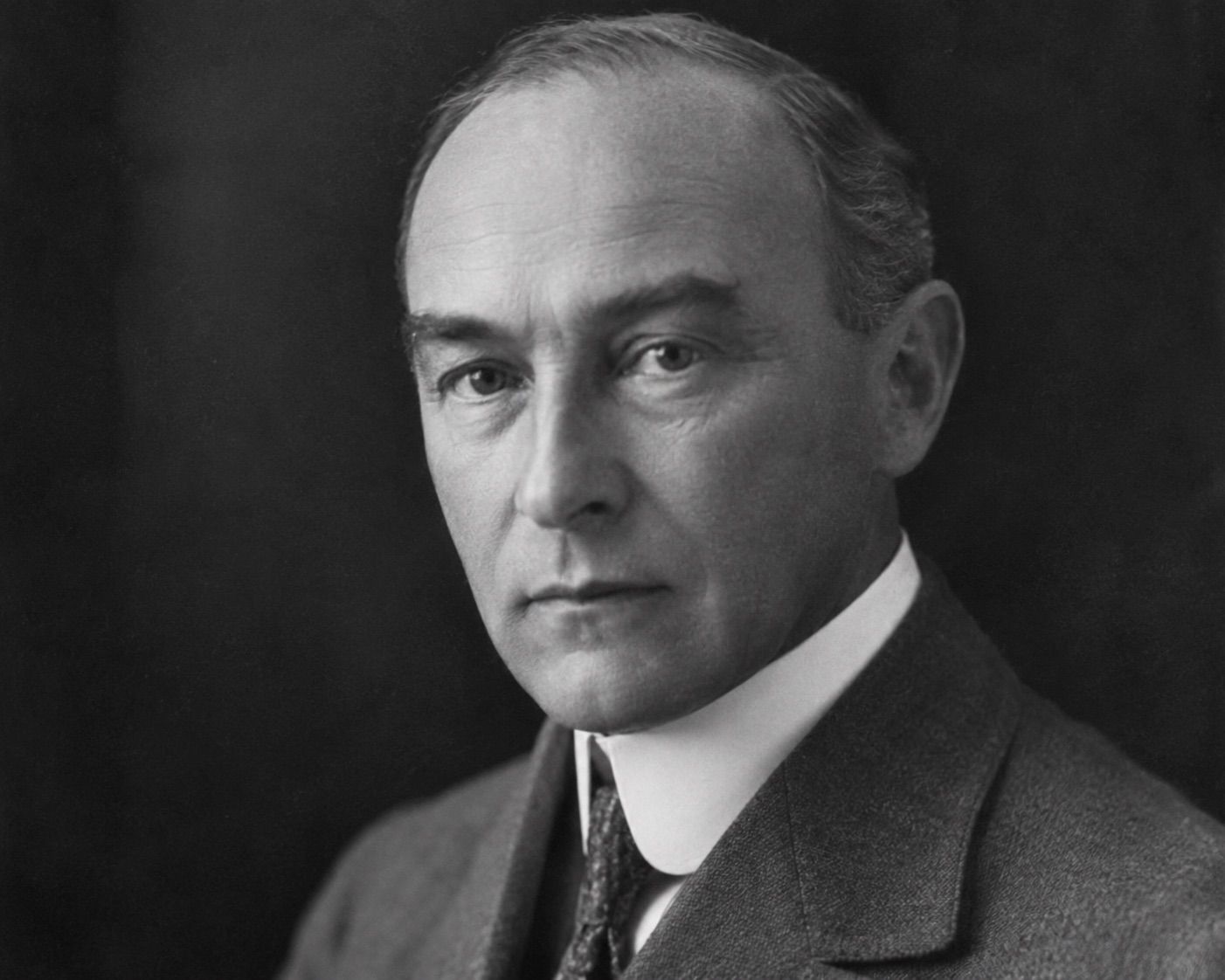
I’ve been reading Robert Musil’s “The Man Without Qualities” for weeks now, but I still can’t shake the feeling that he’s speaking directly to me. It’s not just his writing style – which is both lyrical and impenetrable at the same time – or his philosophical musings on the human condition. It’s something more specific, something that resonates with my own experiences as a young adult trying to navigate the complexities of adulthood.
Musil’s protagonist, Ulrich, is often described as a “man without qualities,” a phrase that sounds like a clever literary device but actually feels painfully familiar to me. I’ve always felt like I’m struggling to define myself, to pin down my own set of characteristics and values that make me who I am. It’s like trying to grasp a handful of sand – the harder I squeeze, the more it slips through my fingers.
One of the things that draws me to Musil is his obsessive focus on the minutiae of everyday life. He writes about the most mundane tasks – paying bills, attending social gatherings, taking a walk in the park – with a level of intensity and philosophical depth that makes them feel almost sacred. It’s like he’s saying, “No, this is not just something we do out of habit or duty; this is what gives our lives meaning.”
But it’s not just the content of his writing that fascinates me – it’s also the way he structures his thoughts. Musil’s prose often feels fragmented and disjointed, like a collection of loose threads that refuse to be tied together into a neat narrative. It’s as if he’s deliberately resisting the urge to provide easy answers or clear conclusions, instead opting for a more fluid, uncertain approach.
I find myself drawn to this way of thinking because it mirrors my own experience with writing. I often feel like I’m struggling to impose structure on my thoughts, to force them into neat paragraphs and logical conclusions. But when I write in the way that feels most natural – meandering, associative, and a little bit disjointed – I start to feel more honest, more authentic.
Of course, this approach can also be frustrating. It’s like trying to capture a feeling or an idea without being able to pin it down. And sometimes, when I’m reading Musil, I feel like I’m getting lost in the labyrinth of his own thoughts, unable to find my way out. But that’s okay – because I think that’s what he wants me to experience.
As I continue to read and reflect on Musil’s work, I’m starting to realize that his writing is not just about exploring the human condition; it’s also about revealing the inherent messiness of existence. We’re all “men without qualities,” struggling to make sense of our own lives in a world that’s always shifting and uncertain.
It’s a hard pill to swallow – but maybe that’s why I’m so drawn to Musil’s writing. He’s not offering me easy answers or reassurances; instead, he’s showing me the messy, complicated beauty of being human. And that, I think, is what really holds my attention.
As I delve deeper into “The Man Without Qualities,” I find myself wondering about the nature of intentionality in Musil’s writing. Is he intentionally crafting a narrative that resists clear interpretation, or is this simply a reflection of his own thoughts and experiences? And what does it say about me, as a reader, when I’m drawn to this kind of writing?
I think about my own writing process and how often I feel like I’m trying to impose meaning on the world around me. I’ll start with a vague idea or feeling, only to find myself getting lost in tangents and side paths as I try to explore it further. It’s like I’m chasing after a will-o’-the-wisp, never quite grasping what I’m searching for.
Musil’s writing feels similar – but instead of being frustrated by the lack of clarity, I’m drawn to it. There’s something about embracing the uncertainty and ambiguity that feels… liberating? Like, maybe this is what it means to be human: not having all the answers, not knowing where we’re going or what we’re doing.
I think back to my college days when I was studying literature and philosophy. We’d spend hours dissecting texts like Musil’s, trying to tease out hidden meanings and symbolic significance. But now, reading him as a young adult outside of academia, I feel like I’m approaching his work with a different mindset. It’s not about uncovering some deeper truth or message; it’s more about letting the words wash over me, without needing to tie everything up into neat little bows.
This shift in perspective is both exhilarating and unsettling. Am I sacrificing depth for superficiality, or am I simply allowing myself to experience Musil’s writing on a more primal level? I’m not sure – but what I do know is that I feel more connected to the world around me when I read his words.
As I continue to immerse myself in “The Man Without Qualities,” I find myself becoming increasingly aware of the tension between Musil’s obsessive attention to detail and my own tendency to get lost in abstraction. While Musil is masterfully crafting a world that is both intricate and precise, I often struggle to pin down specific thoughts or emotions, letting them dissipate like mist in the morning air.
I wonder if this difference in approach stems from our respective experiences as artists. Musil’s background as an engineer and a writer of science fiction gives him a unique perspective on the world – one that is both analytical and creative. My own writing process, on the other hand, is more intuitive and emotional, often driven by a desire to capture a mood or atmosphere rather than to convey a specific message.
This dichotomy makes me think about the role of intentionality in creative expression. Is it possible to create art that is both deliberate and accidental at the same time? Musil’s writing seems to suggest that this is not only possible but also desirable – that the messy, unplanned aspects of our thoughts and experiences can be just as valuable as the carefully crafted ones.
I’m reminded of a conversation I had with my thesis advisor during graduate school. We were discussing the tension between creativity and control in artistic expression, and she suggested that true art often emerges from the space where these two opposing forces meet. It’s as if we need to allow ourselves to get lost in the unknown, to surrender to the chaos of our own minds, in order to tap into something deeper and more authentic.
Musil’s writing seems to embody this idea – a delicate balance between structure and freedom, between control and release. And yet, I’m still not entirely sure what to make of it. Is it a reflection of his own personality or worldview, or is it simply a product of his unique artistic vision? The more I read his work, the more questions I have, and the less confident I become in my understanding of him.
Despite this uncertainty, I feel drawn back to Musil’s writing again and again. There’s something about the way he weaves together disparate threads – philosophical ideas, literary allusions, personal anecdotes – that feels both magical and mesmerizing. It’s as if he’s conjuring up a world that is at once familiar and strange, one that rewards close attention and repeated readings.
As I delve deeper into “The Man Without Qualities,” I find myself wondering about the implications of Musil’s ideas for my own life and writing. Can I learn to balance structure and freedom in my own creative expression? How can I tap into the uncertainty and ambiguity that seem so essential to Musil’s work, without losing sight of what I’m trying to say?
These questions swirl around me as I continue reading, like a vortex of thoughts and emotions that refuse to settle. And yet, despite the discomfort and confusion, I feel a sense of excitement and possibility – the feeling that I might be on the verge of discovering something new and important about myself, and about the world around me.
As I navigate the labyrinthine pages of “The Man Without Qualities,” I find myself becoming increasingly aware of my own existential crises. Musil’s writing is like a mirror held up to my own experiences as a young adult trying to make sense of the world. His protagonist, Ulrich, is struggling to define himself in a society that seems to value sameness and conformity above all else. It’s a struggle I’ve been familiar with since college, when I was trying to figure out who I was outside of academia.
I remember feeling like I was stuck between two worlds: the narrow, theoretical universe of my studies, and the messy, real-world concerns of everyday life. Musil’s writing captures this sense of disorientation perfectly – the feeling that we’re constantly navigating multiple identities, roles, and expectations, without ever quite finding a stable foothold.
One of the things I find most compelling about Musil is his use of language to evoke a sense of temporal uncertainty. His sentences often meander through time, blurring the lines between past, present, and future. It’s as if he’s deliberately resisting the conventions of linear narrative, opting instead for a more fluid, experiential approach.
I find myself drawn to this approach because it mirrors my own experience with memory. I often feel like memories are slippery things – they can be triggered by a single scent or sound, and yet they refuse to settle into fixed narratives or coherent meanings. Musil’s writing seems to capture this sense of temporal dislocation perfectly, where the past and present blend together in ways that defy easy categorization.
This fluidity also makes me think about the role of language in shaping our understanding of reality. If words can be used to evoke a sense of timelessness or uncertainty, what does it say about the nature of truth itself? Is truth something static and fixed, or is it a dynamic, unfolding process that’s constantly adapting to new experiences and perspectives?
As I continue reading Musil, I find myself grappling with these questions in ways that feel both intellectually stimulating and deeply personal. His writing is like a mirror held up to my own existential concerns – the struggle to define myself, the disorientation of navigating multiple identities and roles, the uncertainty of memory and language.
It’s a journey without clear conclusions or easy answers – but one that feels essential to understanding who I am, and what I’m trying to do with my life as an artist.
I’m struck by how Musil’s writing is both a reflection of his own experiences and a commentary on the human condition. He’s not just exploring the complexities of identity and morality; he’s also revealing the inherent messiness of existence, where truth and meaning are always slipping through our fingers like sand.
As I read on, I find myself thinking about my own struggles with uncertainty and ambiguity. As a writer, I’m constantly grappling with the tension between structure and freedom, trying to balance the need for coherence and clarity with the desire to explore new ideas and emotions. Musil’s writing seems to be saying that this is okay – that it’s not only possible but also necessary to create art that is both deliberate and accidental at the same time.
But what does this mean for my own creative process? Can I learn to surrender to the chaos of my own mind, to allow myself to get lost in the unknown, without sacrificing control and structure altogether? It’s a question that has been nagging me for weeks, ever since I started reading Musil’s work.
I think back to my writing workshops in college, where we’d spend hours dissecting each other’s work, trying to tease out hidden meanings and symbolic significance. But now, as an adult writer, I feel like I’m approaching creativity with a different mindset. It’s not about uncovering some deeper truth or message; it’s more about letting the words wash over me, without needing to tie everything up into neat little bows.
This shift in perspective is both exhilarating and unsettling. Am I sacrificing depth for superficiality, or am I simply allowing myself to experience creativity on a more primal level? I’m not sure – but what I do know is that I feel more connected to the world around me when I write in this way.
As I continue reading Musil’s work, I find myself becoming increasingly aware of the role of intuition and emotional intelligence in creative expression. His writing is like a map of his own inner world, where emotions and thoughts are constantly intersecting and colliding. It’s as if he’s tapping into some deep wellspring of feeling, where meaning and significance are always emerging from the depths.
I wonder if this is what I’m trying to do with my own writing – tap into that same wellspring of emotion, to create art that feels authentic and true. But how can I access that level of emotional intelligence, when I’m often struggling just to articulate my own thoughts and feelings?
This question has been nagging me for weeks, ever since I started reading Musil’s work. His writing is like a mirror held up to my own creative struggles – the tension between structure and freedom, the uncertainty of language and memory, the search for authenticity and truth.
As I delve deeper into “The Man Without Qualities,” I find myself becoming increasingly aware of the ways in which Musil’s ideas are influencing my own writing. His emphasis on intuition and emotional intelligence is making me more attuned to the subtleties of human experience – the nuances of emotion, the complexities of identity, the fragility of truth.
But it’s also making me realize how much I still have to learn about myself and my own creative process. Musil’s writing is like a puzzle that refuses to be solved, a labyrinthine maze that I’m constantly navigating. And yet, despite the uncertainty and confusion, I feel drawn back to his work again and again – because it’s reminding me of something essential about the human experience: that we’re all “men without qualities,” struggling to make sense of our own lives in a world that’s always shifting and uncertain.
This realization is both humbling and liberating. It’s making me confront my own limitations as a writer, but also empowering me to explore new ideas and emotions with greater freedom and creativity. And it’s reminding me that the search for meaning and authenticity is not just about creating art; it’s also about living a life that is true to ourselves – messy, complicated, and uncertain though it may be.