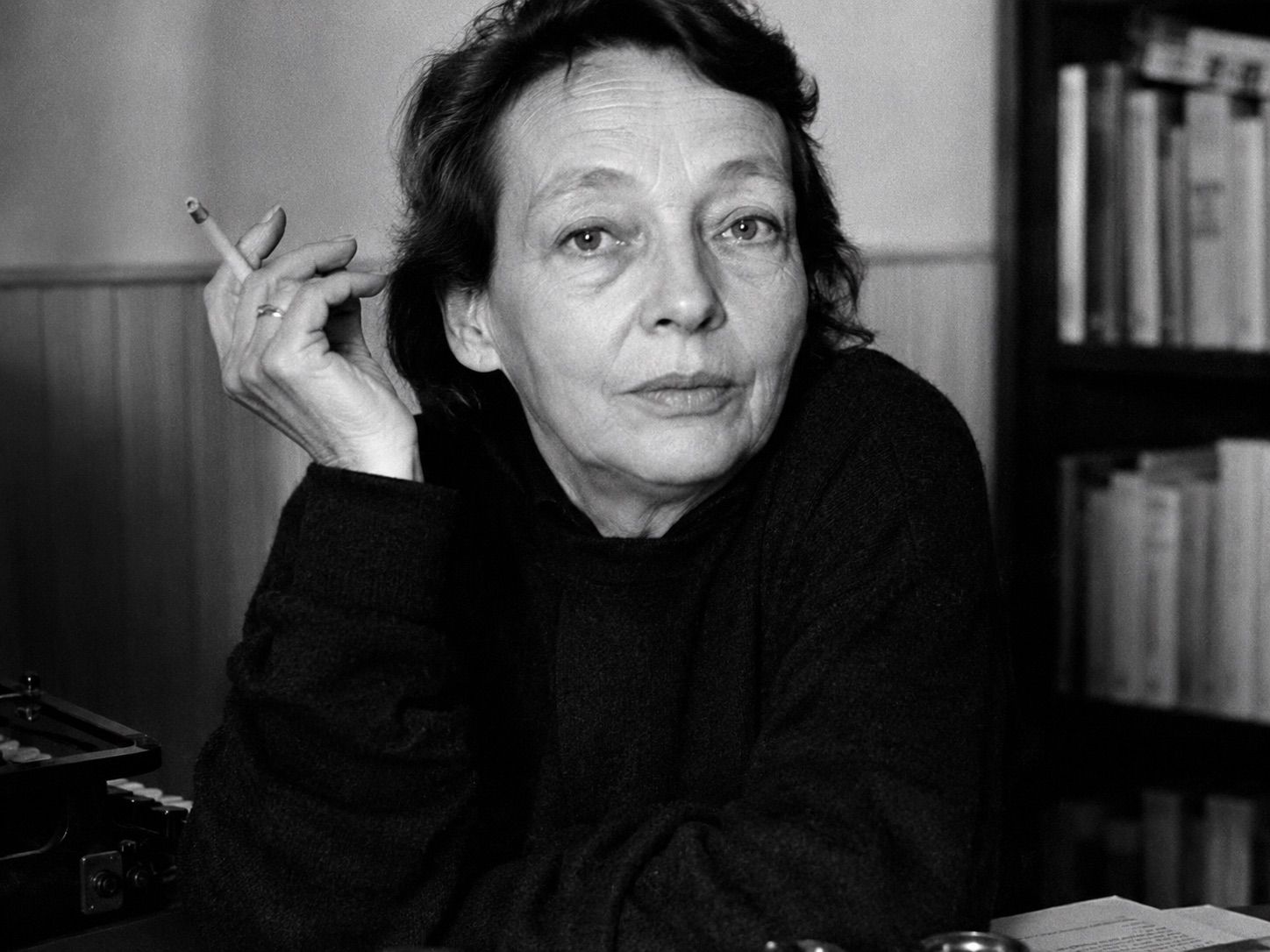
Marguerite Duras. Her name has been lingering in my mind for a while now, like a fragment of a sentence that refuses to be forgotten. I think it started when I stumbled upon her novel “The Lover” in a used bookstore. The cover, with its faded photograph of a young woman’s face, seemed to whisper secrets to me as I ran my fingers over the embossed title.
As I delved into the book, I found myself drawn to Duras’ unflinching portrayal of desire and colonialism. Her writing is like a slow-burning fire that seeps into your bones, making you feel the weight of her emotions. But it’s not just the themes she explores that fascinate me – it’s the way she writes about them. Her sentences are like fragile glass sculptures, delicate and precise, yet capable of shattering at any moment.
I’ve been thinking a lot about Duras’ relationship with her mother, too. In various interviews and biographies, I’ve come across descriptions of their complicated bond, marked by tension and distance. My own relationship with my mom is… complicated. We’re close, but there are moments when it feels like we’re speaking different languages. Duras’ writing about her mother makes me wonder if she felt the same way – like they were two people navigating a minefield of unspoken emotions.
One thing that really resonates with me is Duras’ use of non-linear narrative structures. She often jumps back and forth in time, weaving together disparate threads to create a rich tapestry of memory and experience. It’s like she’s mirroring my own brain, which often gets tangled up in thoughts and emotions from different eras of my life. When I read her writing, it feels like someone has finally understood the chaos in my head.
But what really gets me is Duras’ portrayal of female desire – specifically, the way it’s often reduced to a series of contradictory expectations and silences. In “The Lover,” the protagonist, Lea, is both drawn to and repelled by her lover, Jean. Their relationship is marked by a power imbalance, with Lea ultimately trapped in a cycle of dependence and submission. It’s like Duras is holding up a mirror to my own experiences, making me confront the ways in which I’ve internalized patriarchal norms.
Sometimes, when I’m reading Duras’ work, I feel like I’m getting close to something essential – some deep truth about human relationships or the self. But as soon as I think I understand it, the words slip through my fingers like sand. It’s as if Duras is always keeping me at arm’s length, refusing to let me grasp the full complexity of her ideas.
I suppose that’s what draws me to her writing – its refusal to simplify or comfort. She’s not interested in tying everything up with a neat bow; instead, she’s content to leave us with more questions than answers. In a way, it’s both exhilarating and terrifying. As I continue to read and reflect on Duras’ work, I’m left wondering what secrets she might be hiding from me – or herself.
As I delve deeper into Duras’ writing, I find myself fascinated by her use of language as a tool for excavating the past. In “The Lover,” she employs a detached, almost clinical tone to recount Lea’s experiences in Indochina during World War II. It’s as if she’s peeling away the layers of history, revealing the intricate mechanisms that govern human relationships and desires.
I’m struck by the way Duras’ writing can be both tender and brutal at the same time. Her descriptions of love and violence are like snapshots from a fragmented family album – each one captures a moment in time, but they don’t quite add up to a coherent narrative. This fragmentation feels eerily familiar, as if I’m staring into my own mirror, trying to make sense of the disparate pieces of myself.
I think about my own experiences with love and relationships, and how Duras’ writing often makes me feel like I’m trapped in a hall of mirrors. Every reflection seems to distort and multiply, creating an endless maze of self-doubt and uncertainty. But it’s precisely this feeling of disorientation that draws me to her work – the sense that she’s exploring the same labyrinthine corridors within herself.
One aspect of Duras’ writing that continues to puzzle me is her portrayal of women as agents of their own desires, yet simultaneously trapped by societal expectations. Lea, in “The Lover,” is both a willing participant and an unwilling victim in her relationship with Jean – she’s caught between the twin poles of liberation and oppression. I find myself wondering if this tension reflects Duras’ own experiences, or if it’s a deliberate choice to subvert traditional notions of femininity.
I’m also intrigued by the way Duras often blurs the lines between reality and fiction. Her memoirs and novels blend together in ways that make me question what’s real and what’s invented. It’s as if she’s creating her own mythologies, weaving a narrative that’s both personal and universal. This fluidity reminds me of my own struggles with identity – the way I’m constantly negotiating between my past, present, and future selves.
As I continue to read Duras’ work, I feel like I’m being pulled into a world where time and memory are malleable. Her writing is like a prism that refracts the light of experience, casting multiple reflections on the page. Sometimes, I get lost in these reflections – they’re so fragmented, so disjointed, that it’s hard to make sense of them. But other times, I catch glimpses of something essential, something that resonates deep within me.
I suppose what I love most about Duras’ writing is its refusal to provide easy answers or resolutions. She’s not interested in tying up loose ends or comforting me with neat conclusions. Instead, she keeps pushing me deeper into the labyrinth, further into the heart of darkness and desire. And that’s where I find myself now – in the midst of this twisted maze, searching for a way out, but also drawn to the darkness that lurks within.
As I navigate the complexities of Duras’ writing, I’m struck by the ways in which she subverts traditional notions of storytelling. Her use of non-linear narrative structures and blurred lines between reality and fiction makes me question what’s real and what’s invented. It’s like she’s creating a mirror that reflects my own fragmented experiences back at me.
I think about how often I find myself lost in the labyrinth of my own memories, struggling to piece together the fragments of my past. Duras’ writing is like a map that guides me through this maze, but it’s also a reminder that the journey itself is what matters – not the destination. Her words are a reminder that the self is a dynamic, constantly shifting entity, and that our experiences are always in flux.
One thing that’s been on my mind lately is Duras’ relationship with her own identity. In various interviews, she talks about how she felt trapped by her bourgeois background and the expectations placed upon her as a woman. This sense of confinement resonates deeply with me – I’ve often felt like I’m caught between different worlds, struggling to reconcile my own desires with the demands of others.
When I read Duras’ writing, I feel like I’m finding a kindred spirit in someone who understands this sense of disorientation. Her words are a reminder that we’re all navigating these complex webs of identity and desire, trying to make sense of ourselves within the constraints of society. And yet, even as she acknowledges these limitations, Duras’ writing also suggests that there’s always room for subversion, for resistance, and for transformation.
I’m drawn to this idea – the notion that our identities are fluid, ever-changing, and capable of being rewritten. It’s a comforting thought, especially when I’m feeling lost or uncertain about my own path in life. But it’s also a daunting one – if our identities can change so easily, then what does that mean for our sense of self? Is it possible to create a new identity, one that’s free from the constraints of the past?
These questions swirl around me like leaves on an autumn breeze as I continue to read and reflect on Duras’ work. Her writing is a catalyst for these thoughts, a spark that ignites the flame of curiosity within me. And even though I’m not sure where it will lead, I’m willing to follow the thread of her ideas, to see where they take me next.
As I ponder Duras’ concept of fluid identity, I find myself thinking about my own relationship with language and storytelling. I’ve always been drawn to writing as a way to process my thoughts and emotions, but it’s only recently that I’ve started to see the ways in which language can be both liberating and confining.
Like Duras, I’ve often felt trapped by the expectations placed upon me by others – whether it’s the pressure to conform to societal norms or the weight of my own desires. But when I write, I feel like I’m creating a space for myself, a place where I can experiment with different identities and selves. It’s like I’m giving myself permission to be messy, to be fragmented, and to be unsure.
This idea resonates deeply with me because I’ve always struggled with feelings of inadequacy and self-doubt. I’ve often felt like I’m living in someone else’s skin, trying to navigate the world according to their rules rather than my own desires. But when I write, I feel like I’m breaking free from those constraints, like I’m creating a new narrative that’s all my own.
Duras’ use of language as a tool for excavation and self-discovery is something that I deeply admire. She’s not afraid to dig deep into the complexities of human experience, to reveal the darker corners of our emotions and desires. And yet, at the same time, she’s also able to create this sense of tenderness and vulnerability – it’s like she’s sharing a secret with me, one that only I can understand.
As I continue to read and reflect on Duras’ work, I’m struck by the ways in which she challenges traditional notions of storytelling. Her use of non-linear narrative structures and blurred lines between reality and fiction is like a mirror held up to my own experiences – it’s as if she’s showing me that the self is not fixed or static, but rather a dynamic and constantly shifting entity.
This idea makes me think about the ways in which I’ve been taught to tell stories about myself. We’re often encouraged to create a narrative of success and achievement, one that hides our flaws and imperfections behind a mask of confidence and competence. But Duras’ writing is like a slap in the face – it’s a reminder that the truth is much more complicated, much more messy.
As I navigate this complex web of identity and desire, I’m left wondering what it means to be true to myself. Is it possible to create an authentic narrative, one that reflects my real experiences and emotions? Or am I forever trapped in a hall of mirrors, reflecting back at myself a distorted image of who I think I should be?
These questions swirl around me like leaves on an autumn breeze as I continue to read Duras’ work. Her writing is like a catalyst for these thoughts, a spark that ignites the flame of curiosity within me. And even though I’m not sure where it will lead, I’m willing to follow the thread of her ideas, to see where they take me next.
As I close this notebook and step away from Duras’ words, I feel like I’ve been left with more questions than answers. But that’s okay – it’s what draws me back to her writing again and again. She’s not interested in providing easy resolutions or comforting me with neat conclusions; instead, she keeps pushing me deeper into the labyrinth, further into the heart of darkness and desire.
And it’s there, in the midst of this twisted maze, that I find myself searching for a way out – not because I’m looking for answers, but because I’m curious about what lies beyond.