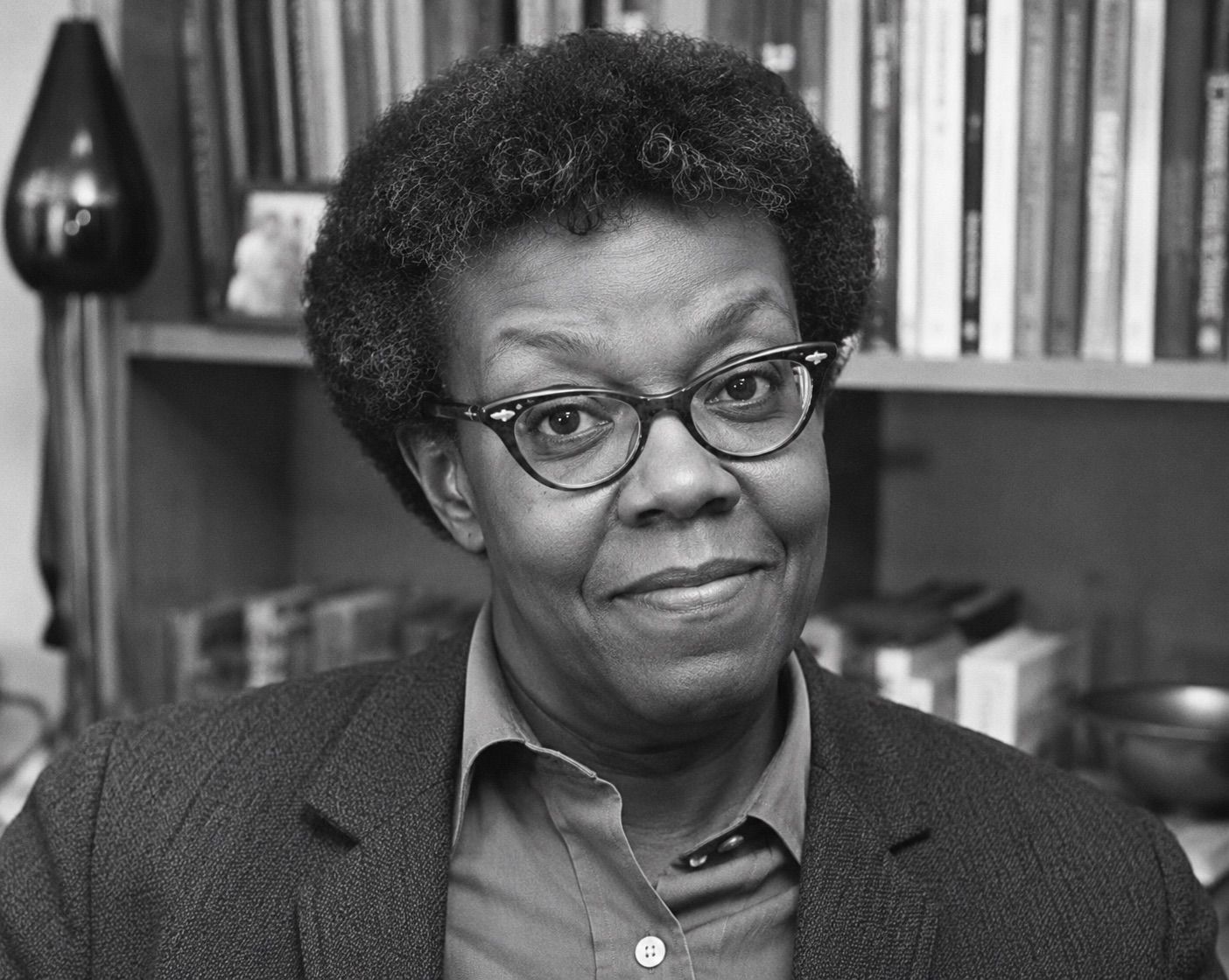
I’ve always been fascinated by Gwendolyn Brooks’ unflinching gaze at the world around her. As a writer, I know that observation is key to crafting compelling stories – but it’s one thing to observe life, and another to bear witness to its brutalities with such elegance and precision.
Growing up in the Midwest, where the rhythms of urban decay and suburban monotony can be suffocating, Brooks’ poetry felt like a whispered truth. Her words captured the nuances of Black experience in America – not as some abstract concept, but as lived reality. I remember being struck by the simplicity and power of her language, which somehow managed to convey the complexity of human emotions.
For me, Brooks’ work is closely tied to my own experiences navigating identity and community. As a young woman from a working-class background, I’ve often felt like an outsider looking in – unsure of how to reconcile my own desires with the expectations placed upon me. Reading Brooks’ poetry was like finding a kindred spirit who’d already mapped out this terrain.
One poem that’s always stuck with me is “We Real Cool.” It’s a sparse, haunting work that explores the lives of a group of young men, their reckless abandon and eventual demise. What I find particularly striking is how Brooks manages to convey both the thrill and the tragedy of youth – not as some grand narrative, but as a series of fragmented moments.
For me, “We Real Cool” is about the dissonance between the idealized notion of youth and its messy reality. As someone who’s struggled with feelings of restlessness and disillusionment, I find it both cathartic and unsettling to confront the fragility of youthful energy. Brooks’ words seem to say that even in their most vibrant moments, lives can be precarious, subject to the whims of fate.
I’ve always been drawn to writers who don’t shy away from the darker aspects of life – not because they revel in tragedy, but because they humanize it. For me, Brooks is a master at capturing the subtleties of emotion, the ways in which we navigate (or fail to navigate) our own mortality.
What’s both fascinating and unsettling about Brooks’ work is its unflinching gaze at the world – particularly when that world is marked by violence, inequality, and erasure. As someone who’s often struggled with feelings of powerlessness, I find myself grappling with the question: how do we bear witness to these injustices without becoming overwhelmed by them?
For Brooks, it seems, the answer lies in the act of storytelling itself – not as some detached observer, but as an active participant in the world. Her poetry is a testament to the transformative power of language, which can both document and subvert the dominant narratives that seek to erase us.
As I reflect on Brooks’ work, I’m reminded that writing is always a form of bearing witness – whether it’s to our own experiences or those of others. It’s a precarious act, one that requires both vulnerability and courage. And yet, it’s in these moments of uncertainty that we find the possibility for connection, for understanding, and ultimately, for transformation.
I’m not sure what I take away from Brooks’ work – other than a deep appreciation for her unflinching gaze at the world. Perhaps it’s the knowledge that even in the darkest moments, there is always beauty to be found; or maybe it’s simply the recognition that our stories are worth telling, no matter how complicated they may be.
As I delve deeper into Brooks’ work, I’m struck by her willingness to confront the messy realities of life head-on. It’s a quality that I admire and aspire to, but also one that leaves me feeling uncertain about my own role as a writer. How do I balance the need to bear witness with the desire to protect myself from the brutalities of the world?
For Brooks, it seems that this tension is resolved through her use of language – which is both lyrical and unflinching. She has a way of capturing the beauty in even the most painful moments, without sugarcoating or romanticizing them. It’s a skill that I struggle with, often finding myself torn between the desire to document my own experiences and the need to protect others from the hurt that I’ve caused.
One thing that I find particularly interesting about Brooks’ work is her exploration of the Black American experience – specifically, the ways in which it intersects with poverty, violence, and erasure. As someone who’s grown up navigating these systems myself, I’m struck by the ways in which Brooks’ poetry seems to capture the nuances of this experience.
But what really gets me is how Brooks’ work speaks to a broader truth about American life – namely, that we’re all living with the consequences of our own making. Her poems are like tiny grenades, exploding with the force of everyday observations: “The father says, ‘What happened?’ / The son says, ‘Ma, I did it.’” (“A Bronzeville Mother Loiters in Mississippi”)
For me, this line is a powerful reminder that even in our most mundane moments, we’re all grappling with questions of morality and responsibility. Brooks’ poetry seems to say that these are the kinds of conversations we need to be having – not just about individual actions, but about the systems and structures that shape our lives.
As I continue to reflect on Brooks’ work, I’m left with a sense of awe at her ability to capture the complexity of human experience. Her poems feel like tiny windows into the soul, offering glimpses of both beauty and brutality. And yet, even as I’m drawn in by their power, I’m also left feeling a little uneasy – unsure of how to reconcile my own desires with the imperatives of the world.
Maybe that’s what makes Brooks’ work so compelling: it’s a reminder that writing is always a form of wrestling – with ourselves, with others, and with the very language we use to try and make sense of the world.
As I delve deeper into Brooks’ work, I find myself drawn to her use of everyday moments as vessels for exploring the human condition. It’s as if she’s saying that even in the most mundane interactions, there lies a richness and complexity that can reveal profound truths about ourselves and our relationships with others.
Take, for example, the poem “The Bean Eaters.” On its surface, it appears to be a simple portrait of two elderly people sitting in a diner, eating beans. But as I read on, I realize that Brooks is using this seemingly ordinary scene to explore themes of poverty, isolation, and the human desire for connection.
What strikes me about this poem is how Brooks manages to convey the weight of these characters’ experiences without resorting to sentimentality or didacticism. Instead, she presents us with a nuanced portrait of two individuals struggling to find meaning in their lives, their struggles rendered all the more poignant by the fact that they’re set against the backdrop of a mundane diner.
For me, this poem raises questions about the role of storytelling in capturing the complexities of human experience. Brooks’ work suggests that even the most everyday moments can be imbued with a kind of universality, a sense that our experiences are not unique but rather part of a larger tapestry of human struggle and resilience.
As I reflect on Brooks’ use of everyday moments as a canvas for exploring the human condition, I’m struck by the parallels between her work and my own life. Growing up in a working-class family, I’ve often found myself navigating similar themes of poverty, isolation, and the search for connection. And yet, even as I see reflections of my own experiences in Brooks’ work, I’m also aware that her poetry is something distinct from my own narrative.
This raises an interesting question for me: how do we reconcile our individual experiences with the larger cultural narratives that shape our lives? For Brooks, it seems that this reconciliation lies in the act of storytelling itself – in using language to capture the complexities and nuances of human experience.
But what does this mean for me as a writer? How can I use my own experiences to tell stories that resonate with others without getting bogged down in my own personal struggles? These are questions that I’m still grappling with, and ones that Brooks’ work only serves to complicate further.
As I continue to reflect on Brooks’ work, I find myself thinking about the ways in which she uses language to capture the complexities of human experience. One thing that strikes me is her use of metaphor – not as a way to obscure or romanticize reality, but rather to reveal its subtleties.
Take, for example, the poem “The Anniad.” On the surface, it’s a narrative about a young girl’s life in Bronzeville during the 1930s. But as I read on, I realize that Brooks is using this story to explore themes of identity, community, and the struggles of growing up in a marginalized neighborhood.
What I find particularly striking is how Brooks uses metaphor to convey the tensions between her characters’ inner lives and the external world they inhabit. She writes about “the house / with the iron fence” – a symbol of the rigid boundaries that separate her characters from the world outside their community.
For me, this image raises questions about the ways in which we navigate our own identities, particularly as women from working-class backgrounds. Do we conform to the expectations placed upon us, or do we forge our own paths? And what does it mean to be a part of a larger community that is shaped by systems of oppression?
Brooks’ work suggests that these questions are not just abstract concepts, but rather lived realities – ones that are marked by both beauty and brutality. Her poetry is a testament to the power of language to capture the complexities of human experience, even in its most mundane moments.
As I delve deeper into Brooks’ work, I’m struck by her use of imagery – not as a way to create some sort of aesthetic distance, but rather to draw us into the world she’s creating. Her poems are like tiny windows into the soul, offering glimpses of both beauty and brutality.
Take, for example, the poem “The Mother.” On its surface, it’s a narrative about a mother’s love for her child – but as I read on, I realize that Brooks is using this story to explore themes of maternal sacrifice, identity, and the complexities of Black American life.
What strikes me about this poem is how Brooks uses imagery to convey the intensity of her characters’ emotions. She writes about “the heavy / iron lid of her body” – a symbol of the weight of responsibility that rests on her mother’s shoulders.
For me, this image raises questions about the ways in which we navigate our own identities as women – particularly those of us who are part of marginalized communities. Do we internalize the expectations placed upon us, or do we forge our own paths? And what does it mean to be a part of a larger community that is shaped by systems of oppression?
Brooks’ work suggests that these questions are not just abstract concepts, but rather lived realities – ones that are marked by both beauty and brutality. Her poetry is a testament to the power of language to capture the complexities of human experience, even in its most mundane moments.
As I continue to reflect on Brooks’ work, I’m struck by the ways in which she uses her own experiences as a Black woman writer to explore the complexities of American life. Her poems are like tiny windows into the soul – offering glimpses of both beauty and brutality.
But what really gets me is how Brooks’ work speaks to a broader truth about writing itself: that it’s always a form of bearing witness, whether we’re documenting our own experiences or those of others. It’s a precarious act, one that requires both vulnerability and courage.
For Brooks, it seems that this tension is resolved through her use of language – which is both lyrical and unflinching. She has a way of capturing the beauty in even the most painful moments, without sugarcoating or romanticizing them.
As I reflect on Brooks’ work, I’m left with a sense of awe at her ability to capture the complexity of human experience. Her poems feel like tiny windows into the soul – offering glimpses of both beauty and brutality.
And yet, even as I’m drawn in by their power, I’m also left feeling a little uneasy – unsure of how to reconcile my own desires with the imperatives of the world. Maybe that’s what makes Brooks’ work so compelling: it’s a reminder that writing is always a form of wrestling – with ourselves, with others, and with the very language we use to try and make sense of the world.