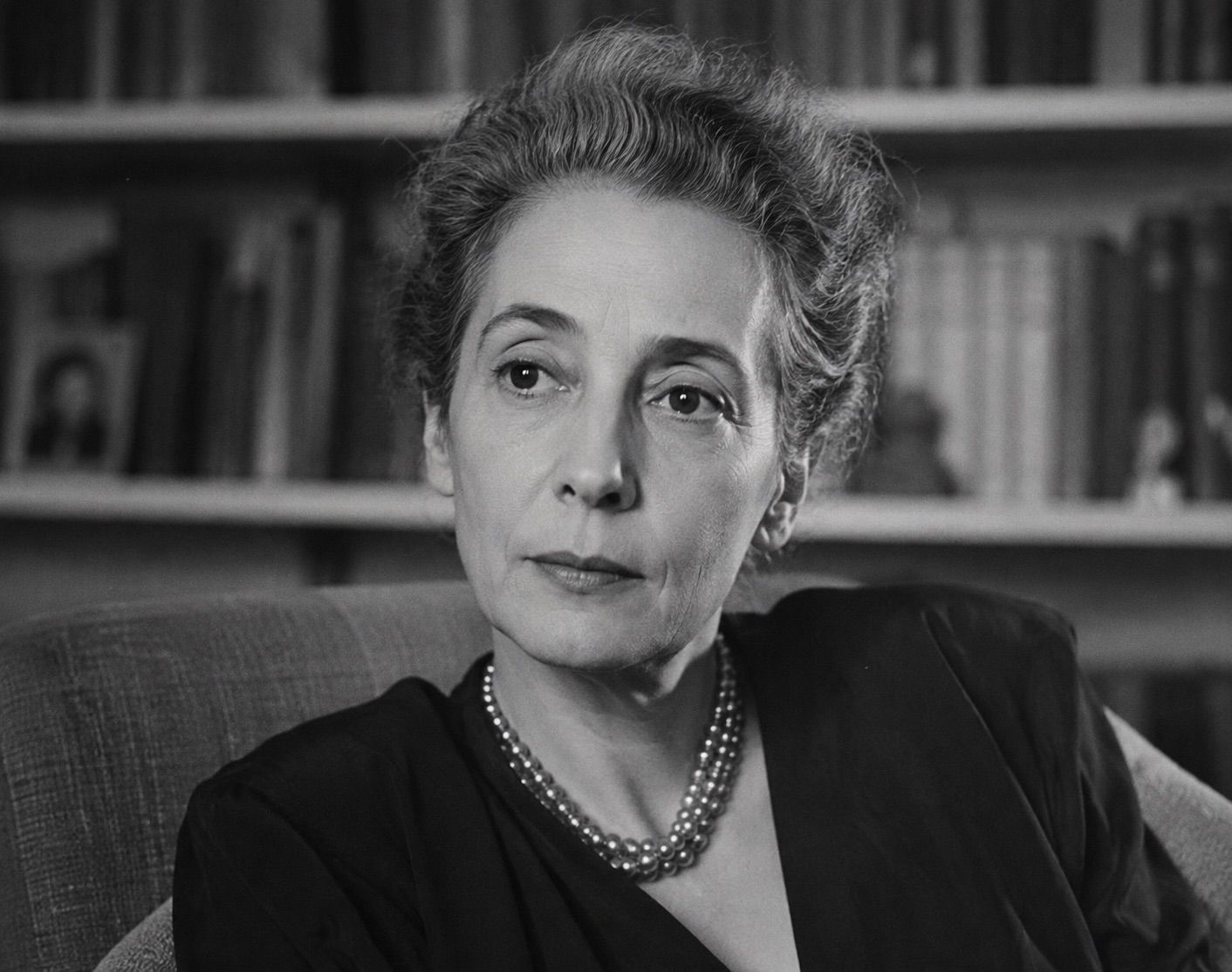
Rebecca West’s words keep coming back to me, like a refrain that I can’t shake. I first read her memoir, “A Train of Powder,” a few years ago, and since then, I’ve found myself returning to it again and again. There’s something about the way she writes that unsettles me – not in a bad way, but in a way that makes me feel like I’m standing at the edge of a cliff, staring out into an uncertain future.
One of the things that draws me to West is her candor about motherhood. She writes with unflinching honesty about the ways in which being a mother has both defined and destroyed her. It’s this paradox that resonates with me – I’ve always been someone who values autonomy, but as I’ve gotten older, I’ve begun to realize just how much my relationships with others shape me.
When West talks about her daughter, Anna, it’s clear that she feels a deep sense of responsibility and guilt. She writes about the ways in which motherhood has forced her to confront her own limitations, her own fears. And yet, at the same time, there’s a sense of defiance – a refusal to be defined solely by this role.
I find myself identifying with West’s ambivalence. As someone who’s always valued independence, I’ve struggled with the idea of being tied down by relationships or responsibilities. But at the same time, I know that these very things are what make life worth living. It’s a tension that feels both exhilarating and terrifying – like standing on the edge of a precipice, wondering which way to step next.
What I appreciate about West is her willingness to confront this complexity head-on. She doesn’t shy away from the messy emotions or contradictions; instead, she leans into them, exploring their depths with a curiosity that feels almost primal. It’s as if she’s saying, “Yes, I’m scared and uncertain, but I’m also brave enough to face these fears.”
One of the things that bothers me about West is her treatment of others – specifically, her daughter. There are moments in her writing where it feels like she’s using Anna as a prop or a symbol for her own emotional journey. It’s uncomfortable to read, and it makes me wonder if I’m being too harsh in my judgment.
But then again, maybe that’s the point. West’s writing is all about pushing boundaries, testing limits – even when it comes to our relationships with others. She forces us to confront the ways in which we’re connected (or disconnected) from those around us. And in doing so, she reminds me of just how little I know about my own desires and motivations.
As I continue to read West’s work, I find myself asking more questions than answers. What does it mean to be a good mother? Can we truly have agency over our lives when we’re tied to others through love and responsibility? And what happens when those very relationships start to feel suffocating?
These are the kinds of questions that West’s writing leaves me with – ones that I’m not sure I’ll ever fully resolve. But that’s okay. In fact, it’s more than okay; it’s a relief. Because in the end, it’s not about finding answers or resolutions, but about embracing the complexity and uncertainty that makes life worth living.
One of the things that I admire most about Rebecca West is her willingness to confront the darker aspects of herself and her relationships. Her writing is unflinching in its honesty, and it’s this quality that makes me feel like she’s speaking directly to me. As I read through “A Train of Powder,” I found myself becoming increasingly uncomfortable with my own biases and assumptions about motherhood.
I think what bothers me most is the way West treats her daughter Anna – not just as a person in her own right, but also as a symbol for her own emotional journey. It’s like West is using Anna as a mirror to reflect back at herself, examining every nuance of their relationship with an intensity that feels almost forensic. And while I understand why she might do this – after all, isn’t it true that our relationships with others are often a reflection of our own inner struggles? – it still feels like a kind of emotional manipulation.
At the same time, though, I think West is trying to get at something deeper here. She’s probing the boundaries between self and other, examining the ways in which we become entangled with those around us. And what she finds, over and over again, is that these boundaries are always shifting – blurring together like watercolors on wet paper.
This makes me think about my own relationships with others. I’ve always prided myself on being independent, on being able to stand alone and make decisions without needing anyone else’s input. But the more I read West’s work, the more I realize that this isn’t entirely true. We’re all connected, somehow – through love, or friendship, or even just our shared experiences as human beings.
And yet, at the same time, I feel like I’m losing myself in these connections. Like I’m disappearing into the labyrinth of other people’s emotions and needs, never quite able to find my own way out again. It’s a scary feeling – one that makes me wonder if I’ll ever be able to reclaim my autonomy, or if it’s just an illusion.
I suppose what I’m trying to say is that West’s writing has given me permission to explore these complexities – to question my own assumptions and biases, and to see the world in all its messy, uncertain glory. It’s a daunting prospect, but also kind of exhilarating. Because when we confront our own limitations and contradictions head-on, we’re forced to confront the possibility that we might be more than we thought we were.
As I delve deeper into West’s writing, I’m struck by her use of language – it’s like a slow-burning fire that consumes me whole. She has this way of taking seemingly mundane moments and turning them into something profound, something that makes me feel seen and understood in ways that few other writers have managed to do.
One of the things that West does so skillfully is capture the fluidity of emotions – how they can shift and swirl like a stormy sea. In her writing, she’s not afraid to explore the darker corners of the human experience, but neither does she shy away from the beauty and vulnerability that lies within those same moments.
When I read about West’s relationship with Anna, I find myself feeling both repelled and drawn in – it’s like watching a train wreck that you can’t look away from. There’s something about their dynamic that feels almost suffocating, like the two of them are trapped in some kind of toxic loop. And yet, at the same time, there’s this deep sense of love and connection between them – one that feels almost impossible to understand.
I think what I’m trying to get at here is that West’s writing is all about exploring the gray areas – those places where right and wrong blur together like watercolors on wet paper. She’s not interested in simplistic answers or easy resolutions; instead, she’s always probing for more depth, more nuance, more complexity.
And this, I think, is what draws me to her so much – the way she’s willing to confront the darkness within herself and others, even when it’s uncomfortable or difficult. It’s like she’s saying, “Yes, we’re all messy and flawed, but that’s what makes us human.”
But at the same time, I’m also left with this nagging feeling that West might be using Anna as a kind of emotional prop – a way to explore her own feelings about motherhood without actually being present for the other person. It’s like she’s using their relationship as a kind of mirror to reflect back at herself, rather than really engaging with Anna on a deeper level.
I don’t know if this is true or not; maybe I’m just projecting my own fears and biases onto West’s writing. But what I do know is that her work has given me permission to explore these complexities – to question my own assumptions about motherhood and relationships, and to see the world in all its messy, uncertain glory.
As I finish reading “A Train of Powder,” I’m left feeling both exhilarated and terrified – like I’ve been dropped off at the edge of a cliff with no safety net. But it’s a good kind of fear, one that makes me feel alive and connected to something deeper than myself.
I’ve spent so much time thinking about Rebecca West’s relationship with her daughter Anna, and I still can’t shake the feeling that there’s more to the story than what she shares on the page. It’s like trying to read between the lines of a novel that never quite reveals its secrets. And yet, at the same time, I’m drawn to this sense of mystery – it’s like West is daring me to fill in the gaps with my own imagination.
I wonder if this is what she means by “a train of powder” – not just a reference to her daughter’s fragile health, but also a metaphor for the delicate balance between truth and interpretation. We’re all just trying to make sense of the world around us, filling in the blanks with our own experiences and assumptions. And sometimes, that means we get it wrong – or at least, partially.
I think about my own relationships with others, and how easily I can slip into the role of observer or analyst. It’s like I’m watching a movie from the outside, trying to make sense of the characters and their motivations without ever truly being one of them. And yet, when I read West’s writing, I feel like she’s pushing me to be more present – to engage with others on a deeper level, even if it means getting my own hands dirty.
This is what scares me about motherhood – not just the responsibilities and challenges that come with caring for another human being, but also the way it can make us lose ourselves in the process. I’ve always prided myself on being independent, on being able to stand alone and make decisions without needing anyone else’s input. But West’s writing has made me realize that this isn’t entirely true – we’re all connected, somehow, through love or friendship or shared experiences.
And what happens when those connections start to feel suffocating? When the people around us begin to blur together like watercolors on wet paper? I don’t know if I’ll ever be able to navigate these complexities with ease, but at least West’s writing has given me permission to try.
As I delve deeper into Rebecca West’s work, I’m struck by the way she blurs the lines between self and other, between truth and interpretation. It’s like she’s saying that our perceptions of reality are always filtered through our own experiences and biases, making it impossible to truly know anything with certainty.
I think about my own relationships with others, and how easily I can get caught up in trying to understand them on a deeper level. It’s like I’m trying to solve a puzzle without having all the pieces, or worse, using someone else as a mirror to reflect back at myself. West’s writing has made me realize that this is not only exhausting but also potentially damaging – both for myself and for those around me.
One of the things that West does so skillfully is capture the fluidity of emotions – how they can shift and swirl like a stormy sea. In her writing, she’s not afraid to explore the darker corners of the human experience, but neither does she shy away from the beauty and vulnerability that lies within those same moments.
When I read about West’s relationship with Anna, I find myself feeling both repelled and drawn in – it’s like watching a train wreck that you can’t look away from. There’s something about their dynamic that feels almost suffocating, like the two of them are trapped in some kind of toxic loop. And yet, at the same time, there’s this deep sense of love and connection between them – one that feels almost impossible to understand.
I wonder if West is trying to say that our relationships with others are always complex and multifaceted, refusing to be reduced to simple explanations or categorizations. That we’re all just trying to make sense of the world around us, filling in the blanks with our own experiences and assumptions. And sometimes, that means we get it wrong – or at least, partially.
I think about my own relationships with others, and how easily I can slip into the role of observer or analyst. It’s like I’m watching a movie from the outside, trying to make sense of the characters and their motivations without ever truly being one of them. And yet, when I read West’s writing, I feel like she’s pushing me to be more present – to engage with others on a deeper level, even if it means getting my own hands dirty.
This is what scares me about motherhood – not just the responsibilities and challenges that come with caring for another human being, but also the way it can make us lose ourselves in the process. I’ve always prided myself on being independent, on being able to stand alone and make decisions without needing anyone else’s input. But West’s writing has made me realize that this isn’t entirely true – we’re all connected, somehow, through love or friendship or shared experiences.
And what happens when those connections start to feel suffocating? When the people around us begin to blur together like watercolors on wet paper? I don’t know if I’ll ever be able to navigate these complexities with ease, but at least West’s writing has given me permission to try.