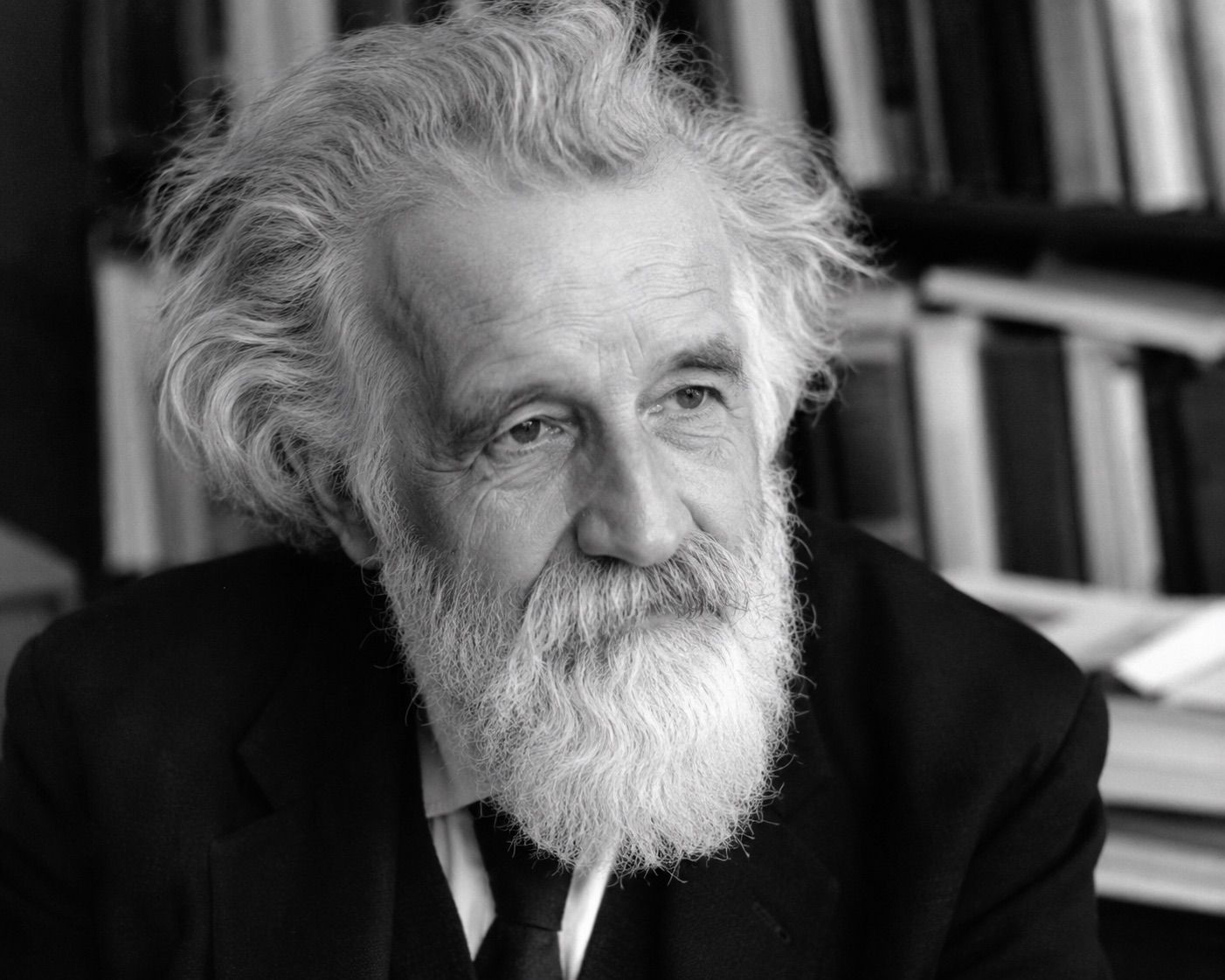
I’ve found myself returning to Gaston Bachelard again and again, not because I’m reading a specific book of his, but because I keep finding him in my own thoughts. It started with “The Poetics of Space,” which a friend recommended when I was struggling to make sense of the apartment I’d just moved into after graduation. Bachelard’s concept of the “topoanalysis” – this idea that our relationship with space is deeply personal and rooted in memories – spoke directly to me.
I remember walking around my new apartment, feeling like an outsider in every room. The layout was cramped, but it was also mine now. I started thinking about all the places I’d lived before: the dorms, the shared houses, the family home where I grew up. Each one had its own rhythms and routines, its own way of shaping who I was at that time. And Bachelard’s words were like a key turning in my mind – it wasn’t just about physical space; it was about how those spaces made me feel.
I think what really drew me to Bachelard is his idea of the ” intimate immensity” of our surroundings. He writes about how the spaces we inhabit can be both tiny and vast, like a room that feels small but holds all your memories. For me, this resonated with my own experiences of feeling lost in familiar places – not just the physical act of getting lost, but the emotional one too.
When I read Bachelard’s descriptions of the “house as a cosmos” or the “forest as a nest,” it felt like he was speaking directly to my own sense of disorientation. He writes about how our relationship with space is always in flux, shaped by our experiences and memories. And that feels so true – not just for me, but for anyone who’s ever moved into a new place, or tried to make a home out of something that feels temporary.
But what I find complicated is the way Bachelard’s ideas sometimes feel…romanticized? Idealized? It’s like he’s painting these idyllic pictures of how we should relate to space – as if it’s always possible to recapture some lost sense of wonder or intimacy with our surroundings. And that feels hard for me, because I know my own experiences are more messy than that.
I think about the time I lived in a tiny studio apartment in college, and how the small size of it made me feel claustrophobic. Or the summer I spent working at my grandparents’ house, where the same four walls felt oppressive after a while. It’s not always easy to recapture that sense of wonder or connection with space – sometimes it feels like we’re stuck in our own routines and expectations.
I’m not sure what Bachelard would say about this – whether he’d encourage me to try harder to find that intimacy, or if he’d acknowledge the difficulties of maintaining it. But what I do know is that his ideas have stayed with me long after I finished reading “The Poetics of Space.” They’ve become a part of how I think about my own relationship with space – and myself.
As I sit here in my current apartment, surrounded by all the familiar objects and memories, I feel like I’m still trying to find that balance between the intimate and the immense. It’s not always easy, but it’s what draws me back to Bachelard again and again – this sense of connection, of uncertainty, of wonder.
As I sit in my current apartment, surrounded by the comforts of familiarity, I’m struck by how Bachelard’s ideas continue to resonate with me. But I’m also aware that his romanticized view of our relationship with space can be limiting. What about when the spaces we inhabit feel oppressive or suffocating? What about when our memories are tied to painful experiences?
I think about my grandparents’ house, where I spent so many summers as a kid. The walls seemed to close in on me after a while, and the familiar rooms felt like a prison. My grandmother would try to tell stories and make jokes, but I’d feel trapped, like I couldn’t escape. And yet, when I think back on those summers now, I remember the way my grandfather used to garden in the backyard, the smell of fresh-cut grass and the sound of his laughter.
Bachelard’s idea of the “house as a cosmos” is beautiful, but it doesn’t account for the messy, complicated relationships we can have with our surroundings. Sometimes the spaces that are supposed to be safe and comforting can feel like a source of anxiety or discomfort. And yet, even in those moments, there’s something about the familiarity of those places that feels…what, exactly?
Is it nostalgia? Is it a sense of obligation, like I’m tied to these memories and experiences whether I want to be or not? Or is it something more profound, something that speaks to the way our relationships with space are inextricably linked to our relationships with ourselves?
I’m not sure. What I do know is that Bachelard’s ideas have given me a new language for thinking about my own experiences with space and memory. They’ve helped me see that even in the most mundane or painful moments, there’s always something there – some thread of connection, some glimmer of intimacy.
But what if I told you that this idea of intimacy is also what feels so elusive to me? What if I said that the more I try to grasp it, the more it slips away, like sand between my fingers? Would Bachelard’s words still be enough to hold onto, or would they just feel like a distant echo of something I’ve lost forever?
I’m not sure. All I know is that I’ll keep coming back to these questions, to this sense of disorientation and wonder, because it’s in the uncertainty that I find my true self – a self that’s always on the move, always searching for connection, always trying to make sense of the world around me.
I’ve been reading about Bachelard’s concept of “reverie,” this state of being where you’re completely absorbed in your surroundings, lost in thought and imagination. It sounds like a beautiful thing – a way of surrendering to the present moment, letting go of all our worries and concerns. But as I think about it more, I start to wonder if it’s not just a romantic notion.
I mean, don’t we often get lost in reverie when things are going wrong? When we’re stuck in traffic or waiting for an appointment, our minds can wander to all sorts of places. And isn’t that kind of reverie just a way of escaping the present moment, rather than truly being in it?
Or maybe I’m just projecting my own fears onto Bachelard’s ideas. Maybe he would say that reverie is always a good thing, no matter what’s happening around us. But for me, it feels like a slippery slope – one minute you’re lost in thought, and the next you’re stuck in some kind of mental loop, unable to shake off the feeling of unease.
It’s funny, I was just talking to my friend about this last week. She said that when she’s feeling anxious or overwhelmed, she tries to focus on her breath, to bring herself back to the present moment. And it sounds like a great technique – but for me, it feels too forced, too artificial. When I try to calm myself down through meditation or deep breathing, it feels like I’m fighting against my own natural rhythms.
I guess what I’m getting at is that Bachelard’s ideas can be both beautiful and limiting. They encourage us to see the world in a new way, but they also risk oversimplifying the complexities of our experiences. And maybe that’s okay – maybe it’s okay for ideas to be imperfect, to leave room for questioning and uncertainty.
As I sit here in my apartment, surrounded by all the familiar objects and memories, I feel like I’m still trying to find my way through Bachelard’s world. It’s a journey that’s both exhilarating and disorienting – but one that I wouldn’t trade for anything. Because even when the path ahead is unclear, even when the ideas themselves are imperfect, it’s the act of searching, of questioning, that feels most alive to me.
And what if, just maybe, Bachelard would say that this is the true essence of reverie – not some romanticized state of being, but rather the simple act of paying attention, of noticing the world around us in all its complexity and beauty? That’s a thought that keeps me up at night, one that I’ll keep returning to again and again as I continue on my journey through Bachelard’s ideas.
The more I think about reverie, the more I realize how deeply it’s connected to another concept of Bachelard’s: the “imagination in revolt.” It’s this idea that our imagination is always pushing against the boundaries of what we know and experience, seeking to create new connections and meanings. And isn’t that exactly what happens when we’re lost in reverie? Our minds start to wander, to make connections between seemingly unrelated things.
But what if I told you that even as I’m writing about Bachelard’s ideas, I’m also resisting them? Not because they’re wrong or unhelpful, but because they feel too easy, too comforting. When I think about reverie and imagination in revolt, I start to worry that I’ll never be able to truly tap into it – that my mind will always be stuck in some kind of mental loop, unable to break free.
I guess what I’m getting at is that Bachelard’s ideas can feel both liberating and confining. They encourage us to see the world in a new way, but they also risk creating unrealistic expectations about our own abilities and potential. And maybe that’s okay – maybe it’s okay for ideas to be imperfect, to leave room for questioning and uncertainty.
As I sit here in my apartment, surrounded by all the familiar objects and memories, I feel like I’m still trying to find my way through Bachelard’s world. It’s a journey that’s both exhilarating and disorienting – but one that I wouldn’t trade for anything. Because even when the path ahead is unclear, even when the ideas themselves are imperfect, it’s the act of searching, of questioning, that feels most alive to me.
And what if, just maybe, Bachelard would say that this is the true essence of reverie – not some romanticized state of being, but rather the simple act of paying attention, of noticing the world around us in all its complexity and beauty? That’s a thought that keeps me up at night, one that I’ll keep returning to again and again as I continue on my journey through Bachelard’s ideas.
I think about the times when I’ve felt most alive – not just when I’m reading or writing, but when I’m walking in nature, or talking with friends, or simply daydreaming. And it’s during those moments that I feel like I’m tapping into something deeper and more meaningful than myself. It’s like my imagination is revolting against the boundaries of what I know, seeking to create new connections and meanings.
But how do I hold onto those moments? How do I keep the sense of wonder and awe alive when the world around me feels mundane or oppressive? That’s a question that I’m still searching for an answer to – one that I hope will lead me deeper into Bachelard’s ideas, and further into my own imagination.
As I continue to ponder the concepts of reverie and imagination in revolt, I find myself drawn back to the idea of intimacy with space. It’s as if Bachelard’s words have created a kind of resonance within me, where the boundaries between inner and outer worlds begin to blur.
I think about how my grandparents’ house used to feel like a prison when I was younger – the familiar rooms that were supposed to be comforting, but instead felt suffocating. And yet, as I look back on those summers now, I see that even in the midst of feeling trapped, there was still something beautiful about being surrounded by all those memories and stories.
It’s like Bachelard said – our relationship with space is always a complex mix of intimacy and disorientation. Sometimes we feel completely at home, like we’re exactly where we need to be. And other times, even in the most familiar spaces, we can feel lost or disconnected.
But what if that’s not just about the physical space itself? What if it’s also about how we relate to ourselves within those spaces? As I think about my own experiences with reverie and imagination, I start to wonder if there’s a connection between feeling intimate with space and being intimate with myself.
When I’m lost in thought or daydreaming, am I not tapping into some deep part of myself that feels connected to the world around me? And isn’t that a kind of intimacy – an intimacy with my own inner world, rather than just the external one?
I’m not sure where this line of thinking will lead me, but it feels like an important thread to follow. As I sit here in my apartment, surrounded by all these familiar objects and memories, I feel like I’m on the cusp of something new – a new way of understanding myself and my relationship with space.
And yet, even as I feel this sense of excitement and possibility, I also feel a twinge of uncertainty. What if Bachelard’s ideas are too idealized? What if they’re not meant for someone like me, who struggles to find intimacy in even the most familiar spaces?
But then again, maybe that’s exactly why I need to keep exploring these concepts – because they challenge me to see myself and my world in a new light. As I continue on this journey through Bachelard’s ideas, I’m not sure where it will take me, but I know one thing for certain: it’s an adventure worth taking.