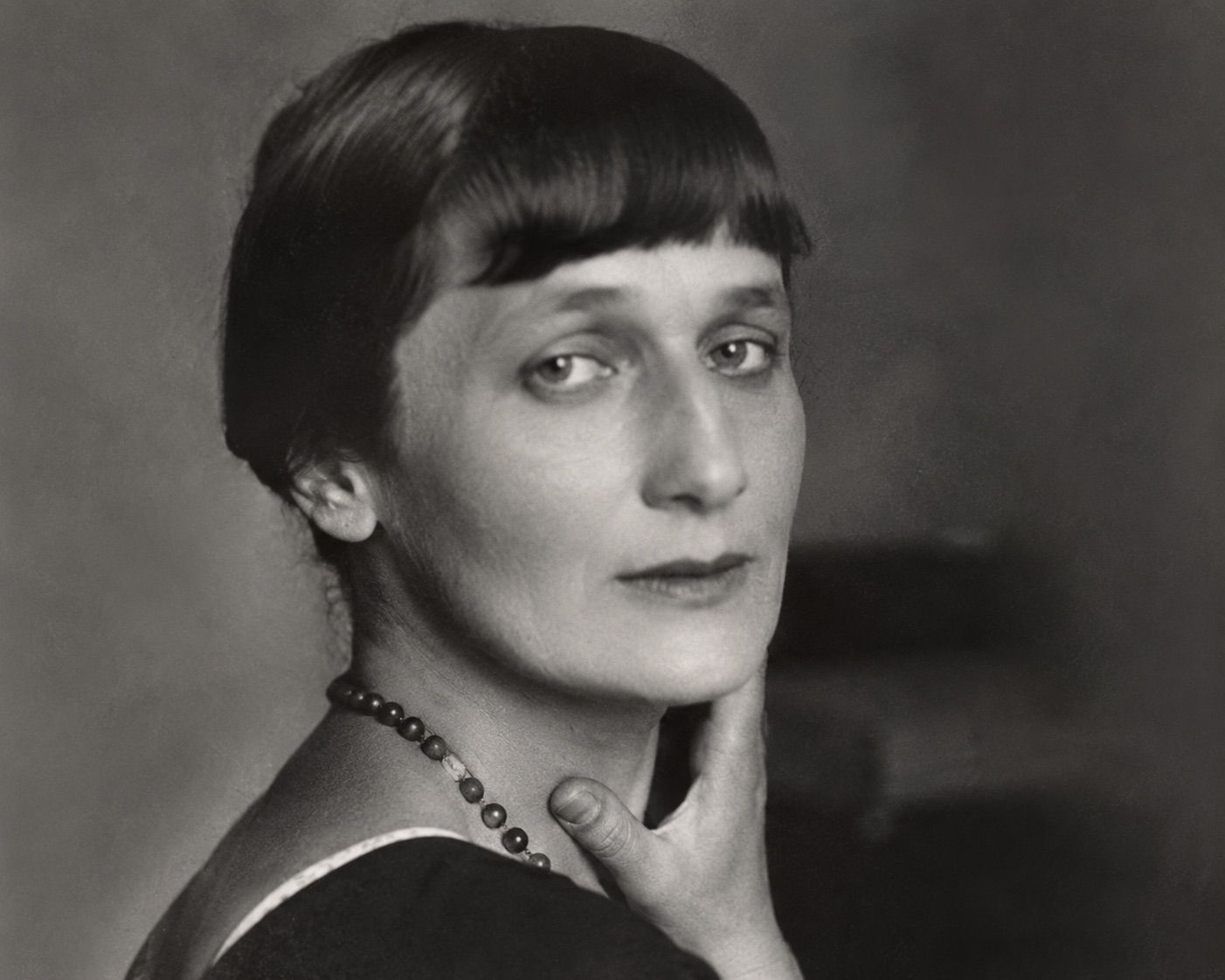
Anna Akhmatova’s poetry has been haunting me for months now, ever since I stumbled upon her work in a used bookstore. At first, it was just the words that caught my attention – the way she wove together disparate threads of love, loss, and longing. But as I delved deeper into her oeuvre, I found myself becoming increasingly fascinated by the person behind the poems.
I’ve always been drawn to writers who explore the complexities of their own experiences, rather than trying to impose some sort of tidy narrative on them. And Akhmatova’s life is anything but tidy – a tapestry woven from threads of love, loss, and persecution under Stalin’s regime. Her poetry is often described as confessional, but I think that’s selling her short. She’s not just exposing her innermost thoughts; she’s excavating the depths of human emotion, laying bare the darkest recesses of the self.
What strikes me about Akhmatova is her willingness to confront the messiness of life head-on. In poems like “Requiem,” she grapples with the pain and trauma inflicted on her by the Soviet authorities – the loss of loved ones, the surveillance, the constant fear. It’s a stark reminder that even in the darkest moments, art can be a lifeline, a way to hold onto hope when all else seems lost.
As I read through her work, I find myself drawn to the contradictions inherent in Akhmatova’s life. She was a poet, an artist, a woman of great beauty and intellect – but also a creature of convention, bound by the societal norms of her time. Her relationships were marked by turmoil and heartbreak, yet she continued to write, to create, even in the face of overwhelming adversity.
I think what I’m most drawn to about Akhmatova is her refusal to simplify or trivialize her emotions. She’s not afraid to acknowledge the complexity of her feelings – the way love can both uplift and destroy us, the way trauma can leave its scars but also shape us into something new. Her poetry is a testament to the human capacity for resilience in the face of adversity.
But it’s also uncomfortable, because Akhmatova’s work often feels like a mirror held up to my own experiences. I’ve struggled with anxiety and depression, the weight of expectation from others, the pressure to conform to societal norms. Reading her poetry is like seeing myself reflected back – all the messy, contradictory bits that I try to keep hidden.
And yet, even in those moments of discomfort, there’s a strange sense of solidarity. Akhmatova’s not trying to offer solutions or answers; she’s simply laying out the questions, the doubts, and the fears. It’s as if she’s saying, “I see you, I feel you, and this is what it looks like to be human.”
For now, that’s enough for me – a recognition that even in the darkest moments, there’s beauty to be found, a depth of emotion that can be both piercing and liberating. Akhmatova’s work has given me permission to explore my own complexities, to confront the messiness of life head-on, and to find solace in the shared human experience.
As I continue to read through Akhmatova’s poetry, I’m struck by the way she weaves together different threads of her life – love, loss, politics, and personal struggle. It’s as if she’s taking all these disparate elements and spinning them into a tapestry that’s both beautiful and brutal. And what I think I’m most drawn to is the way she refuses to separate herself from her art.
For Akhmatova, poetry isn’t just an outlet for her emotions; it’s an extension of her very self. She pours her life experiences into her work, and in doing so, creates something that feels both intensely personal and universally relatable. It’s like she’s saying, “This is what I’m going through, this is what I’ve seen, and this is how I feel.” And in that vulnerability, I think we see the true power of her poetry.
I find myself wondering about the relationship between Akhmatova’s personal life and her work. Did she ever try to separate herself from her art, or did she see them as two sides of the same coin? Was there a point where she felt like she was losing herself in the process of creating, or did she always feel like her poetry was an integral part of who she was?
I’m not sure I have answers to these questions, but reading Akhmatova’s work makes me realize how much I value authenticity in art. When artists are willing to bare their souls, to lay themselves open and vulnerable on the page, that’s when we get something truly remarkable. It’s like they’re saying, “I see you, I feel you, and this is what it looks like to be human.”
Akhmatova’s poetry has also made me think about my own relationship with art as a way of processing emotions. For years, I’ve been writing as a way to make sense of the world around me – to sort through my thoughts, feelings, and experiences. And while I’ve never felt like I’m on par with Akhmatova’s level of talent or skill, I think there’s something similar at play.
Writing helps me navigate the complexities of life, just as it does for Akhmatova in her poetry. It allows me to confront my fears, doubts, and insecurities head-on, and to find a way through the darkness. And when I’m reading Akhmatova’s work, I feel like I’m seeing a reflection of myself – all the messy, contradictory bits that make up who we are as humans.
I’m not sure where this journey with Akhmatova will take me next, but for now, it feels like I’m just beginning to scratch the surface. Her poetry has given me permission to explore my own complexities, to confront the messiness of life head-on, and to find solace in the shared human experience. And that’s a gift I’ll continue to cherish.
As I continue to read through Akhmatova’s work, I’m struck by the way she uses imagery to convey the intensity of her emotions. Her poetry is like a punch to the gut – it leaves me breathless and reeling. But in a good way. Like I’m being shaken awake from a deep sleep, forced to confront the darkness that’s been lurking just beneath the surface.
I find myself drawn to her use of metaphor and symbolism, the way she weaves together disparate threads to create something new and unexpected. It’s like she’s speaking directly to me, using language that’s both beautiful and brutal. Her poetry is a reflection of the world around us – all its beauty and ugliness, its contradictions and complexities.
Akhmatova’s work also makes me think about the power of language itself. She uses words like a scalpel, cutting deep into the skin of reality to expose the raw emotion beneath. It’s like she’s showing me that words have the power to both heal and harm – to bring people together or drive them apart.
As I delve deeper into her poetry, I’m struck by the way she explores the theme of identity. Who are we, really? Are we defined by our relationships, our experiences, our emotions? Akhmatova’s work suggests that identity is a fluid concept, always shifting and evolving. It’s like she’s saying, “I am this, but also this, and maybe even something else entirely.”
This resonates deeply with me, because I’ve always struggled to define myself. Am I a writer, an artist, or just a person trying to make sense of the world? Akhmatova’s poetry makes me realize that it doesn’t have to be one or the other – that our identities can be multiple and complex, like the people we are.
Reading Akhmatova’s work also makes me think about the role of art in times of crisis. What happens when the world around us is falling apart? How do artists respond to chaos and uncertainty? For Akhmatova, poetry was a way of making sense of the world – of capturing its beauty and ugliness in words.
I find myself wondering what would happen if I were living through a time like hers – under Stalin’s regime, with all its fear and repression. Would I be able to write about it? Would I have the courage to speak truth to power? Akhmatova’s poetry suggests that even in the darkest moments, there is always hope – always a way to find beauty in the ashes.
And yet, for now, I’m content to just read her work, to let its words wash over me like a wave. To feel the emotions rise up and fall away, leaving me changed in some small but significant way. Because that’s what Akhmatova’s poetry does – it changes us, one line at a time.
As I immerse myself deeper into Akhmatova’s world, I’m struck by the way she explores the tension between individuality and collectivism. Her poetry is like a dialogue with herself, but also with the world around her – a world that’s both beautiful and brutal.
I think about how this resonates with my own experiences as a young adult. Growing up, I was always encouraged to conform to certain expectations – to follow a traditional path, to fit in with societal norms. But Akhmatova’s work suggests that true creativity and innovation come from embracing our individuality, from taking risks and challenging the status quo.
It’s like she’s saying, “I will not be silenced, I will not be oppressed.” And yet, at the same time, her poetry is also a testament to the power of love and connection. She writes about the human need for intimacy and community, for finding meaning in relationships with others.
This speaks to me on a deep level, because I’ve always struggled with feelings of isolation and disconnection. As a writer, I often feel like I’m alone in my thoughts and emotions – that nobody truly understands what I’m going through. But Akhmatova’s poetry shows me that this is not unique to me; it’s a universal human experience.
Her work also makes me think about the role of memory in shaping our identities. She writes about how memories can be both treasured and painful, how they can haunt us long after they’ve happened. It’s like she’s saying, “I remember, I feel, and this is what it looks like to be human.”
As I continue to read through her poetry, I’m struck by the way she explores the theme of time itself. How do we make sense of the passage of time? Do we try to hold onto memories, or let them fade away? Akhmatova’s work suggests that time is a fluid concept – always slipping away from us, yet also leaving its mark on our lives.
This resonates deeply with me, because I’ve always struggled with feelings of impermanence. As a young adult, it feels like everything is changing all the time – my relationships, my goals, my sense of self. But Akhmatova’s poetry shows me that this is not unique to me; it’s a universal human experience.
She writes about how memories can be both treasured and painful, how they can haunt us long after they’ve happened. And yet, even in the midst of loss and heartbreak, she finds moments of beauty and transcendence. It’s like she’s saying, “I see you, I feel you, and this is what it looks like to be human.”
As I read through her work, I’m struck by the way Akhmatova uses language to convey the intensity of her emotions. Her poetry is like a symphony – each word, each line, each image building on the last to create something new and unexpected.
I find myself drawn to her use of metaphor and symbolism, the way she weaves together disparate threads to create something new and complex. It’s like she’s speaking directly to me, using language that’s both beautiful and brutal. Her poetry is a reflection of the world around us – all its beauty and ugliness, its contradictions and complexities.
And yet, even in the midst of this complexity, Akhmatova’s work feels surprisingly simple – almost direct. She’s not trying to hide behind clever language or complex theories; she’s simply laying out her emotions, her thoughts, and her experiences on the page.
This resonates deeply with me, because I’ve always struggled with feelings of vulnerability in my own writing. Do I open myself up to criticism and rejection, or do I try to protect myself with layers of complexity? Akhmatova’s poetry shows me that true authenticity comes from embracing our vulnerabilities – from laying ourselves bare on the page.
As I continue to read through her work, I’m struck by the way she explores the theme of legacy. What happens when we die? Do our memories and experiences live on in some form, or do they fade away into nothingness? Akhmatova’s poetry suggests that our legacies are not just about what we leave behind; they’re also about how we connect with others – through love, art, and shared human experience.
This resonates deeply with me, because I’ve always struggled with feelings of uncertainty about my own legacy. What will be remembered about me after I’m gone? Will it be my writing, my relationships, or something else entirely? Akhmatova’s poetry shows me that our legacies are not just about what we achieve; they’re also about how we live – in the present moment, with all its beauty and ugliness.
And yet, even in the midst of this uncertainty, Akhmatova’s work feels surprisingly reassuring. She’s showing me that our lives have meaning – that every experience, no matter how small or insignificant it may seem, has value and worth. It’s like she’s saying, “I see you, I feel you, and this is what it looks like to be human.”
As I close this piece for now, I’m left with a sense of awe and wonder at Akhmatova’s poetry – its complexity, its beauty, its brutal honesty. She’s shown me that art can be a powerful tool for exploring our emotions, our experiences, and our identities. And she’s reminded me that, even in the darkest moments, there is always hope – always a way to find meaning and connection with others.
I’m not sure where this journey will take me next, but I know that Akhmatova’s poetry has changed me in some profound way. It’s like she’s awakened something deep within me – a sense of curiosity, wonder, and awe at the human experience.