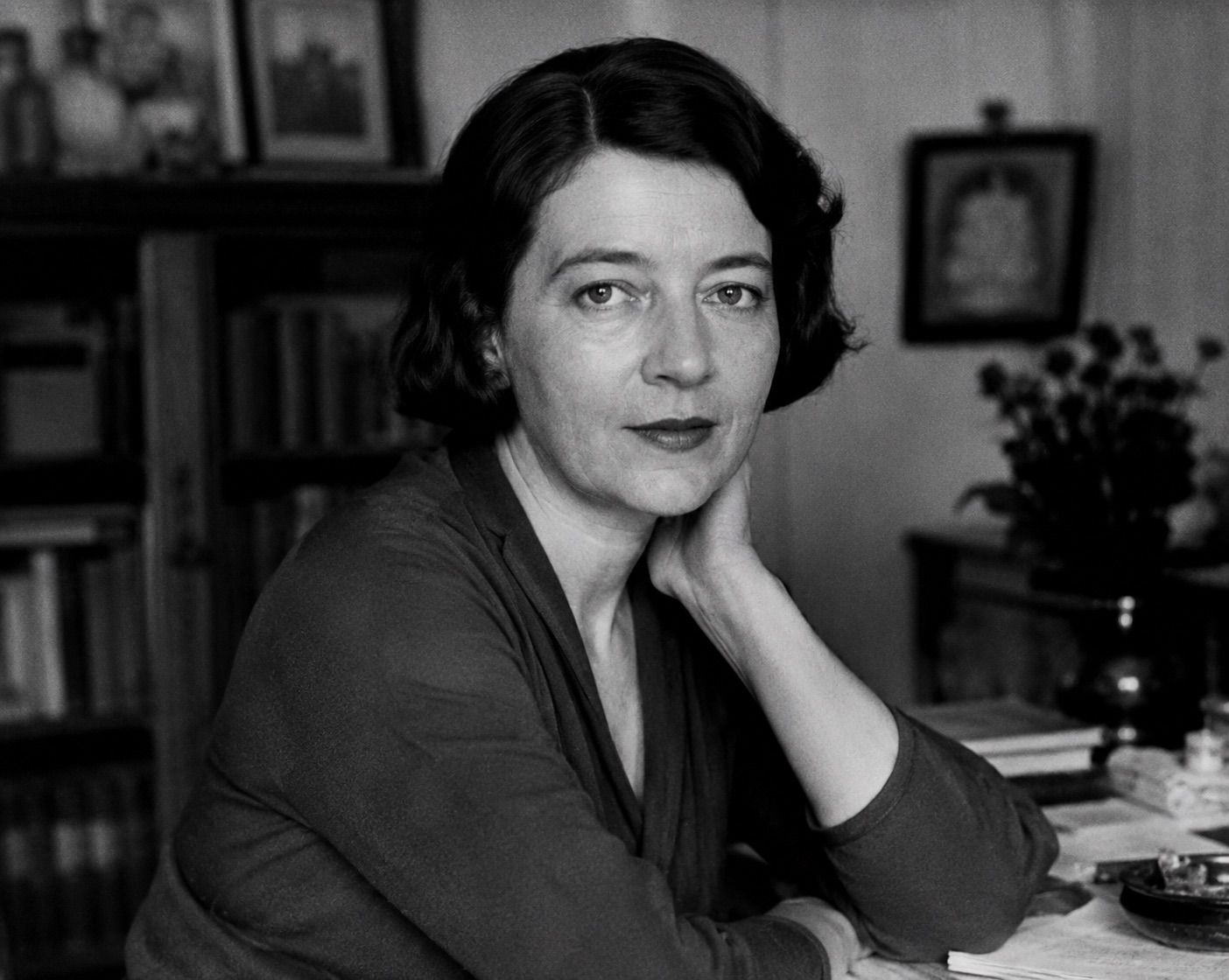
Kay Boyle’s name kept popping up in my American Lit class, and at first, I thought it was just because she wrote about the same stuff everyone else did – love, loss, identity. But the more we read, the more I realized that her stories were like cracks in a facade, revealing something beneath the surface. It’s not just that her writing is raw or honest (although it definitely is), but there’s this underlying tension between what she presents and what seems to be hiding behind those words.
I’ve always been drawn to writers who write about the messy stuff – relationships gone wrong, family secrets, internal conflicts. Boyle’s work often felt like a fusion of the confessional and the surreal, with characters navigating these fragile emotional landscapes. Her stories were full of quiet desperation, this sense that the world is unraveling, but no one quite knows how to hold on or let go.
What really caught my attention was her exploration of motherhood – specifically, the ways in which women are socialized to be caregivers and the consequences that follow. In her short story “The White Horses of Vienna,” a mother’s obsession with her children is mirrored by the city itself: Vienna as a place where beauty and decay coexist. I couldn’t help but think about my own relationship with my mom, who’s been dealing with chronic illness for years. It’s like we’re both navigating this weird dance between caring for each other and losing ourselves in the process.
Boyle’s writing makes me uncomfortable because it forces me to confront my own emotions – not just as a reader, but also as someone who’s trying to figure out her place in the world. There are moments when I feel like she’s speaking directly to me, acknowledging this sense of disconnection and uncertainty that comes with growing up. It’s like we’re both searching for some kind of truth, but it keeps slipping through our fingers.
I’ve been rereading Boyle’s work because I’m still trying to untangle what draws me in. Maybe it’s the way she captures these fragile moments – not just romantic love or familial bonds, but also the ways in which we’re all connected through our mistakes and fears. Or maybe it’s something more specific, like her critique of patriarchy and its effects on women’s lives. Whatever it is, Boyle’s writing has a way of getting under my skin, making me wonder about the world and myself.
Sometimes I feel like I’m missing something – that there’s this deeper level to her work that I haven’t quite grasped yet. Maybe it’s because I’m still figuring out what I want to say with my own writing (and life). But when I read Boyle’s words, I feel seen in a way that’s both exhilarating and terrifying. It’s like she’s holding up a mirror to all the complexities we try to hide behind – love, loss, identity – and saying, “Look, this is what it really looks like.”
That feeling stays with me long after I finish reading her stories. It’s like a lingering unease that refuses to settle into anything neat or tidy. I’m still trying to make sense of it all, but for now, I’m just going to sit with these feelings and see where they take me.
As I delve deeper into Boyle’s work, I find myself returning to her essays and nonfiction pieces. There’s something about the way she blends memoir and criticism that resonates with me. She writes about being a mother, a wife, a writer, and yet these roles never seem to define her fully. Instead, they become threads in a complex tapestry, revealing the fragility of identity.
I think about my own relationships – with family members, friends, romantic partners – and how often I feel like I’m trying to pin down who I am. But Boyle’s work suggests that this search for self is an ongoing process, one that can never be fully satisfied. It’s a truth that both unsettles and frees me, like being told it’s okay to not have all the answers.
In her essay “The Politics of Love,” Boyle writes about the ways in which societal expectations can suffocate love – particularly romantic love – by imposing strict norms and roles on partners. She argues that this kind of love becomes a performance, a masquerade that hides the true complexities of human connection. I’ve seen this play out in my own relationships, where people try to fit into predetermined molds rather than embracing their messy, imperfect selves.
Boyle’s critique of societal expectations resonates deeply with me because it speaks to the ways in which I’ve felt pressure to conform – as a daughter, a friend, a partner. But her work also suggests that these expectations can be broken, that we have the power to redefine what love and relationships mean to us. It’s a message that feels both empowering and daunting, like standing at the edge of a cliff with no safety net.
As I continue to explore Boyle’s writing, I’m struck by her commitment to speaking truth to power – whether it’s the patriarchy, societal norms, or even her own family dynamics. Her work is not about sugarcoating or prettifying the world; instead, it’s a raw and unflinching portrayal of what it means to be human. It’s a quality that I admire but also find intimidating – like trying to keep up with someone who’s always one step ahead of me.
I’m left wondering: What does it mean to write about the messy stuff? Is it possible to capture these complexities on the page, or do we risk getting lost in the fragments of our own experiences? Boyle’s work suggests that the answer lies somewhere in between – that writing can be both a way to process and understand ourselves and a means of connecting with others who’ve walked similar paths.
As I reflect on Kay Boyle’s writing, I’m struck by her ability to capture the nuances of human experience without sacrificing honesty. It’s as if she’s saying, “I’ll show you the messy parts, but don’t expect me to tie them up with a bow.” This willingness to confront the complexities of life is both refreshing and unsettling, like being given permission to be vulnerable without apology.
In her essay “The Woman at the Washington Zoo,” Boyle writes about the ways in which we’re conditioned to see women as objects or commodities, rather than as fully fleshed-out human beings. It’s a critique that resonates deeply with me, particularly when I think about my own experiences with sexism and objectification. Boyle’s writing makes me realize that these attitudes are not just external, but also internalized – we’re often complicit in our own oppression, perpetuating the very systems that harm us.
I’ve been thinking a lot about this dynamic, how it plays out in my relationships and interactions with others. I catch myself making assumptions or judgments based on societal expectations, rather than truly seeing and hearing the people around me. Boyle’s work is a reminder to question these patterns, to look beyond the surface level and try to understand the complexities of human experience.
One of the things that’s been on my mind lately is the tension between honesty and tact. As writers, we’re often encouraged to be raw and honest in our writing, but there’s also a recognition that this can be hurtful or alienating for readers. Boyle’s work walks this tightrope with ease, conveying a sense of vulnerability without sacrificing empathy or compassion.
I’m still trying to untangle the threads of what draws me to her writing – is it the way she captures the complexities of human experience? The way she critiques societal norms and expectations? Or something more specific, like her exploration of motherhood or her critique of patriarchy? Maybe it’s a combination of all these things, and then some.
As I continue to explore Boyle’s work, I’m struck by the ways in which it challenges me to think differently about writing, relationships, and human experience. Her writing is not just a reflection of her own life; it’s an invitation to explore the messy, complicated world we inhabit, with all its contradictions and paradoxes. It’s a reminder that honesty and vulnerability are not weaknesses, but strengths – that the most powerful writing comes from embracing our complexities, rather than trying to simplify or sanitize them.
One of the things I love about Boyle’s writing is the way she uses metaphor to convey the complexities of human experience. In “The White Horses of Vienna,” for example, the city itself becomes a character, symbolizing the fragility and beauty that exists in parallel with decay and destruction. It’s a powerful reminder that our experiences are always multifaceted, never reducible to simple labels or categories.
I think about my own life, and how often I’ve tried to simplify complex emotions or relationships into neat little packages. But Boyle’s writing shows me that this is a false dichotomy – that we can be both vulnerable and strong, loving and hurt, all at once. It’s a liberating thought, one that frees me from the need to categorize myself or others into tidy boxes.
As I read through her essays and stories, I’m struck by the way Boyle explores the intersections between personal and public life. She writes about being a mother, a wife, a writer – but never separates these roles from her experiences as a woman, an artist, a human being. It’s as if she’s saying that our identities are always entangled, that we can’t isolate one aspect of ourselves without affecting the others.
This resonates deeply with me, particularly in my own struggles to balance different parts of my life. I feel like I’m constantly negotiating between my desire for independence and my need for connection – and Boyle’s writing shows me that this is a universal experience, not just mine. Her work reminds me that we’re all navigating complex webs of relationships, societal expectations, and personal desires.
One thing that’s been on my mind lately is the idea of ” authenticity” in writing – what does it mean to be true to ourselves, especially when our experiences are shaped by privilege or oppression? Boyle’s writing raises these questions for me, particularly in her essay “The Politics of Love.” She writes about how societal expectations can suffocate love, turning it into a performance rather than a genuine expression of human connection.
I think about my own relationships and the ways in which I’ve tried to fit into predetermined molds – whether it’s romantic love or friendships. Boyle’s work shows me that this is a false narrative, one that perpetuates harm and hurt rather than genuine connection. Her writing encourages me to question these patterns, to look beyond the surface level and seek out authentic relationships based on mutual understanding and respect.
As I continue to explore Boyle’s work, I’m struck by her commitment to social justice – not just in her writing, but also in her activism. She was a vocal critic of the McCarthy era, using her platform as a writer to speak out against injustice and oppression. Her courage inspires me, particularly in my own struggles to find my voice as a young woman.
Boyle’s writing is not just about personal experience – it’s also about the world around us, with all its complexities and contradictions. She writes about politics, history, culture – always seeking to understand how these forces intersect with our individual lives. Her work shows me that we’re never separate from the world; our experiences are always embedded within a larger context of power dynamics, social norms, and historical events.
This realization is both empowering and overwhelming – like being given a map to a vast, uncharted territory. Boyle’s writing encourages me to explore this terrain, to seek out new perspectives and understandings that can help me navigate the complexities of our world.
As I delve deeper into Kay Boyle’s work, I’m struck by her ability to capture the nuances of human experience in a way that feels both deeply personal and universally relatable. Her writing is like a mirror held up to my own life, reflecting back all the complexities and contradictions that I try to navigate on a daily basis.
One thing that’s been on my mind lately is the concept of “home” – what it means to feel at home in one’s body, in one’s relationships, in one’s own skin. Boyle’s writing touches on this theme in her essay “The Woman at the Washington Zoo,” where she describes a woman who feels like an outsider in her own life, trapped in a world that doesn’t quite understand or accept her.
I feel a deep resonance with this feeling of disconnection – it’s something I’ve experienced myself, particularly in my struggles to come to terms with my own identity and sense of self. Boyle’s writing shows me that I’m not alone in this feeling, that there are countless others who’ve navigated similar experiences of isolation and dislocation.
As I read through her essays and stories, I’m struck by the way she uses language to create a sense of intimacy and connection with her readers. It’s like she’s speaking directly to me, sharing her own fears and doubts in a way that feels both vulnerable and liberating. This is something I’ve always struggled with as a writer – how to convey my own experiences without sacrificing empathy or compassion for others.
Boyle’s writing shows me that this is possible, that it’s okay to be raw and honest while still being mindful of the reader’s experience. She writes about her own struggles with identity and belonging, about feeling like an outsider in her own family and community. And yet, despite these feelings of disconnection, she manages to convey a sense of hope and resilience that’s both inspiring and contagious.
One thing that’s been on my mind lately is the tension between individualism and collectivism – how do we balance our need for independence and self-expression with our desire for connection and community? Boyle’s writing raises these questions for me, particularly in her essay “The Politics of Love.” She writes about how societal expectations can suffocate love, turning it into a performance rather than a genuine expression of human connection.
I think about my own relationships and the ways in which I’ve tried to fit into predetermined molds – whether it’s romantic love or friendships. Boyle’s work shows me that this is a false narrative, one that perpetuates harm and hurt rather than genuine connection. Her writing encourages me to question these patterns, to look beyond the surface level and seek out authentic relationships based on mutual understanding and respect.
As I continue to explore Boyle’s work, I’m struck by her commitment to social justice – not just in her writing, but also in her activism. She was a vocal critic of the McCarthy era, using her platform as a writer to speak out against injustice and oppression. Her courage inspires me, particularly in my own struggles to find my voice as a young woman.
Boyle’s writing is not just about personal experience – it’s also about the world around us, with all its complexities and contradictions. She writes about politics, history, culture – always seeking to understand how these forces intersect with our individual lives. Her work shows me that we’re never separate from the world; our experiences are always embedded within a larger context of power dynamics, social norms, and historical events.
This realization is both empowering and overwhelming – like being given a map to a vast, uncharted territory. Boyle’s writing encourages me to explore this terrain, to seek out new perspectives and understandings that can help me navigate the complexities of our world.