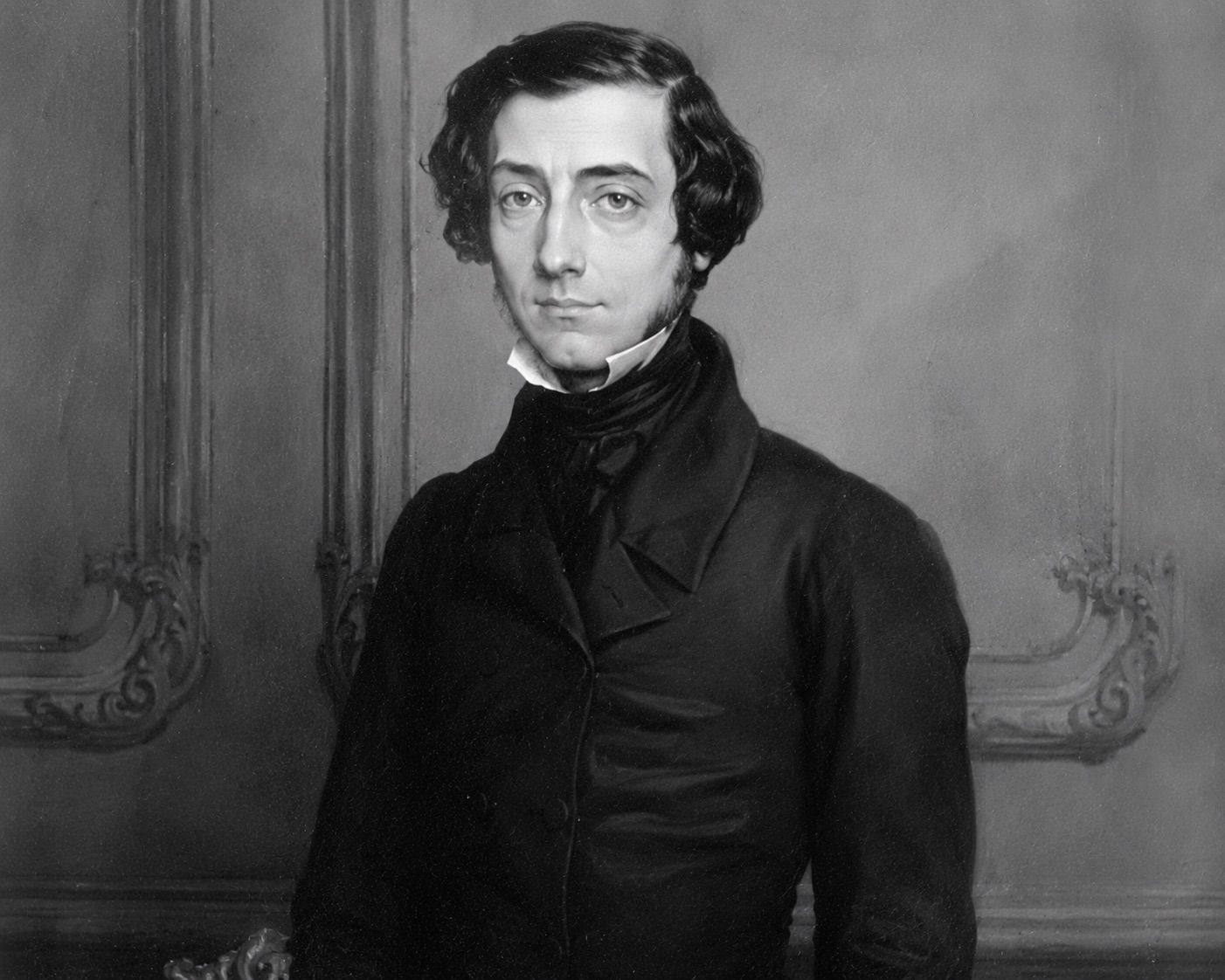
I’ve been thinking a lot about Alexis de Tocqueville lately, and I’m not entirely sure why he’s stuck with me like this. Maybe it’s because his writing is so introspective and honest that it makes me feel less alone in my own thoughts. Or maybe it’s the way he combines insight into human nature with a sense of detachment, as if observing himself and others from a distance.
I remember reading “Democracy in America” for my freshman year history class, and being struck by how relevant his observations on American society felt even to us, two centuries later. But what really caught my attention was the way he wrote about individualism – not just as a trait of American culture, but as a fundamental aspect of human nature.
Tocqueville’s notion that Americans are driven by a desire for independence and self-reliance resonated with me, but it also made me uncomfortable. I’ve always prided myself on being a bit of an outsider, someone who values my autonomy above all else. But the more I read his work, the more I began to see individualism as both a strength and a weakness.
Tocqueville notes that Americans are often so focused on their own pursuits that they neglect their relationships with others – family, community, even themselves. It’s like he saw us staring into our phones, tapping away at our keyboards, and forgetting how to truly connect with the people around us. I’m guilty of this, too – I spend hours writing in my journal, lost in my own thoughts, without really engaging with the world outside.
But what bothers me most is that Tocqueville’s critique feels so… gentle. He doesn’t condemn individualism outright; instead, he presents it as a natural consequence of human nature. It’s like he’s acknowledging our flaws while still admiring us for them. This ambivalence makes me wonder: are we truly flawed for valuing our independence above all else? Or is this just a reflection of the societal pressures that shape us?
As I continue to read and think about Tocqueville, I find myself questioning my own values and motivations. Am I seeking autonomy because it’s who I am, or because I’ve been socialized to believe it’s the most desirable trait? Does my love of writing stem from a genuine desire for self-expression, or is it just another way for me to isolate myself in a world that often feels overwhelming?
I’m not sure I have any answers yet – and maybe that’s the point. Tocqueville’s work has left me with more questions than solutions, which is both frustrating and liberating. It’s made me realize that individualism is a complex, multifaceted concept that can’t be reduced to simple pros and cons.
In many ways, reading Tocqueville feels like looking into a mirror – a reflection of my own strengths and weaknesses, my fears and desires. And it’s this sense of recognition, rather than any grand revelation or insight, that keeps me coming back to his words again and again.
As I delve deeper into Tocqueville’s work, I’m struck by the way he weaves together observations on individualism with commentary on democracy itself. He sees individualism as both a driving force behind American progress and a potential threat to democratic stability. It’s like he’s acknowledging that our desire for independence can be both a strength and a weakness – a double-edged sword that can cut both ways.
This ambivalence makes me think about my own place in society, and how I navigate the tensions between individuality and community. Do I prioritize my own needs and desires above all else, or do I try to find balance by engaging with others? Tocqueville’s writing suggests that this is a universal struggle – one that we all face, regardless of our cultural background or social status.
But what really interests me is how Tocqueville’s observations on individualism are tied to his broader critique of democracy. He argues that the excesses of individualism can lead to a kind of “soft despotism,” where citizens become complacent and passive in the face of overwhelming bureaucratic power. It’s like he’s warning us about the dangers of unchecked capitalism, or the ways in which our desire for freedom can be exploited by those in power.
This idea resonates with me on a personal level, because I’ve always felt uneasy about the way social media platforms and corporate interests shape our perceptions of reality. We’re constantly bombarded with messages telling us to buy more, consume more, achieve more – all in the name of individual success. But what happens when we start to internalize these messages, and begin to see ourselves as products to be marketed and sold? Tocqueville’s critique of democracy feels like a warning about this very phenomenon.
As I continue to ponder these ideas, I’m reminded of my own writing habits – how I often find myself lost in the world of words, isolated from the people and experiences that might ground me. Is this a sign of individualism run amok? Or is it simply a natural byproduct of being a introverted person who finds solace in the written word?
I’m not sure I have any answers to these questions – but Tocqueville’s work has given me a new lens through which to examine my own life and values. His ambivalence towards individualism has made me realize that this is a complex, multifaceted issue that can’t be reduced to simple pros and cons. It’s a reminder that we’re all caught in the web of our own desires and contradictions – and that true understanding requires embracing these complexities head-on.
As I delve deeper into Tocqueville’s work, I find myself drawn to his critiques of democracy, particularly his notion of “soft despotism.” This concept has me thinking about the ways in which power can be exercised without being overtly authoritarian. In today’s world, where corporate influence and social media platforms wield significant control over our lives, Tocqueville’s warnings feel eerily prescient.
I’ve been noticing how easily I get sucked into the vortex of online discussions, scrolling through feeds and engaging with strangers who share similar interests. It’s intoxicating to think that my opinions matter, that I’m part of a larger conversation that can shape public discourse. But at what cost? Tocqueville would likely argue that this kind of engagement is just another form of soft despotism – where individuals become complicit in their own manipulation by surrendering their autonomy to the whims of algorithms and marketing strategies.
This has me questioning my own habits as a writer. Do I use social media platforms as a way to connect with others, or do I merely use them to broadcast my thoughts and opinions to an audience that may not even be listening? Am I contributing to the very problem Tocqueville identified – where citizens become passive and complacent in the face of overwhelming bureaucratic power?
It’s unsettling to consider that my love of writing might be both a strength and a weakness. On one hand, it allows me to express myself and connect with others on a deeper level. But on the other hand, it can also isolate me from the world around me – making me complicit in the very kind of soft despotism Tocqueville warned against.
I’m not sure what this means for my writing or my place in society. Perhaps it’s simply a reminder to be more mindful of how I engage with others online, to avoid getting sucked into the vortex of echo chambers and instead seek out diverse perspectives that challenge my own assumptions. Or maybe it’s a call to action – to use my writing as a way to critique the systems of power that shape our world, rather than simply contributing to their perpetuation.
As I continue to grapple with these ideas, I’m struck by Tocqueville’s own ambivalence towards democracy. He saw its potential for greatness, but also its tendency towards excess and complacency. It’s a tension that feels deeply personal – one that I’m still trying to navigate in my own life.
I wonder what it would be like to embody this kind of ambivalence, to acknowledge the contradictions within myself without becoming mired in them. Would I become more self-aware? More compassionate towards others? Or would I simply become paralyzed by doubt and indecision?
The questions swirl around me like a vortex, drawing me deeper into the complexities of Tocqueville’s thought.
As I ponder Tocqueville’s ambivalence towards democracy, I find myself thinking about my own relationship with power. Growing up in a relatively comfortable middle-class family, I’ve always felt a sense of privilege and security that I’m not sure I fully appreciate. But at the same time, I’m aware of the ways in which systems of power can exert control over individuals, often without them even realizing it.
Tocqueville’s notion of “soft despotism” has me thinking about the ways in which corporate interests and social media platforms can shape our perceptions and behaviors. It’s like we’re living in a world where the boundaries between public and private are increasingly blurred, and where our every move is being tracked, analyzed, and manipulated.
I’m not sure what to make of this, or how to navigate it as a writer and an individual. Part of me wants to resist these systems, to assert my independence and autonomy in the face of overwhelming bureaucratic power. But another part of me feels like I’m already complicit, that I’m contributing to the very problem Tocqueville identified.
This ambivalence is what makes Tocqueville’s writing so compelling – he’s not offering easy answers or solutions, but instead inviting us to grapple with the complexities and contradictions of human nature. It’s a reminder that we’re all caught in this web of power dynamics, and that true understanding requires embracing these complexities head-on.
As I continue to read and think about Tocqueville, I’m struck by his emphasis on the importance of civic engagement and participatory democracy. He argues that individuals must remain vigilant and actively engaged in order to prevent the concentration of power and the erosion of democratic values.
But what does this mean for me as a writer? Am I contributing to the very problem Tocqueville identified, or am I using my writing as a way to critique these systems of power? Or is it something in between – a reflection of both my own agency and complicity?
I’m not sure I have any answers yet, but Tocqueville’s work has given me a new perspective on the complexities of power and democracy. It’s made me realize that true freedom requires more than just individual autonomy; it also requires an awareness of our place within larger systems of power, and a willingness to engage with others in order to create meaningful change.
As I continue to grapple with these ideas, I’m reminded of Tocqueville’s own words: “Democracy extends the sphere of human security. But beyond this limit, democracy is powerless.” This has me thinking about the limits of individual action, and how we can work together as citizens to create a more just and equitable society.
But what does it mean to be a citizen in today’s world? How do we navigate the tensions between individualism and collectivism, between our own desires and the needs of others? Tocqueville’s writing suggests that this is a universal struggle – one that we all face, regardless of our cultural background or social status.
As I ponder these questions, I’m struck by the ways in which Tocqueville’s work continues to resonate with contemporary issues. His critiques of democracy and individualism feel eerily prescient, like he was writing about the very problems we’re facing today.
But what does this say about us as a society? Are we simply repeating the same mistakes over and over again, or are we learning from Tocqueville’s warnings and striving to create a more just and equitable world?
I’m not sure I have any answers yet – but Tocqueville’s work has given me a new lens through which to examine these complex issues. His ambivalence towards democracy and individualism has made me realize that true understanding requires embracing the complexities and contradictions of human nature, rather than trying to reduce them to simple pros and cons.
As I continue to read and think about Tocqueville, I’m reminded of the power of writing as a tool for critique and social commentary. His work has shown me that even in the face of overwhelming bureaucratic power, individual voices can still make a difference – by speaking out against injustice, challenging dominant narratives, and advocating for meaningful change.
But what does this mean for my own writing? Am I using it to amplify marginalized voices or to contribute to the very systems of power I’m trying to critique? Or is it something in between – a reflection of both my own agency and complicity?
The questions swirl around me like a vortex, drawing me deeper into the complexities of Tocqueville’s thought.