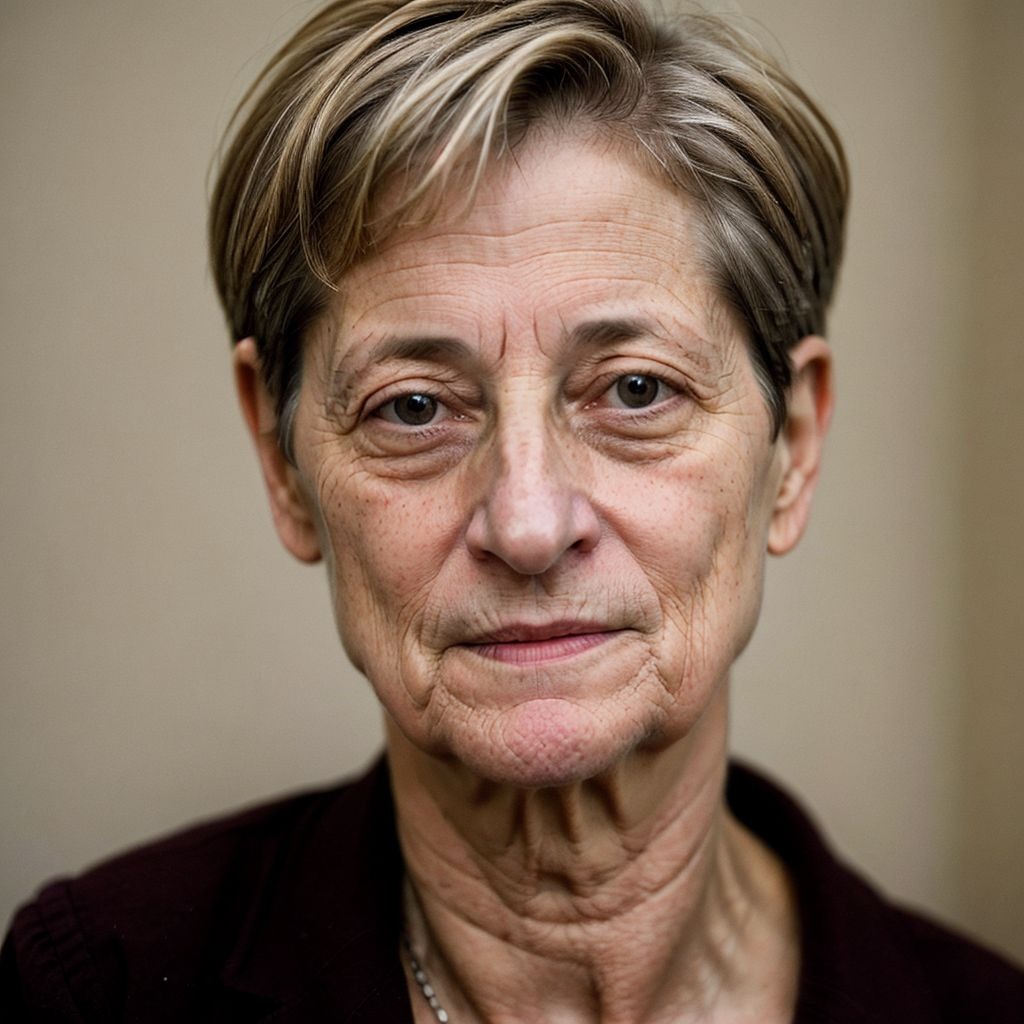
I’ve been fascinated with Judith Butler for years, but it’s only recently that I’ve started to grapple with the implications of her work on my own life. As a writer and a feminist, I’ve always been drawn to her critiques of power, identity, and performance – but what really catches me is the way she challenges the notion of fixed selves.
For me, Butler’s ideas about performativity have been both liberating and unsettling. On one hand, it’s exciting to think that our identities are not predetermined by biology or social norms, but rather constructed through repeated actions and performances. This means that I have agency over how I present myself to the world – a notion that feels both empowering and overwhelming.
At times, I find myself torn between embracing this idea of fluid identity and feeling anxious about the instability it implies. If my identity is a performance, then what does that mean for my sense of self? Am I constantly reinventing myself, or am I just pretending to be someone I’m not? The ambiguity makes me uncomfortable – but at the same time, it’s also exhilarating.
One of Butler’s most influential works, “Gender Trouble,” has been a constant companion on this journey. I’ve returned to it again and again, searching for answers to questions like: What does it mean to “perform” femininity or masculinity? Can I ever truly be myself, or am I always playing a role? The more I read her words, the more I realize that these are not just abstract philosophical conundrums – they’re intensely personal and deeply relevant.
I’ve noticed that Butler’s ideas have seeped into my own writing. When I’m struggling to find the right voice or tone for an essay, I find myself wondering: what performance am I trying to convey? Am I using language to reinforce existing power structures, or can I use it to subvert them? These questions make me think about the ways in which language shapes our perceptions of reality – and how that affects my own understanding of self.
As I delve deeper into Butler’s work, I’m struck by her commitment to unsettling easy answers. She refuses to provide clear-cut solutions or definitions, instead inviting readers to confront the complexities of human experience. This approach is both frustrating and refreshing – it makes me feel like I have to do the hard work myself, but also that there’s value in wrestling with ambiguity.
One of Butler’s most famous concepts is “precarity” – the state of being vulnerable and exposed, without a clear sense of security or control. As someone who’s struggled with anxiety and self-doubt, this idea resonates deeply with me. I find myself thinking about how precarity operates in my own life: when do I feel most alive, and when do I feel like I’m barely holding it together? Butler’s work suggests that these states are intertwined – that our moments of greatest vulnerability can also be the catalysts for growth and transformation.
As I continue to explore Butler’s ideas, I’m left with more questions than answers. But that’s precisely what draws me in – the sense that there’s still so much to learn, so much to untangle. Maybe this is the true power of her work: not just in its theoretical rigor or intellectual depth, but in its ability to spark a conversation within myself about who I am and how I show up in the world.
As I grapple with Butler’s ideas on performativity and precarity, I’m struck by the ways in which they intersect with my own experiences as a writer. When I’m creating, I often feel like I’m putting on a mask or a persona – not necessarily to deceive others, but to explore different aspects of myself. This can be exhilarating, but it also makes me wonder: am I ever being truly authentic?
Butler’s concept of ” iterability” – the idea that our performances are always subject to repetition and reiteration – has been particularly influential in this regard. It suggests that even when we think we’re being ourselves, we’re still drawing on existing narratives or scripts that have been passed down to us. This can be a daunting realization, especially for someone like me who’s always struggled with self-doubt.
And yet, as I continue to read Butler and reflect on my own writing practice, I’m starting to see this iterability as a strength rather than a weakness. Perhaps the most authentic thing I can do is acknowledge the ways in which my performances are always already mediated by external influences – cultural norms, social expectations, historical context. By embracing this complexity, I might be able to tap into a deeper sense of self that’s not bound by any one fixed identity.
This idea is both liberating and terrifying – like standing at the edge of a cliff, unsure of what lies ahead but sensing that there’s a whole new world waiting for me on the other side. As Butler would say, it’s a moment of “undoing” – where I have to let go of my preconceptions about who I am and how I should present myself in order to discover something new.
I’m not sure what this means for my writing or for my sense of self, but I do know that it requires me to be more honest with myself. Not just about my surface-level identity as a writer or a feminist, but about the deeper, messier currents that drive me – the contradictions and paradoxes that make me human. It’s a scary thought, but also an exhilarating one – like standing at the edge of a stormy sea, wondering what waves will crash against the shore next.
As I stand at this edge, I’m reminded of Butler’s notion that our identities are always in a state of “becoming.” This idea is both comforting and unsettling – it suggests that I don’t have to be fixed or definitive, but it also means that I’m constantly navigating uncertainty.
I think about how this applies to my writing. When I’m creating, I often feel like I’m trying to capture a fleeting moment in time – a feeling, an emotion, a insight. But what if I’m not capturing the truth of myself? What if I’m just performing a version of myself that’s more palatable or marketable?
Butler’s ideas about performativity and iterability make me realize that even when I think I’m being authentic, I’m still drawing on existing narratives and scripts. This can be disorienting – like trying to navigate a maze without a map.
And yet, as I continue to grapple with these ideas, I’m starting to see the value in embracing this uncertainty. Maybe the most honest thing I can do is acknowledge that my writing (and my sense of self) are always already in flux. Maybe this means that I have to be more flexible, more adaptable – willing to take risks and challenge my own assumptions.
I think about how Butler’s work has influenced me as a writer. When I’m struggling with an essay or a poem, I often find myself returning to her ideas about performativity and iterability. I’ll ask myself: what performance am I trying to convey? Am I using language to reinforce existing power structures, or can I use it to subvert them?
These questions make me think about the ways in which language shapes our perceptions of reality – and how that affects my own understanding of self. It’s a complex web, full of contradictions and paradoxes. But as Butler would say, this is precisely where the most interesting and productive work takes place.
I’m not sure what lies ahead for me as a writer or as a person. I don’t have any clear answers or solutions to offer. But I do know that I’m on a journey – one that’s fraught with uncertainty and possibility. And it’s in this space, between the known and the unknown, that I feel most alive.
As I continue to explore Butler’s ideas, I find myself returning to the concept of “undoing” – the process of letting go of preconceptions and embracing uncertainty. It’s a idea that resonates deeply with me as a writer, particularly when it comes to tackling complex topics like identity and power.
One of the things that strikes me about Butler’s work is her willingness to take on big questions without trying to simplify them. She knows that human experience is messy and multifaceted, and she resists the urge to reduce it to neat categories or easy answers. This approach can be uncomfortable at times – after all, who wants to grapple with ambiguity and uncertainty? – but it’s also deeply liberating.
For me, this means embracing the complexity of my own experiences as a writer. When I’m creating, I often find myself torn between competing desires: the desire to express myself honestly and authentically, and the desire to present a coherent and marketable image to the world. Butler’s ideas about performativity and iterability help me see that these two desires are not mutually exclusive – in fact, they’re deeply intertwined.
As I think about my own writing practice, I realize that I’m constantly negotiating between different versions of myself. There’s the “writer” self, who is confident and assured in their abilities; there’s the “student” self, who is still learning and trying to figure things out; and there’s the “person” self, who is vulnerable and uncertain.
Butler’s work suggests that these different selves are not fixed or essential – they’re constantly shifting and evolving. And this realization both excites and terrifies me. On one hand, it means that I have agency over how I present myself to the world; on the other hand, it means that I’m always navigating uncertainty and possibility.
I think about how this relates to my writing style as well. When I’m creating, I often feel like I’m trying to capture a specific tone or voice – one that’s authentic and true to myself. But what if that tone is already performative? What if it’s just a mask that I’ve put on, rather than an honest expression of who I am?
Butler’s ideas about iterability help me see that this is precisely the case. Even when I think I’m being authentic, I’m still drawing on existing narratives and scripts – whether they’re cultural, historical, or personal. This can be disorienting at times, but it also means that I have a chance to subvert those narratives and create something new.
As I continue to explore Butler’s ideas, I find myself asking more questions than I have answers. What does it mean to be authentic in a world where identity is always already performative? How can I use language to challenge existing power structures without getting caught up in their own limitations?
These are questions that I’m still grappling with, but they’re also questions that feel deeply relevant to my own life as a writer and a person. As Butler would say, the most interesting and productive work takes place at the edges of certainty – where we’re forced to confront our own ambiguities and contradictions.
For me, this means embracing the uncertainty of my own identity and creative practice. It means being willing to take risks and challenge my own assumptions – not just as a writer, but as a person. And it means acknowledging that even when I think I’m being myself, I’m still drawing on existing narratives and scripts that are always already in flux.
This realization is both terrifying and exhilarating – like standing at the edge of a cliff, unsure of what lies ahead but sensing that there’s a whole new world waiting for me on the other side. As Butler would say, it’s a moment of “undoing” – where I have to let go of my preconceptions about who I am and how I should present myself in order to discover something new.
As I stand at this edge, I’m reminded that Butler’s ideas are not just theoretical constructs, but also deeply personal and experiential. Her own life story is one of queer identity, activism, and academic rigor – a testament to the ways in which her work has been shaped by her experiences as a marginalized person.
I think about how this resonates with me as a writer and a feminist. I’ve often felt like my own voice is somehow less legitimate because it’s not coming from a place of traditional authority or experience. But Butler’s work suggests that even without institutional power, I have the ability to create meaning and challenge dominant narratives.
This idea is both empowering and humbling – it reminds me that my words have value, but also that they are always subject to revision and critique. As Butler would say, our identities and performances are never fixed or final – they’re constantly in a state of becoming.
I think about how this applies to my own writing practice. When I’m creating, I often feel like I’m trying to capture a specific tone or voice – one that’s authentic and true to myself. But what if that tone is already performative? What if it’s just a mask that I’ve put on, rather than an honest expression of who I am?
Butler’s ideas about iterability help me see that this is precisely the case. Even when I think I’m being authentic, I’m still drawing on existing narratives and scripts – whether they’re cultural, historical, or personal. This can be disorienting at times, but it also means that I have a chance to subvert those narratives and create something new.
As I continue to explore Butler’s ideas, I find myself thinking about the ways in which language shapes our perceptions of reality. When I’m writing, I often try to use words that are precise and accurate – but what if that precision is actually a form of performative control? What if my language is reinforcing existing power structures, rather than challenging them?
Butler’s work suggests that even language itself can be a form of performance – a way of creating meaning and shaping reality. This idea is both exhilarating and terrifying – it means that I have agency over how I use language, but also that I’m always subject to the constraints and possibilities of my own cultural context.
As I grapple with these ideas, I’m reminded of Butler’s notion that our identities are never fixed or essential – they’re constantly shifting and evolving. This realization is both liberating and unsettling – it means that I have agency over how I present myself to the world, but also that I’m always navigating uncertainty and possibility.
I think about how this applies to my own sense of self as a writer and a person. When I’m creating, I often feel like I’m trying to capture a specific version of myself – one that’s authentic and true. But what if that version is already performative? What if it’s just a mask that I’ve put on, rather than an honest expression of who I am?
Butler’s ideas about iterability help me see that this is precisely the case. Even when I think I’m being myself, I’m still drawing on existing narratives and scripts – whether they’re cultural, historical, or personal. This can be disorienting at times, but it also means that I have a chance to subvert those narratives and create something new.
As I continue to explore Butler’s ideas, I find myself asking more questions than I have answers. What does it mean to be authentic in a world where identity is always already performative? How can I use language to challenge existing power structures without getting caught up in their own limitations?
These are questions that I’m still grappling with, but they’re also questions that feel deeply relevant to my own life as a writer and a person. As Butler would say, the most interesting and productive work takes place at the edges of certainty – where we’re forced to confront our own ambiguities and contradictions.
For me, this means embracing the uncertainty of my own identity and creative practice. It means being willing to take risks and challenge my own assumptions – not just as a writer, but as a person. And it means acknowledging that even when I think I’m being myself, I’m still drawing on existing narratives and scripts that are always already in flux.
This realization is both terrifying and exhilarating – like standing at the edge of a cliff, unsure of what lies ahead but sensing that there’s a whole new world waiting for me on the other side. As Butler would say, it’s a moment of “undoing” – where I have to let go of my preconceptions about who I am and how I should present myself in order to discover something new.
As I stand at this edge, I’m reminded that Butler’s ideas are not just theoretical constructs, but also deeply personal and experiential. Her own life story is one of queer identity, activism, and academic rigor – a testament to the ways in which her work has been shaped by her experiences as a marginalized person.
I think about how this resonates with me as a writer and a feminist. I’ve often felt like my own voice is somehow less legitimate because it’s not coming from a place of traditional authority or experience. But Butler’s work suggests that even without institutional power, I have the ability to create meaning and challenge dominant narratives.
This idea is both empowering and humbling – it reminds me that my words have value, but also that they are always subject to revision and critique. As Butler would say, our identities and performances are never fixed or final – they’re constantly in a state of becoming.
I’m not sure where this journey will take me, or what lies ahead for me as a writer and a person. But I do know that I’m on a path of discovery – one that’s fraught with uncertainty and possibility. And it’s in this space, between the known and the unknown, that I feel most alive.