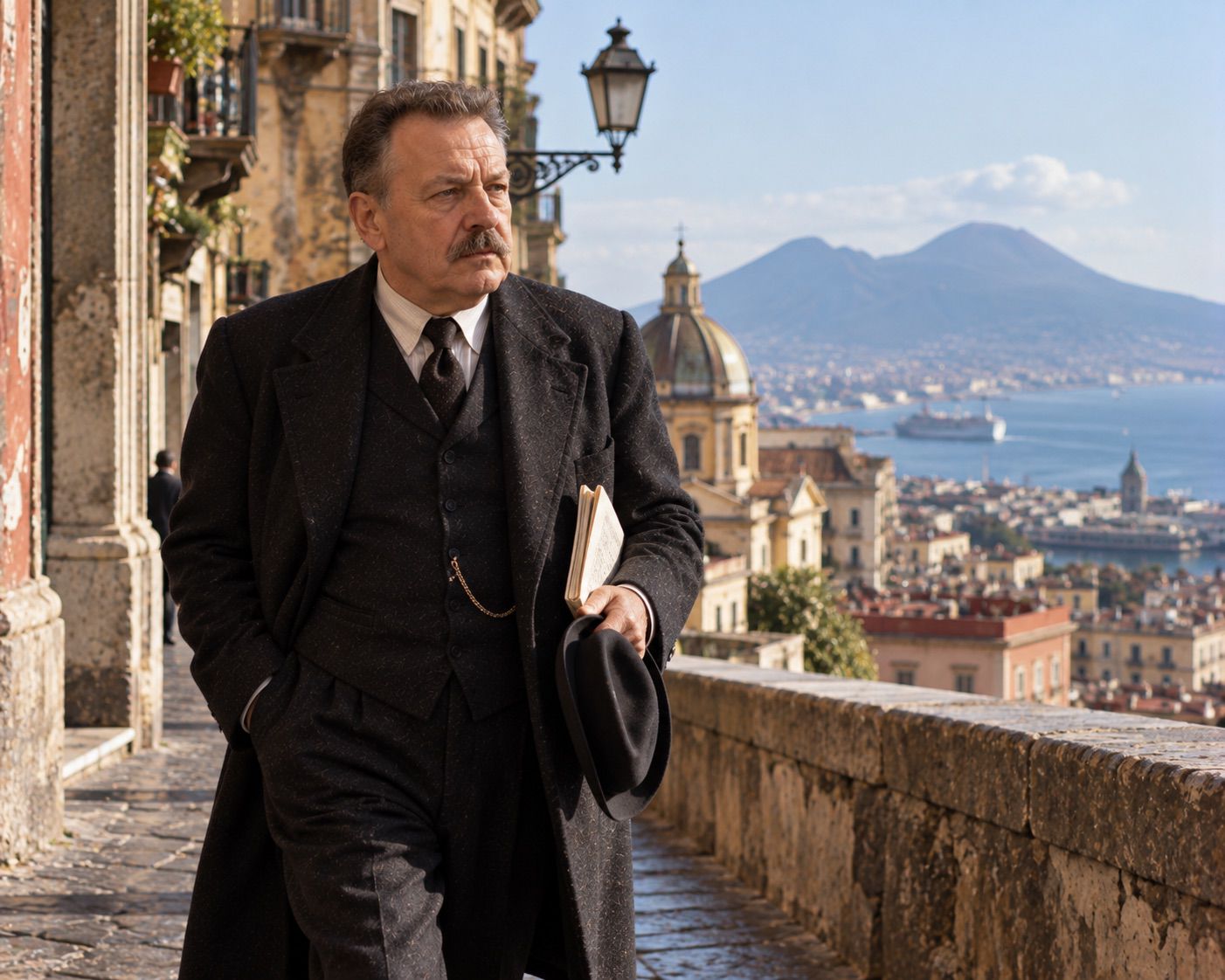
I’ve been thinking about Benedetto Croce a lot lately, ever since I stumbled upon his name in a footnote while reading about Italian philosophy. There’s something about him that fascinates me – or maybe it’s what he represents. As a writer and a thinker, I find myself drawn to the way he wove together aesthetics, politics, and history.
What strikes me is how Croce lived a life of contradictions. On one hand, he was a fervent nationalist who believed in the superiority of Italian culture; on the other, his philosophy emphasized the universal and the human experience. It’s like he had two opposing souls inside him – the patriot and the cosmopolitan. I feel a twinge of discomfort when I think about this tension because it makes me wonder if it’s possible to reconcile these conflicting identities.
Croce’s most famous work, “Aesthetic as Science of Expression,” has been on my mind for weeks. In it, he argues that art is not just a reflection of reality but an expression of the human spirit. I can see why this resonates with me; as someone who writes for personal growth and clarity, I’ve always believed that language has the power to reveal our innermost selves. But what about the societal pressures that shape our expressions? Doesn’t art also reflect the biases and values of its creators?
I’ve been reading Croce’s critiques of positivism and empiricism, how he saw them as stifling the creative potential of humanity. It makes me think about my own experiences in academia, where I felt pressure to conform to certain standards of writing and thinking. Was I stifling my creativity by adhering to those expectations? Or was it necessary to survive within that system?
One thing that’s puzzled me is Croce’s involvement with the Fascist party during World War II. How could someone who advocated for humanism and individuality support a regime that perpetrated such atrocities? It’s like he got caught up in his own nationalistic fervor, blinded by his love of Italy to see the horrors unfolding before him.
I’m not sure if I want to forgive Croce for this betrayal – or even if it’s possible. As someone who struggles with her own biases and contradictions, I find myself grappling with his legacy. Does his work still hold value, despite his actions? Or does that disqualify everything he wrote?
As I delve deeper into Croce’s ideas, I’m reminded of the complexity of human experience – how we’re all made up of contradictory desires, values, and loyalties. It’s a messy, uncomfortable truth, but one that feels essential to my own writing and thinking. Maybe that’s why I keep returning to Croce’s thoughts: because they challenge me to confront the ambiguities within myself.
I’m not sure what conclusions I’ll draw from this journey into Croce’s world – or if there even needs to be a conclusion. What I do know is that his life and work continue to haunt me, pushing me to explore my own contradictions and flaws.
As I navigate the complexities of Croce’s legacy, I find myself drawn back to the tension between aesthetics and politics. It’s as if he’s reminding me that art and truth are never mutually exclusive, but rather intertwined in ways that can be both beautiful and brutal.
I think about my own writing, how it often grapples with the intersection of personal experience and social commentary. Do I have a responsibility to reflect the world around me, or do I have the freedom to create my own truths? Croce’s philosophy suggests that art is not just a reflection of reality, but an expression of the human spirit – which implies that even in the midst of chaos and contradiction, there’s always the potential for transcendence.
But what about when the contradictions are too great, when the societal pressures become overwhelming? Can we still create something true and beautiful, or do we succumb to the weight of expectation? I think about my own struggles with self-expression during college, how it felt like I was constantly torn between conforming to academic standards and staying true to myself.
Croce’s involvement with Fascism has me wondering: what happens when our values and loyalties are tested in ways we never thought possible? Can we hold onto our principles, or do we get caught up in the tide of history? It’s a question that resonates deeply within me, given my own experiences with feeling like I’m walking a tightrope between personal integrity and social acceptability.
As I continue to grapple with Croce’s legacy, I find myself questioning the very notion of objectivity. Can we ever truly separate art from politics, or is it always intertwined in ways that are both subtle and profound? And what does this mean for my own writing, which often tries to navigate the complexities of personal experience and social commentary?
The more I read Croce’s work, the more I feel like I’m uncovering a map of my own inner contradictions. It’s as if he’s showing me that even in the midst of chaos and uncertainty, there’s always the potential for growth, for transformation, and for creating something new and beautiful from the ashes of our mistakes.
But what does it mean to hold onto this complexity, to acknowledge the messy, uncomfortable truth of human experience? Is it possible to find a way forward that honors both the universal and the particular, the individual and the collective? I’m not sure, but as I continue to explore Croce’s ideas, I feel like I’m slowly uncovering a path that leads me deeper into myself.
As I delve deeper into Croce’s philosophy, I find myself returning to the idea of the “aesthetic as science of expression.” It’s a notion that resonates deeply with me as a writer, because it suggests that art is not just a reflection of reality, but an attempt to transcend it. To create something beautiful and true is to tap into the human spirit, to express the depths of our emotions, desires, and experiences.
But what happens when we’re faced with the harsh realities of the world around us? When the beauty and truth of art seem incongruous with the ugliness and cruelty of politics and history? That’s where Croce’s ideas about the relationship between aesthetics and politics become particularly relevant. He argues that art can never be separated from its social context, that it’s always informed by the values and biases of its creators.
I think about my own experiences as a writer, how I’ve often struggled to reconcile my desire for artistic expression with the need to engage with the world around me. Do I have a responsibility to reflect the injustices and cruelties of society in my writing, or can I find ways to transcend them through art? Croce’s philosophy suggests that it’s possible to do both – to create something beautiful and true that also reflects the complexities of human experience.
As I navigate this tension between aesthetics and politics, I’m reminded of the importance of empathy and understanding. When we’re faced with contradictions and paradoxes, it’s easy to become mired in our own biases and assumptions. But Croce’s ideas encourage me to look beyond my own perspectives, to consider the multiple truths that exist within a given context.
I think about my own relationships, how I’ve often struggled to navigate conflicts and disagreements with others. Do I have the capacity to see things from another person’s perspective, or do I get caught up in my own convictions? Croce’s philosophy suggests that it’s possible to cultivate empathy and understanding, even in the face of great disagreement.
As I continue to explore Croce’s ideas, I find myself returning to the concept of “expression” – not just as a means of artistic creation, but also as a way of being human. When we express ourselves fully, without apology or reservation, we tap into our deepest selves and reveal the complexities of our humanity. It’s a notion that resonates deeply with me as a writer, because it suggests that language has the power to transform us, to help us grow and evolve as individuals.
But what does this mean for my own writing, which often tries to navigate the complexities of personal experience and social commentary? Can I find ways to express myself fully, without apology or reservation, even in the face of great uncertainty and contradiction? It’s a question that continues to haunt me, one that I’m not sure I’ll ever fully answer.
As I ponder the complexities of Croce’s legacy, I’m struck by the similarities between his philosophical ideas and my own experiences as a writer. The tension between aesthetics and politics, for instance, feels eerily familiar to me. In my own writing, I often struggle to reconcile the desire to create something beautiful and true with the need to engage with the world around me.
One of the things that’s resonated with me most about Croce’s philosophy is his emphasis on the importance of individual expression. He argues that art is a unique form of expression, one that allows us to tap into our deepest selves and reveal the complexities of human experience. For me, this idea speaks directly to my own experiences as a writer.
When I write, I’m not just trying to convey information or tell a story – I’m trying to express myself, to reveal the depths of my own emotions, desires, and experiences. It’s a vulnerable process, one that requires me to be honest with myself and with others.
But what happens when our expressions are met with resistance or criticism? When we’re faced with the harsh realities of the world around us, can we still find ways to express ourselves fully and authentically? Croce’s philosophy suggests that it’s possible, even in the face of great uncertainty and contradiction.
As I navigate this tension between aesthetics and politics, I’m reminded of the importance of empathy and understanding. When we’re faced with contradictions and paradoxes, it’s easy to become mired in our own biases and assumptions. But Croce’s ideas encourage me to look beyond my own perspectives, to consider the multiple truths that exist within a given context.
I think about my own relationships, how I’ve often struggled to navigate conflicts and disagreements with others. Do I have the capacity to see things from another person’s perspective, or do I get caught up in my own convictions? Croce’s philosophy suggests that it’s possible to cultivate empathy and understanding, even in the face of great disagreement.
But what does this mean for me as a writer? Can I find ways to express myself fully, without apology or reservation, even when faced with criticism or resistance? It’s a question that continues to haunt me, one that I’m not sure I’ll ever fully answer.
As I delve deeper into Croce’s philosophy, I’m struck by the way he weaves together the personal and the political. For him, aesthetics is not just about creating beautiful art, but also about engaging with the world around us. It’s a notion that resonates deeply with me as a writer, because it suggests that our creative expressions are always connected to the broader social context.
I think about my own experiences as a writer, how I’ve often felt like I’m walking a tightrope between expressing myself honestly and navigating the expectations of others. Croce’s ideas encourage me to see this tension as a fundamental aspect of human experience – not just for artists, but for everyone who wants to express themselves authentically in a world that often demands conformity.
One thing that’s struck me about Croce’s philosophy is his emphasis on the importance of intuition and imagination. He argues that art is not just a rational or intellectual pursuit, but also an emotional and intuitive one. As someone who writes for personal growth and clarity, I’ve always relied on my intuition to guide me in the creative process.
But what does this mean for me as a writer? Can I trust my instincts and follow my imagination, even when faced with uncertainty or criticism? Or do I need to rely on more rational or analytical approaches to ensure that my writing is “good enough”? Croce’s philosophy suggests that intuition and imagination are essential components of the creative process – but how can I cultivate them in a world that often values reason and logic over emotions and instincts?
As I continue to grapple with these questions, I’m reminded of the importance of vulnerability and self-awareness. When we create something new, we’re always taking risks – not just in terms of what others might think, but also in terms of our own emotional and psychological well-being. Croce’s ideas encourage me to see this vulnerability as a strength, rather than a weakness.
But what does it mean to be vulnerable as a writer? Can I find ways to express myself honestly and authentically, without sacrificing my own well-being or security? It’s a question that continues to haunt me, one that I’m not sure I’ll ever fully answer.