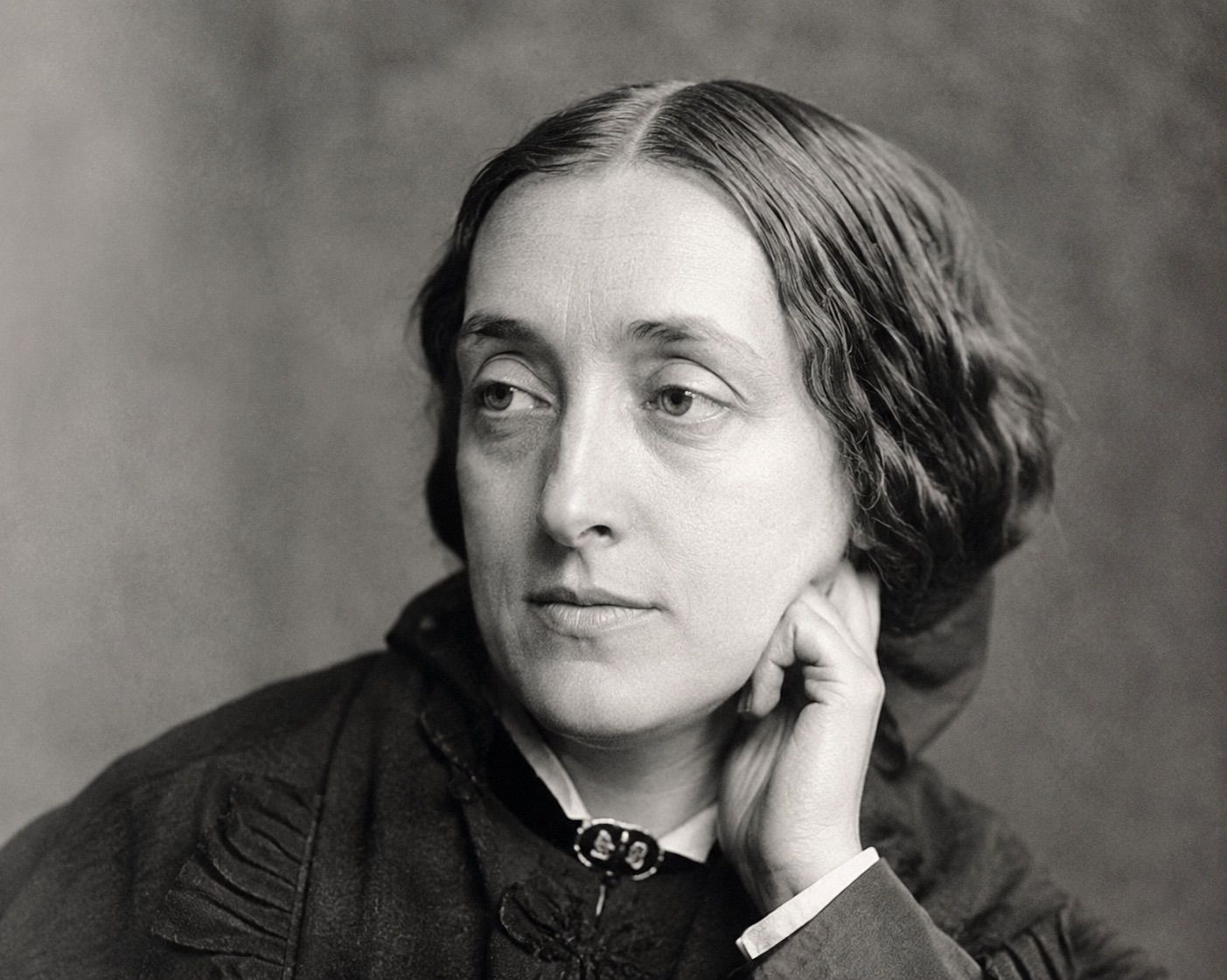
I’ve always been drawn to Christina Rossetti’s poetry, but it wasn’t until I stumbled upon her collection “The World is Too Much With Us” that I really began to understand why. Her words seemed to capture the suffocating weight of expectation that often feels like a constant companion in my own life.
I’ll be honest, when I first started reading her poetry, I felt a little overwhelmed by its intensity. The imagery was vivid and haunting, but it also made me uncomfortable. It’s like she’s holding up a mirror to the darkest corners of my own mind, where all my worries and fears reside. Her poems are not easy to read; they’re like trying to confront the parts of myself that I’d rather ignore.
One poem in particular has stayed with me – “When I am dead, my dearest”. It’s a haunting exploration of love and loss, written from the perspective of someone who’s struggling to come to terms with their own mortality. The speaker is obsessed with the idea of leaving behind something tangible, some physical proof that they existed at all.
As I read those lines, I couldn’t help but think about my own relationship with impermanence. I’ve always been a bit anxious about not being able to control the trajectory of my life, about not knowing what comes next after graduation. Rossetti’s poem tapped into that feeling – the sense that everything is ephemeral and that our attempts to hold on are ultimately futile.
It’s weird, because on one hand, I admire her willingness to confront these darker themes head-on. Her poetry feels like a necessary reckoning with the uncertainty of life. On the other hand, it makes me feel inadequate in my own attempts at self-expression. I mean, she was writing about death and loss while I’m still trying to figure out how to write about, well, anything.
I think that’s part of what draws me to Rossetti – her willingness to confront the messy, complicated aspects of human experience. Her poetry is not neat or tidy; it’s often fragmented and open-ended, like life itself. And yet, despite (or because of) its uncertainty, there’s a beauty in her words that feels both deeply personal and universally relatable.
As I continue to read through her collections, I find myself drawn back to this tension between the need for control and the reality of impermanence. It’s like she’s pointing out that our attempts to impose order on the world are ultimately futile – but that it’s in those moments of surrender that we might just discover something true about ourselves.
I’m not sure what to make of all this, or where it leaves me in terms of my own writing. But for now, I’m just grateful for Rossetti’s presence in my life – her poetry a constant reminder that the most honest explorations are often the ones that leave us feeling uncomfortable and uncertain.
As I delve deeper into Rossetti’s work, I’ve started to notice a thread of melancholy that runs through many of her poems. It’s not just a somber mood, but a sense of longing that seems to permeate every line. In “A Dirge”, for example, she writes about the transience of life and the inevitability of loss. The speaker is left with nothing but memories of what has been lost, and the pain of those memories feels almost palpable.
I think this melancholy resonates with me because it’s a feeling I’ve grown familiar with in my own life. After graduation, I felt a sense of disorientation, like I was floating on the surface of a vast ocean without any anchor to hold onto. It was as if everything I’d known and understood about myself had been upended, leaving me to navigate uncharted waters.
Rossetti’s poetry captures that feeling of being adrift, of struggling to find solid ground in a world that seems determined to keep shifting beneath our feet. And yet, even in the midst of all this uncertainty, there’s a beauty to her words that feels almost redemptive. It’s as if she’s saying that even in the darkest moments, there is always something to be found – perhaps not happiness or peace, but at least a glimmer of understanding.
I’m drawn to this idea because it speaks to my own experiences with anxiety and self-doubt. There are times when I feel like I’m drowning in my own fears and uncertainties, and it’s hard to see a way out. But Rossetti’s poetry reminds me that even in those moments, there is always something to be found – perhaps not a solution or a answer, but at least a sense of solidarity with others who have walked this path before.
As I continue to explore her work, I’m starting to realize just how much she wrote about the fragility of life and the human experience. It’s like she’s constantly holding up a mirror to our deepest fears and insecurities, forcing us to confront the parts of ourselves that we’d rather ignore. And yet, even in the midst of all this intensity, there’s a sense of compassion and empathy that feels almost overwhelming.
I’m not sure what to make of all this – whether it’s Rossetti’s poetry or my own experiences with anxiety and self-doubt – but I do know that her work has given me permission to explore these darker corners of myself. It’s like she’s saying that even in the midst of uncertainty, there is always something to be found – perhaps not a solution, but at least a glimmer of understanding and compassion for ourselves and others.
As I delve deeper into Rossetti’s work, I’m struck by the way her poetry weaves together light and darkness, hope and despair. It’s like she’s holding up two opposing forces, revealing the tension between them as a fundamental aspect of human experience. In “A Last Confession”, for example, she writes about the desire to escape the trials of life, but ultimately concludes that even in death, there is no true respite from pain and suffering.
I find myself wondering if this ambivalence towards hope and despair is a reflection of her own experiences with grief and loss. Her brother Dante Gabriel Rossetti’s mental health struggles are well-documented, and it’s said that Christina’s poetry was influenced by his condition. Did she draw on her own emotions to craft these poems, or did she use them as a way to process the world around her?
I’m not sure if I’ll ever know for certain, but what strikes me is how Rossetti’s uncertainty becomes a kind of strength in her writing. Her poetry doesn’t shy away from the messy, complicated aspects of human experience; instead, it leans into them, embracing the ambiguity and complexity that makes us human.
As I continue to read through her collections, I find myself drawn back to this idea – that our experiences of joy and sorrow, hope and despair, are intertwined in ways we can’t fully comprehend. It’s like Rossetti is showing me that even in the darkest moments, there is always a glimmer of light, and vice versa.
This realization feels both comforting and unsettling at the same time. On one hand, it suggests that my own experiences with anxiety and self-doubt are not unique or isolated; they’re part of a larger tapestry of human emotion that Rossetti’s poetry helps me see more clearly. But on the other hand, it also implies that there is no clear resolution to these struggles – only a ongoing dance between light and darkness.
I’m still trying to wrap my head around this idea, but what I do know is that Rossetti’s poetry has given me permission to explore these complexities in my own writing. It’s like she’s saying that even in the midst of uncertainty, there is always something to be found – perhaps not a solution or an answer, but at least a deeper understanding of ourselves and the world around us.
As I close her collections for now, I’m left with a sense of awe and gratitude for Rossetti’s presence in my life. Her poetry may have started as a source of discomfort and unease, but it has become something more – a beacon of hope and understanding that shines through even in the darkest moments.
One thing that strikes me about Rossetti’s poetry is its use of imagery to convey complex emotions. In “The Prince’s Progress”, for example, she describes a scene where a prince is walking through a forest, surrounded by the sounds and sights of nature. But even as the poem appears to be describing something serene and peaceful, it’s clear that the speaker is actually grappling with feelings of isolation and disconnection.
I think this use of imagery resonates with me because I’ve always found solace in the natural world. As a kid, I spent hours exploring the woods behind my house, collecting leaves and watching birds. And even as an adult, I still find that being outdoors helps me clear my head and process my emotions. Rossetti’s poetry captures this sense of connection to nature, but also complicates it by showing how our experiences of the world are always filtered through our own subjective perspectives.
This is what I think I love most about Rossetti’s work – its willingness to confront the messy, complicated aspects of human experience head-on. She doesn’t shy away from exploring the darker corners of life, but instead dives in with a sense of curiosity and wonder. And it’s this sense of wonder that feels so infectious, so inspiring.
As I continue to read through her collections, I find myself drawn back to this idea – that our experiences of joy and sorrow are intertwined in ways we can’t fully comprehend. It’s like Rossetti is showing me that even in the darkest moments, there is always a glimmer of light, and vice versa.
I’m not sure what to make of all this, or where it leaves me in terms of my own writing. But for now, I’m just grateful for Rossetti’s presence in my life – her poetry a constant reminder that the most honest explorations are often the ones that leave us feeling uncomfortable and uncertain.
As I close this essay, I’m left with more questions than answers. What does it mean to confront our own mortality, to acknowledge the fragility of life? How do we balance our desire for control and order with the reality of impermanence? And what role does poetry play in all of this – as a way of processing our emotions, or as a means of finding solidarity with others who have walked this path before?
I don’t know if I’ll ever have answers to these questions. But I do know that Rossetti’s poetry has given me permission to explore them, to grapple with the complexities and uncertainties of human experience in all their messy, beautiful glory.
As I sit here, pondering the threads of melancholy and hope that run through Rossetti’s work, I find myself drawn back to my own experiences with grief and loss. My grandmother passed away a few years ago, and it was like losing a part of myself. The pain of her absence still lingers, a constant reminder of what I’ve lost.
Reading about Rossetti’s struggles with mortality and loss feels like being given permission to explore those dark corners of my own mind. Her poetry shows me that even in the midst of sorrow, there is always something to be found – perhaps not happiness or peace, but at least a glimmer of understanding.
I think what I love most about Rossetti’s work is its willingness to confront the ambiguity and complexity of human experience head-on. She doesn’t shy away from exploring the messy, complicated aspects of life; instead, she dives in with a sense of curiosity and wonder. And it’s this sense of wonder that feels so infectious, so inspiring.
As I continue to explore her poetry, I find myself drawn back to the idea that our experiences of joy and sorrow are intertwined in ways we can’t fully comprehend. It’s like Rossetti is showing me that even in the darkest moments, there is always a glimmer of light, and vice versa.
This realization feels both comforting and unsettling at the same time. On one hand, it suggests that my own experiences with anxiety and self-doubt are not unique or isolated; they’re part of a larger tapestry of human emotion that Rossetti’s poetry helps me see more clearly. But on the other hand, it also implies that there is no clear resolution to these struggles – only an ongoing dance between light and darkness.
I’m still trying to wrap my head around this idea, but what I do know is that Rossetti’s poetry has given me permission to explore these complexities in my own writing. It’s like she’s saying that even in the midst of uncertainty, there is always something to be found – perhaps not a solution or an answer, but at least a deeper understanding of ourselves and the world around us.
As I close Rossetti’s collections for now, I’m left with more questions than answers. What does it mean to confront our own mortality, to acknowledge the fragility of life? How do we balance our desire for control and order with the reality of impermanence? And what role does poetry play in all of this – as a way of processing our emotions, or as a means of finding solidarity with others who have walked this path before?
I don’t know if I’ll ever have answers to these questions. But I do know that Rossetti’s poetry has given me permission to explore them, to grapple with the complexities and uncertainties of human experience in all their messy, beautiful glory.
As I sit here, surrounded by my own thoughts and emotions, I feel a sense of solidarity with Rossetti – a shared understanding that we’re both navigating this strange, uncertain world together. Her poetry may have started as a source of discomfort and unease, but it has become something more – a beacon of hope and understanding that shines through even in the darkest moments.
And so, I’ll continue to read her collections, to explore the complexities and uncertainties of human experience through her words. Because in doing so, I’m reminded that I’m not alone in this journey – that we’re all part of a larger tapestry of emotion, struggling to make sense of the world around us.