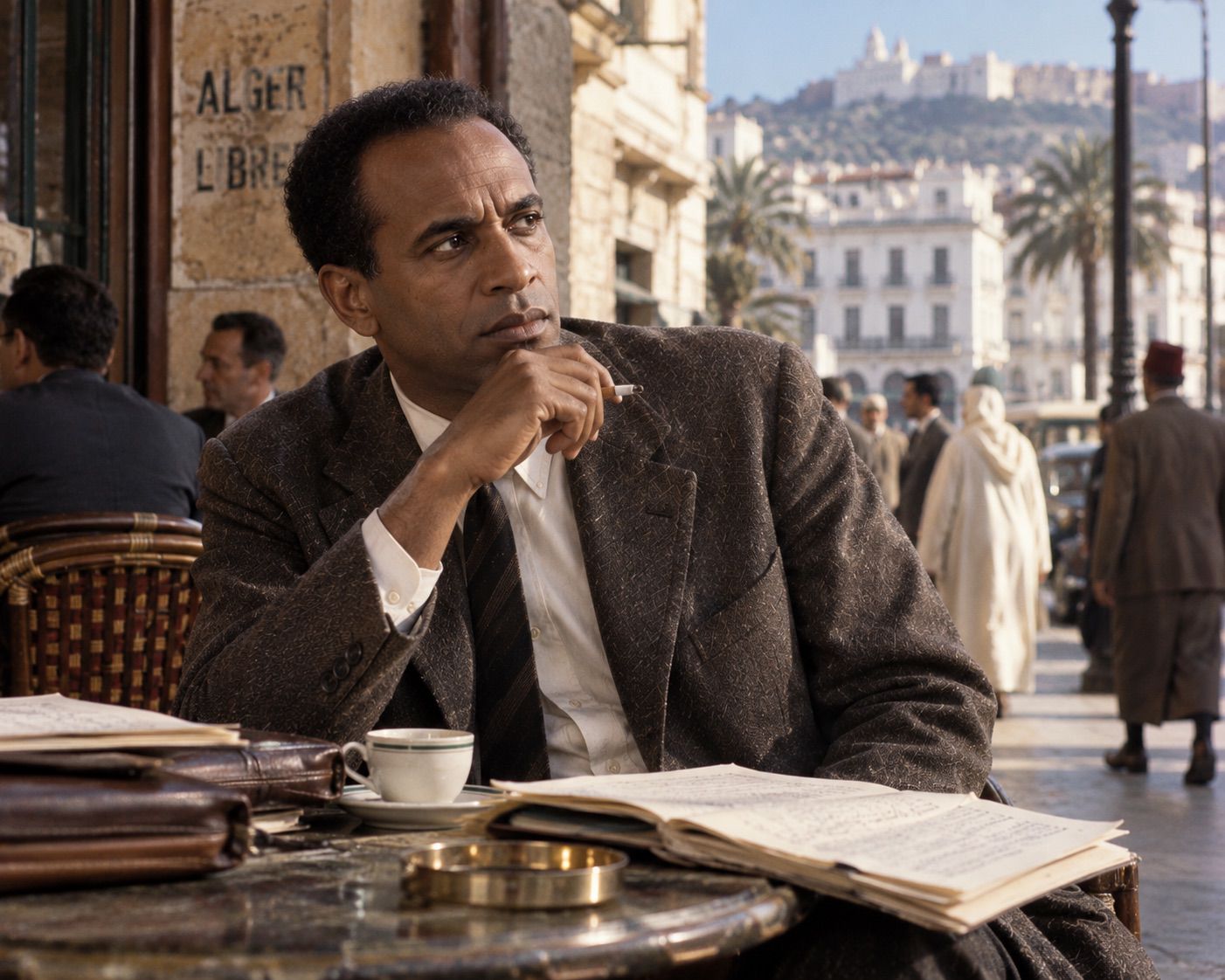
I’ve been thinking a lot about Frantz Fanon lately, and it’s hard to pinpoint exactly why he fascinates me so much. Maybe it’s because his writing is like a mirror held up to my own experiences as a young woman of color trying to navigate the complexities of identity and oppression.
One thing that keeps drawing me back to Fanon is his concept of “epidermalization” – the way in which societal expectations and racism are literally internalized into our bodies, becoming part of who we think we are. I’ve felt this sensation myself, like there’s a constant weight on my shoulders, reminding me of all the ways I don’t quite fit in. It’s exhausting trying to live up to someone else’s standards, and Fanon’s words about how colonialism turns us against ourselves – “The Negro is maimed at birth” – it feels so true.
It’s hard not to get caught up in feeling like a failure when society tells me I’m not good enough. But reading Fanon, I realize that this isn’t just about personal inadequacy; it’s about the ways in which systems of oppression are designed to keep us small, to make us doubt our own worth. It’s infuriating, really – why should we have to constantly prove ourselves to people who don’t even acknowledge our humanity?
Fanon’s work on the role of violence and aggression in colonialism is also striking me right now. He argues that colonial powers use violence to impose their rule, and that this violence is then internalized by colonized subjects as a way to cope with trauma and maintain a sense of dignity. I see echoes of this in my own life – the way I get defensive or angry when confronted with microaggressions or outright racism.
But it’s complicated; I also feel like I’m perpetuating that same cycle of violence when I lash out at others, when I say “you don’t understand what it’s like to be me.” It feels like a double-edged sword – fighting back against oppression can be a way to reclaim power, but it can also lead to more harm and hurt.
I find myself wondering: is resistance always necessary? Can we not just opt out of the systems that are oppressing us, instead of trying to fight them head-on? And what does it mean to truly “resist” in the first place – is it about using violence as a means to an end, or is it about creating something new and different?
These questions feel messy and uncomfortable, but they’re also strangely liberating. I’m not looking for easy answers; I’m just trying to understand Fanon’s ideas on a deeper level, and how they apply to my own life. It’s like he says – “The colonized subject is always torn between his desire to assert himself as a man and the fear of being rejected as a Negro.”
For now, at least, that’s where I’m stuck – caught in this web of contradictions and complexities, trying to figure out who I am and how I fit into this larger world. And Fanon’s words keep echoing in my head: “The violence of the oppressor is always masked by a pretence of benevolence.” It’s a hard truth to confront, but one that feels necessary if we’re going to move forward.
As I grapple with these questions and contradictions, I’m struck by how Fanon’s work seems to capture the nuances of my own experiences as a young woman of color trying to navigate the complexities of identity and oppression. It’s like he’s seen into the depths of my own soul, revealing the ways in which societal expectations and racism have shaped me.
One thing that keeps resonating with me is Fanon’s idea that colonialism is not just about external domination, but also about internalized self-doubt and shame. He writes about how colonized subjects are taught to believe they’re inferior, that they’re less than human. And I see this playing out in my own life, too – the way I’ve been socialized to doubt my own worth, to question whether I’m good enough.
It’s infuriating, because it feels like we’re expected to internalize our own oppression, to believe that we’re somehow responsible for our own marginalization. But reading Fanon, I realize that this is a fundamental strategy of colonialism – to make us doubt ourselves, to make us feel like we don’t belong.
I’m starting to see how this plays out in my relationships with others, too. When someone makes a comment or asks an invasive question about my culture or identity, I often find myself feeling defensive or angry. And then I wonder: am I overreacting? Am I just being sensitive? But Fanon’s work helps me see that these reactions are not just personal quirks – they’re also a response to the systems of oppression that have shaped us.
It’s complicated, because sometimes it feels like I’m walking on eggshells, trying not to upset anyone or draw attention to myself. But reading Fanon, I realize that this is exactly what colonizers want from us – for us to be quiet, to be compliant, to internalize our own oppression. And it’s hard to reconcile that with the desire to resist, to push back against systems of oppression.
I’m not sure where this leaves me, but it feels like a necessary step towards understanding myself and my place in the world. Fanon’s work is like a mirror held up to my experiences – it shows me the ways in which I’ve been shaped by societal expectations and racism, but also gives me the tools to resist, to push back against those systems.
As I continue to grapple with these ideas, I’m struck by how much uncertainty there is. Can we truly opt out of systems of oppression? Or are we always complicit, in some way or another? And what does it mean to “resist” – is it about using violence as a means to an end, or is it about creating something new and different?
I don’t have answers to these questions yet. But I do know that reading Fanon has given me a sense of hope and possibility. It reminds me that there are others out there who see the world in the same way – who understand the complexities and nuances of identity and oppression.
And it’s this sense of connection, of solidarity, that feels like a powerful antidote to the shame and self-doubt that colonizers have instilled in us.
As I delve deeper into Fanon’s work, I’m struck by his emphasis on the importance of decolonizing our minds and bodies. He writes about how colonialism doesn’t just affect individuals, but also shapes our collective identity as a people. This resonates with me because I’ve often felt like my own sense of self is fragmented, like I’m caught between different cultures and identities.
I remember struggling in school to reconcile my love for traditional music and dance from my parents’ culture with the more “mainstream” American pop culture that surrounded me. Fanon’s concept of “double consciousness” – the idea that colonized people are forced to navigate multiple worlds, both internalizing the dominant culture and resisting it at the same time – feels like a perfect description of this experience.
It’s hard not to feel like I’m caught between two worlds, like I don’t quite belong in either one. But reading Fanon, I realize that this is a fundamental aspect of being a person of color in a society dominated by whiteness. We’re constantly forced to navigate these power dynamics, to decide how much we’ll internalize and how much we’ll resist.
I’m not sure if this makes me feel better or worse about myself, but it’s at least a sense of clarity. Maybe I don’t have to choose between being “black” or “American,” but can instead see myself as a complex intersection of both cultures. This feels like a powerful act of resistance in and of itself – refusing to be reduced to simplistic labels or categories.
But even with this newfound understanding, I still feel the weight of Fanon’s words: “The colonized subject is always torn between his desire to assert himself as a man and the fear of being rejected as a Negro.” It’s a constant tension, one that I’m not sure I’ll ever fully resolve. And yet, it’s also what drives me forward – the need to find my own way, to create something new and different in this world.
As I read through Fanon’s works again, I’m struck by his emphasis on the importance of collective action and solidarity. He writes about how colonized people must come together to resist their oppressors, to build a sense of community and shared purpose. This feels like a call to arms, one that resonates deeply with me.
I’ve often felt isolated in my experiences as a person of color, like I’m the only one who’s struggling to navigate these complexities. But reading Fanon, I realize that I’m not alone – there are countless others out there who are fighting for their rights, for their dignity, and for their very humanity.
This sense of solidarity is what gives me hope, what drives me forward even in the face of overwhelming adversity. It’s a reminder that we’re not just individual victims of oppression, but part of a larger collective struggle for freedom and justice.
As I reflect on Fanon’s emphasis on collective action and solidarity, I’m struck by the ways in which my own experiences as a young woman of color have been shaped by feelings of isolation and disconnection. It’s like I’ve been socialized to believe that I must navigate these complexities alone, that there’s no one else out there who understands what it’s like to be me.
But reading Fanon, I realize that this is not just a personal issue – it’s also a symptom of the larger systems of oppression that we’re living under. Colonizers have always relied on divide and conquer tactics, pitting different groups against each other in order to maintain their power and control.
It’s hard for me to shake off the feeling that I’m somehow complicit in this system, even as I try to resist it. But Fanon’s words give me a sense of hope – if we can come together, if we can build solidarity with one another, then maybe we can create something new and different.
One thing that keeps resonating with me is Fanon’s concept of “national culture” – the idea that colonized people must reclaim their own cultural heritage in order to resist colonialism. For me, this means embracing my African American roots, learning about the history and culture of my ancestors, and celebrating the ways in which they contributed to the world.
But it’s not just about personal identity – it’s also about collective action. When we come together as a community, when we celebrate our shared experiences and cultural heritage, then we can create something truly powerful. We can resist the erasure and marginalization that colonizers have imposed upon us, and instead build a new world based on justice, equality, and solidarity.
I’m not sure what this looks like in practice – I don’t have all the answers. But reading Fanon has given me a sense of direction, a sense of purpose. It reminds me that we’re not just individual victims of oppression, but part of a larger collective struggle for freedom and justice.
As I continue to grapple with these ideas, I’m struck by the ways in which Fanon’s work challenges my own assumptions about power and resistance. For so long, I’ve thought of resistance as something individual – me against the system, fighting for my rights and freedoms. But Fanon shows me that this is not enough.
Resistance must be collective, it must be rooted in a sense of solidarity and shared purpose. It’s not just about fighting against our oppressors, but also about building a new world based on justice and equality. And it’s this sense of possibility, this sense of hope, that gives me the courage to keep going, even in the face of overwhelming adversity.
As I look back on my own experiences, I see how often I’ve fallen into the trap of individual resistance – fighting against specific instances of racism or oppression, without seeing the larger systems at play. But reading Fanon has given me a new perspective, one that shows me the ways in which we’re all connected, and how our individual struggles are part of something much bigger.
It’s like he says – “The colonized subject is always torn between his desire to assert himself as a man and the fear of being rejected as a Negro.” This feeling of disconnection, this sense of isolation, it’s not just personal – it’s also a reflection of the larger systems that we’re living under.
But Fanon’s work shows me that there’s hope for change. If we can come together, if we can build solidarity with one another, then maybe we can create something new and different. Maybe we can resist the erasure and marginalization that colonizers have imposed upon us, and instead build a world based on justice, equality, and freedom.
As I continue to reflect on these ideas, I’m struck by the ways in which Fanon’s work challenges me to think differently about power and resistance. It’s not just about fighting against our oppressors, but also about building a new world based on shared values and collective purpose.
I don’t have all the answers yet – I’m still grappling with these ideas, still trying to understand how they apply to my own life. But reading Fanon has given me a sense of direction, a sense of hope. It reminds me that we’re not just individual victims of oppression, but part of a larger collective struggle for freedom and justice.
And it’s this sense of solidarity, this sense of connection with others who are fighting for their rights and freedoms, that gives me the courage to keep going, even in the face of overwhelming adversity.