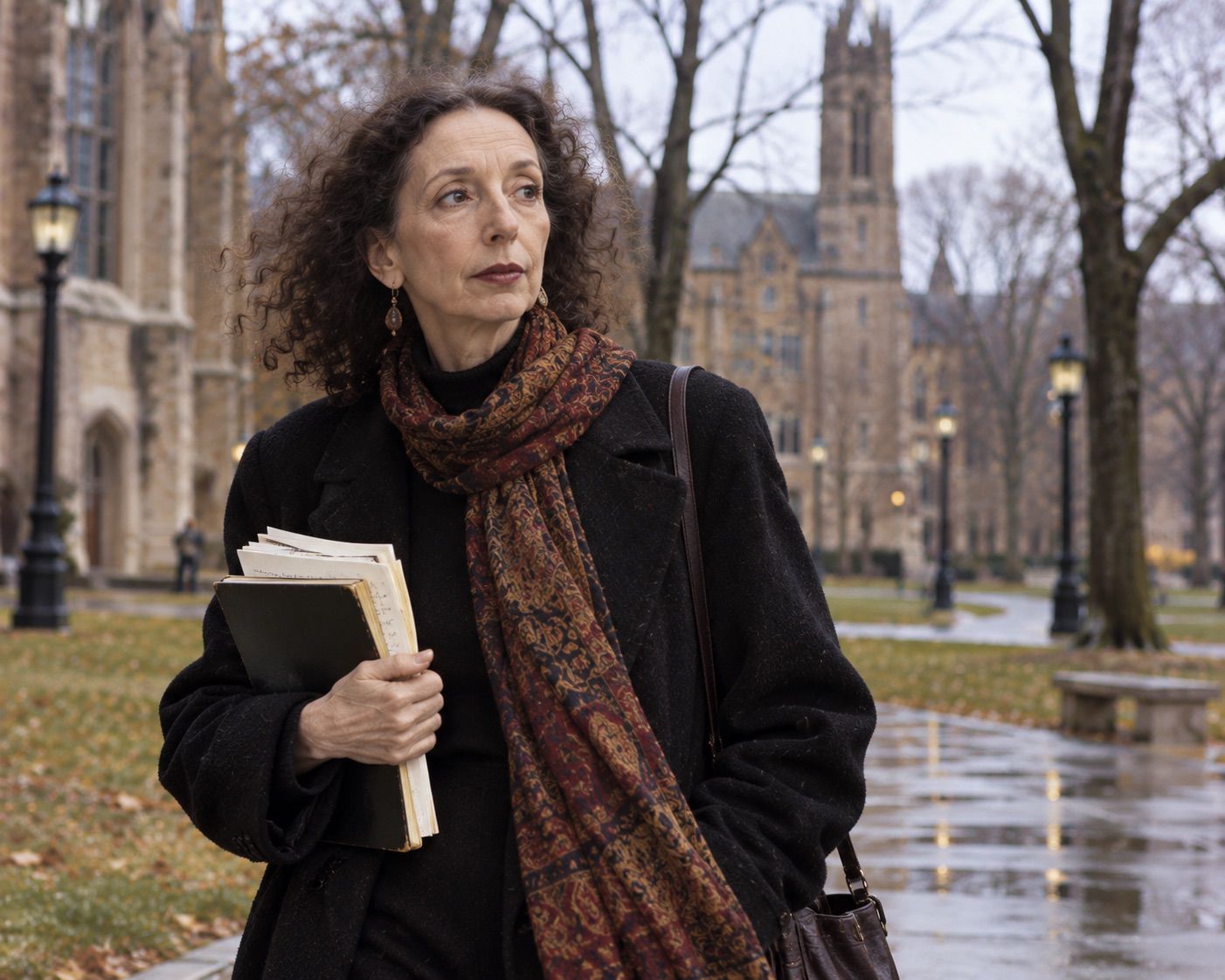
I’ve always been fascinated by Joyce Carol Oates, partly because she seems to embody the contradictions that I’m still trying to navigate myself. As a writer, she’s prolific – I mean, over 160 books? That’s mind-boggling. And yet, her work is often characterized by darkness and intensity, which doesn’t exactly resonate with my own sunny disposition (or so I like to think).
What draws me in, though, is the way Oates tackles the complexities of human nature. Her writing often feels like a raw, unflinching examination of the self – both the beautiful and the brutal aspects. It’s as if she’s asking us: What does it mean to be alive? To suffer? To love? And how do we reconcile those competing impulses within ourselves?
I think about my own experiences with writing as therapy. I started journaling in high school, mainly to process the chaos of adolescence (and my own self-doubt). Writing became a way for me to sort through my thoughts and emotions, often when I felt overwhelmed or uncertain. It’s funny – now that I’ve finished college, I’m not sure what I want to do with this skill, but I know it’s helped me grow in ways I still don’t fully understand.
Oates’ work has a similar effect on me. Her novels and stories make me feel seen in a way that few other writers can – like she’s staring into the abyss alongside me, and we’re both trying to find our footing. It’s unsettling, but also kind of liberating? Like, if this woman who’s supposed to be some kind of literary giant is struggling with the same existential questions I am… then maybe I’m not as lost as I thought.
Take her novel “We Were the Mulvaneys”. That book is like a gut punch – it’s raw and honest in ways that feel both beautiful and excruciating. The way she portrays family dynamics, trauma, and the human capacity for pain… it’s like she’s holding up a mirror to my own experiences with family and relationships. But what really gets me is how she shows characters making choices that are both understandable and unforgivable – all at once.
Sometimes I feel like Oates’ work is asking me (and maybe herself, too?) the same question over and over: What does it mean to be human? It’s a query that’s both simple and impossible to answer. And in her stories, she doesn’t offer any easy solutions or comforting platitudes. Instead, she just keeps pushing us deeper into the messiness of life – until we’re left staring at our own reflections, wondering how to make sense of it all.
For me, reading Oates is a reminder that writing (and maybe even living?) is about confronting those contradictions within myself – embracing both the light and the darkness. It’s a daunting prospect, but also kind of exhilarating? Like, if I can acknowledge my own complexities and flaws… then maybe I can start to understand others better, too.
I’m not sure what this means for me as a writer or even just as a person. But for now, Oates’ work feels like a steady companion – someone who gets it (or at least, tries to). She’s showing me that the only way to truly grow is by facing the things I don’t want to see, and that maybe – just maybe – that’s where the best writing comes from.
As I delve deeper into Oates’ work, I’m struck by her unwavering commitment to exploring the human condition. She doesn’t shy away from the tough stuff – no, she dives headfirst into the muck and mire of our collective experiences. It’s like she’s convinced that the only way to truly understand ourselves is to confront the darkness that lurks within.
I think about my own writing process, and how I often find myself gravitating towards the lighter side of things. Maybe it’s a defense mechanism, or maybe it’s just easier to focus on the pretty stuff. But Oates’ work makes me realize that avoiding the hard questions is only going to leave us with half-truths and superficial understanding.
Take her short stories, for example. They’re like miniature novels in themselves – each one a tightly wound exploration of the human heart. I’ve read collections like “By the North Gate” and “Will You Always Love Me?”, and what strikes me is how she manages to capture the essence of relationships without ever resorting to sentimentality. It’s like she’s saying, “Hey, love can be beautiful, but it’s also messy and complicated – let’s not sugarcoat it.”
This resonates with me because I’ve always struggled with expressing my own emotions in a way that feels authentic. As someone who writes for therapy, I’m constantly trying to tease out the complexities of my own thoughts and feelings. Oates’ work makes me realize that maybe I don’t have to tie everything up with a bow – maybe it’s okay to leave some things messy and open-ended.
But what really gets me is how Oates’ writing seems to be both deeply personal and universally relatable at the same time. It’s like she’s sharing her own innermost thoughts and experiences, but also somehow speaking directly to my own heart. I feel seen and understood in a way that’s hard to explain – it’s as if she’s tapping into some deeper, collective reservoir of human emotion.
I’m not sure how she does it, but Oates’ writing has this eerie ability to tap into our shared vulnerabilities. Maybe it’s because she’s so unflinchingly honest about her own struggles and fears – or maybe it’s just that she’s one of those rare writers who can capture the essence of what it means to be human in all its messy, beautiful complexity.
Whatever it is, I’m grateful for Oates’ work. It’s like having a steady companion on this wild ride called life – someone who gets me, and also pushes me to confront the things that scare me most.
One thing that strikes me about Oates’ writing is how she often blurs the lines between fiction and reality. Her novels and stories are like hybrid creatures – part memoir, part myth, part exploration of the human condition. It’s as if she’s taking bits and pieces of her own life and experiences, and then weaving them into these complex tapestries that are both deeply personal and universally relatable.
I find myself wondering if this is a deliberate choice on her part – to create this sense of ambiguity between fact and fiction. Or maybe it’s just the way she sees the world – as a messy, interconnected web of experiences and emotions. Either way, I think it’s what makes her writing so compelling – it’s like we’re getting glimpses into a private universe that’s both familiar and strange.
I’ve been thinking about this in relation to my own writing, too. As someone who writes for therapy, I often find myself blurring the lines between fact and fiction as well. It’s not always intentional – sometimes it just feels like the easiest way to get things down on paper. But when I read Oates’ work, I feel like I’m seeing a more deliberate version of this – a willingness to experiment with form and genre, to push against the boundaries of what’s considered “real” or “true”.
It makes me wonder if that’s where my own writing needs to go next – into exploring those gray areas between fact and fiction. Not just as a way to create interesting stories, but also as a way to tap into something deeper about myself and the world around me. Oates’ work has a way of making me feel like anything is possible – that even the most seemingly impossible truths can be excavated and explored through writing.
Of course, this raises all sorts of questions about the nature of truth itself. Is it ever really possible to capture the complexity of human experience in words? Or are we always just approximating, guessing, or making things up as we go along? I don’t have any answers to these questions, but reading Oates’ work makes me feel like they’re worth asking.
As I continue to delve into her writing, I’m struck by the way she seems to be constantly exploring new modes of expression – from poetry to playwriting to even painting. It’s like she’s driven by a desire to push against the boundaries of what’s considered “literary” or “artistic”, to see where the edges of creativity take her.
I think about my own creative desires, and how they often feel constrained by my own doubts and fears. What if I’m not good enough? What if no one wants to read what I have to say? Oates’ work is a reminder that these doubts are normal – but also that they shouldn’t hold me back from exploring new forms, new styles, new ways of expressing myself.
It’s funny – reading Oates’ writing feels like being given permission to be messy and imperfect. Like, if she can do it, then maybe I can too.
As I read through her essays and interviews, I’m struck by how she talks about the importance of embracing imperfection in one’s work. She mentions how even her own writing is a process of trial and error, with mistakes and false starts along the way. It’s like she’s saying that it’s okay to not have all the answers, or to make things up as you go along.
This resonates with me because I’ve always been someone who wants to get things “right” – whether it’s a sentence, a story, or even just a thought. But Oates’ work shows me that imperfection can be a strength, not a weakness. That sometimes the most interesting and beautiful writing comes from embracing uncertainty and ambiguity.
I think about my own writing process, and how I often get caught up in trying to create perfect sentences, characters, or plots. But what if I’m just making things up as I go along? What if my stories are more like rough drafts of life itself – messy, imperfect, and full of contradictions?
This makes me wonder about the nature of creativity and inspiration. Is it something that can be forced or controlled, or is it more like a mysterious force that takes over when we’re willing to let go? Oates’ work suggests that the latter might be true – that creativity requires a willingness to take risks, make mistakes, and surrender to the unknown.
I’m not sure what this means for me as a writer, but reading Oates’ work feels like a reminder that I don’t have all the answers. That sometimes the best thing I can do is just show up at the page with an open heart and mind, and see where the writing takes me.
One thing that strikes me about Oates’ writing is how she often explores themes of trauma, violence, and mortality. Her stories are like a window into the darker corners of human experience – where people struggle to survive, love, and make sense of their place in the world.
I think about my own experiences with trauma and pain, and how they’ve shaped me as a person and writer. Oates’ work makes me realize that these experiences are not unique to me – that we’re all struggling with our own versions of suffering, loss, and heartbreak.
This realization feels both comforting and unsettling at the same time. On one hand, it’s nice to know that I’m not alone in my struggles. But on the other hand, it’s also a reminder that these experiences are a part of what makes us human – and that they can be both beautiful and brutal, all at once.
As I continue to read Oates’ work, I’m struck by her unwavering commitment to exploring the complexities of human nature. She doesn’t shy away from the tough stuff – no, she dives headfirst into the muck and mire of our collective experiences. And in doing so, she creates this sense of empathy and understanding that feels both deeply personal and universally relatable.
It’s like she’s saying: “Hey, I get it. We’re all struggling with these same questions and doubts. Let’s face them together – and see where the writing takes us.”