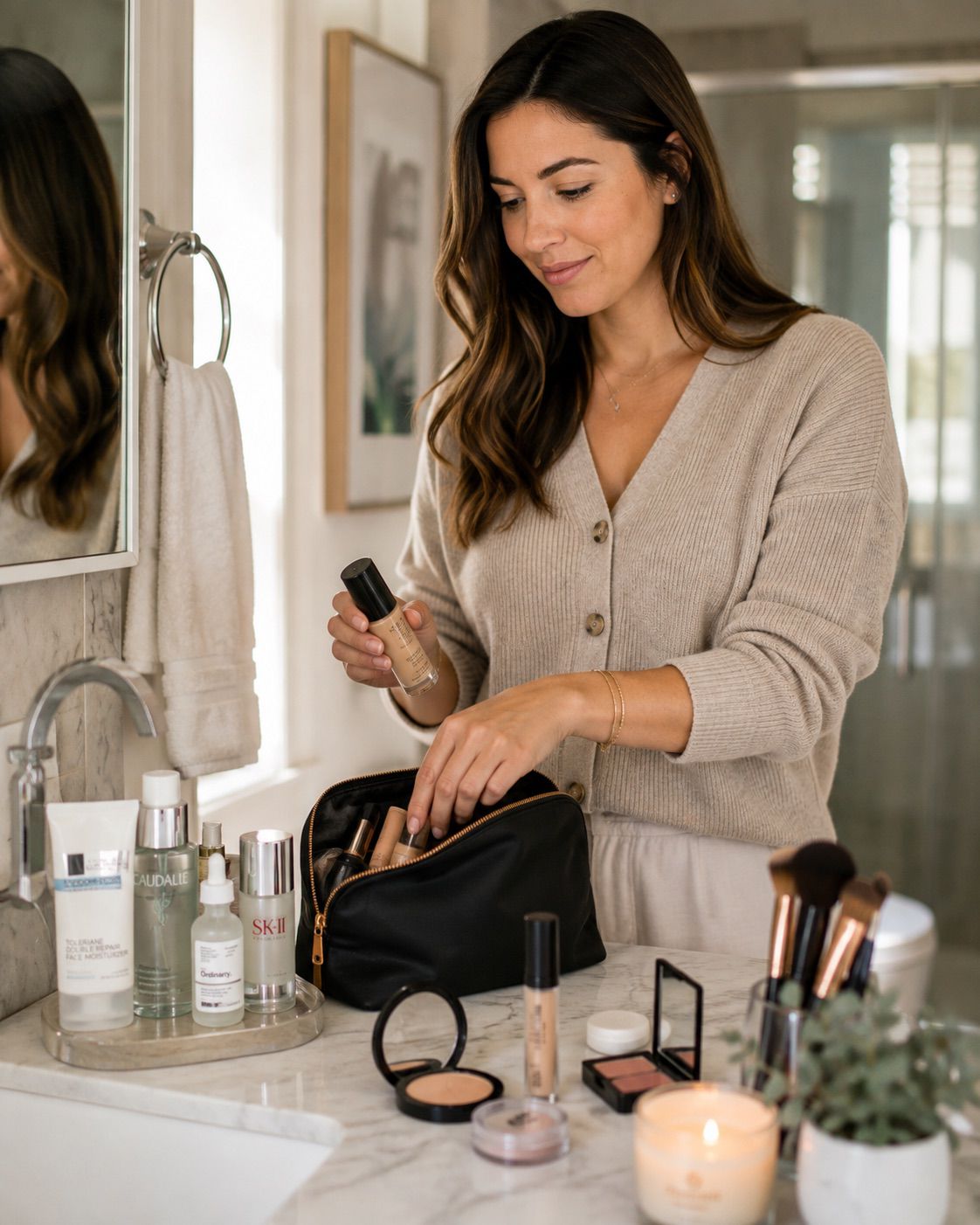
A woman stands at her bathroom counter, carefully selecting a few essential products from her makeup bag to enhance her natural features. The modern approach to beauty has evolved beyond merely applying layers of makeup; it now requires a thoughtful understanding of how skincare and makeup intersect. This intersection is crucial because the quality of skincare directly impacts the longevity and appearance of makeup. Effective skincare provides a smooth canvas for makeup application, allowing for a more even finish and longer-lasting wear.
Effective skincare provides a smooth canvas for makeup application, allowing for a more even finish and longer-lasting wear. Conversely, neglecting skincare can lead to uneven skin tone, dryness, and flakiness, which can compromise the appearance of makeup. By prioritizing skincare, individuals can create a strong foundation for their everyday look, reducing the need for excessive makeup and promoting a healthier, more radiant complexion. This approach requires a nuanced understanding of individual skin types and concerns, as well as the interactions between skincare and makeup products. By recognizing the interconnectedness of skincare and makeup, individuals can make informed decisions about their beauty routines and achieve a polished everyday look that is both effortless and effective.
To understand why prioritizing skincare is essential for a polished everyday look, it’s crucial to examine the mechanisms by which skincare products interact with the skin and how this interaction impacts makeup application. The skin’s barrier function, maintained by its natural moisture barrier, plays a significant role in determining the effectiveness of both skincare and makeup. When this barrier is compromised due to inadequate moisturization or harsh product use, the skin becomes more susceptible to dryness, irritation, and uneven tone, all of which can significantly affect how makeup looks and lasts on the skin. Certain silicones used in primers, for instance, can create a physical barrier that prevents foundation from adhering properly to the skin, leading to uneven coverage and premature wear. This is because these silicones can fill in fine lines and pores but also prevent the foundation from bonding with the skin’s surface, thereby reducing its longevity and evenness.
The construction of skincare products, particularly moisturizers and primers, is key in addressing these concerns. Moisturizers that contain hyaluronic acid, ceramides, or niacinamide, for example, not only help to lock in moisture and support the skin’s barrier function but also create a smoother canvas for makeup application. Similarly, primers formulated with silicones can fill in fine lines and pores, reducing the appearance of imperfections and allowing foundation to adhere more evenly. By understanding the chemical composition and interactions of these products, individuals can make informed decisions about their skincare routine, ultimately leading to a more polished and effortless everyday look. This nuanced approach to skincare as the foundation for makeup reflects a deeper understanding of skin biology and cosmetic chemistry, providing a solid basis for achieving a healthy, radiant complexion that enhances, rather than relies on, makeup.
In evaluating the effectiveness of skincare products as a foundation for makeup, it’s essential to consider how specific ingredients impact skin health and makeup application. For instance, studies have shown that using emollients such as squalane or glycerin in moisturizers can significantly improve skin hydration and reduce the appearance of fine lines and wrinkles, thereby creating a smoother surface for makeup. Additionally, research on humectants like hyaluronic acid or panthenol has demonstrated their ability to attract and retain moisture, reducing dryness and flakiness that can compromise makeup longevity. The pH level of skincare products also plays a critical role; a product with a pH too far from the skin’s natural range can disrupt its barrier function, leading to irritation and other issues that affect makeup wear.
A closer examination of product labels reveals that not all moisturizers or primers are created equal. Some may contain ingredients that, while beneficial for skincare, can interfere with the adhesion or wear of makeup. For example, certain silicones used in primers can create a barrier that prevents foundation from adhering properly, leading to uneven coverage and premature wear. In contrast, products formulated with film-forming agents like polymers or waxes can help extend the wear of makeup while also providing benefits for the skin. By understanding these nuances and selecting products based on their specific properties and interactions, individuals can make informed decisions about their skincare and makeup routines, ultimately achieving a polished everyday look that is both healthy and radiant.
To apply the standard of prioritizing skincare as the foundation for makeup effectively, it’s essential to consider the varying needs of different skin types and concerns. For individuals with oily skin, selecting lightweight, oil-free moisturizers that won’t clog pores is crucial. These products should be formulated with ingredients like salicylic acid or glycolic acid, which help control sebum production and gently exfoliate the skin, creating a smoother surface for makeup application. On the other hand, individuals with dry or sensitive skin require rich, nourishing moisturizers that provide intense hydration without irritating the skin. Ingredients such as ceramides, hyaluronic acid, and niacinamide are beneficial in these cases, as they help repair the skin’s barrier function, retain moisture, and reduce inflammation.
The application of this standard also involves understanding how different skincare ingredients interact with makeup products. For example, certain active ingredients like retinol or vitamin C can make the skin more sensitive to the sun, necessitating the use of broad-spectrum sunscreen with a high SPF during the day. Additionally, the order in which skincare and makeup products are applied can affect their efficacy. Generally, applying thinner, more watery products first (such as essences or serums) allows them to penetrate deeper into the skin, followed by thicker, more emollient products (like moisturizers and primers), which help lock in previous layers and create an ideal canvas for makeup. By considering these factors and tailoring skincare routines accordingly, individuals can optimize their beauty regimens to achieve a polished, healthy look that enhances their natural complexion.
The relationship between skincare and makeup is one of synergy, where each component complements the other to produce a more radiant and enduring result. By focusing on building a strong foundation through effective skincare practices, individuals can enhance the appearance and longevity of their makeup, achieving a polished everyday look that reflects their natural beauty. This approach not only simplifies one’s beauty routine but also fosters a healthier relationship between skin health and cosmetic application, allowing for a more confident and effortless expression of oneself. As such, prioritizing skincare as the foundation for makeup is not merely a matter of aesthetics; it’s an investment in the long-term health and vitality of one’s skin, ensuring that every day begins with a radiant, resilient canvas ready to take on whatever life may bring.