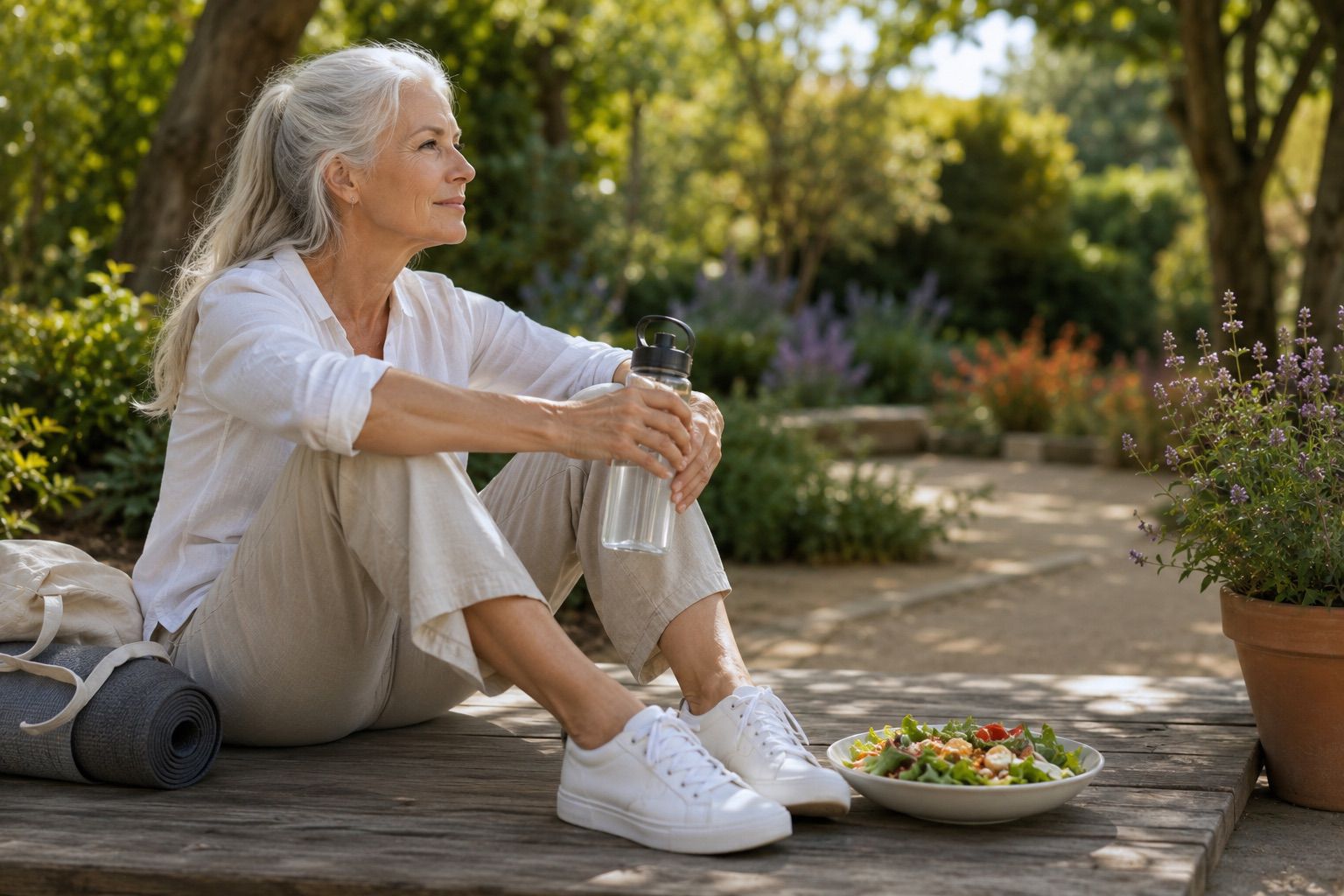
Summer has a way of making us more aware of how we feel. Warm weather changes our energy, our sleep, our time outdoors, and the pace of daily life. It can also bring a flood of advice promising to reverse aging, prevent aging, or somehow outrun it altogether. Fiona takes a quieter view. Healthy aging is not about resisting time. It is about supporting the body with thoughtful routines that make everyday life feel more comfortable, capable, and sustainable.
A helpful place to begin is by letting go of the idea that every change requires correction. Aging is not a problem waiting to be solved, and summer does not need to become another season of self-improvement. Instead of asking how to look younger, it is often more useful to ask how to feel stronger, move more comfortably, and finish the day with more energy than unnecessary effort has taken away.
The most effective routines are usually the least dramatic. Drinking water before feeling thirsty, choosing meals that feel satisfying without being heavy, walking during the cooler hours of the day, and allowing time for proper rest all support well-being without turning health into another project. These habits rarely attract attention, yet they quietly make everyday life easier.
Movement deserves particular attention because consistency matters far more than intensity. A leisurely evening walk, gentle stretching after gardening, or a few minutes of balance exercises while waiting for dinner to cook may not appear impressive, but they help maintain mobility, coordination, and confidence over time. Healthy aging is built through habits that are easy to repeat, not routines that are difficult to sustain.
Summer also reminds us that comfort is worth respecting. Heat changes how quickly the body tires, how much water it needs, and how easily skin becomes irritated by sun and humidity. Lightweight, breathable clothing, supportive shoes, regular hydration, and shaded breaks outdoors are not indulgences. They are practical ways of reducing unnecessary strain so that energy can be spent on the experiences that matter most.
Skincare follows the same principle. The goal is not to chase perfection or erase every visible sign of time. Healthy skin responds best to gentle cleansing, consistent moisturizing, and dependable sun protection. Adding more products is not always the answer. Often, a simple routine followed consistently provides greater comfort than an elaborate collection of treatments used only occasionally.
Recovery deserves the same quiet attention. Busy weekends, family gatherings, travel, and outdoor activities all ask something of the body. Building small periods of recovery into the day—a relaxed breakfast, a few moments in the shade, reading on the porch, or simply sitting without feeling obligated to accomplish something—helps restore both physical and mental energy. These pauses are not signs of slowing down. They are part of staying engaged with life for the long term.
There is also value in reducing unnecessary decisions. Preparing tomorrow’s clothes the night before, carrying only what is actually needed, keeping meals uncomplicated, or limiting the number of products in a daily routine all remove small sources of friction. Individually these choices seem insignificant. Together they create a calmer day with more room for conversation, movement, and rest.
Perhaps the most important habit is learning to recognize the difference between helpful guidance and fear-based advice. Messages built around urgency often suggest that every wrinkle, every gray hair, or every birthday demands another purchase or another promise. Genuine well-being rarely comes from panic. It grows from consistent care, realistic expectations, and the confidence that ordinary habits often produce the most meaningful results.
Fiona’s standard has never been perfection. It is believability. The strongest routines fit naturally into real life, allowing room for changing weather, busy schedules, family commitments, and imperfect days. A healthy habit that only works under ideal conditions is unlikely to last. One that adapts easily becomes part of everyday living.
There is also confidence in choosing enough. Modern life encourages people to optimize every routine and measure every result. Healthy aging does not require constant improvement. Sometimes the wisest choice is recognizing that the body responds best to patience, consistency, and moderation rather than endless correction. Supporting health should feel reassuring, not exhausting.
That is the value of summer routines that support healthy aging without fear-based advice. They do not ask anyone to fight the passage of time or pursue an impossible standard. Instead, they encourage practical choices that help the body feel comfortable, capable, and well cared for throughout the season. When comfort, movement, recovery, and simplicity work together, healthy aging becomes less about appearance and more about living well—one ordinary summer day at a time.