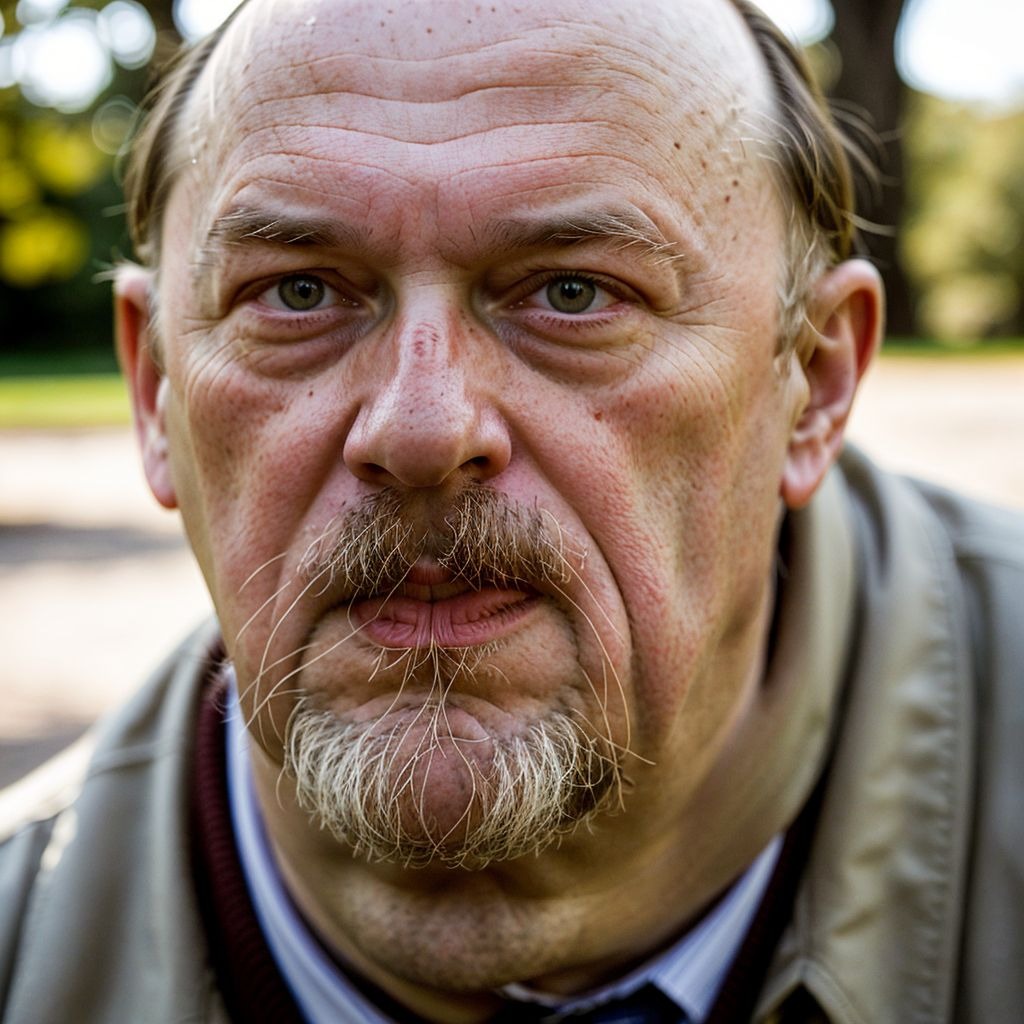
I’ll be honest, I’m not sure why Vladimir Nabokov fascinates me so much. His life seems to defy any straightforward narrative – a Russian aristocrat turned English professor, an immigrant who never quite fit in, and a writer known for his meticulous prose and eerie stories that blend the surreal with the mundane.
One of the things that draws me in is his complex relationship with language. Nabokov was a master of wordplay, obsessed with the nuances of translation and the slippery nature of meaning. His writing often feels like a game of hide-and-seek between different tongues – Russian, English, French, even invented languages like the “nadsat” slang he created for his novel _Invitation to a Beheading_. I find myself caught up in trying to unravel these linguistic puzzles, tracing the threads of etymology and connotation that weave through his sentences.
But Nabokov’s fascination with language also raises uncomfortable questions about power and identity. As someone who grew up in an immigrant family, where our home culture was constantly in tension with the dominant one, I recognize the ways in which language can both unite and divide us. Nabokov’s experiences as a Russian émigré, fleeing revolution and persecution to settle in the United States, must have shaped his perspective on this issue. Yet, despite his own dislocation, he maintained an almost haughty distance from the English language, often using it to create a sense of detachment or irony.
This tension between languages, cultures, and identities is something I see reflected in my own life as well – the struggle to navigate multiple worlds, to find a voice that speaks to both my family’s traditions and my own uncertain place within them. Nabokov’s writing often feels like a mirror held up to this same struggle, though his solutions are rarely straightforward or comforting.
Take, for example, _Lolita_. The novel is notorious for its frank exploration of pedophilia, but it’s also a scathing critique of American consumer culture and the ways in which we objectify and commodify children. Nabokov’s protagonist, Humbert Humbert, is a monstrous figure who embodies this critique – yet he’s also a product of his own cultural conditioning, a man trapped by his own desires and unable to escape them.
I find myself wincing at Humbert’s crimes, but I’m also drawn to the complexity of Nabokov’s portrayal. He doesn’t provide easy answers or moral certainties; instead, he presents us with a character who is both repulsive and relatable, a figure whose own narrative voice we’re forced to confront and question. It’s this refusal to simplify or sanitize that makes _Lolita_ so haunting – and also, perhaps, so necessary.
As I continue to read Nabokov’s work, I’m struck by the way he seems to inhabit multiple roles at once: poet, novelist, critic, and even lepidopterist (his famous butterfly collection is a testament to his fascination with the intricate details of life). This multiplicity feels both exhilarating and overwhelming – like trying to navigate a hall of mirrors where reflections are constantly shifting and multiplying.
Perhaps that’s why I find myself so drawn to Nabokov, despite (or because of) the discomfort he causes. His writing is like a puzzle box that I keep returning to, eager to unravel its secrets and confront my own uncertainties about identity, language, and the human condition. In his complexities, I see fragments of my own – and in his refusal to provide easy answers, I find a kind of reflected truth that’s both disorienting and liberating.
As I delve deeper into Nabokov’s work, I’m struck by the way he often blurs the lines between reality and fiction. His novels are like meticulously crafted illusions, where the boundaries between what’s true and what’s made-up become increasingly tenuous. Take _Speak, Memory_, for example – a memoir that’s as much a work of fiction as it is a personal account. Nabokov’s narrative is full of invented scenes, exaggerated characters, and deliberate distortions, yet he presents them with such conviction and authority that it’s impossible to separate fact from fantasy.
I find myself wondering if this blurring of boundaries is a reflection of his own experiences as an immigrant, where the notion of identity and reality becomes increasingly fluid. When you’re constantly navigating between languages, cultures, and worlds, the concept of truth can become malleable and relative. Nabokov’s writing seems to capture this sense of dislocation, where the self is fragmented and multifaceted, like a butterfly with multiple wings.
This fascination with illusion and reality also speaks to my own experiences as a writer. When I’m trying to convey complex emotions or ideas, I often find myself struggling to separate truth from fiction. Do I write about what really happened, or do I create a fictional narrative that captures the essence of the experience? Nabokov’s work shows me that there’s no clear distinction between these two approaches – that the best writing often lies in the gray areas between reality and invention.
One of the things that’s most intriguing to me is Nabokov’s relationship with his own identity. As a Russian émigré, he was constantly caught between worlds, struggling to reconcile his aristocratic past with his new life in America. His writing reflects this tension, often veering between languages, cultures, and personas like a chameleon changing color. I see echoes of this same struggle in my own family’s history – the way my parents’ cultural backgrounds are intertwined, yet also distinct and sometimes contradictory.
Nabokov’s work makes me realize that identity is not fixed or static; it’s a fluid, dynamic concept that shifts and evolves over time. This realization both liberates and unsettles me – like being given a key to a mysterious house with doors leading in multiple directions. I’m not sure where Nabokov is taking me, but I’m eager to follow him down the rabbit hole, into the labyrinthine corridors of his imagination.
As I wander through Nabokov’s world, I begin to notice a peculiar obsession with butterflies and moths. His collection, which he meticulously documented in _Notes on Butterfly Collecting_, is a testament to his fascination with these delicate creatures. But it’s more than just a hobby – it’s an analogy for the writer’s art itself. Just as Nabokov would carefully capture and preserve specimens, so too does he try to capture and preserve moments of beauty and meaning in his writing.
This idea resonates deeply with me, as I think about my own writing process. When I’m working on a piece, I feel like I’m trying to catch the perfect sentence, the one that distills the essence of an experience or emotion. It’s a fragile, ephemeral thing, like a butterfly in flight – and just as easily lost if I’m not careful. Nabokov’s writing shows me that this process is both beautiful and futile at the same time, that the act of capturing life on paper is always going to be incomplete and imperfect.
But what draws me to Nabokov’s work even more is his willingness to confront the darkness within himself and others. _Lolita_, with its unflinching portrayal of pedophilia, is just one example of this – but it’s not an isolated incident. Throughout his writing, Nabokov explores themes of desire, decay, and mortality, often with a level of nuance that feels both piercing and uncomfortable.
As someone who has struggled with my own dark emotions and impulses, I find solace in Nabokov’s willingness to confront these aspects of human nature head-on. His writing doesn’t shy away from the difficult questions or provide easy answers; instead, it poses them anew, forcing me to consider the complexity of human experience.
This is what makes Nabokov’s work so haunting and so necessary – it reminds us that we are all multifaceted creatures, capable of both beauty and ugliness. His writing shows me that identity is not a fixed entity, but a dynamic process of becoming and unbecoming, always in flux like the wings of a butterfly.
As I continue to read Nabokov’s work, I find myself drawn into this world of uncertainty and complexity – a place where language, culture, and identity blur and merge. It’s a disorienting experience, but also exhilarating, like being swept up in a whirlwind that carries me forward on its winds.
In Nabokov’s writing, I see echoes of my own struggles to find my place within multiple worlds – the world of my family, the world of language, and the world of my own imagination. His work reminds me that these worlds are not fixed or separate; they intersect and overlap in complex ways, like the layers of a butterfly’s wings.
This realization is both liberating and terrifying – like being given a map to a labyrinth with no clear exit. But it’s also what makes Nabokov’s writing so compelling – his refusal to provide easy answers or moral certainties, his willingness to confront the complexity of human experience head-on.
As I navigate these winding corridors of Nabokov’s imagination, I’m forced to confront my own uncertainties and ambiguities about identity, language, and the human condition. It’s a journey without clear destination – but one that feels both necessary and true.
The more I delve into Nabokov’s world, the more I feel like I’m losing myself in it. His writing is like a maze with no clear exit, where every path leads to new questions and contradictions. Take his concept of “doublethink,” for example – the idea that our minds can hold two opposing ideas or truths simultaneously, without reconciling them. It’s a notion that resonates deeply with me, as I struggle to navigate my own complex identities and loyalties.
As a writer, I’m drawn to Nabokov’s ability to craft sentences that are both precise and ambiguous at the same time. His writing is like a game of chess, where each move anticipates multiple possibilities and outcomes. This is particularly evident in his use of metaphor and imagery – he often employs these literary devices to create complex webs of meaning that shift and change depending on how you look at them.
For instance, take his famous description of the Russian landscape in _Speak, Memory_. Nabokov writes about the way the land itself seems to shift and change, like a kaleidoscope turning over. “The very air seemed to be filled with an elusive something that I knew was not quite light,” he says. It’s a passage that defies easy interpretation – is it a description of the natural world, or a metaphor for the way our perceptions can alter reality? Nabokov leaves us wondering, leaving us to fill in the gaps and make connections between his words.
This refusal to pin things down, to provide clear answers or explanations, is both frustrating and exhilarating. As I try to follow Nabokov’s thoughts and ideas, I feel like I’m being swept up in a whirlwind of contradictions and paradoxes. His writing is like a puzzle that keeps shifting its pieces around – every solution leads to new questions and uncertainties.
I find myself wondering if this is what it means to be a writer – to create texts that are both beautiful and fragmented, full of contradictions and ambiguities. Is it the writer’s job to reconcile these contradictions, or to leave them unresolved? Nabokov’s work suggests that the latter might be the case – that sometimes, the only way to capture the truth is to let go of our need for clarity and certainty.
As I continue to explore Nabokov’s world, I begin to see parallels between his writing and my own experiences as a writer. I realize that I’m not just trying to write about myself or my experiences; I’m also trying to create a universe within which these experiences can unfold. It’s a daunting task – but one that feels both necessary and true.
Nabokov’s writing shows me that the act of creation is always an act of translation, where we take fragments of reality and transform them into something new and meaningful. His own biography is full of examples of this – from his Russian aristocratic upbringing to his experiences as an immigrant in America, he was constantly translating between languages, cultures, and identities.
This idea resonates deeply with me, as I think about my own writing process. When I’m trying to capture a particular emotion or experience on paper, I feel like I’m attempting to translate it into language – to take the raw material of life and transform it into something that can be shared and understood by others. It’s a process that’s both beautiful and fraught with uncertainty – but one that feels essential to who I am as a writer.
As I navigate this uncertain terrain, I find myself returning again and again to Nabokov’s concept of the “doublethink” – the idea that our minds can hold two opposing ideas or truths simultaneously. It’s a notion that feels both liberating and terrifying, like being given a key to a mysterious door with no clear exit.
I’m not sure where this journey will take me, but I know that it’s necessary. Nabokov’s writing has shown me that the act of creation is always an act of translation – and that sometimes, the only way to capture the truth is to let go of our need for clarity and certainty. It’s a daunting task, but one that feels both exhilarating and true.