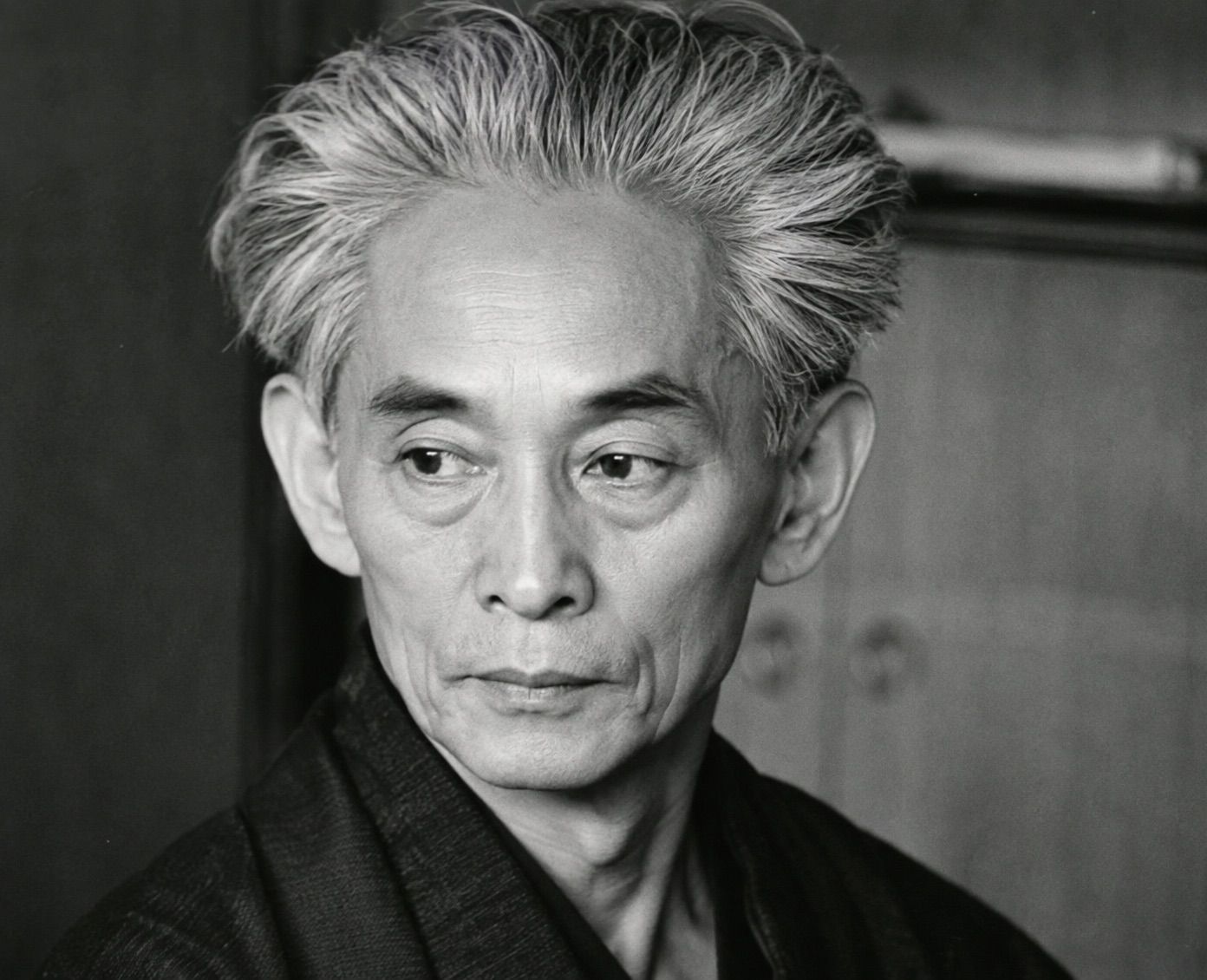
Yasunari Kawabata’s writing has been a constant companion throughout my college years. I remember stumbling upon his short story, “The One-Armed Swordsman,” in a literature class and being struck by the quiet beauty of his prose. The way he described the swordsman’s movements was like watching a dance – fluid, precise, and deeply human.
As I read more of Kawabata’s work, I began to notice a recurring theme: the fragility of life and the impermanence of things. His characters often find themselves at crossroads, facing decisions that will forever alter their paths. This resonated with me on a deep level, as I navigated my own uncertain transition from college student to… well, whatever comes next.
Kawabata’s writing is like a mirror held up to the human experience – it shows us our own vulnerabilities and fears in all their complexity. His characters are often isolated, struggling to connect with others or find meaning in a chaotic world. I felt seen in his stories, even when they were describing experiences that seemed utterly foreign.
But what really draws me to Kawabata is his exploration of the relationship between men and women. In works like “Snow Country” and “Thousand Cranes,” he crafts nuanced portrayals of love, desire, and loss. His female characters are multidimensional and often troubled – they’re not just passive objects of male affection, but complex beings with their own agency and sorrow.
I’ve found myself wondering about Kawabata’s own life and relationships as I read his stories. What was it like to be a man in Japan during the early 20th century? How did he experience love and loss? Did he struggle with the same feelings of isolation and disconnection that his characters do?
These questions make me uncomfortable, but they also feel necessary. Kawabata’s writing has shown me that even the most beautiful things can be tinged with sadness and impermanence. His stories are like a slow-burning fire – they warm me up, but also remind me of the fragility of everything.
I’m not sure what to make of this fascination I have with Kawabata. Part of me wants to dive deeper into his life and work, to uncover all the secrets and mysteries that lie beneath the surface. Another part of me is content to simply appreciate the beauty of his writing, to let it wash over me like a gentle rain.
Either way, Kawabata’s influence on my own writing has been profound. His emphasis on subtlety and nuance has taught me to trust the quiet moments – those fleeting glances, whispered conversations, or unspoken understandings that reveal more about us than we ever could have intended.
As I sit here with his stories scattered around me, I feel a sense of gratitude for this strange connection we share. It’s as if Kawabata is speaking directly to me, reminding me that even in the darkest moments, there’s always beauty to be found – fragile, impermanent, and all too human.
The more I read Kawabata, the more I’m struck by his ability to capture the intricate dance between people. His characters are like chess pieces on a board, each one moving with its own motivations and desires. And yet, despite their individual struggles, they’re all connected in some way – bound together by threads of love, loss, or longing.
I think about my own relationships, particularly the ones that have been complicated or difficult. I’ve always been drawn to people who are struggling, perhaps because I see myself in them. Kawabata’s writing has taught me that even in those messy, imperfect connections, there can be a beauty that’s hard to ignore. It’s like he’s saying: “Look closely at the cracks and fissures – they’re where the real truth lies.”
But what about his own experiences? Did he ever feel trapped by societal expectations or personal fears? Was he ever desperate to break free from the constraints of convention? I wonder if Kawabata ever felt the same sense of restlessness that I do, as if there’s something inside me waiting to be set loose.
His writing often seems to balance between reality and fantasy – blurring the lines between the two in a way that feels both disorienting and liberating. I’ve come across reviews that praise his work for its “Eastern” or “Japanese” sensibilities, but as someone who’s read him extensively, I’m not convinced. His stories are universally human – they transcend borders, cultures, and time.
I think about the way Kawabata describes landscapes – mountains, forests, and rivers that seem to shift and change like living beings. It’s as if he’s trying to capture the essence of existence itself: fleeting, ephemeral, and beautiful in its impermanence. His prose is like a slow-dance with the world, each step leading us deeper into the mystery.
I’m not sure what I want from Kawabata’s writing – whether it’s insight, comfort, or simply a reflection of my own thoughts and feelings. But one thing’s for certain: his stories have changed me in ways I’m still trying to understand.
As I delve deeper into Kawabata’s work, I find myself drawn to the way he explores the complexities of human relationships. His characters are often caught between tradition and modernity, struggling to reconcile their own desires with the expectations placed upon them. This resonates deeply with me, as I navigate my own place in the world.
I think about my own relationships, particularly those that have been complicated or difficult. Kawabata’s writing has taught me that even in those messy, imperfect connections, there can be a beauty that’s hard to ignore. But what about his own experiences? Did he ever feel trapped by societal expectations or personal fears?
Sometimes I wonder if Kawabata’s characters are more than just reflections of himself – if they’re actually fragments of the people around him, the ones he observed and loved. His female characters, in particular, seem to hold a special place in his heart. They’re not just passive objects of male affection, but complex beings with their own agency and sorrow.
I’ve come across reviews that praise Kawabata’s work for its “Eastern” or “Japanese” sensibilities, but as someone who’s read him extensively, I’m not convinced. His stories are universally human – they transcend borders, cultures, and time. He’s written about love, loss, and longing in a way that feels both deeply personal and utterly relatable.
Kawabata’s writing often seems to balance between reality and fantasy – blurring the lines between the two in a way that feels both disorienting and liberating. I’ve found myself lost in his stories, wandering through landscapes of memory and emotion. His prose is like a slow-dance with the world, each step leading us deeper into the mystery.
I’m not sure what I want from Kawabata’s writing – whether it’s insight, comfort, or simply a reflection of my own thoughts and feelings. But one thing’s for certain: his stories have changed me in ways I’m still trying to understand. They’ve taught me to appreciate the beauty in impermanence, to find solace in the fragile and fleeting moments that make life worth living.
As I sit here with Kawabata’s words scattered around me, I feel a sense of gratitude for this strange connection we share. It’s as if he’s speaking directly to me, reminding me that even in the darkest moments, there’s always beauty to be found – fragile, impermanent, and all too human.
And yet, despite the depth of our connection, I know that I can only see through Kawabata’s eyes for so long. Eventually, I’ll have to step back and look at his writing as a reader, rather than a mirror held up to my own experiences. It’s a daunting prospect – one that makes me wonder if I’ve been reading him too closely, too personally.
But even as I take a step back, I know that Kawabata’s influence will remain with me. His writing has taught me to appreciate the quiet moments, the fleeting glances and whispered conversations that reveal more about us than we ever could have intended. And so, I’ll continue to read his stories, not just for their beauty or insight, but for the way they make me see myself – and the world around me – in a new light.
As I reflect on my relationship with Kawabata’s writing, I’m struck by the ways in which it has mirrored my own experiences of transition and uncertainty. Like his characters, I’ve found myself at crossroads, struggling to navigate the complexities of adulthood and independence. And yet, even as I’ve felt lost and uncertain, Kawabata’s stories have offered me a sense of comfort and solace.
But what is it about his writing that resonates so deeply with me? Is it the way he captures the fragility of life and the impermanence of things? Or is it something more nuanced, a deeper understanding of the human experience that transcends borders and cultures?
I think back to my own relationships, particularly those that have been complicated or difficult. Kawabata’s writing has taught me to see them in a new light – not as failures or disappointments, but as moments of beauty and connection that are worth exploring, no matter how messy they may be.
As I read through his stories again, I’m struck by the way he portrays women – as complex, multidimensional beings with their own agency and sorrow. It’s a representation that feels both radical and essential, especially in a world where women are often reduced to stereotypes or one-dimensional characters.
I wonder if Kawabata’s female characters are somehow reflections of his own relationships with women. Were they inspired by the people around him – friends, lovers, family members? Or were they simply figments of his imagination, crafted from the same emotions and experiences that drive us all?
It’s a question that I’ll likely never have an answer to, but it’s one that feels essential to understanding Kawabata’s work. And so, I’ll continue to read his stories, not just for their beauty or insight, but for the way they challenge me to think about the world – and my place in it – in a new and more nuanced way.
As I sit here with Kawabata’s words scattered around me, I feel a sense of gratitude for this strange connection we share. It’s as if he’s speaking directly to me, reminding me that even in the darkest moments, there’s always beauty to be found – fragile, impermanent, and all too human.
And yet, despite the depth of our connection, I know that I’ll eventually have to say goodbye to Kawabata’s writing. It’s a bittersweet prospect – one that feels both necessary and terrifying. But for now, I’m content to simply sit with his words, to let them wash over me like a gentle rain.
In the end, it’s not about understanding Kawabata or his work; it’s about allowing myself to be changed by it. It’s about embracing the beauty of impermanence and the complexity of human relationships. And so, I’ll continue to read his stories – not just as a mirror held up to my own experiences, but as a window into the world itself, with all its fragility and wonder.
As I sit here, surrounded by Kawabata’s words, I’m struck by the sense of intimacy that has developed between us. It’s as if we’ve been sharing secrets, our hearts beating in sync as we navigate the complexities of human experience. But what lies beneath this connection? Is it simply a product of my own imagination, or is there something more profound at play?
I think back to the first time I read Kawabata’s work, the way his prose transported me to a world both familiar and strange. It was like discovering a new language, one that spoke directly to my soul. Since then, I’ve returned to his stories again and again, each time uncovering new layers of meaning and depth.
But what is it about Kawabata’s writing that has resonated so deeply with me? Is it the way he captures the fragility of life and the impermanence of things? Or is it something more nuanced, a deeper understanding of the human experience that transcends borders and cultures?
I’ve come to realize that Kawabata’s work is not just about his own experiences or emotions; it’s about the universal human condition. His stories are like a map, guiding us through the complexities of love, loss, and longing. They remind us that we’re not alone in our struggles, that others have walked this path before us.
As I reflect on my relationship with Kawabata’s writing, I’m struck by the ways in which it has mirrored my own experiences of transition and uncertainty. Like his characters, I’ve found myself at crossroads, struggling to navigate the complexities of adulthood and independence. And yet, even as I’ve felt lost and uncertain, Kawabata’s stories have offered me a sense of comfort and solace.
But what lies beyond this connection? Is it possible to transcend our own experiences and emotions, to see the world through the eyes of another? Or are we forever bound by our own perspectives, our own biases and assumptions?
I think back to the way Kawabata describes landscapes – mountains, forests, and rivers that seem to shift and change like living beings. It’s as if he’s trying to capture the essence of existence itself: fleeting, ephemeral, and beautiful in its impermanence. His prose is like a slow-dance with the world, each step leading us deeper into the mystery.
And yet, despite the depth of our connection, I know that I’ll eventually have to say goodbye to Kawabata’s writing. It’s a bittersweet prospect – one that feels both necessary and terrifying. But for now, I’m content to simply sit with his words, to let them wash over me like a gentle rain.
In the end, it’s not about understanding Kawabata or his work; it’s about allowing myself to be changed by it. It’s about embracing the beauty of impermanence and the complexity of human relationships. And so, I’ll continue to read his stories – not just as a mirror held up to my own experiences, but as a window into the world itself, with all its fragility and wonder.
As I close this reflection, I’m left with more questions than answers. What lies beyond the boundaries of our own experiences? Can we truly see the world through another’s eyes, or are we forever bound by our own perspectives? And what is it about Kawabata’s writing that has resonated so deeply with me?
Perhaps these questions will remain unanswered, lost in the depths of my own mind. But for now, I’m content to simply sit with Kawabata’s words, to let them wash over me like a gentle rain. For in his stories, I’ve found a sense of connection, a reminder that we’re not alone in our struggles – and that even in the darkest moments, there’s always beauty to be found.