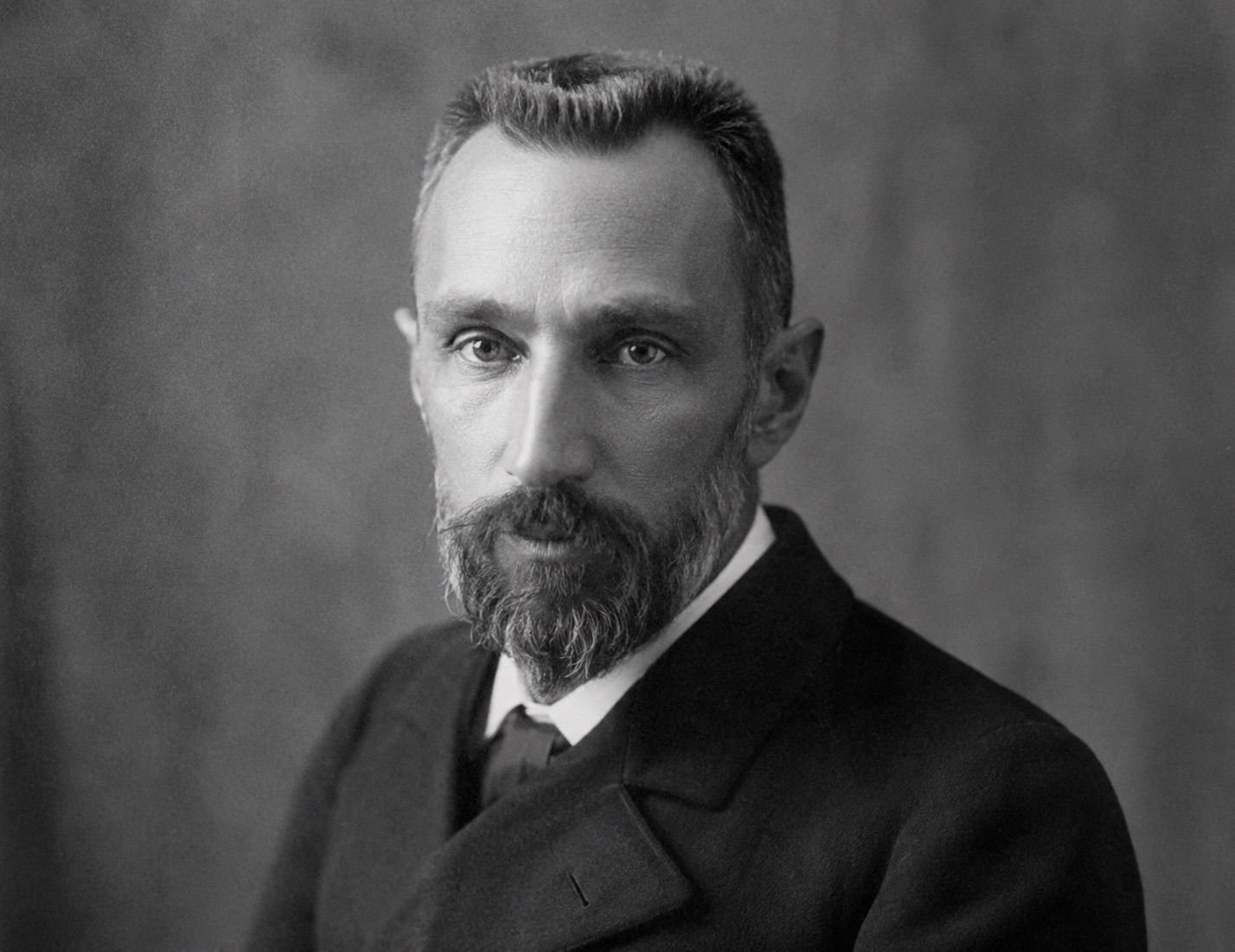
Pierre Curie’s smile keeps popping into my head. I’ve only seen pictures of him, but there’s something about the way his eyes crinkle at the corners that makes me feel like he might be smiling directly at me. It’s a little unsettling, to be honest.
I started reading about Pierre Curie in a course on early 20th-century science and society. We were discussing the intersection of politics and discovery, and Marie Curie’s work kept coming up as an example of how women could break into male-dominated fields through sheer force of will. But whenever I turned to Pierre, my mind wandered.
I think it’s because he died so young – 46 years old, just a few months after being run over by a horse-drawn carriage in Paris. That’s even before he had a chance to really capitalize on his discoveries about radioactivity with Marie. It feels like such a waste of potential, and yet…and yet I’m drawn to the idea that he might have been more than just a brilliant scientist.
When I read about Pierre Curie’s work as a philosopher – yes, he was also interested in philosophy, particularly the ideas of Henri Poincaré – it started to feel like there was more to him than just his research. He was asking big questions about the nature of time and space, about how our understanding of the universe is always incomplete.
I find myself wondering if I’d have liked Pierre Curie if we’d met in person. Would I have been intimidated by his intellect, or would we have connected over some shared curiosity? It’s impossible to know, but it’s hard not to imagine us having long conversations about science and philosophy and the human condition.
Sometimes, when I’m writing (which is often), I find myself thinking about Pierre Curie as a kind of mirror for my own anxieties. He was struggling with the pressure of living up to his wife’s expectations – Marie was already an accomplished scientist in her own right – while also navigating the complex politics of the scientific community. It feels like he might have been trapped between two competing desires: to do groundbreaking work, and to be seen as more than just the husband of a famous woman.
I don’t know if I’m projecting too much onto Pierre Curie’s story. Maybe it’s just easier for me to imagine someone struggling with these same pressures because I’ve felt them myself – in academia, in relationships, everywhere. But whenever I read about Pierre Curie, I feel this nagging sense that there’s more to the story than what we’re told.
What if his early death wasn’t just a tragic accident? What if it was a symptom of something deeper – the exhaustion of living up to expectations, the weight of being a genius in a world that didn’t always understand or appreciate him? It sounds melodramatic, I know, but there’s something about Pierre Curie’s story that feels almost…poignant.
I’m not sure if I’ll ever get to the bottom of what drew me to Pierre Curie. Maybe it’s just the mystery of him – this enigmatic figure who left behind a legacy of discovery and uncertainty. All I know is that whenever his smile pops into my head, I feel this shiver of recognition, like we’re connected in some fundamental way.
And maybe that’s enough for now.
As I continue to think about Pierre Curie, I find myself pondering the relationship between genius and expectation. It’s clear that Marie Curie was a driving force behind his work, pushing him to pursue their research together. But at what cost? Did he ever feel suffocated by her expectations, or did he thrive under the pressure?
I wonder if Pierre Curie’s struggles with identity would have been different if he were a woman in a field dominated by men. Would he have faced similar scrutiny and criticism for his work, or would his experiences be viewed through a different lens? It’s impossible to know, but I do know that women like Marie Curie often had to navigate treacherous waters, both in their personal and professional lives.
The more I read about Pierre Curie, the more I’m struck by the tension between his scientific curiosity and his sense of responsibility. He was driven to uncover the secrets of radioactivity, but he also felt a deep obligation to use his knowledge for the greater good. This sense of duty is something that resonates with me, especially as someone who’s struggled with their own sense of purpose.
As I write this, I’m realizing that Pierre Curie’s story isn’t just about him – it’s about all the people who’ve felt pressure to live up to expectations, whether it’s in science, art, or life. It’s about the weight of legacy and the fear of not meeting standards. And it’s about the quiet moments of doubt and uncertainty that we all face, even in the midst of greatness.
I’m not sure where this train of thought will take me next, but for now, I’m content to simply sit with these questions and ideas. Pierre Curie may be a historical figure, but his story feels surprisingly relevant to my own life – and perhaps, to yours as well.
The more I delve into Pierre Curie’s story, the more I find myself entangled in the web of expectation that surrounds him. It’s as if he’s become a symbol for all the times I’ve felt like I’m living up to someone else’s vision of me, rather than my own. My parents’ hopes and dreams for me, my professors’ expectations of what I should achieve after graduation – they all seem to be whispering in my ear, telling me that I’m not good enough unless I meet certain standards.
I remember the countless nights spent studying for exams, feeling like I was racing against time to prove myself. The pressure to succeed was suffocating at times, and it’s only now that I’m out of college that I can see how it affected my mental health. Pierre Curie’s story makes me realize that I’m not alone in this struggle – he too felt the weight of expectation, particularly from his wife.
It’s interesting to consider how Marie Curie’s legacy might have influenced Pierre’s sense of identity. Did he feel like he was living in her shadow, or did he find a way to carve out his own path? I wonder if their relationship was as complex and multifaceted as it seems on the surface. Were they two equals working together, or did Marie always hold the reins?
As I ponder these questions, I’m struck by the way Pierre Curie’s story intersects with my own fears about being seen as a writer. What does it mean to be a “real” writer? Is it someone who publishes widely, or is it someone who produces quality work that resonates with others? The pressure to fit into certain categories feels overwhelming at times, and I’m starting to realize that Pierre Curie’s story might hold some clues about how to navigate these expectations.
What if, instead of trying to live up to someone else’s definition of success, we focus on our own sense of purpose? What if we prioritize the work itself over external validation or recognition? It’s a daunting prospect, but one that feels increasingly necessary as I navigate my own creative journey.
The more I think about Pierre Curie’s story, the more I realize how little control he had over his own narrative. He was constantly being pulled in different directions – by his wife, by his colleagues, by his own sense of curiosity and wonder. It’s a delicate balance to strike, especially when you’re working at the forefront of your field.
I find myself wondering if Pierre Curie ever felt like he was losing himself in all the hype surrounding his work with Marie. Were they two individuals working together, or had their partnership become a kind of symbiotic entity that threatened to consume them both? It’s a question that resonates deeply with me as I navigate my own relationships and creative partnerships.
As someone who writes for themselves, I often feel like I’m operating outside the bounds of conventional success. There’s no clear definition of what it means to be a “good” writer, at least not one that makes sense to me. And yet, there’s this persistent pressure to produce work that will resonate with others – to create something that will leave a lasting impact.
Pierre Curie’s story makes me realize how much I’m not alone in this struggle. He too felt the weight of expectation, particularly from his wife and colleagues. But what if he had chosen to define success on his own terms? What if he had prioritized his own curiosity and sense of wonder over external validation?
It’s a tantalizing prospect – one that feels both liberating and terrifying at the same time. As I continue to write about Pierre Curie, I find myself drawn into this world of conflicting desires and expectations. It’s a messy, complicated place, but one that feels increasingly familiar.
I think about all the times I’ve felt like I’m living up to someone else’s vision of me – my parents’ hopes for me, my professors’ expectations of what I should achieve after graduation. And then there are the moments when I feel like I’m losing myself in the process – when the pressure to succeed becomes overwhelming and I start to doubt my own abilities.
Pierre Curie’s story offers a powerful counterpoint to these feelings. He was someone who lived on his own terms, even if it meant taking risks and facing uncertainty head-on. And yet, there’s also this sense of tragedy that surrounds him – the idea that he died young, cut down in his prime before he could fully realize his potential.
It’s a complicated legacy to navigate, one that feels both inspiring and cautionary at the same time. As I write about Pierre Curie, I find myself drawn into this web of conflicting desires and expectations. It’s a difficult place to be, but one that feels increasingly familiar – like a mirror held up to my own struggles with identity and purpose.
I’m starting to see Pierre Curie as a kindred spirit in more ways than one. His passion for discovery, his willingness to challenge conventional thinking – it’s all so deeply relatable to me as a writer. And yet, I also feel a sense of trepidation whenever I think about him. It’s like he’s warning me, cautioning me against the dangers of getting too caught up in the pursuit of greatness.
I think about all the times I’ve pushed myself to write something truly remarkable, only to end up feeling burnt out and empty. The pressure to produce quality work is suffocating at times, and it’s hard not to feel like I’m losing myself in the process. Pierre Curie’s story makes me realize that even someone as brilliant and driven as he was struggled with these same feelings.
It’s funny – I used to think that being a “real” writer meant publishing widely, receiving accolades and recognition from others. But the more I write about Pierre Curie, the more I’m starting to question what it really means to be a writer. Is it about producing work that resonates with others, or is it about staying true to ourselves and our own unique vision?
I find myself wondering if Pierre Curie ever felt like he was living in his own skin, or if he too struggled with the pressure to conform to certain expectations. Did he ever feel like he was losing himself in the process of achieving greatness? These are questions that I’m still trying to answer for myself, and yet, somehow, Pierre Curie’s story feels like a kind of guidepost along the way.
As I continue to write about him, I’m starting to see his legacy as a complex tapestry – one that’s woven from threads of genius, passion, and vulnerability. He was someone who took risks, who challenged conventional thinking, and yet, he also struggled with the weight of expectation. It’s a delicate balance to strike, but one that feels increasingly essential for me as I navigate my own creative journey.
I think about all the times I’ve felt like I’m living up to someone else’s vision of me – my parents’ hopes for me, my professors’ expectations of what I should achieve after graduation. And then there are the moments when I feel like I’m losing myself in the process – when the pressure to succeed becomes overwhelming and I start to doubt my own abilities.
Pierre Curie’s story makes me realize that even someone as brilliant and driven as he was struggled with these same feelings. He too felt the weight of expectation, particularly from his wife and colleagues. But what if he had chosen to define success on his own terms? What if he had prioritized his own curiosity and sense of wonder over external validation?
These are questions that I’m still trying to answer for myself, but Pierre Curie’s story feels like a kind of guiding light along the way. He was someone who lived on his own terms, even if it meant taking risks and facing uncertainty head-on. And yet, there’s also this sense of tragedy that surrounds him – the idea that he died young, cut down in his prime before he could fully realize his potential.
It’s a complicated legacy to navigate, one that feels both inspiring and cautionary at the same time. As I write about Pierre Curie, I find myself drawn into this web of conflicting desires and expectations. It’s a difficult place to be, but one that feels increasingly familiar – like a mirror held up to my own struggles with identity and purpose.
I’m starting to see Pierre Curie as someone who embodied both the thrill of discovery and the pain of uncertainty. He was a genius who struggled with his own limitations, and yet, he also found ways to transcend them through his work. It’s a paradox that I find myself drawn to – the idea that even in our darkest moments, we have the power to create something new and beautiful.
As I continue to write about Pierre Curie, I’m starting to realize just how much he has to teach me about living on my own terms. He was someone who refused to be bound by conventional thinking, who instead chose to forge his own path through science, philosophy, and art. It’s a lesson that feels both liberating and terrifying at the same time – one that I’m still trying to wrap my head around as I navigate my own creative journey.
I think about all the times I’ve felt like I was living in someone else’s skin, rather than my own. The pressure to conform to certain expectations can be overwhelming at times, but Pierre Curie’s story makes me realize that it’s never too late to break free from those constraints and forge our own path.
It’s a scary prospect – one that feels both exhilarating and terrifying all at once. But as I write about Pierre Curie, I’m starting to see his legacy as a kind of beacon of hope in the midst of uncertainty. He was someone who lived on his own terms, even if it meant taking risks and facing challenges head-on.
And so, as I sit here with my pen in hand, trying to make sense of Pierre Curie’s story, I’m starting to realize that I have a choice to make. Do I continue down the path of conventional thinking, or do I forge my own way through the unknown? It’s a question that feels both daunting and liberating at the same time – one that I’m still trying to answer for myself as I navigate my own creative journey.
For now, I’ll just keep writing – about Pierre Curie, about myself, and about the complexities of living on our own terms. It’s a path that feels winding and uncertain at times, but also exhilarating in its own way. And so, I’ll continue to write, hoping to find my own way through the darkness and into the light.