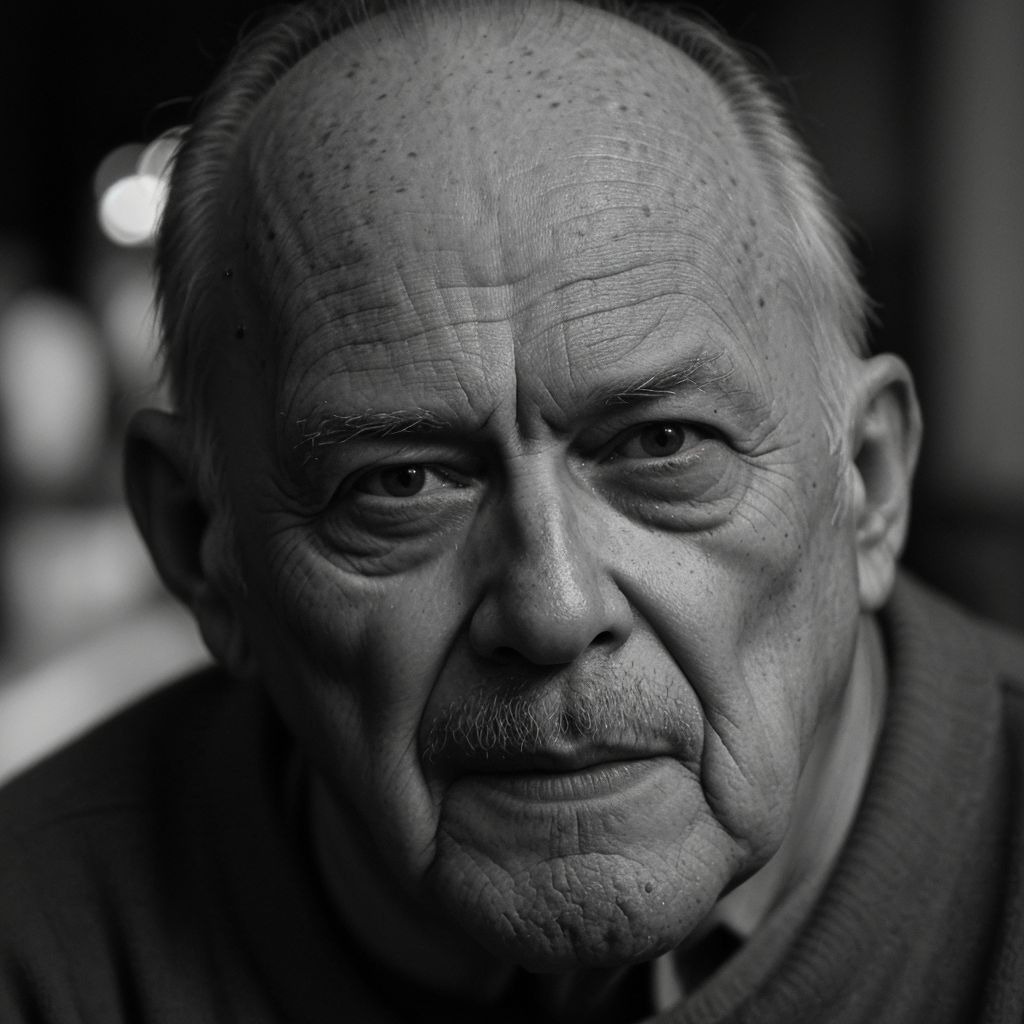
Paul Klee’s work has been a constant presence in my life, even though I’ve never met him. His paintings are like fragments of my own thoughts – abstract, yet somehow familiar. I find myself drawn to his use of color and shape, the way he blends the ordinary with the surreal.
I remember staring at “Twittering Machine” for hours, trying to decipher its meaning. The machine itself is a contraption of gears and wires, but it’s not a machine that produces sound – it’s silent. I was struck by how Klee could create something so mechanical-looking yet simultaneously evoke a sense of quiet contemplation. It made me wonder about the relationship between technology and creativity.
As an art student, I was introduced to Klee’s work through his Bauhaus period. His emphasis on experimentation and pushing boundaries resonated with me. I felt like I was witnessing the birth of something new – not just a style or movement, but a way of thinking. The idea that art could be both functional and expressive at the same time seemed revolutionary.
But it’s Klee’s more recent work, from his later years in Switzerland, that really speaks to me. Paintings like “Senecio” or “Red Balloon” are full of an almost childlike wonder – a sense of discovery that’s hard to put into words. I find myself getting lost in the textures and patterns he created, feeling like I’m unraveling a mystery.
I’ve always been fascinated by Klee’s relationship with his own identity. As a Swiss-German artist living in Europe during World War II, he was caught between two worlds. His paintings often reflect this tension – a blending of cultures, styles, and emotions. It makes me think about how I navigate my own sense of self, caught between the expectations of others and my own desires.
Sometimes, when I’m feeling stuck or uncertain, I’ll find myself looking at Klee’s work as a way to clear my head. His paintings are like a puzzle I can’t quite solve – they’re both complete and incomplete at the same time. It’s a reminder that sometimes, the only way forward is to surrender to the unknown.
I’m not sure what it is about Klee’s art that resonates with me so deeply. Is it the way he explores the boundaries between reality and fantasy? The way he combines opposites – order and chaos, simplicity and complexity? Or is it something more personal, a reflection of my own inner struggles?
As I continue to explore his work, I’m left with more questions than answers. Klee’s paintings are like a mirror held up to my own thoughts and emotions – they reflect back at me in ways both comforting and unsettling. It’s a reminder that art is never just about the artist or their intentions – it’s about the way we engage with it, the way it speaks to us on a deeper level.
For now, I’ll keep returning to Klee’s paintings, letting them guide me through the twists and turns of my own creative journey. And maybe, just maybe, his work will continue to unravel its secrets, revealing new layers of meaning and wonder that I’m still not prepared for.
The more I delve into Klee’s art, the more I feel like I’m uncovering a parallel universe – one where the rules of reality are gently bent, and the ordinary becomes extraordinary. It’s as if he’s showing me that creativity is a form of alchemy, transforming base materials into something new and wondrous.
I find myself getting lost in his use of line and shape, how they seem to dance across the canvas with a life of their own. In paintings like “Ad Parnassum” or “Angelus Novus,” I see echoes of my own struggles with anxiety and self-doubt. The way Klee’s lines twist and turn, creating a sense of tension and release, feels almost visceral – like he’s tapping into the same emotional currents that run through me.
At the same time, there’s something about his work that feels both personal and universal – like I’m witnessing a private language being spoken directly to my soul. It’s as if Klee is saying, “I see you, Penelope,” even when I don’t fully understand what he means. This sense of recognition is both comforting and unnerving, like discovering a secret handshake that only we share.
As an artist myself, I’m drawn to the way Klee experiments with different media – from oil paint to watercolor, from charcoal to collage. He’s not afraid to try new things, to push the boundaries of what’s possible. This sense of playfulness and curiosity is infectious, reminding me that creativity is a journey without a destination.
Sometimes, when I’m working on my own art projects, I’ll find myself channeling Klee – not in terms of style or technique, but in terms of attitude. I’ll try to capture the same sense of wonder and experimentation that he embodies, letting go of my fears about what others might think. It’s as if his art is giving me permission to be reckless, to take risks, and to trust the process.
But here’s the thing: Klee’s work isn’t just about inspiration or influence – it’s also a reminder of the limitations of language. His paintings often defy description, resisting the need for words or explanations. In this sense, they’re like a secret handshake that can only be understood through experience. When I look at his art, I’m forced to confront my own limitations as a writer and thinker – the ways in which language falls short when trying to capture the essence of something.
As I continue to grapple with Klee’s work, I’m left wondering: what does it mean to create something that transcends words? How do we convey the intangible, the ineffable, or the mysterious through art? And what role does the artist play in this process – are they a conduit for something greater than themselves, or simply a vessel for their own thoughts and emotions?
For now, I’ll keep exploring these questions, letting Klee’s paintings guide me down the rabbit hole of creativity and uncertainty.
The more I delve into Klee’s art, the more I’m struck by its enigmatic nature. It’s as if he’s intentionally left clues for us to decipher, but the answers remain elusive. This quality is both captivating and frustrating – it keeps me coming back for more, even when I feel like I’ve reached a dead end.
I find myself returning to his use of symbols and metaphors, trying to unravel their meanings. In paintings like “The Fountain of Love” or “Angelus Novus,” I see references to mythology and alchemy, but they’re not explicit enough for me to grasp fully. It’s like Klee is speaking a language that only whispers to me, leaving me with more questions than answers.
This ambiguity reminds me of my own writing process – the way I struggle to put into words what I’m trying to convey. Sometimes, it feels like I’m trying to capture a dream or a feeling that’s slipping through my fingers. Klee’s art is like a mirror held up to this experience, showing me that I’m not alone in my struggles.
But there’s also a sense of liberation that comes from embracing the unknown. When I look at Klee’s paintings, I feel like I can surrender to the mystery, letting go of my need for control and explanation. It’s a reminder that art is often more about evoking emotions than conveying facts – and that sometimes, the most powerful messages are those that don’t need words.
As I continue to explore Klee’s work, I’m struck by his ability to blend the mundane with the extraordinary. In paintings like “Ancient Harmony” or “Pastoral,” he takes everyday scenes and transforms them into something magical. It’s as if he’s showing me that even in the most ordinary moments, there lies a world of wonder waiting to be discovered.
This quality resonates deeply with me, as someone who often struggles to find meaning in my own daily life. Klee’s art is like a wake-up call, reminding me that creativity can emerge from the most unexpected places – and that sometimes, it’s the smallest details that hold the greatest significance.
But there’s also a sense of disorientation that comes from looking at Klee’s paintings. They’re not always easy to decipher, and they often leave me feeling like I’m walking in circles. It’s as if he’s creating a maze for me to navigate, one that leads nowhere and everywhere at the same time.
This experience is both exhilarating and unsettling – it makes me wonder about the role of art in shaping our perceptions of reality. Are Klee’s paintings showing me the world as it truly is, or are they refracting it through his own unique lens? And what does this say about the nature of truth itself?
For now, I’ll continue to navigate this maze, letting Klee’s art guide me through its twists and turns.
As I wander through the labyrinth of Klee’s paintings, I find myself confronting my own relationship with uncertainty. His art is like a reflection of my inner world – a place where meaning is constantly shifting, and clarity is elusive. It’s as if he’s inviting me to enter this liminal space alongside him, where the boundaries between reality and fantasy blur.
Sometimes, when I’m feeling stuck or uncertain, I’ll find myself looking at Klee’s paintings as a way to clear my head. His art is like a puzzle that I can’t quite solve – they’re both complete and incomplete at the same time. It’s a reminder that sometimes, the only way forward is to surrender to the unknown.
But what does it mean to surrender to uncertainty? Is it a form of defeat or a form of liberation? Klee’s paintings seem to suggest that it’s the latter – that embracing the ambiguity of life can lead to new possibilities and insights. Yet, as I navigate my own creative journey, I find myself torn between the desire for clarity and the need for surrender.
As an artist, I’m constantly grappling with the tension between intention and chance. Do I try to control every aspect of my work, or do I let go and allow things to unfold organically? Klee’s art seems to suggest that it’s a combination of both – that the most innovative ideas emerge from the spaces where intention meets accident.
This idea resonates deeply with me, as someone who often struggles with self-doubt and perfectionism. Klee’s paintings are like a reminder that mistakes can be beautiful, that the unexpected can lead to new discoveries. It’s a message that I need to hear again and again, especially when I’m feeling stuck or uncertain.
But what about the role of intention in art? Doesn’t it matter if an artist sets out to create something specific, only to have it deviate from their original plan? Klee’s paintings seem to suggest that intention is not a fixed entity – that it can evolve and change over time. Yet, as I work on my own projects, I find myself torn between the desire for control and the need for surrender.
Perhaps the key lies in embracing the tension between these opposing forces. By acknowledging the uncertainty of life and art, we can create space for new ideas to emerge – ideas that might not have been possible if we’d stuck to a predetermined plan. Klee’s paintings are like a testament to this idea – they’re full of contradictions and paradoxes, yet they also seem to contain a deeper truth.
As I continue to explore Klee’s work, I’m left with more questions than answers. What does it mean to create art that is both intentional and accidental? How do we balance the need for control with the need for surrender? And what role does uncertainty play in the creative process?
For now, I’ll keep navigating this maze of questions, letting Klee’s paintings guide me through its twists and turns.