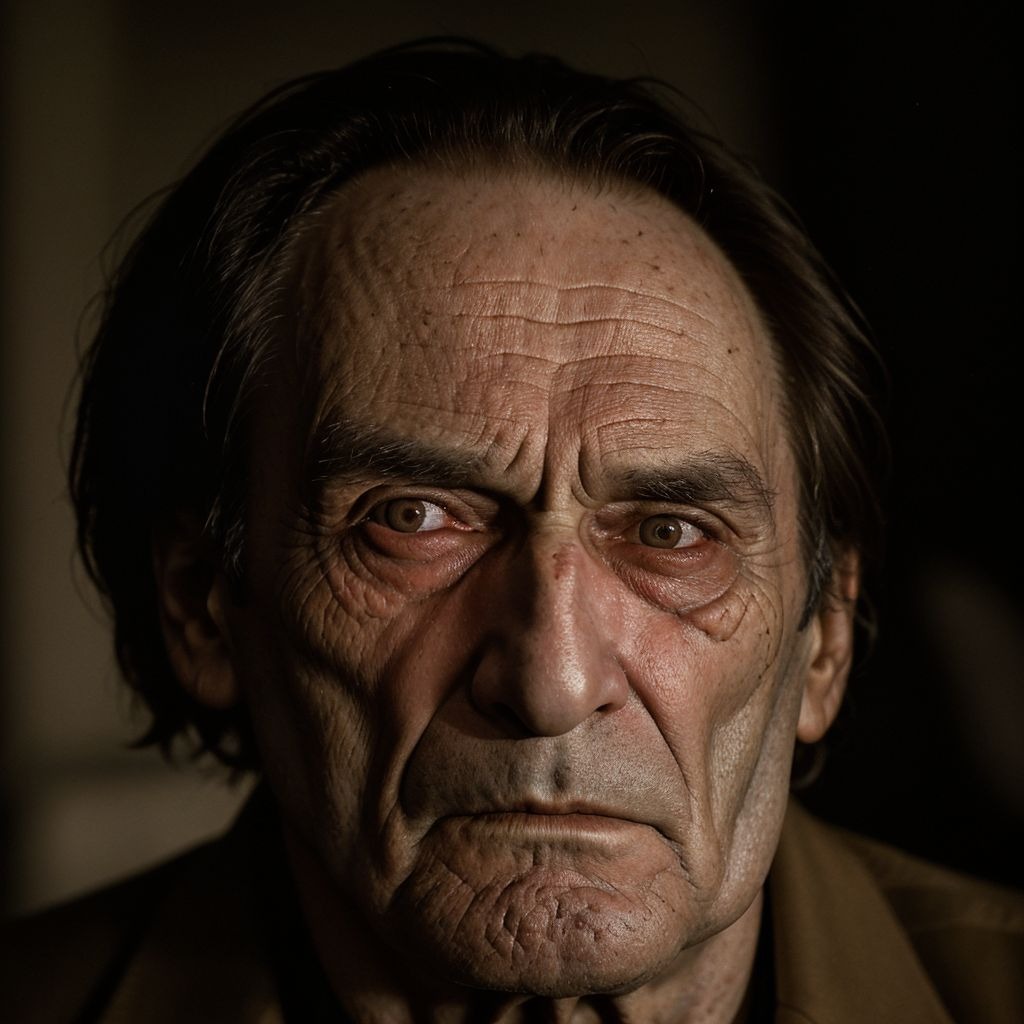
I’ve been thinking about Antonin Artaud a lot lately, trying to wrap my head around the man and his work. For me, it’s not just about understanding him as an artist or a thinker; I’m drawn to the complexities that make him so infuriatingly compelling.
One of the things that keeps me up at night is his conviction that creativity should be raw, unbridled, and – above all – honest. He believed that art should push against the boundaries of what’s acceptable, creating a space for the sublime and the unsettling to coexist. That idea resonates with me on some fundamental level, even though it often makes me squirm.
I think about my own experiences in college, where I was encouraged to explore new forms of creative expression – to push beyond the confines of traditional writing or poetry. There were times when I felt like I was walking a tightrope between innovation and chaos, trying not to alienate my audience while still being true to myself. Artaud’s vision for art-as- revolution feels both exhilarating and terrifying.
His relationships with others have always fascinated me, too – particularly his tumultuous friendship with Jacques Rivière, the editor who championed his early work but ultimately rejected it due to its perceived darkness and instability. I’ve often found myself wondering what it must be like to be so bound up in creative relationships that they become all-consuming, even toxic.
As someone who writes because it helps me process my thoughts and emotions, I’m drawn to Artaud’s emphasis on the role of writer as seer or shaman – an artist who channels the divine into their work. It’s both beautiful and unsettling, this idea that our writing can tap into something greater than ourselves.
But what really gets under my skin is his sense of disillusionment with modern society and its expectations for art. He saw the avant-garde as a failed promise, trapped in the same conventions it sought to subvert. I feel a pang of recognition when I read about his frustration – isn’t that just another way of saying we’re stuck in our own compromises, sacrificing true originality on the altar of marketability or artistic “validity”?
I don’t know what to make of Artaud’s final years, when he became increasingly erratic and detached from reality. Some people see it as a tragic descent into madness; others view it as a deliberate rejection of societal norms in favor of some higher truth. I’m still trying to sort through the mythology surrounding his decline – whether it was a result of his own personal demons or simply a byproduct of living in a world that didn’t understand him.
Maybe what I love most about Artaud is that he refuses to be reduced to easy labels or categories. He’s a puzzle, a paradox – and maybe, just maybe, that’s what makes him so captivating. Even when his ideas make me uncomfortable or question my own assumptions, I find myself returning to them again and again, trying to grasp the full depth of his vision.
I don’t know if I’ll ever fully “get” Artaud, but I do know that his presence in my life has been a catalyst for growth – forcing me to confront my own creative anxieties and doubts. He’s a reminder that art should be messy, imperfect, and sometimes just plain difficult to understand. And maybe, just maybe, that’s what makes it so beautiful.
As I delve deeper into Artaud’s world, I’m struck by the way he navigates the boundaries between creative genius and personal turmoil. His struggles with mental health, addiction, and relationships are a reminder that even the most visionary artists can be fragile, vulnerable beings. It’s easy to romanticize their lives, but in reality, they’re often mired in the same messy complexities as the rest of us.
I think about my own experiences with anxiety and self-doubt as a writer. There have been times when I felt like I was drowning in the weight of expectation – from myself, from others, from the very idea of being a “good” writer. Artaud’s struggles feel both familiar and alienating at the same time; on one hand, I can relate to the pressure to produce something innovative and meaningful; on the other hand, his descent into madness terrifies me.
I’ve always been drawn to the idea of writing as a form of catharsis – a way to process my emotions, work through difficult experiences, and find some semblance of meaning. Artaud’s emphasis on the writer as seer or shaman resonates with this impulse, but his methods were often far more extreme than anything I could ever imagine. His use of automatism, for instance, where he’d write from a trance-like state without editing or censoring himself, seems both exhilarating and terrifying.
What if I let go of my need for control, my fear of making mistakes? What if I surrendered to the process, allowing myself to be guided by some deeper, more primal force? Artaud’s work is like a siren call, beckoning me towards the unknown – but it’s also a warning, reminding me that there are risks involved in embracing this kind of creative freedom.
As I continue to explore Artaud’s ideas and experiences, I’m struck by the way he challenges me to confront my own assumptions about art, creativity, and the role of the writer. He’s a provocateur, a troublemaker – but also a profound thinker who forces me to question everything I thought I knew.
The more I delve into Artaud’s world, the more I’m struck by his unapologetic individualism. He refused to be bound by the conventions of modern society, even when it meant sacrificing comfort and security. For him, art was a form of rebellion, a way to challenge the status quo and create a new language that was both personal and universal.
I find myself drawn to this aspect of his personality, even as I acknowledge the risks involved in embracing such a radical approach to creativity. There’s something about Artaud’s willingness to take the leap, to abandon all pretenses and simply be true to himself, that resonates with me on a deep level.
But what if this individualism is also a form of solipsism? What if Artaud’s emphasis on personal expression has led him down a path of isolation and disconnection from others? I think about his relationships – or lack thereof – with other artists and intellectuals, and wonder if his need for autonomy has come at the cost of genuine human connection.
This tension between individuality and community is something that I grapple with as a writer. Do I prioritize my own unique voice and perspective, even if it means risking alienation from others? Or do I seek out collaboration and feedback, potentially sacrificing some measure of creative freedom in the process?
Artaud’s work is like a Rorschach test, revealing different patterns and meanings depending on one’s own experiences and biases. For some, he represents the pinnacle of avant-garde innovation; for others, he’s a cautionary tale about the dangers of unchecked ego and creative excess.
As I navigate these conflicting impulses within myself, I’m struck by the way Artaud’s legacy continues to evolve and multiply – a testament to his enduring influence on modern art and culture. His ideas have been interpreted and reinterpreted, adapted and subverted by countless artists and thinkers over the years.
And yet, despite this proliferation of meanings, there remains something enigmatic about Artaud himself – a sense that he’s always slipping through our fingers, like sand in an hourglass. This elusiveness is both frustrating and exhilarating, leaving me to wonder what secrets lie hidden beneath his words and actions.
Perhaps the truth is that we’ll never fully grasp Artaud, that he’s destined to remain a mystery – a puzzle that continues to unfold with each new reading or interpretation. And maybe that’s exactly what makes him so compelling: the sense that there’s always more to discover, more to explore, more to learn from this mercurial and enigmatic figure.
As I delve deeper into Artaud’s world, I’m struck by the way he challenges traditional notions of creativity and artistic expression. His emphasis on the raw, unbridled, and honest has me thinking about my own relationship with language and writing. How often do I feel like I’m trying to conform to certain expectations or standards, rather than allowing myself to express freely?
I think back to my college days when I was experimenting with different forms of creative expression – poetry, short stories, even plays. There were times when I felt like I was pushing the boundaries too far, that I was taking risks that might alienate my audience. But Artaud’s words keep echoing in my mind: “The true work is not what we do but how we are.” How am I showing up to my writing, really? Am I being true to myself, or am I trying to fit into some predetermined mold?
It’s funny – when I was younger, I used to think that being a writer meant having all the answers. That it meant being confident and self-assured in one’s creative decisions. But the more I write, the more I realize that uncertainty is an essential part of the process. Artaud’s work is like a reminder that creativity is not just about producing something beautiful or meaningful, but also about embracing the unknown.
I’m struck by how much Artaud’s life and work have in common with my own experiences as a writer – the struggles with self-doubt, the fears of failure, the constant need to question and revise. It’s like he’s speaking directly to me, saying, “Hey, I get it. This is hard. But don’t give up.” And yet, at the same time, his individualism and nonconformity are qualities that both attract and intimidate me.
As I continue to explore Artaud’s ideas and experiences, I’m beginning to see him as a complex, multifaceted figure – someone who embodies both the beauty and the brutality of creative genius. He’s like a mirror held up to my own aspirations and fears, forcing me to confront the contradictions within myself.
I wonder what it would be like to write in Artaud’s style – to allow myself to become completely absorbed in the process, without worrying about the outcome or the opinions of others. Would I feel more free, more alive? Or would I just feel lost and uncertain?
Perhaps that’s the ultimate question: can we ever truly tap into our own creative potential, or are we always constrained by external expectations and internal doubts? Artaud’s work is like a whispered promise – that if we dare to take the leap, to surrender to the unknown, we might just discover something new and unexpected.
As I delve deeper into Artaud’s world, I find myself drawn to his concept of “theatre of cruelty.” On one hand, it seems like a radical rejection of traditional notions of art as entertainment or spectacle. He saw theatre as a space for raw emotion and unbridled expression, where the audience was forced to confront their own fears and desires. But on the other hand, I worry that this approach might be seen as cruel or even sadistic – a way of manipulating people’s emotions rather than genuinely engaging with them.
I think about my own experiences in college, where I worked on a project that involved creating an immersive theatre experience for an audience. It was a challenging and sometimes uncomfortable process, but ultimately rewarding when we saw how it affected the viewers. Artaud’s ideas about theatre as a form of collective catharsis resonated with me then, but now I’m not so sure.
What if his emphasis on cruelty is just another way of saying that art should be confrontational or provocative? Doesn’t that risk alienating audiences and making them feel uncomfortable for the sake of it? Or is there something more nuanced at play here – a recognition that true creativity often requires us to confront our own vulnerabilities and fears?
As I grapple with these questions, I’m reminded of Artaud’s struggles with mental health. He was known to have episodes of intense anxiety and depression, which often manifested in his writing as a kind of raw, unbridled energy. But what if that energy is also a form of self-protection – a way of shielding himself from the harsh realities of the world?
I think about my own experiences with anxiety, how it can sometimes feel like a constant companion, always lurking just beneath the surface. Artaud’s work is like a mirror held up to these fears, forcing me to confront them head-on. But what if that confrontation is also a form of self-destruction – a way of sabotaging my own creative potential?
Perhaps the truth is that Artaud’s ideas are not so much about creating art as they are about experiencing life itself. He saw creativity as a way of tapping into the raw, unbridled energy of existence – an energy that can be both exhilarating and terrifying.
As I continue to explore his work, I’m struck by the way he challenges me to rethink my own relationship with language and writing. His use of automatism, for instance, where he’d write from a trance-like state without editing or censoring himself, is like a call to arms – a reminder that true creativity often requires us to let go of our need for control.
But what if that surrender also means giving up on certain forms of artistic expression? What if my own writing is too rigid, too self-conscious – always trying to fit into predetermined molds or expectations?
Artaud’s legacy is like a maze, with endless paths and dead ends. Every time I think I’ve grasped his ideas, they slip through my fingers like sand. And yet, it’s this very elusiveness that makes him so compelling – a reminder that true creativity often requires us to surrender to the unknown.
Perhaps the ultimate truth about Artaud is not something I’ll ever fully understand – but rather something I can only experience for myself. His work is like a doorway, leading me into the depths of my own creative potential. And it’s up to me to decide whether to step through that doorway or stay safely on the other side.
As I close this chapter in my exploration of Artaud, I’m left with more questions than answers. But perhaps that’s the nature of true creativity – a willingness to take risks, to challenge our assumptions and push beyond the boundaries of what’s acceptable.
Artaud’s work is like a mirror held up to my own creative aspirations, forcing me to confront the contradictions within myself. And it’s in these moments of uncertainty, when I’m not sure which way to turn or what lies ahead, that I feel most alive – most connected to the raw, unbridled energy of existence itself.
Related Posts
- James Weldon Johnson: The Man Who Still Haunts Me (And Why I Think You Should Care Too)
- Lost in the Impermanence of Light: What Claude Monet’s Paintings Taught Me About Finding Beauty in the Fleeting Moments
- Emil Cioran: The Human Equivalent of a Frayed Wire – Always Shorting Out on Purpose or by Accident