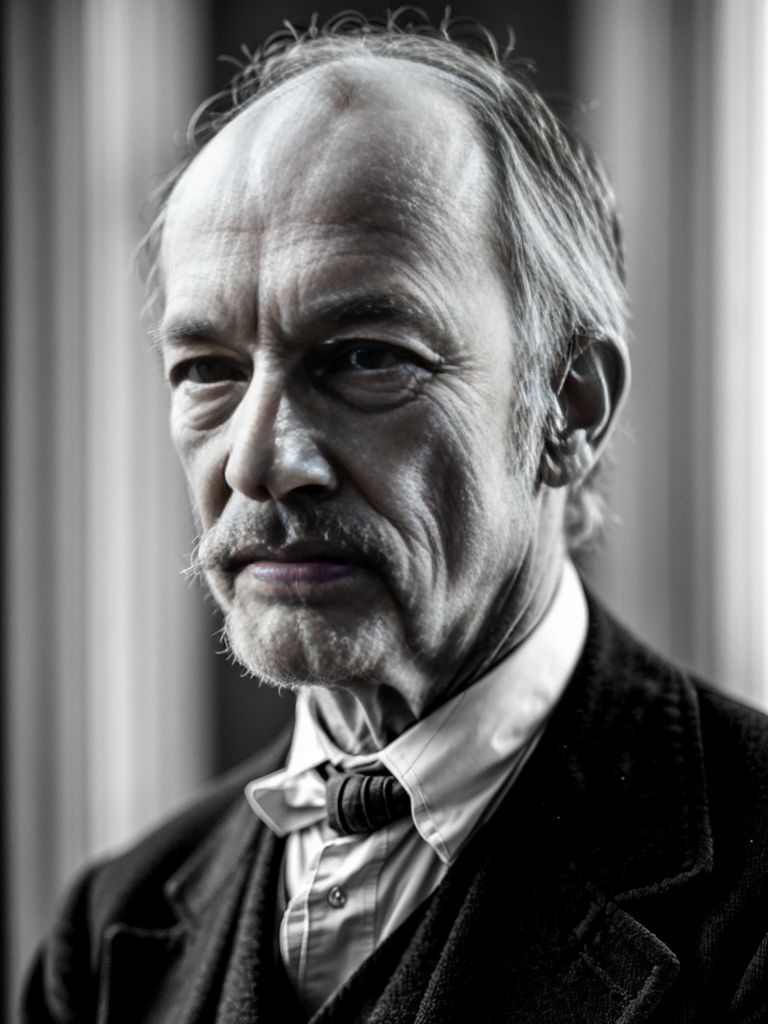
Thomas Hardy’s name has been floating around my consciousness for years, long before I finally picked up one of his novels in college. There was something about the way people spoke of him – as if he were a mythical figure from another time, a relic of an era that still lingered on the edges of our own modern world. I’ve always found it fascinating how certain authors become vessels for collective nostalgia, their works serving as gatekeepers to bygone eras.
My first exposure to Hardy was through The Return of the Native, which I read in a crowded classroom during my junior year. At the time, I was captivated by his descriptions of the English countryside – the way he wove together the lush greenery and the stark beauty of the moors into a sense of desolate grandeur. But it wasn’t until I delved deeper into his works that I began to grasp the complexity of his writing.
Hardy’s fiction often feels like an exploration of the human condition in all its messy, unglamorized forms – the cruelty of nature, the futility of love, and the crushing weight of societal expectations. His stories are populated by characters who embody these struggles, people like Tess Durbeyfield and Jude Fawley, whose lives are marked by tragic flaws and the inexorable march of fate.
What draws me to Hardy’s work is the way he seems to resist romanticizing his subjects, even as they’re often caught up in a sense of doomed inevitability. His writing has this piercing clarity that makes you feel like you’re witnessing events unfold before your eyes – not because he’s trying to persuade or manipulate, but simply because he’s so deeply invested in the truth of the human experience.
One aspect of Hardy’s fiction that’s always unsettled me is his treatment of women. On the surface, his female characters seem to embody a mix of strength and vulnerability, but as you dig deeper, it becomes clear that they’re often trapped within societal strictures that render them powerless. I’ve grappled with this tension – wondering whether Hardy was simply reflecting the limitations placed on women during his time, or if he was perpetuating them through his writing.
I find myself drawn to this paradox because it speaks to my own complicated feelings about feminism and female empowerment. As a young woman, I’m constantly aware of the ways in which societal expectations can both liberate and restrict us – and yet, there’s a part of me that feels like we’re still grappling with these same questions today.
For Hardy, the struggles of his female characters often serve as a metaphor for the broader human condition. Their stories are about the fragility of life, the capriciousness of fate, and the impossibility of escaping one’s circumstances. But what happens when I try to apply this perspective to my own life? Do I start seeing myself as similarly trapped – subject to the whims of a cruel universe that refuses to be swayed?
These are questions that still feel unresolved for me. Hardy’s writing has this way of posing problems without providing neat solutions, and it’s precisely this quality that draws me in. He doesn’t pretend to have answers; instead, he invites you to wade into the messiness of existence alongside him.
As I continue to read through his works, I’m struck by how much of himself Hardy pours onto the page – not just as an author, but as a person grappling with his own sense of disillusionment and despair. His writing is like a confessional, where he lays bare his doubts and fears in order to make sense of them.
In many ways, this is what I find most compelling about Thomas Hardy: the way he acknowledges the darkness within himself, even as he refuses to be consumed by it. It’s an act of remarkable courage – one that speaks to the human capacity for self-awareness and introspection.
And yet, despite all these complexities, there remains a part of me that can’t shake off the feeling that I’m missing something fundamental about Hardy’s writing. Perhaps it’s his relationship with Emma, or his philosophical leanings towards fatalism – but whatever it is, I know that I’ll keep coming back to his work, searching for answers that may never fully reveal themselves.
As I continue to grapple with Hardy’s treatment of women and the societal expectations that shape their lives, I find myself thinking about my own experiences as a young woman. Growing up, I was always told that I had choices – that I could be whoever I wanted to be, pursue whatever career I desired. But as I’ve navigated adulthood, I’ve come to realize just how limited those choices really are.
I think about the way women are often pitted against each other, competing for scarce resources and attention in a world that seems determined to hold us back. And yet, when I look at Hardy’s female characters – Tess, Jude, Sue – I see this same dynamic playing out on a grand scale. They’re all fighting against impossible odds, their lives shaped by the cruel whims of fate and the societal norms that govern them.
It’s strange to think about how much we’ve changed since Hardy’s time, but also how little we’ve really progressed. Women are still fighting for equal pay, for reproductive rights, for basic recognition in a society that often seems designed to marginalize us. And yet, when I read Hardy’s writing, I’m struck by the way he seems to capture this same sense of frustration and disillusionment.
Perhaps it’s because Hardy was a product of his time – a man who saw the world through the lens of Victorian values and societal norms. But maybe it’s also because he was ahead of his time – a writer who grasped the complexities of human experience in a way that feels eerily prescient today.
As I continue to read through his works, I’m struck by the way Hardy seems to question everything – not just society’s expectations of women, but the very fabric of existence itself. He writes about the fragility of life, the capriciousness of fate, and the inevitability of decline and death. It’s a bleak view of the world, perhaps – but it’s also strangely liberating.
Because when you confront the darkness within yourself, as Hardy does in his writing, you begin to see just how little control we really have over our lives. We’re all subject to the whims of fate, caught up in a web of circumstances that can’t be fully understood or predicted. And yet, it’s precisely this realization that sets us free – allows us to let go of our attachments and illusions, and simply be present with what is.
I’m not sure I’ve fully grasped Hardy’s philosophy on this, but it feels like the key to understanding his writing – a way of embracing the uncertainty and chaos that surrounds us, rather than trying to impose order or control. It’s a daunting prospect, perhaps – but also strangely exhilarating. Because when you surrender to the mystery of existence, as Hardy does in his writing, you begin to see just how much beauty there is in the world – even in its darkest corners.
As I delve deeper into Hardy’s works, I’m struck by the way he weaves together the threads of fate and free will. His characters are often forced to navigate the harsh realities of their lives, with little control over the course of events. And yet, it’s precisely this sense of powerlessness that seems to give them a strange kind of freedom.
I think about Tess Durbeyfield, for example – a woman who’s trapped in a cycle of poverty and exploitation, forced to make impossible choices in order to survive. On one level, her story is a tragic one, a cautionary tale about the dangers of societal pressure and the cruel whims of fate. But on another level, it’s also a testament to the human spirit – Tess’s determination to hold onto her dignity, despite everything that’s been taken from her.
For me, Hardy’s writing raises fundamental questions about the nature of agency and responsibility. If we’re all subject to the capriciousness of fate, do we have any real control over our lives? Or are we simply pawns in a larger game, forced to play by rules that we didn’t make?
As I grapple with these questions, I find myself drawn back to my own experiences as a young woman. Growing up, I was always told that I had choices – that I could be whoever I wanted to be, pursue whatever career I desired. But as I’ve navigated adulthood, I’ve come to realize just how limited those choices really are.
I think about the way women are often socialized to prioritize others’ needs over our own, to put ourselves last in order to maintain a sense of harmony and stability. And yet, when we do this, don’t we risk losing ourselves entirely? Don’t we become trapped in a cycle of self-sacrifice, forced to abandon our own desires and dreams in order to fit into someone else’s idea of what it means to be a woman?
Hardy’s writing doesn’t offer any easy answers to these questions. Instead, he poses them in all their complexity – inviting us to explore the messy, often contradictory nature of human experience. And yet, it’s precisely this willingness to confront the unknown that makes his work feel so profoundly liberating.
As I continue to read through his works, I’m struck by the way Hardy seems to capture the essence of existence itself – the mix of beauty and ugliness, joy and suffering, that defines our lives. It’s a bleak view of the world, perhaps – but it’s also strangely beautiful.
Because when you confront the darkness within yourself, as Hardy does in his writing, you begin to see just how much more there is to life than surface-level appearances. You start to notice the subtle nuances of existence – the way light filters through the leaves of trees, the sound of raindrops hitting the pavement, the scent of freshly cut grass.
These are things that we often overlook in our daily lives, too caught up in our own worries and concerns to fully appreciate the beauty around us. But Hardy’s writing reminds me that even in the darkest moments, there is always something to be savored – a sense of wonder, a spark of curiosity, a glimmer of hope.
As I finish reading one of his novels, I’m left with a sense of awe and reverence for the man himself. Not just as an author, but as a person who saw the world in all its complexity, who refused to shy away from its darkness or its beauty. He’s a writer who invites us to join him on this journey into the unknown, to explore the uncharted territories of our own hearts and minds.
And so I’ll continue reading his works, savoring every word, every sentence, every chapter that unfolds before me like a map to hidden worlds. Because in Hardy’s writing, I’ve found a kindred spirit – someone who understands the messy, often contradictory nature of human experience, and invites us to explore it all with him.
As I sit here, surrounded by the dusty pages of Hardy’s novels, I’m struck by the sense that his writing has become an integral part of my own story. It’s as if his words have seeped into my pores, infusing me with a newfound understanding of the world and its complexities. And yet, even as I feel this deep connection to his work, I’m also aware of the ways in which it challenges me – forces me to confront aspects of myself that I’d rather not face.
One of the things that’s struck me most about Hardy is the way he writes about time. His novels are often structured around a sense of temporal fluidity, where past and present blend together in a way that defies traditional notions of chronology. It’s as if he’s trying to capture the essence of existence itself – the way moments accumulate and overlap, forming a tapestry of experience that’s both fragmented and whole.
I think about how this relates to my own life, and I’m struck by the ways in which time seems to warp and distort for me. Memories from childhood feel like they’re from another lifetime, while recent events seem to have happened just yesterday. It’s as if my sense of time is being constantly rewritten – a process that’s both disorienting and liberating.
Hardy’s writing has helped me see this phenomenon in a new light. His characters often experience moments of temporal dislocation, where they’re transported back into the past or propelled forward into an uncertain future. And yet, even as they navigate these shifts in time, they remain anchored to the present – aware of their own mortality and the fleeting nature of existence.
This awareness is something that I’ve struggled with myself, particularly in my early twenties. There’s a sense of disorientation that comes with transitioning from adolescence into adulthood – a feeling that your whole identity is being rewritten before your eyes. And yet, Hardy’s writing has helped me see this process as a kind of liberation – an opportunity to shed the skin of our former selves and emerge anew.
As I continue to read through his works, I’m struck by the way he writes about love. His characters often experience moments of profound connection with one another, but these relationships are always tinged with a sense of sadness or loss. It’s as if Hardy is trying to capture the bittersweet nature of human attachment – the way we’re drawn to others even as we know that our time together is limited.
This resonates deeply with me, particularly in my own experiences with love and relationships. I’ve always been someone who wears their heart on their sleeve, pouring all of themselves into those they care about. And yet, this can also be a source of pain – a reminder that the people we love are never truly ours to possess.
Hardy’s writing has helped me see this dynamic in a new light. His characters often experience moments of epiphanic insight, where they realize that their love is doomed from the start. And yet, even as they acknowledge this reality, they’re also drawn into the very depths of their own emotions – forced to confront the full range of human feeling.
This is something that I’ve struggled with myself, particularly in my relationships with others. There’s a sense of vulnerability that comes with loving someone deeply – a willingness to be hurt or rejected that can feel both exhilarating and terrifying. And yet, Hardy’s writing has helped me see this vulnerability as a strength rather than a weakness – a testament to the human capacity for love and connection.
As I finish reading one of Hardy’s novels, I’m left with a sense of awe and gratitude for the man himself. Not just as an author, but as a person who saw the world in all its complexity – a writer who refused to shy away from its darkness or its beauty. He’s someone who understands that existence is a messy, often contradictory thing – a tapestry of experience that can’t be reduced to simple truths or tidy solutions.
And so I’ll continue reading his works, savoring every word, every sentence, every chapter that unfolds before me like a map to hidden worlds. Because in Hardy’s writing, I’ve found a kindred spirit – someone who understands the messy, often contradictory nature of human experience, and invites us to explore it all with him.