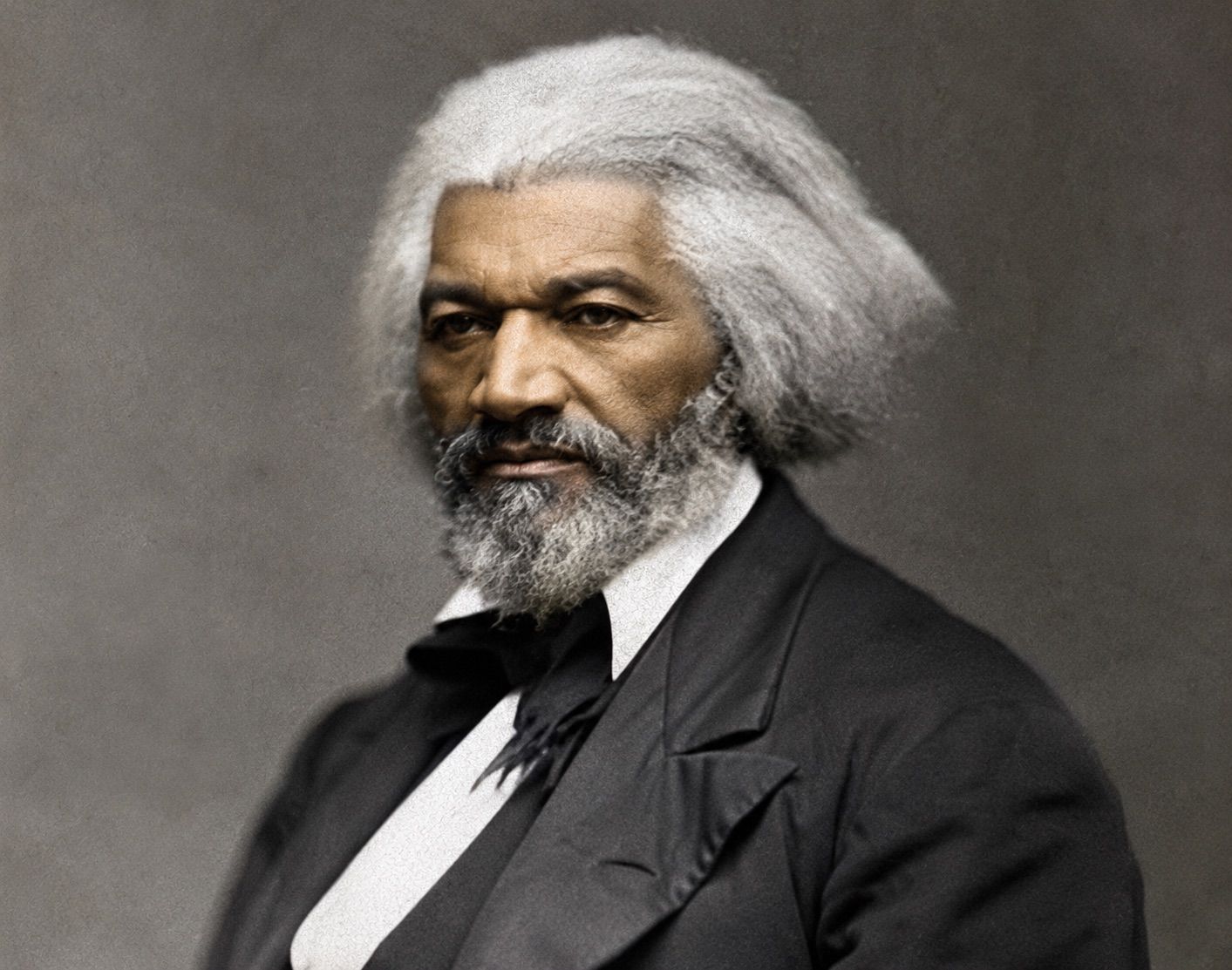
I’ve always been drawn to Frederick Douglass, but it’s his humanity that really gets me. His life was a litany of horrors, and yet he wrote about them with such elegance, precision, and compassion. I find myself wondering how someone who experienced so much trauma could produce writing that is at once searingly honest and beautifully crafted.
When I read Douglass’s accounts of being beaten by his slave owners, or separated from his family, I feel a knot in my stomach. It’s hard to imagine what it must have been like for him to endure such cruelty, and to keep on going despite the odds. But as I delve deeper into his writing, I start to notice something else – a sense of determination, of resilience, that feels almost…dignified.
I think about my own struggles with anxiety, and how sometimes it feels like the world is just too much to bear. I wonder if Douglass ever felt that way, if he ever lay awake at night feeling overwhelmed by the weight of his circumstances. Did he ever doubt himself, or feel like giving up? And yet, time and time again, he kept writing.
I’ve always been a writer, too – it’s how I process my thoughts, how I try to make sense of the world around me. But Douglass was something different altogether. He wrote not just to express himself, but to bear witness to the injustices of his time. He wrote to be heard, even when no one seemed willing to listen.
I’m struck by the complexity of his relationships – with his owners, his fellow slaves, and even the abolitionists who advocated for his freedom. There’s a sense of tension, of push-pull, that I find really compelling. Douglass was a master orator, but he also struggled with his own identity, caught as he was between two worlds.
I’ve read so much about Douglass’s life – about his time on the plantation, his escape to freedom, and his subsequent rise to prominence as an abolitionist leader. But what really fascinates me is the way he grapples with these contradictions. He’s fiercely critical of slavery, but also deeply ambivalent about the society that perpetuated it.
I find myself wondering if this ambivalence was a product of his experiences, or if it was something more fundamental to who he was as a person. Was he torn between two worlds because he was caught in a cycle of violence and oppression? Or was it something deeper – a recognition that even the most well-intentioned people can be complicit in systems of harm?
As I sit here with my notes scattered around me, I’m struck by how much Douglass’s story still resonates today. The struggles he faced are ours too – struggles with identity, justice, and our place in the world. And yet, his writing is more than just a historical artifact; it’s a testament to the power of human resilience, to the possibility that even in the darkest moments, there can be a way forward.
I’m not sure what I take away from Douglass’s life – whether it’s a sense of hope or despair, a recognition of our shared humanity or a reminder of the depths of suffering. All I know is that his writing stays with me, haunting me, and making me see the world in a different light.
As I continue to read through Douglass’s accounts, I’m struck by the way he navigates these contradictions, never shying away from the complexity of his own emotions. There are moments where he writes with a fierce anger, denouncing the cruelties of slavery and the men who perpetrated them. And then there are times when he speaks with a quiet sorrow, reflecting on the losses he’s endured and the loved ones he’s left behind.
I find myself drawn to these quieter moments, where Douglass’s writing is almost…vulnerable. It’s as if he’s sharing a secret with me, one that I’m not sure I’m ready for. But at the same time, it feels like a privilege, being allowed into this inner world of his. This is what makes his writing so compelling – it’s not just about conveying information or making a point; it’s about bearing witness to the human experience.
I think back to my own experiences with anxiety and feeling overwhelmed. How do I navigate those feelings in a way that feels authentic, without resorting to clichés or platitudes? Douglass’s writing is full of phrases like “my heart was heavy” or “I felt like a part of me had been torn away.” They’re simple statements, but they convey so much more than just the facts. They capture the emotional toll of living through trauma.
And yet, even in these moments of vulnerability, Douglass never loses sight of his purpose. He’s writing to bear witness, to testify against the injustices he’s seen. It’s a difficult balance to strike – being honest about one’s own emotions while also conveying the gravity of the issues at hand. But Douglass seems to navigate it with ease, using his experiences as a springboard for larger discussions about freedom and equality.
I’m struck by the way he wields language, too – how he uses his words to paint vivid pictures of life on the plantation, or to convey the desperation that grips him when he’s separated from his family. His writing is full of sensory details: the smell of sweat and blood, the feel of the whip against his skin, the sound of chains clanking in the darkness.
These images haunt me, long after I’ve finished reading a particular passage. They linger in my mind like shadows, refusing to be shaken off. And yet, even as they disturb me, I’m grateful for them – because they remind me that, yes, this is what it means to live through trauma. This is what it means to struggle with identity and belonging.
I don’t know if Douglass ever found peace in his lifetime – or if he was always haunted by the ghosts of his past. But what I do know is that his writing has given me a new perspective on my own struggles, reminding me that even in the darkest moments, there’s always a way forward.
As I continue to delve into Douglass’s life and writing, I’m struck by the ways in which he navigates the complexities of identity and belonging. He’s a man who was born into slavery, yet he becomes a prominent figure in the abolitionist movement, using his experiences to speak out against the injustices of the time. And yet, despite his success, he’s still caught between two worlds – the world of slavery, where he was once bound, and the world of freedom, where he struggles to find his place.
I think about my own experiences with identity, feeling like I’m caught between different worlds too. As a young adult, I’m still figuring out who I am and where I fit in. Sometimes it feels like I’m torn between two opposing forces – the desire for independence and self-expression, and the need for stability and security. It’s a familiar feeling, one that I’ve come to associate with anxiety.
But as I read Douglass’s writing, I start to see his struggles with identity in a different light. He’s not just grappling with the external circumstances of his life – he’s also navigating the internal landscapes of his own mind and heart. He’s trying to make sense of who he is, despite the fact that society has tried to define him as less than human.
This resonates deeply with me, because I know what it’s like to feel like you’re not quite fitting into the world around you. To feel like you’re caught between two opposing forces, and unsure which way to turn. Douglass’s writing is a powerful reminder that this feeling of disorientation is not unique to me – or to any individual, for that matter.
It’s a shared human experience, one that speaks to our deepest desires and fears. We all struggle with identity, in some way or another. And yet, even as we grapple with these complexities, we’re also capable of finding strength and resilience. Douglass’s writing is a testament to this – a reminder that even in the darkest moments, there’s always a way forward.
As I continue to read through his accounts, I’m struck by the ways in which he uses language to explore these themes. He writes with a precision and elegance that belies the brutality of his experiences. And yet, even as he conveys the horror of slavery, he also reveals a deep humanity – a recognition that we’re all connected, despite our differences.
This is what I find most compelling about Douglass’s writing – it’s not just a historical record, but a living, breathing reflection of the human experience. He’s not just telling us about his own struggles with identity and belonging; he’s showing us how to navigate these complexities with courage, compassion, and integrity.
As I close my notebook and sit in silence for a moment, I’m left with more questions than answers. What does it mean to be human, really? How do we navigate the complexities of identity and belonging in a world that often seems hostile or indifferent? And what can we learn from Douglass’s life and writing – about resilience, compassion, and the power of the human spirit?
I don’t have all the answers, but I know that these questions will continue to haunt me as I read on.
As I sit here, surrounded by the words of Frederick Douglass, I’m struck by the realization that his writing is not just a reflection of his own experiences, but also a mirror held up to our collective humanity. His struggles with identity and belonging are not unique to him; they’re universal, and they speak to something deep within us all.
I think about how often we try to reduce complex issues like racism and oppression to simple soundbites or hashtags. We try to distill the complexities of history into neat little packages, erasing the messy, lived experiences of people like Douglass in the process. But his writing refuses to be reduced; it insists on being seen, heard, and felt.
As I read through his accounts, I’m struck by the ways in which he uses language to capture the nuances of human experience. He doesn’t shy away from the brutal realities of slavery, but nor does he sentimentalize them or reduce them to simplistic moralities. Instead, he presents us with a messy, complicated world – one that’s full of contradictions and paradoxes.
I’m reminded of my own struggles with writing about difficult topics like anxiety and identity. How do I capture the complexity of these experiences without reducing them to oversimplified explanations or clichés? Douglass’s writing shows me that it’s possible to be honest, vulnerable, and precise – even in the face of overwhelming trauma and adversity.
As I turn the pages of his book, I’m struck by the way he weaves together different narratives and perspectives. He writes about the experiences of enslaved people, but also about the white abolitionists who advocated for their freedom. He critiques the societal norms that perpetuated slavery, while also acknowledging the ways in which those same systems can be internalized and reproduced.
This multiperspectivity is something I admire about Douglass’s writing – it’s a recognition that truth is always complex, never simple. It’s a reminder that we’re all complicit in systems of oppression, even if we don’t intend to be. And it’s a call to action – to listen to the voices of others, to acknowledge our own privilege and biases, and to work towards greater understanding and empathy.
As I close this chapter on Douglass’s life, I’m left with more questions than answers. What does it mean to be a good ally? How do we support marginalized communities without appropriating their experiences or voice? And how can we, as individuals, contribute to the ongoing struggle for justice and equality?
I don’t have all the answers, but I know that these questions will continue to haunt me as I read on.