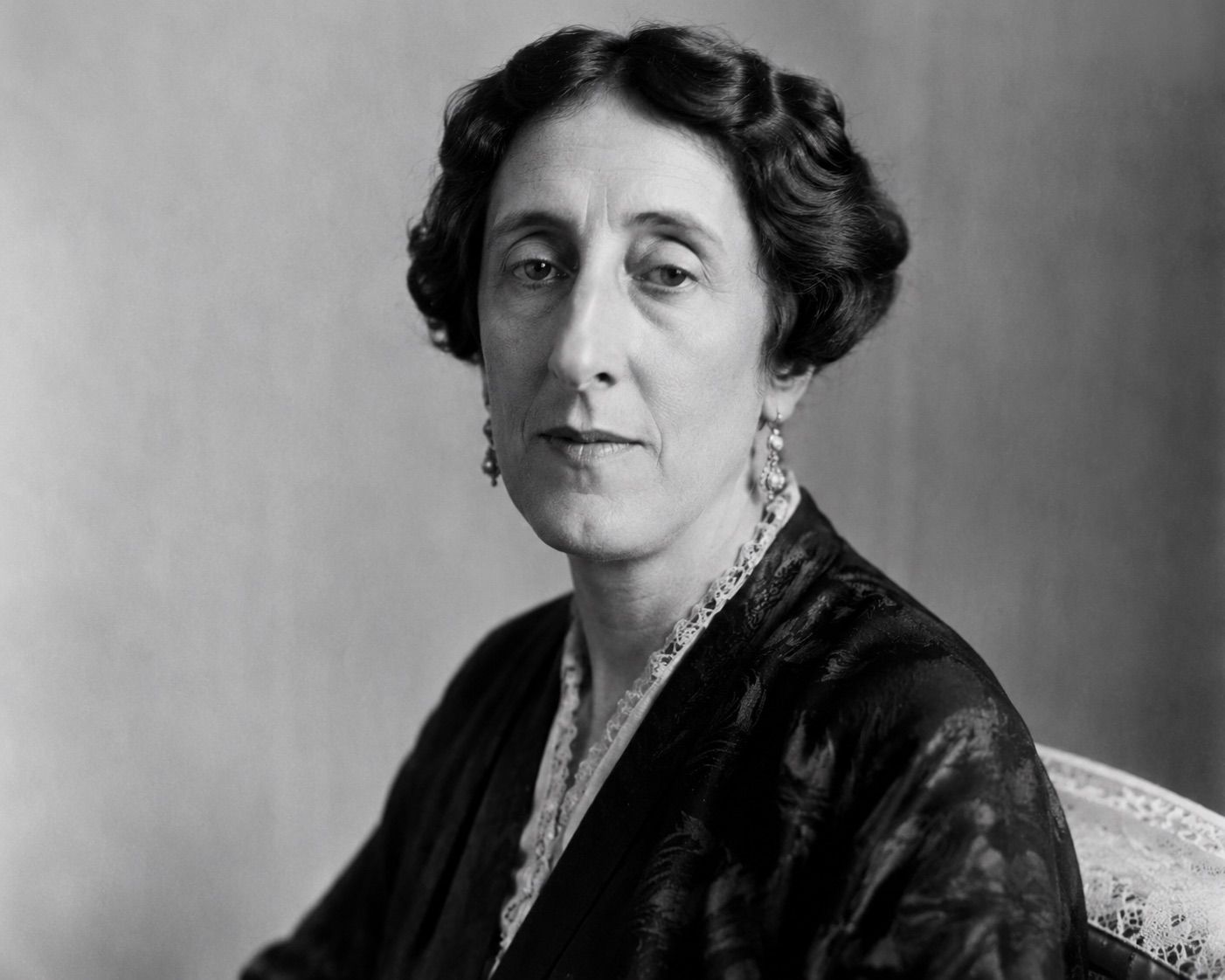
I’ve been thinking about Edith Sitwell a lot lately, ever since I stumbled upon her poetry collection “Façade” in a used bookstore. There was something about the way she wrote about the English countryside that resonated with me – not just the descriptions of rolling hills and misty mornings, but the sense of disconnection that lingered beneath the surface.
As someone who’s spent their entire life in urban areas, I’ve always felt a little out of touch with nature. Growing up, my parents would take me on road trips to visit relatives in the countryside, and I’d spend hours gazing out at the fields and forests, feeling like an outsider looking in. Sitwell’s poetry captured that feeling perfectly – not just the beauty of the natural world, but the way it can feel alienating and overwhelming.
But what really drew me to Sitwell was her eccentricity. She was a member of the aristocracy, but she rejected traditional notions of class and status, embracing instead an avant-garde lifestyle that was equal parts bohemian and bizarre. I mean, who else could make a career out of writing poetry about war and politics, while also experimenting with Dadaism and surrealism? She’s like the ultimate outsider – someone who refused to be bound by conventions or expectations.
And yet, as much as I admire Sitwell’s independence, I have to admit that her personality can be intimidating. Her poetry is often described as difficult, even impenetrable – a trait that’s been reinforced by critics and scholars over the years. When I first started reading her work, I felt like I was swimming against the tide, trying to make sense of lines and images that seemed deliberately obscure.
But what if, I wonder, Sitwell’s difficulty is actually a strength? What if she’s not being opaque or inaccessible, but rather, she’s forcing us to confront our own assumptions and biases about art and language? When I read her poetry, I feel like I’m being pushed to think in new ways – to consider the intersections between politics and aesthetics, or the role of the poet as both observer and participant.
It’s a strange feeling, this sense of being challenged by someone who’s no longer alive. But it’s also exhilarating – like stumbling upon a hidden world that few people get to experience. When I’m reading Sitwell, I feel like I’m part of a secret society, one that values experimentation and risk-taking above all else.
Of course, this is all just speculation on my part. Maybe Sitwell’s poetry is difficult because she was simply trying to say something new and original – without regard for whether anyone would understand her or not. Or maybe it’s more complicated than that, reflecting the turbulent times in which she lived, when war and politics seemed to be constantly intruding into every aspect of life.
I don’t know the answers to these questions, and I’m not sure I care. What matters is the sense of curiosity and discomfort that Sitwell’s poetry inspires in me. It’s like she’s pointing to a hidden doorway in my mind – one that I can choose to step through, or ignore altogether. Either way, I’ll be thinking about her for a long time to come.
As I delve deeper into Sitwell’s work, I’m struck by the way she navigates the intersection of politics and art. Her poetry is not just beautiful language, but also a searing critique of the social norms that govern our lives. She writes about war, colonialism, and class struggle with a ferocity that’s both unflinching and unsentimental.
For me, this aspect of her work is particularly resonant because it speaks to my own feelings of disconnection from the world around me. Growing up in the city, I often felt like an outsider looking in – not just on nature, but also on the social hierarchies that shape our lives. Sitwell’s poetry gives voice to this sense of alienation, and in doing so, it makes me feel less alone.
But at the same time, her work can be overwhelming. The sheer density of her language, the way she piles metaphor upon metaphor, can be daunting even for someone who loves words as much as I do. It’s like trying to drink from a firehose – exhilarating, but also exhausting.
And yet, I find myself drawn back to her poetry again and again, because it seems to capture something fundamental about the human experience. The way she writes about the intersection of personal and public life, for example, feels both eerily familiar and utterly unique. It’s as if she’s mapping out a secret terrain that exists between the private self and the public world.
I wonder, too, how Sitwell’s experiences as an aristocrat influenced her writing. Did her privileged upbringing give her a unique perspective on the social hierarchies of her time? Or did it simply allow her to observe them from a safe distance?
It’s a question that haunts me because I come from a similar background – not aristocratic, perhaps, but still privileged in many ways. And yet, I feel like I’ve always been an outsider within my own social circle. Maybe this is why Sitwell’s work resonates with me so deeply – because she, too, knew what it was to occupy multiple worlds at once.
But I’m getting ahead of myself here. The truth is, I still don’t fully understand Sitwell’s poetry. And that’s okay. What matters is the way it makes me feel – like a traveler stumbling upon a hidden landscape, one that’s both beautiful and treacherous.
As I continue to delve into Sitwell’s work, I’m struck by the way she seems to blur the lines between poetry and politics. Her writing is not just a reflection of her own experiences, but also a commentary on the world around her – a world that was ravaged by war and social upheaval during her lifetime.
I find myself wondering how she managed to maintain such a sharp sense of critique while still being part of the aristocracy. Was it simply a matter of privilege allowing her to speak out against injustice, or did she genuinely see herself as an outsider within her own class?
It’s a question that speaks to my own experiences growing up in a privileged environment, but feeling disconnected from it at the same time. I’ve always felt like there was something missing – a sense of purpose or meaning that eluded me despite my comfortable circumstances.
Sitwell’s poetry gives voice to this feeling of disconnection, and in doing so, it makes me feel less alone. But it also raises questions about the role of privilege in shaping our perspectives and experiences. Can someone like Sitwell, who was born into a life of luxury and entitlement, truly speak for those who are marginalized or oppressed?
I’m not sure I have the answers to these questions, but they’re ones that I find myself grappling with as I read through her work. It’s like she’s challenging me to think more deeply about my own place in the world – to consider the ways in which privilege and power shape our experiences, even when we don’t realize it.
As I continue to navigate Sitwell’s poetry, I’m struck by its sense of fragmentation and dislocation. Her lines often feel disjointed, like she’s taking apart language itself and reassembling it into something new and strange. It’s a process that’s both beautiful and unsettling – like watching a puzzle come together piece by piece.
I find myself feeling drawn to this fragmented quality of her writing, even as I struggle to make sense of it. There’s something about the way she breaks apart language that feels eerily familiar – like she’s speaking directly to my own experiences of disconnection and dislocation.
It’s a feeling that’s both exhilarating and terrifying, like I’m standing on the edge of a cliff staring out into an abyss. But it’s also a reminder that poetry is not just about beauty or truth, but also about risk-taking and experimentation – about pushing against the boundaries of what we think we know in order to see the world anew.
As I close my eyes and let Sitwell’s words wash over me, I’m struck by the sense that she’s speaking directly to my own soul. It’s a feeling that’s both intimate and impersonal at the same time – like she’s revealing secrets that only I can hear, but also speaking to something fundamental about the human experience.
I don’t know what to make of this feeling, or how to process it in a way that feels authentic. All I know is that Sitwell’s poetry has left me changed, somehow – like I’ve been given a new set of eyes with which to see the world. And for now, that’s enough.
As I continue to immerse myself in Sitwell’s work, I’m struck by her use of imagery and symbolism. Her poetry is like a tapestry woven from threads of myth and reality, with each image resonating deeply with my own experiences and emotions. The way she describes the natural world – the trees, the skies, the earth – feels almost primal, as if she’s tapping into some deep wellspring of human feeling.
I find myself drawn to her use of metaphor, too – the way she compares the world around us to a maze, or a labyrinth, or a forest. These comparisons feel both familiar and strange, like they’re speaking directly to my own sense of disorientation in the world. And yet, as I read on, I begin to realize that Sitwell’s metaphors are not just poetic flourishes, but also a way of describing the complexities of human experience.
Her poetry is full of contradictions – light and darkness, order and chaos, reason and madness. She writes about the tension between art and life, between the individual and society, between the past and the present. It’s like she’s mapping out a vast, unmapped territory that lies beneath the surface of our daily lives.
As I delve deeper into her work, I start to feel a sense of kinship with Sitwell – not just as a poet, but also as someone who’s struggled to find their place in the world. Her poetry is like a mirror held up to my own experiences, reflecting back all the doubts and fears and uncertainties that I’ve tried to keep hidden.
And yet, even as I feel this sense of connection, I’m also aware of how different our lives were. Sitwell lived through two wars, saw her country torn apart by social upheaval, and yet still managed to create a body of work that’s both beautiful and unflinching. Meanwhile, I’ve grown up in relative comfort, with all the privileges and opportunities that come with it.
This disparity feels like a weight on my shoulders – a reminder of how lucky I am, but also how disconnected from the world around me. Sitwell’s poetry makes me feel like I’m living in a bubble, cut off from the struggles and hardships that other people face every day. And yet, as I read on, I begin to realize that this is exactly what her poetry is trying to say – that we’re all connected, despite our differences, and that our experiences are linked in ways both subtle and profound.
I’m not sure how to process this feeling, or where it will take me next. All I know is that Sitwell’s poetry has awakened something deep within me, a sense of wonder and curiosity about the world around me. And for now, that’s enough.
As I continue to explore Sitwell’s work, I’m struck by her use of sound and rhythm. Her poetry is like music – each line and phrase unfolding like a melody that draws me in and refuses to let go. It’s as if she’s speaking directly to my ears, using the cadence and timbre of language to convey emotions and ideas that can’t be put into words.
I find myself drawn to her use of repetition, too – the way she repeats certain words or phrases over and over again, like a mantra or a incantation. It’s as if she’s trying to drive home a point, to make me feel the weight of her emotions and ideas in a way that transcends language itself.
And yet, even as I’m drawn to this musical quality of her poetry, I also feel a sense of discomfort. It’s like she’s speaking directly to my soul, but also pushing me to confront aspects of myself that I’d rather not face. Her poetry is raw and unflinching, refusing to sugarcoat or sentimentalize the human experience.
This makes me think about my own writing – how often do I shy away from confronting difficult emotions or ideas? How many times have I opted for safe, conventional language instead of taking risks and pushing against the boundaries of what’s acceptable?
Sitwell’s poetry is a reminder that true art should be uncomfortable, even painful. It’s like she’s saying that if we’re not willing to confront our own demons, then how can we hope to create anything truly meaningful or lasting? This is a hard truth to face, but it’s also liberating – because once I accept this, I realize that my writing doesn’t have to be perfect or polished.
In fact, the more I think about it, the more I realize that Sitwell’s poetry is not just beautiful or challenging – it’s also intensely personal. She writes about her own experiences and emotions with a level of vulnerability that’s both shocking and awe-inspiring. It’s like she’s pulling back the curtain on her inner world, revealing all its complexities and contradictions.
This makes me wonder if I’m willing to do the same in my own writing – to reveal my own vulnerabilities and insecurities, even when it feels uncomfortable or difficult? Or am I too afraid of being seen as imperfect, too scared to risk vulnerability for the sake of creating something truly authentic?
I don’t know the answer to this question yet, but as I continue to explore Sitwell’s work, I feel like I’m getting closer to understanding what it means to be a true artist. It’s not just about technique or skill – although those are certainly important. It’s about taking risks, being willing to confront our own demons, and revealing ourselves in all our messy, imperfect glory.
This is a hard lesson to learn, but one that I feel like Sitwell is teaching me through her poetry. And as I close my eyes and let her words wash over me, I feel a sense of gratitude for this gift – the gift of vulnerability, the gift of creativity, and the gift of being seen in all my imperfection.