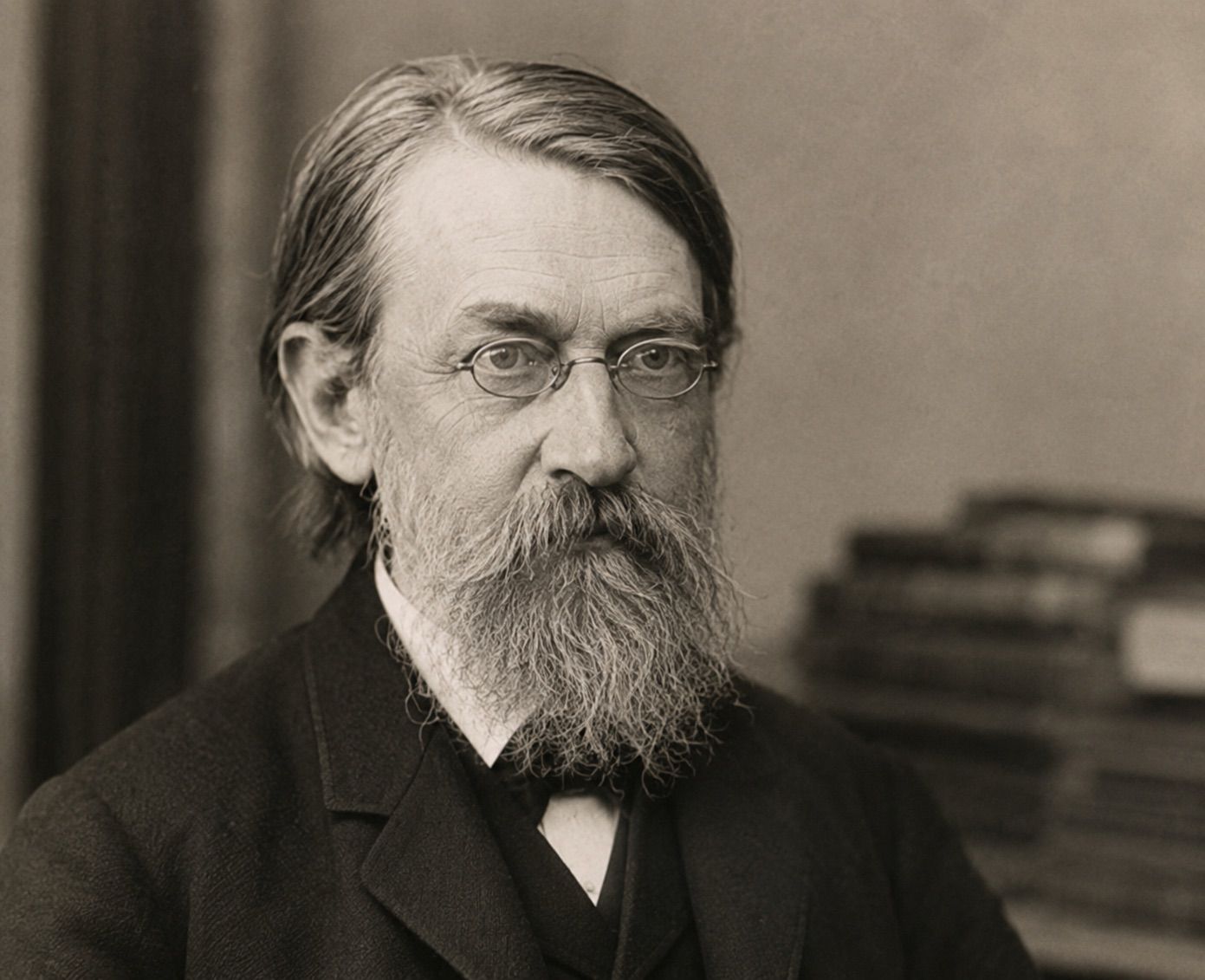
Ernst Mach’s name keeps popping up in my research for a paper on the philosophy of science. At first, I thought it was just because he was a prominent figure in the history of physics and psychology. But as I delved deeper into his work, I found myself drawn to the contradictions within him.
On one hand, Mach was a prolific scientist who made significant contributions to our understanding of perception, space, and time. His ideas about the nature of reality still influence fields like physics and cognitive science today. But on the other hand, he was also an outspoken nationalist and anti-Semite in Austria during World War I. This dual identity is what really fascinates me.
I think part of why I’m struggling with this is because I’m trying to reconcile Mach’s scientific achievements with his problematic views. As someone who values objectivity and critical thinking, it’s hard for me to accept that a brilliant scientist like Mach could hold such extreme views. And yet, his anti-Semitic writings are well-documented – he even went so far as to advocate for the expulsion of Jews from Austria.
As I read about Mach’s life, I find myself wondering what drove him to adopt these hateful ideologies. Was it fear, ignorance, or something deeper? Did his experiences during World War I shape his views in ways that I can’t fully understand?
I also can’t help but think about the implications of this for my own field – philosophy of science. If a scientist as influential as Mach could harbor such prejudices, what does that say about our ability to separate scientific inquiry from personal biases? Can we truly isolate objective truth from subjective perspectives, or are they intertwined in ways we don’t fully grasp?
These questions keep me up at night, even though I know I’ll never be able to fully answer them. It’s a frustrating feeling, like being stuck in a maze with no clear exit. But it’s also what draws me to Mach – the complexity, the messiness of human experience.
As I continue to grapple with these questions, I find myself returning to Mach’s ideas about perception and reality. He argued that our understanding of the world is always filtered through our individual experiences and perspectives, which makes objective truth impossible. In a way, this resonates with me – it feels like we’re all stuck in our own subjective bubbles, trying to make sense of the world without ever quite seeing it as it truly is.
But does that mean we should just give up on objectivity altogether? I’m not sure. Mach’s views on perception are both compelling and unsettling – they challenge me to think about my own assumptions and biases. And yet, his anti-Semitic writings haunt me, a reminder of the darker side of human nature.
I suppose what I’m really struggling with is how to navigate these contradictions. Can we separate the art from the artist? Should we dismiss Mach’s scientific contributions because of his hateful views? Or do we need to engage with both aspects – even if it means confronting our own discomfort and uncertainty?
These are questions that will probably continue to haunt me long after I finish this paper. And maybe that’s okay – sometimes, it’s the unresolved, uncomfortable stuff that sticks with us longest.
As I delve deeper into Mach’s work, I find myself oscillating between fascination and discomfort. His ideas on perception and reality are like a double-edged sword – they inspire me to question my own assumptions, but also make me confront the darkness of his ideology. It’s as if I’m holding two opposing truths in my hands, trying to reconcile them into something coherent.
I think back to my own experiences with conflicting values. Growing up, my parents were always adamant about treating everyone with kindness and respect, regardless of their background or differences. But when I was younger, I remember hearing some of my friends make racist comments or jokes, and I didn’t know how to respond. It wasn’t until later, in college, that I began to understand the harm caused by such language and behavior.
Now, as I grapple with Mach’s anti-Semitic writings, I feel a similar sense of unease. How do I reconcile his scientific contributions with his hateful views? Should I be condemning him outright, or trying to understand what drove him to adopt such ideologies? It’s like being caught in a moral loop – the more I learn about Mach, the more questions I have.
One thing that keeps me up at night is the fear of being complicit. What if, by engaging with Mach’s work, I’m somehow perpetuating his legacy or validating his ideas? Or what if my own biases and assumptions are similar to his, even if I don’t realize it? The thought sends a shiver down my spine.
I know that’s not fair to myself – I’m not Ernst Mach, and my values are different. But the fear persists. It’s as if I’m walking on thin ice, unsure of what lies beneath. And yet, at the same time, I feel drawn to Mach’s ideas because they challenge me to confront these very fears.
I guess that’s what makes this so difficult – it’s not just about Mach or his ideology; it’s about my own relationship with complexity and nuance. Can I acknowledge the darkness in human nature without becoming consumed by it? Can I separate the art from the artist, even when the artist is a product of their time?
I don’t have answers to these questions yet. All I can do is keep questioning, keep pushing against the boundaries of my own understanding. And maybe that’s what makes this so fascinating – the uncertainty, the discomfort, and the struggle to make sense of it all.
As I continue to wrestle with Mach’s complexities, I find myself thinking about my own experiences with nuance and gray areas. Growing up in a liberal household, I was taught that there were clear right and wrongs, black and whites. But as I got older, I began to see the world in shades of gray – people’s motivations and actions weren’t always simple or easily categorized.
This tension between binary thinking and nuance is something I’ve grappled with throughout my college years. In philosophy classes, we’d often discuss complex issues like free will vs. determinism, or the nature of reality. It was exhilarating to engage with these ideas, but also exhausting – there were so many perspectives to consider, so many ways to slice through the arguments.
One of my professors, a kind woman named Dr. Patel, would always remind us that philosophy is about exploring complexity, not finding simple answers. She’d say, “The truth is rarely binary; it’s usually messy and multifaceted.” Her words stuck with me, especially when I encountered Mach’s contradictions.
I think what unsettles me most is the realization that people like Mach are all around us – in our families, communities, and even within ourselves. We’re all capable of holding multiple truths at once: good intentions alongside hurtful actions, admirable qualities alongside disturbing prejudices.
This recognition makes me wonder about my own biases and assumptions. Am I perpetuating harm without realizing it? Have I inadvertently contributed to systems of oppression through my own thoughtless words or actions? These questions haunt me, making me question the very notion of objectivity.
Mach’s ideas on perception and reality keep echoing in my mind. If our understanding of the world is filtered through individual experiences and perspectives, then how can we ever truly know objective truth? Is it possible that I’m constructing a narrative about Mach that’s separate from the historical record?
I’m not sure if I’ll ever resolve these questions or find clear answers. But what I do know is that grappling with complexity is where growth happens – for me, and perhaps even for Mach.
As I continue to explore Mach’s life and work, I’m struck by the parallels between his experiences and my own. Like him, I’ve struggled to reconcile conflicting values; like him, I’ve grappled with the weight of legacy and influence. It’s a sobering reminder that our individual stories are intertwined with those of others – even those we might not consider allies or role models.
In the end, it’s not about finding neat solutions or easy answers. It’s about embracing the uncertainty, the discomfort, and the complexity that comes with engaging with human experience in all its messy glory.
As I delve deeper into Mach’s complexities, I find myself reflecting on my own experiences as a woman of color navigating predominantly white spaces. I’ve often felt like an outsider looking in, trying to make sense of the dominant narratives and power structures that govern our society. And yet, I’m also aware of the privilege I hold by virtue of being educated and having access to resources.
Mach’s anti-Semitic writings have made me question my own complicity in systems of oppression. Have I ever used language or made jokes that perpetuated harm without realizing it? Have I inadvertently contributed to the erasure of marginalized voices or communities? These questions make me uncomfortable, but they’re also essential to confronting the darkness within myself.
It’s easy to point fingers at Mach and his ideology, but it’s harder to confront our own biases and assumptions. As a philosopher, I’m trained to think critically about complex issues, but that doesn’t mean I’m immune to my own flaws and prejudices. In fact, I’ve come to realize that the more I learn, the more I realize how little I know.
One of the things that’s struck me about Mach is his concept of ” psychophysics,” which explores the relationship between mental states and physical phenomena. It’s a framework for understanding how our perceptions shape our experiences of reality. And yet, when applied to human behavior, it raises uncomfortable questions about the role of subjectivity in shaping our understanding of the world.
As I think about my own experiences as a philosopher, I realize that I’ve often relied on objective frameworks and theories to make sense of complex issues. But Mach’s work has made me wonder if that’s ever truly possible. Can we ever separate our subjective experiences from our objective observations? Or are they inextricably linked?
This is where things get messy for me. On one hand, I value the pursuit of objectivity and critical thinking in philosophy. It’s what allows us to question assumptions and challenge dominant narratives. But on the other hand, Mach’s work has made me realize that even our most objective frameworks are filtered through individual perspectives and experiences.
It’s a difficult balance to strike – between embracing complexity and nuance, while also striving for objectivity and critical thinking. As I continue to grapple with these questions, I’m reminded of Dr. Patel’s words: “The truth is rarely binary; it’s usually messy and multifaceted.”
As I navigate the complexities of Mach’s life and work, I find myself returning to this idea – that our understanding of reality is always filtered through individual perspectives and experiences. It’s a notion that challenges my own assumptions about objectivity and critical thinking.
I think back to my college years, when I was first introduced to philosophical ideas like this one. My professors encouraged us to question everything, to challenge dominant narratives and think critically about complex issues. And for the most part, I lapped it up eagerly – I loved the feeling of being on the cusp of new knowledge, of discovering fresh perspectives that challenged my own understanding.
But as I delve deeper into Mach’s work, I’m starting to see that this kind of thinking isn’t always easy or straightforward. In fact, it can be downright uncomfortable. When we’re forced to confront our own biases and assumptions, we often don’t like what we find – especially if it means challenging the comfortable narratives and ideologies that have shaped us.
I remember having a conversation with a friend about this once. We were discussing Mach’s anti-Semitic writings, and she was adamant that he was just a product of his time – that he didn’t know any better. But I countered that knowing better isn’t enough; what matters is how we act on our knowledge, even when it’s difficult or uncomfortable.
My friend looked at me like I was crazy – “What do you mean?” she asked, her voice laced with incredulity. “You’re not saying that Mach was justified in his views, are you?”
No, of course not. But what I am saying is that simply condemning him isn’t enough either. We need to engage with the complexities of human experience, even when it means confronting our own complicity or discomfort.
This conversation has stayed with me ever since. It’s made me realize just how little we talk about these kinds of issues in academic circles – how often we skirt around the uncomfortable truths and settle for simplistic answers. And it’s also made me wonder if this is a problem unique to philosophy, or if it’s a broader issue that affects all fields of study.
As I continue to grapple with Mach’s complexities, I find myself thinking about my own role in perpetuating systems of oppression – even unintentionally. Have I ever used language or made jokes that reinforced dominant narratives? Have I failed to listen to marginalized voices or amplify their concerns?
These questions are tough to confront, but they’re essential to growth and change. And it’s precisely this kind of self-reflection that Mach’s work has inspired in me – a recognition that our understanding of reality is always filtered through individual perspectives and experiences.
In the end, it’s not about finding neat solutions or easy answers. It’s about embracing complexity and nuance, even when it means confronting our own discomfort and uncertainty. As I continue to explore Mach’s life and work, I’m reminded that philosophy is a journey – one that requires patience, empathy, and a willingness to question everything.