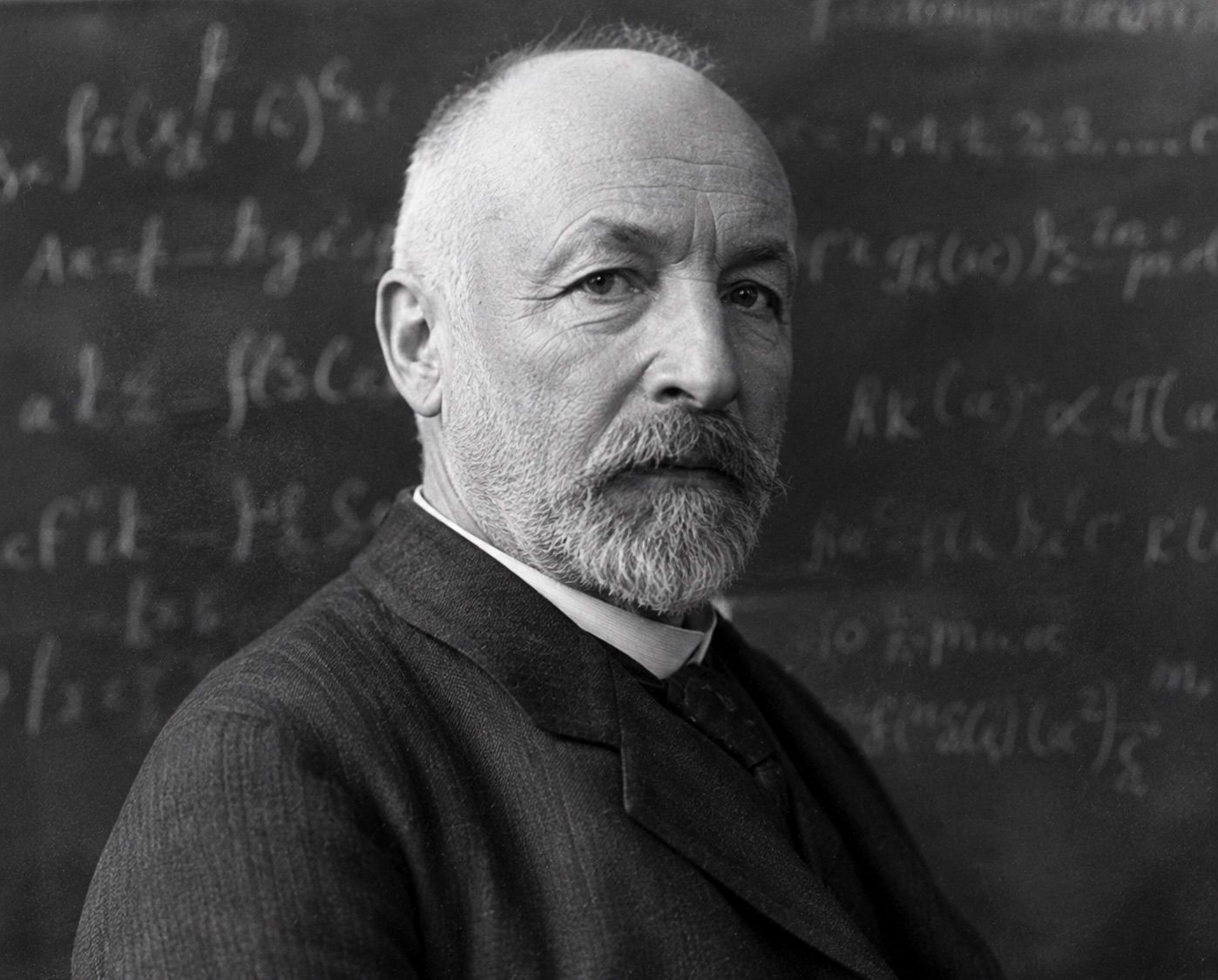
I’ve been thinking about Georg Cantor a lot lately, ever since I stumbled upon his name while researching the history of mathematics. There’s something about him that fascinates me, and it’s not just because he was a brilliant mathematician who made groundbreaking contributions to set theory. It’s more than that.
As I delved deeper into his life and work, I found myself drawn to his struggles with mental health and his obsessive personality. Cantor was known for his intense focus on mathematics, which often bordered on fixation. He would spend hours working on a single problem, neglecting everything else in his life, including his relationships and even his own well-being.
I have to admit, I’ve always been a bit envious of people like Cantor who can dedicate themselves so fully to their passion. As someone who loves writing, I often find myself torn between the desire to produce something meaningful and the pressure to meet deadlines or respond to external expectations. Cantor’s single-mindedness seems almost admirable in its intensity.
But as I learned more about his life, I began to feel a sense of unease. His mental health issues worsened over time, and he eventually struggled with severe depression and anxiety. He even experienced what was then called “brain fever,” which left him unable to work for months at a time. It’s hard not to wonder if the very thing that drove him to make such significant contributions to mathematics – his intense focus – ultimately contributed to his downfall.
I think this is what really gets me about Cantor. He’s like the ultimate symbol of the creative process: brilliant, driven, and ultimately self-destructive. His story makes me question my own relationship with writing and whether I’m willing to sacrifice my mental health for the sake of producing something “good.”
It’s not just that Cantor was a genius who struggled with mental health issues; it’s that his work reflects this struggle in some way. His set theory, which posits that there are different sizes of infinity, seems almost like a reflection of his own inner world. He was constantly grappling with the limits and possibilities of mathematics, much like I grapple with the limits and possibilities of language.
I’m not sure what to make of this connection, but it’s been nagging at me for weeks. Is there something about Cantor’s work that speaks to my own creative struggles? Am I just projecting my own anxieties onto him, or is there really something deeper going on here?
As I continue to think about Cantor and his legacy, I’m struck by the contradictions of his personality. He was a brilliant mathematician who struggled with mental health issues, an obsessive thinker who was often unable to think outside his own box. And yet, it’s precisely this tension that has made him so enduringly fascinating.
I still don’t know what to make of Cantor or his work, but I do know that he’s stuck with me in a way that few other historical figures have. Maybe it’s because I see a bit of myself in him – the obsessive thinker, the struggling artist – and maybe it’s just because his story is so compellingly messy. Whatever the reason, Cantor has become a kind of touchstone for me, a reminder that even the most brilliant minds can be fraught with contradictions and complexities.
I’m not sure where this will lead, but I do know that I’ll continue to think about Cantor and his legacy in some way. His story has become a kind of mirror held up to my own creative struggles, and I’m still trying to make sense of what I see reflected back at me.
As I reflect on Cantor’s story, I find myself thinking more about the role of obsession in creativity. Is it possible that his intense focus was both a blessing and a curse? On one hand, it allowed him to make groundbreaking contributions to mathematics. But on the other hand, it came at the cost of his mental health and relationships.
I think about my own writing process and how I often get lost in a project for weeks or even months at a time. My friends and family will tell me that I’ve been neglecting them, but I’ll just shrug it off and say that I’m in “the zone.” It’s like I’m possessed by the words on the page.
But what if this obsession is actually a sign of deeper issues? What if my need to create is driven by some inner anxiety or insecurity that I haven’t fully acknowledged? Cantor’s story makes me wonder if there’s a fine line between being dedicated and being consumed.
I’ve always prided myself on being a disciplined writer, someone who can sit down at their desk and produce quality work with regularity. But as I think about Cantor’s struggles, I’m starting to realize that this discipline might be a facade. What if my need for control is actually a way of avoiding uncertainty or vulnerability?
This is the part where I get stuck. I don’t know what it means to be vulnerable in my writing, or how to let go of the need for control. Cantor’s story doesn’t offer any easy answers, but it does suggest that creativity is messy and complex, and that sometimes the most brilliant minds are also the most fragile.
As I continue to grapple with these questions, I find myself drawn back to Cantor’s set theory. His work on infinite sets was revolutionary, but it was also deeply personal. He saw mathematics as a way of exploring the nature of reality itself, and his theories reflected this sense of wonder and awe.
I think about my own writing in a similar way. When I’m fully engaged with a project, I feel like I’m tapping into something deeper than myself – a sense of truth or meaning that transcends words on a page. It’s exhilarating, but also terrifying, because it implies that there’s more to writing than just technique or craft.
This is where Cantor’s story gets really interesting for me. His work shows that even in the most abstract and theoretical areas of mathematics, there’s a deep human impulse at play – an impulse to explore, to discover, and to understand the world around us. And I think this is what makes his legacy so compelling: he was both a brilliant mathematician and a deeply human being, full of contradictions and complexities.
As I close in on Cantor’s story, I’m left with more questions than answers. But that’s okay – it’s exactly what happens when you engage with someone as complex and fascinating as Georg Cantor.
One of the things that strikes me about Cantor’s set theory is how it challenges traditional notions of infinity. He showed that there are different sizes of infinity, which was a radical idea at the time. It’s like he was saying that not all infinities are created equal, and that some are more expansive than others.
I think this resonates with me because I often feel like I’m trying to capture something infinite in my writing – a sense of emotion or experience that can’t be fully contained within words. Cantor’s theory makes me wonder if there’s a way to quantify this infinity, to measure the scope and depth of human feeling.
But what if it’s not about quantifying it at all? What if it’s about embracing the mystery and uncertainty of the human experience? Cantor’s work is all about exploring the boundaries of mathematics, but his legacy also speaks to the limits of language and understanding. It’s a reminder that there are some things that can’t be fully grasped or explained.
I’m reminded of my own struggles with writing about complex emotions or experiences. I often feel like I’m trying to put words to something that defies description, and it can be frustrating when I fail to capture the essence of what I’m trying to convey. But maybe that’s where Cantor’s influence comes in – not as a way of finding answers, but as a way of embracing the questions themselves.
It’s funny how our minds work, isn’t it? We often try to find ways to tame or control the things that are most mysterious and unpredictable about us. But what if we’re just trying to avoid the discomfort of uncertainty? Cantor’s story makes me wonder if there’s a way to lean into this uncertainty, to let go of our need for control and instead allow ourselves to be shaped by the unknown.
I’m not sure where this thought will lead, but I do know that it feels like a turning point in my thinking about creativity and vulnerability. Cantor’s legacy is all about challenging traditional notions and pushing the boundaries of what we think is possible – and maybe that’s exactly what I need to do with my own writing.
As I continue to reflect on Cantor’s story, I’m struck by the idea that his work was not just a product of his intellect, but also of his humanity. He was a deeply feeling person who struggled with mental health issues, and it’s this vulnerability that makes his legacy so compelling.
I think about my own writing in a similar way – as an attempt to capture the complexities and nuances of human experience. It’s not just about conveying information or ideas; it’s about tapping into something deeper and more universal. And maybe that’s where Cantor’s influence comes in – not as a way of solving problems, but as a way of embracing the mystery and wonder of existence.
This is what I mean when I say that Cantor has become a kind of touchstone for me – a reminder that even the most brilliant minds can be fraught with contradictions and complexities. His story is a testament to the messy and unpredictable nature of creativity, and it’s this messiness that I’m trying to tap into in my own writing.
As I close in on Cantor’s story, I’m left with more questions than answers – but that’s okay. It’s exactly what happens when you engage with someone as complex and fascinating as Georg Cantor.
I’ve been thinking a lot about the role of emotions in Cantor’s work, particularly his set theory. He was known for being deeply passionate about mathematics, and his theories reflect this passion. His work on infinite sets is like a poetic exploration of the human experience – it’s not just about abstract concepts, but also about the emotional resonance of infinity.
I think this is why I find Cantor’s story so compelling – because he shows that even in the most abstract areas of mathematics, there’s a deep emotional undertow. His set theory is like a mirror held up to our own experiences of time and space, and it challenges us to rethink what we mean by “infinity.”
As I reflect on Cantor’s legacy, I’m struck by the idea that his work was not just about solving mathematical problems, but also about exploring the human condition. He was a deeply feeling person who saw mathematics as a way of expressing himself, and his theories reflect this emotional depth.
I think about my own writing in similar terms – as an attempt to capture the complexities and nuances of human experience. When I’m fully engaged with a project, I feel like I’m tapping into something deeper than myself – a sense of truth or meaning that transcends words on a page.
Cantor’s story makes me wonder if this is what it means to be creative – not just to produce something new, but also to tap into the emotional currents that underlie all human experience. His legacy suggests that even in the most abstract areas of mathematics, there’s a deep human impulse at play – an impulse to explore, to discover, and to understand the world around us.
As I continue to reflect on Cantor’s story, I’m struck by the idea that his work was not just about solving mathematical problems, but also about exploring the limits of language. He saw mathematics as a way of pushing against the boundaries of what we can say or think, and his theories reflect this sense of wonder and awe.
I think about my own writing in similar terms – as an attempt to push against the limits of language, to see how far I can go in conveying complex emotions or experiences. When I’m fully engaged with a project, I feel like I’m tapping into something deeper than myself – a sense of truth or meaning that transcends words on a page.
Cantor’s legacy suggests that this is what it means to be creative – not just to produce something new, but also to tap into the emotional currents that underlie all human experience. His story shows that even in the most abstract areas of mathematics, there’s a deep human impulse at play – an impulse to explore, to discover, and to understand the world around us.
As I close in on Cantor’s story, I’m left with more questions than answers – but that’s okay. It’s exactly what happens when you engage with someone as complex and fascinating as Georg Cantor. His legacy is a reminder that creativity is messy and unpredictable, and that sometimes the most brilliant minds are also the most fragile.
I think about my own writing in similar terms – as an attempt to capture the complexities and nuances of human experience. When I’m fully engaged with a project, I feel like I’m tapping into something deeper than myself – a sense of truth or meaning that transcends words on a page.
Cantor’s legacy suggests that this is what it means to be creative – not just to produce something new, but also to tap into the emotional currents that underlie all human experience. His story shows that even in the most abstract areas of mathematics, there’s a deep human impulse at play – an impulse to explore, to discover, and to understand the world around us.
As I continue to reflect on Cantor’s story, I’m struck by the idea that his work was not just about solving mathematical problems, but also about exploring the nature of reality itself. He saw mathematics as a way of understanding the universe, and his theories reflect this sense of wonder and awe.
I think about my own writing in similar terms – as an attempt to capture the essence of human experience. When I’m fully engaged with a project, I feel like I’m tapping into something deeper than myself – a sense of truth or meaning that transcends words on a page.
Cantor’s legacy suggests that this is what it means to be creative – not just to produce something new, but also to tap into the emotional currents that underlie all human experience. His story shows that even in the most abstract areas of mathematics, there’s a deep human impulse at play – an impulse to explore, to discover, and to understand the world around us.
As I close in on Cantor’s story, I’m left with more questions than answers – but that’s okay. It’s exactly what happens when you engage with someone as complex and fascinating as Georg Cantor.