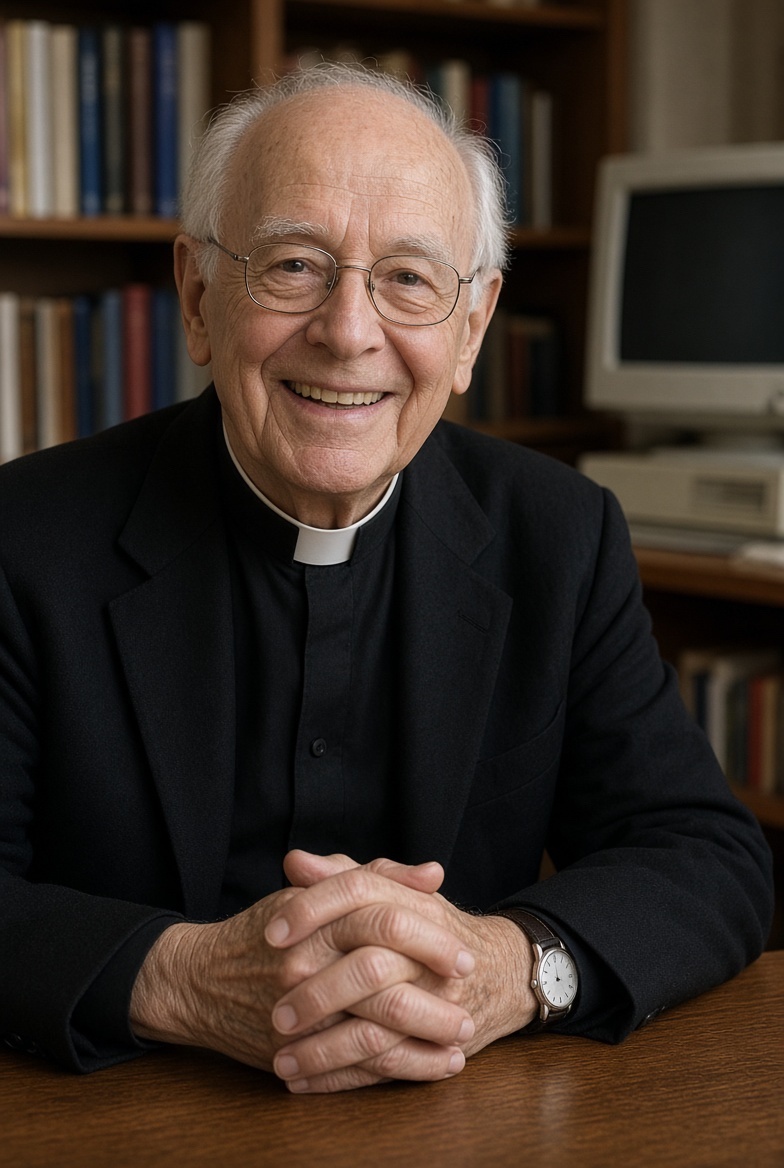
Walter Ong’s writing on media has been haunting me for weeks now. I keep thinking about how he described the shift from oral to literate culture, and how it changed human consciousness. It sounds so abstract, but somehow it resonates with me in a deep way.
I think what draws me in is his observation that oral cultures are more communal, more shared. People’s thoughts and stories were tied to the present moment, and the past was not just a collection of facts, but a lived experience. When I read about how people in ancient cultures would share myths and legends around campfires, I feel this pang of longing for something I’ve never known.
Growing up, my family didn’t have many traditions or rituals that involved storytelling. We’d watch TV together on weekends, but it was more like background noise than an active shared experience. Now that I’m in college, I’ve met people from all over the world who share stories of their cultures’ oral traditions – the way they’d gather around elders to hear tales of ancestors and gods.
It’s funny, because I always thought of myself as a bit of a bookworm, someone who loved getting lost in pages. But reading Ong makes me realize how much my love for reading is actually rooted in this desire for communal storytelling. When I’m reading, it feels like I’m having a conversation with the author, even though they’re not there.
I wonder if that’s why I often get lost in online forums and comment sections – because I’m looking for that sense of community and shared experience. It’s fleeting, though, because eventually people start to argue or take things too personally. And then it feels like we’re back to the isolating, individualized world of print.
Ong also talks about how literate cultures value knowledge over wisdom. With books and written records, we can accumulate information at an incredible pace, but that doesn’t necessarily mean we understand the context or the deeper implications of what we’re reading. I think this is true for me too – I’ve devoured so many books on topics like sociology and psychology, but sometimes I feel like I’m just scratching the surface.
It’s weird to admit, but Ong’s writing makes me feel a bit anxious about my own place in the world. Like, what does it mean to be literate in this age of social media? Do we still value wisdom over knowledge, or are we so caught up in sharing information that we’ve lost sight of what’s truly important?
I’m not sure I have any answers yet. All I know is that reading Ong has made me realize how much more there is to explore – and question – about the way we communicate, the way we think, and the way we relate to each other.
As I delve deeper into Ong’s work, I find myself reflecting on my own relationship with technology. He talks about how the printing press enabled mass production of books, which in turn led to a shift from an oral culture to a literate one. But what about our current digital age? Don’t we have the capacity to produce and consume information at an unprecedented scale?
I think about all the memes I see on social media, the viral articles and videos that get shared millions of times. It’s like we’re living in a never-ending echo chamber, where information is constantly being produced and consumed without much depth or context. And yet, when I look around me, I see people deeply invested in these online conversations – sharing their thoughts, opinions, and experiences with others who are just as passionate.
Ong talks about how oral cultures were more prone to myth and metaphor, whereas literate cultures value reason and analysis. But what happens when we take that rational approach too far? When we reduce complex issues to soundbites and hashtags? I see it happening all the time – people using online forums to shout their opinions without listening to others or considering multiple perspectives.
It’s ironic, because as someone who loves writing, I value clarity and precision. But Ong’s work makes me wonder if that’s exactly what we’re missing in our digital age: the nuance of oral storytelling, the depth of human experience that comes from sharing stories around a campfire or in person. When was the last time you had a meaningful conversation with someone face-to-face? Or shared a laugh with friends without the distraction of screens?
I’m not sure what the answer is – whether we can find a balance between the ease and accessibility of digital communication and the richness of human connection. All I know is that Ong’s work has me questioning my own assumptions about technology, culture, and the way we relate to each other. And for now, that’s enough.
As I continue to grapple with Ong’s ideas, I find myself thinking more and more about the role of technology in shaping our collective consciousness. He talks about how the printing press was a game-changer because it allowed for mass production of books, which in turn led to a shift from oral to literate culture. But what happens when we take that same logic and apply it to digital media?
We’re living in an era where information is more accessible than ever before. We can consume news, entertainment, and educational content at the touch of a screen. But with this ease comes a trade-off: the loss of nuance, the homogenization of ideas, and the erosion of meaningful human connection.
I think about all the times I’ve scrolled through social media, seeing people share their thoughts and opinions without engaging in any kind of genuine discussion or debate. It’s like we’re just repeating ourselves, echoing each other’s sentiments without truly listening to one another. And yet, when I’m reading Ong, I realize that this is exactly what he was warning us about: the dangers of taking the rational approach too far.
When I read about ancient cultures sharing myths and legends around campfires, I feel a pang of longing for something more authentic, more human. We’re so caught up in producing and consuming information that we’ve forgotten how to truly connect with each other. We’re forgetting the value of storytelling, the power of language to evoke emotions and spark imagination.
I wonder if this is what Ong meant by “secondary orality.” He argued that even though we live in a literate culture, our use of digital media has created a new kind of oral tradition – one that’s more focused on soundbites and hashtags than on nuanced discussion. It’s like we’re speaking in a language that’s become detached from the human experience.
As I reflect on this, I’m not sure if Ong’s ideas are just nostalgic musings or genuine warnings about the dangers of our digital age. But one thing is clear: his work has made me question my own assumptions about technology and culture. It’s forced me to think more critically about the way we communicate, the way we relate to each other, and the kind of world we want to create.
I’m not sure where this journey will take me, but for now, it’s enough to know that I’m being pushed to think deeper, to question more, and to seek out meaning in a world that often seems designed to distract us from what truly matters.
As I continue to ponder Ong’s ideas about secondary orality, I find myself thinking about the role of language in shaping our collective consciousness. He argues that oral cultures were more prone to using metaphors and analogies to convey complex ideas, whereas literate cultures tend to rely on abstract concepts and logical reasoning. But what happens when we take this rational approach too far? When do we lose sight of the power of language to evoke emotions and spark imagination?
I think about all the times I’ve tried to explain a difficult concept or idea to someone, only to find that words fail me. I resort to analogies or metaphors, hoping to convey the complexity of what I’m trying to say. But even then, I feel like I’m struggling to connect with others on a deeper level. We’re so caught up in using language as a tool for conveying information that we’ve forgotten how to use it as a means of creating connection and community.
Ong’s work has made me realize just how much I value clarity and precision when it comes to communication. But at what cost? When do we sacrifice nuance and depth for the sake of simplicity and brevity? As someone who loves writing, I’m constantly grappling with this tension between clear expression and evocative language.
I wonder if Ong’s ideas about secondary orality are related to this tension. Is it possible that our use of digital media has created a kind of “orality” that’s more focused on soundbites and hashtags than on nuanced discussion? Or is it something deeper – a fundamental shift in the way we think, communicate, and relate to one another?
As I reflect on these questions, I’m reminded of a conversation I had with a friend recently. We were discussing a complex issue related to social justice, and she shared a personal anecdote that made me see things from a new perspective. In that moment, language was more than just a tool for conveying information – it was a means of creating connection, empathy, and understanding.
That conversation has stuck with me ever since, and I find myself thinking about it whenever I read Ong’s work or ponder the role of technology in shaping our collective consciousness. It’s not just about the way we communicate; it’s about the kind of world we want to create – a world where language is used as a means of connection, community, and meaning-making.
As I sit here thinking about Ong’s ideas on secondary orality, I’m struck by how much they resonate with my own experiences online. I’ve seen countless conversations devolve into shouting matches, where people become more interested in “winning” the argument than listening to others’ perspectives. It’s like we’re forgetting that language is a tool for connection, not just a means of conveying information.
I think about all the times I’ve been part of online discussions that start off productive and insightful, but eventually descend into chaos. People get defensive, emotions run high, and before long, the conversation is derailed by personal attacks or ideological differences. It’s like we’re forgetting that language has the power to build bridges, not just burn them down.
Ong’s work has made me realize how much I value nuance and complexity in communication. When we reduce complex issues to simple soundbites or hashtags, we’re not only oversimplifying the problem – we’re also neglecting the humanity of those involved. We’re forgetting that people have stories, emotions, and experiences that shape their perspectives.
I’m not sure if it’s possible to reverse this trend, but I do know that I want to be part of a different kind of conversation. One where language is used as a means of connection, empathy, and understanding. Where we listen more than we speak, and seek out the stories and experiences of others.
It sounds idealistic, maybe even naive. But Ong’s work has given me hope that it’s possible to create a different kind of world – one where technology serves us, rather than the other way around. A world where language is used as a means of building community, not just spreading information.
As I continue to grapple with these ideas, I’m reminded of a phrase from Ong’s work: “The word is flesh.” It’s a simple yet profound statement that speaks to the idea that language is not just a tool for conveying meaning – it’s an expression of our humanity. When we use language in ways that are careless or hurtful, we’re not just misusing words – we’re neglecting the flesh and blood people behind them.
I’m not sure where this journey will take me, but I do know that Ong’s work has changed me in some fundamental way. It’s made me more aware of the power of language to shape our collective consciousness, and more committed to using it as a means of building connection, empathy, and understanding. As I move forward into an increasingly digital world, I want to be part of creating a new kind of orality – one that’s rooted in the richness of human experience, not just the efficiency of information transmission.
In many ways, Ong’s work has been a mirror held up to my own experiences online. It’s forced me to confront the ways in which technology can both connect and isolate us, and to think more critically about the role language plays in shaping our relationships with one another. As I look out at the world around me – the screens, the likes, the shares – I’m reminded of Ong’s words: “The word is flesh.” It’s a simple yet profound truth that I want to carry with me as I navigate this complex, ever-changing landscape.