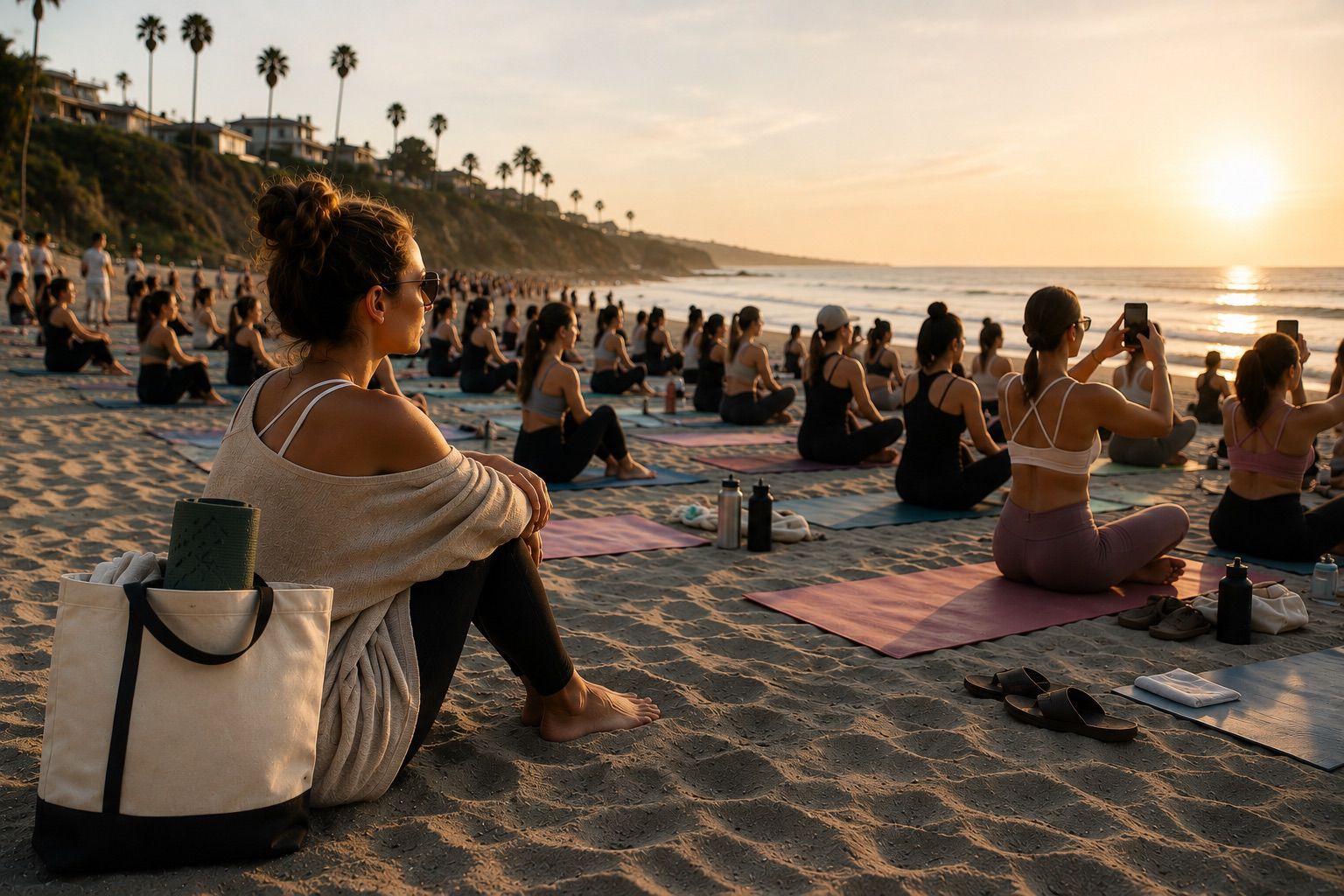
It’s difficult to remember a time when yoga mats weren’t a staple in every beachgoer’s arsenal. They’re now as common as sunscreen and towels, marketed as essential tools for combating the stresses of modern life. But as I observe their proliferation, I find myself questioning the effectiveness of this supposedly indispensable accessory.
At first glance, the logic seems reasonable: yoga mats provide a comfortable surface for stretching and exercising on uneven terrain. Yet my observations suggest they often fail to fulfill their intended purpose. More often than not, these mats become accessories — props used to signal commitment to wellness rather than tools for genuinely achieving it.
I recall a recent visit to a popular beachside yoga class where participants spent more time adjusting their mats and posing for photographs than engaging in meaningful physical activity. The mats had evolved into status symbols, visible markers of devotion to the wellness lifestyle. Meanwhile, the true purpose of yoga — cultivating awareness, balance, and inner peace — was nearly lost amid the performance.
This phenomenon extends far beyond yoga mats themselves. It reflects a broader cultural trend in which appearance has begun to replace function and the performance of wellness has become more important than wellness itself. The explosion of wellness products and services has created an environment where people increasingly prioritize the aesthetics of health over the practice of genuine self-care.
Consider the rise of athleisure wear. Originally designed for movement and athletic performance, these garments have gradually evolved into social signals — a way to project discipline, health, and ambition without necessarily embodying any of those qualities. The result is a culture where appearance often takes precedence over meaningful action.
This obsession with aesthetics extends well beyond fashion. We now measure experiences by how “shareable” they appear online rather than by their actual value. Beachside yoga classes become opportunities to capture the perfect sunset photograph instead of spaces intended for reflection and mindfulness.
As I watch people balancing phones and yoga mats along the shoreline, I’m reminded of how desperately we need restraint in our pursuit of wellness. In a culture saturated with overstimulation, recalibrating our approach to self-care has become essential. We must begin prioritizing substance over appearance and practice over performance.
The failure of yoga mats to deliver on their promise serves as a useful metaphor for this larger issue. Rather than relying on external accessories and carefully curated aesthetics, genuine wellness requires the cultivation of discipline, self-awareness, and consistency — qualities that cannot be purchased.
Walking along the beach, surrounded by rows of carefully arranged yoga mats, I’m struck by the realization that true wellness has very little to do with external objects. It emerges from an internal sense of balance and awareness — something that cannot be bought or displayed, only developed quietly over time.
In this era of constant stimulation, we need to reconsider our priorities and redefine what wellness actually means. By shifting our focus away from appearances and toward meaningful practice, we may begin building a healthier and more authentic culture — one rooted in reality rather than performance.
As the sun sets over the ocean, I’m reminded again of the importance of restraint. The shortcomings of wellness culture are not simply about yoga mats or athleisure clothing; they reveal a deeper cultural tendency to confuse consumption with transformation.
This reevaluation must also extend to the way we consume wellness products and services. The explosion of yoga accessories, wellness brands, and lifestyle marketing has created a multibillion-dollar industry that profits from insecurity and aspiration. We are repeatedly encouraged to believe that purchasing these products will somehow translate into genuine personal growth.
I recall a conversation with a friend who spent hundreds of dollars on a luxury yoga mat only to leave it rolled up in the corner of her apartment, untouched for months. When I asked why she never used it, she admitted she was “waiting for the right moment.” The purchase itself had become a substitute for the practice.
This phenomenon is increasingly common, and it speaks to a larger cultural problem: our tendency to confuse consumption with care. The wellness industry has become remarkably skilled at selling the illusion of transformation while often delivering little beyond temporary excitement and aesthetic appeal.
We are conditioned to believe that health, balance, and fulfillment exist somewhere outside ourselves — hidden inside products, routines, or branded lifestyles — when in reality, genuine well-being requires effort, patience, and discipline.
By embracing this illusion, we not only drain our finances but also undermine our own potential for growth. Consumer culture encourages us to seek fulfillment externally rather than developing the internal awareness necessary for genuine change.
As I leave the beach and the sounds of the shoreline fade into the distance, I’m left with an uneasy realization. Yoga mats may have become symbols of modern wellness culture, but at what cost? Have we traded substance for spectacle and authenticity for performance?
Perhaps it’s time to step back and reconsider what wellness truly means. Real health has very little to do with appearances or accessories. It exists in the quiet, often unglamorous work of cultivating awareness, discipline, and balance — qualities that cannot be photographed, branded, or sold.