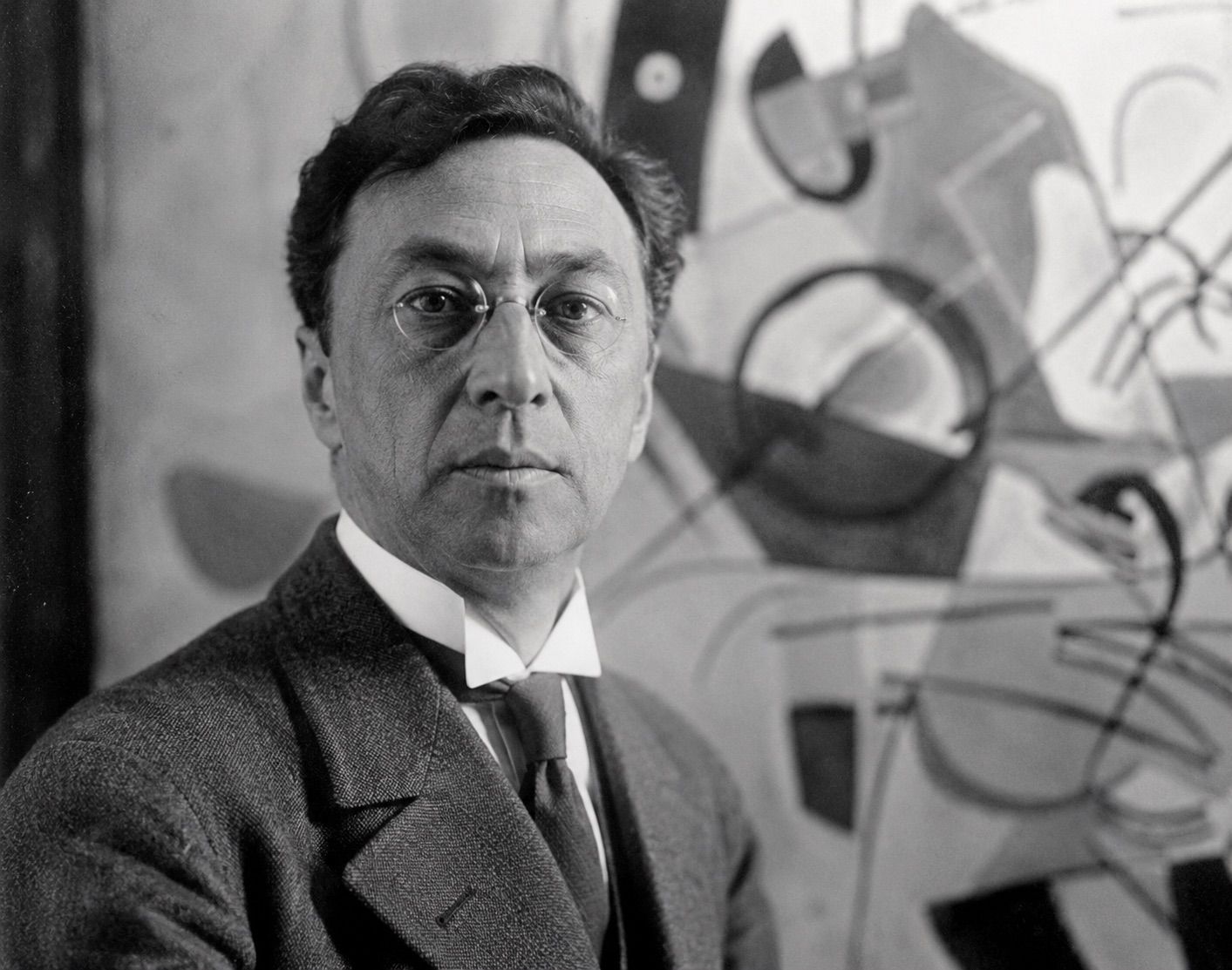
I’ve always been drawn to Wassily Kandinsky’s work, but it wasn’t until I stumbled upon his book “Concerning the Spiritual in Art” that I began to grasp why he resonates with me on a deeper level. As an art major, I’d studied his abstract paintings and theories, but reading about his journey from a struggling artist to a pioneer of abstraction felt like seeing myself reflected back.
Kandinsky’s writing is both poetic and philosophical, often blurring the lines between art and spirituality. He believed that colors and shapes could evoke emotions and convey spiritual experiences, not just visually represent the world. This idea spoke to me because I’ve always turned to writing as a way to process my own emotions and connect with others on a deeper level.
I remember spending hours as a teenager scribbling in my journal, trying to capture the intensity of emotions that felt too big for words. Writing helped me make sense of the world, even when it seemed like everything was falling apart. Kandinsky’s emphasis on the emotional and spiritual dimensions of art made me realize that I wasn’t alone in seeking meaning beyond the surface level.
But what really fascinates me about Kandinsky is his ambivalence towards the role of the artist. On one hand, he believed that the artist should be a visionary, someone who can tap into the collective unconscious and reveal hidden truths. On the other hand, he felt that art was a personal expression, a reflection of the artist’s inner world.
This tension between the individual and the universal resonates with me because I’ve always struggled to balance my own creative voice with the pressure to create something universally relatable. As a writer, I worry about whether my words will resonate with others or simply echo back at me as self-indulgence. Kandinsky’s struggles with this same dilemma made me feel less alone.
As I read on, I began to notice how Kandinsky’s art and writing often explored the relationship between chaos and order. He saw beauty in the fragmented and the unpredictable, but also believed that these elements could be harnessed to create a sense of harmony and balance. This paradox feels like the core of my own creative process – trying to find meaning in the messiness of life.
I’m not sure why Kandinsky’s work speaks to me on such a deep level, but I think it has something to do with his willingness to confront uncertainty and ambiguity head-on. In an era where art was increasingly bound by rules and conventions, he refused to be tied down, instead embracing the freedom to create whatever he felt compelled to express.
As I close this book, I’m left with more questions than answers – about Kandinsky’s life, his art, and my own place in the world. But that’s what draws me back to his work again and again: the sense of mystery, the thrill of the unknown, and the knowledge that even in uncertainty, there is beauty to be found.
As I delve deeper into Kandinsky’s writing, I find myself returning to this idea of uncertainty as a source of creativity. He believed that art should be a reflection of the artist’s inner world, but also a means of tapping into something greater than themselves. This tension between the individual and the universal is both exhilarating and terrifying – it’s like standing at the edge of a cliff, unsure of what lies ahead.
I think about my own writing and how often I’ve struggled with this same sense of uncertainty. There are times when words flow effortlessly onto the page, and others when I feel stuck, unable to express myself clearly. Kandinsky’s words on the importance of “inner necessity” – the idea that art should arise from a deep inner drive rather than external pressures or expectations – resonates with me.
I’ve always felt like I’m searching for this sense of inner necessity in my writing, trying to tap into a deeper truth that goes beyond mere self-expression. But what does it mean to truly follow your inner voice? Is it a gentle whisper or a deafening scream? And how do you distinguish between the two?
Reading Kandinsky’s words, I’m struck by his willingness to take risks and challenge conventional norms. He saw the world as a place of constant flux and change, where order and chaos were intertwined. This perspective is both liberating and terrifying – it means that nothing is fixed or certain, but also that anything is possible.
As I think about my own life, I realize that I’ve often felt like I’m caught between these two poles: the desire for control and structure on one hand, and the need for freedom and experimentation on the other. Kandinsky’s art and writing offer a reminder that it’s okay to be uncertain, to take risks and explore the unknown.
But even as I find solace in Kandinsky’s words, I’m also aware of the limitations of his perspective. As a white, male artist living in early 20th-century Europe, he was part of a cultural and historical context that is vastly different from my own. His experiences and biases shape his writing, just as mine do.
I wonder what it would be like to read Kandinsky’s work through the lens of someone who has faced similar struggles and challenges – someone who understands the weight of systemic oppression or the burden of expectation. Would their perspective on uncertainty and creativity be different? Would they see Kandinsky’s words as liberating or restrictive?
These questions swirl in my mind as I close the book, feeling both inspired and uncertain. Kandinsky’s work has given me permission to explore the unknown, to seek out the beauty in chaos and the harmony in fragmentation. But it’s also reminded me that there are countless other perspectives, experiences, and stories waiting to be heard – and that’s a responsibility I’m still trying to navigate.
As I sit here, surrounded by my own scribbled notes and half-finished drafts, I’m struck by the similarities between Kandinsky’s process and my own. We both seem to be drawn to the same paradox: that uncertainty can be a source of creativity, but also a crippling force that prevents us from taking risks.
I think about how often I’ve felt like I’m struggling to find my own “inner necessity,” to tap into that deep wellspring of inspiration and creativity that Kandinsky writes about. It’s as if I’m searching for a key to unlock the door, but the door itself is constantly shifting and changing shape.
Kandinsky’s words on the importance of intuition – of trusting one’s instincts and inner voice – resonate deeply with me. But what does it mean to trust oneself in this way? Is it a matter of quieting the external noise and listening to that internal whisper, or is it something more complex?
As I ponder these questions, I find myself drawn back to my own writing process. I think about how often I’ve felt like I’m trying to force words onto the page, rather than allowing them to emerge naturally from within me. It’s a struggle to balance the desire for control with the need to surrender to the creative process.
Kandinsky’s art and writing offer a powerful reminder that this tension is not unique to me or my own experiences. He too struggled with the same paradox, as he sought to create works that were both personal expressions of his inner world and universal statements about the human condition.
As I read on, I begin to notice how Kandinsky’s work often blurs the lines between art and spirituality. He saw colors and shapes as vessels for spiritual experiences, rather than just visual representations of the external world. This idea speaks to me on a deep level, as I’ve always tried to use my writing as a means of tapping into something greater than myself.
But what does it mean to tap into this “something greater”? Is it a matter of transcending the individual self, or is it more about acknowledging the interconnectedness of all things? Kandinsky’s words on the importance of spiritual experience in art offer a glimpse into his own search for meaning and purpose.
I’m left with more questions than answers as I close this book. What does it mean to create from a place of uncertainty, rather than certainty? How can we balance our desire for control with our need for freedom and experimentation? And what lies at the heart of Kandinsky’s spiritual vision – is it a desire for transcendence, or something more profound?
As I sit here, surrounded by my notes and scribbled thoughts, I’m struck by the complexity of Kandinsky’s ideas. His work challenges me to think about art and creativity in ways that feel both familiar and foreign. On one hand, his emphasis on intuition and inner necessity resonates with my own experiences as a writer. But on the other hand, his rejection of external rules and conventions makes me wonder if I’m giving myself too much freedom – or not enough.
I think about how often I’ve struggled to find my voice in my writing. There are times when words flow effortlessly onto the page, but others when I feel stuck, unable to express myself clearly. Kandinsky’s words on the importance of “inner necessity” offer a comforting reminder that this is a common struggle for artists and writers.
But what does it mean to truly follow one’s inner voice? Is it a matter of quieting the external noise and listening to that internal whisper, or is it something more complex? Kandinsky’s work suggests that it’s not just about tuning into our own thoughts and feelings, but also about tapping into a deeper, collective unconscious.
As I ponder these questions, I find myself drawn back to my own creative process. I think about how often I’ve felt like I’m trying to force words onto the page, rather than allowing them to emerge naturally from within me. It’s a struggle to balance the desire for control with the need to surrender to the creative process.
Kandinsky’s art and writing offer a powerful reminder that this tension is not unique to me or my own experiences. He too struggled with the same paradox, as he sought to create works that were both personal expressions of his inner world and universal statements about the human condition.
But what lies at the heart of Kandinsky’s spiritual vision? Is it a desire for transcendence, or something more profound? As I read on, I begin to notice how his work often blurs the lines between art and spirituality. He saw colors and shapes as vessels for spiritual experiences, rather than just visual representations of the external world.
This idea speaks to me on a deep level, as I’ve always tried to use my writing as a means of tapping into something greater than myself. But what does it mean to tap into this “something greater”? Is it a matter of transcending the individual self, or is it more about acknowledging the interconnectedness of all things?
Kandinsky’s words on the importance of spiritual experience in art offer a glimpse into his own search for meaning and purpose. He saw art as a means of accessing higher states of consciousness, of tapping into the divine within us all.
As I sit here, surrounded by my thoughts and scribbled notes, I’m left with more questions than answers. What does it mean to create from a place of uncertainty, rather than certainty? How can we balance our desire for control with our need for freedom and experimentation?
And what lies at the heart of Kandinsky’s spiritual vision – is it a desire for transcendence, or something more profound? These questions swirl in my mind as I close this book, feeling both inspired and uncertain.
As I reflect on Kandinsky’s words, I’m struck by the parallels between his spiritual vision and my own experiences with writing. He saw art as a means of accessing higher states of consciousness, of tapping into the divine within us all. For me, writing is often a way to tap into a deeper sense of self, to access emotions and thoughts that might otherwise remain hidden.
But what does it mean to “tap into” this deeper sense of self? Is it a matter of quieting the external noise and listening to our inner voice, or is it something more complex? Kandinsky’s words on the importance of intuition suggest that it’s not just about tuning in to our own thoughts and feelings, but also about accessing a collective unconscious.
As I ponder this idea, I’m reminded of my own experiences with writing. There are times when words flow effortlessly onto the page, and others when I feel stuck, unable to express myself clearly. Kandinsky’s emphasis on the importance of inner necessity – the idea that art should arise from a deep inner drive rather than external pressures or expectations – resonates deeply with me.
But what does it mean to truly follow one’s inner voice? Is it a matter of trusting our instincts and intuition, or is it something more nuanced? Kandinsky’s work suggests that it’s not just about listening to our own thoughts and feelings, but also about tapping into a larger cultural and historical context.
As I read on, I begin to notice how Kandinsky’s art and writing often explore the relationship between chaos and order. He saw beauty in the fragmented and the unpredictable, but also believed that these elements could be harnessed to create a sense of harmony and balance. This paradox feels like the core of my own creative process – trying to find meaning in the messiness of life.
But what does it mean to “harness” chaos and disorder? Is it a matter of imposing our own order on the world, or is it something more complex? Kandinsky’s words suggest that it’s not just about creating beauty from disorder, but also about acknowledging the interconnectedness of all things.
As I sit here, surrounded by my thoughts and scribbled notes, I’m left with more questions than answers. What does it mean to create from a place of uncertainty, rather than certainty? How can we balance our desire for control with our need for freedom and experimentation?
And what lies at the heart of Kandinsky’s spiritual vision – is it a desire for transcendence, or something more profound? These questions swirl in my mind as I close this book, feeling both inspired and uncertain.
As I look back on my own experiences with writing, I realize that I’ve often struggled to balance my desire for control with my need for freedom and experimentation. There are times when I feel like I’m trying to force words onto the page, rather than allowing them to emerge naturally from within me.
But what does it mean to truly allow ourselves to create freely? Is it a matter of surrendering to our own instincts and intuition, or is it something more complex? Kandinsky’s work suggests that it’s not just about letting go of control, but also about tapping into a deeper sense of purpose and meaning.
As I reflect on these questions, I’m struck by the complexity of Kandinsky’s ideas. His spiritual vision is both exhilarating and terrifying – it’s like standing at the edge of a cliff, unsure of what lies ahead. But it’s this uncertainty that also feels most alive to me, most full of possibility.
As I close this book, I’m left with more questions than answers. What does it mean to create from a place of uncertainty, rather than certainty? How can we balance our desire for control with our need for freedom and experimentation?
And what lies at the heart of Kandinsky’s spiritual vision – is it a desire for transcendence, or something more profound? These questions swirl in my mind as I sit here, surrounded by my thoughts and scribbled notes.