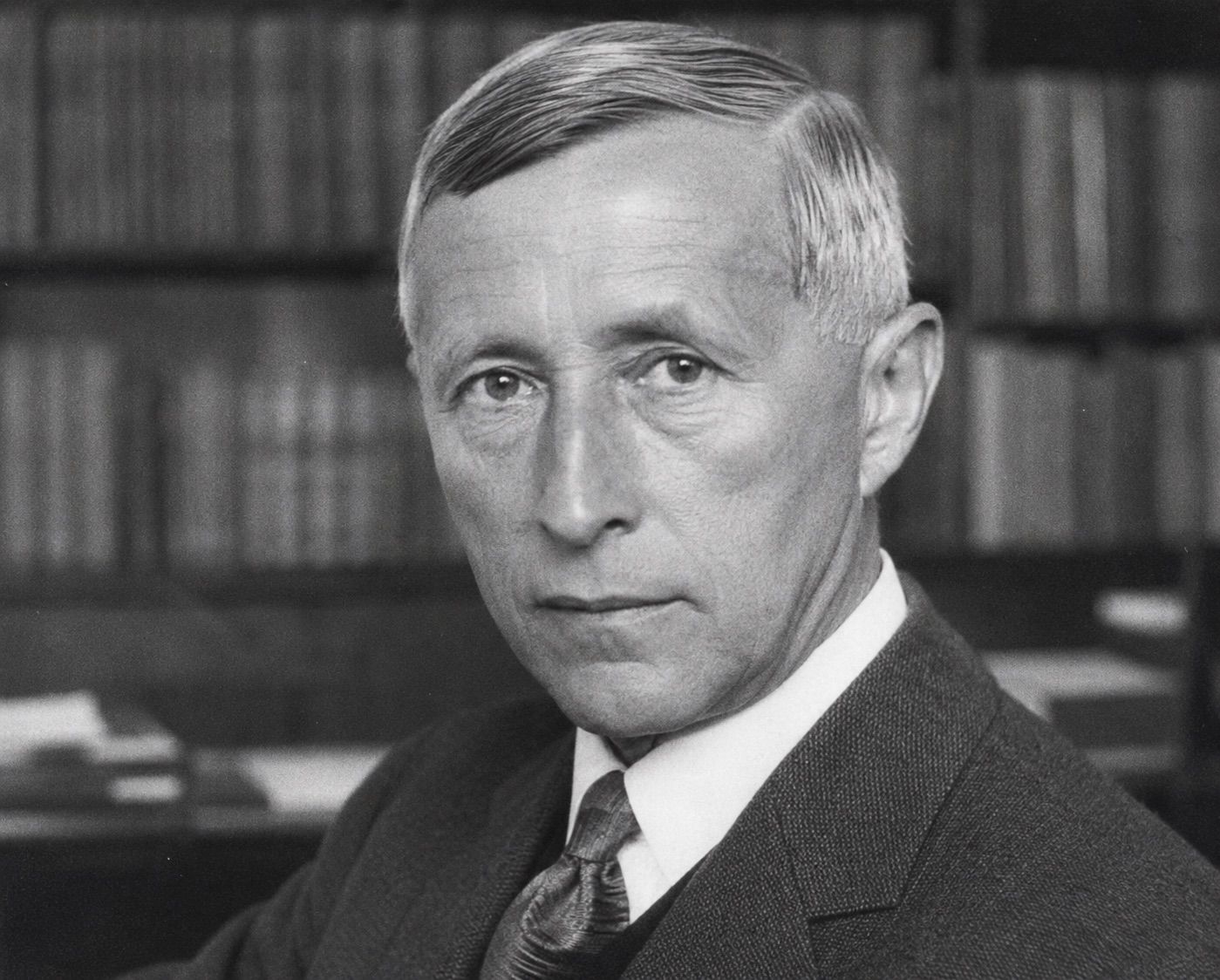
I’ve been reading about Ernst Junger for weeks now, and I’m still not sure what to make of him. At first, it was the words that caught my attention – his writing is like a puzzle I want to solve. The way he uses language is both precise and poetic, like a perfectly crafted machine that hums with an eerie beauty.
As I delved deeper into his work, I started to notice something else: Junger’s obsession with technology. He wrote about it back in the 1920s, when the world was still reeling from World War I and the rise of industrialization. At the time, he saw technology as a force that could either liberate humanity or destroy it – a double-edged sword that would decide the fate of modernity.
What resonates with me is how Junger’s ideas about technology mirror my own feelings about social media. I grew up with the internet and smartphones, and it’s hard not to feel like these tools are shaping our lives in ways we can’t even fully comprehend. Sometimes I wonder if they’re making us more connected or just more isolated – a paradox that Junger himself grappled with.
But what really unsettles me is Junger’s involvement with the Nazi party during World War II. I know it’s been extensively documented, but every time I read about it, I feel like I’m stuck in a moral quagmire. Part of me wants to separate his politics from his writing, to admire his literary genius while condemning his ideology. Another part of me worries that this is exactly what Junger would want – for us to compartmentalize our thoughts and avoid the complexities.
I’ve been reading about Junger’s concept of the “worker” – how he saw them as the embodiment of modernity’s contradictions. On one hand, they’re the ones who drive innovation and progress; on the other, they’re also victims of industrialization, their labor exploited for the benefit of a few. It reminds me of my own experiences working in service jobs during college, feeling like I was just another cog in the machine.
What bothers me is how Junger’s ideas about the worker seem to echo his own privilege – he never really considered what it means to be someone who isn’t part of the ruling class. His writing can come across as detached, almost aristocratic, which feels deeply at odds with my own experiences as a young woman from a working-class background.
I’m not sure I have answers yet about Junger or his ideas. Maybe that’s the point – maybe it’s okay to be stuck in this mess of contradictions and uncertainties. As I continue reading and thinking about him, I keep coming back to one question: what does it mean to truly engage with technology without losing ourselves in its abyss?
The more I read Junger’s work, the more I feel like I’m getting tangled up in his own contradictions. On one hand, he writes about the importance of embracing modernity and all its attendant complexities – this idea that we must confront the darkness within ourselves if we’re going to truly understand the world around us. But then there are moments where it feels like he’s romanticizing the very thing that threatens to consume us: technology.
I think about my own experiences with social media, how it can be both a source of connection and isolation at the same time. I’ve seen people who use it as a way to build relationships and communities, but also those who are sucked into its endless loop of consumption and comparison. It’s like Junger’s ideas about the double-edged sword of technology – always cutting in two different directions.
What really gets me is how Junger’s writing can be both exhilarating and disorienting at the same time. He has this way of using language that feels almost kinetic, like a machine propelling forward even as it grapples with its own limitations. But then there are moments where it feels like he’s trying to distance himself from the very problems he’s describing – like he’s talking about technology in abstract terms, rather than really grappling with what it means for people like me.
I’m starting to wonder if this is what Junger meant by “the worker” – not just someone who labors on a factory floor or behind a computer screen, but also someone who feels lost and disconnected from the world around them. Like they’re stuck in this never-ending cycle of consumption and production, without ever really being able to connect with anyone else.
It’s funny, because I used to think that writing was just about putting words on paper – but now I’m starting to see it as a way of trying to make sense of the world, even when it feels like nothing makes sense. Junger’s ideas are like a puzzle I keep trying to solve, even though I know there might not be any final solution. Maybe that’s what I love about his writing – its refusal to tie things up with a neat bow, its willingness to confront the abyss head-on.
As I continue reading and thinking about Junger, I’m starting to feel like I’m getting closer to some kind of understanding – but it’s still just out of reach. It’s like he’s holding up this mirror to modernity, reflecting back all our hopes and fears and contradictions, and expecting us to confront them head-on. But what if we’re not ready? What if we’re still stuck in the quagmire of our own making, unable to find a way out?
I’ve been thinking about Junger’s concept of “the abyss” – this idea that modernity is characterized by an endless void that threatens to consume us all. It sounds dramatic, but it resonates with me in a weird way. I feel like we’re living in a world where the boundaries between reality and fantasy are constantly blurring, where the noise of social media and the 24-hour news cycle can make it hard to distinguish what’s real from what’s not.
Junger saw this abyss as a source of both fascination and horror – something that could inspire us to greatness or drive us mad. I’m starting to see why he’d think that way, given his experiences during World War II. The world must have seemed like an endless void back then, a chasm of destruction and chaos that threatened to swallow everything whole.
But here’s the thing: I don’t feel like we’re living in a time quite like that anymore. Sure, there are still wars and atrocities happening all over the world, but for me, the abyss feels more like a metaphorical void – something that exists within myself as much as it does outside of me. It’s the feeling of being lost in the depths of social media, scrolling through endless feeds and wondering if anyone is even looking back at me.
Junger wrote about how technology could be both liberating and oppressive, depending on how we choose to use it. I think that’s true for all of us – whether we’re using social media to connect with others or to escape from our own feelings of loneliness and disconnection. The line between liberation and oppression is always blurred, and sometimes it feels like we’re walking right up to the edge of that abyss without even realizing it.
I’ve been reading more about Junger’s ideas on “the worker” – how he saw them as the embodiment of modernity’s contradictions. It makes me think about my own experiences working in service jobs during college, feeling like I was just another cog in a machine that didn’t care about me or my well-being. But it also makes me wonder if Junger ever really considered what it means to be someone who isn’t part of the ruling class – someone who is stuck at the bottom rungs of society with no clear way out.
It’s funny, because when I read Junger’s writing, I feel like he’s talking about my own experiences in a weird way. He writes about how technology can both liberate and oppress us, but also about how we need to confront our own limitations and contradictions head-on if we’re going to truly understand the world around us. It sounds simple, but it feels impossible – like I’m stuck in this never-ending cycle of consumption and production without ever really being able to connect with anyone else.
I guess what I’m getting at is that Junger’s ideas are still haunting me, even though I don’t fully agree with them. Maybe that’s the point – maybe his writing is meant to be a puzzle that we keep trying to solve, even when there might not be any final solution. Maybe it’s okay to be stuck in this mess of contradictions and uncertainties, as long as we’re willing to confront them head-on and try to make sense of the world around us.
As I continue to read Junger’s work, I find myself returning to his concept of “the worker” again and again. It’s like he’s speaking directly to me, reflecting back my own experiences and emotions in a way that feels both eerie and comforting. But what really gets me is how his ideas about the worker are tied up with his own privilege – how he never really considered what it means to be someone who isn’t part of the ruling class.
It makes me think about my own family, about growing up in a working-class neighborhood where everyone seemed to be struggling just to get by. My parents worked multiple jobs to make ends meet, and I often felt like I was invisible – like I didn’t matter unless I was producing something valuable for someone else. It’s hard not to feel like that’s what Junger is writing about when he talks about the worker – this sense of being a cog in a machine that doesn’t care about your well-being.
But at the same time, Junger’s ideas about the worker also feel like they’re missing something essential. He writes about how technology can both liberate and oppress us, but he never really considers what it means to be someone who is already oppressed – someone who is already trapped in a system that doesn’t care about their needs or desires.
I guess what I’m getting at is that Junger’s writing feels like it’s caught between two worlds – the world of the privileged and the world of those who are struggling just to survive. It’s like he’s trying to speak to both groups, but ends up speaking past them instead. And yet, despite all this, his ideas still resonate with me on some deep level.
Maybe that’s because Junger’s writing is so focused on the human experience – on the ways in which we’re all connected, even when we feel like we’re isolated and alone. He writes about how technology can both unite and divide us, but also about how it can reveal our deepest fears and desires. It’s like he’s holding up a mirror to modernity, reflecting back all our hopes and fears and contradictions.
As I read on, I find myself wondering if Junger would have written differently if he’d grown up in my shoes – if he’d experienced the same kinds of struggles and hardships that I’ve faced. Would his ideas about technology and modernity be different then? Would he have been more aware of the ways in which privilege can blind us to our own limitations?
I don’t know, but what I do know is that Junger’s writing has changed me in some fundamental way. It’s like he’s shown me a new perspective on the world – one that sees technology not just as a tool or a machine, but as an extension of ourselves. As something that can both liberate and oppress us, depending on how we choose to use it.
I guess what I’m getting at is that Junger’s ideas are still haunting me, even though I don’t fully agree with them. Maybe that’s the point – maybe his writing is meant to be a puzzle that we keep trying to solve, even when there might not be any final solution. Maybe it’s okay to be stuck in this mess of contradictions and uncertainties, as long as we’re willing to confront them head-on and try to make sense of the world around us.