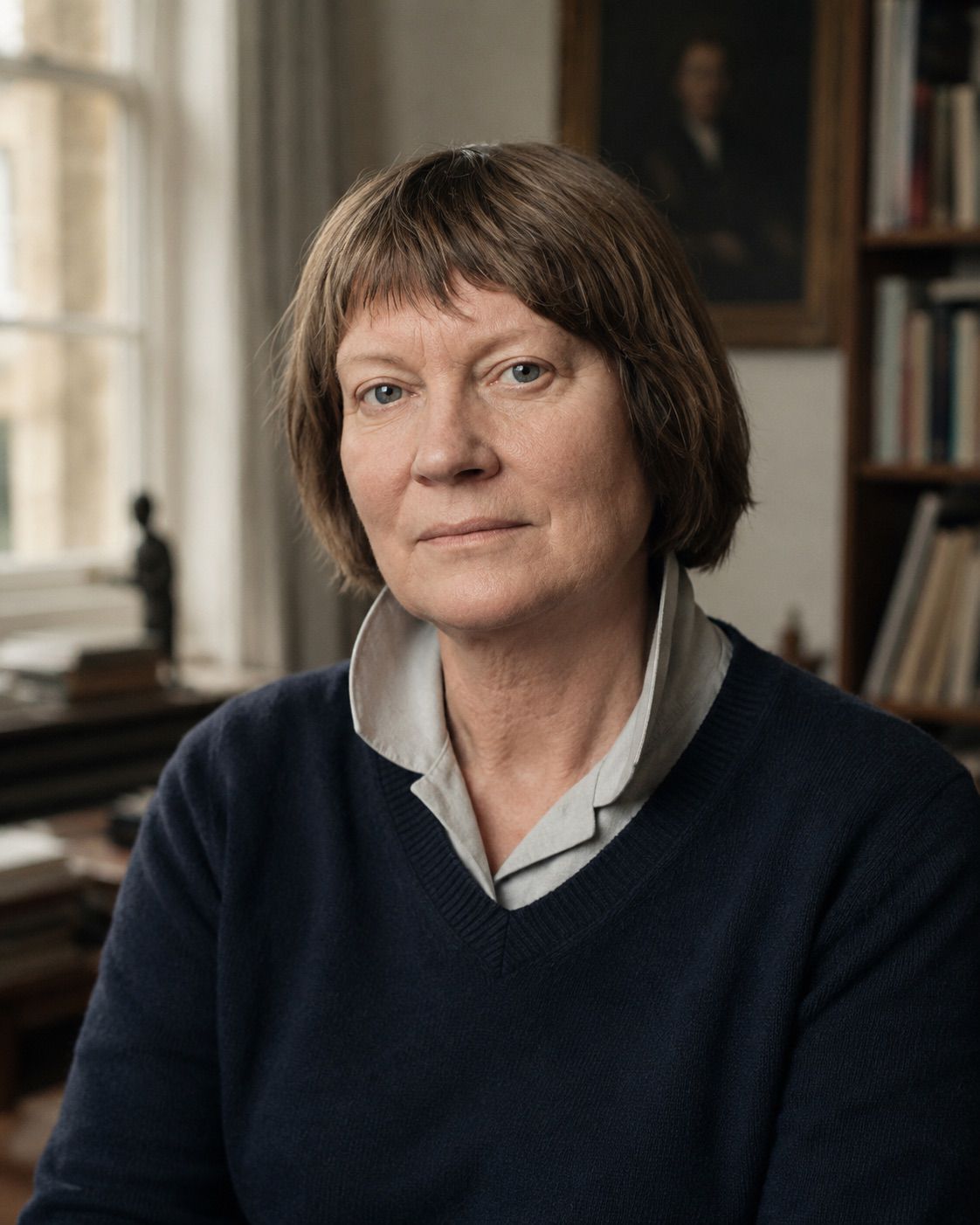
Iris Murdoch – the name itself seems to conjure a world of complexity, of intellectual rigor, of moral depth. As I sit down to write about her, I’m struck by the sense that I’m venturing into uncharted territory, that I’m attempting to grasp something slippery and elusive.
One thing that’s always drawn me to Murdoch is her writing style – dense, layered, and unflinchingly honest. Her novels are like labyrinthine puzzles, each sentence building upon the last to create a rich tapestry of thought and emotion. When I read her, I feel like I’m being led down a winding path, forced to confront my own assumptions and biases along the way.
But it’s not just her writing that fascinates me – it’s also her life story. Born in Dublin, raised in England, she spent most of her adult years teaching philosophy at Oxford University. Her marriage to John Bayley was marked by both deep love and intense emotional turmoil, with his decline into Alzheimer’s disease serving as a backdrop for many of her later works.
I find myself drawn to the contradictions of Murdoch’s life – her commitment to intellectual rigor alongside her romantic and passionate nature, her dedication to social justice alongside her seemingly privileged upbringing. It’s this messy, imperfect humanity that makes me feel seen, that makes me wonder if I’m the only one struggling with my own contradictions.
As I read about Murdoch’s relationships, particularly her marriage to John Bayley, I’m struck by a sense of discomfort. Their love story is both beautiful and brutal – they were deeply devoted to each other, but also intensely argumentative and often hurtful. It’s hard for me to reconcile this with my own expectations of what a healthy relationship should look like.
At the same time, I find myself drawn to their commitment to one another, even as it became increasingly difficult to navigate. Murdoch’s letters to Bayley during his illness are some of the most heartbreaking and beautiful things I’ve ever read – they’re full of love, anger, and vulnerability, all jumbled together in a way that feels both deeply personal and universally relatable.
As I sit here trying to make sense of Iris Murdoch, I’m aware of my own limitations. I don’t have the intellectual rigor or philosophical training that she possessed; I can only approach her work from my own limited perspective. And yet, it’s precisely this lack of expertise that allows me to see something in her – a reflection of myself, perhaps, or at least a echo of my own struggles and doubts.
Murdoch’s writing often explores the tension between reason and emotion, between intellectual curiosity and personal passion. It’s a tension I feel deeply in my own life, as someone who’s always struggled to balance my love of learning with my desire for connection and meaning. When I read her, I’m forced to confront these contradictions head-on – to acknowledge both the beauty and the brutality of human experience.
As I write this, I realize that Iris Murdoch is not just a fascinating figure to me; she’s also a mirror held up to my own life. Her complexities, her contradictions, her struggles with love and mortality – they’re all things that I see reflected back at me, in ways both disturbing and liberating. And it’s precisely this recognition that makes me want to keep reading, to keep thinking, and to keep exploring the messy, imperfect world of Iris Murdoch.
One aspect of Murdoch’s life that continues to fascinate me is her relationship with Christianity. As a philosopher, she was drawn to the intellectual rigor and moral complexity of Christian thought, yet as an individual, she struggled with its dogmatic tendencies and the ease with which it can be used to justify oppression and exclusion. I find myself oscillating between admiration for her philosophical engagement with Christianity and discomfort with her apparent ambivalence towards its institutional manifestations.
I’ve often felt similarly conflicted in my own life, torn between a deep-seated desire for spiritual meaning and a healthy skepticism of organized religion. Growing up, my family was nominally Catholic, but we rarely attended Mass or engaged with the Church’s teachings beyond the occasional baptism or wedding. As I entered adulthood, I began to explore other spiritual traditions, drawn to their emphasis on individual experience and personal growth.
Yet, even as I’ve wandered further from traditional Christianity, I’ve found myself drawn back to its philosophical and moral frameworks. Murdoch’s work often explores the intersection of faith and reason, highlighting the ways in which our rational faculties can be both a source of liberation and a means of oppression. Her writing challenges me to confront my own assumptions about what it means to live a virtuous life, and to consider the complex interplay between intellectual curiosity, emotional vulnerability, and moral commitment.
As I continue to read Murdoch’s work, I’m struck by the way she weaves together seemingly disparate threads – philosophical ideas, personal experiences, literary explorations. Her writing is like a tapestry, richly textured and multifaceted, inviting me to enter into its complexities and contradictions. And it’s precisely this invitation that makes her so compelling – not just as a writer or philosopher, but as a fellow human being, struggling with the same questions and doubts that I face every day.
I’m aware that my own experiences and perspectives will always shape my understanding of Murdoch’s work, that I’ll inevitably impose my own biases and limitations upon her ideas. And yet, it’s this very recognition that allows me to see something in her – a deep empathy for the human condition, a commitment to intellectual honesty, and a profound sense of wonder at the mysteries of existence. As I sit here with Murdoch’s writing, I feel like I’m engaging with someone who gets me, who sees the messy, imperfect world that I inhabit, and is willing to explore its complexities alongside me.
As I delve deeper into Murdoch’s work, I find myself increasingly drawn to her concept of “moral imagination.” For her, this refers to the ability to imagine oneself in another person’s shoes, to see the world from their perspective and understand their struggles and desires. It’s a notion that resonates deeply with me, as someone who has always struggled to connect with others on a meaningful level.
I think about my own relationships, particularly those with family members or close friends, where I’ve often found myself feeling disconnected and unsure of how to bridge the gap between us. Murdoch’s writing suggests that this disconnection is not just a result of our individual flaws or shortcomings, but rather a fundamental aspect of human experience – one that requires effort and imagination to overcome.
As I reflect on my own life, I realize that I’ve often relied on intellectual understanding as a way to connect with others. I’ll try to engage them in discussions about philosophy or literature, hoping to find common ground and shared interests. But this approach can be limiting, as it neglects the emotional and personal aspects of human connection.
Murdoch’s emphasis on moral imagination challenges me to think differently, to approach relationships with a sense of empathy and curiosity rather than mere intellectual curiosity. It’s a daunting prospect, as it requires me to confront my own biases and limitations, but also to open myself up to the complexities and uncertainties of others.
In this sense, I see Murdoch’s writing not just as an exploration of philosophical ideas, but as a call to action – a reminder that our relationships with others are always imperfect, always messy, and always in need of repair. By engaging with her work, I’m forced to confront my own limitations and biases, and to strive for greater empathy and understanding.
This is perhaps the greatest gift that Murdoch’s writing has given me: the recognition that I don’t have to have all the answers, that it’s okay to be uncertain and imperfect in my relationships. By embracing this uncertainty, I’m able to approach others with a sense of curiosity and wonder, rather than trying to impose my own ideas or solutions upon them.
As I continue to read Murdoch’s work, I feel like I’m being offered a map for navigating the complexities of human connection – a map that highlights the importance of empathy, imagination, and moral courage. It’s a map that is both beautiful and imperfect, just like the world itself, and one that reminds me that relationships are always worth striving for, no matter how messy or complicated they may become.
As I delve deeper into Murdoch’s concept of moral imagination, I’m struck by its resonance with my own experiences as a writer. For me, writing is often a way to process and make sense of the world around me – to try to understand myself and others within it. But Murdoch’s emphasis on empathy and imagination challenges me to think about writing in a new way: not just as a means of self-expression or intellectual exploration, but as a tool for connecting with others on a deeper level.
I think about my own writing practice, which often involves immersing myself in the thoughts and experiences of fictional characters. I try to inhabit their perspectives, to feel their emotions and see the world through their eyes. But Murdoch’s moral imagination suggests that this exercise is not just a literary device, but a reflection of our fundamental human experience: we are all trying to understand each other, even as we struggle to understand ourselves.
As I reflect on my own relationships, I realize that I’ve often relied on writing as a way to communicate with others – to express myself and connect with them on a deeper level. But Murdoch’s emphasis on moral imagination challenges me to think about the limitations of this approach. While writing can be a powerful tool for connection, it is ultimately a mediated experience: we are communicating through words on a page, rather than directly experiencing each other’s emotions and perspectives.
Murdoch’s work suggests that true connection requires something more fundamental – a sense of shared humanity, a recognition of our common struggles and vulnerabilities. As I read her writing, I’m struck by the way she effortlessly moves between intellectual ideas and personal experiences, blurring the lines between philosophy and memoir in a way that feels both deeply honest and profoundly human.
This is perhaps the greatest gift that Murdoch’s work has given me: the recognition that our relationships with others are always complex, always multifaceted – and that true connection requires us to engage with this complexity head-on. By embracing the messiness of human experience, we can begin to see each other in a new light – as fellow travelers on the journey of life, rather than as abstract intellectual constructs.
As I continue to read Murdoch’s work, I’m struck by the way she weaves together seemingly disparate threads – philosophical ideas, personal experiences, literary explorations. Her writing is like a tapestry, richly textured and multifaceted, inviting me to enter into its complexities and contradictions. And it’s precisely this invitation that makes her so compelling – not just as a writer or philosopher, but as a fellow human being, struggling with the same questions and doubts that I face every day.
I’m aware that my own experiences and perspectives will always shape my understanding of Murdoch’s work, that I’ll inevitably impose my own biases and limitations upon her ideas. But it’s this very recognition that allows me to see something in her – a deep empathy for the human condition, a commitment to intellectual honesty, and a profound sense of wonder at the mysteries of existence. As I sit here with Murdoch’s writing, I feel like I’m engaging with someone who gets me, who sees the messy, imperfect world that I inhabit, and is willing to explore its complexities alongside me.
And so I’ll continue to read, to write, and to reflect on Murdoch’s work – not just as a writer or philosopher, but as a fellow human being, struggling to make sense of this complex, beautiful, and often brutal world.