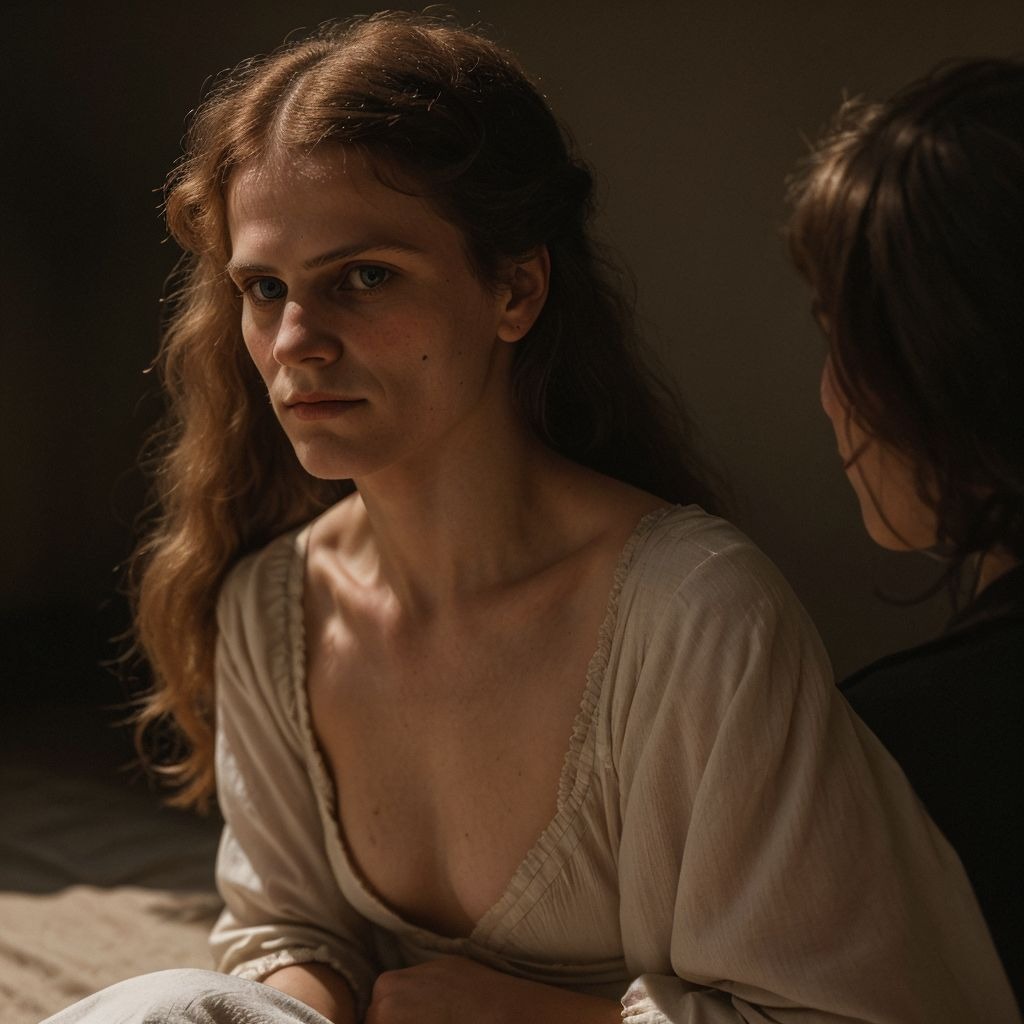
Lou Andreas-Salomé has been on my mind a lot lately, ever since I stumbled upon her name while researching women writers of the early 20th century. At first, it was just a fleeting curiosity – who is this woman and why should I care? But as I delved deeper into her life and work, I found myself becoming increasingly obsessed with her complexities.
What draws me to Lou is her unwavering commitment to her own desires, even when those desires go against the societal norms of her time. She was a Russian-German philosopher, psychoanalyst, and writer who lived during an era where women were expected to be subservient, domesticated, and silent. Yet, she rejected all these expectations with ease, pursuing a life that was both unconventional and intellectually demanding.
I find myself wondering what it must have been like for Lou to navigate the patriarchal society of her time. Born into a wealthy family in 1861, she had access to education and opportunities that many women did not. But even with these advantages, she still faced opposition from those around her – including her own family members who disapproved of her intellectual pursuits.
What resonates deeply with me is the tension between Lou’s need for autonomy and her desire for human connection. She was known to have had several intense relationships throughout her life, including a romantic affair with Friedrich Nietzsche, which has been widely documented. But what I find particularly interesting is how these relationships seemed to be both a source of comfort and a means of validation – as if she was constantly seeking external proof that she was worthy of love and respect.
I have to admit, this aspect of Lou’s life makes me uncomfortable. As someone who values independence and self-sufficiency, I struggle to understand why she would seek out relationships that might compromise her autonomy. And yet, at the same time, I recognize that human connection is a fundamental need – one that can be difficult to fulfill on our own.
I’m also drawn to Lou’s intellectual pursuits, particularly her work in psychoanalysis. As someone who writes as a way of processing my thoughts and emotions, I appreciate her use of writing as a therapeutic tool. Her writings on the female psyche are insightful and thought-provoking, offering a nuanced understanding of the complexities of femininity.
One aspect of Lou’s life that still eludes me is her relationship with psychoanalysis itself. While she was one of the first women to be analyzed by Sigmund Freud, her own views on psychoanalysis were somewhat ambivalent. She saw it as a useful tool for understanding human behavior, but also believed that it could be limiting and restrictive.
I find myself wondering whether Lou’s experiences in psychoanalysis influenced her writing style or worldview. Did she use writing as a way to process the intense emotions and conflicts that arose during analysis? Or did she see writing as a means of pushing back against the restrictions imposed by psychoanalytic theory?
These are just a few of the questions that swirl around my mind whenever I think about Lou Andreas-Salomé. She is a complex, multifaceted figure who defies easy categorization – a true original in every sense of the word. As I continue to explore her life and work, I’m reminded of the importance of embracing ambiguity and uncertainty. In an era where we’re often encouraged to seek clear answers and definitive solutions, Lou’s example is a powerful reminder that sometimes it’s okay not to know – and that uncertainty can be a source of strength rather than weakness.
As I delve deeper into Lou’s life, I’m struck by the way she navigates the tension between her intellectual pursuits and her emotional needs. Her relationships with men, in particular, seem to be a site of great complexity and conflict. On one hand, she was drawn to men who were intellectually stimulating and emotionally challenging – Friedrich Nietzsche, for example, was both a mentor and a lover. But on the other hand, these relationships often left her feeling vulnerable and exposed.
I find myself wondering whether Lou’s need for validation through relationships was a coping mechanism for the societal expectations placed upon her as a woman. Did she feel that by seeking out men who valued her intellect and creativity, she could somehow prove to herself and others that she was worthy of respect? Or did she genuinely believe that these relationships were a source of personal growth and transformation?
What’s interesting is how Lou’s experiences with psychoanalysis seem to have influenced her views on the human psyche. She wrote extensively about the concept of the ” anima,” or the feminine aspect of the male psyche, which suggests that men have an unconscious feminine side that is often repressed. But I wonder whether this idea was also a reflection of her own experiences as a woman navigating a patriarchal society.
In many ways, Lou’s life feels like a precursor to my own experiences as a young woman in academia. Like her, I’ve struggled with the tension between intellectual pursuits and emotional needs – often feeling like I have to choose between being taken seriously as a writer and being seen as vulnerable or emotional. But while Lou’s struggles were rooted in a particular historical moment, I’m starting to realize that these tensions are still very much alive today.
As I continue to explore Lou’s life and work, I’m struck by the way she embodies both the privileges and the pitfalls of being a woman in a patriarchal society. She had access to education and opportunities that many women did not, but she also faced intense pressure to conform to societal expectations. And yet, despite these challenges, she continued to pursue her passions with unwavering dedication – often at great personal cost.
I’m left wondering what lessons we can learn from Lou’s example. How do we navigate the tensions between intellectual pursuits and emotional needs? How do we balance our desire for autonomy with our need for human connection? And what does it mean to be a woman in a society that still largely values men over women? These are questions that I’m not sure I have answers to, but they’re definitely ones that I’ll continue to grapple with as I explore Lou’s life and work further.
As I reflect on Lou’s experiences, I find myself thinking about my own relationships with men in academia. Like her, I’ve often felt like I have to choose between being taken seriously as a writer and being seen as vulnerable or emotional. It’s as if I’m constantly walking a tightrope, trying to balance my desire for intellectual rigor with the need for human connection.
I think about my own relationships with male friends and colleagues – how we often discuss ideas and critique each other’s work in a way that feels both stimulating and safe. But at the same time, I wonder whether these relationships are also tinged with a subtle power dynamic, where men feel entitled to offer critiques or advice because they’re perceived as being more “objective” or “expert.” It’s a feeling that’s hard to put my finger on, but it’s one that Lou’s experiences seem to echo.
One of the things that strikes me about Lou is her willingness to take risks and challenge societal norms. She was unafraid to push boundaries and question established authority – whether it was in her relationships with men or in her intellectual pursuits. And yet, despite this boldness, she also seemed to be deeply vulnerable and emotionally sensitive.
I’m reminded of the ways in which women are often socialized to be both strong and fragile at the same time. We’re expected to be resilient and independent, but also nurturing and empathetic. It’s a contradictory set of expectations that can be incredibly difficult to navigate – especially when we’re trying to establish ourselves as intellectuals or professionals.
As I continue to think about Lou’s life and work, I’m struck by the ways in which she embodies both the privileges and the pitfalls of being a woman in a patriarchal society. She had access to education and opportunities that many women did not, but she also faced intense pressure to conform to societal expectations. And yet, despite these challenges, she continued to pursue her passions with unwavering dedication – often at great personal cost.
I find myself wondering what it means to be a woman in academia today – particularly when we’re still grappling with issues of sexism and inequality. How do we balance our desire for intellectual rigor with the need for human connection? And how do we navigate the complex power dynamics that exist between men and women in academic settings?
These are questions that I’m not sure I have answers to, but they’re definitely ones that I’ll continue to grapple with as I explore Lou’s life and work further. As I delve deeper into her experiences, I’m reminded of the importance of embracing complexity and ambiguity – rather than trying to simplify or categorize it.
As I reflect on Lou’s relationships with men, I’m struck by the way she often found herself caught between two opposing forces: her desire for intellectual stimulation and her need for emotional connection. She was drawn to men like Nietzsche who were both intellectually stimulating and emotionally challenging, but these relationships also left her feeling vulnerable and exposed.
I think about my own experiences in this regard. I’ve had relationships with men who valued my intellect and encouraged me to pursue my writing, but at the same time, they often seemed to expect me to be more nurturing or emotional than I was comfortable being. It’s as if they saw me as a woman first, rather than as an equal intellectual partner.
This dynamic is something that Lou also grappled with in her relationships with men. She wrote about how women are often socialized to prioritize their relationships with men over their own desires and needs, and how this can lead to feelings of resentment and frustration.
I find myself wondering whether Lou’s experiences with psychoanalysis influenced her views on the role of women in society. Did she see psychoanalysis as a way of understanding the ways in which societal expectations shape our behavior and desires? Or did she view it as a tool for challenging those expectations?
As I continue to explore Lou’s life and work, I’m struck by the way she embodies both the privileges and the pitfalls of being a woman in a patriarchal society. She had access to education and opportunities that many women did not, but she also faced intense pressure to conform to societal expectations.
I think about my own experiences as a young woman in academia, and how I’ve often felt like I’m walking a tightrope between being taken seriously as a writer and being seen as vulnerable or emotional. It’s a feeling that’s hard to shake, especially when I’m surrounded by men who seem to have more authority and confidence.
Lou’s experiences with psychoanalysis also make me think about the ways in which women are socialized to internalize their own oppression. She wrote about how women often feel like they need to prove themselves to others in order to be worthy of love and respect, rather than trusting their own desires and needs.
I find myself wondering whether this is still a prevalent issue today. Do women still feel like they need to conform to societal expectations in order to be taken seriously? And what does it mean for our intellectual pursuits and emotional lives when we’re socialized to prioritize one over the other?
These are questions that I’m not sure I have answers to, but they’re definitely ones that I’ll continue to grapple with as I explore Lou’s life and work further. As I delve deeper into her experiences, I’m reminded of the importance of embracing complexity and ambiguity – rather than trying to simplify or categorize it.
As I reflect on Lou’s experiences with psychoanalysis, I’m struck by the way she used writing as a therapeutic tool to process her emotions and thoughts. Her writings on the female psyche are incredibly insightful, offering a nuanced understanding of the complexities of femininity. I find myself wondering whether this is something that resonates with my own experiences as a writer.
I’ve always turned to writing as a way to work through difficult emotions and ideas, but I’m not sure if it’s because of any specific influence from Lou or psychoanalysis. Perhaps it’s simply a fundamental aspect of being human – the need to express ourselves in order to make sense of our own thoughts and feelings.
One thing that does resonate with me is the way Lou used writing as a means of challenging societal norms and expectations. In her work, she often pushed back against the restrictive roles assigned to women, advocating for greater autonomy and self-expression. I see parallels between this and my own experiences in academia, where I’ve often felt like I’m walking a tightrope between being taken seriously as a writer and being seen as vulnerable or emotional.
It’s interesting to me how Lou’s experiences with psychoanalysis seem to have influenced her views on the role of women in society. Did she see psychoanalysis as a way of understanding the ways in which societal expectations shape our behavior and desires? Or did she view it as a tool for challenging those expectations?
As I continue to explore Lou’s life and work, I’m struck by the way she embodies both the privileges and the pitfalls of being a woman in a patriarchal society. She had access to education and opportunities that many women did not, but she also faced intense pressure to conform to societal expectations.
I find myself wondering whether this is still a prevalent issue today – do women still feel like they need to prove themselves to others in order to be worthy of love and respect? And what does it mean for our intellectual pursuits and emotional lives when we’re socialized to prioritize one over the other?
These are questions that I’m not sure I have answers to, but they’re definitely ones that I’ll continue to grapple with as I explore Lou’s life and work further. As I delve deeper into her experiences, I’m reminded of the importance of embracing complexity and ambiguity – rather than trying to simplify or categorize it.
One thing that strikes me about Lou is her willingness to take risks and challenge societal norms. She was unafraid to push boundaries and question established authority – whether it was in her relationships with men or in her intellectual pursuits. And yet, despite this boldness, she also seemed to be deeply vulnerable and emotionally sensitive.
I see parallels between this and my own experiences as a young woman in academia. I’ve often felt like I’m walking a tightrope between being taken seriously as a writer and being seen as vulnerable or emotional. But while Lou’s experiences were rooted in a particular historical moment, I’m starting to realize that these tensions are still very much alive today.
As I continue to reflect on Lou’s life and work, I’m struck by the way she embodies both the privileges and the pitfalls of being a woman in a patriarchal society. She had access to education and opportunities that many women did not, but she also faced intense pressure to conform to societal expectations.
I find myself wondering what lessons we can learn from Lou’s example – how do we navigate the tensions between intellectual pursuits and emotional needs? How do we balance our desire for autonomy with our need for human connection? And what does it mean to be a woman in academia today, particularly when we’re still grappling with issues of sexism and inequality?
These are questions that I’m not sure I have answers to, but they’re definitely ones that I’ll continue to grapple with as I explore Lou’s life and work further.