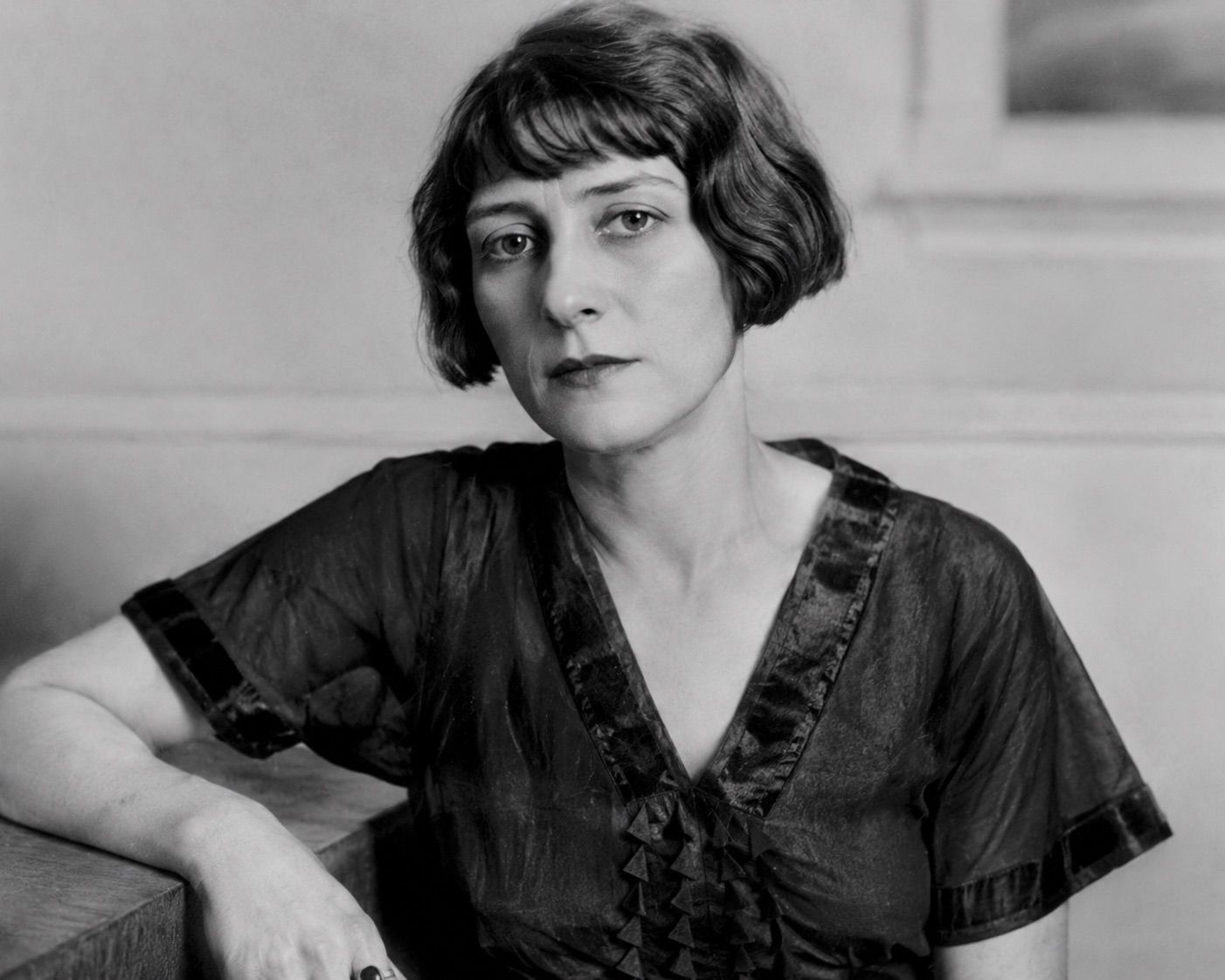
I’ve been reading Louise Bogan’s poetry for months now, and yet I still find myself struggling to pin down why she holds my attention. It’s not just her words, although they’re undeniably beautiful – it’s the way she weaves together fragments of her own life into these delicate, often unsettling poems.
One thing that keeps coming back to me is Bogan’s relationship with Sylvia Townsend Warner. I’m fascinated by the way their connection seems to have both energized and tormented Bogan. On one hand, Warner was a source of creative inspiration – Bogan wrote some of her most celebrated work after meeting the other poet in the 1920s. But on the other hand, their relationship was marked by what sounds like possessiveness, even obsession.
I’m drawn to this dynamic because it speaks to my own experiences with intense, all-consuming friendships. There’s a tension between the desire for creative validation and the need for emotional autonomy – a tension I recognize in myself, and one that Bogan seems to have navigated in her writing.
At times, Bogan’s poems feel like attempts to untangle herself from Warner’s gravitational pull. Her words are infused with a sense of longing and disconnection, as if she’s trying to reconcile the love she feels for another person with the need to preserve her own identity. I’ve found myself lost in these poems, wondering what it would be like to surrender so fully to someone else – but also terrified by the prospect.
This ambivalence is mirrored in Bogan’s views on feminism and her own role as a woman writer. While she was a pioneering figure in many ways (one of the first women poets to receive a Guggenheim Fellowship, for example), her attitudes towards sex and relationships often seem… complicated. On one hand, she advocated for greater freedom and autonomy for women; on the other, her work sometimes perpetuates sexist stereotypes or reinforces patriarchal norms.
I’m not sure how to feel about this – it’s disorienting to read Bogan’s words, which so powerfully convey a sense of female experience, and yet also contain these problematic elements. As someone who’s been grappling with their own feminism, I find myself wondering whether it’s possible for women writers like Bogan (or me) to be both complicit in systemic injustices and still worthy of admiration.
I don’t have answers to these questions – which is partly why I keep coming back to Bogan’s work. Her poetry feels like a labyrinth, full of twists and dead ends that challenge my assumptions about art, identity, and relationships. And maybe that’s the point: by confronting our own complexities and contradictions, we can begin to see ourselves more clearly in all our messy, imperfect glory.
But for now, I’m still lost in Bogan’s poems – trying to untangle the threads of her life and work, and figuring out what it means to be a woman writer in the 20th century.
As I continue to read through Bogan’s poetry, I find myself returning to this idea of the labyrinth. It’s not just that her words are complex and multifaceted – although they certainly are – but that they also represent a kind of internal terrain that she’s mapping for herself. Each poem is like a new room in this maze, full of hidden passages and unexpected corners.
I think about how my own writing often feels like a similar navigation of inner landscapes. When I’m struggling to put words on paper, it’s as if I’m trying to find my way through a dark forest – every step forward feels uncertain, every decision fraught with potential pitfalls. But when the words start flowing, it’s exhilarating – like stumbling upon a hidden clearing in the woods.
But what draws me to Bogan’s work is not just the process of creation itself, but also the sense of vulnerability that underlies her poetry. She writes about desire and disappointment, love and loss, with an unflinching honesty that feels both devastating and liberating. It’s as if she’s saying: “I have felt this way too – and maybe you have too.”
This is a kind of solidarity that I crave in my own writing, but also find difficult to replicate. When I’m writing about my own experiences, I often feel like I’m tiptoeing around the edges of my emotions, afraid to fully confront what’s at stake. But Bogan’s poetry shows me that it’s possible to be honest without being brutal – to expose one’s vulnerabilities without losing sight of one’s strength.
I think about how this might relate to my own struggles with identity and self-expression. As a young woman, I’ve often felt like I’m navigating multiple selves – the writer-self, the friend-self, the daughter-self – each with its own set of expectations and responsibilities. Bogan’s poetry reminds me that these selves are not mutually exclusive, but rather interconnected threads in a larger tapestry.
But at the same time, I’m aware that this kind of fluidity can also be used as an excuse for evasion or self-doubt. When I’m feeling lost or uncertain about my own path, it’s easy to get caught up in the idea that I’m not quite living up to expectations – that I’m somehow failing to embody multiple selves at once.
This is where Bogan’s work gets tricky again – because her poetry often seems to suggest that this kind of identity-multiplicity can be a source of creative power, even if it’s also a potential liability. She writes about being a woman poet, a lesbian writer, an artist torn between different worlds and identities. And yet, despite these contradictions, she manages to create work that feels both deeply personal and expansively universal.
I don’t know how Bogan does this – or whether I can ever hope to do it myself. But as I continue to read her poetry, I’m struck by the sense that her work is not just about solving problems or arriving at easy answers. Instead, it’s a journey through the complexities of human experience – one that I feel drawn to, even when it feels like getting lost in the labyrinth all over again.
As I delve deeper into Bogan’s poetry, I find myself questioning my own notions of creativity and identity. She writes about being a woman poet, but also about being a woman who doesn’t quite fit into traditional feminine roles. Her work is full of contradictions – she’s both deeply rooted in her emotions and intensely rational; she’s both fiercely independent and desperate for connection.
I see myself in these contradictions. As a writer, I’ve always struggled with the idea of being “authentic” or “true to myself.” Should I write about my personal experiences, or should I create fictional worlds that are more easily controlled? Bogan’s poetry suggests that there’s no easy answer – that authenticity is not something you can achieve, but rather a process of embracing your complexities and contradictions.
This idea resonates with me on a deep level. As someone who’s always felt like they’re navigating multiple identities, I’m drawn to the notion that my creative work can be a reflection of this multiplicity. But it’s also terrifying – because what if I’m not being “authentic” enough? What if I’m just pretending to be someone I’m not?
Bogan’s poetry shows me that this fear is not unique to me. She writes about the tension between her own creative ambitions and the expectations placed upon her as a woman writer. Her work is full of references to other women poets, artists, and writers who have come before her – women like Emily Dickinson, Edna St. Vincent Millay, and Gertrude Stein.
I’m struck by the sense that Bogan’s poetry is not just about her own experiences, but also about the larger cultural context in which she’s writing. She’s aware of the ways in which society expects women to conform to certain roles or norms – and she’s determined to subvert those expectations through her work.
This is a kind of solidarity that I appreciate – the idea that my creative struggles are not just personal, but also part of a larger cultural conversation. As I continue to read Bogan’s poetry, I’m reminded that my own writing is not just about expressing myself, but also about contributing to this ongoing dialogue.
As I delve deeper into Bogan’s work, I find myself thinking more and more about the role of solitude in her life and art. She was a woman who valued her independence above all else, and yet she was also deeply drawn to intense, all-consuming relationships – like her relationship with Sylvia Townsend Warner. This paradox has always fascinated me, as someone who’s struggled with their own need for alone time versus their desire for connection.
I wonder if Bogan’s emphasis on solitude was a way of coping with the expectations placed upon her as a woman writer. In an era when women were often expected to be domestic and nurturing, Bogan’s pursuit of a solitary, artistic life must have been seen as unconventional at best, scandalous at worst. And yet, she refused to conform to these norms – instead, she created a world of her own making, where words and emotions were the only laws that mattered.
This reminds me of my own struggles with solitude versus connection. As someone who’s always felt like they’re navigating multiple identities, I’ve often found myself craving time alone – time to recharge, reflect, and reconnect with my own thoughts and feelings. But at the same time, I’m also deeply social, and I love being around people who share my passions and interests.
Bogan’s poetry suggests that this tension between solitude and connection is not unique to me. She writes about the need for silence and contemplation – the necessity of stepping away from the world in order to truly see it. And yet, she also celebrates the beauty of human connection – the way that words can bridge gaps, create communities, and transcend borders.
This ambivalence is something I’m still trying to navigate in my own life and work. As a writer, I know that solitude is essential for creativity and self-reflection. But as someone who’s deeply social, I also crave the stimulation and validation that comes from sharing my thoughts and feelings with others. Bogan’s poetry shows me that this tension is not something to be resolved – but rather something to be explored, celebrated, and even exploited in one’s work.
I think about how this might relate to my own writing practices. As someone who’s always struggled with self-doubt and fear of failure, I often find myself seeking external validation through social media or online communities. But Bogan’s poetry reminds me that true connection comes from within – from the act of creating itself, rather than from the responses we receive from others.
This is a hard truth to swallow, especially in an era where likes and comments can be so intoxicating. But as I continue to read Bogan’s work, I’m struck by the sense that she’s offering me a more profound kind of validation – one that comes not from external approval, but rather from the act of creating itself.
In many ways, this is what draws me to Bogan’s poetry in the first place. Her words are like a mirror held up to my own inner world – a reflection of my own desires, fears, and contradictions. And yet, they’re also something more – a testament to the power of art to transcend our individual experiences and connect us with others on a deeper level.
As I close this essay (for now), I’m left wondering what other secrets Bogan’s poetry might hold for me. What else can I learn from her labyrinthine world of words? And how will this experience shape my own writing, as well as my understanding of myself and the world around me?
As I continue to immerse myself in Bogan’s poetry, I find myself returning to the idea of the labyrinth again and again. It’s a metaphor that feels both ancient and timeless – a reminder that our inner worlds are full of twists and turns, dead ends and hidden passages. And yet, it’s also a symbol of hope, a reminder that even in the most confusing or disorienting moments, we can find our way through to the other side.
I think about how Bogan’s poetry is like a labyrinth in its own right – a complex web of emotions, experiences, and ideas that she weaves together with incredible skill. Each poem feels like a new room in this maze, full of surprises and unexpected connections. And yet, as I navigate these poems, I begin to feel a sense of familiarity – a sense that I’m not just reading Bogan’s words, but also my own.
This is both exhilarating and terrifying – the realization that our inner worlds are so intertwined with those around us. It’s a reminder that we’re not alone in our struggles or triumphs, that others have walked this path before us and left behind trails of breadcrumbs to guide us forward. And yet, it’s also a warning – a reminder that our experiences can be both beautiful and painful, joyful and devastating.
As I continue to explore Bogan’s poetry, I’m struck by the sense that she’s not just writing about her own life – but also about the lives of others. Her poems are full of references to mythology, history, and literature – a testament to the idea that our individual experiences are part of a larger cultural narrative.
This is something that resonates deeply with me as a writer. As someone who’s always felt like they’re navigating multiple identities, I’ve often struggled to find my place in this larger story. But Bogan’s poetry shows me that even in the midst of uncertainty and doubt, there is a sense of belonging – a sense that our experiences are part of something greater than ourselves.
I think about how this might relate to my own writing practices. As someone who’s always struggled with self-doubt and fear of failure, I often find myself wondering if I’m just making up stories or repeating the same old cliches. But Bogan’s poetry reminds me that even in the midst of uncertainty, there is a sense of truth – a sense that our experiences are worth sharing, not just with others, but also with ourselves.
This is a hard truth to swallow, especially when it feels like everyone around us is trying to tell us what we should be writing about. But Bogan’s poetry shows me that true art comes from a place of vulnerability and honesty – a willingness to confront our fears, desires, and contradictions head-on.
As I close this essay (for now), I’m left wondering what other secrets Bogan’s poetry might hold for me. What else can I learn from her labyrinthine world of words? And how will this experience shape my own writing, as well as my understanding of myself and the world around me?
I think about how Bogan’s poetry is like a map – a guide to navigating the complexities of human experience. It’s a reminder that our inner worlds are full of twists and turns, dead ends and hidden passages. But it’s also a testament to the power of art to transcend our individual experiences and connect us with others on a deeper level.
As I continue to explore Bogan’s work, I’m left feeling both inspired and intimidated – like I’m standing at the edge of a great precipice, staring out into an unknown future. But it’s also exhilarating – the realization that there are so many stories waiting to be told, so many experiences waiting to be explored.
And as I step forward into this uncertain landscape, I’m reminded of Bogan’s own words: “The poet must not speak with the voice of another; he must not repeat what has been said before.” These words feel like a challenge – a reminder that true art requires us to take risks, to confront our fears and doubts head-on.
But they also feel like a promise – a reminder that even in the midst of uncertainty, there is always a way forward. A way through the labyrinth, into the unknown.