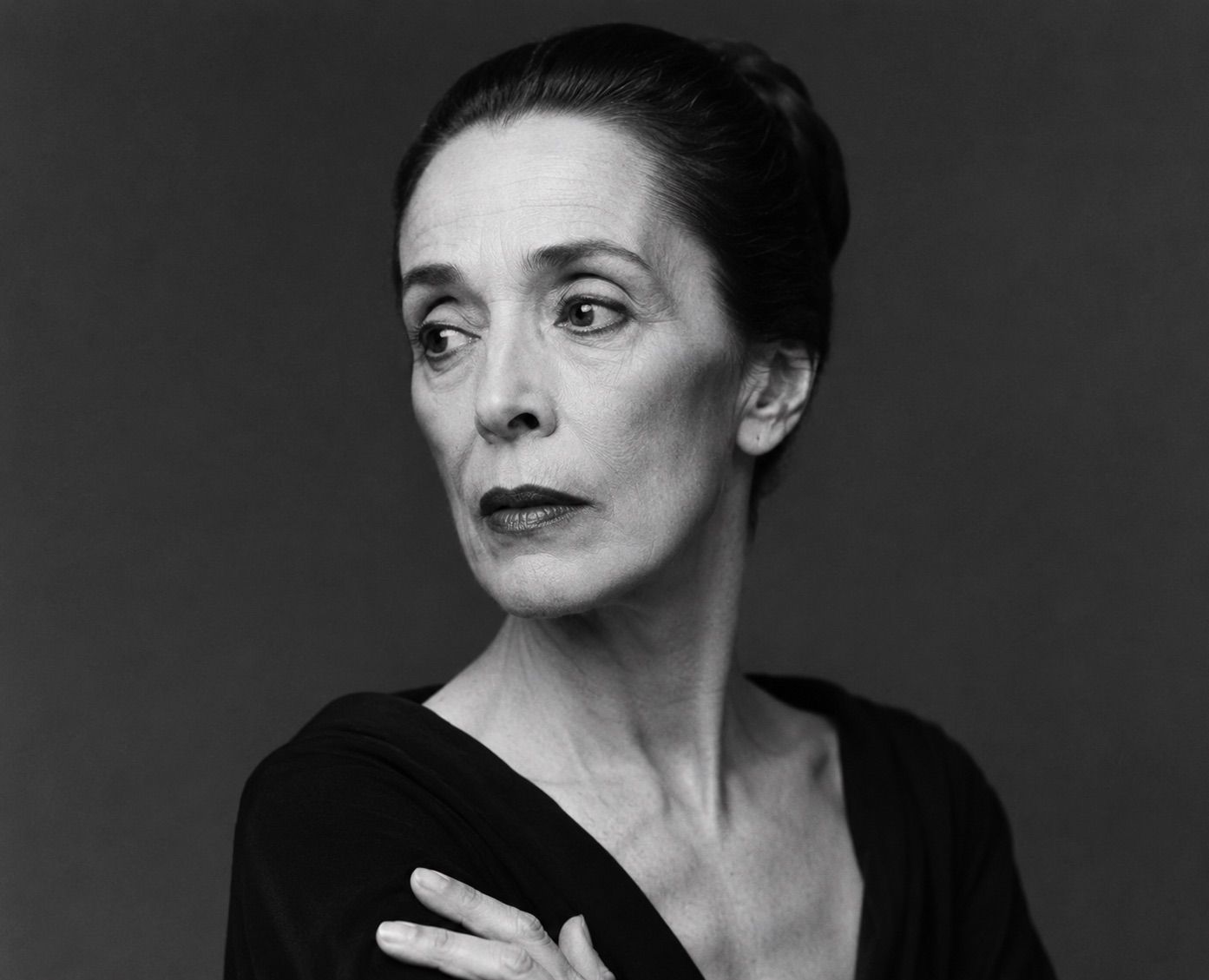
Martha Graham’s name has been floating around my mind since I first started dancing. It was during a particularly grueling ballet class, and our teacher kept referencing her as the “mother of modern dance.” At the time, I found it hard to connect – we were struggling through pliés in heels, not exactly what comes to mind when you think of “modern” movement.
But Graham’s name has stuck with me. Maybe it’s because I’ve always been drawn to the unconventional, and her choreography seems to defy traditional notions of dance. Or maybe it’s because I sense a certain tension within her – a push-pull between control and surrender that I find intriguing.
I remember watching videos of her performances, mesmerized by the intensity with which she moved. It was as if every muscle in her body was screaming, begging to be released. And yet, at the same time, there was this air of precision about her – a sense that every step, every gesture, had been calculated and rehearsed to perfection.
It’s that tension that really gets me. I mean, I’ve always been drawn to creative expression as a way to process my emotions, but Graham takes it to another level. Her dancing is almost like a form of exorcism – she channels her inner turmoil onto the stage, transforming it into something raw and beautiful.
But what’s also fascinating about Graham is how she’s often described as both innovative and traditional at the same time. She drew from mythology and classical music to create her choreography, but also pushed against conventions in terms of technique and movement style. It’s a paradox that I think resonates with me on some level – I’ve always struggled with feeling like an outsider within my own family, caught between cultural traditions and personal desires.
Graham’s relationships are another aspect of hers that fascinate me. Her partnership with Louis Horst, her composer and collaborator, is particularly compelling. He was 40 when they met, she just 22 – a significant age difference that speaks to the power dynamics at play in their relationship. And yet, it seems like he not only supported her artistic vision but also encouraged her to take risks and push beyond her own limits.
I wonder about our own relationships – how we navigate power imbalances and expectations within our personal and professional lives. Graham’s partnership with Horst feels both empowering and complicated at the same time – a dynamic that I think many of us struggle with in our own way.
As I continue to learn more about Martha Graham, I find myself grappling with what it means to be an artist who challenges conventions while also honoring her roots. It’s a delicate balance, one that requires a certain level of self-awareness and vulnerability. And yet, it’s precisely this tension – between control and surrender, tradition and innovation – that makes her work so compelling.
I’m still trying to wrap my head around all of this, but Graham’s legacy feels both timeless and urgent at the same time. Her choreography continues to inspire new generations of dancers and artists, while also serving as a reminder of the complex, messy nature of creative expression. It’s a messy, beautiful thing that I think we can all relate to in our own way.
As I delve deeper into Martha Graham’s life and work, I’m struck by her unapologetic commitment to her art. She was known for pushing boundaries, both on and off stage, and it’s clear that she didn’t shy away from controversy or criticism. There were times when her choreography was deemed too avant-garde, too provocative, or just plain disturbing – but Graham refused to compromise her vision.
I think about my own experiences as a writer, where I often feel pressure to conform to certain expectations or norms within the literary community. It’s easy to get caught up in the desire for validation and recognition, to sacrifice my unique voice for the sake of fitting in. But Graham’s unwavering dedication to her art is a powerful reminder that true creativity requires taking risks, embracing uncertainty, and being willing to challenge the status quo.
One aspect of Graham’s life that I find particularly intriguing is her relationship with mortality. She was known for her rigorous physical training and discipline, but she also struggled with various health issues throughout her life – including a bout with polio in 1916. Despite these challenges, she continued to dance and choreograph until the very end of her life.
I’m haunted by the thought of facing my own mortality, of realizing that time is limited and precious. As an artist, I’ve always felt like I have the luxury of indulging in creative expression, of exploring the depths of human emotion without worrying about real-world consequences. But Graham’s experience reminds me that even the most driven and talented individuals can be vulnerable to the fragility of life.
As I continue to explore Graham’s legacy, I find myself returning to the theme of transformation – both on and off stage. Her choreography was known for its dramatic shifts in mood and tempo, often juxtaposing opposing emotions or energies within a single piece. It’s as if she was constantly seeking to break free from conventions, to tap into something raw and primal that lay just beneath the surface.
I wonder if this is what draws me to her work – the sense of possibility, the feeling that anything can be transformed, transfigured into something new and unexpected. As a writer, I’m always searching for ways to capture the fluidity of human experience, to convey the complexity and richness of life in all its messy, beautiful forms.
Graham’s legacy feels like a powerful reminder that art is not just about creating something new, but also about shedding light on the hidden, the unseen. Her choreography was often described as both deeply personal and universally relatable – a testament to the power of creative expression to transcend boundaries and connect us across time and space.
As I sit here, reflecting on Martha Graham’s life and work, I feel a sense of awe and reverence for this pioneering artist. She embodied the contradictions that I’m still trying to navigate in my own life – between control and surrender, tradition and innovation, mortality and transformation. And yet, it’s precisely these tensions that make her work so compelling, so urgent, and so essential to our understanding of the human experience.
As I continue to grapple with Martha Graham’s legacy, I find myself thinking about the role of risk-taking in creative expression. Graham was known for pushing boundaries, not just in her choreography but also in her personal life. She was a trailblazer in many ways, refusing to conform to societal norms and expectations. And yet, she was also deeply rooted in tradition – drawing from mythology and classical music to inform her work.
I think about my own writing, and how I often struggle with taking risks. I want to write about things that are meaningful and true, but I’m also afraid of being criticized or rejected. Graham’s example reminds me that creative expression is not just about producing something beautiful or technically proficient – it’s also about being willing to take a chance, to expose oneself to vulnerability and uncertainty.
I wonder if this is what makes her work so powerful – the sense of raw emotion and energy that pours out onto the stage. She was able to tap into something deep within herself, and convey it in a way that resonated with audiences. It’s not just about technical skill or mastery – it’s about being willing to be fully present, to surrender to the moment.
I think about my own experiences as a writer, and how I often feel like I’m hiding behind words on a page. I’m afraid to reveal too much of myself, to expose my true emotions and thoughts. But Graham’s example shows me that creative expression can be a form of liberation – a way to break free from the constraints of social norms and expectations.
As I continue to reflect on Martha Graham’s life and work, I find myself thinking about the concept of “authenticity.” What does it mean to be true to oneself, both in art and in life? For Graham, it meant embracing her unique voice and vision, even when it went against the conventions of her time. It meant taking risks and pushing boundaries, rather than conforming to societal norms.
I think about how this relates to my own writing – am I being true to myself, or am I trying to fit into certain expectations or categories? Am I willing to take risks and push boundaries, or am I holding back out of fear or uncertainty? Graham’s legacy challenges me to be more honest with myself, to be more authentic in my creative expression.
As I sit here, reflecting on Martha Graham’s life and work, I feel a sense of gratitude for her example. She shows me that creative expression can be a powerful form of self-discovery, a way to tap into one’s deepest emotions and experiences. And she reminds me that authenticity is not just about being true to oneself – it’s also about embracing the complexities and contradictions of human experience.
As I delve deeper into Martha Graham’s legacy, I find myself thinking about the role of imperfection in creative expression. Her choreography was never perfect, never polished – it was raw, emotional, and often messy. And yet, it’s precisely this imperfection that makes her work so compelling.
I think about my own writing, where I often strive for perfection, for a seamless narrative or a perfectly crafted sentence. But Graham’s example shows me that creative expression is not just about technical skill – it’s also about embracing the imperfections, the uncertainties, and the messiness of human experience.
Her use of everyday movements, like walking or running, as choreographic material is particularly striking to me. It’s almost as if she’s saying that even the most mundane actions can be transformed into something beautiful and meaningful with the right intention and energy.
I wonder about my own writing process – how often do I get caught up in trying to craft the perfect sentence, rather than allowing myself to simply express what’s true? Graham’s example reminds me that creativity is not just about producing something polished or refined – it’s also about embracing the raw, unedited nature of human emotion.
One aspect of Graham’s life that I find particularly inspiring is her commitment to mentorship. She was known for passing on her knowledge and expertise to younger dancers and choreographers, often taking them under her wing and nurturing their creative development. It’s a testament to her generosity and willingness to share her gift with others.
I think about my own writing community – how often do I feel like I’m competing with others, rather than collaborating or supporting each other? Graham’s example shows me that creative expression is not just about personal achievement – it’s also about building relationships and fostering a sense of community and shared purpose.
As I continue to reflect on Martha Graham’s life and work, I find myself thinking about the power of ritual in creative expression. Her choreography was often deeply rooted in mythological and cultural traditions – but she also used these rituals as a way to explore deeper human emotions and experiences.
I wonder about my own writing process – how often do I rely on familiar structures or tropes, rather than experimenting with new forms and narratives? Graham’s example reminds me that creative expression is not just about producing something beautiful or meaningful – it’s also about tapping into the collective unconscious, and exploring the deeper mysteries of human experience.
Her use of silence in her choreography is another aspect of her work that I find particularly striking. In many of her pieces, she uses long periods of quiet or stillness to punctuate the movement, creating a sense of dramatic tension or contrast. It’s almost as if she’s saying that sometimes the most powerful thing we can do is simply be present, and allow ourselves to receive and respond to what’s happening around us.
I think about my own writing – how often do I rely on language and narrative to convey meaning, rather than allowing myself to simply be present with the reader? Graham’s example shows me that creative expression is not just about producing something clever or insightful – it’s also about being present in the moment, and allowing ourselves to receive and respond to what’s happening around us.