Latest Articles

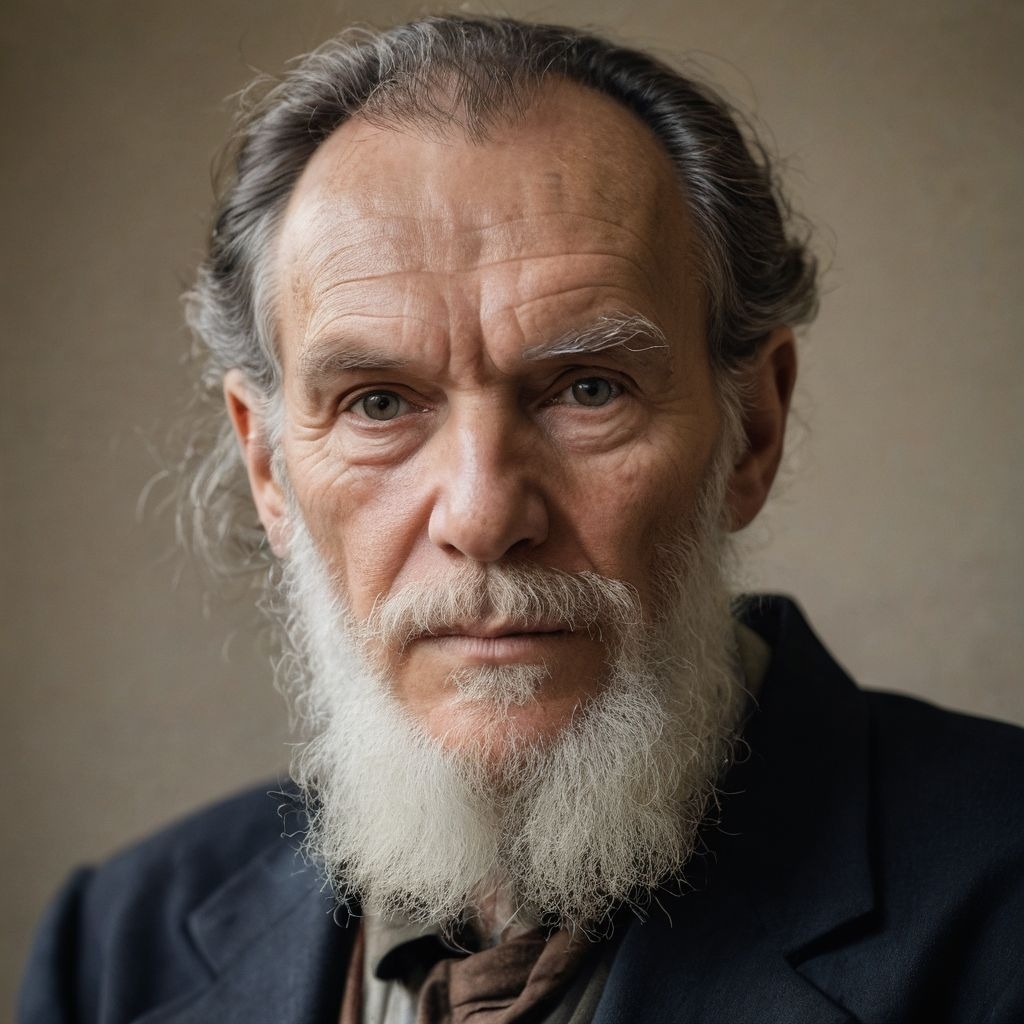
Furcas: The Ancient Knight Who Teaches Philosophy, Judgment, and the Hard Discipline of Wisdom

Dave

Furcas is a demon who feels old in a way that has nothing to do with age and everything to do with endurance. Among the spirits of the Ars Goetia, he does not present himself as a monster of excess, flame, or terror. Instead, he appears as a stern, elderly man with a long beard, seated or standing with authority, holding a sharp weapon or staff. This imagery is deliberate. Furcas is not the demon of temptation or spectacle. He is the demon of accumulated understanding, of wisdom forged through repetition, error, and consequence.

In the Ars Goetia, Furcas is named as a Knight of Hell, commanding legions and teaching philosophy, rhetoric, logic, astronomy, astrology, chiromancy, and the art of judgment. His title alone sets him apart. Knights are not kings or dukes. They are enforcers of order, bound to codes, duty, and discipline. Furcas does not rule domains. He sharpens minds.

The aged appearance attributed to Furcas is central to his symbolism. Old age in demonology is not weakness. It is persistence. Furcas represents knowledge that has survived being tested, contradicted, and refined. He is not interested in novelty. He values what holds up under pressure. His wisdom is not inspirational. It is corrective.

Furcas teaches philosophy, but not as abstract debate. Under Furcas, philosophy is confrontation with reality. It is the discipline of asking uncomfortable questions and refusing comforting answers. Furcas does not teach how to feel wise. He teaches how to think clearly when wisdom is inconvenient.

Logic and rhetoric also fall under his domain, but again, not as tools for persuasion alone. Furcas understands how arguments are constructed, dismantled, and abused. He teaches how reasoning can be weaponized, and more importantly, how to recognize when it is being used dishonestly. Under Furcas, intelligence without integrity is exposed.

Judgment is one of Furcas’s most important attributes. Judgment is not opinion. It is evaluation informed by structure, evidence, and consequence. Furcas governs the moment when information must be weighed and a decision made, knowing that no outcome will be clean. He does not promise fairness. He promises clarity.

The weapon or staff Furcas carries is symbolic of enforcement. Knowledge, under Furcas, is not passive. It demands application. Once you understand something clearly, you are responsible for acting accordingly. Furcas does not allow ignorance as an excuse once insight has been granted.

Astrology and astronomy also belong to Furcas, but in a practical sense. He does not teach star-gazing for wonder. He teaches cycles, timing, and influence. Furcas understands that judgment improves when context is considered. Decisions made without awareness of timing and environment are incomplete.

Chiromancy, the reading of hands, fits naturally into Furcas’s domain. Hands are tools of action. They reveal labor, habit, injury, and adaptation. Furcas teaches how the body records choices long after the mind forgets them. Under Furcas, nothing is accidental. Everything leaves a trace.

Unlike demons who tempt through pleasure or fear, Furcas tempts through authority. He speaks with certainty earned rather than claimed. This makes him dangerous to the arrogant and humbling to the curious. Furcas does not flatter. He corrects.

Psychologically, Furcas represents the internal judge that develops with maturity. The voice that no longer excuses impulse, that demands accountability, that values restraint over indulgence. Furcas is not kind, but he is stabilizing. He strips away self-deception.

Furcas’s rank as a Knight is significant here. Knights serve causes larger than themselves. Furcas serves structure. He upholds disciplines that keep thought from collapsing into chaos. In this sense, Furcas is a guardian against intellectual decay.

In modern terms, Furcas feels like the embodiment of rigorous education. Not schooling as credential, but learning as discipline. He is present wherever standards matter, wherever reasoning is expected to withstand scrutiny, and wherever judgment carries real consequences.

Unlike demons associated with madness or illusion, Furcas is associated with sobriety. He does not distort reality. He clarifies it. This clarity can feel harsh. Furcas does not soften truths to preserve comfort. He does not adjust conclusions to spare feelings.

The aged appearance of Furcas also reflects patience. He does not rush conclusions. He observes patterns over time. This makes him deeply unsettling in a culture obsessed with speed. Furcas reminds us that wisdom takes time, and shortcuts are visible to those who know where to look.

Furcas’s teachings often leave people quieter rather than energized. Insight under Furcas does not inflate ego. It deflates it. He shows how little most people understand about the systems they judge confidently.

In demonological warnings, Furcas is not described as treacherous or cruel. He is described as severe. Severity here means uncompromising adherence to standards. Furcas does not bend principles to accommodate desire.

Symbolically, Furcas represents the cost of knowing better. Once you understand, you are accountable. There is no return to ignorance without dishonesty. Furcas enforces that boundary.

He endures in demonology because every culture eventually needs correction. When reasoning erodes and judgment collapses, systems fail. Furcas exists as the reminder that structure matters, discipline matters, and clarity is earned.

To engage with Furcas symbolically is to accept that wisdom is not gentle. It is earned through discomfort, discipline, and the willingness to be wrong.

Furcas is not the demon of inspiration. He is the demon of standards.

Related Posts

Rosalind Franklin: The Invisible Thread That Almost Broke Me Too

Penelope

I’ve always felt a pang of fascination when I think about Rosalind Franklin’s story. Her life is like a puzzle with too many missing pieces, and yet it’s the gaps that intrigue me. What I know is that she was a brilliant British biophysicist who made significant contributions to our understanding of DNA structure, but her work was often overlooked during her lifetime.

As someone who’s also struggled to be recognized for my own creative endeavors, I find myself drawn to Franklin’s frustration and disappointment. She was a woman in a male-dominated field, working tirelessly in the lab while simultaneously navigating the societal expectations placed upon her as a wife and mother. Her frustration is palpable in her letters and interviews – she felt undervalued and underappreciated by the very people she was helping to advance scientific knowledge.

One of the things that gets stuck in my head is Franklin’s relationship with James Watson and Francis Crick, the duo who famously discovered the double helix structure of DNA. While they credited Franklin for their work, it feels like a half-hearted nod at best. Her X-ray crystallography images were instrumental in helping them decipher the code, but her contributions were largely erased from the narrative. I’ve read about how Watson and Crick would often mock her accent and belittle her abilities, reducing her to nothing more than a footnote in their story.

It’s uncomfortable for me to confront this kind of sexism and misogyny head-on. As someone who’s grown up with a relatively privileged existence, it’s hard to wrap my head around the ways in which women like Franklin faced such blatant disregard for their work. And yet, I feel drawn to her determination and resilience – she refused to be silenced or ignored, even when faced with overwhelming obstacles.

What strikes me most about Franklin is the sense of isolation that pervades her story. Despite being part of a prestigious research team at King’s College London, she worked largely in solitude, pouring over data and experimenting with new techniques. Her relationships were complicated, and her marriage to a fellow scientist, John Randall, was strained to say the least. It’s as if she existed on the periphery of her own life, observing the world around her with a mix of curiosity and disconnection.

I wonder what it must have been like for Franklin to feel so disconnected from the very people who were supposed to be supporting her. Was she able to find solace in her work, or did the isolation seep into every aspect of her being? I’m not sure I’d want to know – there’s something unsettling about confronting the depths of human loneliness.

As a writer, I often struggle with feelings of disconnection myself. There are days when it feels like my words are falling on deaf ears, and I’m just shouting into the void. Franklin’s story makes me realize that I’m not alone in this feeling – there are countless women who have come before me, struggling to be heard in a world that often refuses to listen.

But even as I grapple with these feelings of isolation and frustration, I’m drawn back to Franklin’s image. She’s the embodiment of quiet strength, refusing to be silenced or overlooked despite the odds against her. Her legacy is complex, multifaceted – a reminder that women like me are capable of greatness, even in the face of adversity.

As I sit here with my thoughts swirling around Rosalind Franklin, I’m left with more questions than answers. What does it mean to be undervalued and overlooked? How do we find our place in a world that often seems determined to erase us? These are questions I’ll continue to grapple with, long after this piece is finished.

I keep coming back to the image of Franklin’s data, meticulously recorded and analyzed on graph paper. It’s as if she’s speaking directly to me from beyond the grave, her calculations and observations a testament to her unwavering dedication. I find myself wondering what it must have been like for her to pour over those X-ray crystallography images, searching for patterns and connections that would unlock the secrets of DNA.

There’s something haunting about the idea that Franklin’s work was so precise, so carefully considered, and yet so easily dismissed by the men around her. It’s a reminder that even in the midst of groundbreaking research, women were often relegated to the margins, their contributions reduced to footnotes or afterthoughts. I think about all the times I’ve felt like an outsider in my own creative pursuits – the moments when my ideas are met with skepticism or condescension.

As I delve deeper into Franklin’s story, I’m struck by the tension between her public persona and private life. On one hand, she was a brilliant scientist, respected by her peers for her intellect and expertise. On the other hand, she struggled to balance her career ambitions with the societal expectations placed upon her as a woman. Her marriage to John Randall was complicated, to say the least – it’s clear that he often undermined her work, dismissing her contributions as trivial or insignificant.

I find myself wondering what it must have been like for Franklin to navigate these dual identities – the scientist who craved recognition and respect, versus the wife and mother who felt bound by societal norms. Was she able to reconcile these two selves within herself? Or did they exist in a state of perpetual conflict, each one vying for dominance?

The more I learn about Franklin’s life, the more I’m struck by the ways in which her story reflects my own fears and insecurities as a writer. What if my words aren’t good enough? What if no one takes me seriously? These are the same doubts that haunted Franklin, despite her towering intellect and groundbreaking research.

As I grapple with these questions, I’m left with a sense of unease – a feeling that there’s more to Franklin’s story than what we’re allowed to see. There are whispers of infidelity, of personal struggles that went far beyond the confines of her lab work. It’s as if she existed in a state of constant tension, torn between her ambition and her desire for human connection.

I’m not sure where this is leading me – only that I’m drawn deeper into Franklin’s world with each passing day. Her story is a labyrinth, full of twists and turns that challenge my assumptions about creativity, identity, and the pursuit of knowledge. And yet, it’s in the midst of these complexities that I find myself most alive – questioning, seeking answers, and grappling with the messy, imperfect nature of human experience.

I’ve been lost in Franklin’s world for hours now, tracing the contours of her story with a mix of fascination and trepidation. As a writer, I’m drawn to the way she navigates the complex web of relationships within her lab, trying to balance her own ambitions with the expectations of those around her.

It’s strange to think that Franklin’s work was so central to the discovery of DNA’s structure, yet she herself felt like an outsider in the very community where she made such significant contributions. I wonder if this sense of disconnection is something I can relate to – as someone who writes about topics that often feel ephemeral or abstract, I sometimes struggle to connect with others on a more tangible level.

The more I read about Franklin’s life, the more I’m struck by her fierce determination and independence. Despite facing so many obstacles, she continued to push forward, pouring all of herself into her work. It’s almost as if she knew that her contributions were crucial, even if they wouldn’t be recognized until long after she was gone.

I think about my own writing habits – the way I often retreat into my own little world when faced with criticism or doubt. Franklin’s story makes me realize that this kind of isolation is not unique to me, but rather a common experience for many women who’ve been pushed to the periphery of their own lives. It’s as if we’re constantly navigating between two worlds – the one where we’re recognized and valued, and the one where we feel overlooked and undervalued.

As I sit here with Franklin’s story swirling around me, I’m left with more questions than answers. What does it mean to be a woman in a male-dominated field? How do we find our voice in a world that often tries to silence us? These are questions I’ll continue to grapple with, long after this piece is finished.

But even as I face these uncertainties, I’m drawn back to Franklin’s data – those meticulously recorded X-ray crystallography images that hold the secrets of DNA. It’s as if she’s speaking directly to me from beyond the grave, her calculations and observations a testament to her unwavering dedication. And in this moment, I feel a sense of connection to her – a recognition that our struggles, though different in many ways, are somehow intertwined.

I think about all the times I’ve felt like an outsider in my own creative pursuits, unsure if anyone would ever truly see or hear me. Franklin’s story makes me realize that these feelings are not unique to me, but rather a common experience for countless women who’ve come before me. And it’s this sense of solidarity – this recognition that we’re all part of a larger narrative – that gives me the courage to keep going, even when the road ahead feels uncertain and daunting.

As I close my eyes and let Franklin’s story wash over me, I feel a sense of peace settle in. It’s as if she’s telling me that it’s okay to be messy, to be imperfect, and to be unsure – that these are all part of the journey towards discovery and growth. And in this moment, I know that I’ll keep writing, keep pushing forward into the unknown, even when the world around me seems determined to silence me.

As I sit here with Franklin’s story still resonating within me, I find myself thinking about the power of representation and how it can shape our perceptions of ourselves and others. Franklin’s legacy is a testament to the importance of acknowledging and celebrating women in science, but it also highlights the ways in which societal expectations can silence and erase them.

I think about all the times I’ve felt like my own voice was being drowned out by the dominant narratives around me. As a writer, I’m constantly seeking ways to express myself and connect with others, but it’s easy to get caught up in the noise of the world outside. Franklin’s story makes me realize that this is not just a personal struggle, but a collective one – that women like her and me are part of a larger movement towards visibility and recognition.

But even as I’m drawn to the idea of solidarity and shared experience, I’m also aware of the complexities and nuances that come with it. Franklin’s story is not just about being a woman in science; it’s also about being a British woman, a wife, a mother – all these identities intersecting and overlapping in ways that are both beautiful and challenging.

I wonder what it would be like to have more women like Franklin in my life – mentors, role models, friends who understand the intricacies of navigating a male-dominated field. I think about how much easier it would be to face my own doubts and fears with someone who’s been through similar experiences, someone who can offer guidance and support without judgment.

As I ponder these questions, I’m struck by the sense of longing that pervades Franklin’s story. Despite her many achievements, she often felt like an outsider, a stranger in a strange land. And yet, it’s this very sense of disconnection that also allows her to maintain a sense of independence and resilience – a quality that I admire and aspire to.

I find myself wondering what would have happened if Franklin had been able to connect with others on a deeper level – if she’d had more people in her life who understood and valued her contributions. Would she still be working tirelessly in the lab, pushing forward against the obstacles that stood in her way? Or would she have found a different path, one that allowed her to balance her ambition with her personal relationships?

These questions swirl around me like a vortex, pulling me deeper into Franklin’s world and my own. It’s as if I’m trapped in a never-ending loop of what-ifs and maybes – forever chasing the elusive thread of connection and understanding.

But even as I’m lost in these doubts and uncertainties, I’m also aware of a sense of peace that settles within me. It’s as if Franklin’s story has given me permission to be uncertain, to be imperfect, and to be unsure. And in this moment, I know that I’ll keep writing, keep pushing forward into the unknown, even when the world around me seems determined to silence me.

For now, at least, I’m content to sit here with Franklin’s story, letting it wash over me like a wave of calm. It’s as if she’s reminding me that our struggles are not unique, but also not identical – that we’re all part of a larger narrative, one that’s still unfolding and evolving with each passing day.

As I close my eyes and let the silence settle around me, I feel a sense of connection to Franklin that goes beyond words. It’s as if we’re linked by some invisible thread, a thread that binds us together in our shared humanity. And in this moment, I know that I’ll keep writing, keep seeking answers, and keep pushing forward into the unknown – not just for myself, but for all the women who’ve come before me, and for those who will come after.

Related Posts

Balam: The Three-Headed King Who Sees Past, Present, and Future Without Mercy

Dave

Balam is a demon who does not bargain with uncertainty. In the Ars Goetia, he is named as a Great and Terrible King of Hell, commanding forty legions and appearing in one of the most unsettling forms in demonology: three heads—one of a man, one of a bull, and one of a ram—set upon a powerful body, with blazing eyes and the presence of something that has already seen the outcome. Balam does not speculate. He remembers the future.

What makes Balam distinct is not simply his monstrous form, but the function it serves. Each head represents a different mode of knowing. The human head is reason and articulation, the ability to explain what is seen. The bull represents raw strength, inevitability, and momentum—the force that carries events forward regardless of resistance. The ram represents will, stubborn direction, and the power of initiation. Together, they form a being that does not guess at fate but comprehends it from multiple angles at once.

Balam’s most feared ability is his knowledge of the past, present, and future. This is not prophecy in the poetic sense. It is not riddles or metaphors. Balam sees events as structures, not moments. He understands how causes lock into effects, how decisions narrow pathways, and how outcomes solidify long before people realize they are inevitable. To encounter Balam is to confront the idea that choice exists, but only within boundaries already drawn.

Unlike demons who manipulate through desire or fear, Balam manipulates through certainty. He can make a person invisible, not just physically, but socially—unnoticed, overlooked, erased from consequence. He can also grant sharp wit and insight, allowing someone to speak with devastating precision. These gifts are not comforts. They are tools for navigating a world whose outcomes Balam already understands.

Balam’s kingship matters. Kings in demonology are not merely powerful; they are final authorities within their domain. Balam does not influence fate. He governs knowledge of it. He does not need to change the future, because he knows which futures will survive resistance. This makes him profoundly unsettling. Resistance feels futile in his presence, not because he threatens it, but because he has already accounted for it.

The animal heads attributed to Balam are not random symbols of chaos. Bulls and rams have long been associated with sacrifice, cycles, and the exertion of will against limitation. These are not predators; they are forces. Balam is not a hunter. He is gravity.

In occult tradition, Balam is sought by those who want clarity without illusion. But clarity under Balam is brutal. Knowing the future does not grant control over it. Often, it strips away hope of changing it. This is why Balam is described as terrible. Not because he is cruel, but because he is honest in a way that leaves no escape.

Psychologically, Balam represents the fear that some outcomes are already locked in. The anxiety that no matter how much effort is applied, certain paths will not change. Balam does not create this fear. He confirms it. He is the demon of confirmation bias elevated to cosmic scale.

Balam’s ability to grant invisibility is deeply symbolic. Invisibility is not always protection. Sometimes it is irrelevance. To be unseen is to be spared, but also to be excluded. Balam understands when erasure is safer than presence. He does not frame this as kindness. It is efficiency.

His gift of wit is equally dangerous. Wit under Balam is not humor. It is surgical articulation. The ability to say exactly what needs to be said to collapse an argument, expose a weakness, or end a debate. This wit does not persuade. It concludes.

In modern terms, Balam resembles systems that predict outcomes with unsettling accuracy: models that forecast behavior, algorithms that anticipate decisions, trends that reveal inevitability before individuals are aware of them. Balam is the demon of predictive certainty.

What makes Balam endure in demonology is that humans crave certainty, even when certainty hurts. We want to know what will happen, even if knowing removes hope. Balam offers that knowledge without apology.

He does not guide. He informs. He does not protect. He reveals. Once Balam has shown you what lies ahead, the burden of action is yours alone.

Balam is the demon of the closed door you finally understand was never meant to open, the future that feels cruel only because it was always honest.

Related Posts

Leo Tolstoy: The Elusive Truth and My Own Fumbling Attempts at Grasping It

Penelope

Leo Tolstoy’s face keeps popping up in my mind, a constant presence in the crowded landscape of writers I’ve read and admired. At first glance, he seems an imposing figure – tall, brooding, with a philosophical intensity that makes me feel like I’m staring into the depths of the Russian soul. But as I delve deeper into his work and life, I find myself stuck on one particular aspect: his obsession with finding meaning.

It’s not just that Tolstoy was consumed by existential questions – who isn’t, right? – but how he went about seeking answers. His novels are a sprawling, messy attempt to pin down the elusive truth, like trying to grasp a handful of sand. I’ve spent countless hours getting lost in the complexities of Anna Karenina or War and Peace, watching as characters grapple with their own purpose, only to have it slip through their fingers like grains of sand.

What draws me to Tolstoy’s struggles is how relatable they are. As someone who’s always felt a sense of disconnection from the world around me – a perpetual outsider looking in – I recognize the hunger for meaning that drives him. We both seem to be searching for something more, some underlying pattern or purpose that will make sense of our lives. But while Tolstoy’s search is often grand and public – he writes novels about it, after all! – mine is more private, a nagging feeling that I’m drifting through the world without direction.

This similarity in our existential angst creates a strange kind of intimacy with Tolstoy. It’s as if we’re two people lost in the same wilderness, stumbling towards the same unknown destination. When he writes about the futility of seeking happiness or the inevitability of suffering, I feel like I’m reading my own thoughts back to me.

One aspect that puzzles me is how Tolstoy’s search for meaning seemed to ebb and flow throughout his life. There are moments when he appears almost manic in his pursuit – he’s writing novels about peasants, questioning the value of wealth and power, railing against the Church. But then there are periods of quiet contemplation, when it seems like he’s given up on finding answers altogether.

I find myself wondering if this seesawing between optimism and despair is something I’m familiar with too. As someone who’s struggled to commit to a single path or passion, I’ve often felt like I’m oscillating between two extremes: the thrill of possibility versus the crushing weight of uncertainty. Tolstoy’s ups and downs make me realize that I’m not alone in this struggle – maybe it’s even a necessary part of growing up.

As I continue to grapple with Tolstoy’s ideas, I start to notice something else: how he seems to be searching for meaning within himself, rather than external validation or recognition. This self-reflection is both beautiful and terrifying – beautiful because it shows that even someone as esteemed as Tolstoy struggled with the same doubts and fears as me; terrifying because it makes me wonder if I’m doing the same.

In many ways, Tolstoy’s story feels like a cautionary tale about the dangers of seeking meaning outside ourselves. He devotes his life to creating art, only to become increasingly disillusioned with its power to capture reality. It’s as if he’s trying to find answers in the wrong places – in the grand narratives of history or the platitudes of philosophy – when all along, they’re hidden within himself.

I’m not sure what this says about my own search for meaning. Part of me wants to follow Tolstoy’s example, pouring myself into creative pursuits in hopes that I’ll stumble upon some deeper truth. But another part is terrified by the prospect of becoming so lost in my own introspection that I forget how to engage with the world around me.

As I look back at Tolstoy’s life and work, I realize that his search for meaning has become mine too – a constant companion on this winding journey through adulthood. Maybe it’s not about finding answers or resolving our existential crises; maybe it’s just about showing up, day after day, to the uncertainty and complexity of being human.

The more I reflect on Tolstoy’s search for meaning, the more I’m struck by how it echoes my own struggles with identity. Like him, I’ve felt a deep sense of disconnection from the world around me – not just as an outsider looking in, but also as someone trying to figure out who I am and what I want to be. It’s as if I’m perpetually caught between multiple selves: the academic self that thrives on intellectual pursuits; the creative self that yearns for artistic expression; and the practical self that needs to pay bills and adult like a “real” person.

Tolstoy’s struggles with his own identity are no less complex. He was born into a wealthy family, but felt stifled by the expectations placed upon him. He then rejected his aristocratic upbringing in favor of a life of simplicity and introspection, only to feel torn between his commitment to spirituality and his attachment to material comforts. I wonder if this sense of dissonance is what fuels my own restlessness – the feeling that I’m caught between different versions of myself, none of which quite align with who I truly am.

One aspect of Tolstoy’s life that resonates deeply with me is his rejection of external validation. He became increasingly disillusioned with the fame and recognition he received for his writing, seeing it as a hollow substitute for true meaning. This sense of disillusionment is something I’ve struggled with too – the feeling that success or achievement isn’t enough to fulfill me, that there’s always more to be desired.

It’s interesting to note how Tolstoy’s rejection of external validation led him to focus on his own inner life. He began to write about the peasants and simple folk he encountered during his travels, seeking to capture their wisdom and authenticity in his work. I’m drawn to this aspect of his writing – the way he honors the quiet, everyday moments that often go unnoticed.

As I continue to explore Tolstoy’s life and work, I find myself wondering what it means to truly “show up” in the world – not just as a writer or an artist, but as a human being. It seems like Tolstoy was always searching for ways to do this, whether through his writing, his spiritual practices, or simply by engaging with the people and places around him.

For me, showing up means acknowledging my own limitations and uncertainties. It means recognizing that I don’t have all the answers, and that it’s okay to not know what comes next. Maybe Tolstoy’s search for meaning wasn’t about finding some ultimate truth, but about embracing the complexity and ambiguity of life – and in doing so, discovering a deeper sense of purpose and connection.

I think one of the most striking aspects of Tolstoy’s life is his paradoxical relationship with simplicity. On the one hand, he advocates for a simple, rustic way of living – rejecting the trappings of wealth and status in favor of a more authentic existence. But on the other hand, he’s drawn to grand, epic stories that explore the complexities of human experience.

As someone who’s always been torn between seeking simplicity and indulging in complexity, I find this contradiction fascinating. Sometimes I feel like I’m caught between two opposing desires: the need for clarity and order, versus the thrill of exploration and discovery. Tolstoy’s work often embodies both of these impulses – he seeks to capture the intricate web of human emotions and experiences, even as he advocates for a more straightforward, uncomplicated way of living.

I wonder if this tension between simplicity and complexity is what drives my own creative pursuits. As a writer, I’m drawn to exploring complex themes and ideas, but at the same time, I crave the clarity and focus that comes with simplifying them down to their essence. Maybe Tolstoy’s work is a reminder that these opposing forces are not mutually exclusive – that simplicity can be found in complexity, and vice versa.

Another aspect of Tolstoy’s life that resonates with me is his emphasis on living in the present moment. He writes about the importance of being fully engaged with one’s surroundings, of letting go of distractions and expectations to simply experience life as it unfolds. This idea speaks directly to my own struggles with anxiety and disconnection.

As someone who’s often felt like they’re stuck in their head, lost in thoughts and worries about the future or past, Tolstoy’s message is a powerful one: that true meaning can be found only in the present moment. It’s as if he’s saying, “Stop worrying about what’s coming next – or what’s already passed. Just show up, fully and completely, to this moment right now.”

For me, embracing this idea has been a slow process. I still catch myself getting caught up in worries about the future or regrets about the past. But Tolstoy’s words have helped me begin to see that these distractions are just that – distractions from the beauty and wonder of the present moment.

I’m not sure what this means for my own life, but I do know that it’s something I want to explore further. Maybe Tolstoy’s emphasis on living in the present is a reminder that true meaning isn’t found in some distant future or external validation – but in the simple, everyday moments of connection and awareness.

As I continue to reflect on Tolstoy’s life and work, I’m struck by how his ideas have become intertwined with my own. It’s as if we’re two people lost in the same wilderness, searching for meaning and purpose together. And yet, despite our shared struggles and doubts, Tolstoy’s story feels like a beacon of hope – a reminder that even in the midst of uncertainty, there is always the possibility for growth, transformation, and connection.

I think this is what I love most about Tolstoy’s work: not just his ideas or his stories, but the way he embodies the very qualities he writes about. He’s a flawed, imperfect human being – just like me – struggling to make sense of the world around him. And it’s in these imperfections that I see a reflection of my own struggles, my own doubts and fears.

Maybe Tolstoy’s search for meaning isn’t something we can ever truly complete or resolve. Maybe it’s an ongoing journey, one that requires us to show up to the present moment with humility, openness, and a willingness to learn.

As I reflect on Tolstoy’s imperfections and my own struggles, I’m struck by how his work can be both incredibly optimistic and deeply pessimistic at the same time. On one hand, he writes about the possibility of spiritual awakening, about the potential for human beings to transcend their limitations and connect with something greater than themselves. But on the other hand, he also acknowledges the inevitability of suffering, the futility of seeking happiness in a world that is inherently uncertain.

I think this paradox is what makes Tolstoy’s work so hauntingly familiar to me. As someone who has struggled with anxiety and depression, I know firsthand how easy it can be to get caught up in the pessimistic view – the idea that life is ultimately meaningless, or that we’re all just stuck in some kind of existential quicksand.

But Tolstoy’s optimism is a powerful counterbalance to this despair. He reminds me that even in the midst of suffering, there is always the possibility for growth, transformation, and connection. And it’s this sense of hope that I think is at the heart of his work – not some grand, cosmic solution to our existential problems, but rather a simple, everyday recognition that we are all in this together.

As I continue to explore Tolstoy’s ideas, I’m struck by how they speak directly to my own experiences as a creative person. I’ve always struggled with the idea of “finding my voice” or “discovering my purpose,” feeling like I’m stuck between multiple identities and interests. But Tolstoy’s emphasis on living in the present moment reminds me that maybe this search for identity is just an illusion – that true creativity and meaning come from embracing our imperfections, rather than trying to pin ourselves down into some kind of fixed category.

I think this is what I love most about Tolstoy’s writing: its messy, imperfect quality. He’s not afraid to show us the cracks in his own armor, the doubts and fears that creep in when he’s trying to write about something bigger than himself. And it’s in these imperfections that I see a reflection of my own struggles – the times when I feel like I’m stuck between multiple selves, or when I’m unsure what kind of writer I want to be.

One aspect of Tolstoy’s work that I’ve always found fascinating is his use of irony and humor. He has this wicked sense of humor that catches me off guard every time – a way of poking fun at the pretensions and hypocrisies of society, while also acknowledging our own complicity in these flaws.

I think this use of irony is something I want to explore more in my own writing. As someone who’s always been drawn to satire and social commentary, I’ve often found myself getting caught up in the seriousness of it all – trying to make grand statements about the world, rather than simply observing its absurdities with a twinkle in my eye.

Tolstoy’s example shows me that maybe this is where the real power lies: not in some grand, cosmic statement, but in the simple, everyday observations that catch us off guard. His writing is full of moments like these – little epiphanies or insights that come from his own experiences as a human being, rather than some abstract notion of truth.

As I look back on my reflections about Tolstoy’s life and work, I realize that they’ve become a kind of meditation for me. Not just a intellectual exercise, but a way of exploring my own thoughts and feelings about existence, creativity, and purpose.

I think this is what Tolstoy would want me to remember: that his search for meaning wasn’t just about finding answers or resolving our existential crises – but about embracing the complexity and ambiguity of life itself. And it’s in this messy, imperfect quality that I see a reflection of my own struggles, my own doubts and fears.

Maybe that’s what I love most about Tolstoy’s work: its ability to reflect back at me my own imperfections, my own uncertainties. It’s as if he’s saying, “I see you, Penelope – with all your flaws and contradictions.” And in this recognition, I find a strange kind of comfort, a sense that maybe we’re not so different after all.

Related Posts
Alloces: The Armored Duke Who Masters War, Astrology, and the Brutal Mathematics of Power

Dave

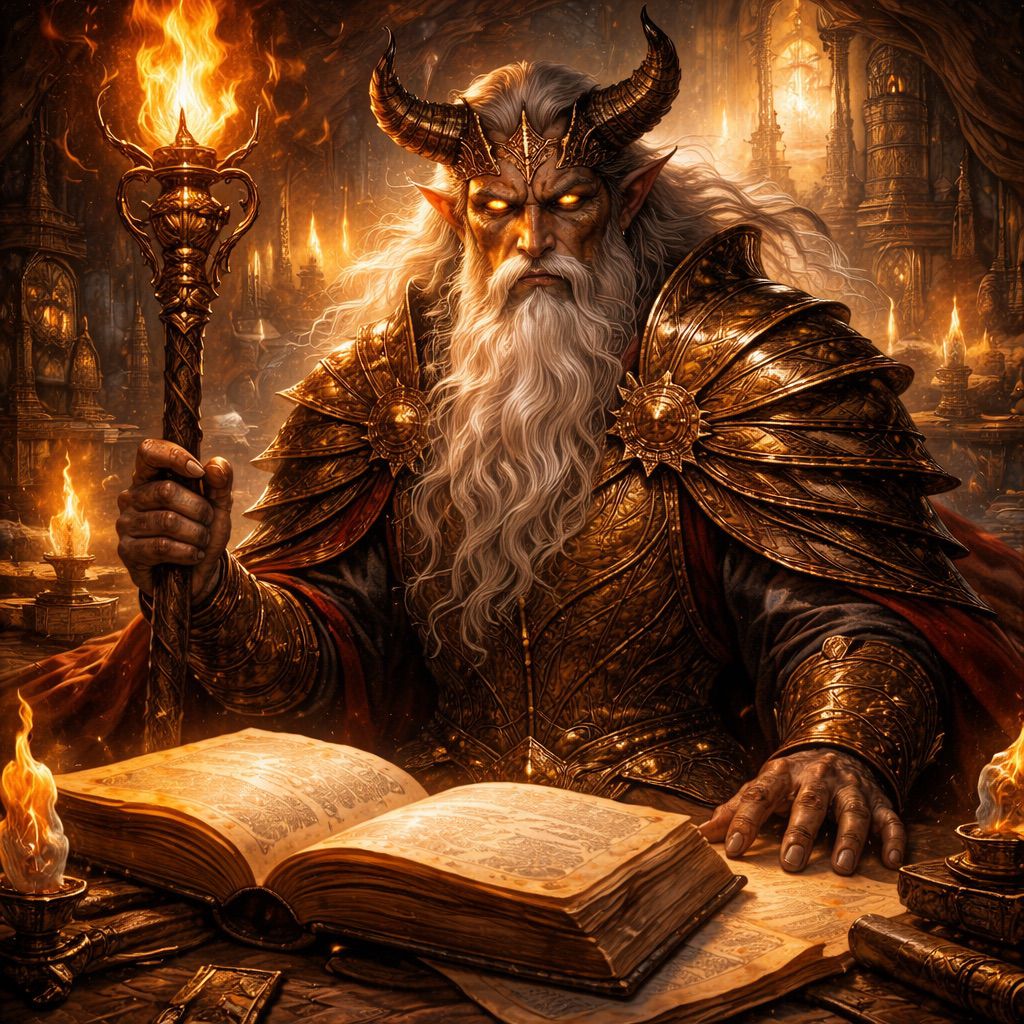
Alloces is a demon who does not hide what he is. He arrives armored, mounted, and ready, a figure of open confrontation rather than subtle corruption. In the Ars Goetia, Alloces is named as a Great Duke of Hell, commanding legions and appearing as a soldier riding a griffin, his voice hoarse and commanding. There is no ambiguity in this imagery. Alloces is not a demon of temptation or illusion. He is a demon of force, structure, and the cold intelligence that governs conflict long before the first blow is struck.

The griffin that carries Alloces is one of the most telling symbols in demonology. A creature with the body of a lion and the head and wings of an eagle, the griffin represents dominance over both land and sky, strength fused with vigilance. This is not a beast of chaos. It is a guardian, a sentinel, a creature built to command territory. Alloces does not rely on surprise. He relies on superiority of position.

Alloces is associated with the sciences of astronomy and astrology, but in a way that differs sharply from demons who use celestial knowledge for prophecy or manipulation. Under Alloces, astrology is tactical. It is timing, positioning, and probability. He teaches how celestial cycles influence morale, momentum, and the rise and fall of power. This knowledge is not meant to inspire awe. It is meant to be used.

War is central to Alloces’s identity, but not in the romantic sense. He is not a demon of heroic battle or glorious conquest. He governs warfare as a system. Logistics, command structures, discipline, and timing all fall within his domain. Alloces understands that wars are rarely won by passion. They are won by preparation.

The soldier imagery attached to Alloces reinforces this. Soldiers represent obedience to hierarchy, endurance under pressure, and acceptance of consequence. Alloces is not interested in individual brilliance. He is interested in coordinated force. This makes him especially dangerous, because his power scales. One soldier becomes a unit. A unit becomes an army.

Alloces’s hoarse voice is an often-overlooked detail in grimoires, but it matters. A hoarse voice suggests commands shouted over noise, repeated until they lose softness. It is the voice of someone who has spoken authority into chaos for a long time. Alloces does not whisper. He issues orders that must be heard.

Unlike demons who tempt individuals, Alloces influences groups. He governs how people organize themselves for conflict, how leadership asserts itself, and how dissent is crushed or redirected. Alloces is not interested in persuasion. He is interested in compliance.

Astrology under Alloces is not mystical fatalism. It is environmental awareness. He teaches how larger cycles influence human behavior en masse. When morale rises, when fear spreads, when resistance weakens. Alloces reads these patterns and exploits them. He does not change the stars. He times his movements to them.

This makes Alloces deeply relevant to political and military history. Every successful campaign has depended on timing, discipline, and exploitation of weakness. Alloces personifies that calculus. He is not the cause of war. He is the intelligence behind it.

Psychologically, Alloces represents the part of the human mind that values order over empathy. The belief that stability requires force, and that force must be organized to be effective. Alloces does not enjoy violence. He accepts it as necessary.

Unlike demons associated with treachery, Alloces values loyalty within hierarchy. Betrayal weakens structure. Alloces punishes it not out of moral outrage, but because it undermines efficiency. Under Alloces, loyalty is not emotional. It is functional.

Alloces also teaches liberal sciences alongside warfare, suggesting that he values educated command. Strategy requires understanding, not brute instinct. Alloces does not glorify ignorance. He weaponizes knowledge.

In modern symbolic terms, Alloces resembles the machinery of organized power: militaries, security apparatuses, and systems that prioritize order over individual freedom. He is not cruel for cruelty’s sake. He is efficient, and efficiency is indifferent.

What makes Alloces unsettling is that he feels reasonable. His logic is coherent. His priorities make sense within their framework. And that is exactly why he is dangerous. He demonstrates how easily order becomes oppression when efficiency is valued above humanity.

Alloces’s rank as a Duke reinforces his role as a regional power rather than a supreme ruler. He governs theaters, not empires. Campaigns, not ages. This makes him a demon of decisive moments rather than eternal domination.

He endures in demonology because conflict endures. As long as humans organize to impose will, there will be forces that refine how that organization works. Alloces is not the scream of battle. He is the plan written before it begins.

To engage with Alloces symbolically is to confront the truth that power favors those who prepare, organize, and strike at the right time. He does not offer victory without cost. He offers understanding of why victory happens at all.

Alloces is the demon of armored certainty, of command given without apology, of stars consulted not for wonder, but for advantage. He does not ask if force should be used. He ensures that when it is used, it works.

Related Posts