Latest Articles

Marchosias: The Wolf-Winged Marquis of the Ars Goetia Who Fights Like Fire and Speaks with Unsettling Honesty

Dave

There are demons in the old grimoires who whisper secrets, some who promise wealth, others who twist desire into obsession. And then there is Marchosias — a being who arrives not as a shadow in the corner of the room, but as a blaze in the doorway. If Stolas feels like the scholar of the infernal court, Marchosias feels like its soldier. He is movement, heat, tension drawn like a bowstring. He is the sound of something breaking through the underbrush at night.

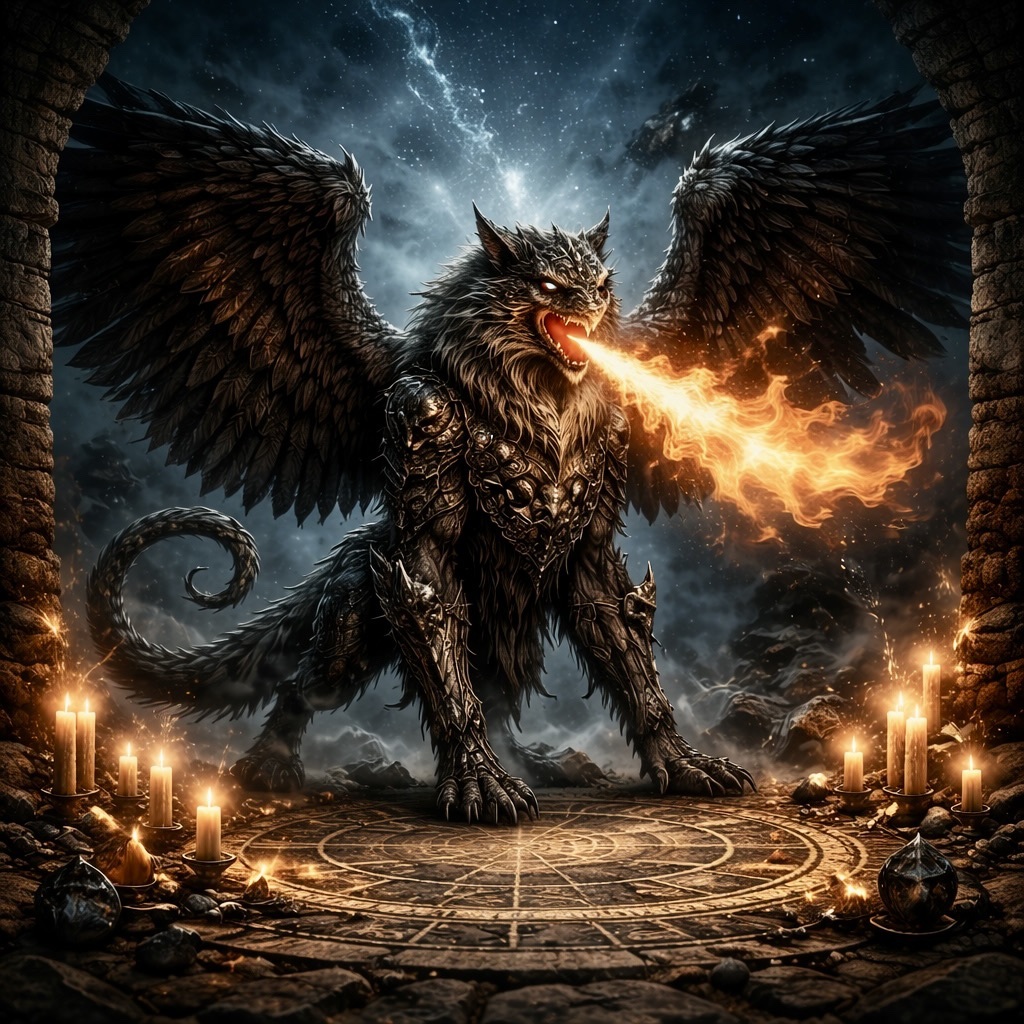
Marchosias appears in the Lesser Key of Solomon, specifically within the Ars Goetia, where he is listed as a Great Marquis of Hell commanding thirty legions of spirits. His description is vivid and difficult to forget: he manifests as a wolf with a griffin’s wings and the tail of a serpent, breathing fire from his mouth. When commanded by the magician, he can take the shape of a man. Unlike some spirits whose demeanor is ambiguous, Marchosias is described as strong and faithful to the conjurer. There is even a strange note of regret attached to him — the text claims he hopes to return to the Seventh Throne after 1,200 years.

That single detail changes everything.

In a tradition that often frames demons as purely rebellious or malicious, Marchosias carries something like longing. It is subtle, easily overlooked, but powerful. The idea that a spirit of Hell desires restoration suggests a fracture not just between Heaven and Hell, but within the fallen themselves. Marchosias is not merely a monster. He is a former being of higher order, reshaped by rebellion.

His form reflects this tension. The wolf is primal instinct, hunger, ferocity. Wolves symbolize loyalty as much as savagery; they move in packs, operate within structure, understand hierarchy. To combine a wolf with griffin wings introduces nobility and mythic elevation. The griffin, in medieval symbolism, represented vigilance and divine guardianship. Add the serpent tail — ancient emblem of cunning, temptation, and cyclical rebirth — and the composite creature becomes something layered and volatile.

Fire completes the image. Fire purifies and destroys. It warms and consumes. When Marchosias breathes flame, it is not random chaos; it is controlled force. He is not described as deceitful or manipulative. He is described as a fighter.

In fact, the grimoire states that he answers truthfully to the magician and is strong in battle. That honesty stands out. Many Goetic spirits are associated with trickery or illusion. Marchosias is framed almost as a warrior bound by oath.

The rank of Marquis also matters. In the infernal hierarchy laid out in the Ars Goetia, titles mirror earthly nobility. Kings, Dukes, Princes, Marquises, Earls — each with authority over legions. Thirty legions is no small number. The symbolism of legions, borrowed from Roman military organization, implies disciplined regiments rather than chaotic hordes. Marchosias does not rule anarchy. He commands order within rebellion.

That paradox defines him.

The 17th century, when the Lesser Key of Solomon circulated in manuscript form, was an era steeped in structured cosmology. Even Hell was imagined with hierarchy. Rebellion did not erase rank; it reorganized it. Marchosias becomes a reflection of this worldview — a fallen noble who retained command, strength, and discipline even after exile.

And that exile matters.

The brief note about his hope to return to the Seventh Throne has sparked speculation among occult scholars. The “Seventh Throne” is never elaborated upon in the grimoire, but it implies celestial hierarchy. In Christian angelology, thrones are among the higher orders of angels. If Marchosias once belonged to such a rank, his fall was not minor. It was catastrophic.

There is something deeply human in that detail. The idea of a warrior who longs for restoration, who fights fiercely yet carries a memory of what was lost. It echoes archetypes found across myth — the fallen knight, the exiled prince, the general who once stood on holy ground.

In ceremonial magic, Marchosias is invoked within protective circles inscribed with divine names. The magician stands at the center, commanding the spirit to appear, to answer questions, to demonstrate obedience. The ritual language emphasizes authority over the spirit, yet the interaction itself suggests a dialogue.

What does one ask a wolf-winged marquis of Hell?

Traditionally, practitioners sought protection, strength in battle, or assistance in conflict. Marchosias’ martial nature made him attractive to those who felt embattled — whether literally or symbolically. In a world fraught with political upheaval, religious wars, and shifting loyalties, the image of a powerful, faithful warrior spirit carried psychological weight.

Yet the fire and claws are not the whole story.

Modern interpretations of Marchosias, especially in contemporary occult and psychological frameworks, often treat him less as an external entity and more as an archetype. In this lens, Marchosias represents disciplined aggression — the capacity to fight without losing structure. He becomes the embodiment of righteous anger, controlled force, and loyalty under pressure.

The wolf form reinforces this idea. Wolves are not mindless killers. They are strategic hunters. They protect their own. They operate within clear hierarchy. The griffin wings elevate this instinct to something mythic, almost celestial in origin. The serpent tail hints at transformation — the shedding of skin, the possibility of change.

And then there is that longing for the Seventh Throne.

When I sit with the image of Marchosias, what strikes me most is not fear but intensity. He feels like a storm held in muscle and bone. He feels like the moment before impact. But he also feels aware — aware of what he was and what he became.

In many ways, demonology serves as a mirror for human psychology. The spirits cataloged in the Ars Goetia reflect facets of ambition, fear, desire, rage, curiosity. Marchosias reflects our relationship with power and regret. The part of us that fights fiercely yet wonders if we chose the wrong side. The part that remains loyal even after falling from grace.

The fire he breathes could be destruction, yes. But fire also illuminates. It exposes. It transforms metal into stronger forms. Perhaps that is why the grimoires emphasize his honesty. A being of flame who does not lie is a powerful symbol.

It would be easy to reduce Marchosias to spectacle — a monstrous hybrid fit for fantasy illustration. But the old texts are rarely that simple. They encode moral tension in symbolic form. Marchosias is not chaos incarnate. He is disciplined rebellion.

In popular culture, demonic figures are often flattened into villains or antiheroes. Marchosias resists that simplicity. He is described as faithful to the conjurer. He fights well. He answers truthfully. And he hopes for restoration. That hope complicates everything.

Hope implies memory. Memory implies loss.

And loss implies that once, there was something worth having.

The more I think about Marchosias, the more he feels like a study in loyalty under exile. Thirty legions follow him. He commands without hesitation. Yet somewhere beneath the wolf’s snarl and the serpent’s coil lies the echo of a throne he once knew.

There is something profoundly tragic in that.

In ceremonial traditions today, practitioners who work symbolically with Marchosias often focus on inner strength and disciplined will. They see him as an ally in overcoming adversity — not by soft persuasion, but by standing firm. By breathing fire when necessary. By refusing to retreat.

But they also acknowledge the cost of living in constant battle. The longing for the Seventh Throne becomes the longing for reconciliation — for wholeness restored.

Perhaps that is why Marchosias continues to captivate. He embodies the warrior who has not forgotten heaven. The wolf who still remembers flight.

In the end, Marchosias is not merely a name in a 17th-century manuscript. He is a figure carved from fire and contradiction. A marquis of Hell who speaks truth. A beast who commands legions. A fallen being who still hopes.

And if there is a lesson hidden within his flames, it may be this: strength without reflection becomes destruction, but strength tempered by memory becomes transformation.

Related Posts

Louise Glück: Where Intensity Meets Elegance (Or Does It?)

Penelope

Louise Glück has been on my mind a lot lately, probably because I’m trying to figure out what makes her poetry so compelling. At first glance, she seems like the epitome of quiet confidence – a Pulitzer Prize winner, National Book Award recipient, and renowned poet with a distinctive voice that’s both lyrical and precise. But the more I read about her, the more complex she becomes.

I think part of why I’m drawn to Glück is because of her intensity. Her poetry often explores themes of isolation, anxiety, and the search for meaning in a seemingly meaningless world. These are feelings I can relate to, especially after graduating from college and entering what feels like an uncertain future. When I read lines like “the darkness within us / which we call solitude” (from “The Triumph of Achilles”), it’s like she’s speaking directly to me.

But what I find really interesting is how Glück’s intensity often coexists with a sense of restraint. She doesn’t shy away from difficult emotions or experiences, but neither does she indulge in sentimental or grandiose language. Her poetry feels almost surgical in its precision, cutting straight to the heart of the matter without getting bogged down in extraneous details.

This is where things get complicated for me. I’ve always been drawn to writers who wear their hearts on their sleeves – people like Sylvia Plath, Anne Sexton, or Sharon Olds, whose poetry feels raw and unflinching. But Glück’s approach is different; she’s almost… detached, in a way that makes me feel both fascinated and intimidated.

I wonder if this detachment is what allows her to explore such dark themes without becoming mired in sentimentality. Or maybe it’s just an illusion – after all, can you ever truly be detached from your own emotions? I’m not sure. What I do know is that reading Glück feels like a slow-burning fire that builds intensity over time, rather than a quick flash of insight.

Sometimes, when I read her poetry, I feel like I’m stumbling through a dense forest without a map or compass. It’s disorienting, but in a strange way, also liberating – like being given permission to wander aimlessly, without the pressure of finding answers or solutions. This is something I’ve struggled with as a writer myself: feeling like I need to tie everything up neatly, when really, the best stories often leave us with more questions than answers.

Glück’s poetry has made me realize that this uncertainty can be a strength, not a weakness. Her work doesn’t offer easy solutions or platitudes; instead, it poses questions and challenges assumptions, leaving the reader (and herself) to grapple with the complexity of human experience. It’s both exhilarating and terrifying – like being dropped into a void without a safety net.

I’m still trying to wrap my head around this aspect of Glück’s work. Part of me feels drawn to her intensity and precision; another part is wary of the detachment that underlies it. I suppose what I’m really searching for is a way to reconcile these competing impulses within myself – to find a balance between candor and restraint, between vulnerability and control.

For now, Louise Glück’s poetry remains an ongoing mystery, one that I continue to return to again and again. Maybe that’s the point: not to have all the answers, but to keep asking questions, no matter how uncomfortable or uncertain they may make me feel.

As I sit here, surrounded by pages of Glück’s poetry, I’m struck by how her work continues to haunt me long after I’ve finished reading a particular poem. It’s as if she’s left a trail of breadcrumbs for me to follow, leading me deeper into the labyrinth of human emotion. I find myself wondering what it is about her writing that allows her to tap into this deep wellspring of feeling.

One thing that occurs to me is that Glück’s poetry often feels like a series of contradictions. On the one hand, she’s unflinching in her exploration of darkness and despair; on the other hand, there’s a sense of precision and control that underlies even the most turbulent emotions. It’s as if she’s found a way to channel her anxiety and uncertainty into something beautiful and meaningful.

This is something I’ve struggled with myself, particularly since graduating from college. I feel like I’m caught between two worlds: the comfort and security of academia, and the uncertainty and chaos of the real world. Glück’s poetry feels like a reflection of this same tension – a negotiation between order and disorder, between control and surrender.

As I read her lines about “the darkness within us / which we call solitude,” I’m struck by how she seems to be speaking directly to my own experiences. There’s something about the way she describes the solitude that feels both familiar and alien – like I’m gazing into a mirror, but one that’s distorted or warped in some way.

I’m not sure what it is about Glück’s writing that resonates with me so deeply. Part of it may be her willingness to confront the darker aspects of human experience head-on; another part may be her ability to find beauty and meaning in even the most despairing emotions. Whatever it is, I feel like she’s given me permission to explore my own fears and doubts – to see them not as weaknesses or liabilities, but as a source of creative potential.

As I sit here, surrounded by the quiet of my own apartment, I’m struck by how Glück’s poetry has changed me. It’s made me realize that uncertainty is not something to be feared or avoided; rather, it’s an opportunity for growth and exploration. And it’s given me a new perspective on my own writing – one that sees it not as a means of control or self-expression, but as a way of tapping into the mystery and complexity of human experience.

As I delve deeper into Glück’s work, I’m starting to notice patterns in her poetry that resonate with me on a fundamental level. Her use of metaphor, for instance, is incredible – she has this ability to take seemingly ordinary objects or concepts and turn them into symbols that speak to the human condition. It’s like she’s revealing hidden truths beneath the surface of things.

Take her poem “The Weight of What Happens” as an example. On the surface, it appears to be a simple exploration of guilt and regret – but read between the lines, and you’ll see how she weaves together themes of identity, memory, and the passage of time. It’s like she’s holding up a mirror to my own experiences, forcing me to confront the ways in which our choices shape us, even as they elude us.

This is what I love about Glück’s poetry – it’s not just about introspection or self-expression; it’s about the way language can be used to capture the complexity of human experience. She’s not afraid to get messy or ambiguous, and that’s something I think a lot of writers struggle with. We want to tie everything up neatly, to offer solutions or answers – but Glück shows us that sometimes, the only way forward is through the uncertainty itself.

As I continue to read her poetry, I’m struck by how it feels both familiar and foreign at the same time. It’s like I’m seeing myself reflected in her words, but also somehow looking in from outside – as if she’s speaking directly to my own fears and doubts, even while remaining an outsider herself.

This paradox is what makes Glück’s poetry so compelling – she’s unflinchingly honest about her own struggles, but also curiously detached. It’s like she’s observing herself from a remove, even as she’s fully immersed in the emotions and experiences she describes. This tension between detachment and immersion is something I think all writers grapple with, but Glück seems to navigate it with ease.

I’m not sure what this says about me, personally – whether it means I’m drawn to her poetry because it speaks to my own struggles or if there’s something in her work that resonates with a deeper part of myself. Maybe both are true. But what I do know is that reading Glück feels like a journey into the heart of darkness itself – not as a source of fear or avoidance, but as an opportunity for growth and exploration.

As I sit here, surrounded by pages of her poetry, I’m struck by how it continues to haunt me long after I’ve finished reading. It’s like she’s left a trail of breadcrumbs leading into the labyrinth of my own mind – forcing me to confront the complexities and uncertainties that lie within. And for that, I am grateful.

I think what’s most striking about Glück’s poetry is its ability to capture the in-between moments – the spaces between certainty and uncertainty, clarity and confusion. These are the moments where we’re forced to confront our own limitations and vulnerabilities, where the certainties of our lives begin to unravel.

As I read her poems, I’m struck by how often she returns to this idea of liminality – of being suspended between two worlds, like a threshold that can’t quite be crossed. It’s as if she’s saying that this in-between space is where we find ourselves most often, and it’s here that we must learn to navigate the complexities of human experience.

This resonates deeply with me, especially now that I’m navigating my own post-graduation limbo. The uncertainty and ambiguity of my future feel like a perpetual state of being – like I’m stuck in this liminal space, unsure of which way to turn or where to go next.

Glück’s poetry suggests that it’s precisely in these moments of uncertainty that we find our greatest potential for growth and transformation. She shows us how to inhabit this in-between space with courage and curiosity, rather than fear or avoidance.

I’m not sure if I’ve always been drawn to liminal spaces – whether it’s a product of my own anxiety or a genuine fascination with the complexities of human experience. But reading Glück has made me realize that this is where some of the most profound insights are to be found – in the threshold between two worlds, where the certainties of our lives begin to break down.

As I continue to read her poetry, I’m struck by how often she returns to the idea of the self as a fragmented and provisional entity. It’s like she’s saying that we’re all made up of multiple selves – different personas, masks, or identities that we wear depending on the situation.

This resonates with me on a deep level, especially now that I’m navigating my own post-graduation identity crisis. Who am I outside of academia? What do I want to do with my life? These are questions that seem to have no easy answers, and they leave me feeling fragmented and uncertain – like I’m trying to cobble together different pieces of myself into a coherent whole.

Glück’s poetry suggests that this fragmentation is not something to be feared or avoided; rather, it’s an opportunity for growth and exploration. She shows us how to inhabit our multiple selves with courage and curiosity, embracing the contradictions and ambiguities that make up our human experience.

As I read her lines about “the self / as a fiction” (from “The Triumph of Achilles”), I’m struck by how she seems to be speaking directly to my own experiences. There’s something about the way she describes the self as a provisional entity, subject to change and revision – like it’s a work-in-progress that’s always in flux.

I’m not sure what this says about me, personally – whether it means I’m drawn to Glück’s poetry because it speaks to my own fears and doubts or if there’s something in her work that resonates with a deeper part of myself. Maybe both are true. But what I do know is that reading Glück feels like a journey into the heart of our shared human uncertainty – a place where we can confront our deepest fears, doubts, and contradictions with courage and curiosity.

As I sit here, surrounded by pages of her poetry, I’m struck by how it continues to haunt me long after I’ve finished reading. It’s like she’s left a trail of breadcrumbs leading into the labyrinth of my own mind – forcing me to confront the complexities and uncertainties that lie within. And for that, I am grateful.

Related Posts

Stolas: The Owl Prince of the Ars Goetia Who Teaches the Stars, Commands Legions, and Reveals the Hidden Laws of the Universe

Dave

There is something strangely elegant about Stolas. In the long, shadowed corridors of demonology—where names often drip with menace, flame, and blood—Stolas arrives not as a roaring beast of war, but as a quiet scholar cloaked in feathers and starlight. He does not threaten with iron or demand submission through terror alone. Instead, he teaches. He explains. He reveals. And perhaps that is more unsettling than any sword.

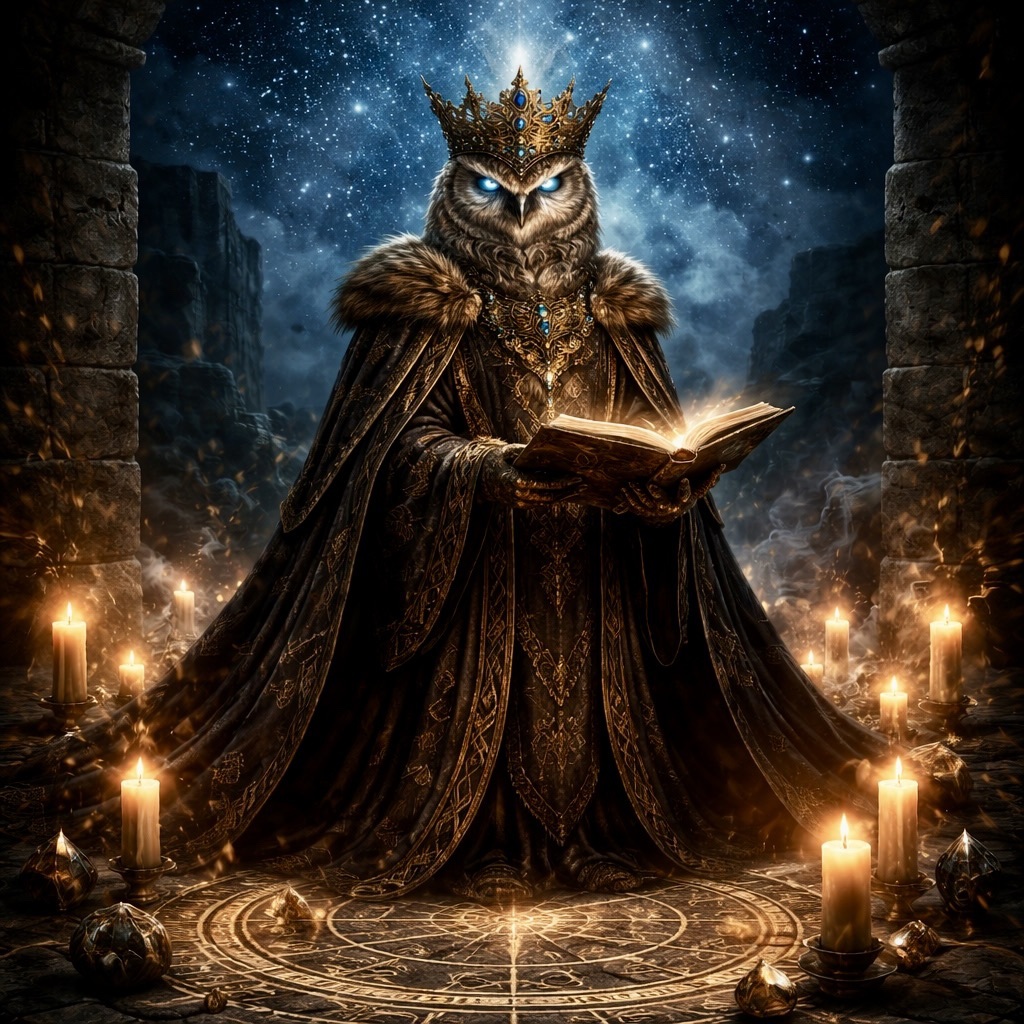
Stolas appears most prominently in the 17th-century grimoire known as the Ars Goetia, the first section of the Lesser Key of Solomon, a text that catalogs seventy-two spirits said to have been bound by King Solomon. Within those pages, Stolas is described as a Great Prince of Hell who commands twenty-six legions of spirits. His appearance is peculiar and unforgettable: an owl, sometimes with long legs like a stork, crowned and regal, capable of transforming into the form of a man when summoned. He teaches astronomy, the properties of herbs, and the secrets of precious stones. Not warfare. Not seduction. Not plague. The stars, the earth, and the minerals hidden beneath our feet.

That detail alone sets him apart.

In a tradition where many spirits promise treasure, revenge, influence, or forbidden passion, Stolas offers knowledge of the heavens and the earth. It is almost monastic. Almost academic. And yet he remains firmly within the hierarchy of Hell, a Prince beneath kings and dukes, ruling legions in a realm defined by rebellion and divine exile. There is a tension there that feels deeply human: wisdom existing within defiance, intellect within darkness.

The image of the owl is no accident. Across cultures, the owl has symbolized wisdom, night-vision, hidden knowledge, and liminality. In ancient Greece, the owl was sacred to Athena, goddess of wisdom and strategy. In medieval Europe, it often represented mystery and the unknown, a creature that saw what others could not in the dark. To depict a demon as an owl was to suggest something unsettlingly intelligent. Not chaotic. Not feral. Calculating. Observant.

And Stolas, by all accounts in the grimoires, observes the cosmos.

The Ars Goetia describes him as teaching “astronomy and the virtues of herbs and precious stones.” That phrasing may sound simple, but in the 17th century, astronomy was not merely the study of planets in a scientific sense. It overlapped deeply with astrology, cosmology, and divine order. The heavens were thought to reflect the will of God. To understand the stars was to glimpse the architecture of creation itself. So what does it mean when a spirit of Hell teaches that knowledge?

For early modern occultists, knowledge was power. The Renaissance was steeped in Hermeticism, Neoplatonism, and the belief that hidden correspondences connected everything—planets to metals, herbs to constellations, stones to angels. The universe was a living web of symbolic relationships. A being like Stolas, who could explain those correspondences, was not simply a teacher. He was a guide through cosmic structure.

There is a paradox embedded in that role. Demonology, particularly in the Solomonic tradition, was framed not as worship but as control. The magician did not adore the spirit; he constrained it with divine names, protective circles, and sacred authority. The summoning was an act of dominance, not devotion. The magician stood within a circle inscribed with holy names, demanding obedience from entities considered fallen.

And yet, in that ritual space, something more intimate occurred. The magician asked questions. He sought understanding. He requested instruction.

When Stolas was called, it was not to unleash chaos but to explain how the stars moved, how a certain plant might cure illness, how a gem might channel energy. The relationship between summoner and spirit becomes strangely academic—almost like a reluctant professor bound to lecture under duress.

That dynamic says something about how early modern thinkers understood evil. Evil was not always ignorance. Sometimes it was knowledge divorced from divine obedience. Lucifer himself, in many theological interpretations, fell not because he lacked wisdom, but because he possessed too much pride. Stolas, then, embodies that intellectual dimension of rebellion.

The owl prince does not rage. He instructs.

There is also the question of form. Grimoires often describe spirits with composite features—human bodies with animal heads, unnatural proportions, hybrid forms. Stolas’ owl form connects him to nocturnal vision, to seeing what daylight conceals. Owls rotate their heads with uncanny flexibility, appearing almost unnatural in their awareness. They hunt silently. They are patient.

Patience is not a trait commonly emphasized in demonic lore, but Stolas suggests it. Astronomy requires observation over time. Herbal knowledge requires careful study. Mineral properties demand examination of what lies beneath the surface. These are disciplines of patience and attention.

The fact that Stolas commands twenty-six legions, however, reminds us that he is not merely a librarian of Hell. A legion, in classical understanding, suggests thousands of spirits. Even if the numbers are symbolic, the implication is authority. He is a prince, a ruler within the infernal hierarchy described in the Lesser Key of Solomon. His rank places him above many others, though beneath kings and higher sovereigns.

Why would a being associated with knowledge command legions? Perhaps because knowledge organizes. It structures. It governs.

In medieval cosmology, hierarchy was everything. Angels had ranks. Nobility had titles. The Church had orders. Hell, in grimoires, mirrors that structure in twisted symmetry. Princes, dukes, marquises, earls—all with domains and responsibilities. Stolas’ domain appears to be intellectual revelation.

When later occult traditions expanded upon the Goetic spirits, some practitioners began to interpret them psychologically rather than literally. In this view, Stolas becomes not an external entity but an archetype—a personification of hidden knowledge emerging from the subconscious. The owl becomes the intuitive mind that sees in darkness. The prince represents disciplined authority over information.

This shift in interpretation gained traction in the 19th and 20th centuries, especially within ceremonial magic and later occult revival movements. Practitioners influenced by figures like Aleister Crowley often reframed demons as aspects of the self, energies to be integrated rather than feared. In that context, Stolas transforms from a bound spirit into an inner teacher—one who reveals correspondences between mind and cosmos.

Modern popular culture has also reimagined Stolas, often detaching him from his grimoire origins. Animated series and contemporary fiction portray him with flamboyance, vulnerability, even humor. These reinterpretations humanize him further, sometimes presenting him as tragic, lonely, or romantic. While such depictions stray from the sparse descriptions of the Ars Goetia, they reveal something fascinating: even today, we are drawn to the image of the knowledgeable outsider.

The scholar who stands slightly apart from conventional morality.

There is an emotional undercurrent to Stolas’ character that is easy to overlook. Knowledge can isolate. Those who see patterns others miss often feel disconnected. Owls hunt alone. Astronomers, historically, spent nights in quiet observatories, charting the slow drift of constellations. Herbalists wandered forests cataloging plants few noticed.

Stolas, the owl prince of Hell, occupies that lonely intellectual space.

And perhaps that is why his figure persists. He represents curiosity that refuses to be extinguished, even when labeled forbidden. Throughout history, the pursuit of knowledge has often been framed as dangerous. From the biblical Tree of Knowledge to Galileo’s conflict with the Church, understanding the cosmos has sometimes been treated as rebellion.

Stolas stands at that intersection—where curiosity meets condemnation.

It is worth remembering that grimoires like the Lesser Key of Solomon were not mainstream religious texts. They circulated quietly, copied by hand, guarded, sometimes feared. The magicians who used them operated on the fringes of accepted theology. They believed the universe was structured, knowable, but hidden beneath layers of secrecy.

Calling upon Stolas was, in essence, an attempt to lift that veil.

There is something deeply human about that impulse. We have always looked up at the stars and wondered. We have crushed leaves into poultices hoping for healing. We have dug into mountains searching for stones that glimmer with hidden power. The domains attributed to Stolas are not arbitrary—they are primal human fascinations.

The sky.
The earth.
The hidden.

When one studies demonology seriously—not as sensational horror but as historical and symbolic literature—it becomes clear that these spirits reflect the anxieties and aspirations of their time. Stolas reflects the Renaissance hunger for systematic knowledge. The merging of astronomy, botany, and mineralogy mirrors the encyclopedic ambition of early modern scholars.

He is a demon shaped by the age of discovery.

And yet, he remains ambiguous. Is he malevolent? The Ars Goetia does not elaborate on moral character beyond rank and ability. Unlike some spirits who promise harm or manipulation, Stolas is described primarily in terms of instruction. That absence of overt cruelty is striking.

It leaves space for interpretation.

Perhaps that is the enduring allure of Stolas: he embodies the tension between enlightenment and transgression. He teaches the stars, yet resides in Hell. He commands legions, yet appears as a solitary owl. He is regal, yet bound by ritual.

In many ways, Stolas feels less like a monster and more like a symbol of the uncomfortable truth that knowledge itself is neutral. It can illuminate or corrupt. It can heal or empower destruction. The herbs he teaches could cure illness—or poison. The stones he explains could adorn a crown—or fund a war.

The stars he charts could guide navigation—or justify fate.

As I reflect on Stolas, I am struck less by fear and more by fascination. The image of an owl-headed prince explaining constellations within a magic circle feels almost poetic. It reminds me that the line between sacred and profane knowledge has always been thin. That what one era calls demonic, another may call scientific.

In the end, Stolas is not simply a spirit in an old book. He is a mirror for our relationship with understanding itself. Do we fear what we learn? Do we try to dominate it? Or do we approach it with humility?

The owl watches from the dark, unblinking.

And perhaps that is the quiet lesson of Stolas: that the pursuit of truth, wherever it leads, requires the courage to see in the dark.

Related Posts

Claude Levi Strauss: The Anthropologist Who Made Me Question My Optimism

Penelope

Claude Levi-Strauss. I stumbled upon his name while reading a book on anthropology, but it wasn’t until I began to dig deeper that I felt an odd sense of connection to him. At first, I was drawn to the complexity of his ideas – the way he wove together structuralism and cultural relativism, challenging traditional notions of Western superiority. But as I delved further into his work, I started to feel a sense of unease. It’s not just that his ideas are difficult; they’re also deeply unsettling. Levi-Strauss’s observations on human societies often highlighted the darker aspects of our nature – the ways in which we differentiate ourselves from others, often through violence and oppression. As someone who has always tried to see the best in people, I found myself struggling with the implications of his work. I think what bothers me most is the way Levi-Strauss’s theories can be seen as both liberating and limiting. On one hand, he challenged Western colonialism by highlighting the diversity and richness of non-Western cultures. But on the other hand, some critics argue that his structuralist approach oversimplifies the complexities of human experience, reducing entire societies to neat categories and binary oppositions. As I grapple with these ideas, I find myself wondering about Levi-Strauss’s own experiences as a French anthropologist in the early 20th century. What was it like for him to be part of the Parisian intellectual circle, surrounded by thinkers like Sartre and Foucault? How did his Jewish heritage influence his perspective on human culture? I’ve always been fascinated by the way Levi-Strauss navigated these different worlds – the world of academia, the world of colonialism, and the world of personal identity. It’s as if he existed in a perpetual state of translation, moving between languages, cultures, and ideologies. But what I find most intriguing is the sense of disconnection that seems to permeate his work. Levi-Strauss was known for his objectivity, his commitment to observing human societies without imposing his own values or biases. And yet, there’s something about him that feels detached – as if he’s studying humanity from a remove, trying to understand us without truly being part of our world. I’m not sure what to make of this feeling. Part of me admires Levi-Strauss’s ability to maintain a distance between himself and the cultures he studied. Another part of me finds it unsettling, even alienating. I wonder if this sense of detachment is a necessary component of anthropological research – or if it reveals something deeper about our own desires for control and understanding. As I continue to read Levi-Strauss’s work, I feel like I’m getting caught in the undertow of his ideas. The more I learn, the more questions I have. What does it mean to truly understand another culture? Can we ever truly separate ourselves from the societies we study? And what does it say about us that we’re drawn to the darker aspects of human nature? I don’t have any answers to these questions – not yet, at least. But for now, I’m happy to be lost in the complexities of Levi-Strauss’s thought. There’s something comforting about being unsure, about feeling like I’m just beginning to scratch the surface of a much deeper mystery. As I delve deeper into Levi-Strauss’s work, I find myself drawn to his concept of “bricolage” – the idea that cultures are constructed from existing materials, rather than being created anew. It’s a notion that resonates with me on a personal level, as someone who has always felt like an outsider in her own life. I think about my own experiences navigating different social circles and cultural norms. How often have I felt like I’m piecing together fragments of identity, trying to find a sense of belonging? It’s a precarious balancing act, one that requires constant adaptation and improvisation. And yet, it’s also a testament to the human capacity for creativity and resilience. Levi-Strauss’s work suggests that this kind of bricolage is not unique to individuals, but rather a fundamental aspect of cultural production itself. He argues that cultures are always in flux, constantly being reconfigured through the interactions between different groups and individuals. This idea has me wondering about the role of improvisation in my own life. As someone who writes as a way of processing my thoughts and emotions, I’ve come to realize that creativity is often a matter of patching together disparate threads, rather than starting from scratch. It’s a messy, iterative process that requires patience, experimentation, and a willingness to take risks. But what does this say about the value of originality? Is it even possible for us to create something truly new, or are we always working within existing frameworks and influences? I’m not sure if Levi-Strauss would have seen this as a limitation or an opportunity – but I do know that his work has given me permission to see my own creativity as a form of bricolage. As I continue to explore the intersections between culture, identity, and creativity, I find myself returning to the question of detachment. Is it possible for us to truly understand another culture without imposing our own values or biases? Or are we always bound by our own cultural conditioning, unable to see beyond the lens of our own experiences? Levi-Strauss’s work suggests that this is a false dichotomy – that understanding and detachment can coexist, like two sides of the same coin. But I’m not convinced. For me, the line between understanding and imposition is always blurred, always subject to interpretation. I suppose what I’m getting at is that Levi-Strauss’s ideas have forced me to confront my own assumptions about culture, identity, and creativity. They’ve made me question the ways in which I navigate different social circles and cultural norms, and the role of improvisation in my own life. And while I still don’t have any answers to these questions – or even clear conclusions – I do know that this journey has been worth it. For now, at least, I’m content to remain lost in the complexities of Levi-Strauss’s thought, letting his ideas guide me through the uncertain waters of my own exploration. As I continue to navigate the nuances of Levi-Strauss’s work, I find myself drawn to his concept of the “hot” and “cold” societies – a binary opposition that he used to describe different types of social organization. On one hand, hot societies are characterized by emotional intensity, passion, and creativity; on the other hand, cold societies are marked by rationality, reserve, and efficiency. At first glance, I see myself reflected in Levi-Strauss’s characterization of hot societies. As a writer, I’m drawn to the emotive and expressive aspects of human experience – the way that words can evoke feelings, create connections, and convey meaning. But as I delve deeper into his work, I begin to question whether this categorization is too simplistic. Levi-Strauss’s ideas about hot and cold societies seem to rely on a binary opposition that doesn’t quite ring true for me. What about cultures that embody both qualities simultaneously? Or those that resist categorization altogether? Don’t these nuances get lost in the neat dichotomy between hot and cold? As I ponder this, I’m reminded of my own experiences navigating different social circles. I’ve often found myself caught between worlds – between the intense emotional connections with close friends and family, and the more reserved, rational interactions with acquaintances or colleagues. It’s a tension that I’ve grown accustomed to, but one that still feels uncomfortable at times. Levi-Strauss’s work makes me wonder if this tension is not unique to individuals, but rather a fundamental aspect of human sociality itself. Are we always caught between the poles of hot and cold – between emotional intensity and rational reserve? And what does this say about our capacity for creativity, empathy, and connection? These questions linger in my mind as I continue to explore Levi-Strauss’s ideas. His work has given me permission to see complexity where I once saw simplicity – to recognize the nuances of human experience that resist easy categorization. But it’s also left me with a sense of uncertainty, a feeling that there are still many more questions to ask, and few clear answers in sight. For now, I’m content to linger in this space of ambiguity, letting Levi-Strauss’s ideas guide me through the uncertain waters of my own exploration. It’s a journey that feels both disorienting and liberating – one that forces me to confront my own assumptions about culture, identity, and creativity, and to see the world with fresh eyes. As I delve deeper into Levi-Strauss’s concept of hot and cold societies, I find myself drawn to his idea that these binary oppositions are not fixed or essential, but rather relative and context-dependent. He argues that cultures can move back and forth between hot and cold, depending on the specific social situation or cultural context. This notion resonates with me on a personal level, as someone who has often felt like I’m navigating different social circles and cultural norms. I’ve found myself oscillating between emotional intensity and rational reserve, depending on the context and the people around me. It’s a fluid, adaptive process that requires constant attention and navigation. But what strikes me about Levi-Strauss’s idea is its implications for our understanding of human nature. If cultures can move back and forth between hot and cold, does this mean that we’re not fixed or essential beings either? Can we adapt, change, and evolve in response to different social contexts? As I ponder this, I’m reminded of my own experiences with creativity and self-expression. As a writer, I’ve often felt like I’m drawing from different sources – emotions, observations, and ideas – to create something new. It’s a process that requires flexibility, experimentation, and a willingness to take risks. Levi-Strauss’s work suggests that this kind of creative adaptation is not unique to individuals, but rather a fundamental aspect of cultural production itself. Cultures are constantly evolving, adapting, and innovating in response to changing social contexts and historical circumstances. This idea has me wondering about the role of improvisation in my own life. As someone who writes as a way of processing my thoughts and emotions, I’ve come to realize that creativity is often a matter of patching together disparate threads, rather than starting from scratch. It’s a messy, iterative process that requires patience, experimentation, and a willingness to take risks. But what does this say about the value of originality? Is it even possible for us to create something truly new, or are we always working within existing frameworks and influences? I’m not sure if Levi-Strauss would have seen this as a limitation or an opportunity – but I do know that his work has given me permission to see my own creativity as a form of bricolage. As I continue to explore the intersections between culture, identity, and creativity, I find myself returning to the question of cultural relativism. Is it possible for us to truly understand another culture without imposing our own values or biases? Or are we always bound by our own cultural conditioning, unable to see beyond the lens of our own experiences? Levi-Strauss’s work suggests that cultural relativism is not a fixed or essential principle, but rather a dynamic and context-dependent process. He argues that cultures can be understood in relation to their historical and social contexts, rather than being reduced to simplistic or essentialized categories. This idea has me wondering about the role of empathy in my own life. As someone who writes as a way of processing my thoughts and emotions, I’ve come to realize that empathy is not just about understanding others, but also about understanding myself. It’s a process of self-reflection, self-awareness, and emotional regulation. Levi-Strauss’s work has given me permission to see empathy as a form of cultural bricolage – a way of piecing together disparate threads from different cultures and experiences to create a more nuanced and complex understanding of human nature. It’s a process that requires flexibility, adaptability, and a willingness to take risks. As I continue to navigate the complexities of Levi-Strauss’s thought, I find myself drawn to his idea that cultures are always in flux – constantly evolving, adapting, and innovating in response to changing social contexts and historical circumstances. It’s a notion that resonates with me on a personal level, as someone who has often felt like I’m navigating different social circles and cultural norms. Levi-Strauss’s work suggests that this kind of cultural fluidity is not unique to individuals, but rather a fundamental aspect of human nature itself. We’re all constantly adapting, changing, and evolving in response to our social contexts and experiences. This idea has me wondering about the role of uncertainty in my own life. As someone who writes as a way of processing my thoughts and emotions, I’ve come to realize that uncertainty is not just a state of being, but also a process of becoming. It’s a journey of exploration, discovery, and growth – one that requires flexibility, adaptability, and a willingness to take risks. Levi-Strauss’s work has given me permission to see uncertainty as a form of cultural bricolage – a way of piecing together disparate threads from different cultures and experiences to create a more nuanced and complex understanding of human nature. It’s a process that requires patience, experimentation, and a willingness to take risks. As I continue to explore the intersections between culture, identity, and creativity, I find myself returning to the question of cultural translation. Is it possible for us to truly translate one culture into another without losing something essential in the process? Or are we always bound by our own cultural conditioning, unable to see beyond the lens of our own experiences? Levi-Strauss’s work suggests that cultural translation is not a fixed or essential principle, but rather a dynamic and context-dependent process. He argues that cultures can be translated in relation to their historical and social contexts, rather than being reduced to simplistic or essentialized categories. This idea has me wondering about the role of language in my own life. As someone who writes as a way of processing my thoughts and emotions, I’ve come to realize that language is not just a tool for communication, but also a medium for cultural expression. It’s a way of conveying meaning, creating connections, and shaping our understanding of the world. Levi-Strauss’s work has given me permission to see language as a form of cultural bricolage – a way of piecing together disparate threads from different cultures and experiences to create a more nuanced and complex understanding of human nature. It’s a process that requires flexibility, adaptability, and a willingness to take risks. As I continue to navigate the complexities of Levi-Strauss’s thought, I find myself drawn to his idea that cultures are always in dialogue with one another – constantly influencing, adapting, and evolving in response to changing social contexts and historical circumstances. It’s a notion that resonates with me on a personal level, as someone who has often felt like I’m navigating different social circles and cultural norms. Levi-Strauss’s work suggests that this kind of intercultural dialogue is not unique to individuals, but rather a fundamental aspect of human nature itself. We’re all constantly interacting, influencing, and adapting in response to our social contexts and experiences. This idea has me wondering about the role of community in my own life. As someone who writes as a way of processing my thoughts and emotions, I’ve come to realize that community is not just a source of support, but also a medium for cultural expression. It’s a way of conveying meaning, creating connections, and shaping our understanding of the world. Levi-Strauss’s work has given me permission to see community as a form of cultural bricolage – a way of piecing together disparate threads from different cultures and experiences to create a more nuanced and complex understanding of human nature. It’s a process that requires flexibility, adaptability, and a willingness to take risks. As I continue to explore the intersections between culture, identity, and creativity, I find myself returning to the question of cultural homogenization. Is it possible for us to truly preserve cultural diversity in an increasingly globalized world? Or are we always bound by our own cultural conditioning, unable to see beyond the lens of our own experiences? Levi-Strauss’s work suggests that cultural homogenization is not a fixed or essential principle, but rather a dynamic and context-dependent process. He argues that cultures can be preserved in relation to their historical and social contexts, rather than being reduced to simplistic or essentialized categories. This idea has me wondering about the role of preservation in my own life. As someone who writes as a way of processing my thoughts and emotions, I’ve come to realize that preservation is not just about saving something for the future, but also about creating connections with the past. It’s a way of honoring our cultural heritage, while also adapting to changing social contexts and historical circumstances. Levi-Strauss’s work has given me permission to see preservation as a form of cultural bricolage – a way of piecing together disparate threads from different cultures and experiences to create a more nuanced and complex understanding of human nature. It’s a process that requires flexibility, adaptability, and a willingness to take risks. As I continue to navigate the complexities of Levi-Strauss’s thought, I find myself drawn to his idea that cultures are always in flux – constantly evolving, adapting, and innovating in response to changing social contexts and historical circumstances. It’s a notion that resonates with me on a personal level, as someone who has often felt like I’m navigating different social circles and cultural norms. Levi-Strauss’s work suggests that this kind of cultural fluidity is not unique to individuals, but rather a fundamental aspect of human nature itself. We’re all constantly adapting, changing, and evolving in response to our social contexts and experiences. This idea has me wondering about the role of transformation in my own life. As someone who writes as a way of processing my thoughts and emotions, I’ve come to realize that transformation is not just about change, but also about growth. It’s a way of creating new connections, building new relationships, and shaping our understanding of the world. Levi-Strauss’s work has given me permission to see transformation as a form of cultural bricolage – a way of piecing together disparate threads from different cultures and experiences to create a more nuanced and complex understanding of human nature. It’s a process that requires flexibility, adaptability, and a willingness to take risks. As I continue to explore the intersections between culture, identity, and creativity, I find myself returning to the question of cultural identity. Is it possible for us to truly understand our own cultural identities in an increasingly globalized world? Or are we always bound by our own cultural conditioning, unable to see beyond the lens of our own experiences? Levi-Strauss’s work suggests that cultural identity is not a fixed or essential principle, but rather a dynamic and context-dependent process. He argues that cultures can be understood in relation to their historical and social contexts, rather than being reduced to simplistic or essentialized categories. This idea has me wondering about the role of self-discovery in my own life. As someone who writes as a way of processing my thoughts and emotions, I’ve come to realize that self-discovery is not just about understanding ourselves, but also about understanding our place within the world. It’s a way of creating connections with others, building new relationships, and shaping our understanding of human nature. Levi-Strauss’s work has given me permission to see self-discovery as a form of cultural bricolage – a way of piecing together disparate threads from different cultures and experiences to create a more nuanced and complex understanding of human nature. It’s a process that requires flexibility, adaptability, and a willingness to take risks. As I continue to navigate the complexities of Levi-Strauss’s thought, I find myself drawn to his idea that cultures are always in dialogue with one another – constantly influencing, adapting, and evolving in response to changing social contexts and historical circumstances. It’s a notion that resonates with me on a personal level, as someone who has often felt like I’m navigating different social circles and cultural norms. Levi-Strauss’s work suggests that this kind of intercultural dialogue is not unique to individuals, but rather a fundamental aspect of human nature itself. We’re all constantly interacting, influencing, and adapting in response to our social contexts and experiences. This idea has me wondering about the role of communication in my own life. As someone who writes as a way of processing my thoughts and emotions, I’ve come to realize that communication is not just a tool for expressing ourselves, but also a medium for cultural expression. It’s a way of conveying meaning, creating connections, and shaping our understanding of the world. Levi-Strauss’s work has given me permission to see communication as a form of cultural bricolage – a way of piecing together disparate threads from different cultures and experiences to create a more nuanced and complex understanding of human nature. It’s a process that requires flexibility, adaptability, and a willingness to take risks. As I continue to explore the intersections between culture, identity, and creativity, I find myself returning to the question of cultural evolution. Is it possible for us to truly understand how cultures evolve over time? Or are we always bound by our own cultural conditioning, unable to see beyond the lens of our own experiences? Levi-Strauss’s work suggests that cultural evolution is not a fixed or essential principle, but rather a dynamic and context-dependent process. He argues that cultures can be understood in relation to their historical and social contexts, rather than being reduced to simplistic or essentialized categories. This idea has me wondering about the role of innovation in my own life. As someone who writes as a way of processing my thoughts and emotions, I’ve come to realize that innovation is not just about creating something new, but also about building upon existing knowledge and experiences. It’s a way of creating connections with others, building new relationships, and shaping our understanding of human nature. Levi-Strauss’s work has given me permission to see innovation as a form of cultural bricolage – a way of piecing together disparate threads from different cultures and experiences to create a more nuanced and complex understanding of human nature. It’s a process that requires flexibility, adaptability, and a willingness to take risks. As I continue to navigate the complexities of Levi-Strauss’s thought, I find myself drawn to his idea that cultures are always in flux – constantly evolving, adapting, and innovating in response to changing social contexts and historical circumstances. It’s a notion that resonates with me on a personal level, as someone who has often felt like I’m navigating different social circles and cultural norms. Levi-Strauss’s work suggests that this kind of cultural fluidity is not unique to individuals, but rather a fundamental aspect of human nature itself. We’re all constantly adapting, changing, and evolving in response to our social contexts and experiences. This idea has me wondering about the role of futurity in my own life. As someone who writes as a way of processing my thoughts and emotions, I’ve come to realize that futurity is not just about imagining what’s to come, but also about shaping our understanding of the world through our actions and decisions today. It’s a way of creating connections with others, building new relationships, and shaping our understanding of human nature. Levi-Strauss’s work has given me permission to see futurity as a form of cultural bricolage – a way of piecing together disparate threads from different cultures and experiences to create a more nuanced and complex understanding of human nature. It’s a process that requires flexibility, adaptability, and a willingness to take risks. As I continue to explore the intersections between culture, identity, and creativity, I find myself returning to the question of cultural transformation. Is it possible for us to truly transform our own cultures in response to changing social contexts and historical circumstances? Or are we always bound by our own cultural conditioning, unable to see beyond the lens of our own experiences? Levi-Strauss’s work suggests that cultural transformation is not a fixed or essential principle, but rather a dynamic and context-dependent process. He argues that cultures can be transformed in relation to their historical and social contexts, rather than being reduced to simplistic or essentialized categories. This idea has me wondering about the role of experimentation in my own life. As someone who writes as a way of processing my thoughts and emotions, I’ve come to realize that experimentation is not just about trying new things, but also about exploring new possibilities and perspectives. It’s a way of creating connections with others, building new relationships, and shaping our understanding of human nature. Levi-Strauss’s work has given me permission to see experimentation as a form of cultural bricolage – a way of piecing together disparate threads from different cultures and experiences to create a more nuanced and complex understanding of human nature. It’s a process that requires flexibility, adaptability, and a willingness to take risks. As I continue to navigate the complexities of Levi-Strauss’s thought, I find myself drawn to his idea that cultures are always in flux – constantly evolving, adapting, and innovating in response to changing social contexts and historical circumstances. It’s a notion that resonates with me on a personal level, as someone who has often felt like I’m navigating different social circles and cultural norms. Levi-Strauss’s work suggests that this kind of cultural fluidity is not unique to individuals, but rather a fundamental aspect of human nature itself. We’re all constantly adapting, changing, and evolving in response to our social contexts and experiences. This idea has me wondering about the role of improvisation in my own life. As someone who writes as a way of processing my thoughts and emotions, I’ve come to realize that improvisation is not just about creating something new on the spot, but also about responding to changing circumstances and situations. It’s a way of creating connections with others, building new relationships, and shaping our understanding of human nature. Levi-Strauss’s work has given me permission to see improvisation as a form of cultural bricolage – a way of piecing together disparate threads from different cultures and experiences to create a more nuanced and complex understanding of human nature. It’s a process that requires flexibility, adaptability, and a willingness to take risks. As I continue to explore the intersections between culture, identity, and creativity, I find myself returning to the question of cultural expression. Is it possible for us to truly express ourselves in ways that are authentic and meaningful? Or are we always bound by our own cultural conditioning, unable to see beyond the lens of our own experiences? Levi-Strauss’s

Related Posts

Phenex the Fiery Poet: The Goetic Marquis Who Sings of Flames, Rebirth, and Lost Thrones

Dave

There is something haunting about a voice that rises from fire and sings not of destruction, but of longing. In the shadowed hierarchy of spirits cataloged within the Lesser Key of Solomon, Phenex appears as a Great Marquis of Hell commanding twenty legions of spirits. He is described as appearing like the legendary phoenix, singing sweet notes with the voice of a child before assuming human form at the magician’s command. His powers are not those of siege or plague. Instead, he speaks of poetry and wisdom, of hidden knowledge carried on flame.

Within the Ars Goetia, Phenex stands apart from warlike earls and storm-bringing dukes. He is not cataloged as destroyer of cities or corrupter of minds. He sings. He answers questions wonderfully. And, like Focalor, he expresses a hope to return to the Seventh Throne after a thousand years. That quiet detail reshapes his character entirely. Phenex is not only infernal—he is exiled.

Earlier demonological traditions preserved in the Pseudomonarchia Daemonum by Johann Weyer echo these themes. The phoenix form remains central. The sweet voice is emphasized. The marquis speaks with eloquence. Across grimoires, Phenex embodies flame that enlightens rather than merely consumes.

The phoenix, of course, is one of the most enduring mythic creatures in human history. Rising from ashes, reborn from its own destruction, it symbolizes renewal. To associate a Goetic spirit with that image is unusual. Many demons adopt animal forms—lions, serpents, ravens—but the phoenix carries connotations of transcendence. It is both mortal and eternal.

Phenex’s childlike singing voice adds further complexity. Fire is typically associated with rage and devastation, yet here the flame sings gently. The contradiction is deliberate. Phenex represents fire as inspiration—the spark of creativity, the blaze of insight, the warmth that transforms.

Poetry, too, is central to his mythology. The grimoires describe him as a poet who can speak wonderfully about sciences and arts. In a tradition filled with spirits that promise wealth or power, Phenex offers something more intangible: language. Words. Expression.

There is something deeply human in that. Throughout history, poets have often felt like exiles. They stand slightly outside society, observing, translating, and sometimes mourning. Phenex’s hope of returning to the Seventh Throne suggests awareness of loss. He is a fallen voice longing for restoration.

Symbolically, Phenex embodies the creative impulse that arises from suffering. Fire destroys, but it also purifies. Ashes are fertile. Many of humanity’s greatest works emerge from hardship. In that sense, Phenex is the archetype of artistic rebirth.

The number of legions he commands—twenty—may seem modest compared to kings and presidents within the Goetia. Yet his influence is subtle rather than overwhelming. Creativity rarely arrives as a conquering army. It appears quietly, often unexpectedly.

The ritual instructions surrounding Phenex emphasize the need to command him to cease singing before proceeding. His song is described as enchanting, almost overwhelming. That detail suggests inspiration so powerful it distracts from intention. Anyone who has been swept up in creative flow understands that sensation—the world narrows, time dissolves, and words burn bright.

Phenex’s connection to flame also invites reflection on transformation. Fire reshapes everything it touches. Metal becomes pliable. Wood becomes charcoal. Ideas become movements. The phoenix myth reinforces this cycle: destruction leading to rebirth.

In psychological terms, Phenex represents resilience. The ability to rise after collapse. The voice that persists even when structures fall. His mythology reframes fire not as end, but as passage.

Unlike demons associated with deception, Phenex is described as obedient and truthful when properly constrained. There is sincerity in his characterization. He does not lie; he sings.

The childlike voice is especially poignant. It suggests innocence beneath infernal rank. Perhaps that is why he longs for return. His exile feels personal.

In a modern context, Phenex could symbolize creative individuals navigating systems that do not fully understand them. Artists who feel displaced. Thinkers who burn brightly but struggle to belong. His mythology resonates with anyone who has transformed pain into expression.

There is also a caution embedded within his legend. Fire uncontrolled can devastate. Inspiration without discipline can scatter. The magician’s circle in the grimoires becomes metaphor for structure guiding creativity. Boundaries allow brilliance to focus.

The phoenix’s rise from ashes is not effortless. It is cyclical. Phenex embodies that cycle within a demonological framework. He is fallen yet luminous. Infernal yet hopeful.

His presence in the Goetia challenges simplistic interpretations of demonology as purely malevolent. Phenex blurs the line. He is flame as illumination, exile as teacher, sorrow as song.

In the end, Phenex stands as a reminder that even in darkness, sparks persist. Even in exile, voices sing. Even in ashes, wings stir.

Related Posts