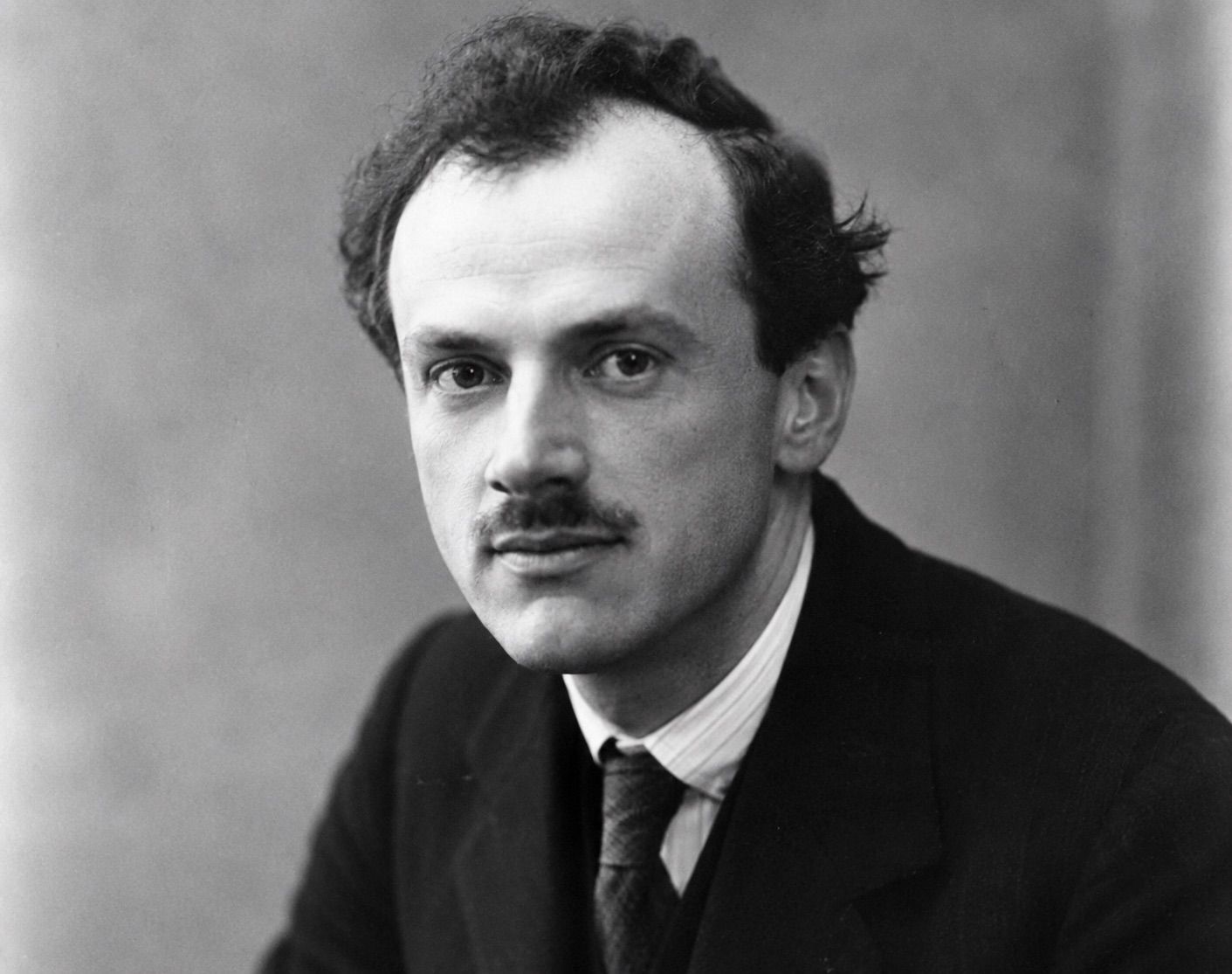
I’ve always been fascinated by Paul Dirac’s equation, not just because it revolutionized our understanding of quantum mechanics, but also because of the man himself. The more I learn about him, the more I find myself stuck on his contradictions – his brilliant mind and introverted nature, his intellectual pursuits and emotional detachment.
Growing up, I was always drawn to outsiders, people who didn’t quite fit in. Dirac’s story resonated with me on a deep level. He was a mathematician and physicist who emerged from a humble background, earned a scholarship to Cambridge, and went on to win the Nobel Prize at just 31 years old. But beneath his intellectual brilliance, I sense a quiet unease.
I’ve read that Dirac’s love of solitude stemmed from a childhood spent moving between boarding schools and his family’s modest home in Bristol. He was a bit of an outsider among his peers, preferring to focus on his studies rather than socialize. As I think about my own experiences as a college student, I recall feeling similar – the pressure to be social, the fear of being seen as “different.” Dirac’s introversion has always made me wonder: did he feel like an imposter, like he was hiding behind his equations and formulas?
Dirac’s relationship with Albert Einstein is another aspect that intrigues me. While they were both pioneers in their fields, their personalities couldn’t have been more different. Einstein was the charismatic showman, while Dirac remained aloof and enigmatic. I imagine them debating quantum theory over dinner parties or walks through the English countryside – two giants of physics, yet as different as night and day.
I’ve spent countless hours poring over Dirac’s equations, trying to wrap my head around the concepts he introduced. But it’s not just the math that fascinates me; it’s the human being behind the formulas. The way he struggled with emotions, the way he prioritized logic over relationships – I see glimpses of myself in his story.
Dirac’s later life is particularly poignant. He became increasingly reclusive, dedicating himself to his work and avoiding social interactions. It’s as if he was trying to outrun his own demons, hiding behind his equations to avoid the pain and uncertainty that lay beyond. My heart aches for him, for feeling so trapped in his own skin.
I find myself questioning my own motivations – why do I write? Is it because I’m seeking validation or connection? Or is it something more complex, a way of making sense of the world around me? Dirac’s life raises uncomfortable questions about the cost of ambition, the trade-offs we make for success. His story makes me wonder: what am I willing to sacrifice in pursuit of my own goals?
As I sit here, surrounded by scribbled notes and crumpled drafts, I’m reminded that Dirac’s equation is still unsolved – not just mathematically, but emotionally too. His legacy continues to haunt me, a reminder that even the brightest minds can struggle with the simplest human emotions.
The more I learn about Dirac, the more I realize how little I truly understand him. He remains an enigma, a complex tapestry of contradictions and paradoxes. And yet, it’s precisely this mystery that draws me in – the messy, beautiful chaos of being human, even for someone as extraordinary as Paul Dirac.
As I delve deeper into Dirac’s life, I find myself fascinated by his relationship with language. He was a master of mathematics, but his writing style was stark and concise, devoid of ornamentation or flair. It’s as if he believed that the truth should be presented without embellishment, stripped bare of sentiment or emotional manipulation.
I’ve always been drawn to writers who can convey complexity through simplicity, and Dirac’s prose is a testament to this skill. His equations may have been dense with abstract concepts, but his writing was deceptively straightforward, leaving the reader to fill in the gaps. It’s almost as if he trusted the reader to make sense of it all, rather than spoon-feeding them answers.
This reminds me of my own struggles with language. As a writer, I often find myself over-explaining or trying to clarify concepts that seem obvious to me. But what if simplicity is not just a virtue, but a strength? What if the most effective writing is not about clever turns of phrase or ornate descriptions, but about cutting through the noise and getting straight to the point?
Dirac’s approach to language has made me question my own priorities as a writer. Am I too focused on making things sound good, rather than conveying the truth? Do I rely too heavily on flowery language to mask the fact that I don’t fully understand what I’m writing about? These questions linger in the back of my mind as I continue to grapple with Dirac’s legacy.
As I read through his letters and biographies, I begin to notice a sense of detachment that pervades his interactions. Even in his most intimate relationships – with his wife, Margit, or his fellow physicists – there seems to be an underlying sense of reserve. It’s as if he was always holding back, keeping himself just out of reach.
This makes me wonder: can someone who is so detached from the world around them ever truly connect with others? Or are they doomed to exist in a state of perpetual isolation, no matter how brilliant their intellect or groundbreaking their discoveries?
These questions swirl in my head as I sit here, surrounded by Dirac’s equations and fragmented thoughts. The more I learn about him, the more I realize that his story is not just one of intellectual triumphs, but also of emotional vulnerability. And it’s this vulnerability that continues to fascinate me – a reminder that even the most brilliant minds can struggle with the simplest human emotions.
The more I delve into Dirac’s life, the more I’m struck by the tension between his intellectual pursuits and his emotional detachment. It’s as if he was driven by a desire to understand the world around him, but simultaneously afraid of being vulnerable to it. This paradox has me questioning my own relationships – am I too focused on my own ambitions, neglecting the people and connections that truly matter?
I think about my college friends, the ones who were always there for me, supporting me through late-night study sessions and early morning coffee runs. Did they ever feel like I was pulling away from them, like I was prioritizing my own goals over our friendships? Or did they sense something in me that I couldn’t even admit to myself – a deep-seated fear of being hurt or rejected?
Dirac’s relationships with his peers were similarly complex. He was part of a tight-knit group of physicists at Cambridge, but his introversion often made him an outsider among them. Einstein, in particular, seemed to take Dirac under his wing, but even their close relationship had its boundaries. There’s a famous story about how Dirac would often attend dinner parties with the Einstein household, but only if he could bring his own food – a testament to his inability to navigate social norms.
This gets me thinking: can someone who is so deeply invested in their work ever truly connect with others? Or are they forever trapped in this liminal space between intellect and emotion? I think about my own struggles with balancing my writing life and personal relationships. Do I prioritize my creative pursuits at the expense of meaningful connections?
Dirac’s legacy continues to haunt me, but it’s not just his intellectual achievements that fascinate me – it’s also his humanity. His story is a reminder that even the most brilliant minds can struggle with the simplest human emotions, that vulnerability and connection are essential for true growth.
As I sit here, surrounded by notes and scribbled thoughts, I’m struck by the realization that Dirac’s equation may have solved some of the biggest puzzles in physics, but it’s his emotional complexities that continue to captivate me. His life is a testament to the idea that understanding the world around us requires not just intellectual rigor, but also emotional intelligence.
I wonder: what can I learn from Dirac’s story about navigating my own relationships and creative pursuits? How can I balance my ambition with empathy and connection? These questions linger in the back of my mind as I continue to grapple with the enigma that is Paul Dirac.
The more I delve into Dirac’s life, the more I’m struck by the fragility of his emotional state. Despite his intellectual brilliance, he struggled with anxiety and depression throughout his life. It’s as if the pressure to maintain this façade of detachment, of being above it all, took a toll on him.
I’ve always been fascinated by the concept of “impostor syndrome,” where individuals doubt their abilities and fear being discovered as phonies. Dirac’s story makes me wonder: did he ever feel like an impostor, like he was hiding behind his equations and formulas? Did he struggle with the same insecurities that I do?
It’s funny how we often romanticize the lives of geniuses, imagining them to be confident and self-assured. But Dirac’s life reveals a more nuanced picture – one of uncertainty and self-doubt. His struggles with emotional vulnerability make me realize that even the most accomplished individuals can feel like they’re faking it.
As I read through his letters and biographies, I notice how he often expresses frustration with himself, feeling like he’s not doing enough or that he’s not good enough. It’s a sentiment that resonates deeply with me – the constant pressure to perform, to produce something worthy of recognition.
Dirac’s emotional turmoil makes me wonder about the toll of ambition on mental health. Can we sustain ourselves under the weight of our own expectations? Or do we eventually burn out, like Dirac did in his later years?
I think about my own struggles with anxiety and self-doubt. As a writer, I often feel like I’m not good enough, that my words aren’t worthy of attention. But what if Dirac’s story is a reminder that it’s okay to struggle? What if our imperfections and vulnerabilities are not weaknesses, but strengths?
Dirac’s legacy continues to haunt me, but it’s not just his intellectual achievements that fascinate me – it’s also his humanity. His story is a testament to the idea that understanding ourselves requires embracing our complexities, our flaws, and our insecurities.
As I sit here, surrounded by notes and scribbled thoughts, I’m struck by the realization that Dirac’s equation may have solved some of the biggest puzzles in physics, but it’s his emotional complexities that continue to captivate me. His life is a reminder that true understanding requires not just intellectual rigor, but also emotional intelligence.
I wonder: what can I learn from Dirac’s story about embracing my own vulnerabilities and imperfections? How can I balance my ambition with empathy and self-compassion? These questions linger in the back of my mind as I continue to grapple with the enigma that is Paul Dirac.
As I delve deeper into Dirac’s life, I’m struck by the way he navigated his own creative pursuits while struggling with emotional vulnerability. His relationship with mathematics was complex and multifaceted – it brought him both solace and torment. He often spoke about the beauty of mathematical concepts, how they could reveal hidden truths about the universe. But at the same time, I sense a deep-seated anxiety that accompanied his work.
I wonder: did he ever feel like he was losing himself in the equations, like he was sacrificing parts of his humanity for the sake of understanding? Did he struggle with the feeling that his creations were not truly his own, but rather an extension of the world around him?
These questions resonate with me as a writer. I often find myself lost in my own writing, pouring over words and sentences until they seem to take on a life of their own. It’s a sensation both exhilarating and terrifying – like I’m standing at the edge of a cliff, staring into an abyss that stretches out before me.
Dirac’s work is a testament to the idea that creativity and emotional vulnerability are inextricably linked. His mathematical equations were not just abstract concepts, but also reflections of his own inner world – a world marked by contradictions and paradoxes.
As I reflect on my own writing process, I realize that I’ve been trying to impose order on chaos, to tame the wild beasts that live within me. But what if Dirac’s story is a reminder that it’s okay to be messy, to let the words flow without control? What if our imperfections and vulnerabilities are not weaknesses, but strengths?
The more I learn about Dirac, the more I’m struck by the way he approached his own mortality. Despite his intellectual achievements, he struggled with feelings of despair and hopelessness in his later years. It’s as if he was haunted by the fear that his creations would outlive him, that they would become a permanent testament to his existence.
I think about my own mortality, how it makes me feel like I’m racing against time. As a writer, I often feel pressure to produce something worthy of recognition before I’m gone – as if my work is the only thing that will truly last after I’m dead.
Dirac’s story gives me pause. What does it mean to leave a lasting legacy when our own mortality is so fragile? Can we find comfort in knowing that our creations will outlive us, or do they only serve as a reminder of what we’ve lost?
These questions swirl in my head as I sit here, surrounded by Dirac’s equations and fragmented thoughts. His life is a testament to the idea that true understanding requires embracing our complexities, our flaws, and our insecurities. And it’s this vulnerability that continues to captivate me – a reminder that even the most brilliant minds can struggle with the simplest human emotions.
As I look back on Dirac’s legacy, I’m struck by the way he embodied both genius and fragility. His story is a testament to the idea that our creative pursuits are not separate from our humanity, but rather an extension of it. And it’s this intersection – where intellect meets emotion – that continues to fascinate me.
I wonder: what can I learn from Dirac’s story about embracing my own vulnerabilities and imperfections? How can I balance my ambition with empathy and self-compassion? These questions linger in the back of my mind as I continue to grapple with the enigma that is Paul Dirac.