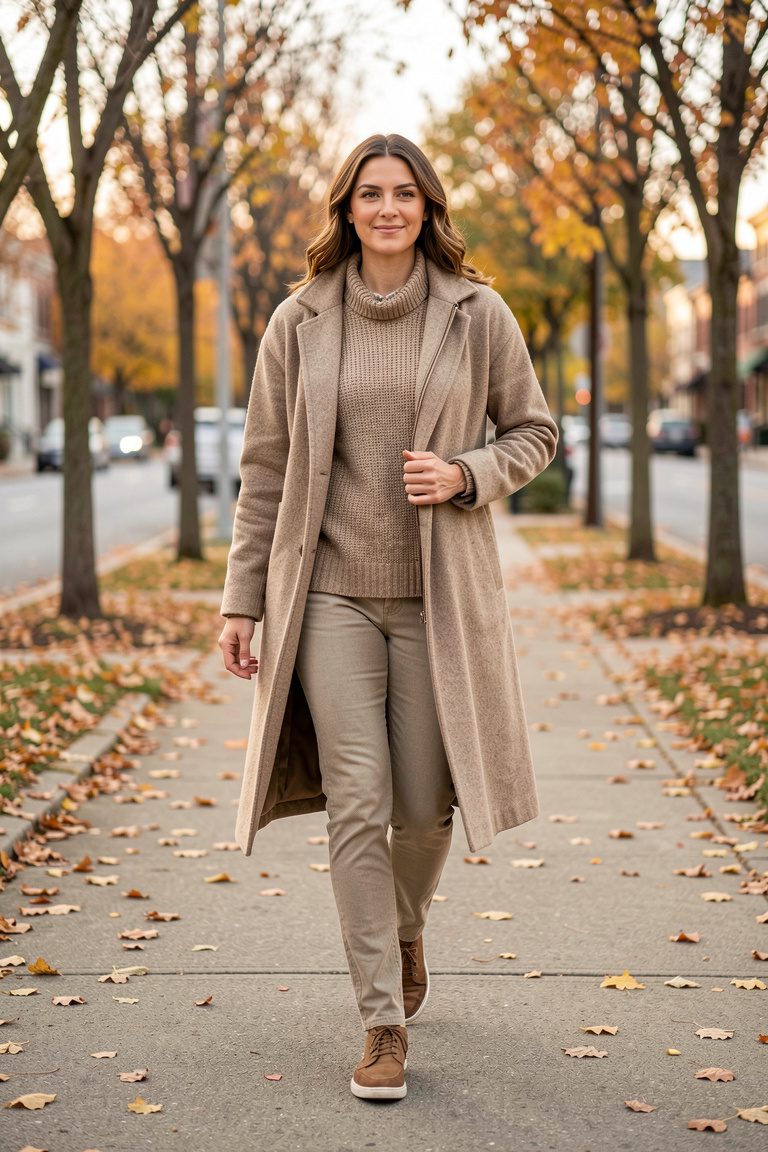
The woman stepped out of the coffee shop, effortlessly adjusting her layers to reveal a coherent, stylish outfit beneath. The scene revealed a thoughtful approach to dressing, one that prioritized intentional choice over excessive accumulation of layers. This judgment replaces the inadequate standard that more layers always mean more warmth, regardless of fabric choice or piece versatility. The assumption that quantity trumps quality in layering has led many to sacrifice style for comfort, resulting in a bulky, unpolished appearance.
In contrast, prioritizing breathable fabrics like merino wool and cotton allows for better temperature regulation, while versatile pieces can be mixed and matched to create multiple outfits, reducing the need for excessive layering. A considered color palette enables ease of combination and a polished appearance, making it possible to achieve both warmth and style without sacrificing one for the other. By focusing on these key elements, individuals can create a layered look that is not only functional but also visually appealing, replacing the misguided notion that more layers always mean more warmth with a more nuanced understanding of what truly constitutes effective layering.
The importance of breathable fabrics in layering cannot be overstated, as they provide the foundation for effective temperature regulation. Merino wool, for instance, is a natural fiber that excels at moisture wicking and thermal insulation, making it an ideal choice for base layers. Its unique properties allow it to retain warmth even when wet, preventing the chill that can come from wearing damp clothing. In contrast, synthetic fibers like polyester and nylon may trap heat and moisture, leading to discomfort and a clammy feeling. The benefits of merino wool are further enhanced by its ability to regulate body temperature, allowing for a stable microclimate next to the skin. This is particularly evident in its ability to prevent overheating during intense physical activity, making it an excellent choice for active individuals. By prioritizing natural fibers like merino wool and cotton, individuals can create a layered look that not only keeps them warm but also allows for a full range of motion and comfort.
The construction of garments also plays a crucial role in layering, as it can either enhance or hinder the performance of the fabrics used. Garment construction techniques such as seam sealing and articulated joints can help to maintain warmth and prevent cold spots, while features like adjustable cuffs and hemlines can allow for customization and versatility. Furthermore, the way in which different pieces interact with one another is essential to achieving a polished, layered look. For example, a tailored blazer can add structure and sophistication to an outfit, while a lightweight scarf can provide a pop of color and texture without adding bulk. By considering both the materials and construction of individual pieces, as well as how they work together to create a cohesive whole, individuals can create a layered look that is both functional and visually appealing.
To discern genuine quality in layering, it’s essential to examine the interplay between fabric properties, garment construction, and intentional choice. A key distinction lies in the ability of a layered outfit to regulate temperature without restricting movement. Breathable fabrics like merino wool and cotton are not only effective at moisture wicking and thermal insulation but also allow for a full range of motion, preventing the discomfort that can come from wearing stiff or bulky clothing. In contrast, garments constructed with thick, heavy materials may provide initial warmth but often lead to overheating and discomfort as activity levels increase.
The quality of layering is further refined by considering how individual pieces work together to create a cohesive whole. For instance, a well-tailored coat with a removable lining can adapt to changing temperatures throughout the day, while a lightweight, breathable sweater can provide warmth without adding bulk. The interaction between different textures and weights of fabric also plays a crucial role in achieving a polished, layered look. By prioritizing intentional choice and considering the specific properties and construction of each piece, individuals can create a layered outfit that not only keeps them warm but also allows for ease of movement and comfort, ultimately distinguishing genuine quality from the misleading proxy of mere quantity or prestige.
To apply the principles of thoughtful layering across different conditions, consider the nuances of varying climates and activities. In temperate regions, a lightweight base layer made from a moisture-wicking fabric like silk or bamboo can provide adequate warmth without overheating. However, in colder environments, a mid-layer of fleece or wool may be necessary to trap warm air and maintain body heat. The key is to balance the insulation properties of each layer with the need for breathability and mobility.
When engaging in high-intensity activities like hiking or skiing, the importance of moisture management becomes clear. A base layer that effectively wicks away sweat can help prevent chilling and discomfort, while a breathable outer layer can facilitate airflow and reduce wind resistance. In contrast, low-intensity activities like walking or lounging may require a focus on thermal insulation, with layers that trap warm air and maintain body heat. By considering the specific demands of each activity and climate, individuals can tailor their layered outfits to achieve optimal comfort and performance, illustrating the practical application of thoughtful layering in diverse contexts.
The attention to detail required for polished layering ultimately reveals itself in the subtle balance between texture, color, and proportion. A thoughtfully layered outfit is not just a collection of individual pieces but a harmonious union of elements that work together to create a cohesive whole. By focusing on the interplay between breathable fabrics, versatile garment construction, and intentional choice, individuals can cultivate a discerning eye for what truly constitutes quality in layering, moving beyond the superficial metrics of quantity or prestige to a more nuanced understanding of what it means to dress with intention and purpose.