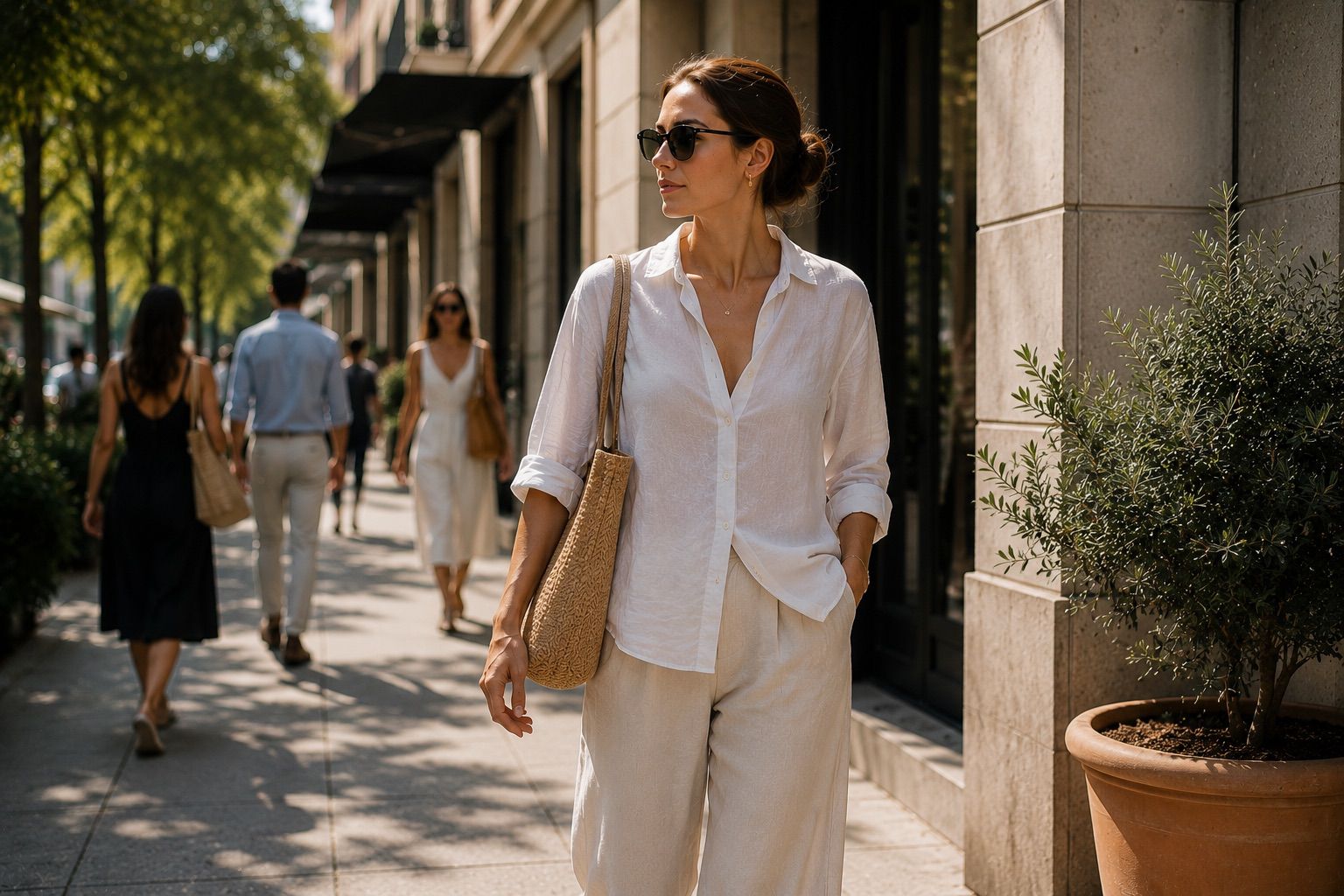
A walk down the street during these sweltering months becomes a study in contrasts. Some people move through crowds with an air of consideration, their attire reflecting attention to detail and respect for the season itself. Others, however, appear to have surrendered entirely, their clothing choices revealing a careless approach to comfort, presentation, and environment.
It’s not simply about aesthetics. It’s about intention.
A person who chooses linen in summer is making a deliberate decision — one that acknowledges the realities of heat, movement, and atmosphere. Linen, with its breathable weave and natural cooling properties, is an intentional fabric. It communicates something about the wearer: that they value comfort without abandoning elegance, and that they’re willing to think carefully about how they move through the world.
By contrast, those who default to heavy cottons or synthetic fabrics like polyester and nylon often reveal a different set of priorities. Perhaps they value convenience over consideration, or expediency over refinement. It’s not that these materials are inherently wrong, but rather that they are frequently chosen without much awareness of their consequences.
Consider the woman walking through the city in dark-wash jeans and a thick cotton shirt. She may be comfortable enough indoors, but outside she radiates heat, her clothing trapping warmth and contributing to the discomfort surrounding her. Compare this to the man wearing lightweight linen trousers and a breathable shirt, moving through the same crowded sidewalks with ease and composure.
Some would argue these distinctions are superficial — that clothing has little connection to character or values. But I disagree. The way we dress often reflects our internal standards, our priorities, and the degree of care we bring to daily life. Dressing intentionally sends a subtle message about how we engage with the world around us.
Summer exposes these differences more clearly than any other season. Heat strips away excess and forces us into direct contact with our environment. It becomes tempting to abandon all standards in favor of convenience alone. Yet those who resist this impulse — who continue to dress with restraint and awareness — reveal a discipline that is increasingly uncommon.
Take the art of layering, for example. In colder seasons, layering often serves decorative or practical purposes tied to warmth. In summer, however, thoughtful layering becomes about airflow, movement, and texture. A lightweight linen shirt draped loosely over a soft cotton tank can create both elegance and comfort without heaviness.
There’s also the matter of how fabrics interact with light. Linen possesses a remarkable ability to absorb and reflect sunlight softly, creating a subtle glow that feels alive in warm weather. Loose linen garments — sundresses, wide-leg trousers, relaxed shirts — seem almost designed for summer light itself.
Synthetic fabrics rarely achieve the same effect. Instead, they absorb heat and flatten texture, often appearing dull and lifeless beneath the sun. There’s something strangely dispiriting about watching someone endure summer wrapped in polyester blends and heavy technical fabrics, disconnected from the environment surrounding them.
Summer heightens sensory awareness. Skin becomes more sensitive to texture and temperature. We seek shade instinctively, notice airflow immediately, and become acutely aware of discomfort. In this environment, intentional dressing becomes an act of harmony rather than vanity.
Choosing natural fibers is ultimately a form of respect — for oneself, for others, and for the season itself. It demonstrates an awareness of one’s surroundings and a willingness to work with nature rather than against it.
There’s a reason certain fabrics have endured for centuries. Linen survives because it works. It cools the body while maintaining elegance. It allows movement without stiffness. It ages beautifully. And perhaps most importantly, it communicates a sense of restraint rather than excess.
Intentional dressing is never simply about fashion. It’s about standards.
Do we settle for what is easiest, or do we choose what is thoughtful? Summer clothing quietly reveals the answer. As temperatures rise and city streets grow crowded, our attire becomes more than personal preference. It becomes an outward reflection of how consciously we choose to live.
In summer, fabrics reveal character.
And yet, despite knowing which materials serve us best, many people continue choosing convenience over consideration. We understand that certain fabrics breathe better, move better, and feel better against the skin, but still gravitate toward fast, disposable alternatives.
What does this reveal about modern culture? Perhaps we’ve become so accustomed to prioritizing convenience that we no longer notice the physical and emotional effects of poor choices. Or perhaps we’ve simply lost touch with the relationship between clothing and environment altogether.
The result is visible everywhere: crowds trudging through intense heat wrapped in fabrics completely unsuited to the season. Sweat-soaked synthetics cling heavily to the body while breathable natural textiles remain oddly underappreciated.
But there is another approach.
By choosing natural fibers and breathable garments, we can create harmony between ourselves and our environment. We can move through the world with greater comfort, ease, and composure. It requires attention and intentionality, but the rewards are tangible.
Consider the tactile experience of linen on a warm afternoon. The fabric lifts slightly from the skin, allowing airflow and movement. It softens with wear rather than deteriorating. It feels connected to the season rather than resistant to it.
Synthetic fabrics rarely offer this experience. They often feel dense, artificial, and disconnected from the body’s natural rhythms. Yet despite this, fast fashion continues encouraging us toward cheap convenience rather than thoughtful craftsmanship.
This choice carries consequences beyond aesthetics. It shapes how we feel physically, how we present ourselves socially, and even how we engage with the environment around us.
As this sweltering season continues, perhaps it’s worth reconsidering the quiet power of intentional dressing. By choosing breathable fabrics, natural textures, and garments designed with care, we create a different relationship with summer itself — one rooted not in performance or excess, but in awareness, comfort, and quiet refinement.