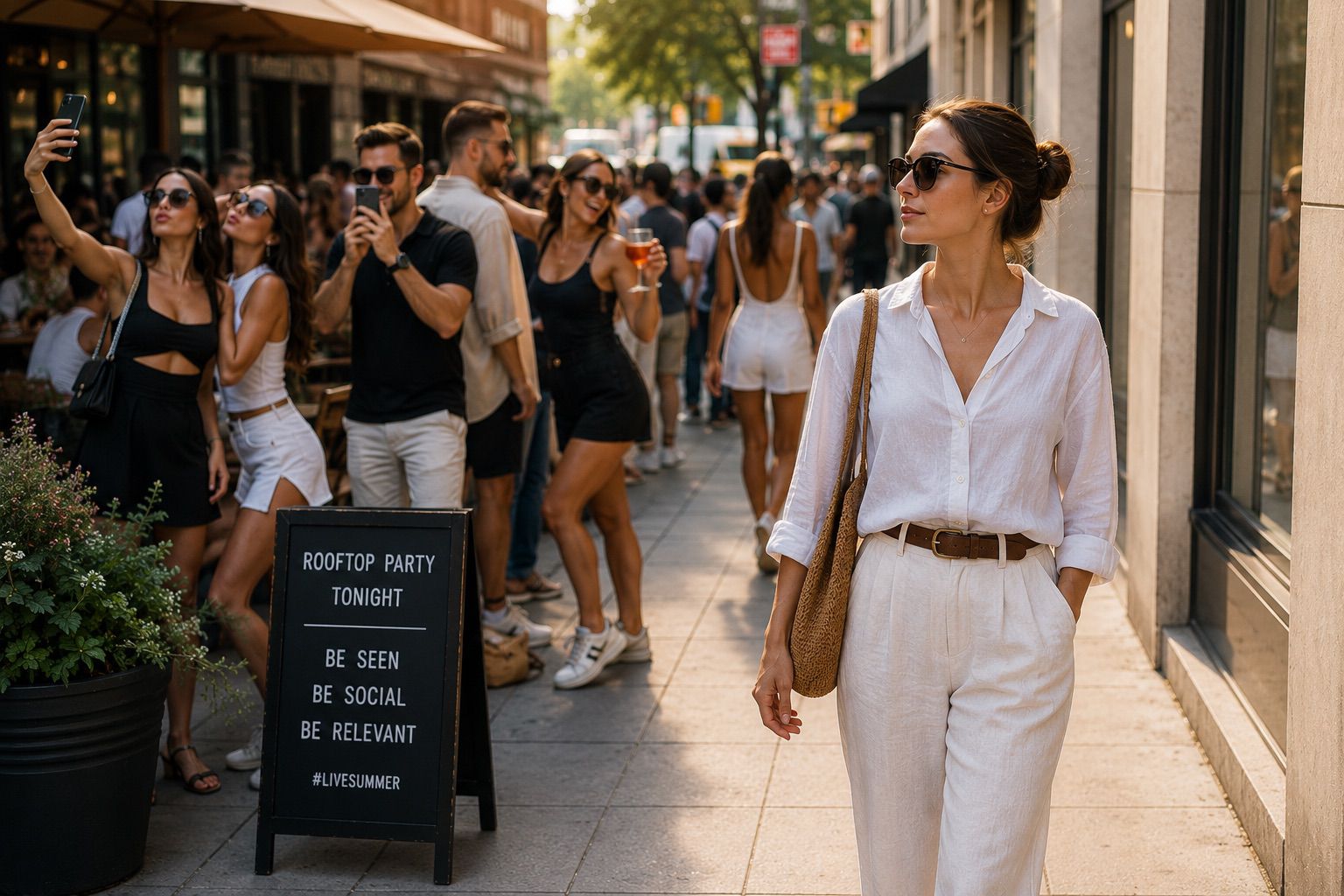
As I watch people navigate the sweltering summer streets, I’m reminded of a peculiar phenomenon: the performative nature of social exhaustion. It’s as if the mere act of being seen in public has become an exhausting endeavor worthy of theatrical display. The telltale signs are everywhere — limp posture, forced yawns, and the obligatory declarations of “I’m so done with this heat.”
But what lies beneath this façade of fatigue? Is it truly a result of the sweltering temperatures, or is it a manifestation of our collective burnout from overstimulation? As someone who has personally experienced the consequences of excessive consumption, I’ve come to realize that true exhaustion stems not from external factors, but from internal ones. The constant need for validation, the pressure to present a curated online persona, and the endless pursuit of novelty have all taken their toll on our collective psyche.
Take, for instance, the summer social calendar. What was once a season of leisurely gatherings and carefree outings has devolved into a grueling schedule of events, each carefully choreographed to maximize visibility and social approval. Instagram-worthy rooftop parties, influencer-packed music festivals, and obligatory beach vacations all serve as reminders that our worth is increasingly measured by our ability to present a flawless exterior.
But at what cost? As we prioritize the superficial over the substantial, we sacrifice our mental and physical well-being in the process. I recall a recent dinner party where the conversation revolved around the latest wellness trends and detox diets. The guests, all impeccably dressed and carefully groomed, spoke of their exhaustion as though it were a badge of honor — proof of their hectic, important lives. Yet as the evening wore on, it became clear that their fatigue was not the result of genuine exertion, but rather the consequence of relentless self-imposed pressure to maintain appearances.
This performative exhaustion is not unique to women. Men, too, have fallen prey to this phenomenon, often expressing it through exaggerated displays of bravado and hyper-masculinity. Summer sports events, beer-fueled barbecues, and obligatory gym sessions become opportunities to prove strength and endurance in a culture increasingly obsessed with outward performance.
But what about those who refuse to participate in this cycle? The people who reject the notion that exhaustion is a necessary byproduct of success? I think of the woman who wears her hair in a simple bun, without makeup or unnecessary adornment. She moves with purpose, unencumbered by the need for validation. Her confidence stems not from external approval, but from within — a quiet self-assurance that is both captivating and intimidating.
As I observe this cultural phenomenon, I’m reminded of my own journey toward refinement. After years of overconsumption and burnout, I was forced to reevaluate my priorities and establish a new set of standards. I began by paring down my wardrobe, eliminating anything that didn’t meet my criteria for quality and timelessness. I adopted a more disciplined approach to social media, limiting my online presence to what felt authentic and necessary.
I also made a conscious effort to surround myself with people who shared my values — those who prioritize substance over style and depth over breadth. Our conversations are richer and more nuanced, often revolving around topics that have nothing to do with appearances or external validation.
As the summer months draw to a close, I’m left with a lingering sense of unease. Will we continue down this path of performative exhaustion, or will we finally acknowledge the toll it takes on our collective well-being? The answer lies not in some grand transformative gesture, but in small, incremental changes. It begins with a willingness to question our assumptions, challenge the status quo, and redefine what constitutes a meaningful life.
I watch as people continue to move through the sweltering streets, their exhaustion on full display. But I also see glimmers of hope — individuals who move with intention, unburdened by the need for constant approval. They are the people who will ultimately reshape our cultural narrative and establish new standards for what it means to live a life of depth and substance.
And as I prepare to leave, I notice a woman walking toward me, her gaze fixed somewhere in the distance. Her hair is tied back, her face unadorned, and her shoulders squared. She radiates a quiet confidence that has nothing to do with performative exhaustion or social validation. In that moment, I’m reminded that true elegance lies not in appearance, but in the ability to move through the world with intention, free from the endless need for approval.
As I continue on my own path, I catch glimpses of others breaking free from the machinery of performative exhaustion. They are not rebels or extremists, but simply people who have grown tired of the charade. They find solace in quieter pursuits: reading books that inspire meaningful conversation, taking long walks without a destination, and engaging in hobbies that bring genuine joy rather than social recognition.
These individuals are not escaping the world; they are redefining their relationship with it. They understand that true fulfillment comes from within, not from external validation. And as they release the need for constant approval, they discover a sense of lightness and freedom that is impossible to ignore.
I see this transformation in my own life as well. As I’ve distanced myself from the culture of performative exhaustion, my relationships have become more authentic and meaningful. My friendships are no longer built around extravagant displays or curated social moments, but around shared values and genuine connection.
But this transformation is not without difficulty. There are still moments when I’m tempted to slip back into old habits — to seek validation through visibility, attention, or recognition. It’s a constant effort to remind myself that my worth is not measured by likes or followers, but by the depth of my relationships and the quality of my experiences.
As I navigate this evolving landscape, I’m reminded that meaningful change requires patience, self-awareness, and the courage to confront our own vulnerabilities. It’s not about achieving perfection; it’s about learning to live honestly and intentionally.
Summer may be drawing to a close, but the conversation surrounding performative exhaustion is only beginning. As we move into a new season, I hope more people begin questioning the systems that demand constant visibility and endless performance. Perhaps then we can start building lives defined not by external validation, but by genuine connection, inner fulfillment, and quiet confidence.