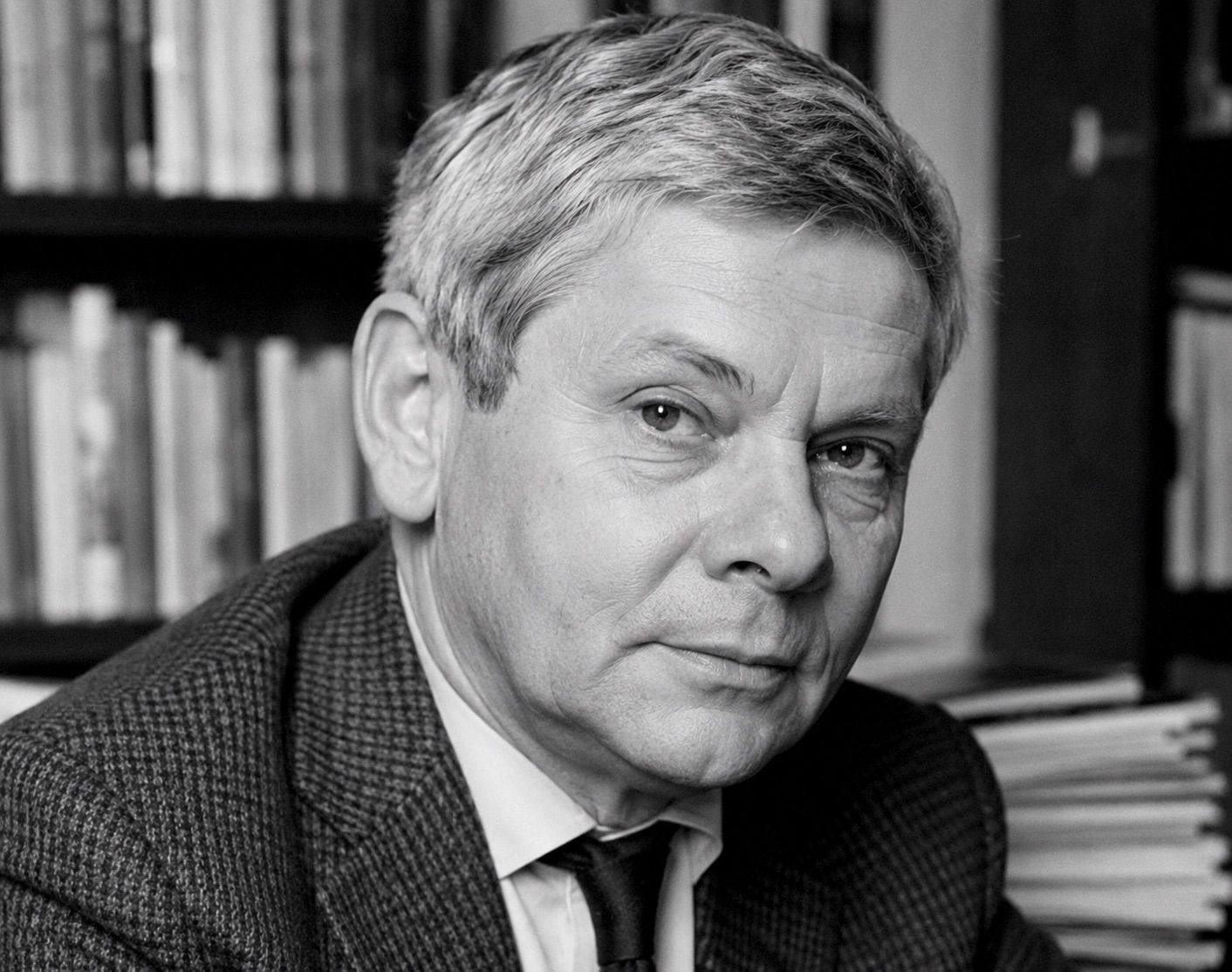
I’ve been thinking a lot about Zbigniew Herbert lately, and I’m not entirely sure why he’s stuck with me like this. Maybe it’s because his poetry has a way of crawling under my skin and refusing to let go – or maybe it’s just that I identify with the sense of disquiet that seems to seep from every line.
As I read through his collections, I find myself drawn back again and again to the themes of identity and belonging. Herbert was a Polish poet who wrote about the fragments of his own life, torn between the cultural heritage of his country and the realities of living under Soviet occupation. He’s got this way of juxtaposing the grand gestures of politics with the smallest, most intimate details of human experience – and it’s this quiet tension that I think I’m still trying to wrap my head around.
I’ve always been fascinated by the way Herbert wields language like a scalpel, cutting through the noise and getting straight to the heart of things. His poetry is all about precision and clarity, but at the same time, it’s full of this rich, fertile soil that invites you to dig deeper. I love how he can take something as simple as a memory or a gesture and spin it into this intricate web of meaning that’s both personal and universal.
One of the things that really gets me is Herbert’s attitude towards the myth of Poland itself – how it’s presented in the poetry, but also how it’s subverted. He’s got this way of referencing the country’s history and culture, but also of poking holes in its idealized image. It’s like he’s trying to get at some deeper truth beneath all the official narratives and propaganda. I feel a similar discomfort when I think about my own place in the world – how it’s tied up with my family’s history and cultural background, but also how those things can be limiting or confining.
Sometimes, reading Herbert feels like trying to untangle a knot that’s been tightened around my heart. His poetry is so beautifully crafted, but at the same time, it’s full of this underlying anxiety – an anxiety about identity, about belonging, about what it means to be human in a world that’s constantly shifting and evolving.
I know I’m not alone in feeling this way, but sometimes I wonder if Herbert’s work is too abstract or too cerebral for its own good. His poetry can feel like a labyrinth, full of twists and turns that leave you questioning everything – even the ground beneath your feet. And yet, it’s this very uncertainty that draws me back again and again.
I guess what I’m trying to say is that Herbert’s poetry has become a kind of mirror for me, reflecting all my own doubts and uncertainties about who I am and where I belong in the world. His work doesn’t offer easy answers or solutions – but it does show me that I’m not alone in this search for meaning and connection. And that, maybe, is what really sticks with me.
As I delve deeper into Herbert’s poetry, I find myself becoming increasingly fascinated by the way he navigates the complexities of identity and belonging. He writes about being a Pole, but not just in the sense of nationality – he’s talking about the cultural heritage, the language, the customs that shape who you are as a person. And yet, he’s also aware of the ways in which this identity can be imposed upon him, how it can be used to define him by others.
I think back to my own experiences growing up, where I felt like I was caught between two worlds – the one my family came from, and the one I was living in. My parents immigrated to a new country when I was young, and I spent most of my childhood trying to navigate this strange new landscape while still holding on to the stories and traditions of our homeland. It’s a feeling that’s hard to put into words, but it’s like being suspended between two identities – not quite fully belonging to either one.
Herbert captures this sense of dislocation perfectly in his poem “The Polish Wedding”. He writes about the ritual of getting married, but also about the ways in which this tradition is both beautiful and suffocating. The language he uses is so precise, so evocative – it’s like I’m right there with him, experiencing the same sense of longing and disconnection.
One of the things that strikes me about Herbert’s poetry is how he can be both intensely personal and universally relatable at the same time. He writes about his own life, but also about the lives of others – about the experiences that shape us all, regardless of where we come from or who we are. It’s like he’s trying to tap into some deeper sense of humanity, one that transcends borders and nationalities.
And yet, even as I’m drawn into this world of poetry, I still feel a twinge of discomfort. Herbert’s work can be so intense, so all-consuming – it’s like being dropped into the midst of a maelstrom, with no clear way out. Sometimes I wonder if his poetry is too much for me, if I’m not equipped to handle its complexity and nuance.
But then again, maybe that’s what draws me to it in the first place. Maybe I’m drawn to the uncertainty, the ambiguity – the feeling that I’m still figuring things out, even as I read about Herbert’s own struggles with identity and belonging. It’s like we’re both on this journey together, trying to untangle the knots of our own hearts and minds.
As I continue to immerse myself in Herbert’s poetry, I find myself drawn into the world of his characters – men and women who are struggling to find their place within a society that is constantly shifting and evolving. Their stories are like mirrors held up to my own experiences, reflecting back at me the same doubts and uncertainties that I’ve been grappling with.
One character in particular has stuck with me – a man named “Herbert” (or rather, a version of himself) who appears in several of his poems. This figure is both a reflection of the poet’s own life and a kind of alter ego, a persona that allows Herbert to explore different aspects of his identity.
I’m fascinated by the way Herbert uses this character to navigate the complexities of Polish identity under Soviet occupation. He writes about the ways in which this identity can be imposed upon him, forced upon him like a mask that doesn’t quite fit. And yet, he’s also aware of the power of language and culture to shape who we are as individuals.
This resonates deeply with me, because I’ve always felt like my own identity is tied up with the stories and traditions of my family’s homeland. As an immigrant kid, I struggled to balance my desire to belong in this new country with my loyalty to the old one. It was like trying to hold two opposing forces in tension within myself – a sense of belonging that was both authentic and artificial at the same time.
Herbert’s poetry shows me that this is a universal experience, one that transcends borders and nationalities. His characters are all struggling to find their place within a world that is constantly in flux, where identities are multiple and fluid. And yet, even as they grapple with these complexities, they remain connected to something deeper – a sense of humanity that binds us all together.
I’m struck by the way Herbert uses imagery and metaphor to convey this sense of connection. His poetry is like a rich tapestry, woven from threads of language and culture that are both personal and universal at the same time. He takes everyday moments – a conversation with a friend, a memory from childhood – and turns them into these powerful symbols that speak to something deeper within us.
It’s this sense of depth, of resonance, that draws me back to Herbert’s poetry again and again. His work is like a mirror held up to my own soul, reflecting back at me the same doubts and uncertainties that I’ve been grappling with. And yet, even as it reveals these complexities, it also offers a sense of connection – a sense that we’re all in this together, navigating the twists and turns of our own hearts and minds.
As I delve deeper into Herbert’s world, I find myself thinking about the concept of “home” and what it means to belong. For Herbert, home is not just a physical place, but also a cultural and emotional one – a sense of identity that is tied to language, history, and tradition. And yet, as he navigates the complexities of Polish identity under Soviet occupation, he begins to question whether this sense of belonging is truly possible.
I think about my own experiences growing up as an immigrant kid, where I struggled to find my place in a new country while still holding on to the stories and traditions of my homeland. It’s like I’m caught between two identities – the one that I was born with, and the one that I’ve acquired through experience. Herbert’s poetry shows me that this is not just a personal struggle, but also a universal one.
One of the things that strikes me about Herbert’s work is the way he uses language to create a sense of intimacy and immediacy. His poetry is like a private conversation, where he shares his innermost thoughts and feelings with the reader. And yet, at the same time, it’s also a deeply public statement – a cry for connection and understanding that resonates across borders and cultures.
I find myself drawn to this sense of vulnerability in Herbert’s work, where he lays bare his own doubts and fears without apology or pretension. It’s like I’m reading a letter from an old friend, one who is sharing their deepest secrets with me without fear of judgment. And yet, even as I’m drawn into this world of poetry, I still feel a twinge of discomfort – the feeling that I’m not quite ready to confront my own doubts and uncertainties.
Herbert’s work shows me that this is okay, that it’s normal to be uncertain and unsure about who we are and where we belong. His poetry is like a reminder that identity is not something fixed or static, but rather a dynamic and fluid concept that shifts and evolves over time. And yet, even as I’m drawn into this world of flux and uncertainty, I still feel the need for some sense of stability and grounding.
I think about the way Herbert uses images from Polish folklore to convey this sense of uncertainty – the mythological creatures, the rituals and traditions, all these things that seem so familiar and yet so alien at the same time. His poetry is like a dream, where reality and fantasy blur together in ways that are both confusing and illuminating.
As I continue to read Herbert’s work, I find myself becoming more and more aware of my own place within the world – my own experiences, struggles, and doubts. It’s like I’m looking through a different lens now, one that sees the complexities and nuances of identity in ways that are both beautiful and disorienting.
And yet, even as I’m drawn into this world of uncertainty, I still feel a sense of connection to Herbert’s work – a sense that we’re all in this together, navigating the twists and turns of our own hearts and minds. His poetry is like a map, one that charts the complexities of identity and belonging with precision and clarity.
As I navigate the labyrinthine world of Zbigniew Herbert’s poetry, I find myself increasingly fascinated by the way he uses language to convey the fluidity of identity. It’s as if he’s constantly shifting between different personas, exploring the multiple layers of self that make up a person.
In his poem “The King,” for example, Herbert writes about a figure who is both king and fool, powerful and powerless at the same time. This duality resonates deeply with me, because I’ve always felt like I’m caught between two worlds – my family’s cultural heritage and the new country where I grew up.
Herbert’s use of metaphor and imagery helps to convey this sense of multiplicity, making it feel both familiar and strange at the same time. It’s as if he’s taking me on a journey through different landscapes, each one reflecting a different aspect of his own identity.
I think about my own experiences growing up as an immigrant kid, where I struggled to reconcile my parents’ cultural traditions with the American culture that surrounded me. Herbert’s poetry shows me that this is not just a personal struggle, but also a universal one – that we’re all navigating multiple identities and trying to find our place within the world.
As I delve deeper into Herbert’s work, I begin to notice a recurring theme of transformation and metamorphosis. His characters are constantly changing, shifting between different forms and guises as they navigate the complexities of identity. It’s as if they’re undergoing some kind of spiritual or psychological transformation, shedding old skins to reveal new ones.
This resonates deeply with me, because I’ve always felt like I’m in a state of constant transformation – trying to adapt to new situations, new cultures, and new identities. Herbert’s poetry shows me that this is okay, that it’s a natural part of the human experience.
One of the things that strikes me about Herbert’s work is the way he uses imagery from Polish folklore to convey this sense of transformation. His characters are often depicted as magical creatures – wolves, bears, and other mythical beasts – which seem to embody the fluidity of identity.
It’s as if Herbert is tapping into some deep reservoir of collective memory, drawing on stories and traditions that have been passed down through generations. And yet, even as he uses these familiar tropes, he’s also subverting them in unexpected ways – turning the mythological creatures into symbols of identity and transformation.
I find myself drawn to this sense of playfulness and experimentation in Herbert’s work, where he’s constantly pushing against the boundaries of language and culture. It’s like I’m reading a series of interconnected puzzles, each one revealing new insights and perspectives on the complexities of identity.
As I continue to navigate the world of Zbigniew Herbert’s poetry, I begin to realize that his work is not just about identity or belonging – but also about the very nature of language itself. He’s constantly playing with words, pushing against their limits and boundaries in ways that are both beautiful and disorienting.
It’s as if he’s trying to uncover some hidden truth beneath the surface of language – a truth that reveals the deep connections between our inner lives and the world around us. And yet, even as I’m drawn into this world of poetry, I still feel a sense of unease – the feeling that I’m on the verge of something profound, but not quite sure what it is.
Herbert’s work shows me that this is okay, that it’s normal to be uncertain and unsure about the mysteries of language. His poetry is like a reminder that meaning is always in flux, always shifting and evolving as we navigate the complexities of our own lives.