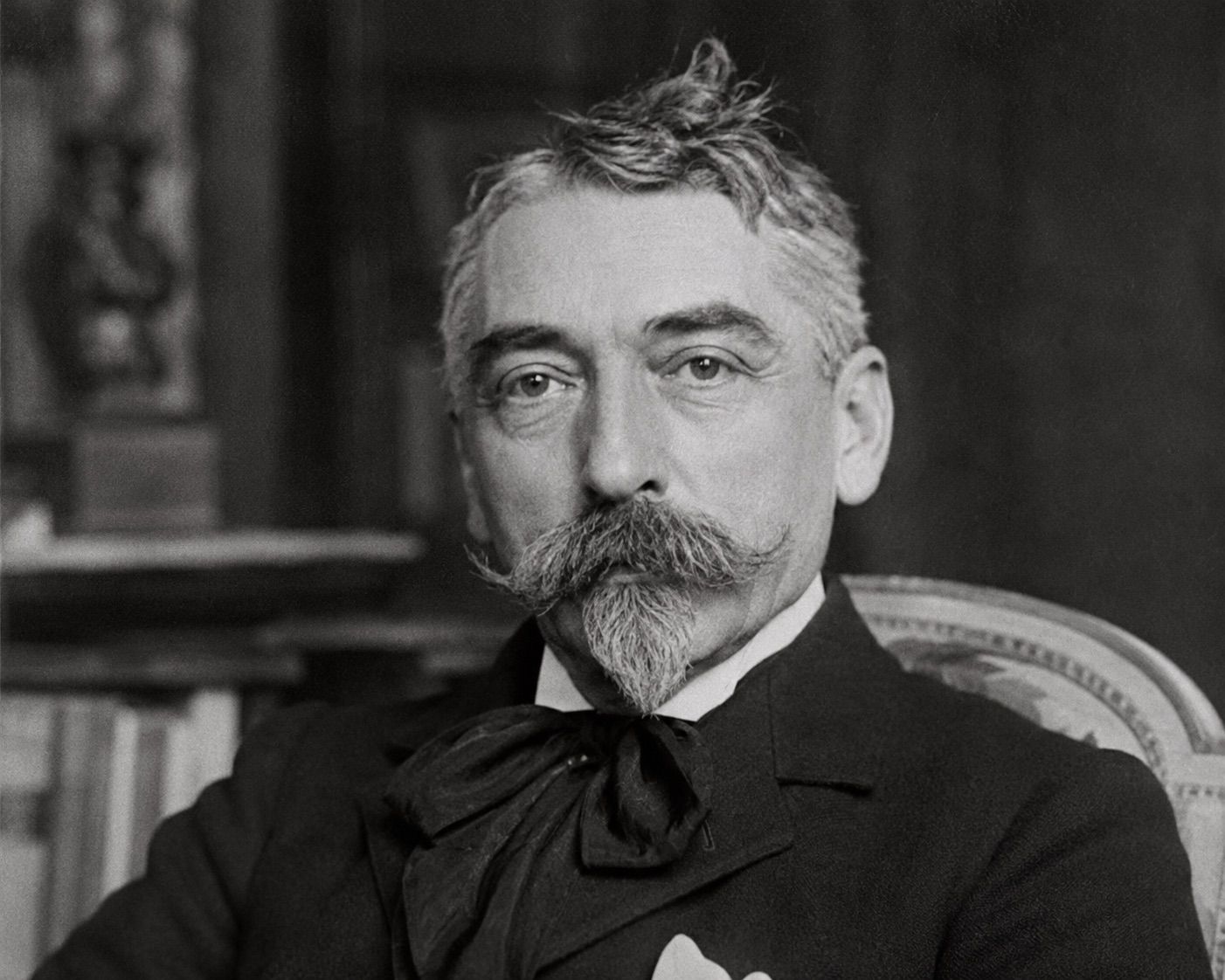
I’ve always been drawn to the enigmatic figure of Stéphane Mallarmé, a poet who defies easy comprehension. His writing is like a maze I find myself getting lost in, yet somehow it’s exactly where I want to be. As I read through his works and biographies, I’m struck by the sense that he’s trying to convey something just out of reach – a secret only he can see.
One aspect of Mallarmé that fascinates me is his obsessive attention to language. He spent years refining his craft, experimenting with syntax and semantics in ways that border on the absurd. It’s as if he’s searching for a code hidden within words themselves, a code that will unlock some deeper truth about existence. I’ve tried to grasp this obsession myself through writing, but it always seems like chasing after smoke – the more I write, the more elusive the meaning becomes.
Sometimes I feel like I’m reading Mallarmé through a prism of my own anxieties. His fixation on language as a key to understanding echoes my own struggles with communication. In college, I’d get bogged down in conversations, searching for the perfect phrase or metaphor to convey what I meant. It’s like Mallarmé is tapping into this deep fear that our words will never quite capture reality – and yet he persists in trying.
Take his poem “Un Coup de Dés Jamais N’Abolira le Hasard” (A Throw of the Dice Will Never Abolish Chance). On one level, it’s a dense, abstract exploration of fate versus free will. But on another, I see it as an attempt to wrestle with the uncertainty that comes with human relationships – can we ever truly know someone else? The poem’s language is like a puzzle I keep trying to solve, but each time I think I’ve grasped it, it slips away.
There are moments when Mallarmé’s philosophy feels almost cruelly detached from human experience. His rejection of the idea that words can capture reality resonates with my own frustration with social media and the performative nature of online interactions. People present curated versions of themselves; they don’t reveal their true selves. But Mallarmé takes this concept to an extreme, implying that even our most intimate thoughts are inaccessible.
I’m not sure if I agree with his radical skepticism about language’s ability to describe reality. Sometimes it feels like he’s abandoning hope in the face of complexity – or perhaps embracing a quiet despair. As someone who writes as a way to think and process, I need to believe that words can somehow approximate truth. But at the same time, I recognize that this is an illusion – we’re always approximating, never quite grasping.
Maybe Mallarmé’s true legacy lies not in his theories or poems but in the uncertainty he leaves us with. He shows us that even when we try to pin down meaning, it slips through our fingers like sand. It’s a sobering thought, one I’m still grappling with as I write this.
As I ponder Mallarmé’s skepticism about language, I find myself wondering if he’s not just rejecting the idea of capturing reality, but also the notion that we can ever truly express ourselves. His writing is like a mirror held up to our own contradictions – we want to convey meaning, but in doing so, we’re trapped by the very words that supposedly liberate us.
I think about my own experiences with writing as a way to process emotions and thoughts. It’s like I’m trying to capture a fleeting glimpse of myself, only to see it slip away like smoke on the wind. Mallarmé’s obsession with language makes me realize how ephemeral our attempts at self-expression can be. His poems are like echoes that reverberate long after we’ve finished reading them – a reminder that even in the act of creation, we’re always negotiating the limits of language.
Sometimes I feel like I’m trying to inhabit Mallarmé’s world, to see things through his prism. It’s a disorienting experience, like navigating a maze without a map. But as I read and reread his works, I begin to sense that he’s not just presenting a philosophical framework – he’s sharing a piece of himself, a fragment of his inner life.
This is where the enigma of Mallarmé becomes most captivating for me: in his willingness to surrender to uncertainty, even as he writes about the search for meaning. His poetry is like a slow-burning fire that consumes him whole, leaving behind ashes and embers that refuse to be extinguished. It’s as if he’s saying: I don’t know what truth is, but I’ll keep searching through language, no matter how elusive it may be.
In this way, Mallarmé becomes a kindred spirit – a fellow traveler in the labyrinth of language and meaning. His work reminds me that even when words fail us, they’re still worth trying to grasp, for it’s in the act of striving that we find ourselves most fully alive.
As I delve deeper into Mallarmé’s poetry, I’m struck by the way he blurs the lines between language and silence. His use of white space on the page, for instance, is almost as significant as the words themselves. It’s as if he’s leaving room for the reader to fill in the gaps, to make sense of the silences that punctuate his text.
I find myself wondering about the relationship between silence and meaning. Is it possible that Mallarmé’s use of white space is not just a aesthetic choice, but a deliberate attempt to capture the complexity of human experience? Do our silences hold secrets that words can’t convey?
In my own writing, I often struggle with finding the right balance between expression and restraint. There are times when I feel compelled to fill every inch of the page with words, as if the more I write, the closer I’ll get to capturing reality. But Mallarmé’s example shows me that sometimes it’s precisely in the spaces between words that meaning resides.
One poem that comes to mind is “L’Après-Midi d’un Faune” (Afternoon of a Faun). On its surface, it appears to be a sensual and dreamlike exploration of desire. But as I read it more closely, I begin to see the way Mallarmé uses silence to create a sense of ambiguity. The poem’s title, for instance, raises questions about the nature of time and memory – what happens after the afternoon of a faun?
The use of white space in “L’Après-Midi d’un Faune” becomes almost palpable, like a physical presence that disrupts my reading experience. It’s as if Mallarmé is inviting me to pause, to breathe between the words and consider the silences that surround them.
This makes me think about the way I read – or rather, how I devour texts without necessarily processing their full meaning. I’m often guilty of racing through pages, looking for key phrases or ideas that resonate with me. But Mallarmé’s poetry forces me to slow down, to listen more intently to the silences between his words.
In doing so, I begin to see the world in a different light – as a vast expanse of ambiguities and uncertainties, where meaning is constantly shifting like sand dunes. It’s a disorienting feeling, but also strangely liberating, as if I’m being given permission to inhabit this liminal space without needing to grasp for solid ground.
As I continue to read Mallarmé’s work, I realize that his legacy extends far beyond the realm of poetry itself. He shows us that language is not a tool for capturing reality, but rather a reflection of our own limitations and contradictions. His poetry becomes a mirror held up to our own fallibility – we can never quite say what we mean, nor capture the world in all its complexity.
In this way, Mallarmé’s work embodies a paradox: he rejects the idea that language can convey truth, yet his poetry continues to speak directly to us across time and space. It’s as if his writing has become a kind of echo chamber, where meaning reverberates long after we’ve finished reading – an echo that resonates deep within our own silences.
I find myself returning to this idea of the echo chamber, wondering how Mallarmé’s poetry manages to speak to us across time and space. It’s as if his words have taken on a life of their own, becoming a kind of collective unconscious that we all tap into when we read his work.
This raises questions about the nature of shared experience and how it relates to language. Can we truly share meaning with others through words, or are we always trapped in our own subjective experiences? Mallarmé’s poetry suggests that even when we try to convey something universally relatable, our words will inevitably be filtered through our individual perspectives.
I think about my own relationships and how I’ve struggled to communicate effectively with loved ones. It’s as if we’re all speaking different languages, trying to find common ground in a world where meaning is constantly shifting. Mallarmé’s work reminds me that even in the most intimate moments, there can be a disconnection between what I mean to say and what others hear.
This feeling of disconnection is both frustrating and liberating. It acknowledges that we’re all trapped in our own subjectivities, yet it also allows us to recognize the beauty of ambiguity and uncertainty. In Mallarmé’s poetry, I see a reflection of this paradox: he’s drawn to the complexities and contradictions of human experience, even as he acknowledges that language can never fully capture them.
As I read on, I start to notice how often Mallarmé uses imagery and metaphor to convey meaning. His descriptions of natural landscapes – sea and sky, light and darkness – become a kind of symbolic shorthand for the human condition. It’s as if he’s trying to capture the essence of existence through these vivid images, rather than through direct statement.
This use of imagery reminds me of my own struggles with writing about emotions and experiences. I often find myself relying on tropes or clichés to convey what I mean, rather than taking the risk of being more direct. But Mallarmé’s poetry shows me that even in abstract expression, there can be a power and intimacy that comes from using imagery to evoke feeling.
One poem that stands out to me is “Le Tombeau d’Edgar Poe” (The Tomb of Edgar Allan Poe). On the surface, it appears to be a tribute to the American poet’s work and legacy. But as I read it more closely, I begin to see how Mallarmé uses imagery to explore the themes of loss, memory, and creativity.
The poem is like a dreamscape, where images blur and intersect in complex ways. Mallarmé describes Poe’s tomb as a kind of threshold between life and death, where art and imagination transcend mortality. It’s a beautiful and haunting image that speaks to me on a deep level – perhaps because it acknowledges the fragility of human existence.
As I reflect on “Le Tombeau d’Edgar Poe”, I realize that Mallarmé’s poetry is not just about conveying meaning or capturing reality, but also about exploring the spaces between words. His imagery becomes a kind of bridge between subjective experience and collective understanding – a reminder that even in the most personal moments, we’re connected to something greater than ourselves.
This connection to something greater is what I find so captivating about Mallarmé’s work. It’s as if he’s tapping into a shared reservoir of human emotion and experience, where words become a kind of shorthand for the complexities and contradictions of existence. In his poetry, I see a reflection of our own search for meaning and connection – a reminder that even in the face of uncertainty, we can find solace in the ambiguities and silences between words.
As I continue to navigate Mallarmé’s world, I’m struck by the way he blurs the lines between reality and imagination. His poetry is like a dreamcatcher, weaving together threads of fact and fiction into a tapestry that’s both familiar and strange. It’s as if he’s showing me that the distinction between truth and falsehood is not always clear-cut, but rather a gradient that shifts with every reading.
This realization makes me think about my own experiences with creative writing. I’ve often found myself walking the fine line between reality and imagination, trying to capture the essence of a particular moment or emotion without getting too caught up in details. Mallarmé’s poetry reminds me that this is not just a technical exercise, but an attempt to tap into the deeper currents of human experience.
One poem that comes to mind is “Les Mots Enigmes” (The Enigmatic Words). On its surface, it appears to be a playful exploration of language and meaning. But as I read it more closely, I begin to see how Mallarmé uses wordplay and puns to create a sense of uncertainty and ambiguity. It’s as if he’s showing me that even the most seemingly simple words can hold multiple meanings, and that these meanings are constantly shifting like sand dunes in the wind.
This idea resonates with my own experiences with language. I’ve often found myself struggling to convey complex emotions or ideas through words, only to have them misinterpreted or misunderstood by others. Mallarmé’s poetry reminds me that this is not just a problem of communication, but an inherent property of language itself – that words are always slipping away from us, like grains of sand between our fingers.
As I ponder this idea, I start to think about the role of ambiguity in human experience. Is it possible that uncertainty and doubt are essential components of our emotional lives? That without them, we’d be stuck in a state of static certainty, unable to adapt or grow?
Mallarmé’s poetry suggests that yes, this is indeed the case. His use of ambiguity and paradox creates a sense of tension and complexity that’s both uncomfortable and exhilarating. It’s as if he’s showing me that even in the most seemingly stable moments, there are always undercurrents of uncertainty waiting to be acknowledged.
This idea makes me think about my own relationships and how I navigate uncertainty with loved ones. Is it possible that our attempts to communicate are always doomed to fail, precisely because we’re trying to pin down meaning in a world where language is inherently ambiguous? Mallarmé’s poetry reminds me that this is not necessarily a bad thing – that the act of searching for meaning itself becomes a kind of intimacy, a way of connecting with others on a deeper level.
As I continue to read and reflect on Mallarmé’s work, I begin to see his legacy as a kind of invitation to inhabit this liminal space between language and uncertainty. It’s an uncomfortable place to be, but also strangely liberating – like being lost in a familiar landscape, where every step forward is a discovery waiting to happen.
I’m not sure what the future holds for me, or how I’ll continue to navigate the complexities of language and meaning. But as I look back on my journey through Mallarmé’s poetry, I know that I’ve been changed by it – that his work has shown me the value of ambiguity and uncertainty in human experience.
In this way, Mallarmé becomes a kindred spirit – a fellow traveler in the labyrinth of language and meaning. His poetry reminds me that even when words fail us, they’re still worth trying to grasp, for it’s in the act of striving that we find ourselves most fully alive.